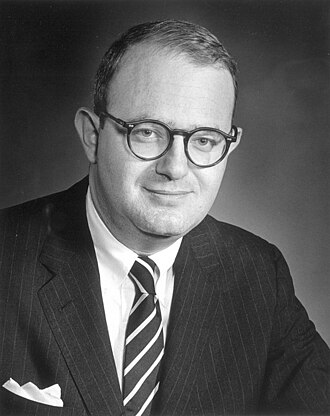
Silberman, Laurence H.
During the Nixon administration, Laurence H. Silberman served as Solicitor of the Department of Labor before becoming Under Secretary of Labor in 1970. In his role as Undersecretary, which he held throughout the entirety of the White House taping period, he clashed with Charles Colson and tendered his resignation to force the hiring of a Black regional director in New York. He left the position in 1973 and later returned to the administration as Deputy Attorney General in early 1974.
President Nixon met with his Cabinet and key advisors to announce a major breakthrough in Strategic Arms Limitation Talks (SALT) with the Soviet Union, culminating in a joint statement to be released simultaneously in both nations. The agreement establishes a framework to prioritize limiting anti-ballistic missile (ABM) systems while pursuing parallel measures for offensive weapons. Nixon emphasized that the breakthrough was achieved by maintaining a strong U.S. defense posture, and he urged his administration to avoid public speculation or detailed commentary that could complicate sensitive ongoing negotiations.
President Nixon met with the Executive Board of the National Association of Home Builders (NAHB), along with Secretary of HUD George Romney and other administration officials, to discuss the economic health of the housing industry. The primary focus of the discussion was the impact of rising interest rates, inflation, and federal regulations on housing production and middle-class affordability. The participants addressed potential legislative reforms to labor relations and the construction industry, while the President emphasized the administration's commitment to stabilizing the economy and monitoring wage and price trends to support industry growth.
President Nixon met with his Cabinet members to discuss the delicate political landscape surrounding the administration's efforts to open communications with the People's Republic of China. The conversation centered on the necessity of maintaining strict discretion to avoid premature public speculation, which could jeopardize sensitive diplomatic negotiations and create political vulnerabilities. Nixon emphasized the importance of a unified front among Cabinet members to manage domestic and international expectations as the policy shift progressed.
President Nixon convened a large meeting with Vice President Agnew and his Cabinet to discuss the national economy and the "New Economic Policy" he had announced the previous day. Key topics included the wage-price freeze, import surcharges, tax relief, budget cuts, and the convertibility of the dollar. The administration sought Cabinet support for these initiatives and discussed their potential impact on international trade and domestic employment.
President Nixon, Vice President Agnew, and members of his Cabinet met to coordinate a unified administration strategy ahead of critical International Monetary Fund (IMF) meetings and ongoing global trade negotiations. The discussion emphasized the necessity of maintaining the recently imposed 10% import surcharge and a firm bargaining stance to address the nation's economic balance of payments and reshape the international monetary system. Nixon and his advisors agreed that while foreign partners would likely criticize U.S. policy, maintaining domestic political support and correcting long-standing trade imbalances remained the administration's primary objective.
President Nixon and the Cost of Living Council convened to discuss the efficacy of the administration's economic stabilization program, specifically the transition from Phase I to Phase II. Participants evaluated the success of existing price and wage controls and addressed the future of the Pay Board and Price Commission ahead of the 1972 calendar year. The meeting concluded with a formal vote to adopt an amendment to 'Option 2' regarding economic policy adjustments.
President Nixon met with the Construction Industry Collective Bargaining Commission to review the progress of labor-management relations and wage stabilization efforts in the construction sector. The discussion focused on the success of the Commission's voluntary approach to curbing inflation, the role of craft boards in fostering industry cooperation, and the broader integration of productivity goals. Nixon commended the participants for their responsible leadership and collaborative efforts, emphasizing the importance of keeping the industry's management in the hands of construction professionals while continuing to modernize labor practices.
President Nixon met with the Cost of Living Council to address surging food and meat prices, emphasizing the need to combat inflation without imposing direct price controls. The discussion focused on managing supply-side pressures, including reduced military food stockpiles and potential adjustments to meat import policies, while coordinating a "jawboning" strategy to encourage price restraint among industry leaders and labor unions. Nixon urged the council to publicly highlight the administration's commitment to fighting inflation while cautioning against speculating on a price freeze, which he warned would destabilize the market.
President Nixon met with the Cost of Living Council to review the performance of his administration's economic stabilization program, including successes in lowering inflation and fostering rapid economic growth. The discussion emphasized the necessity of maintaining fiscal discipline through a proposed $250 billion federal spending ceiling to prevent future inflationary pressure. Participants also addressed specific challenges, particularly rising food prices and the potential impact of government spending on tax rates, while strategizing on how to communicate these economic gains to the public ahead of the election.
President Nixon met with United Paper Makers International Union leader Joseph P. Tonelli and members of his administration, including Secretary of Labor James D. Hodgson, to discuss labor relations and union support for the administration's policies. Tonelli expressed strong approval of Nixon's foreign policy and his approach to economic stabilization, while the group discussed specific legislative concerns regarding pulp and paper industry trade. They also addressed the importance of establishing the National Commission for Industrial Peace to improve labor dispute resolution as an alternative to economic strikes.
President Nixon met with leaders of various building trades unions to discuss their ongoing collaboration with his administration and their formal endorsement of his re-election. The participants addressed labor-management relations, the future of wage and price controls, and the administration’s commitment to providing union representation in high-level government positions. Nixon praised the group for their support of his foreign policy and national security objectives, while the labor leaders reaffirmed their commitment to the President despite the neutrality stance held by the broader AFL-CIO.
President Nixon met with Laurence H. Silberman and his wife to formally bid farewell to Silberman as he departed the administration. During the meeting, which included commemorative photography, Nixon expressed appreciation for Silberman’s service alongside George P. Shultz and James D. Hodgson. The President further offered career advice regarding Silberman’s transition into a private law firm partnership, emphasizing the value of his government experience.