Burger, Warren E.
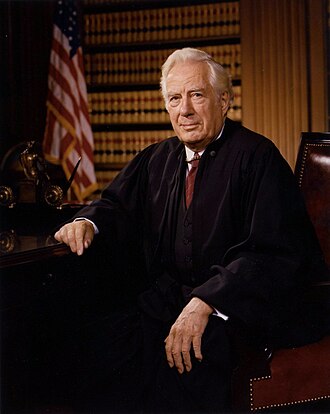
President Richard Nixon appointed Warren E. Burger as the 15th Chief Justice of the United States in 1969, expecting him to lead a conservative court. During the taping period, Burger's recorded conversations with Nixon covered topics like court strategy and mutual acquaintances. Ultimately, Burger authored the unanimous and pivotal 1974 Supreme Court decision in *United States v. Nixon*, which denied the president's claim of executive privilege and compelled him to release the tapes, hastening Nixon's resignation.
President Nixon held two distinct meetings in the Oval Office: the first with Turkish diplomat Targut Menemencioglu and his team to discuss geopolitical concerns in Pakistan, India, and Turkey, including the future of the Central Treaty Organization (CENTO); the second with Chief Justice Warren Burger, John Mitchell, and John Dean regarding judicial reform and the President's potential appearance at an American Bar Association event in London. During the first session, Nixon reaffirmed the importance of maintaining U.S. support for Pakistan and stability in the region despite domestic Congressional opposition. The subsequent meeting focused on the need to expedite the criminal justice system in the U.S. and coordinated scheduling for Law Day and judicial conferences.
President Nixon met with Chief Justice Warren E. Burger to discuss the upcoming National Conference on the Judiciary. Their conversation focused on the President's potential involvement, including remarks on legal reforms and the promotion of city and county-level judicial action. The dialogue also touched upon the historical legacy of John Marshall and Virginia's influence on the presidency, ultimately confirming Burger's support for the administration's judicial initiatives.
President Nixon consulted with staff and Chief Justice Warren E. Burger regarding the public announcement of Supreme Court Justice Hugo Black's sudden resignation. The participants coordinated a messaging strategy for press secretary Ronald Ziegler to handle media inquiries, specifically emphasizing that the President would seek the "best qualified" successor rather than committing to geographic or ideological litmus tests. The discussion also addressed the timeline of when the White House received Black's formal letter and the necessary coordination with Attorney General John Mitchell.
President Nixon and Chief Justice Warren E. Burger discuss the impending retirement of Supreme Court Justices Hugo L. Black and John M. Harlan due to their declining health. Nixon decides to send handwritten notes to both justices rather than organize formal events, acknowledging their inability to receive visitors. Additionally, the two touch upon the potential political fallout of the resignations and review Burger’s recent diplomatic travel to Yugoslavia and England, with Nixon encouraging further foreign engagement to foster international relations.
President Nixon and Chief Justice Warren E. Burger discuss the recent nominations of William H. Rehnquist and Lewis F. Powell, Jr. to the Supreme Court. Nixon expresses strong confidence in both men, characterizing Rehnquist as a tough, constitutionalist jurist and Powell as an eminent legal mind. Nixon specifically instructs Burger to reassure Powell that his vision issues should not preclude his service, urging him to focus on his deliberative role on the Court rather than administrative minutiae.
President Nixon called Chief Justice Warren E. Burger to exchange Christmas greetings and discuss the recent additions to the Supreme Court, Lewis F. Powell, Jr. and William H. Rehnquist. The President expressed his confidence in Rehnquist’s work ethic and emphasized that he viewed the judiciary as the "Burger Court" rather than the "Nixon Court." The conversation concluded with a brief exchange regarding the President's upcoming travel to Florida to meet with Prime Minister Eisaku Sato.
President Nixon and Chief Justice Warren E. Burger discuss their respective eulogies for the late J. Edgar Hoover ahead of an upcoming congressional memorial service. Burger emphasizes his intent to highlight Hoover’s commitment to the Bill of Rights, and the two coordinate the sharing of their speech drafts with White House staff to ensure thematic consistency. Additionally, the pair briefly touches upon Burger's ongoing health and his use of a whirlpool bath for physical therapy.
President Nixon met with Chief Justice Warren E. Burger to coordinate the handling of specific documentation or speech materials. The discussion focused on routing sensitive information to John Andrews, a staff member working within the Executive Office Building on a pending presidential speech. The brief exchange centered on administrative logistics and the secure transmission of these materials between the two parties.
President Nixon met with Chief Justice Warren E. Burger in the Oval Office to discuss the administrative and operational concerns of the Supreme Court, including court caseloads and legislative needs. The two explored potential future judicial appointments, strategies for addressing media criticism of the Court, and ideological shifts within the judiciary. Additionally, they reviewed international affairs, including Nixon's diplomatic opening to China, and analyzed the broader national political landscape heading into the 1972 election.
President Richard Nixon and Chief Justice Warren E. Burger engaged in a wide-ranging, informal conversation to exchange New Year's greetings and discuss their respective work habits. The two men touched upon judicial philosophy, specifically criticizing the 'redeeming social purpose' standard in pornography rulings, and shared views on the necessity of age limits for congressional members to ensure political renewal. Additionally, they coordinated logistical details for the upcoming 1973 presidential inauguration, confirming that Burger would administer the oath of office for both the President and Vice President.
President Nixon and Chief Justice Warren E. Burger engaged in a casual, wide-ranging discussion covering holiday activities, the complexities of judicial decision-making, and contemporary social issues. They also touched upon the ages of Congressional members and potential strategies for future Republican campaign leadership, including the appointments of George H.W. Bush and Bill Brock. The conversation concluded with administrative logistics regarding the upcoming inauguration and Burger’s role in administering the oaths of office.
Chief Justice Warren E. Burger initiated this call to offer personal support to President Nixon, acknowledging the political pressure surrounding the Watergate scandal. The two discussed the difficulty of ensuring fair trials for figures like H.R. Haldeman, John Ehrlichman, and John Mitchell amidst intense public scrutiny and media coverage. Nixon expressed frustration over his inability to oversee his subordinates more closely due to the demands of his foreign policy agenda, including relations with China, the Soviet Union, and the Vietnam War.
President Nixon met with Chief Justice Warren E. Burger for a brief exchange regarding the ongoing Watergate-related legal proceedings. Nixon expressed his concerns about the fairness of public trials, specifically referencing the impact of hearsay and the treatment of individuals like John Mitchell. The President also reflected on his administrative oversight, noting that he would have acted more decisively against overzealous subordinates had he been less focused on his presidential duties.