Mailliard, William S.
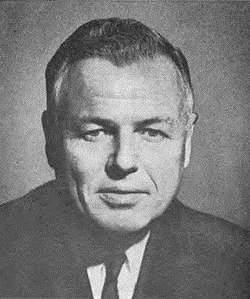
William S. Mailliard was a Republican member of the U.S. House of Representatives, representing San Francisco, California, throughout the Nixon administration's taping period. During this time, he was the ranking Republican member of the Foreign Affairs Committee and a senior member of the Merchant Marine and Fisheries Committee. He remained in his congressional seat until March 1974, when he resigned to accept an appointment from President Nixon.
President Nixon met with Vice President Agnew and a bipartisan group of Congressional leaders to announce a significant diplomatic breakthrough in the Strategic Arms Limitation Talks (SALT). Nixon informed the attendees of a forthcoming joint statement with the Soviet Union pledging to focus on limiting anti-ballistic missile (ABM) systems and certain offensive strategic weapons. While some lawmakers advocated for immediate unilateral U.S. defense cuts to demonstrate good faith, the President and his advisors successfully urged the leaders to maintain existing defense programs during the negotiations to avoid losing vital bargaining leverage.
President Nixon met with bipartisan Congressional leaders and senior administration officials to discuss the sensitive diplomatic initiative concerning the normalization of relations between the United States and the People’s Republic of China. The President and Henry Kissinger briefed the group on the nature of these confidential negotiations, emphasizing the necessity of absolute discretion to ensure the process remained successful. Nixon and his team requested that participants avoid speculation and maintain a unified, non-partisan front when speaking publicly about the delicate geopolitical implications of this shift in U.S. foreign policy.
President Nixon met with a bipartisan group of Congressional leaders to discuss his upcoming historic trip to the People's Republic of China. The President sought to build support for the mission, briefing the group on communication protocols with Peking and his strategy for managing the international and domestic implications of the visit. The discussion emphasized the goal of establishing a new dialogue with the PRC to foster long-term global stability and balance regional power dynamics.
President Nixon met with a bipartisan group of Congressional leaders to provide a firsthand report on his recent diplomatic mission to the People's Republic of China (PRC). During the briefing, the President discussed his interactions with Chinese leadership, the strategic importance of establishing communication channels, and the complex geopolitical dynamics concerning Taiwan and the broader Pacific region. The meeting emphasized the necessity of maintaining trust and diplomatic dialogue to navigate future international relations and manage long-term foreign policy objectives.
President Nixon met with Republican congressional leadership to coordinate strategy on key domestic and foreign policy issues during an election year. The discussion focused on distributing fact sheets regarding economic improvements, crime reduction, and unemployment to bolster support, while also strategizing to defeat restrictive anti-war amendments in Congress. Additionally, the President announced his decision to appoint an acting FBI director to ensure institutional stability following the death of J. Edgar Hoover, aiming to shield the bureau from partisan political controversy.
President Nixon held a large-scale photographic session in the Oval Office with numerous Republican senators, representatives, and congressional candidates. The event was coordinated by technical staff to capture official images of the President with party members. Following the main group session, Clark MacGregor remained for a brief private discussion with the President.
President Nixon met with a bipartisan group of Congressional leaders to provide a detailed briefing on the recently finalized Vietnam Peace Agreement and its implementing protocols. Henry Kissinger explained the strategic nuances of the agreement, including the status of North and South Vietnam, the mechanisms for the International Control Commission, and the timeline for the withdrawal of U.S. forces and the release of prisoners of war. The President emphasized the necessity of bipartisan Congressional support to ensure the agreement's stability and signaled that the administration would work with Congress to frame a positive resolution regarding the end of the war.
President Nixon met with Vice President Agnew and a bipartisan group of Congressional leaders to outline the administration's proposed foreign trade legislation. The discussion focused on securing presidential authority to negotiate trade agreements, implementing safeguards for domestic industries, and establishing pension and unemployment insurance reforms. Nixon emphasized the necessity of shifting away from a 'one-way street' trade policy to protect American workers and leverage better terms with international partners, while urging caution against attaching human rights conditions to Most Favored Nation (MFN) status for the Soviet Union to avoid jeopardizing broader diplomatic and arms control initiatives.
President Nixon met with Vice President Agnew, Secretary of State Rogers, USAID Administrator John A. Hannah, and a bipartisan group of Congressional leaders to secure support for the administration's foreign aid and security assistance requests. The discussion covered the implementation of the Nixon Doctrine, the strategic importance of military and development aid to maintain stability in Southeast Asia, the Middle East, and Latin America, and the necessity of burden-sharing with allies. Nixon emphasized that maintaining U.S. strength and diplomatic engagement was vital for ongoing negotiations regarding arms reduction and global peace, warning against unilateral reductions that could weaken the U.S. negotiating position.
President Nixon met with bipartisan Congressional leaders, Vice President Agnew, and key cabinet members to discuss U.S. foreign policy developments in Latin America, Southeast Asia, and Europe. Secretary of State William Rogers briefed the group on his recent tour of eight Latin American nations, emphasizing improved diplomatic relations despite complex issues regarding oil, inflation, and expropriation. Henry Kissinger provided an update on ongoing negotiations in Paris aimed at reinforcing the Vietnam ceasefire, while he and the President outlined a new strategy for strengthening Atlantic alliances, stressing the need to link economic, political, and defense policies to ensure future international stability.