Goldwater, Barry M.
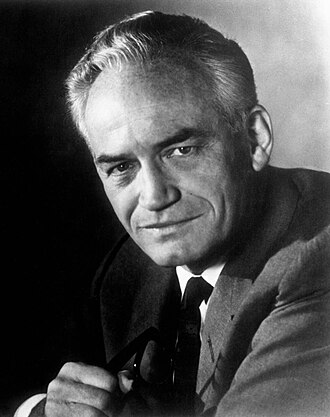
Barry M. Goldwater, a Republican Senator from Arizona, served in the U.S. Senate throughout the entire Nixon administration. During the White House taping period, he was a prominent conservative voice in Congress. Although he and President Nixon were political allies, Goldwater later played a key role in advising the president to resign in the face of the Watergate scandal in August 1974.
President Nixon met with a group of Republican senators and key advisors, including Henry Kissinger, to discuss the political landscape surrounding the Vietnam War and national defense policy. The conversation focused on the erosion of public support for the war, the impact of various congressional anti-war resolutions, and the importance of maintaining American preeminence despite shifting domestic and international pressures. The participants strategized on how to manage the political fallout of the Vietnamization policy and addressed concerns regarding defense preparedness and the administration's foreign policy initiatives in the Soviet Union and China.
President Nixon met with his staff to orchestrate a coordinated public relations and legal counter-offensive against the New York Times regarding the publication of the Pentagon Papers, framing the leak as the trafficking of stolen goods and an act of providing aid and comfort to the enemy. He subsequently consulted with Senator Barry Goldwater and Clark MacGregor to discuss congressional support for the administration's stance on the war and security, while exploring ways to leverage Goldwater’s influence to shift the narrative. The meeting concluded with a broader review of foreign policy strategies, including relations with China, the Soviet Union, and the status of the U.S. aircraft industry.
President Nixon calls Senator Barry Goldwater to express appreciation for Goldwater's recent television appearance supporting the administration's position. The two discuss the political landscape in Congress, specifically praising Representative F. Edward Hébert for his steadfast leadership in the House of Representatives. Nixon emphasizes the importance of Hébert and Senator John Stennis in resisting legislative pressure during upcoming House-Senate conference negotiations.
President Nixon met with Ronald Ziegler to coordinate media strategy regarding a new U.S.-Turkey agreement aimed at curbing the international heroin trade. The conversation focused on utilizing radio and television coverage to emphasize the administration's success in cutting off the primary source of Turkish opium. Nixon directed staff to frame this development as a major breakthrough in his broader worldwide offensive against narcotics, while also discussing efforts to garner political support from congressional allies.
President Nixon and George Shultz met with John Connally to discuss the resolution of the steel and rail strikes, emphasizing the need for an administration-led push for Congressional action on labor legislation. The participants explored a sweeping economic program that could include an import tax, investment tax credit, federal spending cuts, and a temporary wage-price freeze to combat inflation and balance-of-payments issues. They also coordinated strategy regarding an upcoming Senate vote on the Lockheed loan guarantee bill and discussed public relations for the administration's economic and social initiatives.
President Nixon and Senator Barry Goldwater discuss the political stakes of an upcoming Lockheed loan guarantee amendment, with Nixon highlighting the potential economic fallout for Southern California's unemployment rate. Despite acknowledging Goldwater's principled opposition to the government intervention, Nixon emphasizes the necessity of the legislation to avoid further economic and political distress. The conversation concludes with a discussion regarding U.S. diplomatic relations with the People's Republic of China, with Goldwater expressing support for the administration's strategy to maintain Taiwan's status in the United Nations.
President Nixon and Senator Barry Goldwater discuss the political implications of New York City Mayor John V. Lindsay’s shift in party affiliation and the associated frustrations within the Republican Party. They touch upon the views of Ronald Reagan and the historical context of supporting Nelson Rockefeller, reflecting a shared antipathy toward Lindsay’s political trajectory. The conversation concludes with brief personal pleasantries regarding the President’s upcoming travel to California.
Senator Barry Goldwater called President Nixon to express support for the President’s recent political rhetoric, specifically targeting Senator Edward Kennedy’s comments on Communism. The two discussed the potential 1972 presidential ambitions of Hubert Humphrey and the political damage done to Kennedy. Nixon also affirmed his commitment to appointing two conservative justices to the Supreme Court, highlighting William Rehnquist as a potential candidate despite potential pushback from the American Bar Association.
President Nixon initiated this call to express his appreciation for Senator Barry Goldwater’s recent public criticism of Senator Edward Kennedy. The discussion transitioned to the administration’s strategy for upcoming judicial appointments, with Nixon assuring Goldwater that he remained committed to nominating conservative candidates to the Supreme Court. They briefly evaluated potential nominees and discussed the challenges posed by the legal establishment and the ideological leanings of current justices.
President Nixon and Senator Barry Goldwater discussed Nixon's recent speeches in New York and Chicago, with a primary focus on the administration's stance on national defense and the necessity of the Amchitka nuclear test. Goldwater praised Nixon's firm position against disarmament, while the President emphasized the dangers posed by Soviet military growth and the failures of the McNamara era. They agreed on the need for the administration to provide Republican lawmakers with informational fact sheets to better defend these policies against environmentalist and congressional criticism.
Senator Barry Goldwater met with President Nixon to share positive feedback regarding the President's recent public appearances and to discuss their shared concerns about national defense. Goldwater recounted his recent speeches in which he defended the necessity of a strong military posture and dismissed environmentalist objections to defense testing. Nixon emphasized the urgent need to maintain U.S. military strength against Soviet advances, expressing frustration with Congressional efforts that he equated to disarmament.
President Nixon met with his senior advisors and Senator Barry Goldwater to discuss political strategy following a recent speech to the AFL-CIO convention. The participants reviewed the mixed public reaction to the address, analyzed the influence of media coverage, and coordinated efforts to neutralize political opponents such as George Meany and various Democratic rivals. They also touched upon legislative concerns, including campaign finance and pending appointments, while exploring ways to maintain the support of conservative allies and strengthen the administration's public relations efforts.
President Nixon met with Vice President Agnew and Republican congressional leaders to discuss strategy regarding his recent speech on Vietnam and the administration's upcoming FY 1973 budget. The President and Henry Kissinger briefed the attendees on the Vietnam peace negotiations, emphasizing that the U.S. had made comprehensive offers while denouncing North Vietnamese intransigence and political maneuvering. Economic advisors, including George Shultz and Herbert Stein, presented the administration's fiscal plans, highlighting the importance of balancing the budget while supporting a transition to a peacetime economy through controlled spending and wage-price stabilization. Participants agreed on the necessity of maintaining a firm stance on defense and economic policy to solidify public support and improve the administration's negotiating leverage.
President Nixon met with a bipartisan group of Congressional leaders to discuss his upcoming historic trip to the People's Republic of China. The President sought to build support for the mission, briefing the group on communication protocols with Peking and his strategy for managing the international and domestic implications of the visit. The discussion emphasized the goal of establishing a new dialogue with the PRC to foster long-term global stability and balance regional power dynamics.
President Nixon met with a bipartisan group of Congressional leaders to provide a firsthand report on his recent diplomatic mission to the People's Republic of China (PRC). During the briefing, the President discussed his interactions with Chinese leadership, the strategic importance of establishing communication channels, and the complex geopolitical dynamics concerning Taiwan and the broader Pacific region. The meeting emphasized the necessity of maintaining trust and diplomatic dialogue to navigate future international relations and manage long-term foreign policy objectives.
President Nixon and H. R. Haldeman engaged in an extensive review and refinement of the President's upcoming acceptance speech. The discussion focused on balancing the tone of the address, incorporating themes of peace and national leadership, and finalizing specific anecdotes, such as the story of Tanya Savicheva, to emphasize his foreign policy achievements. Additionally, they addressed campaign finance reporting issues involving Maurice Stans and the General Accounting Office, as well as strategies for highlighting the reduction in Vietnam casualty rates compared to the previous administration.
President Nixon and Senator Barry Goldwater discuss Goldwater's upcoming meeting with George Wallace, with the President requesting that he convey his personal well-wishes and offers of medical assistance to the wounded governor. The conversation shifts to the 1972 campaign, where they critique media allegations of Republican 'dirty tricks' as a non-issue outside of Washington. Goldwater proposes a strategy of using 'reverse English' by suggesting that Democratic operatives were responsible for the political mischief, to which Nixon encourages him to continue his aggressive campaign rhetoric.
President Nixon and Senator Barry Goldwater discuss the political landscape of the 1972 campaign and the ongoing allegations regarding "dirty tricks." Nixon expresses his gratitude for Goldwater's public support and effective criticism of political opponents. Additionally, the President conveys his personal concern for a wounded individual, promising full access to Veterans Affairs services and direct communication.
President Nixon met with a bipartisan group of Congressional leaders to provide a detailed briefing on the recently finalized Vietnam Peace Agreement and its implementing protocols. Henry Kissinger explained the strategic nuances of the agreement, including the status of North and South Vietnam, the mechanisms for the International Control Commission, and the timeline for the withdrawal of U.S. forces and the release of prisoners of war. The President emphasized the necessity of bipartisan Congressional support to ensure the agreement's stability and signaled that the administration would work with Congress to frame a positive resolution regarding the end of the war.
President Nixon met with Senator Barry Goldwater and White House staff for a photo opportunity and a brief discussion covering both official business and political scandal. Goldwater briefed the President on his research regarding foreign competition in the U.S. aviation market, emphasizing the need for American involvement in aircraft sales to Latin America. The conversation shifted to the ongoing Watergate scandal, with the participants comparing current political pressures to previous controversies involving Bobby Baker and Lyndon B. Johnson.