Kissinger, Henry A.
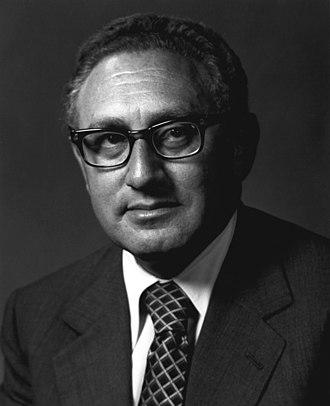
During the Nixon administration, Henry A. Kissinger served as the Assistant to the President for National Security Affairs from January 1969 through the end of Nixon's presidency, acting as the chief architect of U.S. foreign policy. Throughout the White House taping period (February 1971 to July 1973), he was captured extensively on tape advising the president on pivotal events such as the secret opening to China, détente with the Soviet Union, and the negotiation of the Paris Peace Accords. In September 1973, shortly after the taping system was dismantled, Kissinger was additionally appointed as Secretary of State, holding both powerful positions simultaneously until Nixon's resignation in August 1974.
What Kissinger talks about on the tapes
Vietnam War 628Foreign Policy 477Public relations 209People's Republic of China 138Congressional relations 135Diplomacy 122Press relations 92Soviet Union 90Military Strategy 81US-Soviet Relations 75Peace negotiations 74Economic policy 68
Conversations (1,504)
— Page 16 of 16President Nixon held a brief introductory meeting with West German Vice Chancellor and Foreign Minister Walter Scheel and his aide, Heinz Weiber, accompanied by Henry Kissinger. The discussion was limited to preliminary social exchanges and pleasantries. The group concluded the meeting by coordinating an arrangement for official photographs to be taken outside the Oval Office.
President Nixon, Henry Kissinger, and West German Foreign Minister Walter Scheel met to coordinate a unified Western strategy for the upcoming "Year of Europe" initiative. The participants discussed the importance of balancing Atlantic partnership with European cooperation, emphasizing the need for a substantive, philosophically grounded declaration rather than a mere procedural communique. They also explored leveraging the Soviet Union's interest in an all-European summit to secure diplomatic concessions, while stressing the importance of maintaining close, personal channels of communication with European allies—particularly France and Great Britain—to ensure a cohesive stance.
President Nixon and Henry Kissinger met to discuss the escalating political pressure of the Watergate investigation, specifically focusing on the Ervin Committee's demands for White House files and the recent testimony of John Mitchell and Richard Moore. Nixon and Kissinger strategized on how to maintain a firm stance against the committee's inquiries while managing the potential for a constitutional crisis. Additionally, they reviewed progress on the 'Year of Europe' foreign policy initiatives and discussed the optics of managing the President's current bout of viral pneumonia to garner public sympathy while maintaining a statesmanlike image.
President Nixon met with Henry Kissinger, Alexander Haig, and Ronald Ziegler to coordinate the public response to his health issues and the subsequent adjustments to his official schedule, including the potential cancellation of Zulfikar Ali Bhutto’s state visit. The participants discussed how to manage the optics of these changes to avoid political embarrassment while navigating the ongoing pressures of the Watergate investigation. Nixon and his advisors also weighed the implications of the Ervin Committee's proceedings and potential witness testimony on the administration's stability.