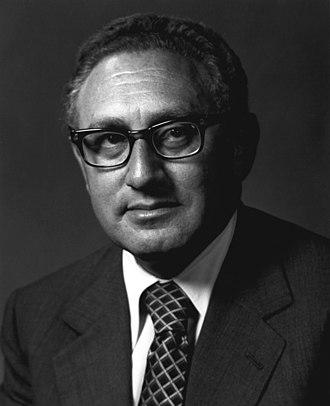
Kissinger, Henry A.
During the Nixon administration, Henry A. Kissinger served as the Assistant to the President for National Security Affairs from January 1969 through the end of Nixon's presidency, acting as the chief architect of U.S. foreign policy. Throughout the White House taping period (February 1971 to July 1973), he was captured extensively on tape advising the president on pivotal events such as the secret opening to China, détente with the Soviet Union, and the negotiation of the Paris Peace Accords. In September 1973, shortly after the taping system was dismantled, Kissinger was additionally appointed as Secretary of State, holding both powerful positions simultaneously until Nixon's resignation in August 1974.
What Kissinger talks about on the tapes
Vietnam War 628Foreign Policy 477Public relations 209People's Republic of China 138Congressional relations 135Diplomacy 122Press relations 92Soviet Union 90Military Strategy 81US-Soviet Relations 75Peace negotiations 74Economic policy 68
Conversations (1,504)
— Page 15 of 16In this meeting, President Nixon and John Ehrlichman coordinate the administration's response to the escalating Watergate crisis, focusing on the potential appointment of a special prosecutor and the necessity of obtaining sworn statements from White House staff to counter the Ervin Committee's investigation. They discuss the strategic timing of releasing these statements to preempt forthcoming testimony and manage political fallout from key Republicans like Barry Goldwater. Additionally, the participants deliberate over the potential political ramifications of base closures in various states and the necessity of securing H.R. Haldeman's cooperation during the unfolding congressional hearings.
President Nixon and Henry Kissinger discussed adjustments to the President's upcoming schedule, specifically coordinating meetings with Jewish leaders and congressional representatives around Passover constraints. They also addressed the importance of maintaining an active role in National Security Council briefings and noted progress regarding Strategic Arms Limitation Talks (SALT). Kissinger emphasized that these strategic engagements were intended to stabilize foreign policy optics amid heightened tensions in the Middle East.
President Nixon and members of the National Security Council met to discuss the strategic importance of Mutual Balanced Force Reductions (MBFR) amidst growing congressional pressure for unilateral U.S. troop cuts. The discussion focused on maintaining a credible conventional defense posture in Europe to avoid a reliance on "tripwire" nuclear escalation, which Nixon and his advisors agreed would be untenable given the current parity in nuclear capabilities between the U.S. and the Soviet Union. Participants ultimately reached a consensus to pursue negotiations that link force improvements with potential reductions while resisting domestic isolationist trends and preserving NATO's operational cohesion.
President Nixon met with NATO Secretary General Joseph M. A. Luns, accompanied by Donald Rumsfeld and Henry Kissinger, to conduct diplomatic discussions regarding the North Atlantic Treaty Organization. The meeting commenced with a formal photograph session and included an exchange of gifts, specifically cufflinks. While the majority of the policy discussions remain classified, the interaction served as a high-level engagement to maintain relations with the NATO leadership.
President Nixon met with a delegation of Japanese governors and officials to discuss the strengthening of U.S.-Japan relations through localized diplomatic exchanges. The participants highlighted the importance of fostering ties beyond the national government level, specifically between state and local leaders, to better connect with the general public in both countries. Discussion touched upon the shift toward friendly economic competition and the long-term historical importance of bilateral cooperation. The meeting concluded with a photo opportunity in the Rose Garden to celebrate the spirit of international friendship.
In this meeting, President Nixon discussed the ongoing Watergate investigation with John Ehrlichman, focusing on strategies for dealing with the Ervin Committee and managing testimony. Following Ehrlichman's departure, Henry Kissinger joined the President to review foreign policy concerns, specifically regarding potential military responses to North Vietnamese violations in South Vietnam. The participants also evaluated the political stability of Soviet leader Leonid Brezhnev and discussed the progress of negotiations on a nuclear treaty ahead of a potential summit.
President Nixon, Henry Kissinger, and Joseph Sisco met to discuss a confidential diplomatic strategy for managing Middle East tensions through both formal channels and back-channel negotiations. The participants emphasized the necessity of maintaining secrecy and building psychological deterrence to manage Egyptian expectations and prevent military escalation, despite the intransigence of the Israeli government. Additionally, the President and Kissinger reviewed Sisco's potential future assignments, ultimately suggesting that his skills were best utilized in Washington to continue his active role in Middle East diplomacy rather than an ambassadorship in Moscow.
President Nixon and Henry Kissinger discuss diplomatic appointments, administration strategy, and foreign policy matters during a telephone call. They review potential ambassadorial assignments for Moscow, Thailand, and Pakistan, while also coordinating the President's upcoming schedule and meetings. Furthermore, they deliberate on Vietnam strategy, including the necessity of a coordinated planning process, and assess ongoing negotiations with the Soviet Union regarding the upcoming summit.
President Nixon met with his senior advisors and staff to manage the escalating Watergate crisis and coordinate a response to the looming threat of grand jury indictments. The participants debated potential strategies for compelling John Mitchell to testify, considered whether key White House staff should resign or remain in their positions, and assessed the risks of congressional investigations. Nixon emphasized the necessity of seizing the initiative and establishing a narrative of presidential transparency and cooperation to protect the integrity of his administration.
President Nixon and H. R. Haldeman met to discuss the urgent need for a strategic public relations move regarding the escalating Watergate scandal. They reviewed the growing pressure from the U.S. Attorney’s office and problematic accounts provided by John Dean, specifically regarding the destruction of evidence and the alleged involvement of Charles Colson and L. Patrick Gray. Nixon and Haldeman concluded that the administration needed to proactively disclose information by 3:00 p.m. to regain control of the narrative before further leaks or accusations from prosecutors occurred.
President Nixon and Henry Kissinger discuss the escalating political crisis surrounding the Watergate scandal, specifically debating the potential resignation or termination of top aides H.R. Haldeman, John Ehrlichman, and John Dean. Nixon expresses frustration over the situation while emphasizing the need for hard evidence before taking any personnel actions, rejecting advice from Leonard Garment to act prematurely. Additionally, they coordinate strategy for managing bipartisan congressional leaders regarding Soviet Jewish emigration and the importance of maintaining foreign policy initiatives despite the domestic political turmoil.
President Nixon met with Vice President Agnew and a bipartisan group of Congressional leaders to address the nation's growing energy needs and proposed legislative solutions. The discussion focused on mitigating potential future shortages by balancing environmental protections with domestic production efforts, including natural gas deregulation, expanded offshore oil leasing, and the completion of the Alaska pipeline. The President and his cabinet members emphasized the importance of developing a cohesive national energy strategy to maintain independence and discussed the foreign policy implications of relying on foreign oil exports. The administration sought Congressional cooperation for pending energy legislation and signaled an intent to increase research and development funding for alternative fuel sources like coal and nuclear power.
President Nixon and Italian Prime Minister Giulio Andreotti, joined by Henry Kissinger, held a wide-ranging discussion on international trade, security policy, and geopolitical strategy. The conversation focused on managing trade relations with Japan, mitigating Soviet-led propaganda efforts against Western multinational corporations, and navigating the complexities of European defense burden-sharing and the Mutual and Balanced Force Reductions (MBFR). The participants also discussed the political situation in Argentina and the importance of maintaining strong NATO cohesion in the face of perceived radicalism and global instability.
President Nixon and Henry Kissinger met to coordinate their strategy regarding Jewish emigration and relations with the Soviet Union, specifically aiming to address political pressure from figures like Senator Henry Jackson. Concerned about potential confrontations with activists, the President decided to cancel a scheduled meeting with Jewish leaders to avoid hostile criticism. They also discussed managing the schedule of Rainer Barzel to prioritize meetings with Congressional leaders over ceremonial press opportunities.
President Nixon met with German politician Rainer Barzel and Erich Feldweg to discuss the importance of Western unity and the maintenance of NATO forces. The participants emphasized the need for strong spiritual leadership to counter disillusionment among Western youth and the intellectual elite, whom they characterized as being overly soft toward adversaries. Nixon outlined his upcoming working trip to Europe, expressing his intent to move beyond ceremonial gestures and establish a new, robust structure for Western international relations.
President Nixon met with his economic advisors and cabinet members to discuss how to manage persistent inflation and public frustration with the economy following the recent passage of the Economic Stabilization Act. Arthur Burns and others proposed various policy adjustments, including a potential return to some Phase 2-style controls like pre-notification, while Roy Ash and Herbert Stein argued for staying the course with Phase 3 to avoid further distorting the market. Ultimately, the administration emphasized the importance of fiscal restraint and maintaining a consistent long-term strategy rather than implementing impulsive or overly restrictive controls that could trigger a recession.
President Nixon met with his economic advisors, including George Shultz, Arthur Burns, and Roy Ash, to discuss the administration's ongoing struggle with inflation and the potential implementation of Phase III economic stabilization measures. The participants analyzed the political and psychological impact of price controls, the efficacy of pre-notification requirements for major corporations, and the necessity of maintaining public confidence amid rising prices. Nixon emphasized the importance of fiscal discipline, particularly regarding the federal budget, while rejecting broad, disruptive price freezes in favor of targeted economic management.
President Nixon and Henry Kissinger discussed the mounting political pressure from the Watergate scandal and the potential necessity of forcing the resignations of top aides H.R. Haldeman and John Ehrlichman. Kissinger advised that the President must proactively and "brutally" distance himself from his staff to preserve the integrity of the presidency and ensure the continued conduct of foreign policy. The two explored potential personnel replacements, such as Kenneth Rush or James T. Lynn, and considered a strategy of suspending lower-level staff to create a framework for the eventual departure of senior officials.
President Nixon and his national security advisor, Henry Kissinger, met with a delegation of American Jewish leaders to discuss the status of Soviet Jewry and the persistent obstacles regarding emigration from the USSR. The President urged the group to avoid public confrontation and support for the Jackson-Vanik Amendment, arguing that legislative mandates would jeopardize his delicate, high-level diplomatic channels with Soviet leadership that had already yielded progress on exit visas. Nixon maintained that his quiet, personal, and direct pressure on the Soviets remained the most effective tool for protecting human rights without triggering a broader geopolitical crisis.
President Nixon and Henry Kissinger held a brief meeting to discuss a recent conversation Kissinger had with Dennis Bassett. Kissinger expressed his high regard for Bassett, describing him as a gentleman. The discussion served as a short briefing regarding these personal interactions rather than a substantive policy matter.
President Nixon and Henry Kissinger discuss the political fallout regarding Jewish leaders' pressure on U.S.-Soviet relations, specifically concerning the potential cancellation of an upcoming summit. Nixon expresses extreme frustration with the influence of Jewish groups and the Jackson-Vanik Amendment, vowing to publicly blame American Jewish leaders if their advocacy causes the summit to collapse. Both participants agree that the administration must prioritize American national interests over these specific lobbying efforts, even at the risk of inciting antisemitic sentiment.
President Nixon and Henry Kissinger met briefly in the Old Executive Office Building to discuss concerns regarding the security and integrity of their private communications. The President expressed immediate apprehension about potential surveillance or interference with his ability to hold confidential conversations. No substantive policy decisions were reached during this short interaction, which focused primarily on the vulnerability of the taping environment.
President Nixon and Henry Kissinger met to discuss international affairs and the unfolding Watergate crisis. The pair reviewed Kissinger’s upcoming speaking engagements, European trip preparations, and contingency military options for Vietnam, including potential bombing campaigns. Regarding Watergate, they deliberated on the political necessity of maintaining a unified administration response, the potential departures of high-level staff like H.R. Haldeman and John Ehrlichman, and the challenge of managing the crisis while preserving the presidency. Nixon emphasized his commitment to a thorough internal investigation, framing it as a standard of integrity superior to previous administrations.
In this meeting, President Nixon, H.R. Haldeman, and John Ehrlichman discuss the intensifying Watergate investigation and the shifting legal strategies of John Dean, who had recently changed attorneys. The participants focus on insulating the White House from culpability, with Haldeman and Ehrlichman detailing their lack of direct involvement and asserting that Dean had acted as an impediment to their previous efforts to produce a full report on the scandal. Additionally, they discuss the growing political risks regarding administrative oversight and the danger of accepting broad responsibility for campaign actions.
President Nixon and Henry Kissinger met to coordinate their upcoming schedules and address pressing diplomatic priorities. The brief discussion focused on finalizing arrangements for an important, forthcoming meeting between the two leaders. No specific policy decisions were recorded during this brief exchange, which functioned primarily as a logistical check-in regarding the President’s calendar.
Henry A. Kissinger met with an unidentified individual in the Oval Office to briefly discuss a matter involving a significant duration of time. Given the extremely limited duration of the recorded exchange, no specific policy decisions or substantive action items were documented. The conversation concluded abruptly within one minute, leaving the primary context of the meeting unclear.
President Nixon and Henry Kissinger met to review a wide range of foreign policy initiatives and administrative personnel matters. Key topics included the status of upcoming diplomatic efforts with North Vietnam, preparations for Kissinger’s trip to Moscow, and the scheduling of the US-USSR summit. They also discussed logistical arrangements for John Connally’s world tour, concerns regarding federal bureaucracy following H.R. Haldeman’s departure, and the cancellation of Emperor Hirohito’s visit to the United States.
President Nixon and Henry Kissinger spoke via telephone to discuss the ongoing political damage caused by the Watergate scandal and strategies for managing the fallout. Nixon expressed his intent to replace Attorney General Richard Kleindienst with Elliot Richardson and to appoint a new, aggressive FBI director to restore order. The President also emphasized that any past FBI surveillance related to national security leaks—specifically concerning the Daniel Ellsberg case—must be staunchly defended as a necessary executive action.
Henry Kissinger called President Nixon to express support following a speech regarding the Watergate scandal, framing the President's actions as courageous and historically significant. Nixon dismissed the political turmoil and criticism as temporary "hysteria" and insisted that his primary focus remained on maintaining world peace. The two men briefly discussed the necessity of ignoring the scandal and confirmed the scheduling of Kissinger’s upcoming trip to Moscow.
President Nixon and Henry Kissinger met to coordinate the agenda for an upcoming visit with West German Chancellor Willy Brandt. The discussion centered on discouraging European efforts to weaken defense ties with the United States via the European Security Conference, with Nixon emphasizing the importance of keeping Europe aligned with American security interests. This strategic messaging was intended to bolster Brandt’s domestic political position against leftist factions within his own government.
President Nixon met with West German Chancellor Willy Brandt to discuss the future of U.S.-European relations, specifically addressing NATO, the "Year of Europe," and strategies for maintaining a unified front amid emerging U.S. isolationism. The conversation covered sensitive geopolitical issues including the Mutual and Balanced Force Reduction (MBFR) negotiations, the potential for a formal summit in Brussels, and the ongoing complexities of Middle Eastern peace efforts and global energy dependence. Both leaders emphasized the necessity of managing domestic public opinion while maintaining a firm, realistic posture toward the Soviet Union to prevent the division of the Western alliance.
President Nixon and Henry Kissinger discuss the potential appointment of David Packard to a high-level position, evaluating his qualifications, political alignment, and rapport with Kissinger. The conversation also covers the success of Nixon’s recent meetings with West German Chancellor Willy Brandt and Egon Bahr, including the tone of Nixon's comments regarding the Soviet Union. Nixon concludes by reinforcing the administration's commitment to upcoming Strategic Arms Limitation Talks (SALT), instructing Kissinger to maintain high morale and execute their diplomatic strategy.
Henry Kissinger calls President Nixon to offer praise for a recent toast and to discuss the political fallout from the Watergate scandal. The two reflect on the necessity of the President’s recent televised address and the resignation of top aides H.R. Haldeman and John Ehrlichman. Nixon expresses resolve to shift focus back to national governance, while Kissinger encourages the President to maintain personal support for his outgoing staff.
President Nixon and Henry Kissinger met to coordinate foreign policy messaging and prepare for upcoming diplomatic engagements, specifically Kissinger’s trip to Moscow to negotiate bilateral agreements and a nuclear treaty. The conversation addressed the logistical handling of a foreign policy report and the necessity of maintaining operational secrecy regarding Vietnam negotiations despite internal bureaucracy. Furthermore, they discussed the political fallout of the Watergate scandal, specifically evaluating the appointment of Elliot Richardson and the public perception of the administration's ongoing investigations.
President Nixon met with West German Chancellor Willy Brandt, along with their respective foreign ministers and advisors, to discuss geopolitical strategy, international trade, and energy policy. The participants engaged in a detailed review of East-West relations, focusing on Soviet adherence to the Four Power Agreement regarding Berlin, strategies for the Conference on Security and Cooperation in Europe (CSCE), and West Germany’s upcoming entry into the United Nations. Additionally, the group addressed the necessity of coordinating energy and oil policies with Japan and the European Community, while exploring diplomatic paths for a Middle East peace settlement despite the complexities surrounding Israeli elections and Soviet involvement.
President Nixon met with Representative Otto Passman, Dr. John Hannah, and other administration officials to strategize on securing passage of the Foreign Assistance Act in Congress. Passman, a key figure in the House Appropriations Committee, advised the President that the administration must shift from a grant-based aid model to a loan-based structure to ensure congressional support, particularly regarding potential aid to North Vietnam. Nixon and his team agreed to adopt this 'loan-first' strategy—which Passman framed as the 'Passman-Nixon Plan'—to navigate resistance and manage upcoming legislative hearings.
President Nixon and Henry Kissinger met to discuss managing the fallout from the unfolding Watergate scandal, specifically focusing on the roles of staff members like David Young and the implications of past national security wiretaps. Kissinger expressed concerns regarding the lack of administrative discipline and the resulting leaks, advocating for more traditional procedures to involve the State Department in ongoing foreign policy negotiations. They also discussed personnel challenges, including the transition of Alexander Haig and the potential departure of Secretary of State William Rogers, while coordinating their messaging strategy for upcoming press briefings and foreign policy initiatives.
President Nixon and Henry Kissinger met to discuss high-level personnel appointments and administrative staffing, specifically evaluating candidates like David Packard and Kenneth Rush for key roles. The discussion centered on Packard's potential hesitance regarding his stock holdings and his stance on U.S. troop withdrawals from Europe, as well as the political implications of considering John B. Connally. Ultimately, Nixon and Kissinger agreed that Kissinger would pressure Packard to accept a position before his departure, with the understanding that Rush would serve as the secondary choice for the assignment.
President Nixon and Henry Kissinger met to discuss urgent personnel restructuring within the White House, specifically focusing on the appointment of a new Chief of Staff and the potential role of Alexander M. Haig, Jr. They evaluated the necessity of balancing domestic responsibilities against foreign policy demands while ensuring a smooth transition for these administrative changes. Additionally, the President reviewed his recent meeting with David K. E. Bruce, emphasizing the importance of maintaining secure communication channels and minimizing bureaucratic interference from the State Department.
President Nixon met with Henry Kissinger and Alexander Haig to discuss the fallout from the Watergate scandal, specifically comparing the current crisis to the Sherman Adams controversy during the Eisenhower administration. Following Kissinger's departure, Nixon and Haig deliberated on Haig taking over staff management duties to replace H.R. Haldeman. They ultimately decided that Haig would transition into an interim role as Chief of Staff, with Haig tasked to handle the logistics of the appointment while keeping his military rank.
President Nixon met with Ronald Ziegler to strategize the White House response to the escalating Watergate scandal, specifically addressing negative press coverage and the potential for a formal election reform initiative. The discussion focused on shifting public attention away from the scandal by emphasizing the administration's foreign policy achievements and the need to professionalize government communications through the Republican National Committee. Nixon directed Ziegler to pursue a strategy of full disclosure regarding the administration’s actions while framing Watergate within the context of previous political wiretapping practices and media manipulation.
In this meeting, President Nixon, Henry Kissinger, and Secretary of State William Rogers discussed the administration's foreign policy strategy amidst the growing pressure of the Watergate scandal. The participants focused on preparing for an upcoming Soviet summit, managing ongoing negotiations regarding the Paris Peace talks and Cambodia, and evaluating personnel changes within the State Department. Despite concerns about domestic distractions and Congressional opposition, they emphasized the necessity of maintaining a firm stance in international negotiations, particularly regarding nuclear arms control and Southeast Asian stability.
President Nixon and Henry Kissinger discuss the fallout from Kissinger's recent press briefing regarding national security wiretaps and his access to intelligence reports during the Watergate scandal. Kissinger reviews the success of his briefing, which aimed to refocus public attention on the upcoming Soviet summit and Strategic Arms Limitation Talks (SALT), while Nixon emphasizes that the administration’s wiretap policies were authorized and less extensive than those of the Kennedy administration. The two conclude by agreeing that the administration should resist releasing a list of wiretapped individuals to protect innocent parties and maintain focus on key foreign policy objectives.
President Nixon and Henry Kissinger met to discuss the logistics and morale surrounding Kissinger’s upcoming diplomatic trip to Paris. The President reflected on his recent meeting with Haile Selassie and offered encouragement to Kissinger, emphasizing the significance of his mission despite the administration's broader political stresses. The exchange served primarily to bolster Kissinger’s confidence and confirm the scheduling for his departure.
President Nixon and Henry Kissinger met to discuss the mounting political pressures of the Watergate scandal and the administration's ongoing foreign policy objectives. Nixon expressed frustration over the scandal's impact on his staff and presidential authority, while Kissinger urged the President to remain resilient, citing upcoming diplomatic successes such as the Soviet summit and nuclear treaties as the means to shift public focus. They also explored potential strategies for managing the fallout, including the possibility of a political counterattack against the press and Congress once the initial intensity of the crisis subsided.
President Nixon and Henry Kissinger discuss the positive progress in Vietnam and Laos negotiations, noting that the status of talks is better than the original agreement. They coordinate a forthcoming press briefing for Kissinger to publicly discuss the President’s upcoming meeting with Georges Pompidou, the US-USSR summit, and the status of Vietnam negotiations. Additionally, Nixon emphasizes the importance of the administration's recent Watergate "White Paper" as a necessary measure to assert the national security implications of the scandal.
President Nixon and Henry Kissinger discuss the need to maintain morale following the public disclosure of national security information. Nixon emphasizes the necessity of the recent decision to release the material despite the political sensitivity. They agree to postpone a more detailed discussion regarding upcoming summer messaging and the status of their diplomatic progress until a later time.
President Nixon and Vice President Agnew met with the Cabinet and senior staff to discuss major foreign and domestic policy priorities and internal administration management. The discussion centered on upcoming diplomatic summits with Leonid Brezhnev and Georges Pompidou, negotiations with North Vietnam regarding the ceasefire, and economic challenges including inflation and energy policy. Additionally, General Alexander Haig briefed the Cabinet on the administration's efforts to stabilize internal governance, improve relations with Congress, and manage the ongoing political fallout from the Watergate scandal.
President Nixon and Henry Kissinger met to discuss the administration's foreign policy challenges, specifically the ongoing Vietnam peace negotiations, the upcoming summit with France's President Pompidou, and the status of a potential nuclear war prevention treaty with the Soviet Union. Amid these international efforts, they addressed the mounting domestic political pressure from Watergate, characterizing the scandal as a politically motivated assault by liberals and the media intended to undermine the President's authority. Nixon and Kissinger agreed on the necessity of maintaining strict secrecy in diplomacy and decided that the President should adopt a more aggressive public stance to regain control of the political narrative.
President Nixon met with Secretary of State William Rogers, UN Ambassador John Scali, and National Security Advisor Henry Kissinger to discuss international affairs and the mounting pressure of the Watergate scandal. The conversation covered progress on foreign relations, including Rogers's recent trip to Latin America and planned diplomatic messaging for the Middle East, while Nixon expressed frustration with the administration's political paralysis and persistent negative media coverage. Nixon analyzed the unfolding Watergate investigations, including the role of former aides, the potential for grand jury testimony, and the necessity of managing public perceptions and congressional hearings to protect the presidency.
President Nixon met with bipartisan Congressional leaders, Vice President Agnew, and key cabinet members to discuss U.S. foreign policy developments in Latin America, Southeast Asia, and Europe. Secretary of State William Rogers briefed the group on his recent tour of eight Latin American nations, emphasizing improved diplomatic relations despite complex issues regarding oil, inflation, and expropriation. Henry Kissinger provided an update on ongoing negotiations in Paris aimed at reinforcing the Vietnam ceasefire, while he and the President outlined a new strategy for strengthening Atlantic alliances, stressing the need to link economic, political, and defense policies to ensure future international stability.
President Nixon met with Henry Kissinger and a delegation of journalists from the People's Republic of China to discuss the ongoing normalization of relations between the two nations. Emphasizing the importance of mutual communication, Nixon highlighted the role of the press in fostering understanding and reaffirmed his commitment to building a constructive relationship with Chinese leadership. During the visit, the President presented the delegation with commemorative pens and expressed his personal desire to visit China again during his second term.
President Nixon met with Ronald Ziegler and Henry Kissinger to discuss press strategy, ongoing Watergate inquiries, and the management of presidential papers, before transitioning to a formal meeting with Huang Chen and Chi Ch’ao Chu of the People's Republic of China. During the session with the Chinese representatives, the President reaffirmed his commitment to strengthening US-PRC relations, emphasizing mutual sovereignty and strategic cooperation. Nixon also sought to assure the Chinese leadership that his upcoming summit with Leonid Brezhnev would not be detrimental to PRC interests, and he solicited their assistance in facilitating a peace agreement in Cambodia.
President Nixon and Henry Kissinger discuss plans to counter Watergate-related criticism by leaking records of extensive wiretapping conducted during the Kennedy and Johnson administrations. Nixon asserts that Bobby Kennedy ordered significantly more illegal wiretaps than the Nixon administration and intends to publish the names of those surveilled to expose political hypocrisy. Additionally, the pair briefly reviews the positive international press reception regarding the President’s recent foreign policy initiatives, including the Shanghai communique and Soviet relations.
President Nixon and Henry Kissinger discuss the favorable reception of Nixon's recent trip to Iceland, viewing it as a strategic success that elevates his stature and serves as a vital distraction from the ongoing Watergate scandal. Kissinger reports that the international press coverage is improving and that he plans to conduct background briefings to solidify the trip's accomplishments, particularly regarding the 'Year of Europe.' Meanwhile, Nixon characterizes the Watergate hearings as a partisan political fight and expresses confidence that the administration has weathered the worst of the fallout following the departures of H.R. Haldeman and John Ehrlichman. Additionally, the pair coordinates a media strategy for the upcoming announcement of a Vietnam agreement, ensuring they maximize positive publicity through simultaneous briefings with Congressional leaders.
President Nixon and Henry Kissinger met to coordinate their upcoming schedules and confirm logistical arrangements for an engagement the following day. The brief exchange focused on finalizing the timing of their future meetings to ensure they had sufficient time to discuss ongoing policy matters. No major policy decisions were reached, as the conversation served primarily as an administrative touchpoint between the President and his National Security Advisor.
President Nixon and Henry Kissinger coordinated their messaging strategy for upcoming diplomatic briefings, including a June 5 press briefing and a June 7 meeting with bipartisan Congressional leaders. The two discussed the significant diplomatic implications of a prompt, joint invitation from Mao Zedong and Chou En-lai regarding a potential visit to the United States. Furthermore, they reviewed the status of Vietnam peace negotiations in Paris and expressed optimism that public sentiment regarding the Watergate scandal was beginning to shift in their favor.
President Nixon met with Vice President Agnew and Republican congressional leadership to solidify legislative strategy and enhance communication between the White House and Capitol Hill. Key discussions included Henry Kissinger’s briefing on recent negotiations in Iceland regarding the 'Year of Europe' and the progress of the Vietnam Peace Accord. The group also addressed the need for improved coordination on pending legislation, political appointments, and the management of vetoes to maintain party unity in the face of domestic challenges.
President Nixon and Henry Kissinger met to coordinate the final details of upcoming Vietnam peace negotiations and the logistics of a summit with Leonid Brezhnev. The discussion focused on the delicate status of the South Vietnamese government's participation and the necessity of managing Congressional expectations during a briefing on the agreements. Amidst the pressure of the Watergate scandal and ongoing media criticism, the two men discussed strategies for maintaining the administration's foreign policy momentum and projecting public confidence.
President Nixon and Henry Kissinger discuss the logistical and security arrangements for Soviet leader Leonid Brezhnev’s upcoming visit to San Clemente. Nixon emphasizes the site's suitability, noting its controlled environment on a military base, while Kissinger highlights the Soviet delegation’s significant concerns regarding security and reported plots. The two agree to resolve the site issue by the following day to finalize travel arrangements.
President Nixon and Henry Kissinger discuss logistics and security arrangements for an upcoming trip, focusing on the necessity of maintaining a strictly controlled itinerary. The two weigh the potential security risks of landing at specific bases and whether such details should be disclosed publicly. They conclude the brief exchange by confirming departure times and reaffirming the need for operational discretion.
President Nixon and Henry Kissinger discuss the final preparations for Leonid Brezhnev's upcoming visit, confirming agreements on nuclear arms, SALT, and peaceful uses of atomic energy. Kissinger briefs the President on positive developments in Vietnam negotiations, noting that Chinese rhetoric regarding Laos and Cambodia suggests potential diplomatic leverage against North Vietnam. They also address security concerns for the summit and coordinate the schedule for briefing materials and upcoming public announcements.
President Nixon met with his senior advisors and Vice President Spiro Agnew to discuss foreign policy, the recent national price control address, and the growing political fallout from the Watergate and Baltimore County investigations. Nixon and his team strategized on how to manage the public perception of the Watergate hearings while considering ways to pivot toward an aggressive political defense. Additionally, they reviewed Vice President Agnew's role in the administration, including future travel and the need for him to maintain a visible and high-profile presence to support the President's agenda.
President Nixon met with J. Fred Buzhardt, Jr., Ronald L. Ziegler, and Henry A. Kissinger to manage the intensifying political fallout from the Watergate scandal. The discussion focused on countering the testimony of key figures like John Dean and Jeb Magruder, specifically addressing their allegations regarding the White House's involvement in a cover-up and potential efforts to influence civil litigation. Nixon expressed frustration over the perceived lack of support from Republican legislators and strategized with his team on how to discredit Dean's testimony while maintaining the President's public narrative of non-involvement.
President Nixon and Henry Kissinger coordinate logistics for the upcoming visit of Soviet leader Leonid Brezhnev, specifically regarding accommodations at the San Clemente compound for Brezhnev, his wife, and Andrei Gromyko. Nixon requests that Kissinger convey his gratitude for a warm personal note received from Brezhnev and confirm the residence arrangements. The two also briefly discuss Kissinger’s successful briefings to Congress and the press, as well as the optimal timing for the signing of a nuclear non-proliferation agreement.
President Nixon and Henry Kissinger coordinated the logistical details and public relations strategy for the upcoming visit of Soviet leader Leonid Brezhnev. The conversation covered the schedule for signing ceremonies, the arrangement of television tapings at Camp David, and the distribution of responsibilities for congressional briefings. Nixon also addressed the political climate, expressing satisfaction that positive engagement with congressional leaders was successfully distracting from the ongoing Watergate scandal.
President Nixon and his advisors met to finalize the logistics and agenda for Soviet General Secretary Leonid Brezhnev’s upcoming state visit. The discussion focused on balancing formal state proceedings with informal, spontaneous-looking events in San Clemente and at Camp David to foster positive imagery. Key decisions included finalizing the guest list for a reception—prioritizing a mix of political, business, and Hollywood figures—and arranging for a scenic coastal drive to provide Brezhnev with a more authentic view of America.
President Nixon met with Alexander Haig, Henry Kissinger, and other staff members to review preparations for his upcoming speech in Pekin, Illinois, and the anticipated visit of Soviet leader Leonid Brezhnev. The participants discussed strategies for managing foreign relations, specifically addressing requests regarding potential diplomatic travel for Vice President Spiro Agnew and navigating the delicate balance of U.S. relations with China and the Soviet Union. Additionally, the President and his team assessed the administration's political standing amid Watergate-related pressures, the national economy, and media coverage, emphasizing the need to project presidential strength and focus on the administration's policy achievements.
President Nixon met with Alexander Haig, Henry Kissinger, and Ronald Ziegler to finalize the logistics for Soviet General Secretary Leonid Brezhnev’s visit and to coordinate the administration’s strategy regarding the unfolding Watergate scandal. The participants discussed the summit schedule—including private sessions, signing ceremonies, and travel arrangements—and expressed frustration over negative media coverage, specifically regarding the potential impact of John Dean’s testimony. Nixon and his advisors resolved to maintain a tough, authoritative public image during the summit to ensure the success of the negotiations and to prevent domestic political turbulence from undermining the administration's foreign policy goals.
President Nixon, Ronald Ziegler, and Henry Kissinger met to strategize on managing the public relations fallout regarding John Dean's upcoming Ervin Committee testimony and recent damaging press reports. The group discussed methods to refute specific allegations—such as claims that the President authorized $1 million in hush money—while debating whether to address charges directly or maintain a strategy of calculated silence to avoid elevating Dean's profile. Additionally, Kissinger briefly consulted the President on messaging for the upcoming visit by Leonid Brezhnev to ensure the public perceived their diplomatic efforts as balanced rather than an attempt at global domination.
President Nixon met with Soviet General Secretary Leonid Brezhnev in the Oval Office to discuss the strengthening of U.S.-Soviet relations following their historic 1972 Moscow summit. The conversation centered on the necessity of building personal trust and confidence between the two leaders to facilitate long-term peace and cooperation, moving beyond historical Cold War tensions. Both leaders committed to a regular schedule of future summits and discussed the importance of expanding economic and cultural ties to solidify a new, stable era of superpower diplomacy.
President Nixon and General Secretary Leonid Brezhnev met in the Oval Office to conduct high-level diplomatic discussions during Brezhnev's state visit to the United States. The participants focused on strengthening bilateral relations, with extensive dialogue regarding the expansion of economic and trade ties, including potential large-scale energy cooperation and agricultural trade. They also addressed pressing international issues, such as the situation in the Middle East, the implementation of the Paris Accords regarding Vietnam, and preparations for a forthcoming nuclear agreement.
President Nixon met with Henry Kissinger, Alexander Haig, and Ronald Ziegler to coordinate the public messaging strategy regarding ongoing Soviet-American relations and bilateral summit agreements. Following the foreign policy segment, the group transitioned to a discussion of domestic political pressures, specifically focusing on the administration’s response to John Dean’s anticipated testimony before the Ervin Committee. Nixon emphasized the necessity of a disciplined, unified defense strategy to counter potential allegations of misconduct and manage the intense media scrutiny surrounding the Watergate investigation.
President Nixon and Henry Kissinger met briefly to finalize the President's upcoming toast for the visit of Soviet General Secretary Leonid Brezhnev. The two reviewed the speech to ensure appropriate length and effective editing. They specifically focused on highlighting the diplomatic achievements reached between the United States and the Soviet Union over the preceding years.
Henry A. Kissinger met with an unidentified individual in the Oval Office to discuss undisclosed matters during a period of intense diplomatic activity. As the transcript is unavailable, the specific policy decisions or action items remain undocumented. The meeting took place amidst Kissinger's ongoing responsibilities regarding international relations and domestic foreign policy strategy.
President Nixon, joined by Alexander Haig and briefly by Henry Kissinger, met with John A. Love to formally recruit him to head a new, high-level White House office tasked with managing the nation's energy policy. The discussion addressed the intense bureaucratic rivalries regarding energy oversight and the critical need for an administrator with direct access to the President who could navigate complex environmental, foreign policy, and economic challenges. Nixon also briefly addressed concerns regarding the Watergate scandal, dismissing its relevance to Love's prospective role while emphasizing that the situation would need to run its course through the courts and the Ervin Committee.
President Nixon and Henry Kissinger met to coordinate the logistics and messaging for the ongoing visit of Soviet leader Leonid Brezhnev, including scheduling, guest lists for the Sequoia, and ensuring the summit's historic significance was properly emphasized. Kissinger advised on managing the press and briefing Allies, while the pair also discussed the political damage caused by the Watergate scandal. Nixon expressed frustration with the Ervin Committee hearings and Republican congressional behavior, deciding to postpone a public response until after John Dean’s testimony concluded.
President Nixon and Henry Kissinger discuss logistics and planning for the upcoming visit of Soviet leader Leonid Brezhnev, specifically focusing on the itinerary for Camp David and the presidential yacht, the Sequoia. Kissinger updates the President on the Soviet Union's attempt to offer a non-aggression treaty to China, noting that the Chinese rejected the overture due to their ongoing relationship with the United States. The participants resolve to maintain flexibility regarding the Brezhnev schedule while ensuring the Soviet leader's security concerns are addressed.
President Nixon and Henry Kissinger met to coordinate the final arrangements and diplomatic strategy for Leonid Brezhnev’s upcoming visit to the United States. They discussed the scheduling of official events, the management of press and public relations regarding various bilateral agreements, and strategies to mitigate potential protests or political interference. Additionally, the pair touched upon ongoing domestic political pressures, specifically the impact of the Watergate hearings and their frustration with Congressional leadership.
President Nixon met with Ronald Ziegler, Alexander Haig, and Henry Kissinger to coordinate the upcoming state visit of Soviet leader Leonid Brezhnev and manage the ongoing Watergate crisis. The group planned the logistical details of the summit, including travel to Camp David, photograph opportunities, and public relations strategies for the Brezhnev visit. Simultaneously, they discussed political damage control, specifically preparing for John Dean's upcoming testimony before the Ervin Committee and determining the White House's public stance regarding the Watergate investigation and the role of special prosecutor Archibald Cox.
President Nixon and Henry Kissinger discussed logistical arrangements for an upcoming summit with Soviet leader Leonid Brezhnev at Camp David, including travel plans due to poor weather and the composition of the delegation. They coordinated the scheduling of an economic meeting and ensured that the timing of a formal agreement signing would follow substantive discussions to maximize its political impact. Additionally, they touched upon media management, specifically addressing speculative reports by Victor Louis and Kissinger's recent interactions with journalist Hugh Sidey regarding positive public relations efforts.
President Nixon, Henry Kissinger, and Alexander Haig met briefly to coordinate the logistics and diplomatic agenda for Soviet General Secretary Leonid Brezhnev's upcoming visit. They discussed scheduling meetings with Senators and planning specific talks regarding SALT and Mutual and Balanced Force Reductions (MBFR). Additionally, the group briefly addressed emerging press reports concerning John Dean’s handling of campaign funds, with Nixon emphasizing the need to manage the fallout from the Watergate-related allegations.
President Nixon, Soviet General Secretary Leonid Brezhnev, and key members of their diplomatic and economic teams met to discuss the expansion of U.S.-Soviet trade and the challenges of integrating two distinct economic systems. The conversation focused on large-scale, long-term projects in the energy sector—specifically oil and gas—and the necessity of institutionalizing economic cooperation through trade missions and working groups. Participants acknowledged that while political will is high, practical implementation requires navigating complex issues of financing, pricing, and administrative differences between American private enterprise and the Soviet state-controlled economy.
President Nixon and Henry Kissinger spoke from Camp David to coordinate the agenda for upcoming meetings with Soviet General Secretary Leonid Brezhnev. The two assessed Brezhnev’s strong personal rapport with Nixon and emphasized that their ongoing diplomatic efforts were of greater national significance than the Watergate scandal. Nixon expressed frustration over the distraction caused by domestic political controversies, specifically disparaging John Dean, while affirming the strategic necessity of maintaining his presidency to continue essential international negotiations with the USSR and China.
President Nixon and Henry Kissinger coordinated the logistical arrangements and agenda for the upcoming summit with Soviet General Secretary Leonid Brezhnev. The two discussed the protocol for Nixon to personally present an automobile as a gift to Brezhnev and established a sequence for upcoming meetings, including sessions involving Kissinger and Ambassador Anatoliy Dobrynin, as well as private time for the President and Brezhnev. Kissinger committed to delivering a brief outlining the remaining summit goals to ensure the plenary sessions and private discussions proceeded as planned.
President Nixon and Henry Kissinger spoke briefly to coordinate their immediate availability for discussions. Nixon inquired about Kissinger's current schedule and potential meetings to ensure they were prepared for upcoming engagements, including the President's scheduled meeting with Soviet Union officials. The call functioned primarily as a logistical check-in to align their respective calendars while at Camp David.
Henry Kissinger requested that the White House operator place a telephone call to Senator J. William Fulbright. This communication was initiated to facilitate high-level diplomatic contact between the National Security Advisor and the Chairman of the Senate Foreign Relations Committee. The primary action item was the successful connection of the call to discuss legislative or foreign policy matters.
Henry Kissinger contacts Senator J. William Fulbright to request the rescheduling of a planned 5:00 p.m. meeting with the Senate Foreign Relations Committee to the following morning. Kissinger explains that postponing the session would allow him to provide a more comprehensive briefing once ongoing negotiations conclude. Fulbright agrees to consult his staff, specifically Carl Marcy, to determine if the committee members can be notified and rescheduled on such short notice. They agree that if rescheduling proves impossible, Kissinger will proceed with the original afternoon meeting as planned.
President Nixon and Henry Kissinger met to coordinate the upcoming visit of Soviet leader Leonid Brezhnev and manage the accompanying diplomatic strategy, including the preparation of communiqués and the involvement of U.S. allies. A significant portion of the discussion focused on scheduling a briefing for Senator J. William Fulbright and his committee, which Kissinger ultimately moved to the following morning to ensure he could provide a more comprehensive and detailed update. The participants also discussed the necessity of maintaining international perceptions and the importance of presenting a unified administrative stance regarding ongoing negotiations.
President Nixon and Henry Kissinger met to refine strategy regarding Leonid Brezhnev’s ongoing visit and the upcoming Agreement on the Prevention of Nuclear War. They discussed whether to seek a Congressional resolution for the agreement, ultimately deciding against it to avoid unnecessary legislative scrutiny. Additionally, the pair reviewed the President's foreign policy accomplishments, specifically noting the positive shifts in media coverage and public perception despite the ongoing Watergate scandal.
President Nixon, Alexander Haig, Ronald Ziegler, and Henry Kissinger met to coordinate the administration's defensive strategy regarding the unfolding Watergate scandal and the Ervin Committee's upcoming hearings. The participants discussed strategies for discrediting John Dean and mitigating damaging press coverage by leaking information regarding historical FBI surveillance abuses conducted under the Kennedy administration. Furthermore, the President emphasized the necessity of a firm legislative stance against Congress, specifically regarding spending vetoes and the handling of foreign policy agreements like the nuclear war prevention pact with the Soviet Union.
President Nixon and Henry Kissinger met to review the public reception of the recently signed Agreement on the Prevention of Nuclear War, specifically focusing on Kissinger's press briefing and the challenges of explaining the accord's scope regarding nuclear first use, China, and regional military operations. They discussed how to frame the agreement as a significant symbolic commitment to peace while managing skepticism from the press and political critics. Additionally, the President briefly consulted with an unidentified staffer regarding legislative meetings and discussed a potential postponement of negotiations concerning a US-USSR air services protocol.
President Nixon met with Vice President Agnew, Secretary of State William Rogers, Henry Kissinger, and bipartisan congressional leaders to discuss recent foreign policy breakthroughs and the administration's ongoing diplomatic strategy. The discussion focused on the significance of newly negotiated agreements with the Soviet Union, specifically regarding the prevention of nuclear war and the management of bilateral relations. Nixon emphasized that these diplomatic efforts represent a move toward global stability and stressed the necessity of maintaining bipartisan support as his administration continues these critical negotiations with Soviet leadership.
Henry A. Kissinger provided an informal tour of the Cabinet Room to a group of visitors, focusing on the room's historical decor and furnishings. The conversation touched upon the specific placement of presidential portraits, including those of Woodrow Wilson and Theodore Roosevelt, and the seating arrangements for cabinet members and staff. No policy or administrative decisions were made during this brief social engagement.
President Nixon and Henry Kissinger coordinated a strategic communication effort to influence Soviet General Secretary Leonid Brezhnev ahead of his upcoming visit. Kissinger was instructed to contact Soviet Ambassador Anatoliy Dobrynin to convey that Congressional leaders held a positive reaction toward the President's diplomatic initiatives, specifically emphasizing the progress on Most Favored Nation (MFN) status. This action aimed to reassure the Soviet leadership and build momentum for negotiations despite delays in the summit's business agenda.
President Nixon and Henry Kissinger met briefly in the Oval Office to continue discussions regarding ongoing international negotiations or intelligence matters. The dialogue, which appears to be a segment of a broader exchange, focuses on the strategic feasibility of obtaining specific terms or information. No definitive policy shift is finalized in this short duration, as the participants weigh the necessity and availability of their objectives.
Henry A. Kissinger met with an unidentified man and woman in the Oval Office to discuss architectural comparisons and personal recollections. The conversation included observations regarding the White House Rose Garden and its similarities to Georgian-style homes in England. No substantive policy decisions were made, as the dialogue focused primarily on light social interaction and logistical scheduling.
President Nixon and Henry Kissinger discussed the positive domestic and international reception of the newly signed U.S.-Soviet agreement on the prevention of nuclear war. Nixon emphasized the strategic importance of characterizing the arrangement as an executive agreement rather than a treaty to avoid a contentious and unnecessary congressional approval process. The pair also discussed the geopolitical implications of the agreement, including the potential to restrain Soviet aggression, and Nixon directed Kissinger to highlight the importance of the personal relationship between the two nations' leaders during media briefings.
President Nixon and Henry Kissinger discuss the successful negotiation of a new agreement with the Soviet Union, characterizing the deal as a diplomatic masterpiece. Nixon instructs Kissinger to brief the press on the significance of the agreement, emphasizing that the treaty's strength lies in the personal relationship between the leaders and the mutual commitment to avoid the use of force. They also express relief at avoiding potential congressional hurdles by deciding that formal legislative approval is not required for the treaty.
President Nixon met with his doctors to discuss his ongoing health issues, specifically viral pneumonia, and the logistics of managing his public schedule and medical testing. Following these medical consultations, he met with Alexander Haig to review the administration's strategy regarding the Watergate investigation and the Ervin Committee hearings. Nixon expressed determination to maintain a firm stance against the committee's subpoenas, while the participants analyzed the testimony of key figures such as John Mitchell and John Dean. The meeting concluded with Nixon reaffirming his resolve to protect the presidency from perceived partisan attacks.