Baroody, William J., Jr.
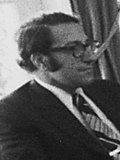
William J. Baroody, Jr. served as an aide to Secretary of Defense Melvin Laird from 1969 until 1973. In 1973, he transitioned to the White House as a Special Assistant to the President, taking over the responsibilities of Charles Colson. He also held the title of special consultant to the president during the Nixon administration.
President Nixon calls Secretary of Labor Peter J. Brennan to advise him to visit the site of a recent building collapse to demonstrate the administration's commitment to construction safety. Nixon emphasizes the importance of Brennan 'showing the flag' to improve the administration's public image and suggests that Brennan announce that the President has expressed personal concern regarding potential safety regulation violations. Brennan confirms his intent to visit the site and agrees to report his findings back to the President.
President Nixon and his Cabinet met to launch a strategic public relations campaign, titled the Presidential Spokesmen program, aimed at pressuring Congress to support his budget priorities and oppose spending-heavy legislation. Nixon urged his officials to frame the budget debate not as a constitutional conflict, but as a direct choice between the economic interests of the 'New American Majority' and the fiscal irresponsibility of the opposition. The session included briefings on foreign policy, defense spending, and law enforcement, emphasizing the need for administration spokesmen to maintain a positive, disciplined narrative while avoiding defensive posturing on 'false issues.'
President Nixon met with David Packard, James Roosevelt, John Byrnes, and William Baroody, Jr., to discuss mobilizing public and business support for his austere federal budget and efforts to curb government spending. The participants focused on strategies to counter congressional pressure for increased spending—particularly regarding programs like OEO and social initiatives—while emphasizing the link between fiscal discipline and national security. The President stressed that maintaining military strength and avoiding unilateral cuts was essential to his ongoing diplomatic efforts and arms control negotiations with the Soviet Union.
President Nixon met with William E. Timmons and William J. Baroody, Jr. to discuss the administration's political strategy and public messaging following his April 30 speech regarding the Watergate scandal. The President emphasized the need for his staff to maintain an upbeat, aggressive demeanor while navigating congressional inquiries and the potential appointment of a special prosecutor by Elliot Richardson. Nixon specifically directed the team to monitor staff members like W. Richard Howard to ensure they remained focused and avoided legal exposure as the administration braced for continued political pressure.
President Nixon initiated this brief call to express his strong dissatisfaction with William J. Baroody Jr.'s performance regarding the administration's 'New Majority' strategy. Criticizing Baroody’s previous comments as inadequate, the President sternly commanded him to increase his efforts and improve his output immediately. Baroody acknowledged the reprimand and committed to taking more assertive action as directed.
President Nixon directed William J. Baroody, Jr. to improve his outreach efforts, expressing clear dissatisfaction with the adequacy of the morning's activities. The President explicitly instructed Baroody to increase his intensity and engagement when addressing the public. This brief, one-minute exchange served as a firm reprimand regarding the efficacy of Baroody's current operations.
In this meeting, President Nixon addressed his Cabinet and senior staff regarding the recent departures of top aides H.R. Haldeman and John Ehrlichman, framing the transition as a necessary move to restore stability amidst the escalating Watergate investigation. Nixon emphasized the importance of maintaining public trust, directed the staff to cooperate fully with investigators, and insisted that the White House avoid any appearance of a cover-up. Cabinet members and staff discussed the administration’s focus on governance, foreign policy, and economic management, reaffirming their collective commitment to the President's agenda despite the political crisis.
President Nixon met with William J. Baroody, Jr. to discuss the administration's internal morale and efforts to cultivate public support following recent Watergate-related pressures. They evaluated the potential departure of staff members connected to the scandal and reviewed positive public reactions to the President's recent televised address, including feedback from ethnic leaders and business groups. Additionally, they touched upon the political implications of a Senate resolution calling for a special prosecutor, with the President advising a cautious, discreet approach toward managing staff personnel and future investigations.
President Nixon met with Thomas R. Moore, Thomas S. Kleppe, and William J. Baroody, Jr. in the Oval Office for a brief, ceremonial engagement. The session included formal introductions, a photo opportunity with members of the press, and the presentation of presidential gifts, including cufflinks and a portrait. The participants also facilitated the delivery of an eight-page statement during the meeting.
President Nixon met with Senator Jacob Javits and a delegation of associates to receive the Robert L. Hague Merchant Marine Achievement Award and commemorate the Merchant Marine Act of 1970. The participants briefly discussed Javits’s long-standing relationship with the President, mutual acquaintances such as Ben Javits and Spyros Skouras, and the President's upcoming diplomatic engagements. The meeting concluded after a brief exchange regarding scheduling and administrative priorities.