Aiken, George D.
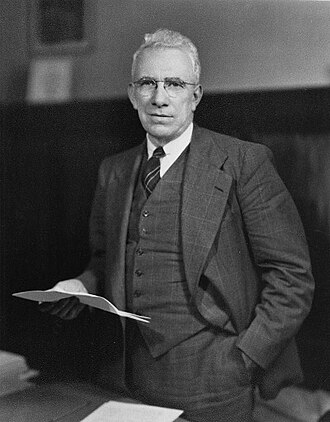
During the Nixon administration, George D. Aiken was a senior Republican U.S. Senator from Vermont, having served in the Senate since 1941. Throughout the taping period, he took a nuanced position on the Vietnam War, generally supporting President Nixon's policy of slow withdrawal while also advising the president against escalating actions like the bombing of Cambodia. As the Watergate scandal unfolded in 1973, Aiken, the most senior member of the Senate at the time of his retirement, was among the senior Republicans who ultimately withdrew their support for the president.
President Nixon met with Vice President Agnew and a bipartisan group of Congressional leaders to announce a significant diplomatic breakthrough in the Strategic Arms Limitation Talks (SALT). Nixon informed the attendees of a forthcoming joint statement with the Soviet Union pledging to focus on limiting anti-ballistic missile (ABM) systems and certain offensive strategic weapons. While some lawmakers advocated for immediate unilateral U.S. defense cuts to demonstrate good faith, the President and his advisors successfully urged the leaders to maintain existing defense programs during the negotiations to avoid losing vital bargaining leverage.
President Nixon met with a bipartisan group of Congressional leaders and administration officials to propose a centralized federal office for coordinating drug abuse prevention and treatment strategies. The discussion highlighted the urgency of addressing drug addiction, particularly among servicemen in Vietnam and youth in the United States, by shifting from a fragmented, multi-agency approach to a unified, performance-based model. Participants debated the integration of law enforcement, research, and treatment programs, with an emphasis on establishing flexible, community-based solutions and securing Congressional support for new enabling legislation.
President Nixon met with bipartisan Congressional leaders and senior administration officials to discuss the sensitive diplomatic initiative concerning the normalization of relations between the United States and the People’s Republic of China. The President and Henry Kissinger briefed the group on the nature of these confidential negotiations, emphasizing the necessity of absolute discretion to ensure the process remained successful. Nixon and his team requested that participants avoid speculation and maintain a unified, non-partisan front when speaking publicly about the delicate geopolitical implications of this shift in U.S. foreign policy.
President Nixon and George Shultz met with John Connally to discuss the resolution of the steel and rail strikes, emphasizing the need for an administration-led push for Congressional action on labor legislation. The participants explored a sweeping economic program that could include an import tax, investment tax credit, federal spending cuts, and a temporary wage-price freeze to combat inflation and balance-of-payments issues. They also coordinated strategy regarding an upcoming Senate vote on the Lockheed loan guarantee bill and discussed public relations for the administration's economic and social initiatives.
President Nixon consulted Senator George D. Aiken regarding the Lockheed loan guarantee, emphasizing the urgent need to support the Southern California aerospace industry following the cancellation of the SST program. Aiken expressed reservations about the selective nature of the proposal but agreed to remain neutral during the upcoming debate, acknowledging the economic hardships facing the region. The two also discussed current foreign policy, specifically affirming their mutual support for the administration's stance on maintaining Taiwan's position in the United Nations amid the evolving relationship with the People's Republic of China.
President Nixon hosted a large gathering in the Oval Office, including Secretary of Agriculture Earl Butz, several members of Congress, and various agricultural officials, to discuss the state of the American agricultural sector. The President highlighted the efficiency of American farmers and the affordability of food for domestic consumers as a significant national achievement. The meeting served as a public relations event to underscore the importance of agriculture to the nation's overall well-being and to reinforce support for administration policies.
President Nixon met with a bipartisan group of Congressional leaders to discuss his upcoming historic trip to the People's Republic of China. The President sought to build support for the mission, briefing the group on communication protocols with Peking and his strategy for managing the international and domestic implications of the visit. The discussion emphasized the goal of establishing a new dialogue with the PRC to foster long-term global stability and balance regional power dynamics.
President Nixon met with a bipartisan group of Congressional leaders to provide a firsthand report on his recent diplomatic mission to the People's Republic of China (PRC). During the briefing, the President discussed his interactions with Chinese leadership, the strategic importance of establishing communication channels, and the complex geopolitical dynamics concerning Taiwan and the broader Pacific region. The meeting emphasized the necessity of maintaining trust and diplomatic dialogue to navigate future international relations and manage long-term foreign policy objectives.
President Nixon hosted a signing ceremony in the Cabinet Room with key congressional leaders, administration officials, and representatives from international financial institutions to formalize contributions to the Inter-American Development Bank, the Asian Development Bank, and the International Development Association. The brief gathering served as an official expression of gratitude to the legislative and international participants involved in securing these development funds. The session concluded shortly after the signing, affirming the administration’s commitment to multilateral economic assistance.
President Nixon met with Republican congressional leadership to coordinate administration talking points on sensitive domestic and foreign policy issues. The discussion focused primarily on the ongoing military situation in Vietnam, emphasizing the success of Vietnamization, the importance of maintaining public support, and the necessity of keeping political opposition from undermining the war effort. Additionally, the President and his advisors briefed members on key legislative priorities, specifically the administration's stance against forced busing and efforts to address rising food prices and drug-related crime. The participants discussed strategies for distributing these fact sheets and maintaining a unified front to influence public perception and legislative outcomes.
President Nixon met with Republican congressional leadership to coordinate strategy on key domestic and foreign policy issues during an election year. The discussion focused on distributing fact sheets regarding economic improvements, crime reduction, and unemployment to bolster support, while also strategizing to defeat restrictive anti-war amendments in Congress. Additionally, the President announced his decision to appoint an acting FBI director to ensure institutional stability following the death of J. Edgar Hoover, aiming to shield the bureau from partisan political controversy.
President Nixon, H.R. Haldeman, and Henry Kissinger discuss strategies for maintaining Senate support for the administration’s Vietnam policy, specifically regarding an amendment sponsored by Senator George D. Aiken. Nixon and Kissinger emphasize the sensitivity of ongoing Paris peace negotiations and the necessity of preventing congressional interference that might undercut their diplomatic leverage. The participants also coordinate the President’s upcoming schedule, including logistical details for a potential weekend trip to the McCabe residence and medical arrangements involving Dr. W. Kenneth Riland.
President Nixon and Henry Kissinger coordinated with Senator George D. Aiken regarding the tactical implications of his proposed congressional amendment amidst ongoing secret peace negotiations with North Vietnam. The participants discussed the risk that the amendment might inadvertently signal weakness or encourage North Vietnamese stalling tactics, specifically emphasizing the need for a unified front against competing legislative efforts like the Brooke substitute. Ultimately, the administration sought to balance Aiken's support for the President's policy with the necessity of maintaining diplomatic leverage and preventing premature funding cutoffs that could undermine the peace process.
President Nixon met with a bipartisan group of Congressional leaders to provide a detailed briefing on the recently finalized Vietnam Peace Agreement and its implementing protocols. Henry Kissinger explained the strategic nuances of the agreement, including the status of North and South Vietnam, the mechanisms for the International Control Commission, and the timeline for the withdrawal of U.S. forces and the release of prisoners of war. The President emphasized the necessity of bipartisan Congressional support to ensure the agreement's stability and signaled that the administration would work with Congress to frame a positive resolution regarding the end of the war.
President Nixon met with Vice President Agnew and a bipartisan group of Congressional leaders to outline the administration's proposed foreign trade legislation. The discussion focused on securing presidential authority to negotiate trade agreements, implementing safeguards for domestic industries, and establishing pension and unemployment insurance reforms. Nixon emphasized the necessity of shifting away from a 'one-way street' trade policy to protect American workers and leverage better terms with international partners, while urging caution against attaching human rights conditions to Most Favored Nation (MFN) status for the Soviet Union to avoid jeopardizing broader diplomatic and arms control initiatives.
President Nixon met with Vice President Agnew and a bipartisan group of Congressional leaders to address the nation's growing energy needs and proposed legislative solutions. The discussion focused on mitigating potential future shortages by balancing environmental protections with domestic production efforts, including natural gas deregulation, expanded offshore oil leasing, and the completion of the Alaska pipeline. The President and his cabinet members emphasized the importance of developing a cohesive national energy strategy to maintain independence and discussed the foreign policy implications of relying on foreign oil exports. The administration sought Congressional cooperation for pending energy legislation and signaled an intent to increase research and development funding for alternative fuel sources like coal and nuclear power.
President Nixon met with Vice President Agnew, Secretary of State Rogers, USAID Administrator John A. Hannah, and a bipartisan group of Congressional leaders to secure support for the administration's foreign aid and security assistance requests. The discussion covered the implementation of the Nixon Doctrine, the strategic importance of military and development aid to maintain stability in Southeast Asia, the Middle East, and Latin America, and the necessity of burden-sharing with allies. Nixon emphasized that maintaining U.S. strength and diplomatic engagement was vital for ongoing negotiations regarding arms reduction and global peace, warning against unilateral reductions that could weaken the U.S. negotiating position.