Nixon, Richard M. (President)
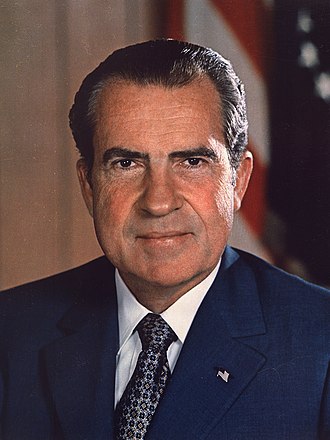
Richard M. Nixon served as the 37th President of the United States from January 1969 until his resignation in August 1974. In February 1971, he ordered the installation of a secret voice-activated taping system in the White House to preserve a historical record of his administration. Until the system's existence was revealed and dismantled in July 1973, the tapes captured Nixon directing major foreign policy initiatives, such as the opening to China, as well as his central role in the Watergate cover-up.
What Nixon talks about on the tapes
White House operations 4,718Presidential scheduling 2,225Public relations 1,784Presidential schedule 1,782Vietnam War 1,693Logistics 1,650Manolo Sanchez 1,626White House communications 1,400White House administration 1,399Presidential communication 1,243Henry Kissinger 1,191Foreign Policy 1,183
Conversations (21,010)
— Page 38 of 211President Nixon and Secretary of Agriculture Clifford M. Hardin discussed the immediate public and international reactions to Nixon's wage-price freeze speech delivered earlier that day. They reviewed key economic components of the new policy, specifically focusing on agricultural exemptions, the 10% import tax intended to pressure Japan into revaluing the yen, and the implementation of investment tax credits. Nixon emphasized the necessity of secrecy regarding these plans to protect the price of gold and instructed Hardin to maintain a vigorous enforcement stance.
President Nixon directs the White House operator to place two telephone calls following an earlier conversation with Secretary of Labor James D. Hodgson. He specifically requests to speak with his daughter, Julie Nixon Eisenhower, immediately. This interaction serves as a routine administrative request to facilitate the President's personal and official communication flow.
President Nixon held a brief, informal telephone conversation with his daughter, Julie Nixon Eisenhower, and her husband, David Eisenhower. The discussion centered on personal family matters and domestic logistics rather than policy or administration business. No significant political decisions or governmental actions resulted from this exchange.
President Nixon contacted the White House operator to place a telephone call to Secretary of Labor James D. Hodgson. This interaction served as the administrative bridge for a high-level communication between the President and a key cabinet member. The call reflects the ongoing logistical coordination of the administration's internal affairs during a period of significant domestic policy developments.
President Nixon and Secretary of Labor James D. Hodgson discussed the positive reception and strategic necessity of the recently announced wage-price freeze. They reviewed the administration's decision to maintain secrecy regarding the policy to prevent economic instability, specifically citing concerns about runs on the dollar and preemptive price hikes. Nixon emphasized the importance of maintaining a firm stance with labor leaders like Lane Kirkland and corporations like General Motors while preparing to coordinate the administration's messaging during an upcoming cabinet meeting.
President Nixon received a brief telephone call from Alexander M. Haig, Jr. facilitated by the White House operator. The exchange consisted of a perfunctory closing statement. No substantive policy matters or administrative decisions were documented during this short communication.
President Nixon and Alexander Haig discuss the initial positive reception to Nixon’s televised address announcing a wage-price freeze. Haig reports favorable feedback from a broad range of political and economic figures, noting that the speech successfully projected a crisp and confident tone. The conversation concludes with a brief update on Henry Kissinger’s ongoing, private negotiations regarding Vietnam, which the President hopes will be effectively camouflaged by the economic policy announcement.
President Nixon and H. R. Haldeman reviewed the immediate public and media reception to the President's televised address announcing a new economic program, including a 90-day wage-price freeze. The conversation focused on consolidating feedback from political leaders, business executives, labor representatives, and economic analysts, who generally praised the speech as a bold and necessary assertion of leadership. The participants expressed satisfaction with the overwhelmingly positive initial momentum and viewed the program as a significant psychological turning point for the administration's economic policy.
President Nixon and Director of Communications Herbert G. Klein discuss the initial public and media reception to the President’s newly announced wage-price freeze. Klein reports that the policy is being viewed positively and argues that the psychological impact of the decisive action is the key to maintaining momentum. The two men review planned follow-up communications strategies, including upcoming television appearances by John Connally and briefings for journalists to sustain support for the administration's economic initiatives.
President Nixon consulted with the White House operator to facilitate a telephone connection with Hobart D. Lewis. The brief interaction focused solely on the administrative coordination required to patch the call through to the President. No substantive policy discussions or major decisions were recorded during this brief logistical exchange.
President Nixon and HUD Secretary George Romney discussed the administration's newly announced, bold economic program, commonly known as the New Economic Policy. Romney expressed strong support for the measures, including the ninety-day wage and price freeze, while Nixon clarified the mechanics of rent and dividend controls. The two men also addressed the potential public reaction to these policies and the administration's efforts to regain control over international monetary issues. Nixon concluded by instructing Romney to raise any remaining questions or concerns during the upcoming Cabinet meeting.
President Nixon received a brief incoming call from Freeman F. Gosden, Jr. facilitated by the White House operator. The communication served as a simple administrative hand-off to connect the President with his correspondent. No substantive policy matters or further action items were recorded during this brief exchange.
President Nixon spoke with Freeman F. Gosden, Jr. to gauge public and professional reaction following the President's televised address regarding the New Economic Policy's wage-price freeze. Gosden relayed overwhelmingly positive feedback from business associates and personal contacts, noting that even political opponents viewed the action favorably. Nixon emphasized the importance of the psychological impact of the policy on the American public and the need to bolster national economic confidence.
President Nixon communicated briefly with a White House operator to facilitate an incoming telephone call from economist Pierre Rinfret. The conversation served primarily as an administrative bridge to manage incoming communications late in the evening. No substantive policy discussions occurred during this exchange.
President Nixon consulted with economist Pierre Rinfret to gauge early reactions to his New Economic Policy announcement, specifically the newly implemented wage-price freeze. Rinfret expressed strong support for the measures, assuring the President that the business community would view the initiative and Nixon's direct involvement favorably. The two discussed the expected positive impact of these interventions on gold, income taxes, and private enterprise, with Rinfret committing his support to the administration's economic agenda.
President Nixon contacted the White House operator to initiate an urgent telephone call to his special counsel, Charles W. Colson. The interaction served as a brief administrative bridge to facilitate direct communication with a key advisor regarding ongoing administration business. No further substantive discussion occurred during this specific recorded segment.
President Nixon received a call from the White House operator regarding the availability and location of Charles W. Colson. Due to ongoing circumstances, the President briefly deferred the inquiry to attend to other matters. He requested that the operator hold off for a moment, postponing the outreach to Colson.
President Nixon contacted the White House operator to place a follow-up call to speechwriter and advisor William L. Safire. The brief interaction served as a logistical step to initiate direct communication between the President and his aide. No substantive policy matters were discussed during this request for assistance.
President Nixon and speechwriter William Safire discussed the reception and delivery of the President’s televised address announcing the wage-price freeze. The conversation focused on the public impact of the speech's rhetoric and the successful launch of the new economic policy. Nixon concluded the brief call by confirming he had scheduled a follow-up meeting with his team for the following morning.
President Nixon contacted the White House operator to place an urgent call to Federal Reserve Chairman Arthur F. Burns. This request followed the President's public announcement earlier that day regarding his 'New Economic Policy,' which included the suspension of the gold standard and the imposition of wage and price controls. The call was initiated to facilitate high-level communication between the President and his top monetary advisor during a critical period of economic transition.
President Nixon and Federal Reserve Chairman Arthur Burns discuss the immediate aftermath of the announcement of the wage-price freeze, expressing relief that the plan remained secret during its development at Camp David. The two leaders strategize on managing international monetary policy, with Nixon tasking Burns to maintain close control over Paul Volcker and Dewey Daane to ensure alignment with administration objectives. Finally, they plan to secure political support from Representative Wilbur Mills by offering him full credit for the initiative to ensure the program's success.
President Richard M. Nixon met with his personal valet, Manolo Sanchez, in the Oval Office. The brief interaction focused on the President's request for an unknown personal item. No significant policy decisions were recorded during this brief administrative exchange.
President Nixon and H. R. Haldeman met to assess the public and political reception of the President's August 15 economic address, discussing strategies to maintain the momentum of his new policy. They evaluated the positive reactions from business leaders and discussed upcoming PR tactics, including the use of photographs from Camp David and orchestrating television appearances to frame the President as a bold, decisive leader. The conversation also touched upon coordinating with figures like Nelson Rockefeller and John Mitchell to ensure ongoing support and manage political fallout from economic decisions such as the wage-price freeze and budget cuts.
President Nixon instructed the White House operator to initiate a telephone call to Congressman Wilbur D. Mills. This brief exchange served solely as a logistical request to establish communication with the influential legislator. The conversation concluded immediately after the operator acknowledged the request to connect the President.
President Nixon consulted with a White House operator to facilitate an urgent communication with Congressman Wilbur D. Mills at his Arkansas residence. After the operator reported an inability to reach the Congressman, the President instructed the operator to stop pursuing him at that location. Nixon ultimately decided to leave instructions for Mills to return the call rather than continuing further attempts to track him down.
President Nixon initiates a request for the White House operator to place a telephone call to New York Governor Nelson A. Rockefeller. This brief interaction serves as a logistical bridge to connect the President with the Governor for an unrecorded or subsequent discussion. No substantive policy matters are addressed during this administrative exchange.
President Nixon and Nelson Rockefeller discussed the positive public reception of Nixon's recently announced wage-price freeze and international monetary policy. The two agreed on the necessity of revaluing foreign currencies, specifically regarding Japan and the Common Market, to ensure American economic competitiveness. Additionally, they arranged a breakfast meeting to address policy conflicts with HEW regarding welfare reform and the use of welfare recipients for state public service jobs.
President Nixon initiated a brief telephone request through the White House operator to be connected with Secretary of the Treasury John B. Connally. The interaction functioned primarily as a logistical step to facilitate direct communication with the Secretary. No further policy discussions were recorded during this specific exchange.
President Nixon convened a large meeting with Vice President Agnew and his Cabinet to discuss the national economy and the "New Economic Policy" he had announced the previous day. Key topics included the wage-price freeze, import surcharges, tax relief, budget cuts, and the convertibility of the dollar. The administration sought Cabinet support for these initiatives and discussed their potential impact on international trade and domestic employment.
President Nixon met with H. R. Haldeman and other aides to manage the political and economic response to his recently announced New Economic Policy. The discussions focused on coordinating with bipartisan congressional leadership to ensure support for the administration's program, highlighting the effectiveness of Treasury Secretary John Connally's public outreach, and monitoring the positive stock market reaction. A key objective was to frame the policy as a proactive leadership move that preempted more damaging legislative actions, while also preparing future speeches and briefings to maintain momentum and public confidence.
President Nixon and Treasury Secretary John B. Connally discuss strategic preparations for Connally's upcoming press conference regarding the administration's new economic proposals. They coordinate a plan to announce a bipartisan leadership meeting at the White House, specifically highlighting the support of House Ways and Means Chairman Wilbur Mills to ensure legislative cooperation. The discussion emphasizes the need to give public credit to Mills while organizing a comprehensive group of congressional committee chairs and leadership to bolster the administration's agenda.
President Nixon instructed the White House operator to place a call to Kenneth E. Belieu on behalf of H.R. Haldeman. This brief administrative interaction served to facilitate communication between the President's chief of staff and an external contact. No further policy discussions or substantive developments occurred during this brief exchange.
President Nixon, H.R. Haldeman, and Kenneth BeLieu coordinated the urgent assembly of a bipartisan congressional leadership meeting. The participants finalized a list of key legislators from the Senate and House, specifically focusing on members of the Appropriations, Ways and Means, and Banking and Currency committees. BeLieu was tasked with contacting the members immediately to arrange the meeting and providing government transportation to facilitate the arrival of lawmakers currently out of town.
H. R. Haldeman initiated a telephone call to locate Peter M. Flanigan on behalf of President Nixon. After failing to reach Flanigan directly at his office, Haldeman spoke with an administrative assistant to confirm his whereabouts and expected return time. This logistical exchange was intended to facilitate a follow-up communication between the President and Flanigan later that afternoon.
President Nixon initiates a brief telephone exchange with the White House operator to request a connection to Charles W. Colson. The call serves as a logistical administrative step to facilitate direct communication with his special counsel. No substantive policy matters are discussed during this brief request.
President Nixon met with H. R. Haldeman, John Connally, Charles Colson, and other advisors to assess the public and economic response to his recently announced domestic economic program. The participants discussed the reaction of the stock market, business community, and media to the wage and price freeze, while strategizing on managing political credibility and legislative support. The discussion also addressed necessary administrative adjustments to welfare reform and federal budget cuts, as well as preparations for upcoming briefings with Congressional leaders.
President Nixon initiates a brief telephone request for the White House operator to connect him with Treasury Secretary John B. Connally. The call serves as a logistical bridge to facilitate direct communication with his key economic advisor. No substantive policy matters are discussed beyond the establishment of the connection.
President Nixon, Charles Colson, and Ron Ziegler contacted Secretary John Connally to commend his performance during a recent televised press conference. The participants praised Connally's effective confrontation with the press and his ability to clarify and augment the President's economic initiatives announced the previous evening. Colson specifically highlighted the enthusiastic praise received from CBS President Frank Stanton regarding the broadcast's impact.
President Nixon met with his personal valet, Manolo Sanchez, in the Old Executive Office Building. The brief discussion primarily focused on coordinating the President's upcoming daily schedule and personal logistics. No significant policy decisions were recorded during this interaction.
President Nixon instructed the White House operator to locate and connect him with Robert H. Finch for a telephone conversation. The President briefly expressed frustration regarding the difficulty of tracking down individuals amidst a high volume of ongoing initiatives and ideas. The exchange served as a routine administrative request to facilitate direct communication with a key advisor.
President Nixon consulted with the White House operator to facilitate an outgoing call to an unidentified individual. The brief exchange reflects the President's ongoing efforts to reach out to various contacts regarding potential policy ideas. No specific action items or substantive decisions were recorded beyond the logistical coordination of the communication.
President Nixon and H. R. Haldeman discuss the scheduling and strategic management of an upcoming meeting at the State Department involving George P. Shultz. The conversation focuses on maintaining political momentum for the administration's recent economic initiatives while navigating interactions with Congress. They finalize the timing for the afternoon agenda to ensure these objectives remain a priority.
President Nixon and John Ehrlichman reviewed the positive initial public and market reactions to the President's August 15 economic address. They discussed the significant surge in stock market volume and emphasized the need to maintain public confidence following the announcement. Additionally, Nixon praised Treasury Secretary John Connally's effective and firm performance during recent press briefings regarding the new economic policies.
President Nixon initiated a brief communication through the White House operator to place an outgoing call. The primary purpose of this interaction was to establish a direct line of contact with presidential speechwriter William L. Safire. No further discussion or substantive policy deliberations occurred during this brief exchange.
President Nixon met briefly with an unidentified individual in the Old Executive Office Building. The recording captures only the auditory signal of a knock at the door, suggesting a routine, non-substantive interaction. No policy discussions or significant administrative actions occurred during this one-minute encounter.
President Nixon met with speechwriter William Safire to discuss the development of an upcoming address to the Knights of Columbus. Nixon instructed Safire to synthesize drafts prepared by John McLaughlin and Patrick Buchanan into a cohesive 1,500-word speech. The President emphasized themes of peaceful competition following his August 15th address to the nation and requested the inclusion of Buchanan’s assertive rhetoric regarding America’s critics to suit the audience's sensibilities.
President Nixon met with Alexander P. Butterfield to coordinate administrative logistics regarding his immediate schedule and upcoming engagements. The discussion centered on managing arrivals for a meeting at the State Department, specifically involving Arthur F. Burns and George P. Shultz, as well as the status of speech drafts being prepared by William L. Safire. Butterfield was tasked with overseeing these appointments and ensuring the necessary materials were ready for the President's review.
President Nixon instructed the White House operator to place a call to his personal secretary, Rose Mary Woods. He also provided notification that he would be unavailable for the next thirty minutes. The interaction served to coordinate his private schedule and communication flow for the afternoon.
President Nixon and his personal secretary, Rose Mary Woods, discuss the logistical challenges and optics of including Tricia Nixon Cox and Edward R.F. Cox in the President's upcoming travel plans. The pair also briefly evaluates the public reception of the President's recent television address delivered the previous evening, noting uncertainty regarding initial feedback and the broadcast's reach. Ultimately, Nixon suggests skipping the inclusion of his daughter in the trip to avoid potential social awkwardness or complications.
President Richard Nixon and counselor Robert Finch discussed the overwhelmingly positive public and market reactions to the President’s August 15, 1971, economic address. The participants highlighted the favorable reception of John B. Connally’s press conference and noted that rising stock market figures served as a key indicator of restored public confidence. The brief conversation served to validate the administration's new economic initiatives by sharing anecdotal feedback from various supporters and associates.
President Nixon and Alexander P. Butterfield met to coordinate the logistics and scheduling for an upcoming high-level meeting at the State Department. The discussion focused on confirming the attendance of key economic advisors, including John B. Connally, Arthur F. Burns, and Paul W. McCracken, and addressing gaps in the briefing materials. Butterfield assisted the President in refining departure times and initiating a follow-up call to Alexander M. Haig, Jr. to ensure administrative preparations were finalized.
President Nixon and Alexander Haig met to discuss ongoing Vietnam War negotiations, specifically focusing on the status of the Demilitarized Zone. Nixon expressed concern regarding the duration of potential talks, cautioning against being drawn into an unproductive dialogue that might leave the administration vulnerable to military provocation. The discussion centered on the necessity of Henry Kissinger’s involvement and the strategic timing required to maintain leverage during the negotiation cycles.
President Nixon consulted with the White House operator to facilitate a telephone call to special counsel Charles W. Colson. The brief interaction served as an administrative bridge to initiate direct communication with one of the President's key political advisors. No substantive policy discussions were recorded during this connection request.
President Nixon and Secretary of State William P. Rogers coordinated strategy regarding upcoming economic and diplomatic negotiations with Japan. Nixon emphasized a public relations theme centered on mutual success and fair competition rather than conflict. The President also informed Rogers that Japan had specifically requested his participation in the talks over other potential U.S. representatives like John Connally or George H.W. Bush.
President Nixon met with an unknown individual to coordinate his upcoming schedule, specifically regarding a planned golf outing and an address to the Knights of Columbus. The President discussed the status of his speech draft, which was being prepared by William Safire, and requested clarity on the timing for the event. Additionally, they briefly touched upon the current performance of the stock market.
President Nixon met with his valet, Manolo Sanchez, in the Old Executive Office Building for a brief private discussion. Because the majority of the conversation consists of a withdrawn segment classified as personal, the meeting's substantive content remains unavailable for public record. The interaction highlights the routine, informal, and often private nature of the President's daily consultations with his immediate personal staff.
President Nixon requested that the White House operator place a telephone call to Idanell “Nellie” Connally, the wife of Treasury Secretary John Connally. The brief interaction focused solely on facilitating this connection. No substantive policy discussions or major administrative developments occurred during this brief exchange.
President Nixon held a brief administrative conversation with Secretary of State William P. Rogers to facilitate a connection to an individual in Texas. The interaction served primarily as a logistical bridge, with the President initiating the call to coordinate communication with the external party. No substantive policy discussions or major decisions were recorded during this exchange.
President Nixon and H.R. Haldeman briefly conferred regarding stock market activity, specifically discussing the sale of 31 million shares. The President requested that documentation regarding this transaction be brought to him for review. Following this administrative exchange, Nixon indicated his intention to depart for a round of golf.
President Nixon speaks with the White House operator to discuss current public sentiment regarding John Prescott and Tippett. The President expresses his awareness that these individuals are a prominent topic of conversation in both Washington and New York. No further policy action is taken beyond this informal exchange regarding public discourse.
President Nixon and Nellie Connally discussed the positive public and media reception following a recent press conference held by Treasury Secretary John Connally, specifically noting praise from CBS executive Frank Stanton. The President outlined his upcoming travel itinerary, which included stops in New York, Illinois, Dallas, and California. Additionally, Mrs. Connally urged the President to ensure her husband received necessary rest due to exhaustion, while also expressing her personal support for the President’s leadership.
President Nixon and Press Secretary Ronald L. Ziegler held a brief meeting to coordinate messaging regarding the President’s recent leisure activities. The discussion focused on establishing the narrative for upcoming golf outings involving William P. Rogers at Burning Tree and Bob Hope in San Clemente. This interaction served to ensure consistent public communication regarding the administration's recreational schedule.
President Nixon and H. R. Haldeman met to assess the overwhelmingly positive press coverage and market reaction following the administration’s recent economic policy announcements. The discussion focused on leveraging the current momentum, including potential political strategies for dealing with Democratic opponents and coordinating a strategic, unannounced visit to the New York Stock Exchange. Additionally, the President reviewed pending matters such as textile negotiations with Japan and decided against meeting with the Mayor of West Berlin to avoid political complications.
President Nixon met with his personal valet, Manolo Sanchez, in the Old Executive Office Building. The brief interaction focused on the personal delivery of an item to the President. No substantive policy matters were addressed during this short exchange.
President Nixon contacted the White House operator to place an outgoing call to Secretary of the Treasury John B. Connally. The brief exchange served as a logistical request to initiate a high-level consultation. This call was part of the administration's ongoing financial maneuvering during the August 1971 economic policy shift.
President Nixon and H. R. Haldeman discuss the positive reception of the administration’s new economic policies, specifically noting Treasury Secretary John Connally's reports of bipartisan support and favorable market reactions. They review a commitment from General Motors to maintain 1971 vehicle prices in response to the President's wage and price freeze. The conversation concludes with administrative planning regarding the President's upcoming travel to New York City and schedule adjustments to avoid distractions at the White House.
President Nixon and Peter Flanigan discussed the administration's strategy for upcoming textile negotiations with Japan, emphasizing the need for a cautious approach following the President's August 15 economic announcement. Nixon instructed Flanigan to avoid providing premature assurances to industry leaders like Roger Milliken, arguing that the recent policy shifts had fundamentally strengthened the U.S. bargaining position. The conversation also covered the positive market reaction to the new economic policies, noting strong indicators in the stock market and home building sectors.
President Nixon contacted the White House operator to place an outgoing call to his close friend and confidant, Charles G. "Bebe" Rebozo. The brief exchange served purely administrative purposes to facilitate personal communication between the President and Rebozo. No substantive policy matters or official developments were discussed during this brief connection.
President Nixon contacted the White House operator to place a follow-up call to speechwriter William L. Safire. The brief interaction served exclusively to facilitate communication with Safire. No further substantive policy discussions occurred during this exchange.
President Richard M. Nixon spoke with his close confidant Charles G. "Bebe" Rebozo in a brief, informal telephone exchange. The conversation primarily served as a personal check-in between the two men. No significant policy decisions or official government actions were recorded during this interaction.
President Nixon consulted with speechwriter William Safire regarding revisions to an upcoming address to the Knights of Columbus. The President tasked Safire with reviewing specific draft sections, particularly focusing on word choice and the inclusion of a 'cheer line.' Safire agreed to process these edits and incorporate suggestions from Raymond K. Price, Jr. before returning the document for the President's final review.
President Nixon initiates a brief telephone call to his personal secretary, Rose Mary Woods, via the White House operator. This interaction serves as a routine administrative request to facilitate communication with a key member of his inner circle. No further substantive discussion occurs during this short exchange.
President Nixon and his personal secretary, Rose Mary Woods, discussed the positive public reception following his announcement of a wage-price freeze. Woods reported favorable anecdotal feedback from various acquaintances, including Jack Drown, regarding the administration's new economic measures. The conversation also briefly touched upon the status of a draft speech being prepared by William Safire for the President’s upcoming address to the Knights of Columbus.
President Nixon contacted the White House operator to place an urgent telephone call to John K. Andrews, Jr. and Raymond K. Price, Jr. This communication was intended to facilitate direct contact with members of his speechwriting staff. No substantive policy discussions occurred during this brief request for administrative assistance.
President Nixon contacted the White House operator to place a follow-up call to Senator Roman L. Hruska. The interaction was limited to this administrative request, serving as a logistical step to initiate communication with the Senator. No further substantive policy discussions occurred during this brief exchange.
President Nixon directs speechwriter John K. Andrews, Jr. to revise the draft for his upcoming address to the Veterans of Foreign Wars convention. Nixon instructs Andrews to pivot away from previous concepts in favor of themes emphasizing the challenge of peace, the maintenance of American military pride, and the necessity of economic strength and national spirit. The President suggests coordinating with speechwriter Raymond K. Price, Jr. to ensure consistent messaging across upcoming speeches and requests that Andrews join the trip to finalize the draft.
President Nixon consulted with the White House operator to facilitate an urgent communication regarding the current location of Senator Roman L. Hruska. The inquiry sought to determine whether Hruska was reachable in Helsinki, Finland. Upon receiving the operator's response, Nixon decided to abandon the attempt to place the call.
President Nixon contacted the White House operator to place an outgoing call to speechwriter William L. Safire. The brief interaction served as a logistical bridge to facilitate a direct conversation between the President and his advisor. No substantive policy matters were discussed during this request.
President Nixon and William Safire discussed the drafting process for an upcoming speech to the Veterans of Foreign Wars (VFW). They coordinated the involvement of John K. Andrews, Jr. and Raymond K. Price, Jr. regarding the speech's thematic content, specifically focusing on promoting the American spirit and ensuring the address remains impactful and newsworthy rather than derivative.
President Nixon contacted the White House operator to place an outgoing call to domestic policy advisor John D. Ehrlichman. The brief exchange served as a procedural request to initiate communication with Ehrlichman. No further policy or strategic details were addressed during this short connection.
President Nixon and John Ehrlichman discuss the positive reception of a briefing led by Treasury Secretary John Connally regarding the administration's recent wage and price freeze. They review the successful Cabinet turnout and evaluate the effectiveness of Arthur Burns and the Vice President’s involvement in promoting the President's vision. Additionally, the pair touches upon antitrust concerns involving ITT and Richard McLaren, as well as the performance of Cabinet members like George Romney during recent proceedings.
President Nixon met with his senior advisors, including John B. Connally and H.R. Haldeman, to formulate a strategy for promoting his newly announced "New Economic Policy" and to address political fallout. The participants discussed the necessity of maintaining a unified, aggressive message, specifically targeting Democratic critics like Hubert Humphrey and labor leaders who might oppose the administration's wage and price freeze. Connally was tasked with representing the administration's economic message to the media and Congressional leaders, while the group emphasized the importance of framing these economic measures as essential for bipartisan national interest and international monetary stability.
President Nixon convened a meeting with Vice President Agnew and a bipartisan group of Congressional leaders to discuss the national economy and his administration's "New Economic Policy." Key topics included the wage-price freeze, investment tax credits, the international monetary situation, and an import surcharge. The discussion focused on the necessity of Congressional cooperation for implementing these measures and their potential impact on inflation, trade, and specific industries like automobiles.
President Nixon hosted a social gathering in the Oval Office for Dr. James R. Schlesinger, his family, and the Doub and Radcliffe families. The meeting primarily served as a ceremonial visit featuring a photographic session and the presentation of presidential gifts, including cufflinks and Apollo viewers, to the guests. Following the departure of the families, the President briefly discussed his schedule, specifically regarding the Oakland A's and Henry Kissinger, with Alexander P. Butterfield, Gerald R. Ford, and Robert P. Griffin.
President Nixon met with Gerald Ford and Robert Griffin to briefly discuss the administration's national economic program and legislative scheduling. Following this brief policy exchange, the focus shifted to a ceremonial visit by members of the Oakland Athletics baseball team. Nixon presented gifts, including golf balls, to the athletes to commemorate their recent on-field achievements.
President Nixon hosted the Oakland Athletics, led by owner Charles O. Finley and manager Dick Williams, for a ceremonial visit to the Oval Office. The meeting served as a social meet-and-greet where the President engaged with players, discussed various professional baseball teams and notable past games, and shared anecdotes regarding his grandson, David Eisenhower. Nixon concluded the brief visit by presenting the players with official presidential golf balls as keepsakes.
President Nixon met with his aide Stephen B. Bull in the Oval Office to coordinate his official schedule. The brief discussion primarily focused on logistical arrangements regarding an upcoming meeting with Representative Gerald R. Ford. No further actions or policy decisions were recorded during this scheduling consultation.
President Nixon met with Alexander P. Butterfield in the Oval Office to handle brief administrative duties. During this brief encounter, they addressed an incoming call from an unidentified businessman and processed an item requiring the President's signature. The discussion concluded quickly after these tasks were completed.
President Nixon met with key advisors and members of Congress to discuss the administration's new economic program and strategy for securing legislative support. The participants emphasized the need to maintain political momentum, project unity, and avoid excessive amendments from Democrats that could derail the administration's tax and economic goals. The conversation also covered the effective use of rhetoric to blame political opponents for partisanship, as well as the personnel requirements for managing the newly established wage and price controls under the Cost of Living Council.
President Nixon held a brief, unscheduled meeting with an unidentified individual in the Oval Office. Due to the lack of an available transcript or audio clarity, the specific subject matter and any resulting policy decisions remain undocumented in the historical record. This encounter serves as a placeholder within the White House taping system logs, reflecting the presence of unrecorded private consultations during the administration.
President Nixon met with his personal secretary, Rose Mary Woods, to coordinate his upcoming schedule and address preparations for an impending speech. The discussion focused on the involvement of speechwriters Raymond K. Price, Jr. and William L. Safire in drafting the address. This brief administrative consultation ensured that Woods remained informed of the President's immediate agenda and staffing priorities.
President Nixon held a brief telephone conversation with his daughter, Tricia Nixon Cox, facilitated by a White House operator. The discussion was personal in nature and lacked any substantive policy or administrative content. No official decisions or actions were taken during this exchange.
President Richard Nixon met briefly with his daughter, Tricia Nixon Cox, in the Oval Office. The discussion primarily focused on personal matters, although specific details remain limited due to the withdrawal of one segment of the recording. No major policy developments or significant political decisions were recorded during this brief exchange.
President Nixon communicated with a White House operator to facilitate an outgoing call from his office in the Executive Office Building. This brief exchange served as a logistical step in the President's daily telephonic operations. No substantive policy discussions or significant political developments occurred during this brief interaction.
President Nixon met with his personal secretary, Rose Mary Woods, to discuss the preparation of an upcoming presidential address. The conversation centered on the status and review of a speech draft originally prepared by speechwriter Raymond K. Price, Jr. This meeting served to facilitate the administrative handling and revision process required for the President's public remarks.
President Nixon met with his personal secretary, Rose Mary Woods, to review draft materials for his upcoming address to the Knights of Columbus. The discussion focused on refining the speech's content and phrasing, specifically evaluating drafts prepared by speechwriters Raymond K. Price, Jr. and William L. Safire. The brief meeting served to coordinate administrative priorities ahead of the President's public appearance.
President Nixon held a brief, ten-minute meeting in the Oval Office with an unidentified participant. As no transcript is available for this encounter, the specific subject matter and any resulting decisions remain undocumented. The interaction reflects the routine private scheduling of the President's office during this period.
President Nixon consulted with H.R. Haldeman regarding upcoming travel schedules and the need for a series of speeches to maintain public momentum for his new economic program. Following Haldeman's departure, Henry Kissinger joined the discussion to coordinate the timing of upcoming summit announcements with the Soviet Union and China. The participants strategized that these diplomatic breakthroughs would provide a necessary psychological lift to the nation and effectively distract from media criticism regarding Vietnam and the economy.
President Nixon met with his personal secretary, Rose Mary Woods, to discuss personal administrative matters, including the handling of a note for Chicago White Sox announcer Bob Elston and his family. The discussion also touched upon preparations for a forthcoming presidential speech. Additionally, the participants briefly addressed strategic considerations regarding the potential withdrawal schedule for ongoing negotiations.
President Nixon met with his personal valet, Manolo Sanchez, in the Oval Office to coordinate logistics regarding the President's personal belongings. The primary focus of the discussion concerned the location and retrieval of a briefcase currently held in the Executive Office Building. Sanchez subsequently departed the office to address these administrative arrangements.