Ash, Roy L.
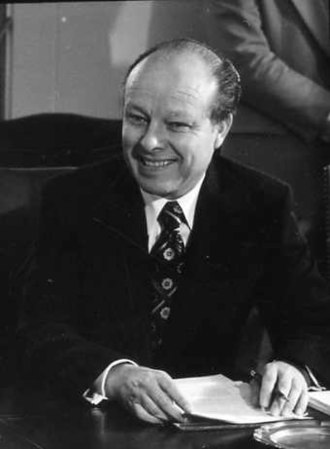
Roy L. Ash was a business executive who played a major role in restructuring the executive branch during the Nixon administration. He initially served from April 1969 to November 1970 as Chairman of the President's Advisory Council on Executive Organization (the "Ash Council"), which successfully recommended the creation of the Office of Management and Budget (OMB). After returning to the private sector for the first part of the White House taping period, Ash transitioned back into government service when Nixon appointed him Director of the OMB. He served in this role from February 1973 until February 1975, working to implement the management and budget reforms his council had originally designed.
In this meeting, President Nixon and his staff, particularly Frederic Malek and Roy Ash, focused on the management reorganization of the federal government for his second term. Nixon emphasized the critical need for absolute loyalty among appointees to ensure that government agencies act in accordance with presidential directives, specifically noting the importance of controlling the IRS and staffing departments with loyalists. Additionally, the President reviewed economic messaging strategies for the upcoming budget, instructed his team to minimize unnecessary paperwork, and discussed sensitive developments regarding potential Vietnam peace negotiations, tasking Henry Kissinger and Alexander Haig with maintaining absolute secrecy.
In this meeting, President Nixon met with his Vice President, Cabinet, and senior staff to provide a briefing on the impending Vietnam cease-fire agreement, scheduled for signing on January 27, 1973. National Security Advisor Henry Kissinger detailed the arduous negotiation process, emphasizing that the agreement achieved key U.S. objectives including the return of POWs, the withdrawal of American forces, and the right of South Vietnamese self-determination. Following the Vietnam discussion, the President transitioned to a briefing on the fiscal year 1974 budget, where Director Caspar Weinberger presented plans for spending cuts and program terminations designed to maintain a full-employment balance and avoid tax increases.
President Nixon met with his Vice President, Cabinet members, and senior staff to conduct a briefing on the upcoming federal budget. The discussion focused on the necessity of fiscal restraint, including the reduction and termination of certain government programs, to avoid tax increases and curb inflationary pressures while maintaining an expanding economy. Cabinet members analyzed projections for the 1974 and 1975 budgets, emphasizing the shift in spending priorities from defense toward human resources and the importance of presenting the budget to Congress and the public as a responsible alternative to higher taxation.
President Nixon and his Cabinet members strategized on how to promote the administration’s 1974 budget and defend proposed spending cuts against inevitable Congressional and lobbying opposition. The participants emphasized shifting from a constituency-based political strategy to a national message centered on fiscal responsibility, specifically using the themes of 'jobs' and 'taxes' to appeal to working-class voters. Nixon underscored the necessity of forcing Congress to accept accountability for spending, ultimately positioning the administration to blame Democrats if tax increases become required to fund legislative priorities.
President Nixon met with Republican congressional leadership to outline his fiscal strategy for the 1974 budget, emphasizing the necessity of expenditure control to avoid tax increases and curb inflation. Nixon and his advisors discussed the use of budget impoundments to maintain a spending ceiling of $269 billion, framing this approach as a critical move for economic prosperity despite the anticipated pushback from special interest groups. The meeting concluded with a call for Republican leaders to unify behind the administration's fiscal restraint and to clearly communicate that budget cuts are essential for maintaining national economic stability.
President Nixon held a ceremonial gathering in the Cabinet Room with key staff from the Office of Management and Budget and the Department of Health, Education, and Welfare to sign the 1974 Budget Message. The meeting served primarily as an opportunity for the President to acknowledge the career civil servants in attendance, noting their years of service and the vital role they played in federal operations. Nixon shared lighthearted personal anecdotes about his own early work experience while distributing souvenir pens to those involved in the budget's development.
President Nixon met with his key economic advisors—George Shultz, Herbert Stein, Roy Ash, and John Ehrlichman—to assess the administration's economic policy, particularly the transition to Phase III of the wage and price controls. The group discussed the political and economic challenges of managing inflation, maintaining a $250 billion budget ceiling, and navigating potential labor strikes, with Nixon emphasizing the need for a unified strategy and public confidence. The participants also addressed international trade tensions, the devaluation of the dollar, and the necessity of managing Congressional relations to sustain the administration's fiscal objectives.
President Nixon met with Republican congressional leaders to discuss his administration's legislative priorities, focusing primarily on securing support for a fiscally responsible budget. He emphasized the necessity of cutting spending and utilizing presidential vetoes to combat inflation and avoid tax increases, framing these actions as essential for the nation's economic stability. Additionally, the President and the leaders engaged in an extensive review of recent foreign policy, specifically highlighting the significance of the Vietnam cease-fire and the strategic importance of U.S. global leadership.
President Nixon met with Vice President Agnew, Cabinet members, and key staff to discuss recent foreign policy developments and economic strategy. Vice President Agnew briefed the group on his recent tour of Southeast Asian nations, while Treasury officials and Cabinet members deliberated on international monetary policy, trade barriers, and the need for a more competitive U.S. industrial posture. The President emphasized the importance of maintaining international engagement, securing legislative tools for trade negotiations, and justifying reconstruction aid for Vietnam as a strategic security necessity rather than purely humanitarian relief.
President Nixon met with his top advisors, including Roy Ash, George Shultz, John Ehrlichman, and H.R. Haldeman, to discuss the administration's budget, revenue sharing proposals, and congressional relations. Key topics included the perceived partisanship surrounding revenue sharing, potential program cuts, the impact of budget decisions on human resources versus defense spending, and strategies for communicating the administration's fiscal policies to Congress and the public. A significant development was the discussion around managing public perception of the administration's spending priorities and the need to counter negative press narratives, particularly concerning social programs and the effectiveness of federal expenditures.
President Nixon met with his economic advisors—including George Shultz, Arthur Burns, and Paul Volcker—to discuss the state of the domestic economy, concerns regarding inflation, and the ongoing volatility in international monetary markets. The participants debated the merits of federal intervention in currency exchange rates versus allowing a transition to a more flexible floating regime. Nixon emphasized that any economic strategy must account for his broader foreign policy objectives and the need to maintain strong political relationships with European allies, ultimately tasking Henry Kissinger to join the group to further weigh these options.
President Nixon met with his congressional leadership, including Hugh Scott and Gerald Ford, to discuss the administration's legislative strategy, specifically focusing on the management of upcoming vetoes and the difficulty of securing Senate support compared to the House. The group reviewed efforts to promote public awareness of administration programs, the political implications of specific budget cuts, and strategies to recruit Democratic candidates to the Republican Party for the 1974 election cycle. Additionally, Nixon emphasized the need to handle the trade bill with the Soviet Union delicately to accommodate both the administration's foreign policy goals and the concerns of the Jewish community regarding Soviet emigration.
President Nixon met with his Cabinet and staff to discuss legislative strategy, specifically focusing on overcoming congressional opposition to his budget cuts and vetoes. The group evaluated the political risks of opposing rural and urban programs, concluding that the administration must move away from defensive justifications and instead leverage secondary advocacy from business groups and local organizations to pressure Congress. Nixon also emphasized the need to prioritize House support over the Senate, as he deemed the latter uncooperative and inefficient, and discussed long-term political planning for the 1974 midterm elections.
President Nixon and his Cabinet met to launch a strategic public relations campaign, titled the Presidential Spokesmen program, aimed at pressuring Congress to support his budget priorities and oppose spending-heavy legislation. Nixon urged his officials to frame the budget debate not as a constitutional conflict, but as a direct choice between the economic interests of the 'New American Majority' and the fiscal irresponsibility of the opposition. The session included briefings on foreign policy, defense spending, and law enforcement, emphasizing the need for administration spokesmen to maintain a positive, disciplined narrative while avoiding defensive posturing on 'false issues.'
President Nixon and Republican congressional leaders met to discuss the administration's legislative agenda, specifically focusing on the "New Federalism" approach to governance. The President emphasized shifting decision-making power from the federal bureaucracy to local and state authorities through programs like the Better Communities Act and the Responsive Government Act. Additionally, the conversation addressed a robust crime-fighting package, including proposed federal death penalty statutes and mandatory sentences for major drug traffickers, while positioning these initiatives as essential to restoring national law and order.
President Nixon hosted the recipients of the 1972 Management Improvement Award in the Cabinet Room to coordinate the logistics for a formal ceremony. Brian Usilaner facilitated a briefing for award winners and cabinet members, including William P. Rogers and Caspar Weinberger, to establish the specific order of presentation and photography arrangements. The session focused on streamlining the proceedings to manage the large group effectively while ensuring individual recognition for the agency and department representatives.
President Nixon held a ceremony in the Oval Office to present awards to various federal employees and government agency representatives for their public service. Accompanied by H. R. Haldeman and several cabinet members, the President recognized individuals from departments including Agriculture, Treasury, Defense, and the Atomic Energy Commission. During his remarks, Nixon praised the recipients for prioritizing public service over private financial gain, emphasizing that the intrinsic rewards of their work provided a satisfaction that private enterprise could not match.
President Nixon met with his Cabinet and key administration officials to address the national crisis of rising food prices and related supply chain bottlenecks. The discussion focused on agricultural production, the impact of labor costs on retail food prices, and the implementation of strategic stockpiling policies to stabilize the market. The President instructed his team to prioritize the transportation of farm produce, explore measures to increase production, and maintain clear accountability through regular reporting to manage public concern and inflation.
President Nixon met with Republican Congressional leaders and economic advisors to discuss strategies for addressing rising food prices, inflation, and the ongoing transition of the wage-price stabilization program. Key topics included the administration's efforts to increase food supplies and imports, the management of labor-management relations, and the necessity of maintaining party unity to sustain presidential vetoes on spending legislation. The meeting underscored the administration's focus on economic control and the importance of Congressional support in implementing fiscal policy.
President Nixon met with Chet Holifield, Perkins McGuire, Roy L. Ash, and William E. Timmons to discuss the final report and recommendations of the Commission on Government Procurement. The group highlighted potential government savings, particularly through adjusting non-competitive procurement thresholds, and reviewed strategies for implementing reforms via legislation and executive action. Additionally, the participants reviewed energy projections and the development of the breeder reactor, with Holifield presenting comprehensive analyses on long-term energy needs.
President Nixon met with Vice President Agnew and a bipartisan group of Congressional leaders to address the nation's growing energy needs and proposed legislative solutions. The discussion focused on mitigating potential future shortages by balancing environmental protections with domestic production efforts, including natural gas deregulation, expanded offshore oil leasing, and the completion of the Alaska pipeline. The President and his cabinet members emphasized the importance of developing a cohesive national energy strategy to maintain independence and discussed the foreign policy implications of relying on foreign oil exports. The administration sought Congressional cooperation for pending energy legislation and signaled an intent to increase research and development funding for alternative fuel sources like coal and nuclear power.
President Nixon met with his economic advisors and cabinet members to discuss how to manage persistent inflation and public frustration with the economy following the recent passage of the Economic Stabilization Act. Arthur Burns and others proposed various policy adjustments, including a potential return to some Phase 2-style controls like pre-notification, while Roy Ash and Herbert Stein argued for staying the course with Phase 3 to avoid further distorting the market. Ultimately, the administration emphasized the importance of fiscal restraint and maintaining a consistent long-term strategy rather than implementing impulsive or overly restrictive controls that could trigger a recession.
President Nixon met with his economic advisors, including George Shultz, Arthur Burns, and Roy Ash, to discuss the administration's ongoing struggle with inflation and the potential implementation of Phase III economic stabilization measures. The participants analyzed the political and psychological impact of price controls, the efficacy of pre-notification requirements for major corporations, and the necessity of maintaining public confidence amid rising prices. Nixon emphasized the importance of fiscal discipline, particularly regarding the federal budget, while rejecting broad, disruptive price freezes in favor of targeted economic management.
President Nixon met with Vice President Agnew, Secretary of State Rogers, USAID Administrator John A. Hannah, and a bipartisan group of Congressional leaders to secure support for the administration's foreign aid and security assistance requests. The discussion covered the implementation of the Nixon Doctrine, the strategic importance of military and development aid to maintain stability in Southeast Asia, the Middle East, and Latin America, and the necessity of burden-sharing with allies. Nixon emphasized that maintaining U.S. strength and diplomatic engagement was vital for ongoing negotiations regarding arms reduction and global peace, warning against unilateral reductions that could weaken the U.S. negotiating position.
In this meeting, President Nixon addressed his Cabinet and senior staff regarding the recent departures of top aides H.R. Haldeman and John Ehrlichman, framing the transition as a necessary move to restore stability amidst the escalating Watergate investigation. Nixon emphasized the importance of maintaining public trust, directed the staff to cooperate fully with investigators, and insisted that the White House avoid any appearance of a cover-up. Cabinet members and staff discussed the administration’s focus on governance, foreign policy, and economic management, reaffirming their collective commitment to the President's agenda despite the political crisis.
President Nixon and Roy Ash discuss strategies for managing White House staff, reorganizing internal processes, and maintaining administrative control amidst the challenges of the Watergate scandal. Nixon emphasizes the importance of retaining key personnel while tasking Ash with oversight of agency management and ministerial performance. Additionally, they address economic policy concerns, specifically agreeing on an opposition to price freezes, and discuss enhancing the Vice President’s role to boost morale and political support.
President Nixon met with Vice President Agnew and his key economic advisors to assess the national economy, focusing on rising inflation and the status of the Phase III wage and price control program. The group evaluated the success of recent industrial wage settlements, particularly in the meatpacking industry, and discussed the potential necessity of fiscal and monetary restraint to avoid a future recession. The President and his team ultimately decided against implementing a new price freeze while considering the political feasibility of a variable investment tax credit with Congressional leaders.
President Nixon met with Vice President Agnew and his Cabinet to discuss the ongoing impact of the Watergate scandal on the administration, personnel changes, and the need to maintain governmental stability. Key topics included the appointment of a special prosecutor, the selection of Elliot Richardson, and the importance of professional coordination between the White House and Cabinet departments to ensure the administration's 1972 election mandate remained the primary focus. Nixon emphasized the necessity of improving Congressional relations and maintaining morale within the bureaucracy despite the political distractions caused by the Ervin Committee hearings.
President Nixon and Roy Ash discussed the administration's economic policy, specifically affirming their rejection of a price freeze despite pressure from some advisors. They also coordinated cabinet management strategies, with Nixon tasking Ash to reassure Caspar Weinberger regarding his continued importance as a key domestic counselor. Finally, the President reflected on the recent, painful resignations of H.R. Haldeman and John Ehrlichman, reiterating that these departures were necessary steps for the administration to move past the Watergate scandal.
President Nixon directed Office of Management and Budget Director Roy Ash to contact John B. Connally to solicit his advice and assistance on several administration priorities, including energy policy, export promotion, tax legislation, and wage and price controls. Nixon expressed concern over the political optics of Connally’s potential involvement in energy, given Connally’s known business interests in Soviet and Middle Eastern gas deals. Ash agreed to coordinate with Connally, acknowledging the need to balance utilizing Connally's expertise while insulating the administration from criticisms regarding his private sector ties.
President Nixon met with a broad group of Republican Congressional leaders to propose the creation of a bipartisan, independent commission on federal election reform. The President outlined the commission's broad mandate to study and recommend improvements to campaign financing, ethics, disclosure rules, and potentially the length of election campaigns. Nixon emphasized that the commission, which would include both public members and Congressional representatives, should serve as a catalyst for practical reform and generate public support for legislative action without preempting the authority of existing Congressional committees. The meeting focused on establishing a non-partisan framework to address the inefficiencies and technical challenges identified in previous election laws.
President Nixon met with his Vice President, Cabinet members, and senior staff to receive departmental updates and reinforce the administration's policy goals. The discussion spanned a wide array of topics, including minority recruitment, the status of the Watergate special prosecutor search, energy policy, and the administration's foreign policy record. Nixon emphasized the importance of maintaining a strong national defense and a unified front against political challenges while encouraging his team to continue their work with confidence.
President Nixon met with Republican congressional leadership to discuss administration strategy regarding pending agricultural legislation and the proposed Alaska pipeline. The President and his team emphasized the shift toward an export-driven agricultural policy and sought consensus on managing the Senate's version of the farm bill, noting the political risks of introducing a standalone administration proposal. Regarding the Alaska pipeline, the President and Secretary Morton argued for immediate legislative approval to address urgent domestic energy shortages, asserting that current supply crises were exacerbated by previous delays and that alternative Canadian routes were not currently viable. Finally, the President urged the leaders to maintain support for his foreign policy initiatives, highlighting recent successes in Vietnam, China, and the USSR while stressing the need for continued operational security to protect sensitive ongoing negotiations.
President Nixon and Vice President Agnew met with the Cabinet and senior staff to discuss major foreign and domestic policy priorities and internal administration management. The discussion centered on upcoming diplomatic summits with Leonid Brezhnev and Georges Pompidou, negotiations with North Vietnam regarding the ceasefire, and economic challenges including inflation and energy policy. Additionally, General Alexander Haig briefed the Cabinet on the administration's efforts to stabilize internal governance, improve relations with Congress, and manage the ongoing political fallout from the Watergate scandal.
President Nixon met with his economic advisors and staff to discuss growing concerns over inflation, the stock market, and the public's perception of the economy. The group analyzed the potential effectiveness of various measures, including a possible excise tax on gasoline, an investment tax credit, and a compulsory savings plan, while considering the political challenges of implementing such a package with Congress. Ultimately, the President decided against immediate, piecemeal action, opting instead to have his advisors develop a comprehensive economic package for review at a follow-up meeting.
President Nixon met with his economic advisors and John Connally to evaluate potential policy responses to the national economy, specifically focusing on the impact of food prices and the potential implementation of an export freeze. The group debated the efficacy of a 60-day price freeze versus alternative measures to curb inflation and addressed the political risks associated with such interventions. Additionally, Nixon and Connally discussed Connally's ongoing advisory role, navigating the potential for public speculation regarding his conflict of interest and the administration's need to maintain a strong, proactive image amid the escalating Watergate scandal.
President Nixon met with his Cabinet and key legislative leaders to discuss the restructuring of domestic policy operations, the appointment of Clarence M. Kelley as FBI Director, and strategies for improving congressional cooperation. Nixon emphasized a team-based approach to policy formulation, delegating significant oversight to Mel Laird, and urged Cabinet members to actively engage with Congress to pass the administration's legislative agenda. The discussion also addressed the administration's response to inflation, the importance of maintaining public morale amidst the Watergate crisis, and the necessity of presenting a unified, forward-looking policy front to the American people.
President Nixon met with Roy L. Ash to strategize a response to ongoing national economic difficulties, specifically discussing the potential implementation of a 45-to-60-day price freeze. The participants emphasized the need to "condition" public opinion and regain control of the economic narrative, noting that while a freeze may be poor economic policy, it serves as a necessary political tool to stop Congress from imposing more restrictive measures. Additionally, Nixon and Ash briefly discussed the political fallout of the Watergate scandal and the President's approach to managing congressional relations amid upcoming veto battles.
President Nixon met with his senior economic advisors and staff to deliberate on a strategy for stabilizing the national economy, specifically focusing on a proposed 60-day price freeze on food and gasoline. The discussion covered the implementation of Phase IV economic controls, the necessity of securing congressional support for trade and spending measures, and the political challenges of potential vetoes on agricultural and minimum wage legislation. Nixon emphasized the importance of public education regarding his administration's economic goals and requested that his cabinet members and advisors actively advocate for these policies to build public and congressional confidence.
President Nixon met with his Vice President, Cabinet members, and senior staff to announce the implementation of a 60-day price freeze as part of a strategy to combat inflation. He explained that this measure, aimed at stabilizing food and gasoline prices, was a necessary pragmatic step to preempt more extreme, mandatory controls favored by Congress. Nixon emphasized his commitment to maintaining a free-market economy and tasked his Cabinet with actively promoting this policy to the public and opinion makers. He also highlighted the administration's broader accomplishments in foreign policy, including the end of the draft and the upcoming U.S.-Soviet summit.
President Nixon met with Vice President Agnew, cabinet members, and a bipartisan group of Congressional leaders to announce an upcoming economic policy address and discuss the administration's new strategy to combat inflation. The President detailed a 60-day price freeze—excluding wages and raw agricultural products—and sought legislative assistance regarding export controls on food and gasoline supply allocations. Additionally, the President arranged for key Congressional leaders to receive ongoing briefings from administration officials during the upcoming summit with Soviet leader Leonid Brezhnev to ensure better oversight of the resulting agreements.
President Nixon met with Vice President Agnew, Secretary of State William Rogers, Henry Kissinger, and bipartisan congressional leaders to discuss recent foreign policy breakthroughs and the administration's ongoing diplomatic strategy. The discussion focused on the significance of newly negotiated agreements with the Soviet Union, specifically regarding the prevention of nuclear war and the management of bilateral relations. Nixon emphasized that these diplomatic efforts represent a move toward global stability and stressed the necessity of maintaining bipartisan support as his administration continues these critical negotiations with Soviet leadership.
President Nixon met with Vice President Agnew, top economic advisors, and a large group of Republican Congressional leaders to discuss the administration's current 60-day economic freeze and the development of a subsequent "Phase IV" program. The primary challenge identified was managing inflation and supply shortages—particularly in food—while avoiding the long-term economic damage of permanent price and wage controls. The President and his advisors sought Congressional support for a balanced budget and specific legislative measures, such as the release of strategic stockpiles, while acknowledging the significant political difficulty of passing unpopular fiscal reforms. Participants emphasized the need for a careful balance between short-term political relief and long-term economic stability to avoid the pitfalls of past rationing and supply-side distortions.
President Nixon met with his economic advisors and Cabinet members to debate the design of 'Phase IV' of his economic program, focusing on the appropriate speed for removing wage and price controls. The discussion centered on balancing the political need to curb inflation with the economic necessity of incentivizing production, particularly in the agricultural sector, where export controls and price ceilings had created supply shortages. The President and his team also addressed the critical need for a balanced federal budget to bolster business confidence, ultimately agreeing on the necessity of a tough, credible policy to stabilize the economy.
President Nixon met with Vice President Agnew and his Cabinet to discuss the transition from the current wage and price freeze to a "Phase IV" economic policy. The President emphasized the need to balance controlling inflation with maintaining domestic production, while acknowledging the political difficulty of removing controls due to congressional and public pressure. Key developments included the administration's resolve to move toward a free-market economy as quickly as possible, coupled with a renewed commitment to fiscal austerity and a balanced federal budget to bolster economic confidence.