Johnson, Donald E.
Donald E. Johnson served as the Administrator of Veterans Affairs for the duration of the Nixon administration, from 1969 to 1974. During the White House taping period, he was responsible for an agency with a budget of over $7 billion, dealing with the needs of a growing veteran population resulting from the Vietnam War. Appointed by President Nixon, his role focused on expanding benefits and promoting the GI Bill for Vietnam veterans.
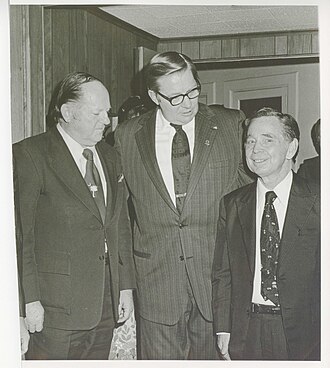
President Nixon met with VFW leadership, Donald E. Johnson, Charles W. Colson, and Alexander M. Haig, Jr. to discuss the administration's Vietnam War policies, including the status of U.S. Prisoners of War and the progress of Vietnamization. A significant portion of the discussion focused on domestic challenges facing returning veterans, particularly the high unemployment rates among Vietnam veterans and the need for improved federal job training and placement programs. Nixon directed his team to prioritize veteran employment initiatives and emphasized the importance of ensuring these programs served all veterans equitably, including minorities.
President Nixon met with his Cabinet and key staff to coordinate legislative strategies and manage domestic policy agendas. The discussion focused on securing passage for welfare reform and other administration priorities by engaging directly with congressional leadership and balancing competing interests within the labor market. Participants assessed the challenges of mobilizing support among both Democrats and Republicans and emphasized the necessity of persistent lobbying and effective communication with legislative committees.
President Nixon met with administration officials, including George Shultz and Donald Johnson, along with Congressmen Charles and Olin Teague to discuss the status and long-term needs of the veterans' healthcare system. The discussion focused on balancing budget constraints with the necessity of upgrading aging VA hospital facilities and addressing the specific health and reintegration challenges faced by Vietnam-era veterans. Nixon emphasized his commitment to providing veterans with an 'edge' in public life and directed the participants to coordinate efforts between the VA and other agencies to develop a comprehensive, long-term health strategy, particularly regarding drug abuse treatment and facility utilization.
President Nixon met with sculptor Michael "White Antelope" Naranjo, his wife, and administration officials to view and discuss a bronze sculpture of a Pueblo Indian dancer. The discussion focused on Naranjo’s artistic process, his commitment to his Native American heritage, and the determination required to overcome his physical disability. The President expressed deep admiration for Naranjo's talent and character, concluding the meeting by presenting him with presidential mementos and offering words of encouragement regarding his future work.
President Nixon met with his Cabinet and senior staff to discuss strategies for achieving a balanced federal budget by 1975, emphasizing the necessity of immediate spending cuts and potential vetoes of congressional legislation to curb inflation. Budget Director George Shultz outlined the administration’s plan to issue "ceiling letters" to agency heads to enforce strict fiscal guidelines and reduce government deficits. The participants also reviewed recent positive economic indicators, including growth in the Gross National Product and declining unemployment, while noting that the public generally views government spending as a primary driver of inflation.
President Nixon met with Veterans Affairs Administrator Donald E. Johnson and other aides to discuss the administration's legislative strategy regarding veterans' benefits and a messaging campaign for the 1972 election. Nixon emphasized the need to contrast his support for Vietnam veterans with the Democratic opposition's stance on amnesty and national security, specifically targeting comments made by Sargent Shriver and Ramsey Clark. The session also included administrative updates, such as the upcoming resignation of George Romney and a social visit with Donald McI. Kendall and his family, during which they exchanged gifts and discussed presidential items.
President Nixon met with his senior staff and campaign advisors to assess his 1972 reelection strategy, focusing on framing the debate against George McGovern around key issues like Vietnam, welfare, busing, and national defense. The group discussed the necessity of moving from a defensive posture to an aggressive offense by highlighting the radical nature of McGovern's positions to the general public. Additionally, the President met with James Hodgson and other officials to review progress on veterans' benefits and education programs, confirming plans to maintain support among Vietnam-era veterans as part of the broader campaign effort.
President Nixon met with the National Advisory Council for Drug Abuse Prevention to discuss the administration's ongoing strategies for combating drug use, including law enforcement, treatment programs, and international cooperation. The President emphasized the importance of the Council's expertise in generating effective policy ideas and highlighted the prevalence of drug-related crimes among the youth population. During the meeting, Nixon presented awards to the members in recognition of their contributions to the national anti-drug effort.
President Nixon and his Cabinet met to launch a strategic public relations campaign, titled the Presidential Spokesmen program, aimed at pressuring Congress to support his budget priorities and oppose spending-heavy legislation. Nixon urged his officials to frame the budget debate not as a constitutional conflict, but as a direct choice between the economic interests of the 'New American Majority' and the fiscal irresponsibility of the opposition. The session included briefings on foreign policy, defense spending, and law enforcement, emphasizing the need for administration spokesmen to maintain a positive, disciplined narrative while avoiding defensive posturing on 'false issues.'
President Nixon met with Donald E. Johnson and James H. Cavanaugh to discuss administrative support and public relations strategies regarding Vietnam veterans following his March 29 address. The participants focused on the challenges faced by returning veterans, including psychological care and the need for the Veterans Administration to combat bureaucratic inefficiencies through decentralization. Additionally, Nixon emphasized the administration's commitment to obtaining a full accounting of American prisoners of war and those missing in action.