Hébert, F. Edward
F. Edward Hébert, a Democratic Congressman from Louisiana, served as the influential Chairman of the House Armed Services Committee during a significant portion of the Nixon administration. He assumed this powerful role in 1971, placing him in a key position to shape military policy and defense spending throughout the period the White House tapes were recorded. His interactions with the administration were significant, as evidenced by his recorded meetings with President Nixon.
President Nixon met with Vice President Agnew and a bipartisan group of Congressional leaders to announce a significant diplomatic breakthrough in the Strategic Arms Limitation Talks (SALT). Nixon informed the attendees of a forthcoming joint statement with the Soviet Union pledging to focus on limiting anti-ballistic missile (ABM) systems and certain offensive strategic weapons. While some lawmakers advocated for immediate unilateral U.S. defense cuts to demonstrate good faith, the President and his advisors successfully urged the leaders to maintain existing defense programs during the negotiations to avoid losing vital bargaining leverage.
President Nixon met with a bipartisan group of Congressional leaders and administration officials to propose a centralized federal office for coordinating drug abuse prevention and treatment strategies. The discussion highlighted the urgency of addressing drug addiction, particularly among servicemen in Vietnam and youth in the United States, by shifting from a fragmented, multi-agency approach to a unified, performance-based model. Participants debated the integration of law enforcement, research, and treatment programs, with an emphasis on establishing flexible, community-based solutions and securing Congressional support for new enabling legislation.
President Nixon calls Congressman F. Edward Hébert to congratulate him on the House's decisive legislative victory regarding funding for the Antiballistic Missile (ABM) system and the B-1 bomber. The conversation shifts to the ongoing controversy surrounding the publication of the Pentagon Papers by The New York Times, which Nixon characterizes as an attack on the presidency. Nixon expresses his determination to pursue legal action against Daniel Ellsberg and his associates, asserting that those responsible for leaking the classified documents must be sent to jail.
President Nixon consulted with House Armed Services Committee Chairman F. Edward Hébert and Secretary of Defense Melvin Laird regarding legislative strategies and the security of classified documents. Nixon expressed gratitude for Hébert’s support in the upcoming House-Senate conference on Vietnam withdrawal language, emphasizing the need to prevent legislative mandates that could undermine ongoing peace negotiations. Additionally, the participants discussed the handling of leaked government documents, with Hébert assuring the President that he would implement strict security protocols to prevent further disclosures if the materials were referred to his committee.
President Nixon met with House Armed Services Committee Chairman F. Edward Hébert to express appreciation for his public support during ongoing legislative negotiations. The discussion focused on managing the political challenges posed by the Senate and the imperative of maintaining the security of sensitive government intelligence sources. Nixon emphasized the necessity of preventing leaks to ensure the administration's leverage in diplomatic and military negotiations.
President Nixon and Congressman F. Edward Hébert coordinated legislative strategy regarding the Mansfield Amendment to ensure the President maintained control over Vietnam negotiations. Hébert updated the President on the status of the House conference committee and his plan to maneuver the resolution on the floor. The two agreed to speak again the following morning to finalize the administration's position before Hébert took further action in Congress.
President Nixon, Henry Kissinger, Alexander Haig, and Representative F. Edward Hébert met to discuss congressional strategy regarding the draft and the influence of legislative language on ongoing Vietnam peace negotiations. The President tasked Hébert with reviewing specific amendment language to ensure it aligned with White House objectives while avoiding problematic deadline constraints. The discussion also addressed the administration's high-stakes diplomatic maneuvering, specifically balancing potential summits with the Soviet Union and China.
President Nixon met with H.R. Haldeman, Henry Kissinger, and Representative F. Edward Hébert to discuss legislative strategy, public relations, and foreign affairs. The primary focus was navigating a Congressional resolution on the Vietnam War, with Nixon instructing Hébert to resist firm withdrawal deadlines while attempting to tie any potential concessions to a ceasefire and prisoner exchange. Additionally, the participants reviewed press leaks involving the Supreme Court, planned the President’s upcoming July 3rd appearance, and coordinated a personal response to the tragic deaths of three Soviet cosmonauts.
President Nixon and Representative F. Edward Hébert, in consultation with Henry Kissinger, discussed strategies for the Congressional conference committee regarding the Selective Service Act. Nixon provided Hébert with alternative legislative language that the White House could tolerate, while emphasizing his firm opposition to the Mansfield Amendment or any provision containing a withdrawal date. The President insisted that any language must include requirements for a ceasefire and prisoner exchange, directing Hébert to present the White House's preferred language as his own to maintain the appearance of administration distance from the legislative negotiations.
President Nixon met with bipartisan Congressional leaders and senior administration officials to discuss the sensitive diplomatic initiative concerning the normalization of relations between the United States and the People’s Republic of China. The President and Henry Kissinger briefed the group on the nature of these confidential negotiations, emphasizing the necessity of absolute discretion to ensure the process remained successful. Nixon and his team requested that participants avoid speculation and maintain a unified, non-partisan front when speaking publicly about the delicate geopolitical implications of this shift in U.S. foreign policy.
President Nixon met with key Congressional leaders, including John C. Stennis and F. Edward Hébert, along with his advisors to discuss the legislative strategy for upcoming draft bills and the political impact of Congressional interference in Vietnam War policy. The participants debated the risks of establishing a firm troop withdrawal date, with Nixon emphasizing that Congressional restrictions could undermine his negotiating leverage and public perception. The President insisted on maintaining executive freedom of action to ensure a favorable peace settlement and signaled that he would not yield on the inclusion of a binding deadline in draft legislation.
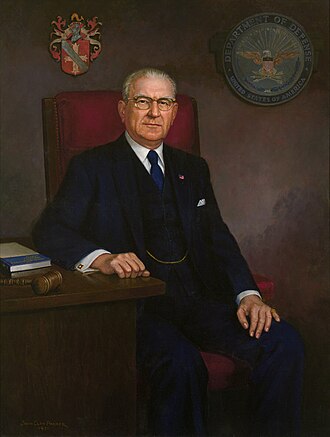
President Nixon and Congressman F. Edward Hébert discussed legislative strategy regarding the extension of the military draft, emphasizing the need to maintain a hardline stance to protect national security interests. Nixon requested that Hébert avoid making immediate public comments if an initial vote fails, instead deferring to the President so they can coordinate a secondary strategy with key allies like Leslie Arends and John Stennis. Additionally, Nixon agreed to attend Hébert's 70th birthday portrait-hanging ceremony on October 12, 1971, contingent upon their continued collaboration on the draft legislation.
President Nixon, Representative F. Edward Hébert, and Henry Kissinger discussed legislative strategies for securing a draft extension bill, emphasizing the necessity of maintaining national security and presidential authority. The participants strategized on how to manage congressional opposition and media pressure, specifically regarding artificial Vietnam withdrawal deadlines and the potential political fallout of the Mansfield amendment. Nixon and his advisors also reviewed foreign policy accomplishments and agreed to adopt an aggressive, non-defensive public stance regarding Vietnam and the Attica prison riots to counter critical media narratives.
President Nixon met with congressional leaders and administration officials, including John C. Stennis and Melvin R. Laird, to coordinate legislative strategy regarding HR 6531 and the broader Military Procurement Bill. The participants discussed the status of the bill in Congress, specifically focusing on managing the Mansfield amendment and navigating the conference committee process. The discussion emphasized building support for the administration's military objectives and preparing for legislative action items in the coming week.
President Nixon met with a bipartisan group of Congressional leaders to discuss his upcoming historic trip to the People's Republic of China. The President sought to build support for the mission, briefing the group on communication protocols with Peking and his strategy for managing the international and domestic implications of the visit. The discussion emphasized the goal of establishing a new dialogue with the PRC to foster long-term global stability and balance regional power dynamics.
President Nixon met with a bipartisan group of Congressional leaders to provide a firsthand report on his recent diplomatic mission to the People's Republic of China (PRC). During the briefing, the President discussed his interactions with Chinese leadership, the strategic importance of establishing communication channels, and the complex geopolitical dynamics concerning Taiwan and the broader Pacific region. The meeting emphasized the necessity of maintaining trust and diplomatic dialogue to navigate future international relations and manage long-term foreign policy objectives.
President Nixon met with Secretary of Defense Melvin Laird and various congressional leaders to discuss the signing of the Uniformed Services Health Provisions Revitalization Act (HR 2) and the promotion of defense-related legislation. The conversation transitioned into campaign strategy for the 1972 election, with Nixon and Laird analyzing the political implications of George McGovern's defense platform and coordinating appearances to target specific demographics in key states like Massachusetts and Wisconsin. Additionally, they praised the public speaking skills of Brigadier General Daniel 'Chappie' James Jr. and discussed administrative efforts to bolster military support through strategic announcements, such as new contracts for the Quincy shipyards.
President Nixon calls Representative F. Edward Hébert to confirm that a personal request regarding appropriations has been resolved through the efforts of John Ehrlichman. Hébert expresses his gratitude for the President's intervention in clearing the bureaucratic hurdle. The pair concludes the brief conversation with Hébert praising a recent presidential speech and reaffirming their shared hardline stance on using military force to achieve diplomatic goals.
President Nixon and Representative F. Edward Hébert met briefly to follow up on the resolution of an unspecified personnel or procedural matter. The participants confirmed that the issue had been successfully settled and that appropriate credit would be granted. The conversation concludes with a brief, cryptic remark regarding the successful handling of the situation without collateral impact on uninvolved parties.
President Nixon met with bipartisan Congressional leaders, Vice President Agnew, and key cabinet members to discuss U.S. foreign policy developments in Latin America, Southeast Asia, and Europe. Secretary of State William Rogers briefed the group on his recent tour of eight Latin American nations, emphasizing improved diplomatic relations despite complex issues regarding oil, inflation, and expropriation. Henry Kissinger provided an update on ongoing negotiations in Paris aimed at reinforcing the Vietnam ceasefire, while he and the President outlined a new strategy for strengthening Atlantic alliances, stressing the need to link economic, political, and defense policies to ensure future international stability.