Nixon, Richard M. (President)
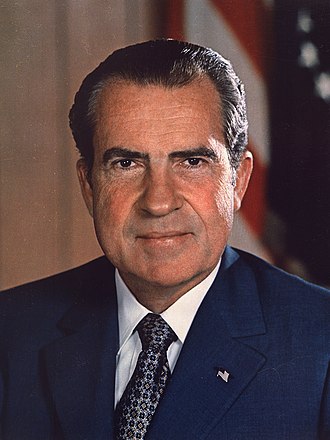
Richard M. Nixon served as the 37th President of the United States from January 1969 until his resignation in August 1974. In February 1971, he ordered the installation of a secret voice-activated taping system in the White House to preserve a historical record of his administration. Until the system's existence was revealed and dismantled in July 1973, the tapes captured Nixon directing major foreign policy initiatives, such as the opening to China, as well as his central role in the Watergate cover-up.
What Nixon talks about on the tapes
White House operations 4,718Presidential scheduling 2,225Public relations 1,784Presidential schedule 1,782Vietnam War 1,693Logistics 1,650Manolo Sanchez 1,626White House communications 1,400White House administration 1,399Presidential communication 1,243Henry Kissinger 1,191Foreign Policy 1,183
Conversations (21,010)
— Page 161 of 211President Richard M. Nixon interacted with the White House operator during a brief session in his Old Executive Office Building suite. The recording consists solely of administrative coordination between the President and the operator to facilitate external communications. No policy matters or substantive political developments were addressed during this brief exchange.
President Nixon met with his personal valet, Manolo Sanchez, in the Old Executive Office Building to discuss administrative or logistical arrangements. The brief interaction focused on operational coordination, with the President providing instructions for Sanchez to initiate a phone call. The conversation concluded with the President directing the logistics of the requested communication.
President Richard Nixon met to dictate a memorandum for the official record, serving as a continuation of previous discussions. This administrative task was intended to document specific institutional or political developments for the historical file. No further details regarding the substance of the memorandum were recorded in the provided documentation.
President Nixon met with Charles Colson to evaluate the political fallout and public reaction following his 1973 Inauguration, focusing specifically on the effectiveness of his inaugural address and the bias of press coverage. The two discussed strategic approaches to handling the President's political opponents, including the use of lawsuits against critical media outlets like Time magazine. Additionally, they reviewed security concerns and legal responses regarding protestors who disrupted the inaugural parade.
President Nixon directed Raymond K. Price, Jr. to transmit a speech draft to him for review. The two discussed their immediate availability to coordinate on this document and other pending matters. Price committed to sending the materials shortly and remaining on standby for further instruction from the President.
President Nixon initiates a brief request for the White House operator to connect him with Press Secretary Ronald L. Ziegler. The conversation serves solely as a logistical bridge to facilitate direct communication with his aide. No substantive policy discussions or decisions occur during this brief administrative exchange.
President Nixon instructed Press Secretary Ronald L. Ziegler to implement an immediate ban on all communication between White House staff and Time magazine. This directive was prompted by a negative story regarding Charles W. Colson and John N. Mitchell. Nixon ordered that any staff member, including National Security Council personnel, found violating this policy—specifically mentioning Jerold L. Schecter—must have their resignation submitted within one minute.
President Nixon contacted the White House operator to facilitate an outgoing call to Press Secretary Ronald L. Ziegler. This brief interaction served as a logistical step to initiate communication with a key staff member. No further substantive policy matters were discussed during this request.
President Nixon directs Press Secretary Ronald Ziegler to enforce a strict information blackout regarding a sensitive timing issue, specifically tasking Ziegler with instructing Alexander Haig to police the Pentagon's compliance. Nixon expresses frustration over perceived malicious leaks from the State Department and demands that Ziegler silence members of the Domestic Council, including staff under George Shultz. The conversation serves as a directive to centralize control over communications and neutralize internal dissent across key executive departments.
President Nixon directs the White House operator to contact speechwriter Raymond K. Price, Jr. The President explicitly requests that Price come to the Oval Office immediately. This brief administrative interaction serves as a call for consultation with a key member of the Nixon speechwriting staff.
President Nixon consulted with the White House operator to facilitate an outgoing call. This brief interaction served administrative purposes to connect the President with a desired party. No substantive policy matters or further developments were recorded during this brief technical exchange.
President Nixon and H. R. Haldeman met briefly in the Old Executive Office Building to discuss administrative matters and the ongoing management of the White House staff. The conversation focused on internal personnel adjustments and the strategic planning of upcoming presidential communications. No formal records of the specific dialogue exist, leaving the granular details of their decisions undocumented.
President Nixon met with key advisors and staff, including Raymond Price, H.R. Haldeman, and Alexander Haig, to finalize the messaging and strategy for his upcoming televised address regarding the Vietnam settlement. The discussion focused heavily on managing congressional relations, securing bipartisan support, and refining the speech’s tone to project strength while addressing potential sensitivities. Throughout the afternoon, the group also monitored news of former President Lyndon B. Johnson's declining health, which prompted deliberations on the impact of his condition on the President's schedule and the potential need for a public statement.
President Nixon initiates a request for the White House operator to connect him with Alexander M. Haig, Jr. This brief administrative interaction serves as the preliminary step for the President to establish direct communication with his assistant. No further substantive policy discussions occur during this specific exchange.
President Nixon and Alexander Haig discuss the implications of Lyndon B. Johnson’s death on the timing of the impending Vietnam settlement announcement. Nixon expresses concerns about announcing the agreement during a national mourning period and suggests that Henry Kissinger could utilize the news of Johnson’s passing as a strategic delay to accommodate South Vietnamese concerns. Furthermore, Nixon decides against delivering the announcement from the Capitol, opting instead for a more somber address from the White House, and instructs Haig to coordinate the speech draft with Raymond Price.
President Nixon contacted the White House operator to place a telephone call to H. R. “Bob” Haldeman. The brief exchange served as an administrative request to facilitate communication with his Chief of Staff. No further substantive policy matters were discussed during this connection.
President Nixon and H.R. Haldeman discuss logistical arrangements for the funeral of Lyndon B. Johnson, focusing on Nixon's refusal to attend any services held at the Washington National Cathedral due to personal animosity toward Dean Francis B. Sayre. Nixon instructs Haldeman to ensure the White House press staff is firm regarding his non-attendance and emphasizes his preference for services to be held at the Capitol. Additionally, the President orders the postponement of a planned television address and a dinner for Japanese Prime Minister Eisaku Sato to avoid appearing insensitive during the national mourning period.
President Nixon contacted the White House operator to place a personal telephone call to his close friend and confidant, Charles G. (“Bebe”) Rebozo. The brief exchange served as a routine administrative request to facilitate private communication. No substantive policy matters were discussed during this brief connection.
President Nixon contacted the White House operator to facilitate an immediate connection with Press Secretary Ronald L. Ziegler. This brief administrative interaction served as a logistical bridge to initiate a direct line of communication between the President and his primary spokesperson. No further substantive policy matters were addressed during this short exchange.
President Nixon and Press Secretary Ronald Ziegler discussed the difficulty of controlling the narrative regarding the Vietnam peace settlement due to extensive media coverage and public comments from South Vietnamese Foreign Minister Tran Van Lam. Ziegler explained that press plants with The Washington Post and CBS were complicated by the Foreign Minister’s optimistic but unauthorized interviews. The two concluded the call with arrangements for Ziegler to deliver a prepared statement regarding the death of former President Lyndon B. Johnson to the Lincoln Room.
President Nixon and Charles G. “Bebe” Rebozo discuss the death of former President Lyndon B. Johnson and the coordination of memorial service attendance. The conversation also touches upon a recent, successful event at the President’s Florida home, which Rebozo describes as having been received with great enthusiasm. Nixon requests that Rebozo make plans to attend the upcoming funeral ceremonies.
President Nixon and his valet, Manolo Sanchez, engage in a brief interaction concerning the review of photographs and the management of audio recordings. The discussion centers on locating a specific individual in a photograph and confirming that certain tapes are designated for the President’s private files. No major policy decisions were made during this brief, personal administrative exchange.
President Nixon met with an unidentified individual in the Old Executive Office Building to review the presidential schedule, specifically concerning the activities of National Security Advisor Henry Kissinger. Due to the lack of a recorded transcript, the substantive details of the discussion remain unknown. The meeting concluded shortly after the brief exchange, with the visitor departing before 8:15 am.
President Nixon and Press Secretary Ronald Ziegler discuss the drafting of a formal statement regarding the death of former President Lyndon B. Johnson. They deliberate on the specific phrasing of the tribute, ultimately deciding to remove a sentence about achieving peace to avoid potential controversy or distraction during upcoming media coverage. Nixon directs Ziegler to finalize the statement, noting that its release should be timed strategically alongside public announcements.
President Nixon utilized this time in the Old Executive Office Building to dictate a memorandum for the files regarding his recent activities and administrative priorities. The recording captures the President documenting thoughts on the 1973 inauguration, the impending Vietnam peace settlement announcement, and personnel matters involving Alexander Haig and Charles Colson. Following this dictation, Manolo Sanchez entered the office to fulfill a request for refreshments.
President Nixon utilized this session to dictate a memorandum for the official White House files. This recording serves as a continuation of his previous administrative notes recorded in the preceding conversation. The primary purpose was to document specific internal matters for the historical record.
President Nixon utilized the White House operator to place an outgoing call to Charles W. Colson. This brief interaction served solely as a logistical bridge to connect the President with his special counsel. No substantive policy discussions or decisions occurred during the exchange with the operator.
President Nixon dictates a memorandum for the files to record his thoughts following a previous discussion. The brief recording serves as a continuation of prior deliberations, documenting internal administrative or policy recollections. This dictated entry functions as an official record of the President's personal notes regarding ongoing White House matters.
President Nixon and Charles Colson discuss Colson’s potential lawsuit against the media regarding recent reporting. While Attorney General Richard Kleindienst advised against legal action, Nixon encourages Colson to pursue the case to force a public retraction. The conversation also touches upon the death of Lyndon B. Johnson and its impact on the public perception of the Vietnam War settlement.
President Nixon and Charles Colson held a brief, informal discussion regarding unspecified political activities or personnel matters. Due to the fragmentary and poor quality of the recording, no substantive policy decisions or clear action items are discernable. The brief interaction serves primarily to document the ongoing communication between the President and his advisor during this period.
President Nixon met with Alexander Haig and Raymond Price to review and refine a draft statement or speech regarding the ongoing negotiations in Vietnam. The discussion focused on editing specific paragraphs and determining the appropriate tone for addressing the progress of the peace efforts and the role of the South Vietnamese government. Nixon provided direction on which sections to retain or omit to ensure the document effectively communicated the administration's position.
President Nixon utilized this session in his Old Executive Office Building suite to dictate a memorandum. The recording captures the President engaged in administrative work, though the specific subject matter of the dictated document remains unavailable due to the lack of a transcript. This brief meeting reflects the President's routine use of the taping system to record official correspondence and policy directives.
President Nixon met with an unknown woman in the Oval Office to facilitate the formal signing of an official document. Stephen B. Bull was present to assist with the administrative process during this brief encounter. The meeting concluded immediately following the execution of the paperwork.
President Nixon met briefly with an unidentified woman in the Oval Office to facilitate the delivery of specific materials. The encounter was short, lasting less than six minutes, and concluded with the visitor departing the office. No further details regarding the nature of the materials or the identity of the individual were recorded.
President Nixon attempted to reach journalist William S. White via the White House operator. The operator informed the President that White was briefly unavailable after stepping out to a nearby store. No further discussion occurred as the operator confirmed she had left a message for White to return the call.
President Nixon held a brief administrative interaction with the White House operator to facilitate official communication. This exchange reflects the standard procedural operations required to manage incoming and outgoing calls within the Oval Office. No substantive policy discussions or significant political developments occurred during this brief contact.
President Nixon and Stephen B. Bull met to coordinate scheduling for upcoming meetings with Congressional leadership regarding the 1973 budget and legislative initiatives. The discussion focused on finalizing the timing for bipartisan briefings and clarifying the involvement of Roy L. Ash and William E. Timmons. Nixon emphasized the need for caution and political strategy in handling these sensitive materials to ensure the information remained secure.
President Nixon met with his personal secretary, Rose Mary Woods, and Stephen B. Bull to review and reform the guest invitation process for White House social events. Expressing frustration with the repetition of the same attendees, the President directed that future guest lists prioritize new, diverse invitees and strictly limit repeat visits for staff and politicians. They also discussed logistical concerns regarding Inaugural event planning, religious services, and the management of contributor expectations.
President Nixon spoke with journalist William S. White to express condolences following the death of former President Lyndon B. Johnson. The two discussed their shared frustration regarding the lack of loyalty Johnson received from members of his own political party during his later years. Nixon also reflected on a recent conversation he had with Johnson, expressing his belief that the former president felt encouraged by the progress of the Vietnam peace negotiations before his passing.
President Nixon met with William P. White to express his condolences following the death of former President Lyndon B. Johnson. The conversation focused on the personal and political treatment of Johnson by members of his own party, with Nixon expressing deep frustration toward those he felt had disloyally abandoned their former mentor. Both men shared reflections on their personal histories with Johnson and lamented the lack of support he received from Democratic allies toward the end of his life.
President Nixon contacted the White House operator to initiate a telephone call to Colonel Richard T. Kennedy. This brief interaction served solely as a logistical request to establish communication with Kennedy. No substantive policy discussions or decisions occurred during the exchange.
President Nixon consulted with the White House operator to troubleshoot a technical issue with the telephone connection. The brief exchange focused exclusively on the President's inability to hear the operator. No substantive policy matters or administrative decisions were addressed during this failed communication attempt.
President Nixon and Colonel Richard T. Kennedy discuss the status of Henry Kissinger’s schedule regarding the Vietnam peace negotiations in Paris. The President seeks confirmation on whether Kissinger intends to return to Washington as planned or delay his arrival due to the passing of former President Lyndon B. Johnson. The pair confirms that Kissinger is expected back by 6:00 p.m., and Nixon affirms his commitment to proceed with the scheduled Day of Mourning for Johnson regardless of the diplomatic developments.
President Nixon instructed his aide, Stephen B. Bull, to locate H.R. Haldeman to discuss urgent matters before the President became occupied with other obligations. Nixon also directed that Alexander M. Haig, Jr. be brought in immediately to join the meeting. Bull was tasked with determining Haldeman's availability without disrupting his current staff meeting while ensuring Haig's prompt arrival.
President Nixon consulted with Col. Richard T. Kennedy to receive updates regarding uncertain negotiations or strategic plans that were subject to ongoing developments. The brief exchange focused on conflicting reports about a potential delay in these plans, with the President emphasizing the need for timely notification upon Kennedy's arrival. No definitive policy decisions were reached, as the primary objective was to clarify the status of the evolving situation.
President Nixon initiated a brief contact with the White House operator to facilitate an administrative connection. This interaction functioned as a routine logistical step to establish communication for subsequent official business. No substantive policy discussions or major decisions were recorded during this one-minute exchange.
President Nixon directs Stephen B. Bull to monitor the progress of specific administrative or logistical tasks involving Soviet personnel. The President explicitly requests information regarding the anticipated completion time of these activities while emphasizing a desire to limit the scope of the Russians' involvement. This brief exchange serves to track the status of ongoing diplomatic or bureaucratic arrangements.
President Nixon contacted the White House operator to issue a directive regarding his staff scheduling. He specifically requested that speechwriter Raymond K. Price, Jr. be summoned to the Executive Office Building. This brief administrative communication facilitated the necessary coordination for Price to meet with the President.
President Nixon directs the White House operator to facilitate an urgent call between Chief of Staff H.R. Haldeman and former Secretary of the Treasury John B. Connally. The discussion focuses on determining Connally's current location in Jamaica and evaluating the security of communication lines, specifically whether the call can be placed via a secure channel or must go through a commercial operator. The President prioritizes establishing contact with Connally as quickly as possible.
President Nixon initiates a request for the White House operator to connect him with Alexander M. Haig, Jr. This brief administrative interaction serves as a bridge to facilitate direct communication between the President and his top aide. No further policy discussions or substantive developments occur during this brief exchange.
President Nixon met with H. R. Haldeman, Alexander Haig, Ronald Ziegler, and others to strategize for the upcoming announcement of the Vietnam peace settlement and the state funeral for former President Lyndon B. Johnson. The discussion focused on coordinating the public relations strategy, balancing the tone of the announcement with a period of national mourning, and managing Congressional relations. Nixon emphasized his desire for a succinct, impactful speech regarding the peace agreement and expressed frustration with internal staff leaks and the potential for political fallout from his domestic opponents.
President Nixon and H. R. Haldeman met to coordinate the logistics and venue for a televised address regarding the impending Vietnam peace settlement. The discussion focused on the political implications of delivering the speech before Congress, specifically weighing the advice and perspectives of Speaker Carl Albert and Representative Gerald Ford. The participants evaluated the potential for a Congressional boycott and the broader necessity of securing legislative prestige for the administration's foreign policy announcement.
President Nixon held a brief, undocumented discussion with an unidentified individual in his Old Executive Office Building workspace. The lack of available transcript or descriptive records renders the specific content and purpose of this meeting unknown. Consequently, no policy decisions or action items can be attributed to this brief exchange.
President Nixon consults with Alexander M. Haig, Jr. regarding the completion of a drafted message. Following this, the President instructs Haig and Raymond K. Price, Jr. to convene with him at the White House for a follow-up meeting. This brief exchange serves to coordinate the scheduling and review of the finished document.
President Nixon consulted with a White House operator in his Old Executive Office Building workspace to facilitate a telephone connection. The interaction served as a brief administrative bridge to initiate further communication with an unnamed party. No substantive policy matters or major political decisions were recorded during this brief exchange.
President Nixon and Alexander Haig met to discuss strategic matters following the conclusion of the Vietnam War negotiations. The conversation focused on the implications of the imminent peace agreement and the necessary administrative adjustments required in the wake of this development. No specific operational mandates were finalized, as the discussion served primarily to align the President and his aide on the shifting political landscape.
President Nixon, H.R. Haldeman, and Alexander Haig coordinated the scheduling of a series of high-level meetings regarding the upcoming Vietnam peace settlement announcement. The group finalized plans for an 8:30 p.m. Cabinet meeting followed by a session with Congressional leadership. Additionally, the President initiated a request for a follow-up telephone call with William E. Timmons to address these administrative preparations.
President Nixon initiates a brief telephone call to the White House operator to be connected with First Lady Pat Nixon. This administrative exchange serves solely as a request to facilitate private communication with his wife. No substantive policy matters or major political decisions are addressed during this short interaction.
President Nixon met with his senior advisors, including Alexander Haig, H. R. Haldeman, and Raymond Price, to finalize the wording and delivery strategy for his upcoming speech announcing the Vietnam peace settlement. The President emphasized his desire to highlight his personal role in the negotiations while coordinating support from bipartisan Congressional leaders to ensure the agreement's success. Additionally, the group discussed scheduling concerns related to the upcoming funeral ceremonies for Lyndon B. Johnson and the President's personal exhaustion, with Nixon expressing the need for a brief recuperative trip to California or Florida following the announcement.
President Nixon met with his personal valet, Manolo Sanchez, to discuss logistical arrangements and the President's upcoming schedule. The brief conversation focused on coordinating a meeting with Charles W. Colson, specifically regarding the proper location for the encounter. No major policy decisions were reached during this short interaction, which primarily served to manage the President's immediate administrative affairs.
President Nixon met with his valet, Manolo Sanchez, in the Old Executive Office Building to discuss administrative matters. The brief conversation focused on the schedule of Special Counsel Charles W. Colson. No major policy decisions were recorded during this short interaction.
President Nixon calls First Lady Pat Nixon to share the news that Henry Kissinger is returning with a signed Vietnam peace agreement. The President informs her that he plans to deliver a televised announcement regarding the settlement that evening. This brief personal exchange serves to update the First Lady on the successful conclusion of the negotiations.
President Nixon held a brief, administrative interaction with the White House operator to facilitate a connection. The discussion was limited to routine telecommunications logistics and contained no substantive policy deliberations or political developments. The exchange served exclusively as a functional transition for the President to reach another party.
President Nixon contacted the White House operator to initiate a telephone call to his Press Secretary, Ronald L. Ziegler. The brief interaction served solely to facilitate this communication channel between the President and his top spokesperson. No further policy or strategic discussions took place during this exchange.
President Nixon informs First Lady Pat Nixon that a formal agreement regarding the Vietnam War has been reached. He outlines his intention to publicly announce the peace agreement at 10:00 p.m. that evening. The brief exchange concludes with the President instructing her to communicate this development to others.
President Nixon and Press Secretary Ronald Ziegler coordinated media and public relations strategy regarding the upcoming announcement of the Vietnam peace settlement. Nixon instructed Ziegler to restrict media access to a photographic pool, explicitly barring reporters to avoid unauthorized questioning. The President also rejected a joint session of Congress as a backdrop for the address, opting instead for a simpler presentation to minimize the platform provided to political opponents.
President Nixon held a brief, informal interaction with a White House operator to facilitate an outgoing call. No substantial policy matters or political discussions were recorded during this exchange. The encounter serves primarily as a procedural recording of the President utilizing White House communication infrastructure.
President Nixon and Press Secretary Ronald Ziegler discuss the handling of visual documentation and photographic records regarding an unspecified project or event. The President explicitly instructs that only photographic material be emphasized, while expressing skepticism regarding the feasibility of funding for a particular initiative. They also briefly consider the strategic optics of involving bipartisan congressional leadership in public-facing appearances.
President Nixon met with his personal valet, Manolo Sanchez, in the Old Executive Office Building to address a technical issue. The conversation focused on the failure of the dictation machine's batteries. Sanchez was present to assist with the administrative equipment, confirming the need for functional recording tools.
President Richard Nixon met with his valet, Manolo Sanchez, in the Old Executive Office Building to discuss the President's personal schedule. The brief interaction focused on logistics regarding Nixon's upcoming agenda and daily appointments. No major policy developments or high-level strategic decisions were recorded during this segment of the conversation.
President Nixon met with his personal valet, Manolo Sanchez, in the Old Executive Office Building. The brief discussion focused on the acquisition and maintenance of batteries for the President's dictation machine. No major policy matters were addressed during this administrative exchange.
President Nixon utilized this time to dictate a memorandum for his personal files following his recent inauguration. The brief recording captures the President documenting minor logistical details related to the ceremonial proceedings, specifically concerning floral arrangements and the family members of an unidentified individual. No major policy decisions or significant administrative actions were discussed during this brief dictation.
President Nixon met with his personal valet, Manolo Sanchez, to discuss the logistics of his upcoming public address regarding the Vietnam settlement and the pursuit of "peace with honor." The conversation touched upon the strategic implications of the recent bombing campaigns and their role in facilitating negotiations. Beyond political discourse, the participants coordinated the President’s personal schedule, specifically managing his needs for refreshments and rest.
President Nixon contacted the White House operator to issue a directive regarding Charles W. Colson. He requested that Colson report to him immediately upon returning from his lunch break. This instruction ensured that the President could speak with his special counsel as soon as he became available.
President Nixon held a brief administrative interaction with the White House operator to facilitate a telephone connection. The exchange served as a logistical step in managing the President's telecommunications during his time in the Executive Office Building. No substantive policy discussions or major decisions occurred during this brief communication.
President Nixon met with his personal valet, Manolo Sanchez, in the Old Executive Office Building to discuss administrative matters. The brief interaction focused on the President's upcoming schedule and involved coordination with Charles W. Colson. No significant policy decisions were reached during this short meeting.
President Nixon and Charles Colson met to strategize the administration's public messaging following the impending Vietnam cease-fire agreement. Nixon emphasized the necessity of a vigorous, aggressive counteroffensive against political opponents and media critics to ensure his policy was perceived as a vindication of his Southeast Asia strategy. They discussed mobilizing labor leaders and veterans to bolster support, while simultaneously dismissing the importance of negative press coverage from outlets like the Washington Post and CBS.
President Nixon contacted the White House operator to request a telephone connection with his Press Secretary, Ronald L. Ziegler. The brief exchange served as a logistical step to facilitate direct communication between the President and his senior aide. No substantive policy discussions or decisions occurred during this brief request.
President Nixon met with his personal valet, Manolo Sanchez, in the Old Executive Office Building to discuss administrative matters regarding the President's daily schedule. The conversation focused on logistical arrangements managed by Raymond K. Price, Jr. No significant policy decisions were recorded during this brief exchange.
President Nixon held a private meeting with an unidentified individual in his Old Executive Office Building suite to discuss matters concerning the President's daily schedule. Due to the lack of a transcript and the anonymity of the participant, the specific nature of the agenda remains unverified. The discussion concluded when the visitor departed the office later that afternoon.
President Nixon met with his personal aide, Manolo Sanchez, to discuss administrative matters and his upcoming schedule. The conversation included coordinating the arrival of Raymond K. Price, Jr. and Alexander M. Haig, Jr., as well as arranging for refreshments. The brief interaction focused primarily on managing the flow of personnel and logistical needs within the Executive Office Building.
President Nixon contacted Press Secretary Ronald Ziegler to enforce a strict directive barring White House staff from communicating with Time magazine journalists Jerrold L. Schecter and Hugh S. Sidey. Nixon demanded that his orders to freeze all cooperation with the publication be fully understood and upheld for the remainder of his term. He confirmed that he would also coordinate with H. R. Haldeman to ensure the policy was consistently implemented across the administration.
President Nixon consulted with the White House operator to facilitate a connection for an outgoing telephone call. This brief interaction served as a logistical step in managing the President’s external communications. No policy matters or substantive political decisions were addressed during this exchange.
President Nixon and Press Secretary Ronald L. Ziegler held a brief meeting to coordinate messaging and ensure mutual understanding regarding sensitive information. The conversation centered on the management of specific inquiries and the necessity of keeping communications restricted to a limited circle of individuals. Nixon emphasized the importance of total discretion as they aligned their strategy for handling forthcoming public or internal inquiries.
President Nixon held a brief, informal meeting with an unidentified individual to discuss adjustments to his immediate daily schedule. The conversation centered on the necessity of completing specific administrative tasks before the President could begin his primary work duties. No major policy developments or significant decisions were recorded during this short exchange.
President Nixon met with an unidentified individual in the Old Executive Office Building to handle a brief administrative matter. The conversation focused on the delivery of an unspecified item or document, which received the President's formal approval. The interaction concluded quickly, with the visitor departing shortly thereafter.
President Nixon met with Alexander Haig and Raymond Price to finalize the content and tone of his upcoming speech regarding the Vietnam peace settlement. The discussion focused on articulating the strategic necessity of the war and the U.S. commitment to international stability compared to historical precedents. Nixon provided direct instructions to Price regarding the drafting process and cautioned his advisors against idealistic misinterpretations of political opposition and media criticism.
President Nixon used this time to record a memorandum regarding personal family history and to reflect on his administrative schedule and political strategy. He discussed the upcoming announcement of the Vietnam peace settlement, coordinating with staff and congressional leaders to manage public and press reactions. Additionally, Nixon emphasized the need for better pacing of his own schedule to manage fatigue and reviewed ongoing efforts by Charles Colson and other aides to counter political opposition.
President Nixon met with his personal secretary, Rose Mary Woods, to finalize administrative logistics following the announcement of a Vietnam peace settlement. The discussion focused on coordinating the distribution of letters to members of Congress and reviewing revisions to the President's public address regarding the settlement. Woods assisted in managing these critical communications and procedural tasks before concluding the brief meeting.
President Nixon met with H.R. Haldeman to refine the rhetoric for an upcoming public address regarding the Vietnam peace agreement. The discussion focused on framing the Paris agreement as "peace with honor" to secure support from Congress and the public while countering criticism. By reviewing dictated drafts and recordings, Nixon finalized his messaging strategy to distinguish his administration's diplomatic success from a policy of surrender.
President Nixon and H. R. Haldeman discussed the administration’s strategy for communicating the impending Vietnam settlement to key congressional members and labor leaders. They specifically reviewed the use of letters drafted by Patrick Buchanan and Raymond Price to garner support for the agreement. Additionally, the pair coordinated logistics for Pat Nixon’s attendance at the upcoming funeral of former President Lyndon B. Johnson.
President Nixon consulted with his personal secretary, Rose Mary Woods, regarding the administrative handling of outgoing correspondence. The discussion focused on finalizing a personal note intended for former First Lady Lady Bird Johnson as well as the delivery logistics for official letters addressed to various members of Congress. Woods was tasked with coordinating the specific timing and dispatch of these communications through the military aide and speechwriter Raymond K. Price, Jr.
President Nixon met with his personal valet, Manolo Sanchez, in the Old Executive Office Building to handle routine administrative and personal tasks. The discussion focused on coordinating a delivery to the President’s personal secretary, Rose Mary Woods, and finalizing a food order. The brief encounter facilitated logistical support for White House staff operations.
President Nixon met with his personal aide, Manolo Sanchez, in the Old Executive Office Building to discuss administrative logistics. The brief discussion primarily focused on the scheduling of National Security Advisor Henry Kissinger, specifically regarding his arrival time at the White House and the necessity of placing a call to his office. No major policy decisions were recorded during this brief encounter.
President Nixon met with his personal valet, Manolo Sanchez, in the Old Executive Office Building. The primary focus of the discussion was coordinating the logistics and arrival timing of National Security Advisor Henry Kissinger. This meeting served as an administrative check on the President's upcoming schedule.
President Nixon contacted the White House operator to facilitate a communication connection. The primary purpose of this brief call was to request the placement of a telephone call to Charles W. Colson. No further substantive policy matters were addressed during this interaction.
President Nixon initiates a brief administrative communication with the White House operator from his office in the Old Executive Office Building. The recording serves as a procedural log of the President connecting via the internal switchboard system. No substantive policy matters or specific directives were captured during this brief exchange.
President Nixon met with his personal secretary, Rose Mary Woods, to coordinate arrangements for an upcoming televised address regarding the Vietnam peace settlement. The discussion focused on administrative logistics, specifically providing instructions for the chief White House operator and Press Secretary Ronald Ziegler to ensure the broadcast proceeded as planned. This meeting served to finalize the communication strategy for announcing the resolution of the Vietnam conflict to the American public.
President Nixon met with Charles Colson and Henry Kissinger to discuss public relations strategies regarding the impending Vietnam peace settlement and the anticipated political fallout from domestic critics. The participants reviewed plans to coordinate with congressional leaders and labor figures to build support, while also addressing a recent Supreme Court ruling on abortion and Colson's ongoing legal dispute with Time magazine. Nixon and Kissinger finalized preparations and messaging for an upcoming televised speech intended to address the war's conclusion and defend the administration's past policies.
President Nixon initiated a brief communication with the White House operator to facilitate a telephone call to Press Secretary Ronald L. Ziegler. The exchange served as a routine procedural request to connect the President with his key staff member. No further substantive policy discussions occurred during this brief administrative interaction.