Nixon, Richard M. (President)
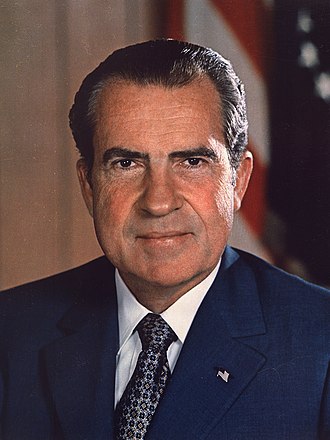
Richard M. Nixon served as the 37th President of the United States from January 1969 until his resignation in August 1974. In February 1971, he ordered the installation of a secret voice-activated taping system in the White House to preserve a historical record of his administration. Until the system's existence was revealed and dismantled in July 1973, the tapes captured Nixon directing major foreign policy initiatives, such as the opening to China, as well as his central role in the Watergate cover-up.
What Nixon talks about on the tapes
White House operations 4,718Presidential scheduling 2,225Public relations 1,784Presidential schedule 1,782Vietnam War 1,693Logistics 1,650Manolo Sanchez 1,626White House communications 1,400White House administration 1,399Presidential communication 1,243Henry Kissinger 1,191Foreign Policy 1,183
Conversations (21,010)
— Page 20 of 211President Nixon initiated a brief telephone call to his personal secretary, Rose Mary Woods, with Chief of Staff H. R. Haldeman present. The primary purpose of the communication was to establish contact with Woods, though the recording concludes before substantive business is conducted. This interaction serves as a brief administrative coordination involving the President’s inner circle.
President Nixon instructed Rose Mary Woods to inform his speechwriting staff, including John K. Andrews, Jr. and Raymond K. Price, Jr., that the final draft of his speech was approved and they could conclude their work for the evening. He also directed Woods to coordinate with Press Secretary Ronald Ziegler regarding the distribution of the text to the press, granting authorization for an advance release to news magazines if desired. Finally, the President requested that Woods prepare a clean reading copy of the document for his personal use.
President Nixon initiates a brief telephone call to connect with his daughter, Tricia Nixon. The primary purpose of the communication is to establish contact with her through the White House operator. No further policy-related discussions or significant developments occur during this brief exchange.
President Richard Nixon spoke with his daughter, Tricia Nixon Cox, in a brief personal telephone call. The conversation primarily served as a private familial exchange. No significant political developments or official government actions were recorded during this brief interaction.
President Nixon initiates a brief telephone request through the White House operator to be connected with his National Security Advisor, Henry A. Kissinger. This administrative interaction serves as a bridge to facilitate a direct line of communication between the President and his senior foreign policy official. No substantive policy matters are discussed, as the exchange is limited to the procedural request for the call to be placed.
President Nixon attempted to locate Henry Kissinger to facilitate a communication with Alexander Haig. Upon learning that Kissinger was out at dinner, the President declined to be connected to him at the restaurant. Nixon instead directed the operator to reach out to Colonel Hayes to address the matter.
President Nixon met with an unidentified individual in the Oval Office to request assistance in locating a specific folder containing various items. The conversation was brief and focused exclusively on the retrieval of these materials from the President's desk. No further policy or political discussions were recorded during this interaction.
President Nixon met with unidentified individuals in the Oval Office to coordinate details regarding his upcoming daily schedule. The discussion focused on logistical planning and the management of his professional engagements for the day. No specific policy decisions or significant developments were recorded during this brief administrative session.
President Nixon held a discussion with an unidentified individual, during which he placed a telephone call to the Secretary of Defense. While specific details of the dialogue remain unrecorded, the interaction focused on administrative or strategic matters requiring immediate consultation with the Pentagon leadership. The call serves as a brief point of contact between the President and the Department of Defense regarding ongoing executive oversight.
President Nixon met with H.R. Haldeman and Henry Kissinger to strategize on high-stakes foreign policy issues, including Vietnam peace negotiations, the Berlin Agreement, and the impending US-Soviet summit. The President emphasized his desire to present a firm, blunt ultimatum to the North Vietnamese to force a final resolution, while also discussing the political necessity of ensuring the U.S. is disengaged from ground combat before the 1972 election. The conversation also touched upon domestic political concerns, including the management of the press, the potential impact of Democratic candidates' foreign policy positions, and Nixon's efforts to cultivate support through key allies like Nelson Rockefeller.
President Nixon and Henry Kissinger coordinate a telephone call to Governor Nelson A. Rockefeller. The brief exchange serves as a logistical precursor to a private consultation between the President and the Governor. No substantive policy matters are finalized during this connection process.
President Nixon and New York Governor Nelson Rockefeller consulted on the fiscal and political challenges facing New York City Mayor John Lindsay, particularly concerning rent control policies and municipal budget disputes. The two discussed the potential formation of a commission to investigate city operations, with Nixon strongly recommending Frederick Kappel as an ideal candidate to lead such an effort. They also addressed the possibility of federal financial assistance for New York City police, with Nixon directing John Ehrlichman to coordinate with Rockefeller on the matter.
President Nixon and John Ehrlichman discuss a request from New York Governor Nelson Rockefeller for emergency federal financial assistance to support New York City police, citing recent unrest and violence. Nixon explores the political implications of providing direct aid to the state to counteract budget maneuvering by Mayor John Lindsay. The two agree that Ehrlichman will evaluate potential funding sources and contact Rockefeller to determine if a strategic federal grant can be announced.
President Nixon met with Alexander P. Butterfield in the Oval Office to review administrative matters regarding the President’s daily schedule. The brief discussion focused on logistical arrangements for upcoming appointments and presidential engagements. No major policy decisions were reached during this short logistical consultation.
President Nixon and H.R. Haldeman met to discuss strategic communications, including talking points for Henry Kissinger’s upcoming trip to Paris and managing the administration’s relationship with the press regarding columnist Chalmers Roberts. The conversation also touched upon logistical arrangements for Special Assistants to the President attending an event at West Point. The President emphasized the importance of maintaining a firm public stance and controlling the narrative against critical media coverage.
President Nixon instructed the White House operator to place a call to H.R. "Bob" Haldeman. This brief interaction served solely to initiate communication with his Chief of Staff. No further substantive policy discussions were recorded during this brief exchange.
President Nixon met briefly with his personal valet, Manolo Sanchez, to facilitate a short rest period. During this brief interaction, the President requested and secured assistance for a nap. The conversation was limited to these personal logistical arrangements.
President Nixon initiated a brief contact with the White House operator to facilitate an outgoing call. This interaction served a purely administrative function to connect the President with another party. No substantive policy matters or decision-making discussions occurred during this brief exchange.
President Nixon met with an unknown visitor in his Old Executive Office Building suite to discuss the President's upcoming schedule. The brief four-minute encounter concluded without any recorded substance regarding policy or political affairs. The meeting served purely as an administrative review of the President's calendar.
President Nixon initiated a call through the White House operator to locate his Chief of Staff, H.R. Haldeman, who was attending a school event. Upon learning of Haldeman's unavailability, the President opted not to pursue contact and instead instructed the operator to connect him with Alexander Butterfield. This brief exchange reflects the President's administrative process for managing staff communications during the workday.
President Nixon consulted with the White House operator regarding the management of his incoming messages and communications. This brief administrative interaction served to coordinate the handling of the President's correspondence and telephony. No substantive policy decisions were reached during this exchange.
President Nixon instructed Alexander P. Butterfield to encourage Treasury Secretary John B. Connally to visit Camp David for rest due to concerns regarding Connally's health. Butterfield was directed to facilitate the logistics of the trip, including coordinating helicopter transportation for the following day. Nixon specified that while the offer should be extended, no further report back to him was required.
President Nixon directs Alexander P. Butterfield to arrange expedited helicopter transportation for Treasury Secretary John Connally, who is suffering from a severe cold. The President emphasizes the need for speed to ensure Connally arrives at his destination by the mid-afternoon. No further reporting is required once the logistics are confirmed.
President Nixon contacted the White House operator to place an urgent follow-up call to H.R. Haldeman. He provided specific instructions for the operator to notify him if Haldeman could not be reached at his residence. This brief interaction reflects the President's efforts to maintain direct communication with his Chief of Staff.
President Nixon met with his personal valet, Manolo Sanchez, to discuss the President's personal schedule and workload. The brief exchange highlights the late-night hours maintained by the President in the executive office. No major policy decisions were made during this informal interaction.
President Nixon held an undocumented meeting with an unidentified individual in his Old Executive Office Building suite. Due to a lack of available transcript or recorded content, the specific objectives and substance of the dialogue remain unknown to researchers. This interaction serves as a placeholder in the White House taping archives, requiring cross-referencing with other logs for potential identification of the participant.
President Nixon held a brief, informal meeting with his personal valet, Manolo Sanchez, in the Old Executive Office Building. The recording captures a limited interaction characterized primarily by an exclamatory remark from the President. No substantive policy discussions or administrative decisions were documented in this brief exchange.
President Nixon held a meeting with an unidentified individual in his Old Executive Office Building suite to engage in an undocumented discussion. Due to the lack of available transcripts or archival records regarding the specific dialogue, the subject matter and any subsequent action items remain unknown. This encounter is preserved as part of the White House Taping System, though the content provides no verifiable historical insight.
President Nixon consulted with the White House operator to determine the whereabouts of H.R. Haldeman and his wife. The operator reported that Haldeman had left the premises and his daughter was unaware of her mother’s shopping destination. Nixon acknowledged the information and concluded the brief administrative inquiry without further action.
President Nixon contacted the White House operator to request a telephone connection with First Lady Thelma C. "Pat" Nixon. The brief exchange served as a logistical bridge to facilitate a personal conversation between the President and his wife. No substantive policy matters or administrative decisions were addressed during this call.
President Nixon requested that the White House operator connect him to his wife, Pat Nixon. The brief interaction served as a logistical bridge to facilitate a personal phone call. No other political or policy-related matters were discussed during this exchange.
President Nixon and First Lady Pat Nixon engaged in a brief, informal telephone exchange. The conversation served as a personal check-in between the couple, lacking any discussion of official policy or administrative matters. No significant decisions were made during the brief interaction.
President Richard Nixon and First Lady Pat Nixon briefly coordinate their movements and schedules while working from the Executive Office Building. The conversation primarily serves as a logistical check-in regarding the President's ongoing review of documents and the First Lady's availability. No significant policy decisions were made during this brief administrative exchange.
President Nixon and H. R. Haldeman reviewed the President's domestic approval ratings, discussing regional disparities and the impact of public communication strategies. They assessed the effectiveness of press conferences versus televised interviews in shaping the President’s image, noting that Nixon should emphasize themes of leadership, dignity, and decisive action to address concerns about inflation, the economy, and crime. Finally, the two planned the President's upcoming travel schedule for June 1971, including trips to Maine, Rochester, and Portsmouth, while strategically scheduling a press conference to coincide with the announcement of a forthcoming trip.
President Nixon and H. R. Haldeman met to discuss political strategy and public opinion regarding the administration's performance. The conversation touched upon the perceived conservative leanings of specific groups and concerns regarding the influence of the press and public polling, such as Gallup. The President emphasized the need to mobilize support for upcoming initiatives while evaluating the efficacy of previous media engagements and press conferences.
President Nixon initiates a brief telephone call to Secretary of State William P. Rogers through the White House operator. The primary purpose of the communication is to establish a direct line of contact with the Secretary. No further dialogue or substantive policy discussion is captured in this recording.
President Nixon met with his personal valet, Manolo Sanchez, in the Old Executive Office Building for a brief administrative interaction. The exchange consisted of routine social pleasantries and formal departures. No substantive policy discussions or significant White House decisions were recorded during this short encounter.
President Nixon instructed the White House operator to initiate telephone calls to two of his key advisors, Chief of Staff H.R. Haldeman and Secretary of State William P. Rogers. The communication serves as a record of the President's administrative efforts to coordinate with senior staff and Cabinet members. No specific policy details were captured beyond the initiation of these high-level contacts.
President Nixon attempted to reach H.R. Haldeman and Secretary of State William P. Rogers via the White House operator. Upon learning that Haldeman was in transit and Rogers was unavailable, the President opted not to pursue urgent contact. He instructed the operator to leave messages for them to return his calls at their convenience, indicating no immediate emergency.
President Nixon consulted with the White House operator to manage a pending communication with an unidentified individual. The President confirmed the recipient's current status and indicated that a return call should be placed once the individual arrived at their destination. No significant policy decisions were reached, as the brief exchange focused solely on logistics for reaching a specific party.
President Nixon and Alexander Haig discuss the administration's skepticism regarding ongoing international negotiations and the potential for foreign powers to exploit U.S. diplomatic overtures. Nixon emphasizes that ongoing talks with the Soviet Union and China should not inhibit necessary American military actions in Vietnam. The two conclude that the U.S. must maintain a firm posture, ensuring that diplomatic channels do not prevent a robust response to military provocations.
President Nixon and Secretary of State William P. Rogers coordinated their public messaging in preparation for an upcoming presidential press conference. They discussed maintaining a noncommittal stance on Middle East arms sales to Israel and ongoing Mutual and Balanced Force Reduction (MBFR) talks, while expressing sympathy for the domestic political pressures faced by Egyptian leader Anwar el-Sadat. Furthermore, the two men agreed on the necessity of bolstering American morale through more patriotic, upbeat public events and symbolic displays, such as those involving martial music.
President Nixon and Secretary of State William P. Rogers discuss maintaining a firm bargaining position regarding international trade and economic policy. They reflect on recent public appearances, specifically addressing national morale and the President's attendance at a Memorial Day event at West Point. The conversation concludes with an emphasis on balancing domestic political pressures with a responsible approach to economic management.
President Nixon and H.R. Haldeman discuss a strategic plan to dominate media coverage throughout the summer of 1971 by scheduling regular radio and television statements on weekends. Nixon directs Haldeman to develop a program that utilizes Saturday and Sunday for public appearances and statements to avoid competing with weekday news cycles. They also address the logistical coordination of drafting materials with Patrick Buchanan and Raymond Price for upcoming events, including a presidential trip to Tulsa.
President Nixon and H. R. Haldeman held a brief meeting to verify the status of an ongoing communication or administrative task. The discussion centered on confirming the readiness of a specific operating system or protocol. The participants concluded the exchange by establishing that the necessary steps were being handled within the appropriate operational area.
President Nixon contacted the White House operator to place a personal telephone call to his daughter, Tricia Nixon. This brief interaction served solely to facilitate a private family communication. No political or policy-related matters were discussed during this exchange.
President Nixon held a brief, informal interaction with the White House operator within the Old Executive Office Building. The exchange consisted entirely of nonsensical vocalizations rather than substantive policy discussion or administrative business. No official developments or actionable decisions resulted from this recording.
President Nixon met with his personal valet, Manolo Sanchez, in the Old Executive Office Building for a brief administrative interaction. The primary purpose of the encounter involved a request for food service. No significant policy decisions were discussed during this short exchange.
President Nixon held a brief, informal telephone conversation with his daughter, Tricia Nixon Cox. The discussion was personal in nature, reflecting typical family interaction rather than formal administrative or policy business. No significant political developments or official actions were recorded during this brief exchange.
President Nixon met briefly with his daughter, Tricia Nixon Cox, to facilitate a request regarding a guest or associate named Claire Lewis. The discussion centered on securing an autograph or signature from the President for this individual. The exchange concluded with the President acknowledging the request and agreeing to provide the requested item.
President Nixon contacted the White House operator to place a personal telephone call to his daughter, Tricia Nixon. This brief interaction served solely as a logistical request for the operator to connect the President with her. No substantive political or policy discussions took place during this exchange.
President Nixon met with his personal valet, Manolo Sanchez, in the Old Executive Office Building to provide specific instructions regarding the organization of his personal materials. The President requested that Sanchez place a particular item into the back of a book. Sanchez acknowledged the directive, and the brief exchange concluded with the President expressing appreciation for the valet's assistance.
President Nixon met with his personal aide, Manolo Sanchez, in the Old Executive Office Building to discuss administrative details and upcoming travel logistics. The conversation touched upon the scheduling of Sanchez’s activities, including his involvement with flamenco performances and departure arrangements. Beyond these personnel matters, the pair engaged in a brief, disjointed exchange regarding a filmmaker and international business travel to Nassau.
President Nixon and his daughter, Tricia Nixon Cox, discuss media figures and political allies in the context of planning for her upcoming wedding. They review a list of prominent publishers and journalists, evaluating their political leanings and their history of support for the Nixon administration. The conversation serves as an informal assessment of key media influencers as the White House prepares to manage the public relations and guest list for the event.
President Nixon and his daughter, Tricia Nixon Cox, consult on the guest list for an upcoming event, likely related to Tricia's wedding festivities. They discuss the inclusion of various media figures and journalists, weighing the attendance of individuals from organizations like the Chicago Tribune and the Columbus Dispatch. The President provides guidance on how to manage specific invitees and suggests appropriate protocol for handling sensitive guests.
President Nixon contacted the White House operator to facilitate a personal call to his daughter, Tricia Nixon. This administrative interaction was strictly logistical, serving solely to bridge the connection between the President and his family member. No policy matters or substantive governmental affairs were addressed during this brief exchange.
President Nixon consulted with the White House operator to finalize a list of names for a personal communication. He specifically requested that the operator avoid involving his wife, Pat Nixon, in the logistical details of contacting these individuals to spare her unnecessary concern. This brief exchange focused on managing personal correspondence and curating the President's private outreach efforts.
President Nixon held a brief telephone conversation with his daughter, Tricia Nixon Cox, to touch base during the evening. The discussion was personal in nature and did not address matters of public policy or administration. No significant political developments or official decisions resulted from this short exchange.
President Nixon held a brief, informal meeting with his daughter, Tricia Nixon Cox, in the Executive Office Building. The conversation primarily served as a personal check-in between the two. No formal policy decisions or official administration business were conducted during this short exchange.
President Nixon contacted the White House operator to place a personal telephone call to his daughter, Tricia Nixon. This brief interaction served solely as a logistical request for the operator to facilitate the connection. No substantive policy discussions or administrative decisions were addressed during this exchange.
President Nixon held a brief, informal exchange with a White House operator regarding the importance of transparency and truthfulness in ongoing communications. The discussion focused on the necessity of receiving accurate information to support the administration's objectives. No specific policy decisions were recorded during this short interaction.
President Richard Nixon spoke briefly with his daughter, Tricia Nixon Cox, via telephone. The conversation was personal in nature and served as a private check-in between family members. No substantive policy matters or administrative decisions were addressed during this short exchange.
President Richard Nixon met briefly with his daughter, Tricia Nixon Cox, in the Old Executive Office Building. The meeting served as a personal check-in between the President and his daughter shortly before her wedding. No substantive policy discussions or administrative actions were recorded during this brief interaction.
President Nixon met with his personal valet, Manolo Sanchez, in the Old Executive Office Building. The brief interaction focused on domestic matters, including a request for coffee and a logistical arrangement regarding the transport of the President's dog. No significant policy decisions were recorded during this brief, informal exchange.
President Nixon and Henry Kissinger met to discuss the status of ongoing diplomatic negotiations regarding the Vietnam War and broader international relations. Kissinger provided an update on recent discussions with negotiators, noting that while a peace settlement remained uncertain, the current dialogue was the most substantive it had been in four years. The two men also deliberated on the strategic timing for public announcements concerning high-level engagement with China and its potential impact on relations with the Soviet Union.
President Nixon initiated a brief telephone request to be connected with Alexander Butterfield. The call functioned solely as a routine administrative communication to facilitate a conversation with a member of his staff. No further substantive discussion occurred during this recording.
President Richard Nixon met with his personal aide, Manolo Sanchez, in the Old Executive Office Building. Due to the lack of a transcript and the presence of a withdrawn segment, the specific substance of their brief interaction remains unrecorded. Consequently, no policy decisions or administrative actions can be attributed to this exchange.
President Nixon and H. R. Haldeman discuss the operational logistics of crowd control for an upcoming public event. They deliberate on the potential deployment of the National Guard and address concerns regarding the official documentation and photographic record of the situation. This exchange focuses on managing security optics and personnel coordination for the President's appearance.
President Nixon and H. R. Haldeman met to coordinate logistics regarding an upcoming public appearance or event featuring photographer Oliver F. Atkins. The discussion focused on the management of photography and the handling of the participants involved in the event. This meeting served to finalize arrangements for official documentation of the President’s scheduled activities.
President Richard Nixon met with his longtime valet, Manolo Sanchez, in the Old Executive Office Building. The recording consists primarily of repetitive, unintelligible audio in Welsh, preventing any identification of substantive policy discussions or political decision-making. Consequently, no meaningful administrative actions or developments can be extracted from this specific exchange.
President Nixon and John D. Ehrlichman met to discuss the President’s upcoming schedule and follow up on matters previously addressed in a discussion with H. R. Haldeman. The participants focused on coordinating executive priorities and managing the President's time. This interaction served to ensure administrative continuity and alignment among top-level advisors regarding the administration's immediate agenda.
President Nixon interacts with a White House operator to facilitate contact with a reporter from the Washington Star. This brief administrative exchange serves to initiate a communication request between the President and the journalist. No further substantive policy matters or major developments are recorded during this interaction.
President Nixon met with his personal valet, Manolo Sanchez, in the Old Executive Office Building to discuss the President's upcoming schedule. The brief interaction, conducted in Welsh, focused on logistical arrangements for the day. No major policy decisions were made during this routine administrative encounter.
President Nixon held an informal discussion with an unidentified reporter from the Washington Star regarding the coverage and internal dynamics of his administration's foreign affairs policy. The conversation touched upon the involvement of Attorney General John Mitchell and the influence of media reporting on political decision-making. The interaction reflects the President's ongoing efforts to manage press narratives and ensure his policy initiatives were accurately framed within the media landscape.
President Nixon and Press Secretary Ronald Ziegler met to coordinate the briefing strategy for Governor Nelson A. Rockefeller. The discussion focused on managing the administration's messaging and political engagement regarding the Governor. The meeting served to ensure executive alignment prior to the Rockefeller briefing.
President Nixon held a private meeting with his personal valet, Manolo Sanchez, in the Old Executive Office Building. As no transcript exists and the segment was marked as a personal returnable item, the interaction appears to have been limited to private administrative or domestic matters. No significant policy decisions or official government business were recorded during this brief encounter.
President Nixon contacted the White House operator to request a connection with Alexander P. Butterfield. The brief exchange served as a logistical coordination to facilitate direct communication between the President and his deputy assistant. No further substantive policy matters were recorded during this brief administrative interaction.
President Nixon met with H. R. Haldeman in the Old Executive Office Building to coordinate the President's upcoming daily schedule. The primary focus of the discussion concerned logistical arrangements for a forthcoming meeting involving Henry Kissinger. No further substantive policy decisions were finalized during this brief administrative exchange.
President Richard M. Nixon and Alexander P. Butterfield met to discuss administrative arrangements concerning the President's schedule and logistical matters. The conversation touched upon institutional coordination, specifically regarding university-related affairs and discussions with Love Films. The exchange remained brief, focusing on delegating internal communication tasks and operational planning.
President Nixon met with his aide Stephen B. Bull to coordinate the scheduling of several upcoming appointments. The discussion focused on arrangements for meetings with Representative Harley O. Staggers, White House photographer Oliver F. Atkins, and Deputy Assistant Alexander P. Butterfield. No specific policy decisions were recorded during this brief administrative briefing.
President Nixon and Henry Kissinger met to discuss the Case-Reed proposal and the influence of Patrick J. Buchanan on the administration's messaging. They also addressed coordination regarding upcoming diplomatic communications with the Soviet Union and determined that Secretary of Defense Melvin Laird should be directed to call the President to discuss the administration's formal stance. These consultations reflect ongoing efforts to manage foreign policy strategy and internal bureaucratic alignment.
President Nixon and Henry Kissinger discussed a recent Richard Wilson column in the Washington Post that criticized Democratic presidential candidates for their opposition to the administration's ABM deployment policy. They noted that the column strongly supported the White House position on strategic arms negotiations, contradicting a poorly phrased entry in the daily news summary that had initially confused the President. Kissinger agreed to meet with William F. Buckley to ensure that the administration's strategy and the nuance of these developments were effectively communicated to conservative audiences.
President Nixon and Henry Kissinger discussed administrative and logistical arrangements regarding the use of the presidential yacht, the Sequoia. They reviewed maintenance requirements and scheduling for the upcoming year to ensure the vessel remained in proper condition. The conversation concluded with an agreement to coordinate these plans with the relevant staff to manage expectations and oversight.
President Nixon met with his personal valet, Manolo Sanchez, to coordinate scheduling and administrative arrangements for upcoming meetings. The President specifically requested that Sanchez facilitate brief appointments with Henry Kissinger and Peter G. Peterson. The discussion focused primarily on managing the President's immediate calendar constraints to accommodate these high-priority engagements.
President Nixon and H. R. Haldeman met to coordinate preparations for an upcoming press conference, focusing specifically on formulating effective responses to anticipated inquiries. Their discussion included a review of pending policy matters, most notably the administration's stance on gun control legislation. The participants concluded the session by establishing a plan for follow-up communications to finalize the briefing strategy.
President Nixon met with an unidentified individual in the Old Executive Office Building to review and discuss the President's upcoming official schedule. The participants focused on managing the logistical and strategic priorities of the executive calendar during this period. No specific changes or formal decisions were documented due to the lack of available transcript details.
President Richard M. Nixon met with his personal valet, Manolo Sanchez, in the Old Executive Office Building for a brief, informal exchange. While the transcript consists of repetitive Welsh phrases indicating a personal or private communication, the encounter underscores the routine, day-to-day interactions between the President and his domestic staff. No significant policy decisions or official government business were transacted during this short interaction.
President Nixon held a brief, informal meeting with Representative Harley O. Staggers, John E. Nidecker, and Mary Kay Leavitt to facilitate a photo opportunity. The discussion primarily served as a ceremonial exchange, involving the presentation of gifts and light conversation regarding Leavitt’s background and schooling. The President shared brief reflections on his own college experiences before concluding the visit.
President Nixon and H. R. Haldeman met to discuss a wide-ranging agenda including administration public relations, political strategy for the 1972 election, and staffing efficiency. The President emphasized his desire to reduce White House paperwork and strictly prohibited staff members from engaging in political backgrounders with the press. They also planned upcoming events, such as a televised Fourth of July address at the National Archives, and reviewed strategies to counter Democratic criticism regarding Vietnam and the economy.
President Nixon and Henry Kissinger met to deliberate on sensitive foreign policy objectives, specifically addressing the administration's "Two China" strategy regarding Taiwan's United Nations membership. The discussion also evaluated ongoing U.S. military operations in Vietnam and Cambodia, assessing the effectiveness of South Vietnamese forces. Additionally, the participants touched upon press relations and communications strategy, referencing the involvement of Herbert G. Klein.
President Nixon and H.R. Haldeman reviewed the potential economic impact of a Lockheed collapse, noting that approximately 31,000 jobs were tied to a specific contract. Additionally, Haldeman briefed the President on the status of an administration study aimed at developing objective criteria for new gun control legislation. This initiative sought to address existing loopholes in the 1968 Gun Control Act by regulating the domestic manufacture of firearms based on performance and quality standards.
President Nixon and Alexander P. Butterfield held a brief administrative meeting in the Old Executive Office Building to review and coordinate the President's upcoming schedule. This session functioned as a routine consultation regarding presidential logistics and time management. No significant policy decisions were recorded during this brief exchange.
President Nixon and Henry Kissinger coordinate the public messaging strategy regarding the origins of the May 20th Strategic Arms Limitation Treaty (SALT) announcement. They resolve to describe the diplomatic process as an exchange initiated by a January 9th message to Soviet leaders that successfully broke the negotiation deadlock. The two finalize the language used to characterize the agreement to prioritize antiballistic missile (ABM) defenses while pursuing offensive limitations, agreeing to defer technical specifics to future background briefings.
President Nixon instructed the White House operator to implement a strict hold on all incoming telephone calls beginning at 9:00 p.m. The President sought to eliminate interruptions to ensure his focus following an upcoming press conference and subsequent private obligations. This request established a temporary window of privacy for the President's evening activities.
President Richard M. Nixon and Henry A. Kissinger engaged in a brief, two-minute meeting in the Old Executive Office Building. Due to the incoherent and irrelevant nature of the transcript provided, which consists entirely of repeated phrases in Welsh unrelated to administrative or foreign policy matters, no substantive political topics or actionable decisions can be determined from this record.
President Nixon consulted with a White House operator to facilitate an outgoing telephone connection. This brief interaction served administrative purposes to establish a line for the President's ongoing communications. No substantive policy matters or further developments were recorded during this brief logistical exchange.
President Nixon met with his aide Stephen B. Bull and his personal valet Manolo Sanchez in the Old Executive Office Building to review and coordinate the President’s upcoming schedule. The discussion focused on logistical planning and administrative arrangements for the President's official commitments. No major policy decisions were recorded during this brief administrative consultation.
President Nixon met with unknown participants to review his upcoming schedule and manage professional obligations. The discussion appears to focus on administrative coordination and the logistical oversight of pending tasks. No substantive policy decisions were reached, as the dialogue remained centered on procedural workflow and the maintenance of institutional responsibilities.
President Nixon and H. R. Haldeman discuss administrative personnel matters, specifically addressing compensation issues related to White House photographer Oliver F. Atkins. The discussion centers on the necessity of formalizing these arrangements through official correspondence to resolve outstanding concerns. Haldeman is tasked with overseeing the resolution of these procedural and staffing-related issues.
President Nixon contacted the White House operator to facilitate a telephone connection with his Chief of Staff, H.R. Haldeman. This brief interaction served solely as a logistical bridge to initiate a direct conversation with a key advisor. No substantive policy matters or decisions were discussed during this specific exchange.