Cox, Tricia Nixon
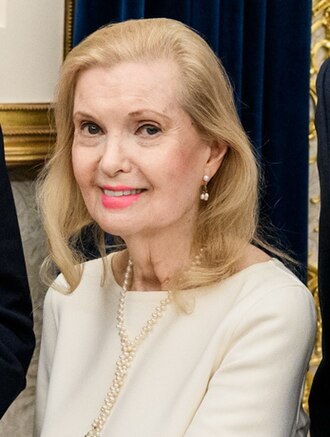
Tricia Nixon Cox is the elder daughter of President Richard Nixon and First Lady Pat Nixon, serving in the highly visible public role of First Daughter throughout his administration. During the White House taping period, she famously married Edward F. Cox in a widely publicized Rose Garden wedding ceremony in June 1971. Following her marriage, she moved out of the White House but continued to make public appearances and campaign on behalf of her father, including during his 1972 reelection effort.
President Nixon consulted with his daughter, Tricia Nixon Cox, regarding her upcoming social and diplomatic obligations. The President offered parental advice on how to manage attendance at two separate embassy events, encouraging her to participate in both. The brief exchange concluded with New Year's greetings and expressions of mutual well wishes.
President Nixon speaks with Tricia Nixon Cox and Edward R. F. Cox to receive a firsthand account of the performance by the Shenyang Acrobatic Troupe in Washington, D.C. Tricia describes the enthusiastic reception, noting that the audience remained for a lengthy standing ovation despite the presence of heavy security measures. The discussion emphasizes the success of this cultural exchange as a positive tool for U.S.-China relations.
President Richard Nixon met briefly with his daughter, Tricia Nixon Cox, in the Old Executive Office Building. The exchange was personal and informal in nature, consisting primarily of casual remarks and pleasantries. No substantive policy discussions or official government actions occurred during this brief interaction.
President Nixon met with Manolo Sanchez and Tricia Nixon Cox at Camp David to reflect on recent administrative challenges, presidential communication, and foreign policy. Nixon discussed his frustrations with the press, the necessity of maintaining a firm public stance against critics, and his ongoing work regarding energy, trade, and international relations. The conversation also touched upon personal reflections regarding his predecessors and the importance of documenting his own historical record through tape recordings and notes.
President Richard Nixon and his daughter, Tricia Nixon Cox, discuss their recent movements to and from Camp David and confirm their family's arrival at the retreat. The primary focus of the call involves a domestic update regarding a tame deer kept at the site and the family's efforts to introduce it to their dog, King. The participants exchange lighthearted advice on feeding the animal and express optimism about the two animals coexisting.
President Nixon and his daughter, Tricia Nixon Cox, met at the Aspen Lodge at Camp David for a personal visit. The brief discussion primarily concerned the logistics surrounding the departure of a staff member or associate named Fina Sanchez. No major policy decisions were reached during this informal interaction.
President Nixon and his daughter, Tricia Nixon Cox, coordinate family schedules for the upcoming Gridiron Club dinner and Camp David visits. The conversation shifts to a recap of a successful White House performance by Sammy Davis, Jr. during which Nixon critiques the lack of loyalty shown by the John F. Kennedy administration toward entertainers like Davis and Frank Sinatra.
President Nixon and his daughter, Tricia Nixon Cox, coordinated plans to watch the film *Texas*. The brief telephone exchange served to confirm that the screening was prepared and ready for the President to attend. Nixon concluded the call by informing his daughter that he would be joining her shortly.
President Richard Nixon and his daughter, Tricia Nixon Cox, engaged in a brief, informal conversation while both were at Camp David. The discussion focused on personal matters, including Tricia’s health, the cold weather, and the President's upcoming schedule, which included a potential visit to New York City. The two also coordinated future plans for Tricia to visit the presidential retreat during the spring.
President Richard Nixon and his daughter, Tricia Nixon Cox, shared a brief personal phone call to check on each other's well-being following the President's return from Camp David. The two discussed mundane details, including the President's recent helicopter arrival and local weather conditions. They concluded the conversation by confirming plans for an early dinner at 6:00 p.m. with First Lady Pat Nixon.
President Richard Nixon met briefly with his daughter, Tricia Nixon Cox, in the Oval Office for a personal check-in. The discussion was informal, covering her well-being and the weather conditions during her walk from the residence. The exchange concluded with the scheduling of a family dinner for 6:00 p.m. that evening.
President Nixon spoke with his daughter, Tricia Nixon Cox, to notify her that he would be working late at the White House with John Ehrlichman on a budget speech. He requested that she join First Lady Pat Nixon for dinner in his absence to ensure she was well-cared for. The brief exchange also touched upon the President’s health and the pleasant weather.
President Nixon informs his daughter, Tricia Nixon Cox, that he must remain at the White House to work on a budget speech with John Erickson. He requests that she assist her mother with their evening plans in his absence. The brief exchange focuses on the President's personal schedule and the coordination of family logistics.
President Nixon and his daughter, Tricia Nixon Cox, discussed personal arrangements and upcoming scheduling changes. The President confirmed he would return for dinner that evening and noted a planned appointment with Dr. W. Kenneth Riland. He also encouraged Tricia and First Lady Pat Nixon to spend time at Camp David while he traveled to Florida for a three-day work trip.
President Nixon consulted his daughter, Tricia Nixon Cox, regarding administrative arrangements for an upcoming dinner honoring returning prisoners of war (POWs). The President informed her that Press Secretary Ron Ziegler would contact First Lady Pat Nixon to coordinate the event's public relations strategy, specifically regarding the timing of announcements for the dinner and the entertainment. To maintain exclusivity and control the guest list, the President decided to delay the public announcement of celebrity participants like Bob Hope.
President Nixon held a brief, informal meeting with his daughter, Tricia Nixon Cox, to check on her well-being. The conversation was personal in nature, focusing on her health and general state of mind. No official business or substantive policy matters were addressed during this short exchange.
President Nixon spoke with his daughter, Tricia Nixon Cox, to check on her well-being and coordinate their upcoming social schedule. During the brief check-in, the President clarified that he would be unavailable for dinner that evening due to pressing work obligations, including a meeting with Secretary of State William P. Rogers. They concluded the call by confirming plans to reunite the following day.
President Nixon and his daughter, Tricia Nixon Cox, held a brief personal check-in regarding the President's health and upcoming schedule. They confirmed plans to meet at a dinner later in the week while the President noted his need to work with Secretary of State William Rogers that evening. The interaction served as a coordination of social and professional commitments rather than a discussion of policy.
President Nixon and his daughter, Tricia Nixon Cox, spoke briefly as the President prepared to depart for a trip to California. The two discussed positive public reactions to the President's March 29 speech, specifically noting input from Patrick J. Buchanan. Tricia also expressed her expectation that the President would receive a favorable response from returning prisoners of war regarding his address.
President Richard Nixon and his daughter, Tricia Nixon Cox, held a brief, informal meeting in the Oval Office to bid each other farewell. Their conversation touched upon a recent encounter with an unidentified individual whom Tricia was pleased to have met. The exchange concluded with plans to reconnect the following week, serving primarily as a personal interaction rather than a discussion of formal administrative business.
President Richard Nixon and his daughter, Tricia Nixon Cox, engaged in a brief, informal telephone conversation. The recorded segment consists entirely of withdrawn material, preventing any substantive analysis of the topics discussed. Consequently, no specific decisions, actions, or developments can be identified from the available documentation.
President Nixon and his daughter, Tricia Nixon Cox, discussed logistics and travel plans for an upcoming weekend trip to Camp David. They coordinated the arrival times for the First Family members, including Julie Nixon Eisenhower and Edward Cox, while expressing concern regarding public scrutiny of the family's activities. Additionally, the President arranged his work schedule at Birch Lodge and finalized movie selections for the visit.
President Nixon and his daughter, Tricia Nixon Cox, coordinate family travel plans to Camp David while acknowledging the heightened public scrutiny surrounding their movements. The President weighs the optics of private family trips, ultimately deciding that a collective family excursion is preferable to smaller, isolated visits. He clarifies his own scheduling constraints, noting that his official obligations prevent him from arriving until Saturday noon.
Secretary of State William P. Rogers calls President Nixon to offer praise and support following the President's televised address regarding the Watergate scandal. The two discuss the effective delivery and tone of the speech, as well as the difficult resignations of H.R. Haldeman and John Ehrlichman. Additionally, Rogers updates the President on positive feedback from congressional leaders regarding a potential role for David Packard and expresses his commitment to supporting the administration. Tricia Nixon Cox also joins the call to reiterate the family's appreciation for Rogers's loyalty during the crisis.
Tricia Nixon Cox initiated a telephone call to locate Rose Mary Woods, the President's personal secretary. The White House operator assisted by redirecting the inquiry, noting that Woods was currently located in the West Hall. The conversation also briefly referenced a call from Stephen B. Bull, though the primary focus remained on facilitating communication between Cox and Woods.
Following the recent departures of H.R. Haldeman and John Ehrlichman, President Nixon spoke with Stephen Bull to reorganize the handling of incoming telephone calls. Nixon issued explicit instructions to route all calls from key administration figures and associates, such as William P. Rogers, Elliot Richardson, and Billy Graham, directly to the Lincoln Sitting Room. He emphasized the necessity of maintaining open lines of communication to preserve morale during a period of transition.
President Nixon and newly appointed Attorney General Elliot Richardson spoke to discuss the fallout of the Watergate scandal and Richardson's upcoming confirmation. Richardson expressed strong support for the President’s recent televised address, while Nixon reaffirmed his confidence in Richardson's ability to handle the investigation. The two touched upon the sensitive issue of appointing a special prosecutor, with Nixon granting Richardson full autonomy to decide how to proceed while promising his complete backing in the pursuit of the truth.
President Nixon received a call from Secretary of Commerce Frederick B. Dent, who expressed his support and praise for the President's recent televised speech regarding the Watergate scandal. The two discussed the importance of showing strong leadership and maintaining administrative unity during this challenging period. Nixon concluded the brief exchange by confirming the rescheduling of an upcoming Cabinet meeting to Wednesday to accommodate the arrival of West German Chancellor Willy Brandt.
Admiral Thomas H. Moorer called President Nixon to express support following the President's televised address regarding the Watergate scandal. The two discussed the appointment of Elliot Richardson as the new Attorney General and the subsequent vacancy within the Department of Defense. Nixon signaled his intention to recruit a successor from California to fill the leadership gap created by Richardson's move.
Henry Kissinger called President Nixon to express support following a speech regarding the Watergate scandal, framing the President's actions as courageous and historically significant. Nixon dismissed the political turmoil and criticism as temporary "hysteria" and insisted that his primary focus remained on maintaining world peace. The two men briefly discussed the necessity of ignoring the scandal and confirmed the scheduling of Kissinger’s upcoming trip to Moscow.
Tricia Nixon Cox coordinates with the White House operator to facilitate a return telephone call from President Nixon to Governor Ronald Reagan. The brief exchange serves as a logistical bridge to connect the two political figures following Reagan's earlier attempt to reach the President. This interaction highlights the administrative process involved in managing the President’s high-level communications during a period of significant political pressure.
Governor Ronald Reagan placed a courtesy call to President Richard Nixon to offer personal support and prayers following the President’s televised address regarding the Watergate scandal. The conversation focused on the resignations of H. R. Haldeman and John Ehrlichman, with Reagan affirming his continued loyalty to the administration. Nixon expressed appreciation for the gesture while emphasizing the necessity of their shared commitment to global peace amidst the ongoing political crisis.
President Nixon and his daughter, Tricia Nixon Cox, connected via telephone to facilitate a conversation with Tricia's husband, Edward Cox. During the call, it was noted that the President had been receiving numerous communications from high-profile figures, including Cabinet members, Billy Graham, and Governor Ronald Reagan, in the wake of his televised address regarding the Watergate scandal. The interaction served primarily to coordinate family communication during a period of intense political pressure.
Tricia Nixon Cox initiated a telephone call to Press Secretary Ronald Ziegler to gauge the media's reception following a nationally televised address by President Nixon regarding the Watergate scandal. Ziegler reported that the press responded favorably, particularly noting that the President’s decision to visit the press room personally bolstered his standing. He expressed optimism that the administration could now move past the errors of subordinates and focus on the President’s future leadership objectives.
President Nixon received a call from Hobart D. Lewis shortly after delivering a televised address regarding the Watergate scandal. The two men discussed the resignation of H.R. Haldeman and John Ehrlichman, with Lewis offering strong praise for the President's tone and sincerity in handling the difficult situation. Nixon characterized the original Watergate break-in as an ineffective and amateurish operation, and the pair concluded by affirming the need to move forward beyond the scandal.
Tricia Nixon Cox and Rose Mary Woods discuss the incoming public and political reaction to President Nixon’s recent Watergate-related speech. The conversation focuses on logging telephone calls from key figures such as Nelson Rockefeller, Ronald Reagan, and Winton Blount to gauge national support. Woods reports that despite logistical challenges in tracking communications, early indicators from loyalists like Charles Colson suggest the President maintains strong support from his core base.
President Nixon spoke with Counselor to the President Anne Armstrong shortly after his televised address regarding the Watergate scandal. Armstrong expressed strong support for the President's speech and pledged her continued loyalty and assistance in maintaining administration morale. Nixon confirmed plans to hold a Cabinet meeting on the following Wednesday to rally his staff and requested that Armstrong serve as a cheerleader for the troops.
George H. W. Bush called President Nixon to express support following the President's televised address regarding the Watergate scandal, specifically acknowledging the difficulty of the President's decision to part with aides H.R. Haldeman and John Ehrlichman. Bush conveyed optimism about the speech's reception among the public despite criticism from media commentators, citing his recent travels as evidence of grassroots political backing. Nixon reaffirmed his perseverance and pledged a close working relationship with Bush as his administration navigated the ongoing crisis.
Secretary of Transportation Claude S. Brinegar called President Nixon to offer personal support following the President's televised address regarding the Watergate scandal. Brinegar praised Nixon's courage and performance, reinforcing his commitment to the administration's agenda. The two men agreed to refocus on substantive governing matters during an upcoming Cabinet meeting, dismissing the ongoing political controversy.
President Nixon instructed Stephen B. Bull to continue patching through incoming telephone calls for the next half hour following his televised speech regarding the Watergate scandal. The President specifically requested that calls from Paul W. Keyes, Rose Mary Woods, and Charles G. “Bebe” Rebozo be prioritized. This exchange reflects the President's desire to gauge public and personal reaction immediately following his major address.
President Nixon received a supportive telephone call from Major General James D. Hughes following the President's televised address regarding the Watergate scandal. Joined briefly by Tricia Nixon Cox during the call, Nixon expressed personal gratitude for Hughes's loyalty and his positive feedback on the speech. The exchange served primarily as a morale-boosting communication between the President and a military aide during a period of significant political instability.
President Nixon received congratulatory telephone calls from close associates Robert Abplanalp and Bebe Rebozo following his televised address regarding the Watergate scandal. The participants discussed the positive public reaction to the speech, noting that supporters found the President’s performance “magnificent” and moving. Rebozo also mentioned his upcoming travel plans to Florida and affirmed his continued personal loyalty to Nixon during the crisis.
President Nixon and his daughter, Tricia Nixon Cox, discussed the political climate surrounding the Watergate scandal, specifically referencing the recent indictments of John Mitchell and Maurice Stans. The President sought reassurance regarding public sentiment and expressed optimism that the scandal would fade from public consciousness within several months. They also touched upon the positive reception Nixon received at a recent Republican dinner, which served as a focal point for their mutual confidence in the remainder of his second term.
President Nixon and his daughter, Tricia Nixon Cox, engage in a brief personal check-in while the President is staying at Camp David. The conversation touches upon the President's recent positive reception in Norfolk, Virginia, and the upcoming Prisoners of War reception. Additionally, Nixon dismisses the ongoing Watergate Ervin Committee hearings as a "sham," characterizing the participating senators as ridiculous figures seeking attention.
President Nixon and his daughter, Tricia Nixon Cox, discuss the positive reception of the President's recent remarks at a White House reception for former prisoners of war. Tricia conveys the enthusiastic support she witnessed from the POWs and their wives, comparing the atmosphere to an energetic religious service. The two briefly confirm logistics for an upcoming dinner for the returnees, while the President dismisses concerns regarding potential lack of media coverage for the event.
President Nixon and his daughter, Tricia Nixon Cox, engage in a brief, informal social interaction while in the Old Executive Office Building. Their dialogue centers on coordination regarding an upcoming dinner engagement and general personal pleasantries. No substantive policy matters or official political decisions are addressed during this short exchange.
Tricia Nixon Cox initiated a telephone call through the White House operator to contact Paul W. Keyes, with President Nixon present in the background. The brief exchange focused solely on facilitating this connection. No further policy or political decisions were recorded during the interaction.
Tricia Nixon Cox contacts a White House operator to facilitate an urgent request from President Richard M. Nixon to speak with General Alexander M. Haig, Jr. The brief communication serves primarily to connect the President with his Chief of Staff during the late-night hours. The interaction highlights the administrative process utilized by the President to secure immediate consultations with key advisors.
Tricia Nixon Cox and Paul W. Keyes spoke by telephone while the President was present in the Lincoln Sitting Room. The participants discussed the recent dinner for former prisoners of war, with Keyes and Cox exchanging mutual praise for the success of the event. The brief conversation centered on their satisfaction with the evening's emotional resonance, specifically noting the positive reaction from attendees like John Wayne.
President Nixon and Tricia Nixon Cox spoke via telephone to coordinate the inclusion of Paul W. Keyes on an upcoming flight. Tricia requested the White House operator's assistance in locating and inviting Keyes to join the President's party. The operator acknowledged the request and committed to attempting to secure his presence for the trip.
President Nixon and Alexander Haig discuss the success of a recent White House dinner honoring former prisoners of war (POWs), using the event to contrast the genuine patriotism of the attendees with the negativity of the press. Despite the positive morale boost, Nixon expresses significant anxiety regarding the intensifying Watergate scandal and the potential for congressional opponents to force his resignation or obstruct his foreign policy agenda. Haig urges the President to maintain his resolve, arguing that the administration has already weathered the worst of the crisis and that support from key constituencies remains strong.
President Nixon initiated a late-night telephone call to coordinate plans regarding an upcoming event honoring former prisoners of war (POWs). He sought assistance from an operator to connect with his daughter, Tricia Nixon Cox, and requested a subsequent call to Press Secretary Ronald L. Ziegler. The conversation centered on the logistical arrangements for the POW reception and the management of executive communications.
Julie Nixon Eisenhower contacted Press Secretary Ronald L. Ziegler to gauge media sentiment following a dinner honoring former prisoners of war, with President Nixon and Tricia Nixon Cox present for the discussion. They reviewed the positive press coverage surrounding the President’s speech, specifically focusing on the favorable reaction to his remarks on December 1972 bombing operations and national security. Ziegler confirmed that the event received strong television coverage and effectively portrayed the President’s interactions with the attendees.
President Nixon and his daughter, Tricia Nixon Cox, discussed the success of his recent diplomatic trip to Iceland and its role in advancing his "Year of Europe" policy, specifically noting productive meetings with French President Georges Pompidou. The conversation contrasted this international progress with the ongoing distractions of the Watergate scandal, which Nixon lamented dominated domestic press coverage. Tricia encouraged her father to maintain high-profile engagements, such as the upcoming visit by Soviet leader Leonid Brezhnev, to help shift public focus away from Watergate and alleviate political pressure.
President Nixon and his daughter, Tricia Nixon Cox, discuss Charles Colson's recent television interview with Howard K. Smith regarding the Watergate scandal. Tricia praises Colson’s performance and dignity, specifically highlighting his challenge to accusers to take lie detector tests. The call concludes with the President asking Tricia to inform First Lady Pat Nixon of his plans to have dinner on the Sequoia with John Connally and Alexander Haig.
President Nixon and his daughter, Tricia Nixon Cox, held a brief, informal check-in regarding a recent public appearance or event. The discussion centered on an unidentified individual's positive performance, which the President briefly acknowledged. No substantive policy decisions or political actions resulted from this short exchange.
President Richard Nixon and his daughter, Tricia Nixon Cox, discussed the President's upcoming travel and logistical schedule regarding the official visit of Soviet leader Leonid Brezhnev. The conversation centered on the timeline for meetings at Camp David, the state dinner, and a potential trip to California. Nixon noted that while his travel plans remained flexible due to the heavy workload at the White House, he emphasized the historic significance of the summit.
President Nixon and Rose Mary Woods discussed the ongoing political pressure from the Watergate scandal, focusing on the negative impacts of the Ervin Committee hearings and hostile media coverage. Nixon and Woods strategized on how to handle potential campaign contributions and expressed frustration regarding the testimony of figures like John Dean. Throughout the discussion, Woods emphasized the widespread public support for the President and the importance of maintaining his resolve against calls for impeachment.
President Nixon consulted his daughter, Tricia Nixon Cox, regarding appropriate reciprocal gifts for Viktoria Brezhnev and her family following the US-USSR summit. The President suggested obtaining high-quality watches from a New York City craftsman, noting that Rose Mary Woods could facilitate the request. He tasked Tricia with coordinating with her mother and sister, Julie, to finalize the selection of gifts.
President Nixon and his daughter, Tricia Nixon Cox, met briefly in the Old Executive Office Building for a personal exchange. The dialogue is fragmentary and largely unintelligible, consisting primarily of casual remarks and procedural acknowledgments. No significant policy discussions, administrative decisions, or political developments are recorded in this brief interaction.
President Nixon and his daughter, Tricia Nixon Cox, discussed their daily schedules and recent political developments during a brief phone call. The conversation focused heavily on the Senate Watergate hearings, with both agreeing that John Mitchell’s testimony was effective and superior to that of previous witnesses like Jeb Stuart Magruder and John W. Dean, III. Additionally, the President reflected on the positive reception he received during his recent trip to Kansas City, Missouri.
President Nixon and his daughter, Tricia Nixon Cox, discuss managing the public narrative surrounding his recent health concerns. The President expresses a clear desire to avoid drawing excessive attention to his condition, rejecting a proposed five-day precautionary measure to prevent the situation from appearing larger than it is. The conversation concludes with a mutual agreement to keep the matter low-profile.