Knauer, Virginia H.
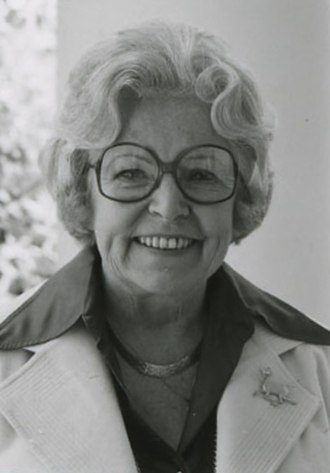
Virginia H. Knauer was a prominent figure in the Nixon administration, serving as the highest-ranking woman for a significant period. In April 1969, she was appointed as the Special Assistant to the President for Consumer Affairs. Subsequently, in February 1971, she also became the Director of the newly created U.S. Office of Consumer Affairs, a position she held concurrently throughout the taping period and the remainder of the administration. In these roles, she was a vocal advocate for consumer rights, addressing issues such as product safety and truth in advertising.
President Nixon met with his senior staff to address several pressing administrative and political matters, primarily focusing on the South Vietnamese military operation in Laos and strategies for managing press criticism of the war. Nixon and his advisors discussed the need to report progress on the operation without overpromising, while also weighing whether to send General Alexander Haig to Vietnam to provide an independent assessment of the ground situation. Additionally, the President reviewed his recent engagement with Republican governors and considered whether to make a brief appearance at a White House meeting with Black leaders to maintain goodwill without becoming entangled in policy debates.
President Nixon met with his Cabinet and key advisors to announce a major breakthrough in Strategic Arms Limitation Talks (SALT) with the Soviet Union, culminating in a joint statement to be released simultaneously in both nations. The agreement establishes a framework to prioritize limiting anti-ballistic missile (ABM) systems while pursuing parallel measures for offensive weapons. Nixon emphasized that the breakthrough was achieved by maintaining a strong U.S. defense posture, and he urged his administration to avoid public speculation or detailed commentary that could complicate sensitive ongoing negotiations.
Virginia H. Knauer met with White House staff to coordinate legislative strategy regarding the Holifield-Erlenborn bill and related Federal Trade Commission (FTC) legislation. The participants discussed the drafting of legislative language, the necessity of securing congressional cooperation, and the importance of White House input in upcoming hearings. They focused on ensuring that draft provisions were effectively communicated to key stakeholders to maintain alignment with administration objectives.
President Nixon met with the Cost of Living Council to assess the implementation and public reception of the 90-day wage-price freeze initiated on August 15, 1971. The council members, including John Connally, George Shultz, and Arthur Burns, reported on the effectiveness of enforcement efforts, current compliance levels, and the complexities of handling exemption requests. The discussion shifted toward strategic planning for Phase II, emphasizing the need for sustainable economic policies, public leadership, and the critical role of securing support from business and labor leaders before the freeze's conclusion.
President Nixon, Pat Nixon, and the Cabinet met with their spouses to discuss the implementation and public perception of the administration’s New Economic Policy. Secretary of the Treasury John Connally led a comprehensive briefing on the wage-price freeze, tax reforms, and international monetary adjustments aimed at curbing inflation. The discussion emphasized the necessity of these economic measures for restoring national growth, managing federal expenditures, and building public and congressional support for the administration's program.
President Nixon met with the White House Consumer Advisory Council to discuss the economic implications of the administration's recently implemented wage-price freeze and the planning for Phase II economic policies. The participants, including Virginia H. Knauer and various consumer advocates, addressed the need for consumer representation, effective enforcement mechanisms, and the impact of inflation on fixed-income groups. The meeting served as a forum for the council to express support for the President's economic stabilization efforts while emphasizing the importance of public participation and transparency in controlling costs.
President Nixon met with Consumer Affairs Advisor Virginia Knauer and representatives from the credit union movement to discuss the status and growth of credit unions. The participants reviewed efforts to increase enrollment and debated the operational effectiveness of these organizations despite current statistical limitations. The meeting concluded with a symbolic gesture as the President was presented with presidential cufflinks.
President Nixon and the Cost of Living Council convened to discuss the efficacy of the administration's economic stabilization program, specifically the transition from Phase I to Phase II. Participants evaluated the success of existing price and wage controls and addressed the future of the Pay Board and Price Commission ahead of the 1972 calendar year. The meeting concluded with a formal vote to adopt an amendment to 'Option 2' regarding economic policy adjustments.
President Nixon met with his Cabinet and senior staff to debrief them on the results and implications of his recent diplomatic trip to the People's Republic of China. The President emphasized that the primary success of the visit was the establishment of a new communication channel between the two nations, which he argued was essential for managing long-term stability and reducing the potential for future conflict. Nixon shared his impressions of Chinese leadership, particularly his discussions with Chou En-lai, noting the stark ideological differences while highlighting common strategic interests, such as peace in the Pacific and balancing influence against the Soviet Union. The discussion concluded with a focus on how this opening could be leveraged to reshape international relations and manage regional tensions across Asia.
President Nixon met with members of the Cost of Living Council and other key economic advisors to assess the efficacy of Phase II wage and price controls. The discussion focused on controlling inflation, managing food prices, and navigating political pressures from organized labor and Congress. Participants evaluated the impact of economic policies on the public interest and discussed strategies for future price stability across various sectors.
President Nixon met with the Cost of Living Council to address surging food and meat prices, emphasizing the need to combat inflation without imposing direct price controls. The discussion focused on managing supply-side pressures, including reduced military food stockpiles and potential adjustments to meat import policies, while coordinating a "jawboning" strategy to encourage price restraint among industry leaders and labor unions. Nixon urged the council to publicly highlight the administration's commitment to fighting inflation while cautioning against speculating on a price freeze, which he warned would destabilize the market.
President Nixon met with the Cost of Living Council to review the performance of his administration's economic stabilization program, including successes in lowering inflation and fostering rapid economic growth. The discussion emphasized the necessity of maintaining fiscal discipline through a proposed $250 billion federal spending ceiling to prevent future inflationary pressure. Participants also addressed specific challenges, particularly rising food prices and the potential impact of government spending on tax rates, while strategizing on how to communicate these economic gains to the public ahead of the election.
President Nixon met with the Cost of Living Council to review the administration’s economic performance and coordinate strategy regarding inflation, labor relations, and food prices ahead of the 1972 election. Council members, including George Shultz and Donald Rumsfeld, discussed measures to protect Social Security recipients from illegal rent increases and highlighted the relative success of U.S. wage and price controls compared to foreign nations. The President directed his team to maintain an affirmative, disciplined public messaging campaign, emphasizing that the U.S. was achieving growth and reduced inflation without the reliance on wartime spending seen in the 1960s.
President Nixon met with his Vice President, Cabinet members, and senior staff to announce the implementation of a 60-day price freeze as part of a strategy to combat inflation. He explained that this measure, aimed at stabilizing food and gasoline prices, was a necessary pragmatic step to preempt more extreme, mandatory controls favored by Congress. Nixon emphasized his commitment to maintaining a free-market economy and tasked his Cabinet with actively promoting this policy to the public and opinion makers. He also highlighted the administration's broader accomplishments in foreign policy, including the end of the draft and the upcoming U.S.-Soviet summit.