Hoover, J. Edgar
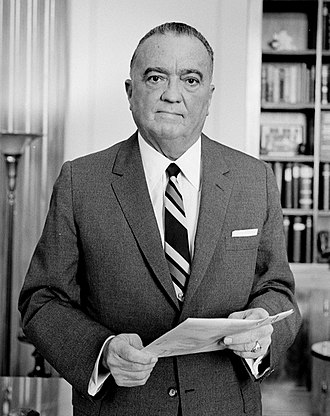
J. Edgar Hoover continued to serve as the Director of the Federal Bureau of Investigation during the Nixon administration, a position he had held since 1924. He remained in this powerful role throughout the beginning of the White House taping period, leading the FBI until his death on May 2, 1972. Though his relationship with Nixon was complex, Hoover's FBI was a key institution during this era of political turmoil.
President Nixon spoke with J. Edgar Hoover to offer personal support following recent public criticism and media speculation regarding the FBI Director's potential resignation. Nixon reassured Hoover that he had publicly defended him during a recent interview with newspaper editors, framing the attacks as malicious and unwarranted. The call concluded with Henry Kissinger joining the conversation to echo his admiration for the President’s stance and provide further support to Hoover.
President Nixon met with Senate Majority Leader Mike Mansfield and National Security Advisor Henry Kissinger to discuss U.S. foreign policy toward the People's Republic of China (PRC). The President sought to use Mansfield as a private channel to gauge interest in a potential high-level visit to China, aiming to initiate a dialogue while maintaining a step-by-step approach regarding trade and travel restrictions. The participants emphasized the importance of conducting these overtures privately to avoid public rejection and to manage the delicate balance of power between the U.S., China, and the Soviet Union.
President Nixon met with J. Edgar Hoover, John Mitchell, and senior staff to coordinate a stronger federal response to rising violence against police officers, including the potential implementation of federal insurance benefits for fallen officers' families. The group discussed strategies to foster public support for law enforcement, such as establishing an annual Police Recognition Day and organizing high-profile meetings between the President and police leadership to counter anti-authority sentiment. Additionally, the President issued a directive to create a centralized, independent agency to tackle the national drug crisis, moving responsibilities away from HEW to improve accountability and treatment programs for military personnel.
President Nixon and FBI Director J. Edgar Hoover discussed the recent targeted killings of New York City police officers and the strategy to apprehend the perpetrators. Nixon directed Hoover to utilize unlimited intelligence-gathering resources and coordinate with Attorney General John Mitchell to ensure full FBI cooperation. Additionally, Hoover outlined plans for upcoming conferences with national police leadership to address the violence and bolster law enforcement response.
President Nixon and J. Edgar Hoover discussed strategies for strengthening public support for law enforcement and the military amidst ongoing anti-war protests and civil unrest. The President emphasized the need for a national narrative that frames service and law enforcement as pillars of societal stability, contrasting this with the negative portrayal of such institutions by media and protest movements. They further explored legislative ideas, including potential federal benefits for the families of slain police officers, as part of an effort to bolster morale and public respect for those in uniform.
President Nixon met with H.R. Haldeman, Henry Kissinger, and other staff members to strategize on administration messaging, foreign policy initiatives, and political tactics. The conversation centered on managing the upcoming press conference, refining the administration's stance on drug policy by shifting focus toward youth rather than just veterans, and monitoring polling data regarding China and the United Nations. Nixon and his advisors also reviewed plans for an upcoming speech at West Point and discussed sensitive diplomatic maneuvering regarding potential summits and China-related negotiations.
President Nixon and FBI Director J. Edgar Hoover discussed coordinating a public relations strategy to counter legislative efforts, specifically the Schweiker bill, which sought to expand federal jurisdiction over the investigation of police killings. They aimed to oppose these bills by highlighting the effectiveness of local law enforcement while reaffirming the FBI's existing, flexible authority to intervene in specific cases involving national conspiracies or political groups like the Black Panthers. Hoover agreed to meet with police chiefs to align them against the proposed legislation and planned to work with Attorney General John Mitchell to draft a refreshed public statement regarding FBI procedures for the upcoming week.
President Nixon and FBI Director J. Edgar Hoover discussed the President's recent press conference, specifically his defense of law enforcement tactics used against May Day demonstrators and his firm stance against the legalization of marijuana. The two men criticized the D.C. court system, particularly Judge David L. Bazelon, while coordinating the agenda for an upcoming meeting involving police officials. Additionally, Hoover updated the President on an ongoing FBI investigation into a recent criminal incident involving Black suspects in New York.
President Nixon met with a large group of law enforcement officials, including J. Edgar Hoover and Attorney General John Mitchell, to discuss the increasing dangers facing police officers and to bolster morale through strong federal support. The conversation covered the need for legislative action, such as federal death benefits for families of slain officers, as well as strategies for better inter-agency cooperation against civil unrest and drug-related crime. Nixon emphasized the importance of public respect for law and order, highlighting recent May Day demonstrations as a point of discussion regarding the administration's firm stance on maintaining public security.
President Nixon met with J. Edgar Hoover, John Mitchell, Egil Krogh, and John Ehrlichman to coordinate an upcoming meeting with law enforcement leaders. The participants discussed the administration's proposed legislation for providing financial compensation to the families of crime victims and strategies for presenting these initiatives to police officials. Nixon specifically instructed Hoover to emphasize the FBI's commitment to providing assistance to local police departments as part of the broader legislative agenda.
President Nixon and Henry Kissinger discussed the administration's public relations strategy regarding the Pentagon Papers and the Supreme Court's pending decision, ultimately agreeing to avoid a formal statement to remain on the offensive. They also reviewed the complexities of Kissinger’s upcoming diplomatic mission to the People's Republic of China, emphasizing the need for absolute secrecy to ensure its success. Furthermore, the participants addressed the ongoing challenge of media leaks and their potential to undermine both domestic policy and sensitive international negotiations.
President Nixon and FBI Director J. Edgar Hoover discussed the recent Supreme Court decision regarding the Pentagon Papers, with both men expressing frustration over the ruling and the perceived bias of the Court. Hoover advised the President to remain silent regarding the controversy to avoid falling into a media trap that could associate the administration with the leaks. They also addressed the legal proceedings against Daniel Ellsberg, whom they both viewed as a central figure in a broader conspiracy, and discussed the importance of allowing political opponents like Lyndon B. Johnson to handle their own defenses regarding the Vietnam-era history uncovered by the documents.
President Nixon and FBI Director J. Edgar Hoover discussed the successful FBI investigation leading to the arrest of five Black Panther members accused of killing two New York City police officers. Nixon emphasized the importance of the FBI receiving public credit for the breakthrough and instructed Hoover to coordinate with Press Secretary Ron Ziegler to maximize the news coverage. The two also touched upon ongoing leads in the 'phantom' killings in Washington, D.C., and briefly reviewed political fallout from Nixon's recent appearance at the AFL-CIO convention.
President Nixon and FBI Director J. Edgar Hoover exchanged holiday greetings and discussed logistics for upcoming social engagements, including a planned dinner in Florida. The conversation shifted to the President's decision to release Jimmy Hoffa from prison, a move supported by Attorney General John Mitchell. Nixon cited Hoffa's status as a model prisoner and his wife’s illness as primary reasons for the commutation, while also noting his belief that the late Robert F. Kennedy had pursued a personal vendetta against Hoffa.
President Nixon initiated this call to commend J. Edgar Hoover and his agents for their successful handling of recent aircraft hijacking incidents, which resulted in the recovery of significant ransom funds and the apprehension of perpetrators. Following these pleasantries, the two men transitioned to the Vietnam War, with Nixon explaining the necessity of his decision to escalate military strikes against North Vietnam in response to border incursions. Hoover expressed support for the President’s aggressive military posture before the brief conversation concluded.