Brennan, John V.
John V. "Jack" Brennan served as the Marine Corps Aide to President Richard Nixon throughout his administration, acting as a trusted military assistant and confidant. During the White House taping period from February 1971 to July 1973, Brennan frequently interacted with Nixon to manage logistical matters, coordinate travel, and carry the presidential nuclear 'football.' He accompanied the president on his historic 1972 diplomatic trips to China and the Soviet Union, and remained fiercely loyal to Nixon, eventually accompanying him on his final flight from the White House following his August 1974 resignation.
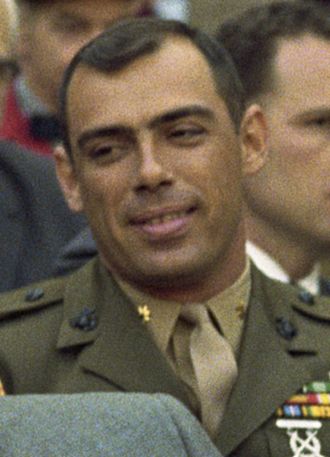
President Nixon met with James D. Hittle and John V. Brennan for a brief ceremonial session that included gift exchanges and official photographs. The participants engaged in lighthearted reminiscing about vintage automobiles and their shared professional history regarding the mission and role of the U.S. Marine Corps. The visitors also expressed their appreciation for the President’s advocacy and administrative support for American servicemen.
President Nixon met with Canadian Prime Minister Pierre Trudeau to engage in a broad-ranging discussion on bilateral relations and major international crises. The leaders addressed economic tensions—specifically regarding U.S. trade measures, foreign capital investment in Canada, and the importance of maintaining a sound U.S. economy—while also consulting on the escalating India-Pakistan war. Nixon and Kissinger emphasized the necessity of a multilateral approach to monetary issues and expressed their desire to maintain a stable balance of power in South Asia despite the conflict.
President Nixon and Alexander Haig discuss the public perception and emotional state of Henry Kissinger, particularly regarding his recent struggles with press coverage and internal administrative pressures. The conversation touches upon the successful handling of a recent press conference by Secretary of Defense Melvin Laird and the management of a Soviet student's attempted defection in New York. Ultimately, Nixon and Haig express concern over Kissinger’s psychological stability and his capacity to withstand the intense political scrutiny expected during the upcoming 1972 campaign, emphasizing the necessity of supporting him to ensure the success of critical diplomatic negotiations with China and the Soviet Union.
President Nixon met with H. R. Haldeman, John Ehrlichman, Henry Kissinger, and others to manage the fallout and public relations surrounding the recent trip to the People's Republic of China, specifically addressing Secretary of State William P. Rogers' perceived alienation from the process. The participants discussed strategies to neutralize negative press coverage and mitigate perceived leaks from the State Department, while also deliberating on the upcoming US-Soviet summit. Additionally, the conversation touched on various domestic political matters, including the ITT case, busing policy, 1972 campaign financing, and the political maneuvers of Democratic candidates.
President Nixon coordinates logistics with Major John V. Brennan for an afternoon helicopter departure to Camp David, accompanied by the First Lady and Manolo Sanchez. Amidst these travel arrangements, the President expresses strong approval regarding recent U.S. air strikes in Vietnam. He specifically notes positive feedback from Henry Kissinger concerning the Pentagon’s enthusiastic reaction to the success of the military operation.
President Nixon instructed Major John V. Brennan to offer the presidential yacht, the Sequoia, for Secretary of State William P. Rogers's use, provided it was not currently scheduled by Alexander P. Butterfield. The President also discussed the poor weather conditions at Camp David, noting that heavy rain and potential travel limitations necessitated a follow-up call to First Lady Pat Nixon. Brennan was tasked with coordinating these logistics and reporting back on the availability of the vessel.
President Nixon consulted with Major John V. Brennan regarding logistics for his potential travel to Camp David and the availability of the presidential yacht, the Sequoia. Due to uncertain weather forecasts involving predicted thunderstorms, Nixon instructed Brennan to delay offering the yacht to Secretary of State William P. Rogers. The President requested an updated weather report by 3:30 p.m. to finalize his plans for the day.
President Nixon met with John V. Brennan to arrange transportation to Camp David, specifically requesting assistance for a departure around 1:00 p.m. During the exchange, they briefly discussed the recent aerial strikes conducted by the Pentagon, noting the intensity of the reaction to the military operation. The meeting focused on both logistical travel arrangements and a situational update regarding ongoing military activities.
President Nixon consulted with Major John V. Brennan to arrange the cancellation of his planned trip to Camp David. Brennan acknowledged the directive and confirmed he would immediately execute the change in schedule. The brief discussion served solely to finalize the logistics regarding the President’s travel plans.
John V. Brennan coordinated with logistical staff to prepare a telephonic connection for President Nixon to address a reception honoring Senator John G. Tower. The participants confirmed the technical readiness of the 'Super Q' line to ensure high audio quality for the call. They finalized the arrangement to initiate the connection to the event upon receiving further notification, with the Senator having already notified attendees of the impending call.
John V. Brennan, Dan Milne, and other operators coordinated the logistical arrangements for a scheduled telephone call between President Nixon and Senator John G. Tower. The participants managed the technical setup, including securing the phone line and preparing to switch the signal to a public address system for a reception. The call was successfully established and connected to the presidential extension, ensuring the President could communicate with the Senator.
John V. Brennan contacted the Camp David operator to facilitate a routine communication connection. The brief exchange served as a logistical coordination point for the Aspen Lodge operations. No substantive policy discussions or significant political decisions were recorded during this interaction.
President Nixon and John V. Brennan coordinated logistics with the Camp David operator to facilitate an incoming telephone connection. The participants focused on managing the phone lines and ensuring the operator was prepared to bridge the call immediately upon the President's return to the study. The discussion was strictly operational, centering on the technical handling of communication lines for an impending conversation.
President Nixon, John V. Brennan, and the Camp David operator coordinated technical arrangements to facilitate a private phone call between the President and Senator John G. Tower. The participants discussed the feasibility of monitoring or patching into the call, ultimately confirming that the requested line access was not technically possible. No substantive policy matters were addressed, as the brief exchange focused solely on the logistics of the connection.
President Nixon contacted Senator John G. Tower via a telephone hookup to address a gathering of Texas supporters during the final stretch of the 1972 presidential campaign. Nixon praised Tower’s legislative record, specifically highlighting his support for national defense, fiscal responsibility, and the administration’s goal of 'peace with honor.' The President used the call to solidify political support in Texas and emphasize the necessity of Tower’s continued presence in the Senate for his upcoming second term.
President Nixon held a brief phone conversation with Senator John G. Tower to address a reception held in the Senator's honor. After coordinating technical logistics with John V. Brennan and the Camp David operator, Nixon personally called Tower to offer a strong endorsement of his legislative record. The President emphasized Tower's importance to both Texas and the nation, expressing his anticipation of working together during a second term.
President Nixon met with his staff and Henry Kissinger to discuss the transition into his second term, the ongoing Vietnam peace negotiations, and various administrative matters. Nixon emphasized his desire to centralize control over foreign policy and White House personnel, signaling a move away from relying on State Department officials like William Rogers for Vietnam initiatives. The group also coordinated logistics for Kissinger's travel to Camp David and New York, reviewed recent election results, and addressed personal financial arrangements for White House staff.
President Nixon met with John V. Brennan at Camp David to coordinate upcoming scheduling logistics. The discussion focused on arrangements for an impending meeting between the President and Charles W. Colson. No major policy decisions were reached, as the exchange remained limited to administrative and logistical coordination.
President Nixon met with John V. Brennan at Camp David to facilitate communication regarding Henry Kissinger’s request for a discussion with the President. The conversation centered on the logistical timing of Soviet Ambassador Anatoliy Dobrynin’s departure for Moscow, which influenced the President’s scheduling. Additionally, the participants briefly confirmed the arrival status of Charles “Bebe” Rebozo.
President Nixon and John V. Brennan met at Camp David to coordinate the President’s administrative schedule and the handling of sensitive correspondence. Nixon prioritized finalizing a letter intended for Henry Kissinger’s office, emphasizing that it must reach the history office before a 5:00 p.m. deadline. Following the completion of this document, the pair planned to facilitate a subsequent meeting with Roy L. Ash and Frederic V. Malek.
President Nixon met with John V. Brennan at the Aspen Lodge to coordinate logistics for upcoming meetings. The discussion centered on scheduling arrangements for Vice President Spiro T. Agnew and managing a request for a private meeting with H.R. Haldeman. Brennan sought clarification on whether these appointments should take place within the lodge or at another designated site.
President Nixon and H.R. Haldeman met at Camp David to coordinate the comprehensive reorganization of the executive branch and White House staff for the second term. They discussed specific personnel changes, including the removal of Bob Dole from the Republican National Committee in favor of George H.W. Bush, the restructuring of Cabinet positions, and strategies for managing high-level officials like John Mitchell, Henry Kissinger, and William Rogers. Additionally, the President issued firm directives regarding inaugural pavilion designs, press relations, and the necessity of maintaining control over departmental transitions, while preparing for sensitive discussions with staff members slated for departure or reassignment.
President Nixon consulted with John V. Brennan regarding an upcoming meeting with Dr. James R. Schlesinger. The discussion centered on assessing Schlesinger’s temperament and potential concerns, with Brennan providing reassurance about the interaction. This brief exchange served as a preparatory briefing for the President prior to his engagement with Schlesinger.
President Richard M. Nixon held a telephone conversation with President Félix Houphouet-Boigny of the Ivory Coast to mark the inauguration of a new satellite communications station. The leaders discussed the economic progress of the Ivory Coast, the importance of fostering global peace, and their mutual commitment to continued cooperation. During the call, President Nixon expressed his personal admiration for Houphouet-Boigny’s leadership and extended an invitation for a future meeting to further strengthen bilateral relations.
Major John V. Brennan and the Camp David operator coordinated logistics for an impending telephone call between President Nixon and Ivorian President Félix Houphouët-Boigny. The participants established the technical setup for the call, specifying which phone lines would be used for the President and his interpreter. Brennan instructed the operator on the protocol for signaling the arrival of the call so he could transfer the connection to the President.
President Richard M. Nixon held a telephone conversation with President Félix Houphouët-Boigny of the Ivory Coast to commemorate the inauguration of a new satellite communications earth station. The discussion was facilitated by interpreters and White House staff to ensure connectivity between Camp David and the Ivory Coast. Both leaders exchanged expressions of mutual support and appreciation, with Nixon pledging continued U.S. cooperation and personal interest in the nation's progress throughout his second term.
John V. Brennan and Alex G. Toumayan met at Camp David to conduct technical preparations for an upcoming telephone call between President Nixon and Ivorian President Felix Houphouet-Boigny. The participants tested the communication equipment in the Aspen Lodge to ensure the line was secure and operational for the international discussion. The brief interaction concluded with logistical adjustments to facilitate the connection for the President.
This recording documents the technical preparations and subsequent telephone conversation between President Richard Nixon and President Félix Houphouët-Boigny of the Ivory Coast, facilitated by White House staff and interpreters. The call marked the inauguration of a new satellite communications link between the two nations, providing an opportunity for both leaders to express mutual admiration for their respective economic development efforts and foreign policy goals. Nixon affirmed his continued interest in U.S.-Ivory Coast cooperation and pledged to support the nation's progress throughout his second term.
President Nixon held a brief, informal meeting at the Camp David Aspen Lodge involving White House staffer John V. Brennan and personal aide Manolo Sanchez. The discussion included the arrival of Attorney General Richard G. Kleindienst and the routine maintenance of the lodge's fireplace. No major policy decisions were recorded during these casual interactions.
President Nixon met with John V. Brennan at the Aspen Lodge to coordinate logistics for a forthcoming trip to the Camp David Fieldhouse. The discussion centered on transportation arrangements and the specific departure time for the President. This meeting concluded with the finalization of these transit details to ensure the President's schedule remained on track.
President Nixon instructed Major John V. Brennan to coordinate a congratulatory gesture for Debbie Reynolds following her performance in the Broadway musical "Irene." The President directed Brennan to procure a large bouquet of roses to be presented on stage during the first curtain call. Brennan was tasked with wearing his military uniform to deliver the flowers on behalf of the President and the First Lady to ensure the presentation was handled appropriately.
President Nixon met with John V. Brennan for a brief discussion regarding the scheduling and opening timeline of a specific show. The two men coordinated a plan to verify these details before proceeding with further action. No other substantive policy matters were addressed during this short exchange.
President Nixon consulted with Major John V. Brennan regarding the feasibility of the First Family traveling to Camp David despite adverse weather conditions. Brennan advised that while the flight would be slightly longer and more turbulent due to high winds and snow flurries, access to the retreat remained possible. Following this assessment, Nixon concluded the call after confirming the potential for a round trip that same evening.
President Nixon coordinated with Jack Brennan to finalize travel logistics for a family trip to Camp David involving Julie and David Eisenhower. They discussed transportation arrangements, specifically utilizing a helicopter to commute between Hagerstown and the retreat to minimize travel time for David Eisenhower. The President also confirmed that Manolo Sanchez and the family dogs would accompany them, while opting against bringing a stenographer for the short duration of the visit.
President Nixon directed Major Jack Brennan to ascertain the specific arrival time of Secretary of the Treasury George P. Shultz for his return to Washington on the following Thursday. The President sought this information to coordinate his schedule with the Secretary's availability. Brennan acknowledged the request and committed to reporting back to the President with the precise details.
President Nixon directs John V. Brennan to ascertain the return time of Senator Schultz. This brief interaction serves as an administrative request to facilitate the President's scheduling or communication needs regarding the Senator's arrival. No further policy or strategic developments are discussed in this specific exchange.
President Nixon coordinated with Major John V. Brennan to arrange an immediate briefing with Secretary of the Treasury George P. Shultz upon his arrival at Andrews Air Force Base. Nixon directed that Shultz be brought to the White House to provide a report before departing again. The President also instructed Brennan to ensure John D. Ehrlichman was included in the process to facilitate this rapid exchange of information.
President Nixon held a brief, informal meeting with John V. Brennan and an unidentified individual in the Old Executive Office Building. The dialogue consists entirely of non-substantive conversational pleasantries, providing no insight into official policy or administration decisions. Consequently, the interaction lacks any meaningful developments or action items.
President Nixon and his advisors met to finalize the logistics and agenda for Soviet General Secretary Leonid Brezhnev’s upcoming state visit. The discussion focused on balancing formal state proceedings with informal, spontaneous-looking events in San Clemente and at Camp David to foster positive imagery. Key decisions included finalizing the guest list for a reception—prioritizing a mix of political, business, and Hollywood figures—and arranging for a scenic coastal drive to provide Brezhnev with a more authentic view of America.