Nixon, Richard M. (President)
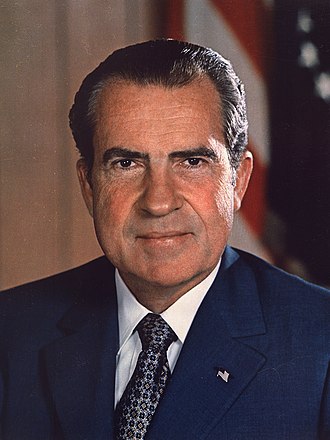
Richard M. Nixon served as the 37th President of the United States from January 1969 until his resignation in August 1974. In February 1971, he ordered the installation of a secret voice-activated taping system in the White House to preserve a historical record of his administration. Until the system's existence was revealed and dismantled in July 1973, the tapes captured Nixon directing major foreign policy initiatives, such as the opening to China, as well as his central role in the Watergate cover-up.
What Nixon talks about on the tapes
White House operations 4,718Presidential scheduling 2,225Public relations 1,784Presidential schedule 1,782Vietnam War 1,693Logistics 1,650Manolo Sanchez 1,626White House communications 1,400White House administration 1,399Presidential communication 1,243Henry Kissinger 1,191Foreign Policy 1,183
Conversations (21,010)
— Page 116 of 211President Nixon and Henry Kissinger met to coordinate administrative logistics and manage scheduling priorities. The discussion focused on the management of Kissinger's upcoming agenda and professional obligations. No major policy shifts or strategic decisions were recorded during this brief administrative exchange.
President Nixon and H.R. Haldeman met at the Aspen Lodge to discuss brief logistics regarding the day's leisure activities at Camp David. The participants exchanged casual remarks concerning the weather and a suggestion for playing tennis. No substantive policy matters or administrative decisions were recorded during this brief encounter.
President Nixon and Henry Kissinger met to discuss strategies for the 1972 election, focusing heavily on managing political opposition and framing the Vietnam War as a campaign asset. They reviewed potential diplomatic maneuvers, including a revised proposal for North Vietnam and approaches to Middle East tensions following the expulsion of Soviet advisors from Egypt. Nixon expressed deep frustration with the United Nations and the bureaucracy, directing Kissinger to adopt a colder, dismissive tone toward UN leadership and to initiate a post-election effort to purge unsupportive officials from the government.
President Nixon initiated a brief communication with the Camp David operator from the Aspen Lodge study. The interaction primarily involved standard administrative procedures regarding telephonic connectivity. No significant policy discussions or substantive developments occurred during this brief exchange.
President Nixon and Henry Kissinger discussed the ongoing Vietnam conflict, emphasizing the necessity of using sufficient force to counter North Vietnamese aggression. The pair also addressed trade negotiations with Japan, expressing frustration over public comments made by staff member Everly regarding the talks' progress. Nixon directed that administration officials maintain discretion with the press and ordered better preparation for upcoming trade discussions.
President Nixon met with his personal valet, Manolo Sanchez, at the Aspen Lodge to coordinate the movement of administrative materials. The President directed Sanchez to relocate a briefcase and a dictaphone to Birch Lodge. This brief logistical exchange ensured the secure transfer of essential working equipment during the President’s stay at Camp David.
President Nixon met with various administration officials to review the progress of the Property Review Board, focusing on the management and transfer of federal lands for public use. The President expressed frustration with bureaucratic inertia, citing a specific case at Camp Pendleton where beach access was hindered by poor facility planning and lack of oversight. Additionally, the President urged his staff to better publicize positive economic trends, such as inflation reduction and job growth, to provide congressional candidates with a more effective campaign narrative.
President Nixon instructed the White House operator to place a telephone call to Raymond A. Gallagher, the former commander of the Veterans of Foreign Wars (VFW). The President provided identifying details about Gallagher to ensure the operator could locate the correct contact information. This brief exchange served as an administrative request to facilitate direct communication with the former veteran organization leader.
President Nixon met with Rose Mary Woods to discuss various personal matters, including family schedules, press coverage of the 1972 campaign, and reactions to media stories. Following this, Nixon held a phone conversation with Raymond A. Gallagher to express appreciation for his political support and to strategize on the "Democrats for Nixon" initiative. The discussions primarily centered on campaign outreach efforts, the strategic role of John B. Connally, and managing support from prominent Democrats and labor figures.
President Nixon instructed the White House operator to place a telephone call to Ray Gallagher. He identified Gallagher as the commander of the Veterans of Foreign Wars (VFW) and requested the operator locate his contact information. The primary purpose of this brief exchange was to facilitate direct communication with the organization's leadership.
President Nixon telephoned Raymond A. Gallagher to express gratitude for his public support of the administration's Vietnam War policies and its strategy regarding POWs. The two men criticized George McGovern's approach to the conflict, affirming the necessity of maintaining military pressure on the North Vietnamese. Nixon also solicited Gallagher's help in framing his reelection campaign as a non-partisan effort, while discussing the potential appearances of Vice President Spiro Agnew at upcoming veterans' conventions.
President Nixon met with H.R. Haldeman, Ronald Ziegler, and other staff members to strategize for the 1972 presidential campaign, specifically focusing on fundraising, speech preparation for the Republican National Convention, and managing press relations. They discussed the political fallout surrounding the Thomas Eagleton health controversy, the management of the Committee to Re-elect the President, and the ongoing investigation into the Watergate break-in. Nixon emphasized the importance of maintaining a presidential posture during press conferences while utilizing staff to counterattack the opposition on issues of incompetence and foreign policy.
President Nixon met with his personal valet, Manolo Sanchez, in the Oval Office to address a private administrative matter. The discussion centered on the President's request for a key. Following this brief interaction, which lasted approximately 16 seconds, Sanchez departed the office.
President Nixon and an unidentified associate, potentially John B. Connally, briefly discuss the logistical arrangements for an upcoming meeting or telephone call. The exchange centers on coordinating the individual's schedule and confirming that the President will not initiate a call to a third party. The conversation concludes with a mutual agreement to wait for the other party to reach out.
President Nixon and John D. Ehrlichman met in the Oval Office to address miscellaneous administrative matters and scheduling concerns. The discussion served as a routine touch-base on outstanding presidential business and logistical items. No major policy shifts or strategic decisions were finalized during this exchange.
President Nixon met with John Ehrlichman to discuss legislative strategy, including the management of federal budget concerns and the potential vetoing of various bills, such as the rural development and water legislation. They reviewed plans to blame George McGovern for rising food prices by connecting them to his food stamp legislation, while also coordinating the administration's political messaging for the 1972 campaign. Furthermore, the participants addressed personnel management within the executive branch, including the role of Vice President Agnew and potential Cabinet-level changes, alongside legal considerations regarding the disclosure of wiretaps in the Leslie Bacon perjury case.
President Nixon met with Dr. John A. Hannah, Alexander M. Haig, Jr., and Peter M. Flanigan to evaluate the performance of the Agency for International Development (AID) and discuss its future direction. Nixon emphasized that foreign aid must prioritize U.S. national interests over humanitarian idealism and expressed skepticism toward multilateral aid programs, favoring a shift toward bilateral arrangements. The group further analyzed congressional strategies for passing upcoming authorization and appropriations bills, focusing on managing bureaucratic obstacles and securing necessary legislative support before the Republican National Convention.
President Nixon met with H. R. Haldeman, Charles Colson, and members of Colson's staff to discuss administrative communications strategy, the role of cabinet members in defending policy, and political outreach. The discussion focused on using cabinet officials as effective surrogates to promote conservative judicial appointments and defend administration policies to specific audiences, such as law enforcement groups. Additionally, the President touched upon concerns regarding rising food prices and the necessity of cultivating aggressive, action-oriented leadership within the State and Defense departments.
President Nixon and Stephen B. Bull met to finalize logistical arrangements for a scheduled photo session featuring First Lady Pat Nixon for Life magazine. The discussion focused on coordinating the shoot on the Truman Balcony while managing timing constraints. The participants briefly addressed procedural concerns regarding the volume of materials or logistical scope involved in the request.
President Nixon met briefly with Alexander P. Butterfield to handle administrative business. The primary purpose of the meeting was for the President to review and sign various official documents. The interaction concluded immediately after the signing process was completed.
President Nixon consulted with National Association of Letter Carriers President James H. Rademacher regarding their history of collaborative efforts. The discussion served as a brief professional touchpoint to affirm their ongoing partnership and alignment on future labor objectives. Their exchange focused on past shared initiatives and maintaining a productive relationship to benefit the postal union membership.
President Nixon met with National Association of Letter Carriers president James H. Rademacher to discuss their ongoing political collaboration and labor relations. The brief exchange focused on mutual support and the pursuit of shared legislative goals for the benefit of union membership. The conversation concluded with a pledge to continue their cooperative efforts in future policy battles.
President Nixon directs the White House operator to place an outgoing call to Vito Marzullo, a prominent Chicago political figure. The President briefly characterizes Marzullo as an 'all-arounder' to provide context for the request. This interaction serves as the administrative bridge for the President to initiate contact with a local Democratic operative.
President Nixon instructed the White House operator to place a telephone call to Vito Marzullo, an alderman based in Chicago. This administrative request served as the sole purpose of the brief interaction. The operator acknowledged the instructions and the spelling of the alderman's name to facilitate the connection.
President Nixon and Illinois State Representative Vito Marzullo engaged in a brief telephone conversation, though the specific substance remains classified under a personal withdrawal notice. The interaction serves as a record of high-level political outreach between the President and state-level leadership. No substantive policy decisions or developments are discernible from the available documentation.
President Richard Nixon met briefly with Illinois Democratic political operative Vito Marzullo to discuss matters related to the 1972 presidential campaign. The discussion primarily focused on political strategy and organizational efforts within Illinois. No specific policy decisions were finalized during this short encounter, and the conversation concluded shortly after it began.
President Nixon consulted with a White House operator to facilitate an outgoing call. The brief interaction served as a logistical step to connect the President with another party. No substantive policy discussions or major decisions were recorded during this brief exchange.
President Nixon initiates a brief request for the White House operator to connect him with special counsel Charles W. Colson. This communication serves as a logistical bridge to facilitate a direct discussion between the President and a key advisor. The conversation concludes immediately upon the operator acknowledging the request to place the call.
President Nixon and Charles Colson discussed the morale and management of the White House communications staff, specifically regarding potential meetings with Kenneth Clawson’s group. Colson explained that he excluded Clawson’s team from a recent session to keep the meeting size manageable and to avoid offending Herb Klein. They agreed that the administration should meet with staff in specialized project groups to ensure productivity while maintaining sensitive internal hierarchies and professional relations.
President Nixon and Charles Colson discuss the political necessity of engaging a specific advocacy group to ensure they remain aligned with the administration. Nixon directs Colson to invite the group's representative to the White House for a brief meeting to prevent them from feeling alienated. The President emphasizes managing these relationships to maintain support for specific projects, concluding that a personal outreach is the most effective approach to avoid future friction.
President Nixon initiates a request through the White House operator to place a telephone call to Jack D. Maltester, the mayor of San Leandro, California. The exchange focuses on providing the operator with the correct spelling of the mayor's name and the specific city to ensure the connection is established. This interaction reflects the administrative process involved in the President's outreach to local political officials.
President Nixon met with various staff members and officials to discuss a wide array of administrative, foreign policy, and political matters. The President reviewed his upcoming schedule and foreign affairs, including a review of the House Foreign Affairs Committee's narrow vote to mandate a U.S. military withdrawal from Vietnam. Additionally, H. R. Haldeman coordinated with the President and Vice President Agnew to enforce a strict no-comment policy regarding the personal affairs of Thomas Eagleton, while discussions also touched on campaign strategy and potential coordination with George Wallace's associates.
President Nixon spoke with San Leandro Mayor Jack D. Maltester to discuss the political momentum surrounding revenue sharing legislation following a productive meeting with local government officials. The two discussed the nonpartisan nature of local politics in California and the lack of enthusiasm among Democrats for opposing programs. They concluded the call by arranging for Maltester to meet with Bob Haldeman to schedule a photo opportunity for the presentation of a Bicentennial medallion to the President.
H. R. Haldeman initiated a request through the White House operator to contact Vice President Spiro T. Agnew, who was currently traveling in Washington State. Following a brief discussion with President Nixon, Haldeman coordinated the logistics of the call. The primary objective of the communication was to verify the Vice President's schedule.
H. R. Haldeman coordinates a telephone conversation with Senator Robert J. Dole to discuss administration business. After initial difficulty reaching the Senator due to his involvement in another call, Haldeman instructs the White House operator to have Dole return the call directly to his line. The brief exchange focuses primarily on logistical arrangements for communication between the White House and the Senator.
H. R. Haldeman coordinated with Vice President Spiro Agnew to establish a unified White House stance regarding the news of Senator Thomas Eagleton’s health issues. The President issued explicit instructions for all campaign associates, including Robert Dole and Clark MacGregor, to refrain from making any public comments on the matter. Haldeman confirmed that the administration would avoid involvement, allowing the Democratic campaign to manage the emerging crisis independently.
President Richard Nixon met with his valet, Manolo Sanchez, in the Oval Office for a brief morning discussion. The conversation centered on the retrieval of a briefcase from the Executive Office Building. Following these instructions, the two exited the office shortly thereafter to attend to the task.
President Nixon communicated with the White House operator via telephone to initiate or manage external call connections. Due to the lack of a transcript and the brevity of the contact, the specific subject matter remains unintelligible. The exchange serves as a standard administrative record of presidential telecommunications operations.
President Nixon met with an unidentified individual to provide specific instructions regarding the handling and dissemination of a sensitive item intended for a private file. The conversation focuses on the strategic management of documentation designated for public release to the press. This brief interaction underscores the administration's careful control over the flow of internal information and public-facing records.
President Nixon consulted with the White House operator to facilitate a telephone connection with Alexander M. Haig, Jr. This brief interaction was strictly administrative, serving as a formal request to initiate communication with a key member of his national security staff. No other substantive policy or political matters were addressed during this exchange.
President Richard M. Nixon and Alexander M. Haig, Jr. engaged in a brief telephone conversation to coordinate internal administration matters. The discussion remained private and brief, involving a reference to a follow-up conversation for further deliberation. No definitive policy decisions were recorded during this brief exchange.
President Nixon tasked Alexander Haig with gathering specific statistical data regarding the Vietnam War to support administration messaging. Nixon requested figures on total civilian casualties throughout the conflict, recent civilian casualty counts, and the current number of refugees displaced by the war. This exchange highlights the President’s focus on utilizing quantitative data to influence the public narrative surrounding the war's human impact.
President Nixon communicated with a White House operator to facilitate an outgoing call. Due to the lack of available transcripts or descriptive metadata, the specific subject matter and ultimate outcome of the interaction remain unrecorded. This brief exchange serves as a functional step in the President’s telephone operations for the day.
President Nixon spoke with the White House operator to facilitate an outgoing call. The discussion served primarily as a logistical step to connect the President with another party. No substantive policy or political matters were recorded during this brief administrative exchange.
President Nixon held a brief interaction with the White House operator to facilitate an outgoing call. No substantive policy or political discussions occurred during this administrative exchange. The interaction concluded as the operator assisted the President in establishing a connection to another party.
President Nixon met with his personal valet, Manolo Sanchez, to facilitate the delivery of the daily news summary. This brief interaction served the administrative purpose of ensuring the President received his morning briefing materials. No further policy discussions or significant political developments occurred during this brief exchange.
President Nixon met with an unidentified woman in the Old Executive Office Building to review internal news summaries prepared by staff members Patrick J. Buchanan and Lyndon K. Allin. The discussion focused on media monitoring and recent press reports, though the recording includes a brief segment of personal, non-substantive material that was later withdrawn. No major policy decisions or significant administrative actions were recorded during this brief administrative briefing.
President Richard Nixon engaged in an undocumented discussion with an unidentified participant in the Old Executive Office Building. The conversation primarily consisted of the President providing an affirmation regarding an unknown matter. Due to the lack of transcript and specific context, the dialogue remains a matter of historical ambiguity regarding its intent or potential policy implications.
President Nixon consults with an unidentified participant, likely H.R. Haldeman, regarding the prioritization of staff workflow and administrative efficiency. The brief exchange focuses on the necessity of increasing productivity within the President's immediate office environment. No specific policy decisions were finalized during this brief directive regarding staff performance.
President Nixon consulted with the White House operator to address a malfunctioning telephone ringer in his office. The discussion focused on confirming whether the operator was intentionally signaling him and establishing a protocol for handling future calls. Nixon ultimately decided to leave the ringer active to ensure he would be alerted to incoming communications.
President Nixon held a brief administrative call with the White House operator to facilitate communication. The exchange served as a routine connection for the President to conduct official business. No substantive policy discussions or specific action items were recorded during this brief operational contact.
President Nixon consulted with the White House operator to facilitate a telephone connection. The brief interaction served as a routine administrative step to reach another party. No substantive policy matters or significant decisions were addressed during this short exchange.
President Nixon and Charles Colson spoke via telephone to discuss ongoing political strategies and administration business. While the specific details of the conversation were not recorded in a transcript, the call reflects the frequent communication between the President and his special counsel regarding White House operations. No definitive policy shifts were documented, but the exchange serves as evidence of Colson's role in the President's daily strategic coordination.
President Nixon contacted the White House operator to request an urgent meeting with special counsel Charles W. Colson. The President directed that Colson be summoned immediately to his office in the Old Executive Office Building. This brief exchange served solely to facilitate an in-person consultation between Nixon and one of his key political advisors.
President Nixon met with his senior advisors to discuss political strategy for the 1972 campaign, specifically focusing on the emerging controversy regarding Democratic vice-presidential nominee Thomas F. Eagleton. Nixon directed his staff to maintain a public stance of non-interference, aiming to exploit the contrast between his own steady governance and the perceived instability within the McGovern campaign. The group also evaluated administrative management, press relations, and the scheduling of various diplomatic and political engagements.
President Nixon and Ambassador George H.W. Bush consulted on media strategy and diplomatic messaging regarding the Vietnam War. Nixon instructed Bush to emphasize the humanitarian toll of the conflict, specifically citing high casualty figures in South Vietnam, during his interactions with United Nations Secretary-General Kurt Waldheim. The call served to align the administration's public narrative on the war's impact with the diplomatic initiatives being handled by Bush.
This telephone conversation involves President Nixon and an unidentified participant. Due to the unintelligible nature of the audio recording, no substantive topics, specific policy discussions, or actionable decisions were captured. Consequently, the record provides no historical insight into the President’s agenda or internal deliberations for this specific interaction.
President Nixon held a brief telephone conversation with an unidentified individual, the substance of which remains inaccessible due to the lack of an available transcript. The recording, captured by the White House taping system, consists entirely of unintelligible audio, precluding any identification of specific topics or actionable outcomes. Consequently, no meaningful historical developments or policy decisions can be attributed to this exchange.
President Nixon consulted with the White House operator to facilitate a personal telephone call to his daughter, Julie Nixon Eisenhower. The brief interaction focused entirely on establishing this connection from his office in the Old Executive Office Building. No further policy or administrative matters were addressed during this exchange.
President Nixon held a brief administrative exchange with the White House operator to facilitate a specific telephone connection. The conversation centered on identifying and reaching the desired party, referred to only as 'Young' and 'Wild'. No substantive policy discussions occurred during this brief request for external communication.
President Nixon initiates a call through the White House operator to his daughter, Julie Nixon Eisenhower. The exchange serves primarily as a logistical step to facilitate direct communication with a family member. No policy matters or substantive political topics are discussed during this brief connection.
President Nixon held a brief telephone conversation with an unidentified individual, though the content of this discussion remains unavailable due to the lack of a transcript or descriptive record. The communication was captured by the White House taping system, but no specific topics, decisions, or action items are documented for this exchange. Consequently, the historical significance of this interaction cannot be determined based on existing records.
President Nixon met with staff members Stephen Bull and William Carruthers to review administrative matters regarding his schedule and communications. The participants primarily discussed the logistical arrangements for an upcoming telephone conversation with Israeli Prime Minister Golda Meir. The conversation focused on the necessary technical requirements, including the duration of the call and the presence of press and film crews.
President Nixon coordinated with staff members Stephen B. Bull and William H. Carruthers to finalize technical and logistical arrangements for a scheduled telephone call with Israeli Prime Minister Golda Meir. The discussion focused on managing the broadcast of the call, including the timing of the connection and the involvement of the press. Following the direct conversation with Meir, Nixon participated in a photo session where he discussed regional Middle Eastern geopolitics and development with members of the media.
President Richard Nixon and Israeli Prime Minister Golda Meir participated in a televised exchange intended to foster goodwill and strengthen diplomatic ties between their two nations. The conversation emphasized the shared commitment to achieving a just peace in the Middle East that preserves Israel's integrity and territorial security. Both leaders expressed mutual appreciation for their long-standing partnership and noted that new satellite communications technology would serve to increase cultural understanding and tourism between the American and Israeli people.
President Nixon and Stephen B. Bull reviewed logistics and technical preparations for a recorded message to Israeli Prime Minister Golda Meir. The discussion focused on coordinating the filming of the President’s remarks, which were intended for a global television broadcast. The meeting ensured that the technical aspects of the communication, including timing and presentation, were effectively managed for the international audience.
President Nixon met with H. R. Haldeman and Stephen B. Bull to review preparations for an upcoming 'Evening at the White House' event featuring Johnny Cash and June Carter Cash. The discussion centered on logistics for the performance, including coordination with William E. Brock III and William E. Timmons, as well as managing press coverage for the event. The group confirmed that scheduling arrangements were proceeding satisfactorily.
President Nixon met with Johnny Cash, William Brock, and William Timmons to discuss prison reform and Cash's recent testimony before the Senate. The participants explored the logistics of a potential presidential prison visit and evaluated strategies to address recidivism. Following a formal photograph session, the meeting concluded with informal discussions regarding White House furnishings, personal gifts, and Cash’s upcoming professional commitments.
President Nixon initiates a request for the White House operator to place a telephone call to John B. Connally. The brief exchange serves as a logistical bridge to facilitate direct communication between the President and the former Treasury Secretary. No further policy discussions or substantive developments occur during this interaction.
This recorded session includes a substantive meeting between President Nixon, H.R. Haldeman, Ronald Ziegler, and others regarding the 1972 presidential campaign and potential political messaging. Key discussions focused on the health of Democratic vice-presidential nominee Thomas Eagleton, the Republican response strategy, and assessments of Cabinet members like George Shultz. Following this, the President held a ceremonial meeting that included photographs, the display of White House state gifts, and casual conversation with visitors.
President Nixon and John B. Connally discussed political strategy regarding Governor George Wallace, focusing on incorporating elements of his platform into the Republican campaign. They agreed to offer Wallace a national security briefing via Alexander Haig and planned to have campaign officials like Clark MacGregor or John Rhodes publicly acknowledge Wallace's contributions to national debate. Additionally, they decided to have Ed Morgan discreetly share the party's busing plank with Wallace's camp to foster potential alignment.
President Nixon and John Ehrlichman met briefly in the Old Executive Office Building to discuss administrative and political matters. The majority of the meeting's duration consists of a withdrawn segment classified as a personal, returnable item. Consequently, no substantive policy decisions or actionable directives are documented in the remaining available record.
President Richard Nixon met with his valet, Manolo Sanchez, in the Old Executive Office Building for a brief, personal discussion. The encounter primarily concerned private, non-governmental matters as evidenced by the immediate withdrawal of the material from public record. No policy decisions or official business were recorded during this brief interaction.
President Nixon and H. R. Haldeman met briefly in the Old Executive Office Building to address an unspecified matter. The discussion remained brief and inconclusive, serving primarily as an acknowledgment of an unknown issue. No specific decisions or further actions were recorded during this brief exchange.
President Richard Nixon met with his personal aide, Manolo Sanchez, in his Old Executive Office Building workspace. The conversation was brief, lasting approximately six minutes in total. Due to the withdrawal of material and an undefined transcript, the specific substance of their exchange remains restricted from public record.
President Richard Nixon met with his valet, Manolo Sanchez, in the Old Executive Office Building for a brief, private discussion. Due to the absence of a transcript and the existence of a withdrawn personal segment, the specific nature of their interaction remains undocumented. The brief duration of the encounter suggests a routine or personal administrative exchange between the President and his staff member.
President Richard Nixon and John D. Ehrlichman engaged in a brief telephone conversation to coordinate administrative matters. The discussion, which remains largely undocumented due to the lack of an available transcript, reflects ongoing communication between the President and his chief domestic advisor regarding White House operations. As noted in the finding aid, this interaction is linked to further administrative discussions documented in subsequent recordings.
John D. Ehrlichman briefed President Nixon on an agenda for an upcoming press conference and shared perspectives from Ron Ziegler. The discussion touched upon the 1972 presidential campaign, specifically focusing on the political credibility of George McGovern's running mate, Thomas F. Eagleton, and his potential status on the Democratic ticket. The brief meeting centered on strategizing how these campaign developments might impact the President's public messaging.
President Richard M. Nixon held a brief, informal telephone conversation with his daughter, Julie Nixon Eisenhower. Due to the personal nature of the discussion, the recording was withdrawn from public release. The call serves as a record of private family communication between the President and his daughter during his second term.
President Nixon held a brief, one-minute meeting with his daughter, Julie Nixon Eisenhower, in the Old Executive Office Building. Due to the lack of available transcripts and the withdrawal of materials from the official record, the substantive details of their discussion remain restricted. No specific policy decisions or significant administrative actions were recorded during this brief encounter.
President Richard Nixon met with his longtime valet, Manolo Sanchez, in the Old Executive Office Building. The recording contains only a brief segment involving personal items, as the majority of the encounter was withdrawn from the archival record. No substantive policy discussions or significant political developments are documented in this specific audio file.
President Nixon and H. R. Haldeman met to discuss strategic considerations regarding a potential meeting with George C. Wallace. The discussion focused on the political implications of such an engagement and how it might fit into the administration's broader electoral agenda. No specific action items were finalized beyond the initial conceptualization of the encounter.
President Nixon met with H.R. Haldeman, Charles Colson, and Ronald Ziegler to coordinate the administration's political strategy regarding the 1972 presidential campaign. The discussion focused on distancing the President from campaign chair Clark MacGregor’s unauthorized public comments concerning Senator Thomas Eagleton's medical history. Additionally, the group strategized on leveraging Senator George McGovern’s controversial stances on foreign aid to Greece and national defense as political wedges to secure support from key voting blocs.
President Nixon contacted the White House operator to issue a directive regarding his staff. The President requested that special counsel Charles W. Colson be summoned to his office in the Executive Office Building. This brief administrative communication served to facilitate an immediate follow-up meeting with Colson.
President Nixon contacted the White House operator to initiate an outgoing call to New York Governor Nelson A. Rockefeller. The conversation was limited to this administrative request to establish a line of communication with the Governor. No further substantive policy discussions were recorded during this brief exchange.
President Nixon met with his personal valet, Manolo Sanchez, in the Old Executive Office Building to conduct private business. Due to the withdrawal of the primary segment of the recording for personal reasons, no substantial policy discussions are documented. The brief interaction serves as a record of the President's personal administrative activities during this period.
President Nixon and Nelson Rockefeller discussed the positive reception surrounding Clark MacGregor’s recent activities in support of the 1972 reelection campaign. The President briefly shared his experience inaugurating a new satellite communications station with Israeli Prime Minister Golda Meir. The conversation also touched upon administrative logistics and minor technical distractions during the call.
President Richard Nixon and Nelson A. Rockefeller discussed political strategy and the performance of campaign surrogate Clark MacGregor ahead of the 1972 election cycle. The conversation addressed the status of the President's legislative agenda, specifically welfare reform efforts involving Senator Russell B. Long, as well as political climates in key states. Additionally, the two touched upon the financial instability of the Grumman aircraft company and the potential for federal intervention via the Navy to prevent bankruptcy.
President Nixon contacted the White House operator to facilitate an immediate call to aide Patrick J. Buchanan. This brief administrative interaction served as a routing request to establish contact between the President and his speechwriter and political strategist. The conversation concluded promptly after the operator acknowledged the President's instructions to place the call.
President Nixon held a brief, inconclusive exchange with a White House operator to facilitate an outgoing call. The discussion lacks sufficient substantive content to determine the intended recipient or the primary objective of the communication. No significant policy decisions or further actions were recorded during this segment.
President Nixon and Patrick J. Buchanan engaged in a brief telephone conversation to discuss immediate political messaging or strategic administrative matters. Although the specific dialogue remains unintelligible and unrecorded, the interaction serves as a point of reference for subsequent deliberations documented in related files. This call reflects the frequent, high-level consultation maintained between the President and his advisor during the 1972 campaign cycle.
President Nixon consulted with Patrick J. Buchanan to request research regarding a recent congressional speech by Senator Mike Mansfield concerning Greece. The primary objective was to obtain historical context or records related to the Senator's remarks for use in administration policy or messaging. No further substantive developments were recorded during this brief administrative exchange.
President Nixon contacted the White House operator to initiate a telephone call to Clark MacGregor, who was serving as the chairman of the Committee for the Re-Election of the President. The brief exchange served as a procedural request to connect the President with his political campaign leadership. No substantive policy matters were discussed during this brief administrative interaction.
President Nixon initiated a brief administrative request to the White House operator to place a telephone call to Willie J. Usery, Jr. The conversation functioned solely as a logistical bridge to connect the President with the labor official. No substantive policy matters or further discussions were recorded during this brief exchange.
President Nixon consulted with the White House operator to discuss the transition into a quiet period. The brief exchange focused on establishing a peaceful environment for the President's upcoming activities. No further policy decisions were recorded during this communication.
President Nixon consulted with the White House operator to provide specific instructions regarding the handling of an incoming return phone call. The brief exchange focused on administrative protocols for managing his telecommunications during this period. No major policy discussions occurred as the interaction was strictly limited to operational coordination.
President Nixon consulted with Clark MacGregor regarding the management of the 1972 reelection campaign and political strategy. The discussion focused on organizational efforts and the tactical positioning of the campaign during the primary election season. No definitive actions or major policy shifts were recorded, as the conversation primarily served as an update on internal campaign affairs.
President Nixon consulted with the White House operator to facilitate an outgoing call. This brief administrative interaction served as the necessary logistical step to connect the President with a specific party. No substantive policy discussions or policy decisions occurred during this connection.
President Nixon met with Clark MacGregor to discuss campaign strategy and assess the vulnerabilities of Democratic challenger George McGovern. The two reviewed McGovern's campaign staff, his controversial selection of Thomas Eagleton as a running mate, and perceived arrogance among McGovern's intellectual supporters. Additionally, they considered Nelson Rockefeller's perspective on MacGregor’s performance and his interactions with a hostile press corps.
President Nixon and John Ehrlichman discuss legislative strategies regarding the Office of Economic Opportunity (OEO) and the restructuring of its board of directors. The pair considers a proposal to reform the board's composition by selecting representatives from both former poverty lawyers and client groups. Additionally, they touch upon broader legislative priorities, including H.R. 1, school busing policies, and handgun control measures pending before the Senate Judiciary Committee.