Nixon, Richard M. (President)
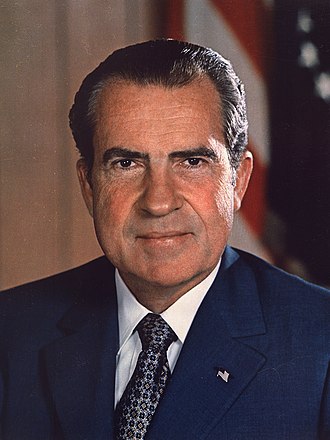
Richard M. Nixon served as the 37th President of the United States from January 1969 until his resignation in August 1974. In February 1971, he ordered the installation of a secret voice-activated taping system in the White House to preserve a historical record of his administration. Until the system's existence was revealed and dismantled in July 1973, the tapes captured Nixon directing major foreign policy initiatives, such as the opening to China, as well as his central role in the Watergate cover-up.
What Nixon talks about on the tapes
White House operations 4,718Presidential scheduling 2,225Public relations 1,784Presidential schedule 1,782Vietnam War 1,693Logistics 1,650Manolo Sanchez 1,626White House communications 1,400White House administration 1,399Presidential communication 1,243Henry Kissinger 1,191Foreign Policy 1,183
Conversations (21,010)
— Page 117 of 211President Nixon and John Ehrlichman discuss the administration's stance on gun control legislation, specifically focusing on policies regarding 'Saturday night specials.' The conversation addresses potential public statements concerning the FBI and Director L. Patrick Gray's previous remarks on the issue. They deliberate on the extent of the administration's involvement in current legislative proposals and the strategic messaging required to handle the matter.
President Nixon met with an unidentified individual in the Old Executive Office Building to review the schedule of National Security Advisor Henry Kissinger. This brief meeting appears to have been focused on logistical coordination or planning related to Kissinger's official itinerary. No further details regarding specific developments or decisions are available due to the lack of a transcript.
President Nixon and Alexander Haig met to coordinate the President's upcoming press conference strategy. They discussed potential inquiries regarding international relations, specifically focusing on the political standing of Egyptian leader Anwar el-Sadat and the situation in Northern Ireland. The discussion centered on preparing the administration's messaging for these key geopolitical issues.
President Nixon consulted with H. R. Haldeman regarding Clark MacGregor’s performance and the fallout from a recent press conference involving Nelson Rockefeller. The discussion focused on managing political messaging, including the potential for future briefings directed at Cabinet members and the spouses of administration officials. They further addressed Rockefeller’s assessment of MacGregor as they strategized on internal political coordination.
President Nixon and H. R. Haldeman engaged in a brief telephone consultation regarding internal administration matters. The discussion focused on coordinating ongoing policy or political tasks, though specific details remain obscured due to the lack of a transcript. This interaction highlights the regular communication loop between the President and his Chief of Staff during the summer of 1972.
President Nixon and Charles Colson held a lengthy telephone consultation to discuss sensitive political strategy and administration priorities. While specific transcript details are unavailable, the conversation served as a high-level briefing between the President and his special counsel regarding ongoing domestic policy or political developments. This exchange highlights the close, informal advisory relationship between Nixon and Colson during a critical period of the 1972 election year.
President Nixon interacted with a White House operator to facilitate a telephone connection. The brief exchange served as a routine administrative task for the switchboard to place an outgoing call for the President. No substantive policy discussions or significant political developments occurred during this short interaction.
President Nixon communicated with the White House operator via telephone to address logistical needs regarding his outgoing calls. The brief interaction serves primarily as a record of administrative coordination within the White House communications system. No policy decisions or substantive political discussions occurred during this exchange.
President Nixon held a brief telephone communication with the White House operator to facilitate an outgoing call. Due to the unintelligible nature of the recording, the specific subject matter and destination of the call remain unconfirmed. No significant policy developments or actionable outcomes are evident from the available audio.
President Nixon consulted with the White House operator to facilitate a telephone call to his daughter, Tricia Nixon Cox. The exchange served as a logistical request to establish private communication between the President and his family member. No further policy or administrative matters were addressed during this brief connection.
President Nixon consulted with the White House operator to facilitate two specific outgoing communications. He requested that the operator connect him with his daughter, Tricia Nixon Cox, and separately place a call to Secretary of Labor James D. Hodgson. These instructions initiated the evening's outreach efforts as managed through the executive switchboard.
President Nixon held a brief communication with the White House operator to facilitate a return telephone call. The interaction served as a logistical bridge to connect the President with an unnamed third party. No substantive policy discussions or major decisions were recorded during this brief administrative exchange.
President Nixon held a brief telephone conversation with his daughter, Tricia Nixon Cox, and his son-in-law, Edward R. F. Cox. The discussion was personal in nature and lacked any substantive policy or administrative focus. No official decisions or significant political developments resulted from this brief familial exchange.
President Nixon held a brief, informal meeting in the Old Executive Office Building with his daughter, Tricia Nixon Cox, and her husband, Edward R. F. Cox. The discussion served as a personal social interaction between the President and family members. No formal policy matters or significant administrative decisions were recorded during this brief encounter.
President Nixon and H. R. Haldeman engaged in a brief telephone consultation to address internal administrative or strategic matters. Although specific details of the discussion remain unavailable due to an unintelligible recording, the exchange reflects ongoing communication between the President and his Chief of Staff regarding White House operations. No definitive policy outcomes or further action items can be verified from this segment.
President Nixon contacted the White House operator to facilitate a telephone connection with Stephen B. Bull. The brief interaction served as a functional request to reach his aide for further communication. No substantive policy matters were discussed during this administrative exchange.
President Nixon consulted with his aide, Stephen B. Bull, regarding adjustments to his official daily schedule. The brief conversation served to coordinate the President's upcoming appointments and logistical arrangements. No major policy decisions were reached, as the discussion focused primarily on administrative oversight of the President’s time.
President Nixon met with Alexander P. Butterfield to coordinate scheduling logistics for an upcoming appointment. The discussion primarily addressed the President's meeting with Henry A. Kissinger regarding the pending foreign aid bill. The brief interaction served to facilitate the immediate management of the President's calendar.
President Nixon met with his valet, Manolo Sanchez, in the Old Executive Office Building to facilitate the delivery of a document from National Security Advisor Henry Kissinger. This brief interaction served as a logistical hand-off between the President and his staff member. No further substantive policy discussions were recorded during this meeting.
President Nixon and Press Secretary Ronald L. Ziegler met to finalize strategy and logistics for an upcoming presidential press conference. They specifically discussed how to address the emerging controversy surrounding Thomas F. Eagleton and coordinated the format of the event, including the risks associated with press photography. The brief consultation served to align the administration's messaging and public image management ahead of the scheduled media interaction.
President Nixon held a brief, informal discussion with an unidentified individual in his Old Executive Office Building workspace. The dialogue remains largely unintelligible, consisting of casual remarks that do not reveal any substantive policy deliberations or strategic decision-making. Consequently, the meeting did not result in any documented developments or official action items.
President Richard Nixon met with his valet, Manolo Sanchez, in the Old Executive Office Building. The brief interaction consisted primarily of personal matters, as indicated by the withdrawal of the recorded content under personal returnable status. No significant policy decisions or administrative actions were documented during this short encounter.
President Nixon met with his staff and advisors to review his recent press conference, assessing its effectiveness in countering criticism of his Vietnam policy and the perceived "double standard" of his critics. Nixon and his team discussed strategies to further neutralize opposition, including coordinating public relations efforts against negative media coverage and managing congressional resistance to his war policy. The President also reviewed his upcoming schedule, including golf outings and social engagements, while coordinating sensitive communication channels with key political allies like John Connally.
President Nixon initiates a brief telephone communication to coordinate the scheduling of an unidentified meeting and requests a follow-up call to special counsel Charles W. Colson. The exchange serves as a logistical directive for managing the President's immediate agenda. No substantive policy discussions are captured in this fragment, as the dialogue focuses exclusively on administrative arrangements.
President Nixon held a series of brief, disconnected meetings and calls with Alexander P. Butterfield, Charles W. Colson, and Henry A. Kissinger. The discussions centered on internal scheduling logistics, including a request for a meeting between the President and Senator Hugh Scott. The participants coordinated administrative items related to the President's upcoming agenda.
President Nixon and Charles Colson spoke briefly to coordinate the President's upcoming schedule. The primary focus of the discussion was confirming a future meeting between the two men. This brief interaction served to facilitate the logistics of their ongoing political communications.
President Nixon met with Charles W. Colson to discuss the administration's public relations strategy regarding a specific news story involving Kenneth W. Clawson and John A. Scali. The President instructed Colson to investigate the details of this story to preempt potential complications. Manolo Sanchez joined the meeting briefly at its conclusion as the President managed his scheduling obligations.
President Nixon and Henry Kissinger discussed the political fallout and public reception of the President's press conference held earlier that day, specifically addressing comments regarding the bombing of North Vietnam and the targeting of dikes. The two evaluated the President's performance, compared historical precedents for the vice presidency, and touched upon political concerns involving Senator Hugh Scott and other congressional relations. Additionally, they reviewed the ongoing military situation in South Vietnam, including casualty counts and the impact of the conflict on future peace negotiations.
President Nixon met with Charles Colson, Kenneth Clawson, and John Scali to assess media coverage of his administration's foreign policy and the ongoing presidential campaign. The discussion focused on how international developments, such as the situation in Thailand and broader Cold War dynamics, impacted public and press perception of the President versus his opponent, George McGovern. Additionally, Nixon directed his staff to monitor media relations more closely and advised that Vice President Spiro Agnew should exercise more rhetorical discipline to maintain his political effectiveness.
President Nixon initiates a brief telephone request for the White House operator to connect him with his daughter, Tricia Nixon Cox. The conversation serves solely as a logistical bridge to facilitate this personal call. No substantive policy matters or administrative decisions were addressed during this interaction.
President Nixon, H. R. Haldeman, and Henry Kissinger met to coordinate the President's upcoming travel to Louisiana for the funeral of Senator Allen J. Ellender and to manage Congressional pressure regarding Vietnam peace negotiations. Nixon and Kissinger strategized on how to leverage the funeral to build bipartisan political support, while Kissinger updated the President on diplomatic efforts with British officials and observations from W. Averell Harriman regarding the 1972 election. The group concluded by emphasizing the need for a cautious public posture on Vietnam to prevent Congressional interference from undermining ongoing sensitive negotiations.
President Nixon met with Alexander P. Butterfield and Stephen B. Bull to coordinate personal scheduling and logistics, including an urgent follow-up call requested by Tricia Nixon Cox. The discussion centered on Tricia's concerns regarding ongoing administration crises and the associated media pressure on the family. Consequently, the participants addressed the need for the Nixon family to maintain a low profile during this period while managing the President’s upcoming meetings with Otto E. Passman and John D. Ehrlichman.
President Nixon met with his senior aides and advisors to manage his political schedule and address several pressing crises, including the 1972 presidential campaign, the Watergate investigation, and military policy in Vietnam. The group strategized on how to deflect negative press coverage, particularly concerning Senator Thomas Eagleton's status on the Democratic ticket, and sought to minimize the political fallout from the impending Watergate grand jury indictments by favoring legal delays until after the election. Additionally, they coordinated a messaging strategy to have the State Department, rather than the Defense Department, provide briefings on North Vietnamese dike bombings to maintain greater public credibility.
President Nixon held a brief exchange with the White House operator to facilitate a telephonic connection. The conversation functioned as a routine administrative request to initiate an outbound call. No further substantive policy discussions were recorded during this interaction.
President Nixon and his daughter, Tricia Nixon Cox, discuss her desire for greater privacy regarding her Secret Service protection during personal outings. Tricia argues that she does not require agents to follow her inside stores during unannounced visits, citing the lack of past incidents and the intrusive nature of the close surveillance. The President acknowledges her concerns and agrees to consult with staff to determine if current security protocols can be adjusted in a manner consistent with the law.
President Richard M. Nixon and his daughter, Tricia Nixon Cox, met briefly in the Oval Office for a personal conversation. The discussion was limited in scope, consisting primarily of casual, informal remarks between the two. No substantive political or administrative policy decisions were documented during this short exchange.
President Nixon and Stephen B. Bull reviewed the President’s upcoming schedule, specifically focusing on coordinating logistics for a trip to Camp David. They discussed travel timing, including the departure for the President’s wife and guests, as well as arrangements for dinner involving Rose Mary Woods and Dr. Walter Tkach. The conversation concluded with a decision to finalize the travel itinerary and arrival times for the weekend retreat.
President Nixon and John Ehrlichman met to discuss campaign strategy, personnel management, and the handling of various administrative issues. The President expressed significant frustration with the political performance of staff member Peter Flanigan, ultimately directing Ehrlichman to strip Flanigan of his remaining domestic policy responsibilities. Additionally, they strategized on managing negative press regarding Grumman Corporation layoffs by potentially facilitating F-14 sales to the Shah of Iran to create a positive media narrative.
President Nixon met with Brazilian representatives Antonio D. Neto and Joao Augusto de Araujo Castro, along with Alexander Haig, to discuss strengthening U.S.-Brazilian economic relations and regional political stability. The conversation focused on Brazil’s economic development, including their efforts to combat inflation, manage interior agricultural projects, and address regional income inequality. Nixon emphasized the importance of Brazil's example in the hemisphere and recommended that the visitors coordinate with Deputy CIA Director Vernon Walters on regional concerns regarding neighboring nations like Chile and Bolivia.
President Nixon and Stephen B. Bull met to discuss scheduling adjustments regarding a potential visit with Mayor Jack D. Maltester. The conversation focused on a recommendation from Press Secretary Ronald L. Ziegler to arrange a 'blind' or unannounced visit for the President in California. Nixon approved this approach, facilitating the coordination of the unscheduled engagement.
President Nixon met with his aide, Stephen B. Bull, for a brief administrative discussion in the Oval Office. The conversation focused on the logistical management of presidential records and scheduling requirements. No substantive policy decisions were recorded during this short interaction.
President Nixon met with Jack D. Maltester, John J. Gunther, and John D. Ehrlichman to discuss the legislative status of federal revenue sharing and the political landscape of the 1972 presidential campaign. Participants analyzed strategies for securing support for revenue sharing in the Senate Finance Committee, particularly in light of Senator Allen J. Ellender’s recent death. The group also examined potential endorsements from Democratic mayors and the importance of securing the California vote in the upcoming election.
President Nixon calls Charles W. Colson to offer personal encouragement after Colson expresses distress over a critical newspaper column by Thomas W. Braden. Nixon advises Colson to ignore media criticism, framing it as a predictable tactic by opponents intended to provoke a reactionary response. He encourages Colson to maintain a thick skin and treat such attacks as badges of honor rather than letting them cause personal frustration.
President Nixon met with Charles W. Colson to offer personal encouragement following negative media coverage and political criticism. Nixon advised Colson to remain resilient, framing media attacks as a tactical attempt to induce fear and undermine the administration's resolve. He urged Colson to ignore editorial criticism and maintain a combative posture toward their political adversaries.
President Nixon requested that the White House operator place a telephone call to Senator James O. Eastland. This brief exchange served as a logistical instruction to facilitate direct communication between the President and the Senator. No further substantive discussion occurred during this recording.
President Nixon met with David J. Mahoney, Jr., Kenneth R. Cole, Jr., and Leonard Garment to address the strategic direction and administrative challenges facing the Bicentennial Commission. Mahoney emphasized the need for higher-level cabinet participation and stronger White House support to combat congressional criticism and bureaucratic inertia. Nixon directed the participants to improve coordination across departments, committing to issue a formal memorandum requiring cabinet members to appoint assistant secretaries to attend commission meetings to ensure institutional accountability.
President Nixon met with his personal valet, Manolo Sanchez, in the Oval Office to address administrative matters regarding the President's daily schedule. The brief discussion centered specifically on the arrangements for the President's lunch. No other policy matters or significant historical developments were recorded during this brief encounter.
President Nixon consulted with Stephen B. Bull regarding the May 1972 scientific and technical agreement with the Soviet Union. The President specifically sought to clarify whether Secretary of State William P. Rogers signed the document and requested that Bull verify this information with the National Security Council. This inquiry aimed to confirm the protocol and proper authorization behind the signing of the bilateral accord.
President Nixon and his personal secretary, Rose Mary Woods, met to coordinate scheduling details for upcoming social engagements and official travel. The discussion encompassed logistical planning for helicopter travel, a potential dinner with Elmer H. Bobst, and various personal social arrangements involving the President and First Lady. Additionally, the pair touched upon matters relating to the President’s associates and the personal demeanor of staff members such as Dr. Walter R. Tkach.
President Nixon and Stephen B. Bull reviewed the logistical arrangements for an upcoming signing ceremony concerning the U.S.-Soviet Union Joint Commission on Science and Technology. The discussion centered on the expected attendance of key officials, including Anatoliy F. Dobrynin, Henry Kissinger, and Edward E. David, Jr., while noting the absence of Secretary of State William P. Rogers. They finalized the seating protocol to ensure the event proceeded as scheduled.
President Nixon and H.R. Haldeman briefly discussed the political status of Senator Thomas Eagleton following reports that he intended to remain on the Democratic presidential ticket. They addressed conflicting narratives regarding whether the McGovern campaign had requested Eagleton's resignation. The discussion focused on assessing the media's coverage of these developments and determining the potential impact of the situation on the Democratic party's internal stability.
President Nixon, Soviet Ambassador Anatoliy Dobrynin, and Alexander Haig met to discuss logistical preparations for a forthcoming signing ceremony and to manage the diplomatic fallout from Egypt’s recent expulsion of Soviet military advisers. Nixon sought to reassure Dobrynin that the U.S. had no foreknowledge of or involvement in the Egyptian decision, emphasizing his commitment to preserving U.S.-Soviet relations ahead of the 1972 election. The President stressed his desire for transparency and requested that Dobrynin trust his personal commitment to honor existing bilateral agreements despite bureaucratic pressures.
President Nixon hosted a signing ceremony in the Oval Office for the U.S.-Soviet Union Joint Commission on Science and Technology, formalizing a "Record of Discussions" to implement bilateral cooperation. Attendees, including Dr. Edward E. David, Jr. and Soviet Ambassador Anatoliy F. Dobrynin, highlighted the shift in diplomatic relations from confrontation to negotiation and cooperation. The participants emphasized that this agreement, which establishes six primary areas for research collaboration, serves the interests of both nations and the broader international community.
President Nixon met with Alexander Butterfield, H.R. Haldeman, Stephen Bull, Henry Kissinger, and James Eastland to address several administrative and political matters. The President instructed Butterfield to modify Secret Service protocols for Tricia Nixon Cox, emphasizing a desire for less intrusive protection during unannounced personal activities. Nixon also reviewed political developments regarding Thomas Eagleton’s status on the Democratic ticket and consulted with Kissinger on ongoing US-Soviet diplomatic relations and SALT negotiations. Additionally, Nixon coordinated travel arrangements with Senator Eastland to attend the funeral of Senator Allen Ellender.
President Nixon calls Senator James O. Eastland to formally congratulate him on his recent election as President pro tempore of the Senate. The two men coordinate logistics for Eastland to join the President aboard Air Force One for travel to Louisiana. The primary purpose of the trip is to attend the funeral of Senator Allen J. Ellender, and the President directs his staff to finalize the travel arrangements with Eastland’s office.
President Nixon met with the Earl of Cromer, Sir Burke Trend, and Henry Kissinger to coordinate Western strategy regarding the upcoming European Security Conference and ongoing concerns about European nuclear planning. Nixon emphasized the necessity of maintaining a unified front with Britain, France, and West Germany to prevent the Soviet Union from exploiting potential divisions or illusions of détente. The discussion also addressed the international monetary situation, the importance of maintaining U.S. defense commitments despite domestic political pressure from the 1972 campaign, and the need for private diplomatic channels to manage these complex alliances.
President Nixon and H. R. Haldeman briefly discuss logistical arrangements for the President's upcoming visit to the Burning Tree Country Club. The dialogue focuses on coordinating the timing of their departure and meeting points for the trip. No major policy decisions are reached, as the exchange is limited to scheduling details.
President Nixon initiated a brief telephone communication through the Camp David operator to request a connection with H.R. "Bob" Haldeman. This interaction served primarily as a logistical step to facilitate direct contact with his Chief of Staff. No policy discussions occurred during this exchange.
President Nixon met with his personal valet, Manolo Sanchez, at Camp David to engage in informal conversation. The exchange centered on a lighthearted inquiry regarding a "cowboy," reflecting the personal rapport between the two men. No substantive policy decisions or administrative actions resulted from this brief interaction.
President Nixon contacted the Camp David operator to facilitate a telephone call to cartoonist Al Capp. He directed the operator to obtain the necessary contact information through Charles W. Colson’s office or the White House switchboard. This brief administrative exchange served to initiate a direct line of communication between the President and Capp.
President Nixon and H. R. Haldeman engaged in a brief, informal telephone conversation while at Camp David. The discussion primarily focused on recreational plans, specifically checking the viability of playing tennis given the weather conditions. No significant political decisions or administrative actions were recorded during this brief exchange.
President Nixon contacted the Camp David operator to facilitate an urgent communication with his National Security Advisor, Henry Kissinger. The brief exchange served as a logistical bridge to initiate a direct conversation between the President and Kissinger regarding administration business. No further substantive policy matters were discussed during this specific operator-assisted connection.
President Nixon and Henry Kissinger discussed the military situation in Vietnam, focusing on defensive maneuvers near Firebase Birmingham and the administration's frustration with media coverage regarding the bombing of dikes. They also addressed concerns over unauthorized public comments made by trade negotiator William D. Eberle regarding upcoming negotiations with Japanese Prime Minister Kakuei Tanaka. Nixon instructed Kissinger to investigate the status of these trade talks and to better prepare for the summit to ensure substantive results.
President Richard Nixon met with First Lady Pat Nixon in the Aspen Lodge study at Camp David for a private discussion. Although the specific content of the conversation was withdrawn from the public record due to its personal nature, the meeting represents a documented exchange between the President and the First Lady during a working weekend. No substantive policy developments were recorded as part of this interaction.
President Nixon instructed the Camp David operator to facilitate two high-level communications while he relocated to Birch Lodge. He requested that a message be left for cartoonist Al Capp to return his call, and directed the operator to attempt to reach Secretary John B. Connally. The brief exchange served as a logistical coordination for the President's upcoming private correspondence.
President Nixon initiated a request through the Camp David operator to place a telephone call to John B. Connally. The operator informed the President that Connally was currently unavailable due to horseback riding and would return the call upon his return. Nixon confirmed he would be located at Birch Lodge to receive the incoming communication.
President Nixon met with his personal valet, Manolo Sanchez, at the Aspen Lodge during a weekend retreat at Camp David. The discussion primarily focused on the President's personal schedule and the logistics regarding Fina Sanchez. No major policy developments occurred, as the conversation centered on internal administrative and personal coordination.
President Nixon met with Fina Sanchez at Camp David to discuss the recent visit and accommodations provided to her friends. During the conversation, Sanchez expressed her companions' gratitude for the hospitality they received in Maryland. The exchange touched upon the guests' status as naturalized citizens and their political concerns regarding the Republican party.
President Nixon held a brief, informal meeting with an unidentified woman at the Aspen Lodge study at Camp David. The discussion remained largely unintelligible and did not result in any documented policy decisions or administrative actions. The encounter concluded shortly thereafter with the visitor departing the residence.
President Nixon met with H.R. Haldeman at Camp David to dictate a political memorandum and provide specific instructions regarding its limited distribution. The President emphasized that the document was restricted to a single file copy and was not to be shared further. The meeting was briefly interrupted by an unknown individual requesting newspapers before the President resumed his administrative tasks.
President Nixon met with H. R. Haldeman at the Aspen Lodge study to dictate a formal memorandum. While the specific substance of the correspondence remains restricted as a personal record, the meeting served as an administrative session to document presidential directives. No further details regarding the contents or subsequent action items are available due to the withdrawal of the recorded segment.
President Nixon held a brief, informal interaction with a Camp David switchboard operator while working in the Aspen Lodge. The exchange centered on routine administrative communication and a brief expression of gratitude. No significant policy discussions or major strategic decisions occurred during this brief phone call.
President Nixon coordinates logistics with a Camp David operator to facilitate his upcoming location change to the Birch cabin. During the brief interaction, the President instructs the operator to attempt to reach Secretary John Connally. The conversation serves primarily as a procedural exchange for personal scheduling and establishing communication lines.
President Nixon held a brief, routine administrative interaction with the Camp David operator from the Aspen Lodge study. The conversation focused on the establishment of telephone communications. No substantive policy discussions or significant political developments occurred during this exchange.
President Nixon contacted the Camp David operator to facilitate an urgent connection with White House Chief of Staff H.R. Haldeman. This brief administrative interaction served as a logistical bridge to initiate a direct line of communication between the President and his top aide. No substantive policy matters were discussed during this request for assistance.
President Nixon consulted with the Camp David operator to facilitate a telephone connection. The brief interaction focused solely on logistical coordination for telecommunications at the presidential retreat. No substantive policy matters or major decisions were recorded during this exchange.
President Richard M. Nixon met with his valet, Manolo Sanchez, at the Aspen Lodge during a weekend retreat at Camp David. The interaction, which lasted less than six minutes, consisted entirely of a withdrawn segment classified as personal and returnable. No administrative or policy business was documented, as the recording captures only private exchanges between the President and his staff member.
President Nixon and H.R. Haldeman discuss the logistics of First Lady Pat Nixon’s potential attendance at Senator Allen J. Ellender’s funeral, specifically weighing the optics of changing previous plans to exclude her against the benefit of her presence. The President ultimately decides she should attend, prioritizing political impact over the convenience of congressional spouses. During the discussion, Nixon also briefly disparages the individuals responsible for the Watergate break-in, labeling the operation as an act of stupidity.
President Nixon and H.R. Haldeman discuss the management of a sensitive personal situation involving an individual's absence due to an infection. The dialogue focuses on ensuring that the public or private narrative regarding her inability to attend is handled consistently to avoid potential complications. Haldeman provides reassurance to the President that the current approach is the most effective course of action for the administration.
President Nixon contacted the Camp David operator to facilitate a telephone connection with Special Counsel Charles W. Colson. The brief interaction served as a logistical request to initiate a direct line of communication with a key White House advisor. No policy or substantive political matters were discussed during this brief exchange.
President Nixon and his valet, Manolo Sanchez, consulted on the logistical arrangements for outdoor seating at the Aspen Lodge at Camp David. The discussion focused on the placement of lounge chairs to ensure optimal comfort given the prevailing weather conditions. No significant political or administrative decisions were made during this brief exchange regarding the presidential residence.
President Nixon consulted with the Camp David operator to facilitate telephonic communication from the Aspen Lodge. This brief interaction served administrative purposes to ensure the President could reach intended parties while stationed at the retreat. No policy decisions or substantive political discussions were recorded during this brief exchange.
President Nixon communicated with the Camp David operator to coordinate a telephonic conversation with Charles W. Colson. The operator confirmed that Colson would be available to return the President's call within approximately thirty minutes. The interaction served strictly as a logistical arrangement to facilitate direct communication between the two men.
President Nixon initiated a brief communication with the Camp David operator from the Aspen Lodge study. The interaction served as a routine administrative request to facilitate a telephone connection. No substantive policy matters or major decisions were recorded during this brief exchange.
President Nixon contacted the Camp David operator to facilitate a telephone call to Reverend Billy Graham. This request reflects the frequent communication and personal consultation Nixon maintained with Graham during his presidency. No further substantive policy discussions were recorded during this brief administrative interaction.
President Nixon initiates a brief communication via the White House operator while stationed at Camp David. The exchange serves as a routine administrative request to facilitate a telephone connection. No substantive policy matters or political developments are recorded during this short interaction.
President Nixon and Charles Colson spoke via telephone while the President was at Camp David to discuss sensitive political and administrative matters. Although the majority of the conversation remains restricted, the discussion centered on high-level strategy regarding the management of ongoing domestic issues. No definitive actions or decisions were explicitly transcribed due to the withdrawn status of the primary content.
President Richard Nixon met with Special Counsel Charles Colson at Camp David to discuss ongoing political strategies and administrative matters. Although a formal transcript is unavailable, the meeting focused on managing personnel and internal White House objectives during the 1972 election cycle. The discussion served to align the administration's political agenda and refine operational priorities for the executive branch.
President Nixon initiates a request to the White House operator to place an outgoing call. The President specifically directs the operator to connect him with Costal. This brief exchange serves strictly as an administrative request to facilitate communication.
President Nixon met with his aide, Stephen B. Bull, to conduct a brief administrative review of the President's upcoming schedule. The primary focus of the discussion concerned the involvement of Press Secretary Ronald L. Ziegler in these planned activities. No major policy decisions were reached during this short coordination meeting.
President Nixon contacted the White House operator to facilitate an outgoing call to aide Charles W. Colson. This brief administrative interaction served as a logistical step to initiate communication between the President and a key political advisor. No substantive policy discussions occurred during this exchange.
President Nixon and Charles W. Colson coordinate a brief meeting regarding Colson’s current activities. Colson confirms he is waiting to convene with the Detroit Committee following an earlier session in the Roosevelt Room. The President directs Colson to report to him shortly to discuss the matter.
President Nixon and Charles Colson met briefly in the Oval Office to coordinate the handling of recording equipment and administrative materials. The interaction focused on the physical placement of documents or tapes, likely related to the maintenance of the White House taping system. No major policy decisions were made during this exchange, which functioned primarily as a logistical check-in.
President Nixon met with his aide Stephen B. Bull in the Oval Office to coordinate logistics regarding upcoming appointments. The brief discussion focused on managing the arrivals of Charles W. Colson and Ronald L. Ziegler. The President provided specific instructions to Bull to maintain discretion regarding the location of personnel during these transitions.
President Nixon met with his economic advisors and key staff, including George Shultz, Caspar Weinberger, Herbert Stein, H.R. Haldeman, and John Ehrlichman, to refine the administration's public relations strategy regarding the economy ahead of the 1972 election. The group evaluated the political impact of inflation, unemployment, and food prices, concluding that the public primarily associated rising food costs with processors and middlemen rather than the administration. Nixon directed his team to avoid getting bogged down in minor press interviews and instead focus their efforts on high-impact television appearances and providing economic talking points for political surrogates to utilize in their campaigns.
President Nixon directed the White House operator to place a telephone call to Congressman Joe D. Waggonner, Jr. of Louisiana. John B. Connally was present with the President during the request. The primary objective was to facilitate direct communication with Waggonner regarding legislative or political business.
President Nixon met with John Connally and H.R. Haldeman to discuss political maneuvering regarding the 1972 campaign, specifically focusing on Senate races and the handling of potential legal liabilities. They strategized on how to convince Republican candidates in Arkansas to withdraw to support powerful Democratic incumbents like John McClellan, who were seen as potential allies. Additionally, the participants addressed the imminent indictment of Jake Jacobsen, debating whether political influence could delay the process to protect Connally's interests and the "Democrats for Nixon" initiative.
President Nixon facilitates a brief phone call between Congressman Joe D. Waggonner, Jr. and John B. Connally to foster communication between the two men. Following introductory pleasantries, the conversation transitions into a casual, lighthearted exchange regarding the perceived differences in manners between the wealthy and the poor. No substantive political developments or policy decisions are documented in this portion of the recording.
President Nixon and John Ehrlichman discuss the potential political fallout surrounding the legal case of Jake Jacobsen and his partner, specifically focusing on protecting John Connally. Ehrlichman reports that Attorney General Richard Kleindienst is willing to delay an indictment, though he fears the risk of public disclosure. Nixon instructs Ehrlichman to coordinate closely with Connally and prioritize his guidance on how to manage the situation to avoid negative implications for him.
President Nixon and John Ehrlichman discussed the "Jacobson thing," a matter involving a client whose situation had reverted to its original state. Ehrlichman confirmed he had spoken with his contact regarding the issue, and they considered taking guidance from this individual. The conversation focused on the reactions of others involved, particularly "Kama," and the administration's willingness to provide aid if necessary.