Nixon, Richard M. (President)
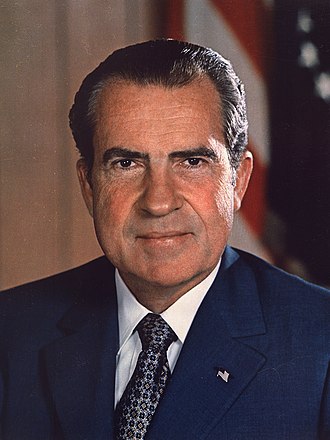
Richard M. Nixon served as the 37th President of the United States from January 1969 until his resignation in August 1974. In February 1971, he ordered the installation of a secret voice-activated taping system in the White House to preserve a historical record of his administration. Until the system's existence was revealed and dismantled in July 1973, the tapes captured Nixon directing major foreign policy initiatives, such as the opening to China, as well as his central role in the Watergate cover-up.
What Nixon talks about on the tapes
White House operations 4,718Presidential scheduling 2,225Public relations 1,784Presidential schedule 1,782Vietnam War 1,693Logistics 1,650Manolo Sanchez 1,626White House communications 1,400White House administration 1,399Presidential communication 1,243Henry Kissinger 1,191Foreign Policy 1,183
Conversations (21,010)
— Page 115 of 211President Nixon initiates a brief telephone call through the Camp David operator to request a connection with Charles W. Colson. The exchange serves solely as a logistical request to facilitate direct communication with his special counsel. No substantive policy matters or further details are discussed during this brief administrative interaction.
President Nixon held a brief exchange with the Camp David telephone operator to facilitate a communication request from the Aspen Lodge. The interaction served as a logistical bridge to initiate further administrative or personal correspondence. No substantive policy matters or major political decisions were recorded during this brief technical coordination.
President Nixon utilized the recording system at Camp David to dictate a memorandum for his personal files regarding recent events. Although the President misidentified the date during the recording, the dictation served as an administrative record of his presidential activities. The brief segment captures the President documenting internal affairs, though the substantive content of the memorandum remains largely withdrawn from the public record.
President Nixon and Charles W. Colson discussed the launch of the "Democrats for Nixon" organization, strategizing on how to leverage former Democratic Treasury Secretary John B. Connally to peel away traditional Democratic support from George McGovern. They reviewed upcoming media appearances by Connally and other candidates, agreeing to emphasize the theme of "loyal Democrats" as a means to differentiate their opposition from the McGovern platform. Additionally, the conversation touched upon the administration's political strategy regarding labor unions, polling data trends, and the necessity of forcing Republican candidates to formally request their opponents' positions on McGovern to create a negative wedge issue.
President Nixon and Charles Colson discuss their frustration with media bias and the perceived weakness of White House staff and legislative leaders. They transition to a strategic assessment of labor legislation, specifically focusing on managing political relations with senators and union leaders like George Meany. Nixon emphasizes that cabinet officials must take direct responsibility for legislative negotiations rather than delegating to lower-level staff, ultimately concluding that they should abandon current stalled efforts in favor of a new legislative approach.
President Nixon contacted the Camp David operator to facilitate a telephone call to his daughter, Julie Nixon Eisenhower. The brief interaction served as a formal request to connect with her at her current location. No further policy or administrative matters were discussed.
President Richard M. Nixon utilized this session at the Aspen Lodge to dictate a memorandum for the official record. The recording serves as a supplemental entry following previous discussions held earlier that morning. As the primary participant, the President formalizes his internal reflections and administrative documentation regarding ongoing White House matters.
President Nixon contacted the Camp David operator to facilitate a personal phone call to his daughter, Julie Nixon Eisenhower. The brief interaction served strictly as a logistical request to establish communication with a family member during the President's stay at the Aspen Lodge. No substantive policy discussions or executive actions occurred during this exchange.
President Nixon communicated with the Camp David operator from the Aspen Lodge study to facilitate a telephone connection. The brief exchange served as an administrative bridge to initiate a separate call, identified as Conversation 136-20. No substantive policy matters or executive decisions were addressed during this brief operational interaction.
President Nixon utilized this session at the Aspen Lodge to dictate a memorandum for the official record. The recording captures the President's personal notes and reflections, serving as a continuation of his earlier administrative dictations. This process was part of his effort to document internal White House proceedings and presidential thoughts.
President Nixon and his daughter, Julie Nixon Eisenhower, discussed various administrative and personal matters while the President was at Camp David. They touched upon political topics, including John Connally's media appearances, George McGovern's position on Greek aid and its impact on NATO, and the public reception of Vice President Spiro Agnew. Additionally, the President requested that his staff track down press coverage of a recent wedding for a family friend, and the two briefly discussed family activities and film recommendations.
President Nixon met with his daughter, Julie Nixon Eisenhower, at the Aspen Lodge for an informal visit at Camp David. The brief discussion primarily consisted of personal matters and family updates. No significant policy decisions or official administrative actions were recorded during this exchange.
President Nixon and H. R. Haldeman coordinated their monitoring of televised Sunday talk shows, specifically focusing on John Connally’s upcoming appearance and George McGovern’s potential policy vulnerabilities regarding foreign aid and international relations. The pair discussed the political strategy of addressing McGovern’s debate requests, with both agreeing that the early proposal had been effectively neutralized by campaign staff. Additionally, they reviewed the positive media coverage surrounding Vice President Spiro Agnew’s recent press conference and discussed the timing of press reports regarding the firing of G. Gordon Liddy in relation to the FBI investigation.
President Nixon initiated this brief telephone call to the Camp David operator to request a connection with H.R. Haldeman. The exchange served primarily as an administrative communication to facilitate immediate contact with his Chief of Staff. No policy discussions took place during this brief interaction.
President Nixon initiates a brief communication with a Camp David operator from the Aspen Lodge. The exchange serves as a routine administrative request to establish a connection for an outgoing call. No substantive policy or political matters are discussed during this short interaction.
President Nixon utilized this session at the Aspen Lodge to dictate a memorandum for the official record. This recording served as a continuation of previous discussions to document administrative details or presidential reflections. The content remains restricted due to personal privacy withdrawals, limiting public insight into the specific directives issued during this dictation.
President Nixon utilized the White House operator to facilitate the dictation of a memorandum for his personal files while at Camp David. This recording represents a brief segment of a larger dictation process regarding administrative or presidential business. The interaction serves as a routine procedural step in the management of executive documentation.
President Nixon and H.R. Haldeman briefly conferred at Camp David to coordinate their viewing of a television program featuring Conway, which the President felt obliged to monitor. The pair discussed the program's anticipated content and exchanged brief observations regarding the ongoing media narrative surrounding current headlines. The interaction served primarily as a logistical check-in for the President's afternoon schedule.
President Nixon utilized the Camp David taping system to dictate a memorandum for his personal files. This administrative action served to formally document his thoughts and presidential records during a weekend stay. No substantive policy discussions or interlocutors were present during this specific segment of the dictation process.
President Nixon utilized this session at the Aspen Lodge to dictate a memorandum for the official record. The recording serves as a personal documentation of administrative or policy matters intended for the presidential files. Due to the withdrawal of personal materials, the specific substantive details of the dictation remain restricted.
President Nixon dictates a memorandum to H. R. Haldeman regarding the sensitive handling and restricted distribution of a specific document. He clarifies that the file should remain solely within Haldeman's office and must not be circulated to other files. This directive emphasizes the President's intent to maintain strict confidentiality and control over the record's location.
President Nixon met with an unidentified individual, addressed as Spencer, at the Aspen Lodge in Camp David. The conversation serves primarily as a logistical record of the President's schedule during his weekend retreat. No substantive policy discussions or major developments are captured in the remaining audio fragment beyond the initial greeting.
President Nixon dictates a memorandum to H. R. Haldeman and Henry Kissinger regarding follow-up actions from his recent discussion with Ronald Reagan, including potential adjustments to U.S. policy on Irish Airlines. The President also outlines strategic objectives for upcoming meetings with foreign leaders, specifically emphasizing the need for a unified Western stance on nuclear defense and European security ahead of negotiations with the Soviet Union. To manage his schedule, Nixon directs staff to limit foreign minister meetings, suggesting that his engagement with Sir Alec Douglas-Home be handled via a casual breakfast or a private trip on the presidential yacht, Sequoia.
President Nixon praises John B. Connally for his skillful performance in a recent television interview, specifically commending his ability to handle aggressive questioning and his effective communication of administration policy. They review Connally's framing of key issues, including the international monetary situation, the Vietnam War, and economic strategy. The conversation concludes with a brief discussion regarding a potential outreach call to a political contact to assist the President's agenda.
President Nixon calls John B. Connally to praise his recent appearance on "Meet the Press," specifically commending his adept handling of hostile questioning regarding the economy, the Vietnam War, and the Smithsonian Agreement. The two discuss political strategy, including how to frame the administration’s position against opponent George McGovern, and briefly touch on the effectiveness of Connally's appearance and wardrobe. Finally, Nixon decides to pursue political assistance from George Smathers and requests the name of Connally's tailor to commission a similar pinstripe suit.
President Nixon contacted the Camp David operator to facilitate an urgent communication with his Chief of Staff, H.R. Haldeman. This brief administrative exchange served as a logistical step to connect the President with his key advisor. No substantive policy matters were discussed during this specific interaction.
President Richard M. Nixon utilized the recording session at Camp David to dictate a memorandum. The content of the dictation remains restricted under a withdrawn item designation, preventing public disclosure of the specific subjects addressed. No further collaborative discussion or executive decision-making took place during this brief recording.
President Richard Nixon utilized his time at the Camp David Aspen Lodge to review previously recorded dictation. The session functioned as a private administrative period for the President to engage with his own transcribed thoughts or instructions. No further collaborative dialogue or external policy decisions were recorded during this segment.
President Nixon met with his daughters, Tricia Nixon Cox and Julie Nixon Eisenhower, at the Aspen Lodge study at Camp David. During this session, the President dictated a personal memorandum for his family. The discussion focused on private matters, though the specific substance remains restricted under withdrawal guidelines.
President Nixon communicated with the Camp David telephone operator from the Aspen Lodge study to address logistical matters regarding his communications. The discussion focused on establishing or verifying connectivity via the Camp David hard wire system. No substantive policy matters were addressed, as the interaction served as a routine administrative or technical check of the facility's telecommunications.
President Nixon and H. R. Haldeman evaluate recent television media appearances by political figures, specifically focusing on the performance of a candidate who pledged to remain in the Democratic Party. The discussion highlights the administration's assessment of interview tactics, media scrutiny, and the perceived effectiveness of the candidate's messaging. Nixon ultimately concludes that their preferred candidate outperformed the opposition, dismissing the significance of the media coverage as largely inconsequential.
President Nixon and H. R. Haldeman reviewed recent television interviews featuring Democratic presidential candidate George McGovern and former Treasury Secretary John Connally. The discussion focused on comparing their respective performances, with Nixon expressing high satisfaction with Connally's ability to act as a political "lightning rod" for the administration. They analyzed McGovern's vulnerabilities regarding labor support, foreign policy stances on Vietnam, and shifting economic proposals, ultimately concluding that Connally's effective critique of McGovern provided the administration with a significant political advantage.
President Nixon contacted the Camp David operator to request a telephone connection with Charles W. Colson. The brief exchange served as a procedural step to facilitate a direct line of communication between the President and his special counsel. No further substantive policy discussions occurred during this brief administrative interaction.
President Nixon contacted the Camp David operator to issue instructions regarding security or local coordination. He specifically directed the operator to place a call to the police. No further substance was recorded, leaving the nature of the emergency or request unresolved in this fragment.
President Nixon and Charles Colson discuss political strategy and public perception regarding the administration's leadership and the rank-and-file electorate. The conversation centers on navigating political optics and managing potential public scrutiny of the administration's actions. The two agree to reconvene the following day to further refine their approach to these sensitive political matters.
President Nixon and Charles W. Colson reviewed recent television appearances by John B. Connally and George S. McGovern, discussing the efficacy of their respective political messages. Nixon praised Connally’s performance while expressing frustration over McGovern's policy stances, particularly regarding Vietnam, Thailand, and the Detroit busing case. The two also strategized on labor union endorsements and voter outreach, specifically emphasizing the importance of registering non-college youth to solidify support within the "silent majority."
President Nixon contacted the Camp David operator to initiate a telephone call to former Senator George Smathers. He provided instructions to locate Smathers, noting that the former senator might be in North Carolina, and authorized the White House operator to pursue the connection either that day or the following morning. No further follow-up was required by the Camp David operator.
President Nixon contacted the Camp David operator to facilitate an urgent communication with National Security Advisor Henry Kissinger. This brief exchange served as a logistical request to establish a secure line or initiate a conference call between the two officials. The conversation reflects the President's reliance on switchboard operators for maintaining direct contact with key foreign policy advisors while at the presidential retreat.
President Nixon utilized this session at the Aspen Lodge to dictate a memorandum for the official record. The recording serves as a personal documentation of administrative business conducted during his stay at Camp David. No other participants were present during this brief dictation.
President Nixon met with H.R. Haldeman at Camp David to dictate a formal memorandum. While significant portions of the recording are classified as personal and withheld from the public record, the discussion focused on administrative instructions and presidential directives. No policy shifts or political strategies were captured in the available transcript material.
President Nixon contacted the Camp David operator to facilitate a telephone call to former Senator George Smathers. The President requested that the operator coordinate with the White House switchboard to locate Smathers, who was reportedly in North Carolina at the time. Nixon provided instructions to prioritize reaching the former Senator but specified that the attempt could be postponed until the following morning if immediate contact proved difficult.
President Nixon held a brief exchange with the Camp David operator from the Aspen Lodge study. The conversation served as a functional interaction to manage communications while the President was in residence at the retreat. No substantive policy discussions or significant political developments occurred during this brief contact.
President Nixon and Henry Kissinger met at Camp David to discuss ongoing military and diplomatic strategies, specifically focusing on the Vietnam War. A primary concern for the President was ensuring that U.S. forces avoid a public defeat, as he emphasized that while a tactical retreat is acceptable, any perceived loss would be politically damaging to domestic support. They also touched upon international diplomatic scheduling, including potential meetings with Italian leadership and managing trade negotiations to ensure positive outcomes prior to future summits.
President Nixon and Henry Kissinger discussed the potential political and military fallout of Senator George McGovern's campaign statements, specifically his proposals to cut foreign aid to Greece and withdraw U.S. troops from Thailand. They transitioned to logistical planning for an upcoming summit with Japanese Prime Minister Kakuei Tanaka, emphasizing the need for a private communication channel to bypass bureaucratic leaks. Finally, they addressed the volatile military situation in South Vietnam, agreeing that South Vietnamese forces should consider a tactical retreat from Quang Tri to avoid a potentially devastating defeat that could undermine ongoing peace negotiations.
President Nixon contacted the Camp David operator via telephone to request the assistance of Manolo Sanchez. The brief exchange served as a directive to summon the President's personal valet to his location. No other substantive policy or political matters were discussed during this brief communication.
President Nixon met with his personal valet, Manolo Sanchez, at the Aspen Lodge at Camp David to discuss logistical arrangements for the remainder of the day. The conversation focused on scheduling the President's evening dinner and coordinating his return travel to the White House. No policy matters were addressed during this brief administrative exchange.
President Richard Nixon met with his personal valet, Manolo Sanchez, at the Aspen Lodge study at Camp David. The interaction served as a brief, informal check-in between the President and his staff member. Due to the withdrawal of the primary content, no substantive policy matters or major decisions are recorded in the available transcript.
President Nixon held a brief administrative interaction with the Camp David operator while stationed at the Aspen Lodge. The exchange concerned routine operational logistics related to the management of White House communications at the presidential retreat. No major policy decisions or significant political developments were documented during this short engagement.
President Nixon contacted his valet, Manolo Sanchez, to coordinate end-of-day logistics while at Camp David. He instructed Sanchez to inform the secretarial staff that they were free to pursue recreational activities for the remainder of the afternoon. Additionally, the President confirmed a 7:00 p.m. departure time, allowing all staff members to finalize their evening plans accordingly.
President Nixon instructed his valet, Manolo Sanchez, to notify staff that no further work would be required for the remainder of the afternoon. He encouraged the staff to utilize their free time for recreational activities like swimming or bowling. Additionally, the President established a firm 7 o'clock departure time from Camp David to allow personnel to finalize their schedules.
President Nixon dictates a memorandum addressed to John B. Connally with a copy directed to Charles W. Colson during a gathering at Camp David. The interaction serves as a formal administrative record for the President to formalize instructions or strategic directives to his advisors. Following the dictation, the conversation transitions into a brief period of personal, non-archived discussion.
President Nixon and his personal secretary, Rose Mary Woods, met to discuss personal administrative tasks, including drafting a message for the Bohemian Grove "Cave Man" camp. They transitioned into an informal discussion regarding current political figures and media coverage, specifically critiquing George McGovern's public persona and recent press profiles. The conversation concluded with updates on social engagements and minor personnel matters concerning associates like Jane Brumley and Clark MacGregor.
President Richard Nixon met with his personal valet, Manolo Sanchez, in the Oval Office to address private matters. The brief encounter was dominated by a twenty-seven-second segment classified as a personal, returnable item. No substantive policy discussions were recorded during this interaction.
President Nixon and H.R. Haldeman reviewed the President’s upcoming schedule, focusing on facilitating direct lines of communication with John B. Connally and managing various White House staff members. They discussed logistics for an upcoming meeting with Connally, the coordination of Raymond K. Price’s speechwriting staff, and arrangements for a photograph opportunity involving drug enforcement officials. Stephen B. Bull joined the discussion to finalize the scheduling and press arrangements for these briefings.
President Nixon and aide Stephen B. Bull met briefly to review the President’s daily schedule. The discussion focused on upcoming meetings with John B. Connally and Henry A. Kissinger. No significant policy decisions were recorded during this brief administrative briefing.
President Nixon and John B. Connally met to discuss a variety of political and strategic issues, including international oil interests, legal investigations involving Jake Jacobsen, and the upcoming 1972 presidential election. Nixon dismissed concerns regarding the Watergate scandal, framing it as the work of lower-level committee members rather than the administration, while emphasizing his intention to focus on presidential duties rather than immediate, aggressive campaign whistle-stopping. The pair further discussed key campaign themes, contrasting Nixon's conservative judicial and fiscal philosophies with the policies of his opponent, George McGovern, whom they labeled a threat to national defense and economic stability.
President Nixon met with an unidentified individual in the Old Executive Office Building to briefly discuss scheduling matters. The exchange was fragmented and inconclusive, providing no substantial details regarding the specific person's calendar or broader policy implications. The conversation concluded without any stated decisions or formal action items.
President Nixon consulted with the White House operator to facilitate an outgoing telephone call. The brief exchange served as a routine administrative request to establish a connection with an unspecified party. No further policy discussions or substantive developments occurred during this brief interaction.
President Nixon met with his personal valet, Manolo Sanchez, to coordinate logistics for the President's upcoming activities. The discussion focused on the preparation of a briefcase to be transported to the Executive Office Building. The conversation concluded with the pair departing the Oval Office to facilitate these scheduled movements.
President Nixon directed the White House operator to place an outgoing call to his daughter, Julie Nixon Eisenhower. The brief exchange served purely administrative purposes to facilitate personal communication between the President and his family. No policy matters or substantive political topics were discussed during this brief connection.
President Nixon and his daughter, Julie Nixon Eisenhower, held a brief personal telephone conversation. The discussion was entirely private in nature, as indicated by the withdrawal of the transcript content for personal privacy reasons. No substantive political or administrative policy decisions were recorded during this brief exchange.
President Nixon held a brief, informal meeting with his daughter, Julie Nixon Eisenhower, in his office. Given the extremely limited duration of the recording, no substantive policy matters or significant executive decisions were addressed. The interaction serves primarily as a record of a personal exchange between the President and a family member.
President Nixon contacted the White House operator to initiate a telephone call to former President Lyndon B. Johnson. The conversation served as a formal request to connect the two leaders, though the subsequent discussion with Johnson occurred during a separate recorded session. This brief exchange highlights the established administrative procedures for coordinating high-level executive communications.
President Nixon initiated a brief administrative exchange with the White House operator to facilitate a telephone call to former President Lyndon B. Johnson. The conversation served primarily as a logistical step to establish communication between the two leaders. No substantive policy matters were discussed during this brief connection.
President Nixon consulted with the White House operator to facilitate a telephone call to former President Lyndon B. Johnson. The brief interaction served as an administrative request to establish direct communication with the former administration. No further policy discussions or significant developments were recorded during this exchange.
President Nixon consulted with a White House operator to discuss his current availability and scheduling logistics. The brief interaction served to confirm the President's location and ensure he remained reachable for upcoming communications. No major policy decisions were made during this administrative exchange.
President Nixon and Henry Kissinger briefly coordinated Kissinger's upcoming schedule regarding meetings with Secretary of Defense Melvin Laird and Admiral Thomas Moorer. The President instructed Kissinger to postpone his discussions with Laird until later in the year when his workload permitted. This short exchange served primarily to manage the National Security Advisor's executive calendar amid ongoing administrative priorities.
President Nixon consulted with Henry Kissinger regarding the Vietnam War, foreign policy, and campaign-related fundraising issues. Nixon also held a telephone conversation with former President Lyndon B. Johnson to ensure that members of Johnson's circle would not be embarrassed by their potential support for John Connally's pro-Nixon Democratic fundraising organization. The discussion with Johnson further touched on providing security and diplomatic courtesies for upcoming travel by Lady Bird and Luci B. Johnson, as well as acknowledging the quiet support Johnson had provided the administration on critical national security matters.
President Richard M. Nixon and former President Lyndon B. Johnson engaged in a wide-ranging discussion concerning the 1972 presidential campaign, specifically focusing on John B. Connally’s efforts to organize the 'Democrats for Nixon' movement. The two leaders also discussed foreign policy, including perspectives on Vietnam and the role of former presidents in international affairs. Furthermore, the conversation touched upon logistical and security arrangements for upcoming travel and appointments involving prominent figures.
President Nixon met with John B. Connally in the Old Executive Office Building for the specific purpose of dictating a formal memorandum. This brief exchange served to record executive instructions or observations, which were further addressed in a subsequent recorded segment. The interaction highlights the administrative workflow between the President and his advisor regarding official documentation.
President Nixon and H. R. Haldeman engaged in a brief telephone consultation to coordinate matters of internal administration. While specific details remain obscured due to the lack of an available transcript, the discussion likely focused on ongoing personnel or policy management issues common to their daily briefings. This short exchange serves as a reference point for further investigation into administrative directives coordinated during the summer of 1972.
President Nixon and H. R. Haldeman held a brief meeting in the Old Executive Office Building to discuss administrative or political matters. While specific details remain obscured by redactions, the exchange serves as a record of high-level communication between the President and his Chief of Staff. No clear policy outcomes are discernible from the available transcript fragments.
President Nixon held a brief telephone conversation with an unidentified participant, though the specific nature of the discussion remains unrecorded due to the lack of an available transcript. The content of the call is currently inaccessible, and no discernible policy decisions or developments were documented. Historical researchers should consult related materials, such as Conversation No. 350-11, for potential context regarding this interaction.
President Nixon held a brief telephone conversation with an unidentified individual, the substance of which remains inaccessible due to the lack of an available transcript. The recording, captured by the White House taping system, consists entirely of unintelligible audio. Consequently, no specific topics, decisions, or developments can be discerned from this particular exchange.
President Nixon and John B. Connally discussed strategies regarding Lyndon B. Johnson’s potential involvement in the 1972 presidential campaign. The conversation focused on securing Johnson's neutrality and exploring his resistance to endorsing George McGovern, despite pressure from the Democratic ticket. Nixon emphasized his desire to leverage Johnson’s influence and perceived personal grievances against the McGovern camp to bolster the 'Democrats for Nixon' initiative.
President Nixon held a brief, undocumented meeting with unidentified participants in the Old Executive Office Building. Due to the lack of transcript availability and the withdrawal of material from the official record, the specific subject matter and any resulting actions remain inaccessible for historical analysis. The interaction highlights the limitations of the archival record regarding confidential or sensitive presidential consultations.
President Nixon met with his personal valet, Manolo Sanchez, to coordinate the delivery of an item intended for Rose Mary Woods. The brief exchange focused on logistical instructions regarding the transfer of a package, which the President noted contained gifts or tokens for specific staff members. Nixon directed Sanchez to ensure the item was promptly transported across the grounds to Woods.
President Nixon consulted with an unidentified individual regarding the current location and availability of John B. Connally. The discussion centered on coordinating a meeting between the President and Connally at the Executive Office Building. This brief exchange served to facilitate the logistics of a high-level consultation.
President Nixon met with John Ehrlichman to dictate instructions regarding a recent conversation he had with Lyndon B. Johnson concerning the upcoming overseas travel of the Johnson family. The discussion focused on coordinating protocol and security arrangements for Luci Baines Johnson and Lady Bird Johnson's visits to London, Paris, Bonn, and Israel. Specifically, the President addressed potential security risks, including the threat of hijackings, during their week-long stay in Israel.
President Nixon met with an unknown individual in the Old Executive Office Building to discuss the President's upcoming daily schedule. The conversation focused on logistical planning and the arrangement of appointments for the chief executive. No substantive policy decisions were recorded during this brief administrative briefing.
President Nixon dictates a memorandum to John D. Ehrlichman regarding the coordination of travel logistics and security arrangements for Luci B. Johnson, Pat Nugent, and Lady Bird Johnson. The discussion focuses on enhancing security protocols for their upcoming itinerary, specifically concerning airline anti-hijacking measures and diplomatic courtesies extended through embassies. Additionally, Nixon addresses the involvement of Henry Kissinger and General Richard Schulz in these security efforts, including the potential for a follow-up call to the Johnson family.
President Nixon met with an unidentified individual to address administrative concerns regarding the handling of sensitive materials. The conversation specifically focuses on the protocol for transcribing documents that fall outside established official procedures. No further actions or broader policy changes were finalized during this brief exchange.
President Nixon, John Connally, and H.R. Haldeman met to discuss political strategy for the 1972 campaign, focusing on managing relations with Lyndon B. Johnson, George McGovern, and key demographic groups. The discussion covered the use of national defense spokespeople like John S.D. Eisenhower, methods for handling sensitive presidential dictations to prevent leaks, and the need for more persuasive, 'catchy' messaging in press materials. Nixon also emphasized the importance of maintaining strict control over staff activities and ensuring that all political communication remains aligned with his campaign's strategic goals.
President Nixon held a private meeting with an unidentified woman in the Old Executive Office Building. Due to the lack of an available transcript or specific log entries, the purpose and content of this discussion remain undocumented. The encounter concluded when the visitor departed the office before 3:22 pm.
President Richard Nixon met with his personal valet, Manolo Sanchez, in the Old Executive Office Building. The conversation, which lasted less than one minute of accessible content, was interrupted by a withdrawn personal segment. No significant policy decisions or substantive governmental actions are recorded in this brief interaction.
President Nixon held a meeting in the Old Executive Office Building with an unidentified individual. The recording consists entirely of a brief exchange of courtesies and a withdrawal of a personal item, resulting in no substantive policy or political discussions. Due to the limited nature of the audio and the immediate departure of the participant, no specific action items or developments were recorded.
President Richard M. Nixon met with his personal valet, Manolo Sanchez, in the Old Executive Office Building. The brief interaction, which included a segment of withheld personal material, primarily functioned as a routine engagement between the President and his long-time aide. No substantive policy discussions or significant political developments are documented for this encounter.
President Nixon met with his personal aide, Stephen B. Bull, to review and adjust the President's daily calendar. The primary focus of the discussion was administrative scheduling, specifically coordinating time for Nixon to receive a haircut. The meeting concluded shortly thereafter as part of routine executive time management.
President Nixon and Stephen B. Bull reviewed the logistical details for upcoming White House photography sessions and the presentation of gifts to various visitors. The discussion focused on scheduling groups including Roland L. Elliott, Patrick J. Buchanan, and Raymond K. Price, Jr., while clarifying protocols regarding gift distribution, such as cufflinks. Nixon confirmed the need for brief, efficient photo opportunities for these individuals and their associates.
President Nixon met with members of the White House correspondence staff and volunteers to acknowledge their work in processing the high volume of daily mail. The discussion focused on the operational challenges of managing correspondence, the strategic importance of using personal stories and vignettes from the mail for campaign speeches, and the need to monitor public sentiment during the upcoming Republican National Convention. Nixon concluded the session by presenting the staff with commemorative gifts and thanking them for their service.
President Nixon met with members of his White House News Summary staff to discuss the importance of monitoring media coverage of the 1972 presidential campaign. He directed the staff to provide confidential, quantitative analyses of how television networks, wire services, and newspapers covered the campaign to better understand media bias and its potential impact on voters. Nixon emphasized the need for a balanced approach to information and instructed his team to keep these sensitive evaluations internal as they prepared to counter negative press narratives regarding Senator George McGovern and the administration.
President Nixon and Stephen B. Bull met briefly to coordinate the scheduling of an upcoming meeting involving Raymond K. Price, Jr. and a group of approximately eight to ten individuals. The discussion focused on finalizing the logistics, including the size of the delegation and the timing of their entry into the Oval Office. Nixon instructed Bull to facilitate the arrival of the group to ensure the appointment proceeded as planned.
President Nixon met with his speechwriting and communications staff to strategize for the 1972 reelection campaign. The discussion centered on framing the election as a fundamental choice between Nixon’s policies and the 'radical' proposals of Democratic nominee George McGovern, particularly regarding national defense, welfare, and the role of government. Nixon instructed his team to emphasize these ideological differences, portray McGovern as an inconsistent extremist, and maintain a positive tone by focusing on the administration’s achievements in foreign policy and economic management.
President Nixon and Charles Colson held a lengthy telephone consultation regarding ongoing administration political strategy and potential internal concerns. While the specific transcript is unavailable, the discussion focused on managing the current political climate and refining the White House's approach to sensitive administrative matters. No definitive outcomes are recorded due to the lack of available documentation for this session.
President Nixon met with his personal valet, Manolo Sanchez, at Camp David to coordinate logistics and guest accommodations. The pair reviewed the specific cabin assignments for visitors, including the Roger E. Johnson family and Julie Nixon Eisenhower. The discussion served as a brief administrative update to ensure the proper placement of guests across the retreat's various lodges.
President Nixon held a brief administrative exchange with the Camp David operator while stationed at the Aspen Lodge. The conversation functioned as a routine logistical check to facilitate the President's telephonic communications during his stay at the retreat. No policy decisions or substantive political matters were addressed during this brief contact.
President Nixon met with his aide Stephen B. Bull to review his daily schedule. The primary focus of the brief discussion was the President's upcoming meeting with various mayors and county officials. John D. Ehrlichman was also noted as a key participant in these pending engagements.
President Nixon and John Ehrlichman met to coordinate the President's upcoming schedule, focusing on meetings with local government officials and legislative strategy. They discussed political intelligence regarding George McGovern's campaign, specifically examining the potential to influence Joseph Alioto and analyzing the Democratic Convention dynamics. Additionally, they strategized on how the President should advocate for revenue sharing while publicly resisting legislative attempts by Senator Russell Long to impose restrictive conditions on the funding.
President Nixon met with a large delegation of mayors and local government officials to strategize on securing the passage of federal revenue sharing legislation in the Senate. Nixon emphasized the necessity of a bipartisan, non-restrictive bill and cautioned the attendees against allowing extraneous amendments—such as welfare reform—to jeopardize the legislation's chances before the upcoming Republican convention. The participants expressed their gratitude for the administration's leadership and pledged to lobby key senators to ensure the bill remained clean and reached the President's desk without delay.
President Richard M. Nixon met with Alexander P. Butterfield in the Oval Office for a brief three-minute discussion. Due to the lack of available transcripts and the unintelligible nature of the audio recording, the specific subjects addressed during this encounter remain historically undocumented. Consequently, no substantive policy decisions or administrative actions can be confirmed from this exchange.