Nixon, Richard M. (President)
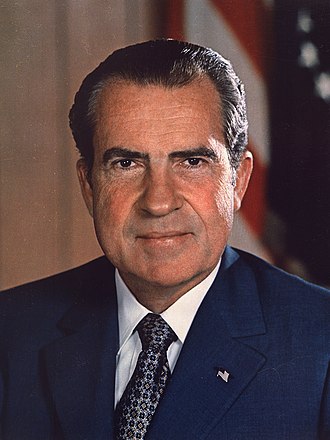
Richard M. Nixon served as the 37th President of the United States from January 1969 until his resignation in August 1974. In February 1971, he ordered the installation of a secret voice-activated taping system in the White House to preserve a historical record of his administration. Until the system's existence was revealed and dismantled in July 1973, the tapes captured Nixon directing major foreign policy initiatives, such as the opening to China, as well as his central role in the Watergate cover-up.
What Nixon talks about on the tapes
White House operations 4,718Presidential scheduling 2,225Public relations 1,784Presidential schedule 1,782Vietnam War 1,693Logistics 1,650Manolo Sanchez 1,626White House communications 1,400White House administration 1,399Presidential communication 1,243Henry Kissinger 1,191Foreign Policy 1,183
Conversations (21,010)
— Page 119 of 211President Nixon and Henry Kissinger discussed the complexities of managing Vietnam peace negotiations while navigating domestic political pressures, specifically focusing on the Brooke amendment and growing Congressional skepticism. They debated the necessity of maintaining secrecy in private negotiating channels to avoid premature disclosure, which could undermine the Administration's leverage and exacerbate opposition from Congressional liberals. Ultimately, they resolved to continue pressuring North Vietnam while balancing the need to retain enough political support to avoid a legislative collapse during the 1972 election year.
President Nixon called John O. Marsh, Jr. to express appreciation for his ongoing work with the American Revolutionary Bicentennial Commission. Nixon relayed positive feedback from Charles Colson and John Connally regarding Marsh’s performance and specifically praised his handling of sensitive matters involving George Wallace. The President concluded the call by affirming his total confidence in Marsh’s ability to manage his current responsibilities.
President Nixon held a brief one-minute meeting with an unidentified individual in the Oval Office. No dialogue or subject matter was captured on the recording due to the brevity and lack of audio documentation. Consequently, no specific topics were discussed and no official actions were taken during this exchange.
President Richard M. Nixon met with his valet, Manolo Sanchez, in the Oval Office for a brief morning discussion. The interaction, which lasted only two minutes, was primarily focused on routine personal or household logistics. No substantive policy matters or major political decisions were recorded during this brief encounter.
President Nixon met with H.R. Haldeman and John Ehrlichman to discuss political strategy, the administration's use of federal investigative agencies, and upcoming personnel decisions. The President expressed frustration that the administration was not effectively using its power to investigate political opponents, specifically focusing on Lawrence O'Brien and the Democratic National Committee. They also discussed managing cabinet expectations regarding potential reappointments and coordination with figures like Herbert G. Klein and John Mitchell for forthcoming events.
President Nixon met with John S.D. Eisenhower and David R. Young, Jr. to discuss the Interagency Classification Review Committee's report on reducing classified materials. The conversation focused on the need to decrease the number of individuals with Top Secret clearance and access, the challenges of overclassification, and the importance of stricter penalties for security violations to prevent leaks. Nixon emphasized the administration's public goal of increased transparency while privately stressing the necessity of maintaining secrecy for national security and effective governance.
President Nixon directed his aide, Stephen B. Bull, to facilitate an immediate meeting with Charles W. Colson. The exchange served primarily to adjust the President's schedule to accommodate this consultation. No further substantive policy matters were discussed during this brief interaction.
President Nixon and Alexander Butterfield briefly conferred in the Oval Office. The discussion touched upon H.R. Haldeman's schedule, specifically a meeting with John Ehrlichman, and the President's own upcoming telephone call. The conversation was very short, with Butterfield departing shortly after the meeting began.
President Nixon briefly met with Stephen B. Bull in the Oval Office to discuss the President's schedule. The conversation was very short and did not yield any significant decisions or action items, with Bull departing shortly after the meeting began.
In this meeting, President Nixon consulted with Alexander Butterfield and Henry Kissinger regarding logistics for his upcoming trip to Hawaii, which included plans for Admiral John S. McCain Jr.'s retirement ceremony and potential events with Clare Boothe Luce. The President and Kissinger also discussed domestic administration policy concerning the debt ceiling and frustrations regarding Secretary of Defense Melvin Laird’s public messaging. Finally, they reviewed sensitive foreign policy strategy, specifically coordinating with the People’s Republic of China regarding the Soviet Union and negotiating a potential path forward in Vietnam.
President Nixon instructed the White House operator to initiate an urgent telephone call to former Treasury Secretary John B. Connally in Texas. This request reflects the ongoing political consultation between Nixon and Connally during the 1972 election cycle. The conversation served strictly as a procedural effort to establish a direct line of communication between the two men.
President Nixon consulted with the White House operator to facilitate contact with John B. Connally. The operator informed the President that Connally was currently away from his ranch and expected to return around 12:30 p.m. Nixon subsequently authorized the operator to have Connally return the call at his earliest convenience.
President Nixon contacted the White House operator to facilitate a telephone call to his daughter, Julie Nixon Eisenhower. The brief interaction served as a logistical bridge to connect the President with his family. No policy matters or significant political developments were addressed during this brief request.
President Richard M. Nixon held a brief telephone conversation with his daughter, Julie Nixon Eisenhower. The discussion served as a personal exchange between family members during the president’s tenure. No official policy matters or significant administrative decisions were recorded, as the bulk of the dialogue consisted of personal communication.
President Nixon and his daughter, Julie Nixon Eisenhower, met briefly for a personal conversation in the Executive Office Building. Given the lack of a transcript and the short duration of the recording, the discussion centered on private family matters rather than official policy. No significant administrative decisions or historical action items were recorded during this brief encounter.
President Nixon requested that the White House operator place a call to his personal aide, Stephen B. Bull. This brief administrative communication served to facilitate direct access to a member of the President's inner staff. No further policy or substantive matters were discussed during this connection.
President Nixon held a brief meeting with his personal valet, Manolo Sanchez, in the Old Executive Office Building. Given the absence of a transcript and the very short duration of the interaction, the exchange remained informal and restricted to personal matters. No substantive policy discussions or administrative decisions were recorded during this encounter.
President Nixon held a brief meeting with an unidentified individual to discuss retrospective events from the previous year. The conversation focused on reviewing the sequence of past developments, though the specific subject matter remains obscured due to the ambiguity of the transcript. No definitive decisions or policy actions were captured during this short exchange.
President Nixon held a brief administrative interaction with a White House operator to facilitate an outgoing communication. This exchange served a purely logistical purpose, functioning as a routine request for telephone connectivity. No policy discussions or significant political decisions occurred during this brief interaction.
President Nixon held a brief telephone conversation with his personal aide, Stephen B. Bull, to discuss administrative logistics or scheduling matters. Due to the unintelligible nature of the audio, no substantive policy decisions or developments can be confirmed. The brief exchange serves primarily as a record of routine communication between the President and his staff.
President Nixon met with his aide, Stephen B. Bull, to discuss the specific terminology for a planned initiative or project. The brief exchange focused on finalizing the phrasing to be used in upcoming communications. Nixon instructed Bull to handle the follow-up and execution of the identified phrasing.
President Nixon contacted the White House operator to facilitate an outgoing call to aide Charles W. Colson. This brief administrative interaction served as the necessary bridge to initiate a direct conversation with a key member of the President's staff. No substantive policy matters were discussed during this brief connection process.
President Nixon initiated a brief, one-minute communication with the White House operator from his office in the Old Executive Office Building. Given the lack of a transcript or supplemental documentation, the specific subject matter of this interaction remains unrecorded. Consequently, no substantive policy decisions or developments can be attributed to this exchange.
President Nixon and Charles W. Colson engaged in a brief telephone consultation regarding administrative and political matters. The dialogue focused on organizational strategy and the handling of ongoing domestic issues facing the administration. No definitive policy shifts were finalized, though the exchange served as a tactical check-in between the President and his advisor.
President Nixon and Charles Colson discuss strategies for presidential gift-giving, specifically focusing on the feasibility of customizing music boxes with the presidential seal to distribute to notable individuals. They also address logistical matters, including the placement of a painting of the President's dog, King Timahoe, and the President's upcoming schedule. The conversation reflects administrative efforts to manage White House promotional items and office decor in consultation with Rose Mary Woods and Manolo Sanchez.
President Richard M. Nixon met with his valet, Manolo Sanchez, in the Old Executive Office Building to attend to personal matters. The brief encounter focused on administrative or private tasks associated with the President's personal staff. The meeting concluded after approximately seventeen minutes without any documented shift in policy or official administration business.
President Nixon consulted with the White House operator to facilitate a scheduled meeting with Charles W. Colson. The brief exchange focused on coordinating logistics for the upcoming encounter in the Executive Office Building. No significant policy decisions were reached during this administrative interaction.
President Nixon and Charles Colson met to discuss administrative personnel assignments for a forthcoming Sequoia cruise and to analyze current economic conditions. They evaluated the political impact of rising food prices on housewives and considered various policy options regarding price controls and staples. Additionally, the President reviewed economic data, specifically examining recent revisions to business indicators and unemployment figures to better gauge the health of the economy.
President Richard Nixon and John B. Connally held a brief telephone conversation following an initial exchange of greetings. While the majority of the recorded session consists of a withdrawn segment containing personal material, the discussion reflects ongoing informal consultation between the President and his close political advisor. No substantive policy decisions or action items were documented in the accessible portion of the transcript.
President Nixon and John B. Connally met briefly to coordinate their schedules and logistics. The conversation primarily served to confirm that Connally had successfully traveled into town for the engagement. No substantive policy or political decisions were recorded during this short exchange.
President Richard M. Nixon met with his longtime valet, Manolo Sanchez, in the Old Executive Office Building for a brief personal interaction. The recorded segment consists entirely of a withdrawn portion labeled as personal, indicating no substantive policy or administrative matters were addressed. Consequently, the meeting resulted in no political developments or action items.
President Nixon spoke with John B. Connally following the latter's return from a diplomatic mission abroad. The discussion remained brief and informal, primarily serving to exchange greetings after Connally’s travels. No substantive policy decisions or strategic objectives were recorded in this segment of the conversation.
President Richard Nixon met with John B. Connally for a brief exchange in the Old Executive Office Building. The recording is incomplete and consists primarily of introductory greetings, providing no substantial policy discussions or administrative decisions. Consequently, the meeting remains a fragmented, non-substantive record of a private interaction between the two men.
President Nixon contacted the White House operator to place an outgoing call to Dwayne O. Andreas. The brief exchange served as a routine administrative request to facilitate communication between the President and the prominent agribusiness executive. No further policy discussions or substantive developments occurred during this short connection.
President Nixon instructed the White House operator to place a telephone call to Dwayne Andreas. Upon being informed that Andreas was currently in Minnesota, Nixon acknowledged the information. The brief exchange served as an administrative request to facilitate communication with the businessman.
President Richard Nixon and H.R. Haldeman met briefly to coordinate administrative matters within the Executive Office Building. While the specific transcript is largely inaudible, the meeting served to facilitate brief communication between the President and his Chief of Staff. No major policy decisions were captured in this short exchange.
President Nixon met with his personal valet, Manolo Sanchez, in the Old Executive Office Building to conduct private business. Given the absence of an official transcript and the brief duration of the encounter, the specific agenda remains undocumented. This interaction reflects the routine daily contact between the President and his close domestic staff.
President Nixon held a brief, three-minute meeting with an unidentified individual in his Old Executive Office Building suite. The dialogue is fragmentary, consisting only of a cryptic reference to a phone call that the President initiated himself. Due to the lack of further transcript evidence, no substantive policy discussions or specific action items were recorded during this interaction.
President Nixon consulted with businessman Dwayne O. Andreas regarding the inclusion of Hubert H. Humphrey in upcoming bipartisan foreign policy meetings. Nixon expressed his intent to formally invite Humphrey to these sessions, acknowledging the importance of recognizing Humphrey's status as a former vice president and presidential candidate. This outreach was intended to foster a more inclusive, bipartisan approach to sensitive foreign policy matters, specifically regarding the Strategic Arms Limitation Talks (SALT).
President Nixon met with H.R. Haldeman, Charles Colson, and Henry Kissinger to coordinate administration strategy regarding the 1972 reelection campaign, foreign policy outreach, and logistical planning for upcoming domestic travel. The group discussed utilizing surrogate outreach to build bipartisan support for the Strategic Arms Limitation Treaty (SALT) and managing the President's visits to flood-stricken areas in Wilkes-Barre and Elmira to highlight disaster relief legislation. Additionally, Nixon emphasized the need for aggressive political tactics—specifically the use of derogatory campaign literature linking opponents to George McGovern—and reviewed economic data concerning food prices and inflation with his staff.
President Nixon and businessman Dwayne O. Andreas discuss the political fallout surrounding the Democratic vice-presidential nomination and the potential replacement of Thomas F. Eagleton. Nixon confirms that he has coordinated with Henry Kissinger to delay a security briefing for Hubert Humphrey to influence the timing of the Democratic ticket's reorganization. The conversation reflects the administration’s strategic interest in managing the perceived stability and optics of the opposing party's convention period.
President Nixon held a brief telephone conversation with an unidentified individual, the substance of which remains unrecorded due to the lack of an available transcript. Consequently, no specific policy decisions, political strategies, or significant developments can be determined from this interaction. The recording serves primarily as part of the archival record of the White House telephone taping system.
President Nixon contacted the White House operator to facilitate a telephone call to First Lady Pat Nixon. The brief interaction served as a logistical request to establish a private line for the President to speak with his wife. No substantive political or policy matters were discussed during this connection attempt.
President Richard Nixon met with his valet, Manolo Sanchez, in the Old Executive Office Building for a brief, private discussion. The interaction, lasting less than a minute, was categorized by NARA as a personal matter. No substantive policy discussions or official government actions were recorded during this session.
President Nixon consulted with a White House operator to facilitate a telephonic communication. This brief administrative interaction served the purpose of establishing a connection for the President to conduct official business. No substantive policy discussions or decisions were recorded during this brief bridge to a subsequent conversation.
President Nixon held brief discussions with First Lady Pat Nixon and aide John D. Ehrlichman while working from the Old Executive Office Building. The dialogue primarily concerned scheduling logistics for the remainder of the day, specifically coordinating the timing of the President's upcoming commitments. Nixon subsequently dictated a memorandum for the file to document his activities.
President Richard Nixon and First Lady Pat Nixon engaged in a brief, personal telephone conversation. The exchange was recorded by the White House taping system but contains no substantive policy discussion or administrative action items. As the entire duration of the call is marked as a withdrawn personal item, the record serves only to document their private communication.
President Nixon and John Ehrlichman spoke briefly to coordinate their upcoming schedule. The primary focus of the discussion was establishing the timing for a future meeting at the Executive Office Building. No substantive policy decisions were made during this brief administrative check-in.
President Nixon contacted the White House operator to facilitate an urgent communication with Senator John C. Stennis. This brief exchange served as an administrative request to place a telephone call to the Senator. No further substantive policy discussions occurred during this short connection.
President Nixon consulted with the White House operator to facilitate an outgoing call. The brief exchange focused on establishing a connection to a specific party, serving as a procedural step in the President's daily communication workflow. No substantive policy discussions or major decisions occurred during this brief interaction.
President Nixon called Senator John C. Stennis to extend birthday greetings and express gratitude for his efforts in navigating difficult appropriation votes in Congress. The two discussed the lack of support from Republican senators and the frustration voiced by Vice President Spiro Agnew regarding the legislative situation. Nixon emphasized the importance of securing a strong position in the House of Representatives to resolve ongoing legislative conflicts, while Stennis reaffirmed his support for the administration's Vietnam policy.
President Nixon met with Senator John C. Stennis to offer birthday wishes and express appreciation for his legislative leadership regarding appropriations. The conversation addressed ongoing challenges with Republican support for the administration's fiscal agenda and the hope for favorable outcomes during upcoming budget conference committees. Nixon acknowledged the difficulties of the election year while reaffirming his private support for Stennis's efforts.
President Nixon met with his senior advisors, including H. R. Haldeman and John Ehrlichman, to discuss administrative strategy, personnel changes, and political damage control ahead of the 1972 election. A significant portion of the discussion focused on managing rising food prices and the potential political fallout, with the President exploring aggressive options like a temporary price freeze on meat. Additionally, they reviewed plans to leverage the IRS to investigate political opponents, such as Lawrence O'Brien, and finalized shifts in cabinet and sub-cabinet personnel to ensure greater control in a potential second term.
President Nixon met with his aide Stephen B. Bull in the Oval Office to coordinate his daily schedule and prepare for an upcoming meeting with Charles W. Colson. Following this briefing, the President engaged in two brief telephone conversations with unidentified individuals to discuss scheduling matters. These interactions reflect the logistical management of the President's priorities and internal communications during the early morning hours.
President Nixon, along with advisors Kissinger, Haldeman, Ehrlichman, and Colson, discussed several key issues. They addressed concerns about the Strategic Arms Limitation Treaty (SALT) and potential congressional amendments, particularly from Senator Jackson, and debated strategies for managing these reservations with the Soviets. The conversation also delved into economic matters, focusing on rising food prices, the potential for a price freeze on hides and other goods, and the political implications of these economic trends. Additionally, the group touched upon the Arthur Bremer assassination attempt and its potential political fallout, as well as the upcoming presidential schedule involving youth and women leaders.
President Nixon and John Ehrlichman discussed a legislative development regarding the export of animal hides, expressing frustration over a House vote that took place without proper administration coordination. Nixon expressed concern that the restrictive nature of the bill was driven by the Department of Commerce rather than George Shultz's office. Ehrlichman was tasked with investigating the source of the legislative error and providing a follow-up briefing to the President.
President Nixon directed the White House operator to facilitate a personal call to his daughter, Tricia Nixon Cox. The brief exchange served as a logistical request to coordinate communication with a family member. No policy matters or substantive political business were addressed during this interaction.
President Nixon and H.R. Haldeman reviewed preparations for an upcoming meeting with various youth program representatives, including discussions on dress codes and the composition of the group. Nixon also coordinated logistics for a personal trip to the Thomas B. McCabe, Jr. residence with Manolo Sanchez and Tricia Nixon Cox. The interaction concluded with brief administrative arrangements and informal social exchanges.
President Richard Nixon engaged in a brief telephone conversation with his daughter, Tricia Nixon Cox. The discussion was personal in nature and served as a private family exchange. No policy matters or official government actions were addressed during the recorded portion of the call.
President Nixon contacted the White House operator to request a telephone connection with special counsel Charles W. Colson. This brief administrative interaction served as the necessary logistical step to facilitate a private discussion between the President and his advisor. No substantive policy matters were discussed during this brief exchange.
President Nixon met with an unknown individual in the Oval Office to review his upcoming schedule. The primary focus of the discussion concerned the President's planned engagement with a visiting youth group. No further administrative developments or substantive policy decisions were recorded during this brief encounter.
President Nixon consulted with the White House operator to facilitate an outgoing call. This brief interaction served as a standard administrative bridge to connect the President with another party. No policy discussions or significant political developments occurred during this operational exchange.
President Nixon and Charles W. Colson engaged in a brief telephone conversation that was subsequently withheld from the public record. Due to the withdrawal of the content, no specific policy decisions, political strategies, or substantive topics are discernable from the available documentation. The interaction remains a restricted item within the White House taping archives.
President Richard M. Nixon met with special counsel Charles W. Colson in the Oval Office for a brief discussion. The brief interaction, which remains largely undocumented due to the lack of a transcript and the withdrawal of an item, pertains to administrative or political matters being handled by the White House during the 1972 campaign season. No definitive policy outcomes or specific actions are identifiable from the available record of this brief meeting.
President Nixon contacted the White House operator to place an outgoing call to Richard K. Cook. The brief exchange served as a routine administrative request to facilitate communication with a member of his staff. No further substantive policy matters were discussed during this brief connection.
President Nixon and H. R. Haldeman met to discuss political strategy and administration initiatives, including the transition to a post-Vietnam economy and foreign policy successes. Much of the conversation focused on managing the political fallout from the Watergate scandal, specifically addressing the legal and public relations implications of the Dwayne Andreas campaign contribution and potential testimony from Jeb Stuart Magruder. Nixon and Haldeman also reviewed the President's upcoming schedule, including the Republican National Convention and strategies for handling media questions regarding Vietnam and campaign finances.
President Nixon and Richard K. Cook discussed the status of a hides bill that had recently passed both houses of Congress despite administration opposition. While Nixon expressed concern over the political ramifications regarding shoe prices and cattlemen, Cook advised that the administration could frame the defeat as congressional obstruction. The two men also strategized on upcoming legislative efforts, specifically regarding the need to secure the neutrality of Speaker Carl Albert by leveraging the influence of former Speaker John W. McCormack.
President Nixon consulted with the White House operator to facilitate a telephonic connection with Jeb Stuart Magruder. The exchange served as a logistical step to initiate a direct conversation between the President and Magruder. No further policy or substantive matters were addressed during this brief administrative interaction.
President Nixon consulted with a White House operator to verify if she recalled an individual named Jeff McGruder. The inquiry serves as a brief personal follow-up regarding a specific acquaintance. No broader policy or administrative developments resulted from this exchange.
President Nixon and Jeb Stuart Magruder held a brief telephone discussion focused on defense programs and their subsequent impact on employment. The exchange served to align their messaging on these economic and national security topics, specifically highlighting plans to produce a video to communicate their platform. No further policy shifts were finalized during this call.
President Nixon and Jeb Stuart Magruder met briefly to discuss unspecified strategic concerns. The dialogue remains largely indistinct, characterized by vague exchanges regarding a potential course of action and the President's expressed sense of unease. No concrete policy decisions or specific directives were recorded during this brief encounter.
President Nixon contacted the White House operator to facilitate a telephone connection with Thomas G. Dunn of Elizabeth, New Jersey. This brief exchange served as a logistical instruction to initiate the outbound call to the mayor. No further substantive policy discussions occurred during this brief communication.
President Nixon consulted with the White House operator to facilitate a connection with Thomas G. Dunn. This brief administrative exchange was initiated to resolve difficulties in reaching Dunn via telephone. The interaction served as a logistical attempt to establish communication with the intended party.
President Nixon initiates a brief communication with the White House operator to facilitate a telephone connection. The primary purpose of the contact is to place a call to Mayor Thomas G. Dunn of Elizabeth, New Jersey. No further discussion or policy decisions were recorded during this brief administrative exchange.
President Nixon consulted with a White House operator to facilitate an outgoing communication. The exchange was brief and focused on technical connectivity rather than substantive policy matters. No significant political decisions or developments occurred during this brief administrative interaction.
President Nixon spoke with Thomas G. Dunn to discuss the status of pending revenue sharing legislation, which appeared poised for imminent passage. Nixon expressed optimism about the bill's progress and extended an invitation to Dunn for a formal signing ceremony at the White House. The conversation served to solidify political support for the administration's legislative agenda while acknowledging Dunn’s cooperation.
President Nixon met briefly with Thomas G. Dunn in the Old Executive Office Building for a two-minute discussion. Due to the lack of a transcript and the fact that one item from the records was withdrawn, the specific nature of their communication remains undisclosed. The interaction serves as a brief recorded contact between the President and Dunn during the summer of 1972.
President Nixon contacted the White House operator to facilitate a telephone connection with his special assistant and speechwriter, Patrick J. Buchanan. This brief administrative interaction served as a logistical step to initiate a direct discussion between the President and his advisor. No policy deliberations were recorded during this brief request for assistance.
President Nixon met with his personal valet, Manolo Sanchez, to briefly discuss social pleasantries. During this short interaction, the President acknowledged expressing gratitude to a previous contact. The exchange concluded with no substantive policy decisions or political directives.
President Nixon held a brief, informal communication with the White House operator. The exchange consisted of social pleasantries rather than substantive policy deliberations or administrative business. No official actions or decisions were recorded during this short interaction.
President Nixon and Patrick J. Buchanan engaged in a brief telephone exchange. The conversation served as a preliminary check-in between the President and his advisor. No significant policy decisions or substantive political matters were addressed during this short interaction.
President Nixon held a brief meeting with White House aide Patrick J. Buchanan shortly before his scheduled departure. The interaction served as a final consultation or farewell before the President left his office. No specific policy decisions were recorded during this abbreviated exchange.
President Nixon met with Charles W. Colson and Patrick J. Buchanan to discuss political strategy and administrative coordination during the 1972 reelection campaign. The participants reviewed Colson’s recent interactions with political analyst Richard M. Scammon and analyzed the President’s earlier meeting with youth representatives from the Committee for the Reelection of the President. The dialogue focused on campaign outreach efforts and assessments of the current political landscape.
President Nixon instructed the White House operator to place a telephone call to Senator Harry F. Byrd, Jr. of Virginia. The brief communication served solely to initiate official contact between the President and the Senator. No further discussion occurred during this recording as the line was managed to facilitate the connection.
President Nixon met with an unknown female staff member in the Oval Office to coordinate logistics regarding the schedule of Charles W. Colson. The discussion focused on determining Colson's availability and whether he was currently occupied in a staff meeting. Following the brief exchange, the president decided not to disturb Colson while confirming his status.
President Nixon met with an unknown female visitor in the Oval Office to coordinate scheduling logistics. The brief discussion centered primarily on finalizing the timing for a forthcoming meeting with Special Counsel Charles W. Colson. The exchange concluded with the setting of a 9:00 a.m. appointment.
President Nixon initiated a call to Senator Harry Byrd from the Oval Office. The primary purpose of this brief interaction was to connect with the Senator, though the specific reason for the call is not detailed in the provided transcript excerpt. The conversation involved only the President and the White House operator facilitating the connection.
President Nixon and Senator Harry F. Byrd, Jr. engaged in a brief, cordial exchange to return a previous call initiated by the Senator. The conversation focused on social pleasantries and the President's upcoming schedule in Maryland. The two men also commiserated over their mutual distaste for the Washington Post, with Nixon suggesting that the Senator consult a more balanced White House news summary to better gauge national sentiment.
President Nixon met briefly with Senator Harry F. Byrd, Jr. to discuss a personal matter regarding Byrd's vehicle. The conversation was brief and informal, with Byrd apologizing for not returning Nixon's call sooner due to an issue with his RV. No significant policy discussions or action items were recorded.
President Nixon and Stephen B. Bull briefly met in the Oval Office to discuss the President's schedule, specifically an upcoming meeting with Charles W. Colson. The conversation was very short, with Bull departing before 9:02 am. No significant decisions or action items were recorded.
President Nixon and Alexander Butterfield briefly discussed the President's upcoming schedule, including meetings with Henry Kissinger, the Council on Environmental Quality, and Virginia legislators. The conversation touched on the timing and press coverage of these events, as well as the content of a briefing by Ronald Ziegler and the length of a meeting with General Goodpaster. The primary purpose was to confirm and coordinate the President's appointments for the day.
President Nixon, Charles Colson, and Stephen Bull discussed the administration's record on unemployment, comparing figures from 1969 to 1972 and considering its relationship to the Vietnam War. They also touched upon public relations strategies, mentioning Clark MacGregor and George McGovern, and reviewed upcoming scheduling matters, including a meeting with Pat Nixon. The conversation also briefly referenced poll data from Gallup and Harris.
President Nixon met with Senator Russell Long, Governor Edwin Edwards and his family, and other staff members in the Oval Office. The meeting included a formal photograph session and discussions about upcoming Senate votes, particularly on national defense and foreign policy, with an emphasis on Southern Democratic support. They also discussed presidential gifts, including cuff links and ashtrays, and a potential road construction project in Louisiana.
President Nixon and Stephen B. Bull reviewed upcoming scheduling arrangements involving Ronald L. Ziegler and Gerald R. Warren in California. The discussion primarily focused on the logistics of presidential gift disbursements, specifically the procurement and presentation of Bulova watches featuring the presidential seal and signature. Nixon finalized plans to present one of these watches to Congressman Otto E. Passman later in the week.
President Nixon and Alexander P. Butterfield met to coordinate the agenda and guest list for an upcoming meeting with Republican Congressional leadership. They focused specifically on the selection of attendees—including Wallace F. Bennett, Frank T. Bow, John W. Byrnes, and Barry M. Goldwater—and the inclusion of William E. Timmons to discuss the national economy. During the brief session, the President also attended to the administrative task of signing various official documents.
President Nixon and Stephen B. Bull reviewed the President's daily schedule to finalize logistics for an upcoming session with the Council on Environmental Quality (CEQ). They specifically discussed the potential participation of John D. Ehrlichman in that meeting. The brief exchange focused on coordinating personnel attendance to ensure proper briefing and follow-through for the President's environmental agenda.
President Nixon, Henry Kissinger, and General Andrew Goodpaster met to discuss the strategic landscape of NATO, European security, and the necessity of maintaining a unified Atlantic alliance amidst potential political shifts. Goodpaster provided an assessment of European confidence in the United States, emphasizing the importance of continued U.S. force presence and the 'formula of comparable effort' to counter Soviet influence and prevent the 'Finlandization' of Europe. The President stressed that while the administration would continue to engage in diplomatic negotiations with the Soviet Union, it remained committed to a strong NATO, and he expressed frustration regarding European leaders' public hedging and the negative influence of domestic 'doves' on U.S. foreign policy.
President Nixon and Gerald L. Warren briefly discussed logistics for an upcoming meeting with the Council of Environmental Quality. They considered the possibility of a photograph opportunity taking place outdoors, with Warren suggesting it might be beneficial. The conversation was very short, focusing on the practical arrangements for the photo op.
President Nixon met with members of the Council on Environmental Quality (CEQ) to discuss the agency's third annual report and the broader direction of national environmental policy. The conversation emphasized shifting the focus of environmentalism from a perceived niche interest for intellectuals to a practical, inclusive movement that benefits urban residents and the working class through accessible public parks and improved living conditions. Nixon encouraged the CEQ to prioritize increasing public park usage, noting that environmental advocacy should address urgent urban issues such as lead paint and sanitation alongside traditional conservation efforts.
President Nixon and John Ehrlichman met to coordinate political strategy ahead of the 1972 election, focusing on the management of various sensitive administration issues. They discussed the tactical delay of the Daniel Ellsberg trial, potential IRS audits of Lawrence O’Brien, and the pursuit of political intelligence through Bobby Baker regarding Democratic rivals. Additionally, the pair evaluated the risks of a proposed railroad bailout bill and considered the political implications of vetoing a water quality bill and a federal blue-collar pay raise.