Nixon, Richard M. (President)
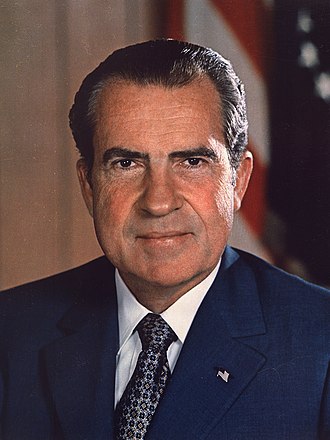
Richard M. Nixon served as the 37th President of the United States from January 1969 until his resignation in August 1974. In February 1971, he ordered the installation of a secret voice-activated taping system in the White House to preserve a historical record of his administration. Until the system's existence was revealed and dismantled in July 1973, the tapes captured Nixon directing major foreign policy initiatives, such as the opening to China, as well as his central role in the Watergate cover-up.
What Nixon talks about on the tapes
White House operations 4,718Presidential scheduling 2,225Public relations 1,784Presidential schedule 1,782Vietnam War 1,693Logistics 1,650Manolo Sanchez 1,626White House communications 1,400White House administration 1,399Presidential communication 1,243Henry Kissinger 1,191Foreign Policy 1,183
Conversations (21,010)
— Page 120 of 211President Nixon met with John Ehrlichman to discuss political strategy for the upcoming campaign and address pressing domestic policy challenges. They focused on framing the administration’s opposition to the pending water quality bill by linking it to excessive tax burdens and negative impacts on jobs, contrasting this with a critical portrayal of George McGovern’s spending policies. Additionally, they reviewed economic issues, including rising food prices and potential strategies for stabilization, alongside administrative scheduling and campaign staffing adjustments involving the roles of H.R. Haldeman and David Parker.
President Nixon met with his personal valet, Manolo Sanchez, in the Old Executive Office Building to discuss personal matters and administrative coordination. The conversation centered on a request for an unspecified item and a review of the President's upcoming schedule. This brief interaction highlights the routine logistical support provided by Sanchez to ensure the President's daily functions remained on track.
President Nixon met with his aide Stephen B. Bull to coordinate upcoming appointments and manage his daily schedule. The discussion centered on logistics for meetings with Charles W. Colson, Otto E. Passman, and a Virginia Democratic delegation, including the coordination of requested photographs. The primary outcome was the administrative preparation for these scheduled engagements.
President Nixon met with his personal valet, Manolo Sanchez, to discuss the President's upcoming schedule and logistical arrangements. The brief interaction focused on coordinating departure plans and general administrative updates. Nixon expressed personal appreciation to Sanchez for his assistance during the meeting.
President Nixon and Alexander Butterfield met to curate the attendee list for an upcoming dinner at Camp David, emphasizing a desire to keep the group small and focused by excluding staff who had already heard recent presentations. The President expressed a preference for maintaining exclusive, hard-working meetings rather than large social gatherings that might dilute the impact of discussions. They also reviewed logistics for a forthcoming meeting with Virginia legislators, including plans for individual photographs, a White House tour, and the selection of appropriate, cost-effective gifts for the guests.
President Nixon met with a delegation of Virginia Democratic leaders to discuss the political landscape ahead of the 1972 election and foster ideological alignment. The conversation focused on the President's opposition to George McGovern’s defense and welfare proposals, the importance of appointing strict constructionist judges to the Supreme Court, and the necessity of prioritizing political philosophy over party labels. Toward the end of the meeting, the attendees encouraged the President to accept an invitation to speak at Woodrow Wilson’s birthplace, arguing that such a forum would provide a strategic opportunity to frame his foreign policy in contrast to his opponent's isolationism.
President Nixon and Stephen B. Bull met briefly to discuss the selection and preparation of gifts for an upcoming meeting with Representative Otto E. Passman. The two reviewed specific items, including a gold watch and a timepiece featuring the presidential seal. Bull subsequently departed the Oval Office to facilitate the President's arrangements for the visitor.
President Nixon met with Representative Otto E. Passman and legislative liaison William E. Timmons in the Oval Office primarily to exchange formal gifts, including personalized watches and cufflinks. Following a brief photo session, the discussion shifted to legislative strategy regarding a bill sponsored by Passman that was currently facing opposition in Congress. Passman outlined his intentions to secure the legislation through an authorization bill or a special rule, while Nixon deferred the tactical handling of these proceedings to Timmons.
President Nixon met with Peter M. Flanigan to discuss managing international economic policy, specifically navigating sensitive trade relations with the European Economic Community, Japan, and the Soviet Union while avoiding premature public confrontations. Nixon emphasized the importance of maintaining a non-partisan, issue-focused role for his economic advisors to bolster his administration's position ahead of the 1972 election and requested that public communications be handled with extreme confidentiality. Additionally, they reviewed organizational changes at the Corporation for Public Broadcasting and discussed the political reliability and background of diplomat Robert O. Blake.
President Nixon met briefly with an unidentified woman to coordinate his departure from the Oval Office. The participants discussed the logistics of moving to the Executive Office Building, where Charles W. Colson was waiting. The brief interaction concluded with the President preparing to join Colson for their scheduled meeting.
President Nixon met with Alexander P. Butterfield to streamline the attendee lists for an upcoming official meeting and dinner. The President expressed a desire to reduce the number of participants, specifically aiming to separate his policy advisors from purely political activities and to ensure staff focused on substantive work rather than social obligations. They reviewed various senior staff members—including Henry Kissinger, John Ehrlichman, and Peter Flanigan—to determine who was essential for briefings versus those whose presence was unnecessary.
President Nixon and Henry Kissinger met briefly in the Oval Office to coordinate their schedules and internal communications. The discussion centered on the preparation and review of a summary report regarding an ambassador. This brief exchange served as a logistical touchpoint to ensure the President was briefed on diplomatic documentation.
President Nixon and John Ehrlichman engage in a brief, disjointed exchange regarding the scheduling of individuals in the Oval Office. The participants attempt to clarify whether colleagues named Alex or Liz are currently present or expected for a meeting. No substantive policy decisions or political developments are recorded during this brief administrative interaction.
President Nixon met with John Ehrlichman and Henry Kissinger to refine the guest list and agenda for an upcoming Cabinet dinner, emphasizing the need to limit attendance to substantive advisors while managing political optics. Following these domestic discussions, the President and Kissinger reviewed ongoing foreign policy challenges, specifically exploring options for Vietnam peace negotiations and strategies to handle potential trade agreements with Japan. Nixon expressed a desire for a firm, principled approach to the Vietnam conflict, explicitly rejecting weak concessions and directing staff to maintain strict confidentiality regarding the sensitive status of these negotiations.
President Nixon, Henry Kissinger, and Arthur Burns coordinated the scheduling of a meeting between the President and Soviet Minister of Health Boris V. Petrovsky. The discussion focused on aligning the arrival of the Soviet official from Los Angeles with the President's upcoming departure for Camp David. Kissinger ultimately confirmed that a 15-minute window would be secured for the meeting on Wednesday before Petrovsky's scheduled return to the Soviet Union.
President Nixon initiated a brief telephone communication with the White House operator. The conversation remained unintelligible, consisting primarily of routine administrative contact. No significant policy decisions or actionable directives were recorded during this brief exchange.
President Nixon directs the White House operator to place a telephone call to an individual identified as Mr. Arthur. The interaction is brief and serves solely as a logistical request for telephonic assistance. No further policy or substantive matters are addressed during this exchange.
President Nixon met with Charles W. Colson to review materials and discuss John B. Connally’s recent schedule and activities. The conversation touched upon political optics and the momentum of ongoing initiatives. Alexander P. Butterfield briefly joined the meeting toward its conclusion before the participants departed.
President Richard M. Nixon and Alexander P. Butterfield held a brief telephone conversation to coordinate the President's upcoming schedule. The discussion served as a logistical check-in regarding official calendar management. No significant policy decisions were recorded during this short exchange.
President Nixon met with a large group of Republican Congressional leaders to coordinate legislative strategy and discuss the administration's economic record ahead of the upcoming election. The conversation focused on countering Senator George McGovern's economic proposals, with the President and his advisors emphasizing that the administration's policies had fostered recovery, reduced inflation, and increased civilian employment. Key action items included distributing briefing materials to counter Democratic attacks, pushing for a government spending ceiling to avoid future tax increases, and planning strategy for upcoming votes on controversial appropriation bills and foreign aid legislation.
President Nixon met with Hugh Scott, Gerald Ford, and other key staff to coordinate a political strategy for challenging Democratic nominee George McGovern's economic platform. The group focused on framing McGovern's proposed welfare and budget policies as fiscally irresponsible, arguing that they would necessitate massive tax increases and significantly expand welfare rolls. Nixon instructed his team to emphasize the importance of a $250 billion spending ceiling and expressed his commitment to using the presidential veto to combat excess government spending.
President Nixon met with his aide Stephen B. Bull to coordinate his daily schedule and logistical arrangements. The primary focus of the brief discussion was a potential meeting between the President and Senator Hugh Scott. The participants finalized the sequence of these engagements to ensure proper planning for the President's upcoming appointments.
President Nixon met with Senate Minority Leader Hugh Scott and Communications Director Herbert G. Klein to address remarks Scott made during a recent Republican leadership meeting regarding the administration's congressional relations. The discussion focused on the necessity of maintaining unified messaging and the role of Henry Kissinger in ongoing diplomatic and political strategy. The meeting concluded quickly, serving primarily to clarify Scott's previous public comments and ensure alignment within the party leadership.
President Nixon met briefly with an unidentified woman in the Oval Office to coordinate his daily schedule. The primary focus of the discussion concerned the President's upcoming appointment with Stephen B. Bull. The meeting concluded quickly, with the visitor departing shortly before the taping session ended.
President Nixon and Stephen B. Bull met to coordinate upcoming administrative events, specifically a photo opportunity with Miss Teenage America and the swearing-in ceremony for Dixy Lee Ray. Nixon expressed concern over potential political embarrassments regarding the views of the teenage contestants, emphasizing his desire to avoid any public incidents. The President directed that scheduling move forward immediately, rejecting suggestions to delay the swearing-in ceremony for Dixy Lee Ray.
President Nixon hosted a meeting and swearing-in ceremony for Dixy Lee Ray, who was appointed as a commissioner to the Atomic Energy Commission (AEC). The event included the participation of several AEC officials, presidential aides, and members of the press to highlight the administration's commitment to appointing qualified women to high-level government positions. During the session, the President emphasized the importance of developing atomic energy for peaceful purposes and formally concluded the proceedings by distributing presidential gifts to the attendees.
President Nixon met with aide Stephen B. Bull to review his upcoming schedule, specifically focusing on a planned appearance with Miss Teenage America. They discussed the inclusion of this event in a news summary and analyzed the political views held by Junior Miss contestants. This meeting served as a brief administrative coordination regarding the optics and public relations strategy of the President's public appearances.
President Nixon met with his aide, Stephen B. Bull, to review and finalize the details of his upcoming schedule. The primary focus of the brief discussion was coordinating a forthcoming meeting between the President and John D. Ehrlichman. The session concluded with Bull departing the Oval Office to facilitate these administrative arrangements.
President Richard M. Nixon utilized this session to dictate a memorandum for the official record. The majority of the meeting's duration is comprised of a withdrawn segment, limiting available information regarding the specific subject matter addressed. Consequently, no substantive policy decisions or external consultations were recorded during this time.
President Nixon met with his personal valet, Manolo Sanchez, to organize and delegate administrative materials. The President provided specific documents to be delivered to his personal secretary, Rose Mary Woods, for the purpose of transcribing a dictated memorandum. This interaction reflects the routine handling of internal presidential correspondence and clerical tasks.
President Nixon initiates a request through the White House operator to place a telephone call to Sam Huff. The President provides the operator with the correct spelling of Huff's surname to ensure the connection is established. This brief exchange serves as a routine administrative coordination to facilitate a direct communication between the President and Huff.
President Nixon initiates a call through the White House operator to contact Sam Huff. The President provides instructions to locate the necessary contact information to facilitate the communication. The primary purpose of the interaction is to establish a connection with Huff for an unspecified objective.
President Nixon met with Alexander P. Butterfield and John D. Ehrlichman to restructure the White House scheduling process, specifically aiming to reduce H.R. Haldeman’s involvement in minor administrative tasks and daily logistics. The group discussed preparations for an upcoming meeting at Camp David, which would include a briefing by George W. Romney, and addressed potential veto strategies for pending legislation such as the Office of Economic Opportunity bill and the water quality bill. Additionally, the President emphasized the need for more aggressive political messaging and the development of catchy, effective slogans to counter Democratic tax reform proposals.
President Nixon initiated a brief telephone exchange with the White House operator to contact Sam Huff regarding an unspecified matter. Upon learning that Huff was away from his office, the President instructed the operator to have Huff return the call at his earliest convenience. No further business was conducted during this brief administrative interaction.
President Nixon held a brief telephone conversation with former professional football player Sam Huff. As the official record of the discussion has been withdrawn, no substantive political or policy details are available regarding the interaction. The call remains documented in the presidential archives despite the restriction of its content.
President Nixon instructed the White House operator to place a telephone call to his daughter, Tricia Nixon Cox. The conversation served strictly as a logistical request to facilitate communication between the President and his daughter. No further policy or administrative matters were discussed during this brief exchange.
President Nixon and his daughter, Tricia Nixon Cox, engaged in a brief, informal telephone exchange. The conversation primarily served a personal, familial purpose rather than addressing matters of state or official policy. Due to the withdrawal of the substantive portion of the recording as personal material, no significant administrative or political decisions are reflected in the preserved transcript.
President Nixon communicated with the White House operator to facilitate external telephonic connections. This brief interaction served administrative purposes for managing presidential communications throughout the day. No specific policy decisions or significant developments were recorded during this exchange.
President Nixon held a brief, informal meeting with his daughter, Tricia Nixon Cox, in the Oval Office. Given the brevity of the recorded interaction, no substantive policy matters or official developments were addressed. The session served as a personal exchange between the President and his daughter.
President Richard M. Nixon met briefly with his personal valet, Manolo Sanchez, in the Oval Office. The conversation was limited in duration and consisted of personal matters that have since been withdrawn from the public record. No substantive policy discussions or administrative actions were documented during this encounter.
President Nixon met with Representative Clarence E. Miller, his wife, and the Fitzpatrick family, including Miss Teenage America, M. Colleen Fitzpatrick, for a ceremonial visit in the Oval Office. The participants engaged in light conversation, posed for official photographs, and exchanged commemorative gifts featuring the Presidential seal. The President also highlighted his daughter Julie Nixon Eisenhower’s successful crewel work project, which raised funds for the Girl Scouts of America, before concluding the brief meeting with well-wishes for the family.
President Nixon met with his aide, Stephen B. Bull, to coordinate logistics for an upcoming meeting with former heavyweight boxing champion Floyd Patterson. The discussion focused specifically on confirming Patterson's current location to ensure the meeting could be arranged. No other topics were addressed before Bull departed the Oval Office.
President Nixon and Alexander P. Butterfield met to coordinate the logistics and scheduling for several upcoming presidential engagements. The discussion focused primarily on the timing and duration of a meeting with Soviet Minister of Health Boris V. Petrovsky and the structure of an official event at Camp David. The two finalized the meeting schedule, including allotted time for briefings, question-and-answer sessions, and breaks.
President Nixon met with his aide Stephen B. Bull to coordinate preparations for an upcoming meeting with former heavyweight boxing champion Floyd Patterson. The discussion focused on managing media involvement and press arrangements surrounding the event. No major policy decisions were made during this brief administrative briefing.
President Nixon hosted professional boxer Floyd Patterson and his family in the Oval Office for a brief courtesy visit, which included a photo session with a White House photographer. The discussion focused on Patterson's upcoming fight, his training regimen, and the broader history of collegiate and professional boxing. Nixon expressed appreciation for Patterson's career and his positive influence as a role model for young people, concluding the meeting by presenting the family with gifts.
President Nixon contacted the White House operator to place a personal telephone call to First Lady Pat Nixon. The brief interaction served solely as a request for the operator to connect the President to his wife. No substantive political or policy matters were discussed during this brief communication.
President Nixon met with Stephen B. Bull and Alexander P. Butterfield to discuss the physical stature of boxer Floyd Patterson following a previous encounter with Sugar Ray Robinson. The group briefly assessed Patterson's size before transitioning into administrative matters, specifically reviewing H.R. Haldeman's upcoming travel schedule to Andrews Air Force Base and Camp David. The brief exchange concluded with the departure of Bull and Butterfield.
President Richard Nixon and First Lady Pat Nixon engaged in a brief, personal telephone conversation. The recording consists entirely of withdrawn material designated as personal and returnable, indicating no matters of official state policy or public governance were addressed. Consequently, the interaction holds no substantive historical record regarding the administration's activities.
President Richard Nixon met briefly with First Lady Pat Nixon in the Oval Office. The two engaged in a short private discussion before departing together. No significant policy decisions or administrative actions were recorded during this brief encounter.
President Nixon met briefly with an unidentified individual in the Oval Office to discuss his upcoming schedule. The conversation focused primarily on the logistics surrounding his planned activities at the Executive Office Building (EOB). No substantive policy decisions were documented during this short exchange.
President Nixon and an unidentified individual discuss the logistics of helicopter transport near a roadway. The participants observe the proximity of landing operations, speculating on the potential for future landings to occur directly on the road. No major policy decisions or significant political developments are addressed during this brief, informal exchange.
President Nixon contacted the White House operator to facilitate a telephone call to his special counsel, Charles W. Colson. This brief communication served solely as a logistical request to initiate a connection with a key administration staffer. No substantive policy discussions or policy-related decisions were recorded during this interaction.
President Nixon held a brief meeting in the Old Executive Office Building with an unidentified individual. Due to the lack of audio content in the transcript, the specific subject matter and any resulting decisions or actions remain unknown. The interaction concluded within six minutes, providing no record of substantive policy or political discussion.
President Nixon initiated a brief communication with a White House operator while located in his office at the Old Executive Office Building. The exchange served as a routine administrative interaction to facilitate telephonic connectivity. No significant policy decisions or substantive political discussions were recorded during this brief connection.
President Nixon and Charles Colson spoke briefly to coordinate a meeting. The primary purpose of the telephone call was to facilitate scheduling for a subsequent in-person discussion between the two men. No substantive policy matters or tactical decisions were reached during this short exchange.
President Nixon and Charles Colson held a brief, informal check-in to confirm their respective locations and availability. The conversation served primarily as a logistical verification to facilitate subsequent communication. No substantive policy matters or tactical decisions were addressed during this exchange.
President Nixon contacted the White House operator to facilitate an outgoing call to his close friend and confidant, Charles G. “Bebe” Rebozo. The brief exchange served strictly as a logistical request to establish a connection with Rebozo. No substantive policy matters or further developments were recorded during this communication.
President Nixon initiates a brief communication with the White House operator to facilitate a call to two unidentified individuals. This exchange serves as a logistical bridge to connect the President with these parties. The conversation reflects the administrative process of managing presidential telecommunications.
President Richard Nixon spoke with his close friend Charles G. "Bebe" Rebozo during a brief telephone call regarding personal matters. While a portion of the conversation remains withdrawn for privacy reasons, the interaction reflects the President's reliance on Rebozo for informal consultation. No significant policy decisions or official government actions were recorded during this exchange.
President Nixon consulted with Charles W. Colson and other staff regarding the coordination of an upcoming external announcement. The discussion focused on scheduling logistical arrangements and determining the necessity of the President's personal attendance at a meeting. Ultimately, the President directed staff to facilitate a call to Clark Hill to clarify these requirements and adjust his availability accordingly.
President Nixon contacted the White House operator to facilitate a telephone connection with Alexander P. Butterfield. The brief exchange served as an administrative request to reach the Deputy Assistant to the President. No substantive policy matters were addressed during this call, as it functioned solely to establish communication.
President Nixon and Alexander P. Butterfield held a brief telephone conversation to coordinate the President's upcoming schedule. The discussion remained focused on logistical arrangements for official duties. No significant policy decisions were recorded during this brief exchange.
President Nixon contacted the White House operator to place a telephone call to Alexander P. Butterfield. The brief exchange served as a logistical request to initiate communication with the Deputy Assistant to the President. No further substantive policy matters or decisions were recorded during this connection.
President Richard M. Nixon and Alexander P. Butterfield conducted a brief telephonic exchange primarily concerned with logistics and the President's upcoming schedule. The conversation focused on coordination regarding the schedule of an unnamed third party. No major policy decisions were reached during this short interaction.
President Nixon met with his personal valet, Manolo Sanchez, in the Old Executive Office Building to review the President’s daily schedule. The brief discussion centered on coordinating timing for upcoming appointments. No significant policy decisions were recorded during this logistical check-in.
President Richard M. Nixon met with his longtime valet, Manolo Sanchez, in the Old Executive Office Building to discuss personal matters. The conversation was brief and did not involve policy or administrative affairs, as the entirety of the recorded dialogue consists of a withdrawn personal item. Consequently, no substantive developments or official decisions resulted from this interaction.
President Nixon met with his personal valet, Manolo Sanchez, to discuss routine administrative matters regarding his professional schedule. The conversation focused on the President's upcoming meeting with John B. Connally and arrangements for an impending trip to Camp David. Specific logistical concerns regarding the care and transport of the President's dogs during the retreat were also addressed.
President Nixon and John B. Connally met to discuss ongoing political maneuvers regarding the Arkansas senatorial election. They specifically addressed strategies to convince a candidate—Winthrop Rockefeller—to withdraw from the race to benefit Senator John L. McClellan. To facilitate this, the President and Connally decided to involve Henry Kissinger in diplomatic outreach to David Rockefeller to exert influence on the candidate.
President Nixon met with Lawrence M. Higby to discuss the scheduling of a telephone call with H.R. Haldeman. The discussion centered on logistics for the call and the necessary follow-up protocols. The President emphasized specific instructions regarding communication procedures following the conclusion of the conversation.
President Nixon met with his personal secretary, Rose Mary Woods, to discuss various administrative and personal matters, including the hiring of an aide to assist First Lady Pat Nixon with travel and wardrobe. The President also provided instructions regarding a report by financial analyst Pierre Rinfret, specifically directing that John Ehrlichman address the perceived liberal bias of financial writers. Additionally, the pair discussed the President’s reading habits and health concerns regarding the family dog, King Timahoe.
President Nixon held a brief meeting with an unidentified individual in the Old Executive Office Building. The engagement included a five-second segment involving personal, returnable materials that were subsequently withdrawn from the archival record. Due to the lack of a transcript and the brevity of the recorded interaction, no further substantive policy or political developments can be determined.
President Nixon contacted the White House operator to facilitate a telephone call to First Lady Pat Nixon. The brief interaction served as a logistical request to establish a connection with his wife. No substantive political or policy matters were discussed during this communication.
President Nixon consulted with the White House operator to facilitate a telephonic connection. This brief interaction served as a logistical bridge to initiate a separate, substantive conversation. No further policy-related discourse occurred during this exchange.
President Nixon contacted the White House operator to facilitate a personal phone call to his daughter, Tricia Nixon Cox. The brief administrative exchange focused on connecting the President to his daughter to discuss her mother's upcoming schedule. No significant policy matters were addressed during this brief logistical communication.
President Nixon initiates a brief request to the White House operator to be connected with an individual named Christian. This exchange serves as a routine administrative communication to facilitate a follow-up conversation. No further substantive matters or policy decisions are addressed during this short interaction.
President Nixon consulted with the White House operator to discuss logistical arrangements regarding the First Family's schedule. The brief exchange focused on administrative coordination for upcoming personal or public engagements. No major policy decisions were made, as the call served primarily as a functional request for information management.
President Nixon contacted the White House operator to facilitate a telephone connection for Henry Kissinger. The primary purpose of this interaction was to reach Richard K. Cook on behalf of the National Security Advisor. No further policy discussions or significant substantive developments occurred during this brief administrative request.
President Nixon contacted the White House operator to facilitate a telephone connection with his aide, Stephen B. Bull. This brief administrative interaction served as the mechanism to initiate a direct line of communication between the President and his staff. No further substantive policy discussions occurred during this exchange.
President Nixon communicated with a White House operator regarding the status of pending instructions for an unnamed individual. The brief exchange focused on coordinating the logistics of a task, resulting in a decision to hold further action until the necessary guidance had been received. The conversation reflects routine administrative oversight of executive communications and scheduling.
President Nixon and Henry Kissinger discussed how to handle a request from Democratic presidential candidate George McGovern for foreign policy briefings. They decided to rebuff McGovern's specific demands—which they viewed as a political trap—by having staff facilitate the briefings at a lower level to avoid elevating the candidate's stature. The conversation also touched upon the political implications of Vietnam negotiations, frustration with Republican congressional "doves," and plans for an extensive post-election purge of personnel within the State Department, Defense Department, and CIA.
President Nixon consulted with Stephen B. Bull and Henry A. Kissinger regarding logistical arrangements for an upcoming trip to Camp David. The discussion focused on coordinating the departure schedule and the specific timing of helicopter transportation. No major policy decisions were reached, as the conversation served primarily to finalize travel logistics.
President Nixon contacted the White House operator to facilitate a telephone connection with First Lady Pat Nixon. The brief interaction served solely as an administrative request to reach the First Lady. No further policy or substantive matters were addressed during this short exchange.
President Nixon initiates a brief, informal communication with the White House operator to facilitate an outgoing call. The interaction serves as a routine administrative request to establish a connection with another party. No substantive policy matters or major decisions are recorded during this brief technical exchange.
President Richard Nixon engaged in a brief telephone conversation with First Lady Pat Nixon. The entirety of the recorded segment is classified as a personal returnable item, indicating the discussion centered on private family or domestic matters rather than official policy. No administrative or governmental action items were addressed during this call.
President Richard Nixon met briefly with First Lady Pat Nixon in the Old Executive Office Building. The private interaction took place shortly before the President transitioned to other administrative duties. No record of the specific dialogue exists, though the meeting serves as a brief point of contact between the President and the First Lady during a busy period of the 1972 administration.
President Nixon consulted with the White House operator to facilitate an outgoing connection to another party. The brief exchange served as a logistical step in the President's administrative communications. No substantive policy discussions or major decisions occurred during this brief interaction.
President Nixon initiates a call through the White House operator to contact his daughter, Julie Nixon Eisenhower. The brief interaction serves strictly as a procedural request to facilitate personal communication between the President and his family. No policy matters or substantive political issues are addressed during this exchange.
President Nixon initiates a brief interaction with the White House operator to facilitate an outgoing communication. This exchange serves as a routine administrative step to connect the President with a third party. No substantive policy discussions or significant political decisions were recorded during this short connection.
President Richard Nixon met with his personal secretary, Rose Mary Woods, for a brief discussion in his Old Executive Office Building suite. Given the lack of a transcript and the classification of the segment as personal, the dialogue likely concerned administrative coordination or private logistical matters rather than substantive policy deliberations. The exchange serves as a record of routine interactions between the President and his long-time aide during the 1972 campaign cycle.
President Nixon consulted with the White House operator to facilitate an outgoing call. This brief interaction served administrative purposes to connect the President with another party for further discussion. No substantive policy matters or major strategic decisions were recorded during this brief exchange.
President Nixon and his daughter, Julie Nixon Eisenhower, engaged in a brief personal telephone call. The conversation, which largely consists of withdrawn material due to its personal nature, reflects the routine familial communication between the President and his family during his tenure. No substantive policy matters or official developments were recorded in the available transcript.
President Richard M. Nixon held a brief, informal meeting with his daughter, Julie Nixon Eisenhower, in his Old Executive Office Building suite. Given the lack of a transcript and the very short duration of the engagement, the discussion appears to be personal or familial in nature. No specific administrative decisions or policy developments are documented from this brief encounter.
President Nixon met with Soviet Health Minister Boris V. Petrovsky, Ambassador Anatoliy F. Dobrynin, and Secretary of Health, Education, and Welfare Elliot L. Richardson to discuss international cooperation in medical research. The participants highlighted the importance of collaborative initiatives regarding cancer, cardiovascular diseases, and infectious diseases as a non-controversial bridge for broader U.S.-Soviet relations. The discussion also touched upon the health of Soviet leadership, the benefits of mandatory vacation policies for officials, and the potential for shared medical advancements to benefit humanity.
President Nixon met with an unknown woman to sign photographs before being joined by White House aide Stephen B. Bull. Their discussion centered on logistical arrangements for an upcoming presidential retreat at Camp David, specifically concerning the attendance and transportation of Secretary of Defense Elliot L. Richardson. The group concluded the meeting by coordinating the departure via helicopter.
President Nixon initiated a brief telephone communication through the Camp David operator to request a connection with his special counsel, Charles W. Colson. The exchange served exclusively as a logistical step to facilitate direct communication with a key administration advisor. No substantive policy discussions or decisions occurred during this brief interaction.
President Richard M. Nixon utilized his time at the Aspen Lodge in Camp David to dictate a formal memorandum. This session, recorded via the Camp David Hard Wire system, served as an opportunity for the President to consolidate his thoughts and record official directives independently. The primary output of the meeting was the creation of this written record, the specific contents of which remain restricted.
President Nixon initiates a brief communication with the Camp David operator to request assistance with an outgoing telephone call. The exchange serves as a routine administrative request to facilitate the President's personal or official telephonic outreach from the Aspen Lodge. No substantive policy discussions or significant political decisions occurred during this brief interaction.
President Nixon and Charles Colson discuss using the IRS to target political opponents, specifically identifying the organization Common Cause as a potential subject for investigation. Nixon expresses frustration with bureaucratic inertia, urging Colson to pursue a more aggressive strategy by auditing Democratic-aligned groups in retaliation for similar tactics used against the administration. The conversation further addresses political maneuvers involving the Veterans of Foreign Wars and criticism directed at George McGovern.
President Nixon and Charles Colson discuss the political weaponization of the Internal Revenue Service against Democratic opponents. Nixon directs Colson to intensify pressure on the IRS to aggressively target their political rivals. This exchange highlights the administration's ongoing efforts to use federal agencies as instruments of political retaliation.
President Nixon met with an unknown individual at the Aspen Lodge study at Camp David for the delivery of an unspecified item. Due to the lack of audio content and documentation beyond the record of the delivery, the nature of the object remains unidentified. The meeting concluded when the individual departed the premises prior to the following morning.