Nixon, Richard M. (President)
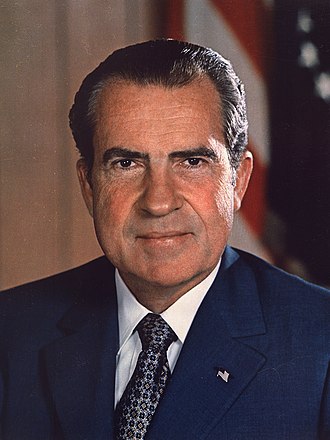
Richard M. Nixon served as the 37th President of the United States from January 1969 until his resignation in August 1974. In February 1971, he ordered the installation of a secret voice-activated taping system in the White House to preserve a historical record of his administration. Until the system's existence was revealed and dismantled in July 1973, the tapes captured Nixon directing major foreign policy initiatives, such as the opening to China, as well as his central role in the Watergate cover-up.
What Nixon talks about on the tapes
White House operations 4,718Presidential scheduling 2,225Public relations 1,784Presidential schedule 1,782Vietnam War 1,693Logistics 1,650Manolo Sanchez 1,626White House communications 1,400White House administration 1,399Presidential communication 1,243Henry Kissinger 1,191Foreign Policy 1,183
Conversations (21,010)
— Page 67 of 211President Nixon met with Pan American World Airways (Pan Am) CEO Najeeb E. Halaby and White House aide Peter M. Flanigan to discuss the airline's significant financial struggles, including competitive pressures from non-scheduled carriers and the impact of federal regulations. Halaby sought administration support for potential mergers, government subsidies, and international route access, particularly concerning the President's upcoming diplomatic trips to China and the Soviet Union. Nixon emphasized his desire to protect major U.S. carriers from insolvency while tasking Flanigan with evaluating the feasibility of the proposed financial relief measures.
President Nixon met with his aide Stephen B. Bull in the Oval Office to facilitate communication with the staff. During this brief encounter, the President issued a specific directive for Bull to summon Charles W. Colson to join him. This interaction served primarily as an administrative request to coordinate a follow-up meeting with a key political advisor.
President Nixon met with his aide Stephen B. Bull to coordinate the scheduling of upcoming briefings and meetings. The discussion focused on the anticipated arrivals of Charles W. Colson and Henry A. Kissinger. Bull also informed the President about the status of Ted Olsen, who was en route to the Oval Office for a brief consultation.
President Nixon and Henry Kissinger met to coordinate administrative scheduling, including a potential meeting with Japanese Prime Minister Eisaku Sato in San Clemente. The discussion also addressed the escalating India-Pakistan crisis, specifically concerning internal administration friction and the need to curb unauthorized news leaks from the State Department. Nixon directed a firm policy stance regarding the cessation of military aid to India and requested that Treasury Secretary John Connally be utilized to exert further pressure on foreign aid allocations.
President Nixon and Charles Colson discuss various political and administrative strategies, including public relations efforts, the status of pending tax legislation, and the impact of the President's recent labor policies. They specifically evaluate the political implications of a proposed tax bill concerning presidential campaign financing, with Nixon expressing a desire to veto it on the grounds that it threatens the integrity of the two-party system. Additionally, the participants touch upon the President’s public image, poll data regarding potential opponents like Edmund Muskie, and preparations for upcoming meetings with Henry Kissinger.
President Nixon met with John Ehrlichman, John Connally, and George Shultz to discuss potential tax policy initiatives, specifically the implementation of a Value Added Tax (VAT) linked to the repeal of residential real estate taxes for education. The group evaluated the political feasibility of introducing such a plan, weighing the risks of congressional interference from Wilbur Mills against the potential for an effective 1972 campaign centerpiece. Ultimately, they reached a consensus to avoid immediate legislative action, opting instead to wait for the McElroy Commission report and delay a formal proposal until later in the spring to build public support and maintain a sense of stability.
President Nixon met with his senior advisors to coordinate on several pressing domestic and foreign policy issues. The discussion covered defense budget allocations and force levels, strategic handling of the ongoing India-Pakistan crisis, and potential legislative vetoes regarding the tax bill and campaign financing provisions. The President directed his staff to maintain a firm stance against certain spending measures, tasking Ehrlichman and Shultz with managing congressional outreach and coordinating with lobbyists to solidify opposition to unfavorable tax legislation.
President Nixon met with Stephen B. Bull and H. R. Haldeman to coordinate logistics for an upcoming event, referred to as the 'pipeline party.' The participants discussed press arrangements and scheduling concerns, including adjustments to lighting and power setups for the appearance. The brief exchange focused primarily on managing the President's public interactions and ensuring technical readiness for his scheduled departure.
President Nixon met with an unidentified individual in the Oval Office to perform administrative duties. The brief interaction was primarily focused on the formal signing of pending legislation. The meeting concluded quickly after the President completed the execution of these bills.
President Nixon and Henry Kissinger met in the Oval Office to coordinate the President's upcoming travel itinerary. The discussion focused on logistics and scheduling for an impending departure. No substantive policy matters were recorded during this brief administrative exchange.
President Nixon and John Ehrlichman met in the Oval Office to discuss the President's upcoming official schedule. The conversation focused on the logistical planning and arrangement of various appointments and commitments. No significant policy decisions were recorded during this brief administrative review.
President Nixon met with his aide Stephen B. Bull to coordinate his personal schedule and upcoming logistics. The discussion focused on facilitating a telephone call to First Lady Pat Nixon regarding their departure time. Additionally, the two briefly addressed matters involving John D. Ehrlichman before concluding the meeting.
President Nixon consulted with Stephen B. Bull to coordinate administrative tasks and facilitate a phone call to First Lady Pat Nixon. The brief interaction served as a logistical bridge to manage the President's personal and official communications for the afternoon. No significant policy decisions were reached during this exchange.
President Nixon consulted with a White House operator to facilitate an outgoing call. This interaction served a purely administrative function to connect the President with a specific party via the White House switchboard. No substantive policy discussions or decisions occurred during this brief exchange.
President Nixon and John Ehrlichman met to strategize the messaging and policy focus for the upcoming State of the Union address, specifically prioritizing issues like property tax relief, nursing home reform, and health initiatives. They discussed utilizing public-facing events and environmental appearances by administration figures, including Julie Nixon Eisenhower, to improve the President's standing on key issues. Additionally, the pair coordinated management protocols for the President's upcoming absence, clarifying the decision-making roles for John Connally, George Shultz, and Ehrlichman.
President Nixon consulted with First Lady Pat Nixon regarding logistical adjustments to their upcoming travel plans. The primary focus of the brief discussion was a proposed change to their departure schedule for a trip to California. The conversation served to coordinate the timing of the couple's travel arrangements.
President Nixon and H. R. Haldeman met to discuss administrative priorities, including the confirmation of Earl L. Butz and upcoming decisions regarding the 1973 federal budget and pay increases. They also strategized on the production of an NBC documentary, "A Day in the Life of the President," with Nixon emphasizing that the footage should avoid overly formal policy meetings to prevent the content from becoming too dull for viewers. The President directed Haldeman to ensure the program featured more dynamic, interrupted sequences rather than prolonged, serious discussions involving his senior advisors.
President Nixon met with his aide Stephen B. Bull to review and organize his daily schedule. The primary focus of the brief session was coordinating logistics for a scheduled meeting with Attorney General John N. Mitchell. No major policy developments occurred during this administrative check-in.
President Nixon met with John Mitchell, John Ehrlichman, Clark MacGregor, and William Timmons to discuss legislative strategy, primarily regarding a pending tax bill and the controversial Pastore amendment. The group deliberated whether the President should publicly signal his intention to veto the bill if it retained the amendment, weighing the potential impact on 1972 campaign financing against the desire to assert executive authority. Additionally, the participants reviewed the contentious confirmation process for Earl L. Butz as Secretary of Agriculture, ultimately deciding to maintain the nomination and reject calls for his withdrawal.
President Nixon initiates a brief telephone call through the White House operator to contact Clark MacGregor. The sole purpose of the exchange is to facilitate this connection, which serves as a precursor to further executive communication. No substantive policy discussions or decisions occur during this brief administrative request.
President Nixon and Clark MacGregor strategize the rollout of a formal presidential statement regarding pending tax legislation. Nixon instructs MacGregor to draft the statement in the third person for his review and outlines a plan to brief key congressional leaders. The strategy involves providing last-minute courtesy notice to Wilbur Mills and Russell Long while giving Republican and Democratic allies advance warning to ensure they are prepared to publicly support the measure.
President Nixon consults with the White House operator to facilitate an immediate outgoing call. The interaction serves as a brief logistical exchange to initiate a communication bridge for the President. No substantive policy discussions or complex directives occur during this short administrative coordination.
President Nixon and Henry Kissinger discussed foreign policy priorities and scheduling, specifically focusing on handling potential meetings with Italian leadership, the geopolitical implications of the India-Pakistan conflict, and managing diplomatic leaks. They agreed to defer any official visit from Italian officials until after their domestic elections to avoid political complications. Regarding the India-Pakistan situation, Kissinger advocated for a tougher stance against India, including cutting off military aid to gain leverage and discourage Indian reliance on the Soviet Union. The pair also addressed the fallout from a news leak attributed to Arthur Burns involving John Connally, reaffirming their support for Connally's role in the administration.
President Nixon instructed the White House operator to connect him with Attorney General John N. Mitchell. The primary purpose of this brief call was to initiate communication with the Attorney General regarding administrative or legal matters. No further discussion occurred on this specific line as the operator proceeded to place the outgoing call.
President Nixon interacts with a White House operator to facilitate telephonic communication. This brief exchange serves the administrative purpose of establishing a connection for the President to conduct official business. No substantive policy or political discussions occur during this logistical interaction.
President Nixon and Attorney General John Mitchell briefly discuss political reputations and potential comparisons between various public figures, specifically mentioning Nelson Rockefeller and another associate referred to as K.O. The exchange focuses on evaluating the public perception and professional conduct of these individuals. No formal policy decisions or major administrative actions were finalized during this short interaction.
President Nixon consulted John Mitchell regarding whether to call New Jersey Governor William T. Cahill to commend his handling of a recent prison situation. Mitchell advised that the President avoid a direct call to prevent potential political friction with New York Governor Nelson Rockefeller, whose own handling of similar issues was frequently compared to Cahill's. Ultimately, they decided that Mitchell would contact Cahill instead to convey the President's approval of his judgment, thereby maintaining a low-key approach.
President Nixon contacted the White House operator to request a follow-up telephone connection with Attorney General John N. Mitchell. This brief administrative interaction served as a logistical step to facilitate direct communication between the President and his Attorney General. No substantive policy matters were discussed during this brief exchange.
President Nixon instructed the White House operator to lower the volume of the recording equipment or a nearby device. The brief exchange served as a functional adjustment to the Oval Office environment during the taping session. No substantive policy matters or political discussions were addressed during this interaction.
President Nixon consulted with John Mitchell regarding whether to reach out to W. Thacher Longstreth following his defeat in the Philadelphia mayoral election. Concerned about the political fallout regarding Frank Rizzo and the importance of Pennsylvania’s Italian American voters, Nixon sought to maintain positive party relations without inciting unwanted publicity. Ultimately, Mitchell advised that a private note of encouragement would be appropriate to preserve future Republican support in the region.
President Nixon consulted John Mitchell regarding whether he should reach out to certain Philadelphia-based Republicans who were hospitalized. Nixon expressed concern that a direct intervention or phone call might negatively influence a sensitive situation, prompting him to seek Mitchell's strategic advice on how to handle the interaction. Mitchell ultimately encouraged a personal touch, suggesting that the President send a letter to maintain personal connections without interfering in the political process.
President Nixon instructed the White House operator to place an outgoing call to Congressman John J. Rooney of New York. The brief exchange served as a logistical request to initiate communication between the President and the Representative. No substantive political or policy discussions occurred during this brief request.
President Nixon contacted the White House operator to facilitate a telephone connection with Clark MacGregor. The brief exchange served as a routine administrative request to initiate communication with the Congressional liaison. No further substantive policy discussions occurred during this brief interaction.
President Nixon requested that the White House operator place a telephone call to Congressman John Rennie of New York. The brief exchange served as a logistical instruction to facilitate direct communication with the legislator. No further substantive policy matters were discussed during this brief administrative interaction.
President Nixon met with his personal secretary Rose Mary Woods to discuss various administrative, scheduling, and personnel matters. The conversation included coordinating details for upcoming White House events and travel, as well as evaluating the efficiency and size of his White House staff. The President expressed concerns regarding office space, staffing levels during trips, and general administrative organization.
President Nixon coordinated an urgent scheduling adjustment for a meeting with Clark MacGregor and Ronald L. Ziegler regarding ongoing staff projects. The President instructed MacGregor to enlist the assistance of speechwriter Raymond K. Price, Jr. to finalize preparations before the group convened in the Oval Office. Nixon also directed MacGregor to utilize phone outreach to ensure key personnel were alerted to specific action items.
President Nixon placed a brief call to Congressman John J. Rooney to extend personal birthday greetings. The conversation served as a courteous gesture to maintain rapport with the veteran legislator, reflecting on their shared history dating back to the 80th Congress. No political or policy matters were discussed during this interaction.
President Nixon instructed the White House operator to place a telephone call to Representative Richard G. Shoup of Montana. This brief interaction served as an administrative request to establish a line of communication with the Congressman. No further policy discussions or substantive developments occurred during this connection.
President Nixon held a brief, informal interaction with a White House operator while in the Oval Office. The conversation focused on the President sharing details or visuals regarding an event that occurred at a wooded location. No significant administrative decisions or policy developments resulted from this brief exchange.
President Nixon placed a congratulatory call to Representative Richard G. Shoup to wish him a happy birthday. Shoup took the opportunity to express his gratitude for the President’s recent visit to Montana and noted the positive reception Nixon received in his district. The two discussed the favorable press coverage of the trip, which highlighted the collaborative efforts between the administration and local leadership, including Senator Mike Mansfield.
President Nixon met with Representative Richard G. Shoup in the Oval Office for a brief, informal exchange characterized by personal pleasantries and mutual congratulations on past collaborative efforts. The conversation focused on social rapport rather than substantive policy matters, reinforcing their political relationship through lighthearted remarks about age and shared experiences. No official business or specific action items were recorded during this brief encounter.
President Nixon contacted the White House operator to facilitate a telephone connection with Special Counsel Charles W. Colson. This brief administrative exchange served as the precursor to a substantive discussion between the President and his advisor. No further details regarding the nature of the requested conversation were captured in this recording.
President Nixon held a brief, informal exchange with the White House operator. The conversation consisted of a polite greeting, specifically the expression 'Shabbat shalom.' No substantive policy matters or administrative decisions were addressed during this interaction.
President Nixon and Charles Colson discuss plans to force the removal of a controversial 'check-off' provision from a pending tax bill by threatening a presidential veto. The President instructs Clark MacGregor to publicize this veto threat to shift responsibility onto Democrats and pressure them to adjust the legislation. The conversation also touches on the potential long-term political ramifications of the provision, the strength of the national economy, and strategies to influence legislative support.
President Nixon met with Charles Colson, Clark MacGregor, and Ronald Ziegler to coordinate the White House's public messaging regarding pending tax legislation and the financing of political campaigns. The participants discussed the potential impact of public campaign financing on presidential mandates and the necessity of passing tax relief before Congress adjourned. MacGregor was instructed to issue a strong statement framing the tax bill as a vital economic measure while pressuring Democrats to avoid partisan obstruction.
President Nixon and H. R. Haldeman met to discuss office space configurations and administrative logistics at both the San Clemente estate and the West Wing of the White House. The President expressed frustration with current reception arrangements, specifically criticizing the lack of appropriate waiting areas for guests and the cluttered, "cubbyhole"-like conditions for staff such as Stephen Bull. They explored design alternatives, including relocating staff and modifying the Roosevelt and Cabinet rooms, to improve functionality, professional appearance, and access control within the White House.
President Nixon, along with Haldeman, Bull, Ziegler, and MacGregor, discussed strategies for managing public perception and legislative efforts. Key topics included the effectiveness of media appearances, potential political risks and benefits of certain actions, and legislative priorities such as tax bills and childcare revisions. A significant development was the agreement to have Charlie Walker meet with Joe Wagner and Russell Long regarding Treasury's willingness to discuss matters of dispute, and the President's commitment to securing a suitable tax bill before Congress adjourns.
President Nixon initiates a brief telephone call to connect with First Lady Pat Nixon. The primary objective of the interaction is to facilitate a direct line to his wife through the White House operator. No further substantive policy or administrative discussions occur during this exchange.
President Nixon held a brief, ten-minute meeting with an unidentified individual in the Old Executive Office Building. Due to the lack of an available transcript, the specific subject matter, policy objectives, and potential action items from this encounter remain unrecorded. Consequently, the historical significance of this discussion cannot be determined from existing documentation.
President Nixon consulted with the White House operator to facilitate an outgoing call. This brief interaction served administrative purposes to connect the President with another party for official communications. No substantive policy discussions or significant decisions were recorded during this exchange.
President Nixon consulted with the First Lady, Pat Nixon, regarding his upcoming schedule and social planning. The discussion included an invitation for Patrick J. Buchanan and his wife, Shelly, to discuss Buchanan's recent trip. The conversation also touched upon the First Lady's ongoing work with their daughter, Julie Nixon Eisenhower.
President Nixon and First Lady Pat Nixon held a brief, informal discussion regarding family matters and personal arrangements. They exchanged updates concerning their daughter Julie and coordinated their schedules for the evening. The conversation concluded with a brief mention of the President’s upcoming evening appearance.
President Nixon initiates a request to the White House operator to place a telephone call to Clark MacGregor, who served as his congressional liaison. This brief interaction serves as a logistical bridge to facilitate direct communication between the President and his advisor. No policy decisions are discussed, as the exchange is limited to the procedural request to connect the two parties.
President Nixon met with his valet, Manolo Sanchez, to coordinate the details of the President's upcoming schedule. The brief discussion focused on logistical planning and administrative arrangements within the Executive Office Building. No significant policy decisions were recorded during this brief encounter.
President Nixon met with his personal valet, Manolo Sanchez, to discuss scheduling logistics. The brief conversation focused on the President's wake-up time and departure arrangements for an upcoming engagement. No major policy decisions were made during this routine interaction.
President Nixon and John D. Ehrlichman met briefly to coordinate their schedules and align on an upcoming discussion regarding policy initiatives for the elderly. The brief exchange focused on logistical arrangements, with the participants deciding to delay their more substantive meeting until later that afternoon. No major policy decisions were reached during this preliminary scheduling session.
President Nixon consulted with a White House operator regarding the status of his heart rate. The brief interaction serves primarily as a medical or personal check-in during the President's workday. No substantive policy matters or administrative decisions were documented in this segment.
President Nixon and Clark MacGregor discussed the congressional reaction to MacGregor’s recent statement regarding the administration’s tax bill and the potential for a presidential veto. The conversation touched upon concerns regarding the Pastore amendment and the need to coordinate with key legislative figures like John W. Byrnes. Additionally, they assessed the political implications of securing television time to advocate for the administration’s tax reform goals.
President Nixon and Clark MacGregor discussed potential political strategies regarding media access, specifically focusing on the promotion of free television time for political candidates. Nixon suggested distancing the White House from the proposal by attributing the idea to others, such as Anderson, to avoid the appearance of administrative invention. The conversation concluded with instructions to circulate this concept to test its viability and impact on tax policy.
President Nixon and H. R. Haldeman met to review and refine the President's upcoming schedule for late 1971 through early 1972. They discussed the necessity of coordinating the President's availability with the legislative calendar to ensure effective engagement with Congress. Ultimately, they reached a consensus to prioritize the congressional schedule, committing the President to remain in Washington until legislative business reached a critical stage.
President Nixon and John Ehrlichman met to discuss the administration's strategy for an upcoming speech at the White House Conference on Aging, focusing on how to address the needs of the elderly while navigating budget constraints and potential Congressional interference. The conversation spanned a variety of political and economic topics, including legislative tactics regarding busing, potential agricultural appointments, and the public relations fallout surrounding labor leader George Meany. Additionally, the pair coordinated responses to the 1972 Democratic presidential field and discussed internal staff assignments, including a proposed project for Edward C. Nixon involving water-filtering technology.
President Nixon instructed the White House operator to summon Charles W. Colson to his Executive Office Building (EOB) location. John D. Ehrlichman was present during the call, which served as a brief administrative directive to coordinate a meeting with Colson. No further substantive policy matters were discussed during this brief communication.
President Nixon contacted the White House operator to facilitate a telephone connection to Robert H. Finch. This administrative exchange served as the precursor to a subsequent private discussion between the President and his counselor. No further substantive policy matters were discussed during this brief request for assistance.
President Nixon and Robert H. Finch coordinated their upcoming schedules, specifically finalizing a meeting involving Herbert G. Klein, Henry A. Kissinger, and Alexander M. Haig, Jr. They also discussed logistical arrangements for Finch’s personal engagements, including a Folger Library event, and addressed the public dissemination of an upcoming narcotics report. The conversation functioned as a brief administrative planning session to ensure alignment between the President and his staff.
President Nixon contacted the White House operator to facilitate a telephone connection with John C. Whitaker. The brief interaction served as a formal request to initiate communication with the administration official. No further substantive policy matters were discussed during this request.
President Nixon consults with John C. Whitaker regarding a proposal from Treasury Secretary John B. Connally to establish a national cleanup week. The initiative aims to improve urban conditions by mobilizing citizens and companies to renovate and clean their own homes and workplaces rather than focusing solely on public parks. Nixon directs Whitaker to present the idea to Russell E. Train’s group to evaluate its feasibility and potential for national implementation.
President Nixon initiated a request to speak with White House Press Secretary Ronald L. Ziegler via the telephone operator. Charles W. Colson was present with the President during the preliminary arrangements for this call. The primary purpose of the contact was to facilitate direct communication with Ziegler regarding administrative or press-related matters.
President Nixon and Press Secretary Ronald Ziegler discuss the positive media reception to the announcement of the upcoming presidential trip to the People's Republic of China and the accompanying news coverage. They review strategy for further public disclosures, coordinating with Henry Kissinger to provide background details on international relations while managing potential domestic distractions. Additionally, the pair touch upon congressional reaction to tax legislation and briefly note miscellaneous news stories regarding the President's recent California trip and the health of football player Sonny Jurgensen.
President Nixon contacted the White House operator to place a personal telephone call to his daughter, Julie Nixon Eisenhower. The operator facilitated the request by connecting the President to her line. No substantive policy matters or administrative decisions were addressed during this brief communication.
President Nixon consulted with his valet, Manolo Sanchez, regarding his upcoming schedule and the coordination of a meeting with H.R. Haldeman. The President specifically requested that Sanchez ensure he meets with Paul before his departure. The interaction focused on logistical preparations and the management of the President's personal agenda.
President Nixon summoned H.R. Haldeman to the Old Executive Office Building for a brief, private meeting. The discussion focused on immediate administrative concerns and strategic coordination between the President and his Chief of Staff. As the meeting lasted only four minutes, it served primarily as a swift consultation to address high-level operational directives.
President Nixon consulted with the White House operator to facilitate an outgoing call. This brief interaction served as a technical bridge for the President to reach another party, consistent with standard communication protocols for the Oval Office. No substantive policy matters or administrative decisions were documented during this short exchange.
President Nixon and H. R. Haldeman met to coordinate upcoming scheduling, personnel matters, and political strategy. Key topics included the potential appointment of Cornelius V. Whitney as Ambassador to Spain—specifically the decision to withdraw his nomination due to concerns over campaign financing—and the confirmation process for Earl L. Butz as Secretary of Agriculture. They also discussed legislative strategy regarding a potential congressional special session and the President’s plan to shift toward more informal Q&A style appearances to better communicate his policies to the public.
President Richard Nixon spoke with his daughter, Julie Nixon Eisenhower, in a brief telephone call to coordinate plans for an upcoming dinner. The conversation served primarily as a check-in regarding the President's evening schedule. No substantive policy or political matters were addressed during this short exchange.
President Nixon contacted the White House operator to initiate a telephone call to Clark MacGregor. The brief exchange served as a routine administrative request to connect the President with his Congressional Relations director. No further policy discussions or substantive developments occurred during this brief operator-assisted connection.
President Nixon contacted the White House operator to cancel a previously placed call to Clark MacGregor after learning that MacGregor was unavailable in New York. The President immediately pivoted, instructing the operator to place a new call to William E. Timmons instead. This brief administrative exchange reflects the President’s active management of his communications and scheduling of legislative liaison staff.
President Nixon consulted with William E. Timmons regarding the status of pending Senate legislation and the prospects for an end-of-year tax bill. The discussion focused on legislative maneuvering concerning investment tax credits, the Economic Stabilization Act, and the challenges of scheduling a special session before year-end. They also reviewed political optics, noting the positive reception of the President's economic and China-related initiatives in the media.
President Nixon held a brief, one-minute interaction with an unidentified individual, likely a White House operator. The exchange consisted of an unintelligible request for an unknown party. No substantive policy discussions or significant administrative decisions were recorded during this brief connection.
President Nixon held a brief telephone conversation with his daughter, Julie Nixon Eisenhower, to facilitate personal communication. The discussion was primarily focused on coordinating the President's evening schedule, specifically regarding dinner plans. No substantive policy matters or major political decisions were addressed during this short call.
President Nixon and his daughter, Julie Nixon Eisenhower, coordinate their evening plans during a brief personal meeting in the Old Executive Office Building. Julie confirms her arrival time of 6:30 p.m. and suggests that First Lady Pat Nixon have a drink while waiting. The conversation reflects a casual domestic check-in between the President and his daughter.
President Nixon initiated a brief telephone request for the White House operator to connect him with special counsel Charles W. Colson. This communication served as an administrative bridge to facilitate a direct discussion between the President and a key political aide. No further policy-related dialogue occurred during this brief exchange.
President Nixon consulted with an unidentified individual regarding the current state of the national economy. The discussion focused on indicators of market health, specifically referencing stock market activity and the status of gold reserves. The brief exchange served as a situational update on fiscal performance without resulting in recorded policy directives.
President Nixon held a brief, six-minute discussion with an unidentified individual in his Old Executive Office Building suite. Due to the lack of a recorded transcript, the specific subject matter, objectives, or outcomes of this meeting remain unknown. Consequently, no substantive policy discussions or administrative decisions can be attributed to this exchange.
President Nixon consulted with the White House operator to facilitate an outgoing call. This brief interaction served as a logistical step for the President to initiate official or personal communication. No substantial policy discussions or significant political developments occurred during this administrative exchange.
President Nixon and Charles Colson discuss legislative strategy regarding the tax bill, specifically focusing on the campaign check-off provision. They coordinate efforts to pressure key Cabinet members and legislative liaisons to move the administration's agenda forward in Congress. Additionally, the conversation touches upon the optics of Pat Nixon and Julie Nixon Eisenhower attending a shopping event to influence public perception of prices.
President Nixon and Charles Colson strategize on how to manage legislative opposition regarding the tax checkoff provision, emphasizing the need for a coordinated public relations campaign. Nixon urges the administration to leverage cabinet members, specifically suggesting the involvement of George Romney and Elliot Richardson, to pressure political opponents. The discussion focuses on executing a robust 'fight back' strategy to influence the legislative trade-off through increased political mobilization.
President Nixon and his personal secretary, Rose Mary Woods, coordinate logistics for an upcoming off-site meeting. The participants arrange a rendezvous point at the West Wing entrance, specifically referencing a landmark known as the 'elephant.' This brief exchange serves primarily to facilitate the President's departure from the office to another location.
President Nixon held a brief, informal meeting with an unidentified individual in the Oval Office. The exchange consisted of brief pleasantries before the visitor departed immediately, resulting in no substantive policy discussions or significant administrative decisions.
President Nixon held a brief, undocumented meeting with one or more unidentified individuals in the Oval Office. Due to the lack of an available transcript and the brevity of the recorded session, the specific agenda and nature of the discussions remain unknown. No clear policy decisions or administrative outcomes can be determined from the existing historical record of this interaction.
President Nixon and H.R. Haldeman met to coordinate administration strategy regarding pending tax legislation, including potential veto threats, and to discuss the ongoing Senate confirmation process for Earl Butz. They also reviewed media management tactics, specifically addressing unauthorized press leaks concerning John Connally's role within the administration and his relationship with Henry Kissinger. The pair concluded by planning the President’s upcoming media appearances and public schedule, including a scheduled interview with Time magazine.
President Nixon met with his aide Stephen B. Bull to review and refine the President's upcoming schedule. The discussion focused on logistical details regarding press attendance for an anticipated meeting with Henry Kissinger, as well as coordination involving staff members Robert H. Finch and Herbert G. Klein.
Archival review of this recording confirms that no audible conversation was captured between President Nixon and the unidentified visitor. Despite the official designation of the encounter, the audio segment consists of background noise or silence. Consequently, no substantive discussions, decisions, or policy developments are attributed to this entry.
President Nixon and Henry Kissinger met to discuss strategies for countering negative press reports surrounding Treasury Secretary John B. Connally and the administration's economic policies. They analyzed potential sources of internal leaks, including speculation that political rivals were attempting to undermine Connally's potential as a vice-presidential candidate. Kissinger received the President's approval to issue a formal backgrounder to the press, explicitly defending Connally's position as the administration's top economic advisor and affirming the unity of the President's economic team.
President Nixon met with Henry Kissinger, Robert Finch, and Herbert Klein to strategize on U.S. foreign policy toward Latin America, emphasizing the need for stronger personal diplomacy and effective ambassadorships. The discussion centered on managing regional economic issues, specifically the import surcharge and tuna fishery disputes, while fostering relationships with friendly military regimes like Brazil's. Nixon directed the participants to form a working group to coordinate concrete programs and trade initiatives, aiming to demonstrate the effectiveness of his administration's diplomatic outreach.
Press Secretary Ronald L. Ziegler met with President Nixon to prepare for upcoming press briefings regarding the administration's stance on pending legislation, including a potential veto of the federal pay raise. The discussion also addressed media relations, specifically addressing inaccurate reporting by CBS and managing the public narrative surrounding the President's upcoming trip to the People's Republic of China. Additionally, they reviewed internal concerns regarding Secretary of the Treasury John Connally's role within the administration and his portrayal in the press.
President Nixon contacted the White House operator to facilitate a direct communication with Press Secretary Ronald L. Ziegler. The brief interaction served as a logistical request to initiate a phone call with his press office. No further policy or substantive matters were addressed during this short exchange.
President Nixon initiates a brief request for the White House operator to place an outgoing call. The interaction serves as a functional administrative bridge to connect the President with another party. No substantive policy discussions or significant decisions occur during this brief exchange.
President Nixon, Henry Kissinger, and H. R. Haldeman met to coordinate upcoming foreign policy announcements and manage public relations regarding the Indo-Pakistani War, Middle East arms policy, and the President's planned trip to China. Kissinger proposed a strategy for restricting military export licenses to Pakistan to maintain diplomatic flexibility, while the group discussed framing the administration's stance on the conflict to emphasize multilateral aid and the principles of the UN Charter. Additionally, the President and his advisors reviewed the administration's communication strategy for upcoming summits, international monetary negotiations, and a television profile, aiming to ensure favorable media coverage and solidify the President's leadership image.
President Nixon initiates a brief telephone call through the White House operator to contact Clark MacGregor. The conversation is strictly logistical in nature, serving as a functional request to connect the President with a member of his staff. No further substantive discussion occurs during this short exchange.
President Nixon met with H.R. Haldeman and later journalists Hobart D. Lewis and David Reed to prepare for an upcoming Reader's Digest interview. The discussion focused on Nixon’s foreign policy goals regarding Vietnam, the Soviet Union, and the People's Republic of China, as well as the broader challenges of maintaining American global competitiveness. The President emphasized his desire to transition toward a "generation of peace" while maintaining military strength to ensure credibility in diplomatic negotiations. The meeting concluded with the President presenting gifts to Reed's children.