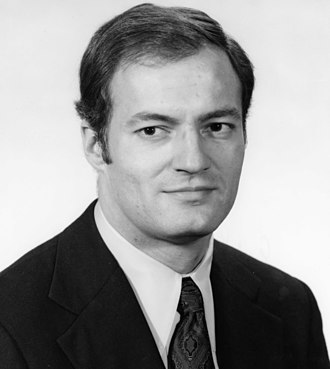
Krogh, Egil ("Bud"), Jr.
Egil "Bud" Krogh Jr. served as Deputy Assistant to the President for Domestic Affairs from November 1969 to February 1973, advising Richard Nixon on domestic issues such as narcotics control and law enforcement. During the White House taping period, his duties expanded when he was appointed co-director of the covert Special Investigations Unit (the "Plumbers") from July 1971 to December 1971, where he authorized the illegal break-in at the office of Daniel Ellsberg's psychiatrist. Krogh transitioned to become Under Secretary of Transportation in February 1973, but resigned in May 1973 after taking full responsibility for the break-in, making him the first Nixon operative to be imprisoned for his actions.
President Nixon met with J. Edgar Hoover, John Mitchell, and senior staff to coordinate a stronger federal response to rising violence against police officers, including the potential implementation of federal insurance benefits for fallen officers' families. The group discussed strategies to foster public support for law enforcement, such as establishing an annual Police Recognition Day and organizing high-profile meetings between the President and police leadership to counter anti-authority sentiment. Additionally, the President issued a directive to create a centralized, independent agency to tackle the national drug crisis, moving responsibilities away from HEW to improve accountability and treatment programs for military personnel.
President Nixon met with his senior staff and cabinet members to finalize a new, centralized strategy for combating the heroin epidemic among Vietnam veterans and the general public, including the establishment of a Special Action Office. The President directed that this new office would oversee federal drug rehabilitation, prevention, and enforcement efforts across all departments, emphasizing the urgent need for a cohesive, high-level response to prevent former servicemen from turning to crime. During the discussions, Nixon also pressed for stricter loyalty within the administration, authorized an investigation into intelligence leaks, and evaluated personnel appointments within the CIA and military leadership.
President Nixon met with a large group of law enforcement officials, including J. Edgar Hoover and Attorney General John Mitchell, to discuss the increasing dangers facing police officers and to bolster morale through strong federal support. The conversation covered the need for legislative action, such as federal death benefits for families of slain officers, as well as strategies for better inter-agency cooperation against civil unrest and drug-related crime. Nixon emphasized the importance of public respect for law and order, highlighting recent May Day demonstrations as a point of discussion regarding the administration's firm stance on maintaining public security.
President Nixon met with J. Edgar Hoover, John Mitchell, Egil Krogh, and John Ehrlichman to coordinate an upcoming meeting with law enforcement leaders. The participants discussed the administration's proposed legislation for providing financial compensation to the families of crime victims and strategies for presenting these initiatives to police officials. Nixon specifically instructed Hoover to emphasize the FBI's commitment to providing assistance to local police departments as part of the broader legislative agenda.
President Nixon, Vice President Agnew, and a large group of Cabinet members and senior staff met to establish a strategic framework for domestic policy, budget planning for the 1973 fiscal year, and the development of the 1972 Republican legislative and election platform. Participants reviewed polling data regarding national, community, and family concerns, noting that the economy, inflation, and unemployment are primary public priorities while other issues like pollution and consumerism are often driven by media visibility. The President and attendees emphasized the need for better communication to receive credit for administration accomplishments, focusing on a limited number of 'gut issues' rather than overextending on too many programs. Ultimately, the group discussed the necessity of coordinating policy initiatives and messaging to ensure visible progress on key economic and social concerns ahead of the 1972 election.
President Nixon met with the Amtrak Board of Directors to discuss the corporation's early operational challenges, strategic planning, and its goal of reviving passenger rail service. The conversation focused on the necessity of improving service quality, boosting ridership, and competing with other travel modes by fostering a culture of professional service. The President emphasized the political importance of simplifying government messaging and prioritizing job creation, while the Board members highlighted their progress in labor negotiations and route rationalization.
President Nixon met with a delegation of railroad executives, Secretary of Transportation John A. Volpe, and White House staff to discuss the industry's severe financial, regulatory, and labor challenges. The executives emphasized that the industry's viability depends on urgent legislative reform, specifically regarding rate-making procedures, tax relief for capital investment, and the resolution of labor productivity issues like work rules. Nixon acknowledged the systemic nature of these problems and urged the participants to help build public and Congressional support for the administration's forthcoming transportation policy proposals.
President Nixon met with Egil “Bud” Krogh and Horace Hampton to formally acknowledge Hampton’s classified contributions to government communication security. Nixon praised Hampton’s discretion and indispensable service, emphasizing the difficulty of replacing an operative who worked independently of the telephone company. The brief meeting concluded with the presentation of cuff links as a token of appreciation before Hampton’s departure from his current duties.
President Nixon met with his senior advisors and drug policy experts to address the escalating heroin crisis among servicemen returning from Vietnam. The discussion focused on establishing a comprehensive program to identify and treat addicted soldiers through urinalysis, detoxification, and expanded rehabilitation, while avoiding stigmatizing veterans in the civilian workforce. The group explored innovative bureaucratic and scientific strategies, including the potential for using biological agents or pests to eradicate opium crops at their source, and proposed holding law enforcement officials accountable for complicity in the drug trade.
President Nixon met with his staff to discuss a broad range of economic and administrative strategies aimed at stimulating the economy and creating jobs, particularly through federal spending and infrastructure projects. The discussion focused on leveraging the Highway Trust Fund for railroad improvements, expediting government spending, and pressuring the Justice Department to take a more lenient stance on corporate mergers and antitrust regulations. Nixon directed his team to prioritize practical results over bureaucratic obstacles, emphasizing the need to channel resources and construction projects into key states to bolster employment.
President Nixon met with his cabinet, diplomatic staff, and intelligence officials to declare drug abuse 'public enemy number one' and to coordinate a comprehensive strategy for eradicating the international supply of narcotics. The participants evaluated the effectiveness of current interdiction programs in Southeast Asia, the Middle East, and Europe, ultimately concluding that despite increased law enforcement efforts, the drug problem was expanding. The President directed his team to prioritize the escalation of foreign pressure, including potential subsidies for poppy crop eradication in Turkey, and announced the centralization of domestic drug policy under a new White House office.
President Nixon met with Republican Congressional leaders to discuss the administration’s new, multi-pronged national strategy for combating drug abuse, emphasizing a shift toward treatment, rehabilitation, and the creation of a centralized Special Action Office. During the discussion, Nixon and his team outlined plans for increased interdiction, expanded military detoxification programs, and a firm, non-permissive stance against the legalization of marijuana. Furthermore, the participants addressed the political climate surrounding the Vietnam War, with Nixon urging support against anti-war amendments and arguing that congressional deadlines for withdrawal would undermine sensitive ongoing negotiations.
President Nixon met with a bipartisan group of Congressional leaders and administration officials to propose a centralized federal office for coordinating drug abuse prevention and treatment strategies. The discussion highlighted the urgency of addressing drug addiction, particularly among servicemen in Vietnam and youth in the United States, by shifting from a fragmented, multi-agency approach to a unified, performance-based model. Participants debated the integration of law enforcement, research, and treatment programs, with an emphasis on establishing flexible, community-based solutions and securing Congressional support for new enabling legislation.
President Nixon met with H.R. Haldeman, John Ehrlichman, and Egil Krogh to discuss strategies for curbing unauthorized leaks of government information and managing economic policy. The President directed that high-level officials and staff with top-secret access undergo polygraph examinations to identify leakers, specifically targeting a suspected individual within the Department of Defense. Additionally, the participants discussed the administration's strained relationship with Federal Reserve Chairman Arthur Burns, ultimately deciding to adopt a 'cool treatment' strategy to pressure him, while also considering efforts to influence the Federal Reserve's composition and independence.
President Nixon and Egil Krogh discussed preparations for an upcoming meeting with Raymond Shafer, the chair of the Commission on Marijuana and Drug Abuse. The primary objective was to ensure Shafer could manage extremist commission members like Harold Hughes to avoid a dissenting report that the administration would be forced to publicly repudiate. Krogh planned to keep the meeting brief, utilizing a photo opportunity to acknowledge the Commission's work while also incorporating a session on the strategies of the Special Action Office led by Jerome Jaffe.
President Nixon met with Raymond Shafer, Dr. Jerome Jaffe, and Egil Krogh to discuss the ongoing work and public perception of the National Commission on Marijuana and Drug Abuse. Nixon emphasized his firm opposition to the legalization of marijuana while expressing concern that the Commission avoid being perceived as a group of 'do-gooders' or becoming a source of political embarrassment. Shafer assured the President that the Commission would maintain a low profile, avoid controversial stances on legalization, and focus on providing a scientific, objective report that complemented the administration's broader drug abuse policies.
President Nixon met with an international delegation of law enforcement and medical experts participating in the Seminar on Illicit Drug Traffic and Abuse to discuss global strategies for combatting narcotics trafficking. The discussion emphasized the transition of drug abuse from a perceived domestic "ghetto issue" to a critical international concern affecting the vitality of all civilizations. Nixon underscored the necessity of robust cooperation with foreign governments, specifically citing efforts with Turkey, while highlighting the role of the Cabinet Committee chaired by Secretary of State William P. Rogers in coordinating these intensified control initiatives.
President Nixon met with D.C. Mayor Walter Washington, Chief Jerry Wilson, and senior aides to discuss city progress, including positive economic and crime statistics, and the ongoing effort to secure a new professional baseball team for the District. Following the departure of local officials, the President transitioned to a strategic discussion with John Ehrlichman regarding the timing and public relations framing for upcoming Supreme Court nominations, specifically those of Herschel Friday and Mildred Lillie. Nixon emphasized prioritizing trial court experience as a key credential and instructed aides to manage the announcement sequence to maximize political impact.
President Nixon met with his Cabinet Committee on Executive Reorganization to coordinate strategy for the administration's departmental restructuring proposals. The discussion focused on overcoming bureaucratic resistance, navigating complex Congressional committee jurisdictions, and addressing concerns regarding constituency-based programs like the Rural Electrification Administration. To advance these reforms, Nixon directed his Cabinet members to personally engage with key Congressional leaders and exert stricter control over their respective bureaucracies to ensure support for the legislative agenda.
President Nixon met with Joel Broyhill, William Timmons, and Egil Krogh to discuss legislative strategy regarding Washington, D.C. subway appropriations and the potential for a presidential statement to resolve ongoing conflicts with Representative William Natcher. Following this, John Mitchell joined the meeting to address the status of a pending tax bill and its potential for a veto, as well as the political ramifications of tax check-off provisions for national political parties. The discussion concluded with a review of sensitive financial and legal matters involving Mitchell, potential IRS investigations, and scheduling for an upcoming AFL-CIO convention speech.
President Nixon met with Myles J. Ambrose, John D. Ehrlichman, George P. Shultz, and Egil Krogh, Jr. to discuss the administration's federal narcotics control strategy and the persistent issue of jurisdictional competition between the Justice and Treasury Departments. The group explored a new, aggressive approach that utilizes grand juries and special prosecution teams to target heroin street-level trafficking and reduce drug supply. Nixon emphasized the necessity of recruiting high-quality young lawyers into criminal law to support these efforts, noting that a unified, cross-agency strategy is essential for effective law enforcement.
Following a formal ceremony in the Oval Office to recognize the commissions of new Supreme Court Justices Lewis F. Powell, Jr. and William H. Rehnquist, President Nixon transitioned into a private session with his staff. The discussion focused on national security concerns, specifically the ongoing investigation into intelligence leaks involving Navy Yeoman Charles E. Radford, the Joint Chiefs of Staff, and Henry Kissinger. Nixon and his advisors resolved to neutralize the threat posed by Radford by utilizing the legal pressure of potential criminal prosecution to ensure his silence, while simultaneously using the incident as a pretext to restructure security operations within the Joint Chiefs and the National Security Council.
President Nixon met with administration officials, including Myles J. Ambrose, John N. Mitchell, and Dr. Jerome H. Jaffe, to formalize the launch of a comprehensive federal drug enforcement initiative. The discussion focused on a three-pronged strategy involving international supply control, treatment and prevention programs, and intensified law enforcement efforts against drug traffickers. Nixon formally appointed Ambrose to lead these consolidated enforcement activities, emphasizing the administration's commitment to aggressively pursuing drug pushers as a top priority.
President Nixon met with United States Attorneys and Justice and Treasury Department officials to emphasize that drug enforcement was the administration's top priority. He urged the attorneys to prioritize the aggressive prosecution of drug peddlers and pushers while improving their public relations efforts to demonstrate the federal government's commitment to the cause. The President encouraged these officials to coordinate more effectively with local law enforcement and to reassure their respective constituencies that the administration was actively tackling the national drug problem.
President Nixon met with the Cabinet Committee on International Narcotics Control to evaluate the administration's progress and strategies in combating the global drug trade. The participants discussed international trafficking routes, the effectiveness of law enforcement efforts in countries like Turkey and Southeast Asia, and the need for improved coordination between federal agencies. The meeting served to reinforce the priority of drug interdiction and treatment programs while addressing inter-agency conflicts that hindered unified action.
President Nixon met with Raymond Shafer, John Ehrlichman, and Egil Krogh to discuss the forthcoming release of the President's Commission on Marijuana and Drug Abuse report. The group strategized on how to frame the findings, with the President emphasizing his opposition to marijuana legalization while acknowledging the commission's recommendation to decriminalize private possession. Additionally, they reviewed political campaign dynamics, the President's position on school busing, and a sensitive plan to involve J. Edgar Hoover in authenticating an ITT-related document to neutralize media scrutiny.
Kenneth R. Cole, Jr., Egil Krogh, and members of the Domestic Council convened in the Cabinet Room for a meeting that was primarily occupied by non-substantive maintenance activities. The recording reflects a period of inactivity regarding policy or administration, as the participants were largely displaced by unknown personnel performing routine maintenance. Consequently, no significant policy discussions, executive decisions, or official action items were recorded during this session.
Kenneth R. Cole, Jr., Egil Krogh, and members of the Domestic Council met to coordinate White House legislative strategies, address internal communication issues with the Office of Management and Budget (OMB), and manage specific policy challenges. The group discussed delicate administrative and legal matters, including the handling of environmental regulations, lobbying by tax-exempt organizations, and the management of a Justice Department lawsuit regarding Texas offshore oil and fishing rights. Krogh emphasized the difficulty of communicating with John Connally and expressed concerns regarding the internal bureaucratic processes and potential for staff friction.
President Nixon hosted Dr. Jerome H. Jaffe and his family in the Oval Office for a brief, informal social meeting accompanied by Egil Krogh Jr. The discussion focused on greetings for the Jaffe children and the facilitation of official White House photographs. The encounter concluded with the President presenting gifts and expressing well wishes regarding Dr. Jaffe’s ongoing work for the administration.
President Nixon met with administration officials, including Myles J. Ambrose and Egil Krogh, Jr., primarily to discuss the administration's progress in federal narcotics enforcement and to arrange a photo opportunity. The participants reviewed charts detailing drug seizures and arrests, using a football analogy to characterize the government’s offensive position in the ongoing drug war. Following reports of federal agents being wounded in Texas, the President committed to writing letters of support to the injured personnel and emphasized the need for more effective public relations messaging regarding the federal government's efforts.
President Nixon met with representatives of the International Conference of Police Associations, including Edward J. Kiernan and Egil Krogh, to discuss the administration's support for law enforcement. The conversation focused on the need for greater public respect for police officers, the impact of police review boards, and concerns regarding legal protections for officers in the line of duty. The meeting concluded with an exchange of presidential gifts as a gesture of goodwill toward the organization.
President Nixon met with a large group of young attorneys participating in the Office of Drug Abuse Law Enforcement (ODALE) program to review progress in federal drug prosecutions and discuss strategies for combating narcotics distribution. The discussion focused on the challenges posed by lenient sentencing, the importance of maintaining pressure on heroin traffickers, and the need to align federal and state judicial attitudes with the administration's tough stance on law enforcement. Nixon explicitly directed the attorneys to track judicial leniency, expressed support for reinstated mandatory sentencing, and encouraged the attendees to continue their high-intensity efforts despite the difficult and often unglamorous nature of their work.
President Nixon met with John Ehrlichman and Egil Krogh to strategize on a public relations campaign aimed at addressing national concerns over crime, drug abuse, and judicial leniency. Nixon proposed a radio address to explicitly criticize "soft-headed" judges, prosecutors, and probation officers who he felt were undermining law enforcement efforts despite legislative and financial support from the administration. The participants discussed drafting this statement to mobilize public opinion, and also engaged in a brief, wide-ranging conversation about the 1972 Munich Olympic Games and athletic performance.
President Nixon met with the National Advisory Council for Drug Abuse Prevention to discuss the administration's ongoing strategies for combating drug use, including law enforcement, treatment programs, and international cooperation. The President emphasized the importance of the Council's expertise in generating effective policy ideas and highlighted the prevalence of drug-related crimes among the youth population. During the meeting, Nixon presented awards to the members in recognition of their contributions to the national anti-drug effort.
President Nixon met with the Policeman of the Year award winner and several honorable mention honorees to recognize their contributions to law enforcement. Accompanied by staff members including Egil Krogh, the President engaged in casual conversation regarding the honorees' various jurisdictions and the importance of police work in protecting the innocent. The meeting concluded with a ceremonial photograph session, the presentation of Presidential gifts to the officers, and a tour of the White House.
President Nixon met with D.C. Mayor Walter E. Washington, his family, and staff in the Oval Office to conduct a ceremonial swearing-in for the Mayor's third term. The President praised Washington's leadership, specifically highlighting improvements in city safety and the Mayor's diplomatic role in hosting international dignitaries. The participants also engaged in a photo session and exchanged lighthearted remarks about the upcoming Bicentennial and the Washington Redskins.
President Nixon met with his Cabinet and key staff to coordinate messaging and strategy on pressing administration priorities, specifically energy policy, economic inflation, and the ongoing Watergate investigations. Nixon urged his officials to actively support the administration's legislative agenda, particularly in the face of rising economic concerns and energy supply challenges. He emphasized the necessity of a unified, firm stance against political pressure, framing the current crises as manageable problems rather than catastrophic failures. Additionally, Nixon underscored his commitment to a thorough investigation into Watergate, stressing the need to maintain public order and confidence while the legal process unfolded.