Stennis, John C.
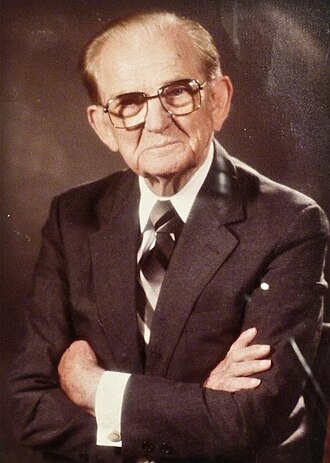
John C. Stennis, a Democratic senator from Mississippi, served as the influential Chairman of the Senate Armed Services Committee throughout the Nixon administration. A staunch advocate for a strong military, he played a key role in shaping defense policy and budgets during the Vietnam War era. In 1973, during the Watergate scandal, President Nixon unsuccessfully proposed the "Stennis Compromise," which would have had the widely respected but hard-of-hearing senator listen to the White House tapes to verify their transcripts.
President Nixon met with Alexander P. Butterfield and later spoke by phone with Senator John C. Stennis to discuss the public and political reception of the President's March 4, 1971, press conference. The participants focused on the effectiveness of the President's performance in defending the military operation in Laos and managing negative media coverage. They agreed on the importance of maintaining a firm stance regarding the Vietnam War despite unfavorable public opinion polls. Additionally, the President arranged for the dissemination of a private letter to British Prime Minister Edward Heath and discussed scheduling a family portrait session.
President Nixon met with key members of the Senate Armed Services Committee, including Senators John Stennis and Margaret Chase Smith, to coordinate legislative strategy on defense priorities. The discussion centered on securing a two-year draft extension, managing military manpower reductions, and timing the submission of the military procurement bill to avoid unfavorable Senate floor votes during a sensitive period of international negotiations. Nixon emphasized the importance of maintaining a firm military position amid changing Soviet leadership and discussed his recent intervention in the Lt. William L. Calley Jr. case to maintain military judicial process.
President Nixon met with Vice President Agnew and a bipartisan group of Congressional leaders to announce a significant diplomatic breakthrough in the Strategic Arms Limitation Talks (SALT). Nixon informed the attendees of a forthcoming joint statement with the Soviet Union pledging to focus on limiting anti-ballistic missile (ABM) systems and certain offensive strategic weapons. While some lawmakers advocated for immediate unilateral U.S. defense cuts to demonstrate good faith, the President and his advisors successfully urged the leaders to maintain existing defense programs during the negotiations to avoid losing vital bargaining leverage.
President Nixon calls Senator John C. Stennis to express his appreciation for the Senator's legislative support regarding Vietnam policy following a recent vote. Nixon reflects on the negative impact of the Pentagon Papers on administration efforts and discusses the potential formation of a Senate select committee to review the documents. The President explicitly endorses Stennis to chair such a committee, specifically contrasting Stennis's judicial temperament with that of Senator J. William Fulbright.
President Nixon met with Senator John C. Stennis to express his strong appreciation for the Senator's ongoing political efforts and steadfast commitment to their shared legislative agenda. The two men briefly discussed the necessity of staying the course on sensitive matters despite potential controversy, with Nixon offering encouragement for Stennis's current leadership role. This short, cordial exchange served primarily to reinforce political solidarity between the President and the Senator during a period of legislative pressure.
President Nixon met with bipartisan Congressional leaders and senior administration officials to discuss the sensitive diplomatic initiative concerning the normalization of relations between the United States and the People’s Republic of China. The President and Henry Kissinger briefed the group on the nature of these confidential negotiations, emphasizing the necessity of absolute discretion to ensure the process remained successful. Nixon and his team requested that participants avoid speculation and maintain a unified, non-partisan front when speaking publicly about the delicate geopolitical implications of this shift in U.S. foreign policy.
President Nixon met with key Congressional leaders, including John C. Stennis and F. Edward Hébert, along with his advisors to discuss the legislative strategy for upcoming draft bills and the political impact of Congressional interference in Vietnam War policy. The participants debated the risks of establishing a firm troop withdrawal date, with Nixon emphasizing that Congressional restrictions could undermine his negotiating leverage and public perception. The President insisted on maintaining executive freedom of action to ensure a favorable peace settlement and signaled that he would not yield on the inclusion of a binding deadline in draft legislation.
President Nixon and his administration met with Republican Congressional leaders to discuss the 1971-1972 economic outlook, focusing on key indicators such as GNP, unemployment rates, and inflation. The discussion centered on evaluating recent economic growth, managing ongoing labor disputes in the steel and transportation sectors, and addressing political concerns regarding the administration's fiscal and wage-price policies. The President and his economic advisors emphasized their commitment to achieving peacetime economic stability and requested support from leadership to convey a positive but measured economic narrative to the public.
President Nixon and Charles Colson met to discuss strategies for countering negative economic perceptions and managing press coverage, particularly concerning unemployment figures. They planned a coordinated effort involving Cabinet members and economic advisors to meet with business leaders and media editorial boards to shift the narrative toward a positive economic outlook. Additionally, they discussed using the Pentagon Papers to highlight political vulnerabilities of the previous Democratic administration, opting to delay the release of certain sensitive material until after the upcoming Vietnam elections.
President Nixon called Senator John C. Stennis to offer birthday greetings and coordinate strategy regarding a pending conference report. The two discussed the political necessity of publicly endorsing the report to protect the administration's negotiating position. Nixon committed to bolstering Stennis's efforts in the Senate by issuing a formal letter and tasking Press Secretary Ronald L. Ziegler with publicizing the White House's approval.
President Nixon met with congressional leaders and administration officials, including John C. Stennis and Melvin R. Laird, to coordinate legislative strategy regarding HR 6531 and the broader Military Procurement Bill. The participants discussed the status of the bill in Congress, specifically focusing on managing the Mansfield amendment and navigating the conference committee process. The discussion emphasized building support for the administration's military objectives and preparing for legislative action items in the coming week.
President Nixon met with a bipartisan group of Congressional leaders and key administration officials to discuss his upcoming summit in Moscow and broader U.S. strategy regarding the Soviet Union and China. The President emphasized that his administration sought to maintain a delicate balance between the two powers without appearing to collude with one against the other. The discussion underscored the importance of bipartisan support for national defense funding and the need for diplomatic engagement to prevent escalation in volatile regions like the Middle East.
President Nixon and Henry Kissinger discuss the strategy for an upcoming Vietnam troop withdrawal announcement, expressing significant frustration with Secretary of State William P. Rogers and Secretary of Defense Melvin Laird over their policy disagreements and suspected leaks to the press. Nixon evaluates different withdrawal timelines and troop levels, ultimately leaning toward a two-month incremental plan despite pressure from his cabinet for longer-term commitments. The conversation concludes with Kissinger tasked to manage the communications with Rogers and Laird to ensure they align with the President's preferred policy direction.
President Nixon telephoned Senator John C. Stennis to express his gratitude for the successful passage of the Stennis amendment regarding the foreign aid program. The two discussed the strategic necessity of the legislation, with the President emphasizing that the aid is essential for maintaining U.S. foreign policy and facilitating the withdrawal of American troops from Vietnam, Korea, and Cambodia. Nixon credited Stennis's hard work in the Senate for securing this legislative victory despite a difficult political environment.
President Nixon met with a bipartisan group of Congressional leaders to discuss his upcoming historic trip to the People's Republic of China. The President sought to build support for the mission, briefing the group on communication protocols with Peking and his strategy for managing the international and domestic implications of the visit. The discussion emphasized the goal of establishing a new dialogue with the PRC to foster long-term global stability and balance regional power dynamics.
President Nixon met with a bipartisan group of Congressional leaders to provide a firsthand report on his recent diplomatic mission to the People's Republic of China (PRC). During the briefing, the President discussed his interactions with Chinese leadership, the strategic importance of establishing communication channels, and the complex geopolitical dynamics concerning Taiwan and the broader Pacific region. The meeting emphasized the necessity of maintaining trust and diplomatic dialogue to navigate future international relations and manage long-term foreign policy objectives.
President Nixon met with H.R. Haldeman to coordinate strategy regarding the International Telephone and Telegraph (ITT) antitrust case and the contentious Senate confirmation of Richard Kleindienst as Attorney General. Nixon emphasized the need for a unified effort involving multiple political operatives, including Clark MacGregor and Charles Colson, while expressing frustration over the Justice Department's perceived lack of political acumen. The President instructed Haldeman to manage staff tensions, ensure a firm legislative strategy to end Senate hearings, and encourage key aides to take necessary breaks to maintain their effectiveness.
President Nixon and Senator John C. Stennis discuss the need for a confidential briefing regarding the upcoming U.S.-Soviet summit. Nixon directs Henry Kissinger to contact Stennis to explain sensitive strategic information necessary for managing Senate reactions before the summit. Additionally, the two men agree to arrange a future private, off-the-record meeting to discuss broader, undisclosed policy concerns away from the cabinet and aides.
President Nixon met with bipartisan Congressional leaders to discuss the upcoming Soviet summit and the administration's strategic approach to international relations. The discussion focused on complex issues including trade, Most Favored Nation (MFN) status for the Soviet Union, and the potential for bilateral cooperation despite ideological differences. Nixon emphasized the importance of maintaining a unified stance to ensure the success of the negotiations while managing domestic political expectations.
President Nixon met with Henry Kissinger, Senator John Stennis, and White House staff to coordinate legislative strategy regarding defense policy and the Vietnam War. The discussion focused on securing support for the military procurement bill and countering congressional efforts, such as the Mansfield amendment, that sought to limit the administration's leverage in Vietnam negotiations. Nixon and Kissinger also updated Stennis on recent diplomatic communications with the Soviet Union and China to ensure a unified front in upcoming SALT II and defense authorization hearings.
President Nixon called Senator John C. Stennis to extend birthday greetings and express gratitude for his efforts in navigating difficult appropriation votes in Congress. The two discussed the lack of support from Republican senators and the frustration voiced by Vice President Spiro Agnew regarding the legislative situation. Nixon emphasized the importance of securing a strong position in the House of Representatives to resolve ongoing legislative conflicts, while Stennis reaffirmed his support for the administration's Vietnam policy.
President Nixon met with Senator John C. Stennis to offer birthday wishes and express appreciation for his legislative leadership regarding appropriations. The conversation addressed ongoing challenges with Republican support for the administration's fiscal agenda and the hope for favorable outcomes during upcoming budget conference committees. Nixon acknowledged the difficulties of the election year while reaffirming his private support for Stennis's efforts.
President Nixon met with a bipartisan group of Congressional leaders to provide a detailed briefing on the recently finalized Vietnam Peace Agreement and its implementing protocols. Henry Kissinger explained the strategic nuances of the agreement, including the status of North and South Vietnam, the mechanisms for the International Control Commission, and the timeline for the withdrawal of U.S. forces and the release of prisoners of war. The President emphasized the necessity of bipartisan Congressional support to ensure the agreement's stability and signaled that the administration would work with Congress to frame a positive resolution regarding the end of the war.
President Nixon calls Senator John C. Stennis to check on the senator's recovery and to provide a confidential briefing on recent diplomatic developments. The discussion centers on the favorable implications of the Laos cease-fire for U.S. military expenditures and the upcoming announcement regarding the establishment of liaison offices between the United States and the People’s Republic of China. Additionally, Nixon previews the release of American prisoners held in China, including CIA operative John Downey, and suggests that these improved relations serve as a strategic check on the Soviet Union.
President Nixon briefed Senator John C. Stennis on recent developments in U.S.-China relations and the shifting status of the conflict in Southeast Asia. Nixon discussed the implementation of a ceasefire in Laos, the planned establishment of reciprocal liaison offices with China, and commitments from the Chinese government regarding the release of American prisoners. These discussions aimed to keep the Senator informed on foreign policy initiatives intended to stabilize the region and strategically manage relations with both China and the Soviet Union.
President Nixon calls Senator John C. Stennis to check on his recovery from recent medical treatment and to discuss the ongoing progress of the Vietnam settlement. Nixon highlights the success of his firm negotiation strategy, noting that threatening to halt troop withdrawals and minesweeping operations successfully forced the release of a second group of POWs. The two also reflect on the return of American prisoners, specifically commending the statements made by Captain Jeremiah A. Denton.
President Nixon and Senator John C. Stennis discussed the ongoing return of American prisoners of war, with the President emphasizing the administration's firm stance during the negotiation process. The two men shared positive sentiments regarding the returnees' morale and the successful execution of the withdrawal schedule. Nixon specifically highlighted a letter from Captain Jeremiah Denton as a poignant summary of the prisoners' experience and high spirits.
President Nixon met with John Dean and Richard Moore to develop a public relations and legal strategy regarding the growing Watergate scandal. The participants discussed the potential risks of various disclosure methods, the limits of executive privilege, and the necessity of maintaining control over testimony to avoid political damage. They considered adopting a policy of appearing cooperative with inquiries while carefully limiting the scope of information released to protect the confidentiality of the presidency.
President Nixon called Senator John C. Stennis to check on his recovery following recent medical treatment. Stennis reported steady but slow progress, estimating that he might return to the office in four to five weeks while noting that a full return to his legislative duties would take longer. The conversation concluded with an exchange of mutual support, as Nixon encouraged the Senator to focus on his health while Stennis affirmed his backing of the administration.