Flanigan, Peter M.
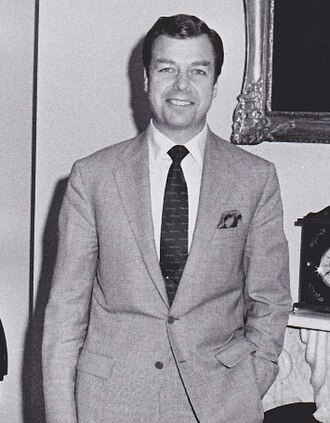
Peter M. Flanigan served as a key economic and commercial advisor during the Nixon administration, earning the nickname "Mr. Fixit" for his handling of powerful business interests. He initially joined the White House as a Consultant to the President in January 1969 before being elevated to Assistant to the President in April 1969, a role he held throughout the taping period (February 1971 – July 1973). As his portfolio expanded to focus on global trade, he concurrently became Assistant to the President for International Economic Affairs in January 1972 and Executive Director of the Council on International Economic Policy in February 1972, serving in these capacities until his resignation in June 1974.
President Nixon met with his Cabinet and senior staff to discuss strategies for achieving a balanced federal budget by 1975, emphasizing the necessity of immediate spending cuts and potential vetoes of congressional legislation to curb inflation. Budget Director George Shultz outlined the administration’s plan to issue "ceiling letters" to agency heads to enforce strict fiscal guidelines and reduce government deficits. The participants also reviewed recent positive economic indicators, including growth in the Gross National Product and declining unemployment, while noting that the public generally views government spending as a primary driver of inflation.
President Nixon met with Dr. John A. Hannah, Alexander M. Haig, Jr., and Peter M. Flanigan to evaluate the performance of the Agency for International Development (AID) and discuss its future direction. Nixon emphasized that foreign aid must prioritize U.S. national interests over humanitarian idealism and expressed skepticism toward multilateral aid programs, favoring a shift toward bilateral arrangements. The group further analyzed congressional strategies for passing upcoming authorization and appropriations bills, focusing on managing bureaucratic obstacles and securing necessary legislative support before the Republican National Convention.
President Nixon met with Peter M. Flanigan to discuss managing international economic policy, specifically navigating sensitive trade relations with the European Economic Community, Japan, and the Soviet Union while avoiding premature public confrontations. Nixon emphasized the importance of maintaining a non-partisan, issue-focused role for his economic advisors to bolster his administration's position ahead of the 1972 election and requested that public communications be handled with extreme confidentiality. Additionally, they reviewed organizational changes at the Corporation for Public Broadcasting and discussed the political reliability and background of diplomat Robert O. Blake.
President Nixon met with Henry Kissinger, Peter Flanigan, and Peter Peterson to discuss the status and strategic negotiation tactics for ongoing U.S.-Soviet trade agreements, including Lend-Lease settlements and potential gas deals. The participants analyzed how to leverage these economic discussions as bargaining chips while managing domestic political concerns, including the 1972 election and Congressional relations. Nixon directed the team to prepare concrete options for his review and emphasized that the administration should maintain a public appearance of optimism regarding the eventual conclusion of these agreements. Additionally, the group briefly touched upon trade interests involving Japan, Cuba-related maritime issues, and diplomatic gestures toward Poland.
President Nixon met with Veterans Affairs Administrator Donald E. Johnson and other aides to discuss the administration's legislative strategy regarding veterans' benefits and a messaging campaign for the 1972 election. Nixon emphasized the need to contrast his support for Vietnam veterans with the Democratic opposition's stance on amnesty and national security, specifically targeting comments made by Sargent Shriver and Ramsey Clark. The session also included administrative updates, such as the upcoming resignation of George Romney and a social visit with Donald McI. Kendall and his family, during which they exchanged gifts and discussed presidential items.
President Nixon met with William D. Eberle, Peter M. Flanigan, and Alexander M. Haig, Jr. to discuss the status of US-Japan trade relations ahead of an upcoming meeting with Prime Minister Kakuei Tanaka. The discussion focused on addressing the trade imbalance, managing Japanese internal political factions, and evaluating a potential joint US-Japan uranium enrichment plant proposal. The President emphasized the need to maintain pressure on Japanese trade policy while Eberle provided updates on ongoing negotiations and legislative developments concerning the U.S. Senate.
President Nixon and Peter Flanigan met to organize the agenda and strategy for an upcoming Council on International Economic Policy meeting regarding trade relations with Europe. They discussed the necessity of aligning trade policy with broader national security and political interests, specifically regarding the U.S. grain trade and upcoming OECD negotiations. Nixon decided to avoid premature policy commitments, instructing Flanigan to focus the meeting on posing critical questions rather than reaching final decisions.
President Nixon met with the Council on International Economic Policy and senior advisors to discuss U.S. trade relations with an expanding European Community. The group debated four strategic options ranging from maintaining the status quo to aggressive confrontation, with the President ultimately directing that the administration maintain a firm, "tough" stance while avoiding specific, provocative threats until after the upcoming election. Nixon emphasized that trade policy should not be viewed in isolation but as a component of a broader strategy concerning global power balances and U.S. national security commitments in Europe.
President Nixon met with Soviet Minister of Merchant Marine Timofey B. Guzhenko and Ambassador Anatoliy F. Dobrynin to discuss the resolution of a difficult maritime agreement between the two nations. Nixon emphasized the broader diplomatic importance of the deal, framing it as a constructive step toward improved political relations and greater cooperation at sea. The discussion also included social exchanges regarding the recent positive reception of Julie Nixon Eisenhower aboard a Soviet ship in Baltimore and invitations for the President's family to travel to the Soviet Union.
President Nixon met with Soviet Minister of Foreign Trade Nikolai Patolichev, Ambassador Anatoliy Dobrynin, and senior U.S. officials to finalize and sign a major bilateral trade agreement. The discussion emphasized the importance of strengthening U.S.-Soviet economic ties, including the role of the Export-Import Bank and Most Favored Nation status, as a foundational element of long-term diplomatic relations. Following the departure of the Soviet delegation, the President consulted with his staff regarding the sensitive, ongoing negotiations to end the Vietnam War and secure a cease-fire.
President Nixon met with Peter Flanigan to review ambassadorial appointments and strategy for his second-term administration. The discussion focused on replacing non-performing or aged diplomats with individuals possessing strong economic backgrounds capable of influencing European political leaders. Nixon explicitly tasked Flanigan with taking personal responsibility for vetting candidates and managing the appointment process to prevent back-channel influence from Henry Kissinger or campaign contributors like Maurice Stans. Additionally, the two discussed organizational restructuring within the State Department and proposed consolidating certain European ambassadorial posts to enhance administrative efficiency.
President Nixon met with Irish Prime Minister Jack Lynch to discuss the ongoing sectarian violence in Northern Ireland, the potential for a peaceful settlement, and Irish-American trade relations. The discussion covered the political complexities involving the British government, the status of the UDA and IRA, and specific civil aviation disputes regarding landing rights and North Atlantic tariffs. Nixon directed Peter Flanigan to review the aviation and investment concerns, and the two leaders agreed to frame their public statements as a constructive, ongoing diplomatic review of these sensitive bilateral issues.
In this meeting, President Nixon met with his Vice President, Cabinet, and senior staff to provide a briefing on the impending Vietnam cease-fire agreement, scheduled for signing on January 27, 1973. National Security Advisor Henry Kissinger detailed the arduous negotiation process, emphasizing that the agreement achieved key U.S. objectives including the return of POWs, the withdrawal of American forces, and the right of South Vietnamese self-determination. Following the Vietnam discussion, the President transitioned to a briefing on the fiscal year 1974 budget, where Director Caspar Weinberger presented plans for spending cuts and program terminations designed to maintain a full-employment balance and avoid tax increases.
President Nixon met with his Vice President, Cabinet members, and senior staff to conduct a briefing on the upcoming federal budget. The discussion focused on the necessity of fiscal restraint, including the reduction and termination of certain government programs, to avoid tax increases and curb inflationary pressures while maintaining an expanding economy. Cabinet members analyzed projections for the 1974 and 1975 budgets, emphasizing the shift in spending priorities from defense toward human resources and the importance of presenting the budget to Congress and the public as a responsible alternative to higher taxation.
President Nixon and his Cabinet members strategized on how to promote the administration’s 1974 budget and defend proposed spending cuts against inevitable Congressional and lobbying opposition. The participants emphasized shifting from a constituency-based political strategy to a national message centered on fiscal responsibility, specifically using the themes of 'jobs' and 'taxes' to appeal to working-class voters. Nixon underscored the necessity of forcing Congress to accept accountability for spending, ultimately positioning the administration to blame Democrats if tax increases become required to fund legislative priorities.
President Nixon met with Vice President Agnew, Cabinet members, and key staff to discuss recent foreign policy developments and economic strategy. Vice President Agnew briefed the group on his recent tour of Southeast Asian nations, while Treasury officials and Cabinet members deliberated on international monetary policy, trade barriers, and the need for a more competitive U.S. industrial posture. The President emphasized the importance of maintaining international engagement, securing legislative tools for trade negotiations, and justifying reconstruction aid for Vietnam as a strategic security necessity rather than purely humanitarian relief.
President Nixon met with Sir Christopher Soames and administration officials to address the growing trend of isolationism in both the United States and Europe and its potential impact on trans-Atlantic relations. The discussion focused on complex trade negotiations, the role of an enlarged European Economic Community, and the necessity of maintaining unified Western political and economic strength in the face of competition from Japan and shifting global powers. Nixon emphasized the political difficulty of passing trade legislation in a protectionist-leaning U.S. Senate and urged European leaders to cooperate on a balanced approach to trade and energy security to prevent an ugly confrontation.
President Nixon met with Archbishop Luigi Raimondi and Peter Flanigan, along with White House staff and photographers, to discuss the role of the Catholic Church in addressing global issues and social change, particularly in Latin America. Key topics included concerns about radical elements potentially exploiting the Church for destructive purposes, the importance of the Church as a force for stability, and the need for moderate US influence. Nixon also informed Raimondi about upcoming legislative support for Catholic schools, expressing confidence in the Church's positive global impact and his commitment to maintaining strong US-Vatican relations.
President Nixon and his Cabinet met to launch a strategic public relations campaign, titled the Presidential Spokesmen program, aimed at pressuring Congress to support his budget priorities and oppose spending-heavy legislation. Nixon urged his officials to frame the budget debate not as a constitutional conflict, but as a direct choice between the economic interests of the 'New American Majority' and the fiscal irresponsibility of the opposition. The session included briefings on foreign policy, defense spending, and law enforcement, emphasizing the need for administration spokesmen to maintain a positive, disciplined narrative while avoiding defensive posturing on 'false issues.'
President Nixon met with Vice President Agnew and a bipartisan group of Congressional leaders to outline the administration's proposed foreign trade legislation. The discussion focused on securing presidential authority to negotiate trade agreements, implementing safeguards for domestic industries, and establishing pension and unemployment insurance reforms. Nixon emphasized the necessity of shifting away from a 'one-way street' trade policy to protect American workers and leverage better terms with international partners, while urging caution against attaching human rights conditions to Most Favored Nation (MFN) status for the Soviet Union to avoid jeopardizing broader diplomatic and arms control initiatives.
President Nixon met with Vice President Agnew and a bipartisan group of Congressional leaders to address the nation's growing energy needs and proposed legislative solutions. The discussion focused on mitigating potential future shortages by balancing environmental protections with domestic production efforts, including natural gas deregulation, expanded offshore oil leasing, and the completion of the Alaska pipeline. The President and his cabinet members emphasized the importance of developing a cohesive national energy strategy to maintain independence and discussed the foreign policy implications of relying on foreign oil exports. The administration sought Congressional cooperation for pending energy legislation and signaled an intent to increase research and development funding for alternative fuel sources like coal and nuclear power.
In this meeting, President Nixon addressed his Cabinet and senior staff regarding the recent departures of top aides H.R. Haldeman and John Ehrlichman, framing the transition as a necessary move to restore stability amidst the escalating Watergate investigation. Nixon emphasized the importance of maintaining public trust, directed the staff to cooperate fully with investigators, and insisted that the White House avoid any appearance of a cover-up. Cabinet members and staff discussed the administration’s focus on governance, foreign policy, and economic management, reaffirming their collective commitment to the President's agenda despite the political crisis.
President Nixon met with members of the Senate Commerce Committee, including Senators Griffin, Hartke, Baker, Beall, Cannon, and Moss, to discuss their recent visit to the Soviet Union and its implications for U.S.-Soviet relations. The conversation centered on the potential impact of the Jackson-Vanik amendment on trade negotiations, specifically regarding the emigration of Soviet Jews and the risk of damaging the President's diplomatic progress with Leonid Brezhnev. Nixon emphasized the need for a bipartisan approach and suggested developing modified language for the legislation to provide an "escape valve" that would avoid a confrontational ultimatum while maintaining progress on key strategic interests like SALT II.
President Nixon met with Vice President Agnew and his Cabinet to discuss the ongoing impact of the Watergate scandal on the administration, personnel changes, and the need to maintain governmental stability. Key topics included the appointment of a special prosecutor, the selection of Elliot Richardson, and the importance of professional coordination between the White House and Cabinet departments to ensure the administration's 1972 election mandate remained the primary focus. Nixon emphasized the necessity of improving Congressional relations and maintaining morale within the bureaucracy despite the political distractions caused by the Ervin Committee hearings.
President Nixon met with his Vice President, Cabinet members, and senior staff to receive departmental updates and reinforce the administration's policy goals. The discussion spanned a wide array of topics, including minority recruitment, the status of the Watergate special prosecutor search, energy policy, and the administration's foreign policy record. Nixon emphasized the importance of maintaining a strong national defense and a unified front against political challenges while encouraging his team to continue their work with confidence.
President Nixon and Vice President Agnew met with the Cabinet and senior staff to discuss major foreign and domestic policy priorities and internal administration management. The discussion centered on upcoming diplomatic summits with Leonid Brezhnev and Georges Pompidou, negotiations with North Vietnam regarding the ceasefire, and economic challenges including inflation and energy policy. Additionally, General Alexander Haig briefed the Cabinet on the administration's efforts to stabilize internal governance, improve relations with Congress, and manage the ongoing political fallout from the Watergate scandal.
President Nixon met with his Cabinet and key legislative leaders to discuss the restructuring of domestic policy operations, the appointment of Clarence M. Kelley as FBI Director, and strategies for improving congressional cooperation. Nixon emphasized a team-based approach to policy formulation, delegating significant oversight to Mel Laird, and urged Cabinet members to actively engage with Congress to pass the administration's legislative agenda. The discussion also addressed the administration's response to inflation, the importance of maintaining public morale amidst the Watergate crisis, and the necessity of presenting a unified, forward-looking policy front to the American people.
President Nixon met with his Vice President, Cabinet members, and senior staff to announce the implementation of a 60-day price freeze as part of a strategy to combat inflation. He explained that this measure, aimed at stabilizing food and gasoline prices, was a necessary pragmatic step to preempt more extreme, mandatory controls favored by Congress. Nixon emphasized his commitment to maintaining a free-market economy and tasked his Cabinet with actively promoting this policy to the public and opinion makers. He also highlighted the administration's broader accomplishments in foreign policy, including the end of the draft and the upcoming U.S.-Soviet summit.
President Nixon, Soviet General Secretary Leonid Brezhnev, and key members of their diplomatic and economic teams met to discuss the expansion of U.S.-Soviet trade and the challenges of integrating two distinct economic systems. The conversation focused on large-scale, long-term projects in the energy sector—specifically oil and gas—and the necessity of institutionalizing economic cooperation through trade missions and working groups. Participants acknowledged that while political will is high, practical implementation requires navigating complex issues of financing, pricing, and administrative differences between American private enterprise and the Soviet state-controlled economy.
President Nixon met with Vice President Agnew, top economic advisors, and a large group of Republican Congressional leaders to discuss the administration's current 60-day economic freeze and the development of a subsequent "Phase IV" program. The primary challenge identified was managing inflation and supply shortages—particularly in food—while avoiding the long-term economic damage of permanent price and wage controls. The President and his advisors sought Congressional support for a balanced budget and specific legislative measures, such as the release of strategic stockpiles, while acknowledging the significant political difficulty of passing unpopular fiscal reforms. Participants emphasized the need for a careful balance between short-term political relief and long-term economic stability to avoid the pitfalls of past rationing and supply-side distortions.
President Nixon met with his economic advisors and Cabinet members to debate the design of 'Phase IV' of his economic program, focusing on the appropriate speed for removing wage and price controls. The discussion centered on balancing the political need to curb inflation with the economic necessity of incentivizing production, particularly in the agricultural sector, where export controls and price ceilings had created supply shortages. The President and his team also addressed the critical need for a balanced federal budget to bolster business confidence, ultimately agreeing on the necessity of a tough, credible policy to stabilize the economy.
President Nixon met with Vice President Agnew and his Cabinet to discuss the transition from the current wage and price freeze to a "Phase IV" economic policy. The President emphasized the need to balance controlling inflation with maintaining domestic production, while acknowledging the political difficulty of removing controls due to congressional and public pressure. Key developments included the administration's resolve to move toward a free-market economy as quickly as possible, coupled with a renewed commitment to fiscal austerity and a balanced federal budget to bolster economic confidence.