Nixon, Richard M. (President)
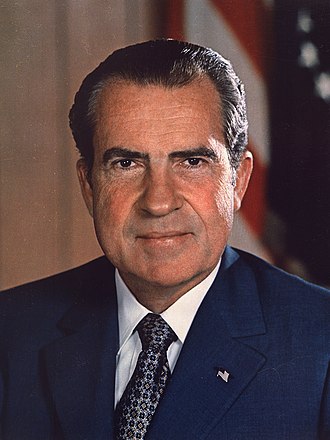
Richard M. Nixon served as the 37th President of the United States from January 1969 until his resignation in August 1974. In February 1971, he ordered the installation of a secret voice-activated taping system in the White House to preserve a historical record of his administration. Until the system's existence was revealed and dismantled in July 1973, the tapes captured Nixon directing major foreign policy initiatives, such as the opening to China, as well as his central role in the Watergate cover-up.
What Nixon talks about on the tapes
White House operations 4,718Presidential scheduling 2,225Public relations 1,784Presidential schedule 1,782Vietnam War 1,693Logistics 1,650Manolo Sanchez 1,626White House communications 1,400White House administration 1,399Presidential communication 1,243Henry Kissinger 1,191Foreign Policy 1,183
Conversations (21,010)
— Page 132 of 211President Nixon contacted the Camp David operator to request assistance with his telecommunications at the Aspen Lodge. The brief exchange focused on establishing a connection to a specific cultural or media broadcast. No significant policy decisions or substantive political discussions occurred during this technical support interaction.
President Nixon and Charles Colson discussed campaign strategy, specifically criticizing the lack of aggressive television advertising regarding Vietnam, the amnesty issue, and prisoners of war. Nixon expressed frustration with the Committee to Re-elect the President (CRP) for failing to target George McGovern’s vulnerability on these topics, insisting that McGovern’s policies amounted to a sellout to communists. Colson agreed to pressure campaign staff to produce new advertisements and ensure that upcoming public appearances by administration officials hit these issues hard to keep McGovern on the defensive.
President Nixon and Charles Colson discuss their frustration with the campaign's current advertising strategy, specifically the lack of aggressive television commercials addressing Vietnam, amnesty, and POW issues. Nixon expresses deep dissatisfaction with campaign staffers and advertising consultants who, he believes, are too liberal or timid to attack the opposition effectively on these topics. He directs Colson to immediately force the development of hard-hitting ads that frame the opposition's platform as a 'sell-out to the communists' to gain an advantage ahead of expected campaign activity from the other side.
President Nixon held an undocumented meeting with an unidentified individual at the Aspen Lodge in Camp David. The recording contains no transcript content beyond a brief one-second segment identified as a personal returnable item. Due to the lack of available dialogue, the specific purpose and substantive outcomes of this discussion remain historically obscured.
President Richard Nixon met with First Lady Pat Nixon in the Aspen Lodge at Camp David to discuss personal matters. The brief interaction, lasting only 16 seconds, was classified as a personal returnable item and contains no recorded substantive policy discussions. Consequently, no official decisions or administrative actions resulted from this exchange.
President Nixon contacted the Camp David operator to facilitate a telephone connection with his Press Secretary, Ronald L. Ziegler. The brief exchange served as a logistical request to initiate a direct line of communication with his senior staff member. No policy matters or substantive political discussions took place during this brief administrative interaction.
President Nixon met with his personal valet, Manolo Sanchez, at the Aspen Lodge during a weekend at Camp David. The brief exchange centered on the arrangement of flowers in the study and included instructions regarding Rose Mary Woods's schedule. No major policy developments occurred during this informal administrative check-in.
President Nixon met with his personal secretary, Rose Mary Woods, at the Aspen Lodge during a weekend retreat at Camp David. The interaction, which was briefly interrupted by a withdrawn personal segment, remains historically opaque due to the absence of a transcript and the restriction of sensitive material. No substantive policy developments or administrative decisions are recorded for this brief encounter.
President Nixon and his personal secretary, Rose Mary Woods, reviewed a draft of an upcoming speech, specifically evaluating contributions from William E. Timmons and Raymond K. Price, Jr. The discussion centered on strategic preferences regarding the inclusion of post-inaugural references, with input provided by John D. Ehrlichman and Alexander P. Butterfield. Following their review, the pair decided to revise the document to better align with the President's desired tone and content.
President Nixon initiates a brief communication through the White House operator while stationed at Camp David. The exchange serves primarily as a logistical check of the telecommunications connection between the retreat and the White House switchboard. No substantive policy discussions or political developments occur during this brief technical interaction.
President Richard Nixon met with his longtime valet, Manolo Sanchez, at Camp David. The discussion, which remains largely inaccessible due to the withdrawal of the recording for personal reasons, involved a brief exchange between the President and his personal aide. No significant policy decisions or official developments are recorded for this interaction.
President Nixon and Press Secretary Ronald Ziegler discuss media strategy for the 1972 campaign, focusing on the handling of upcoming radio speeches and a proposed one-on-one interview request from Walter Cronkite. The two analyze the political efficacy of George McGovern’s recent attacks and conclude that his confrontational rhetoric and delivery style are proving counterproductive with the public. They also weigh the risks and benefits of granting exclusive television access, ultimately deciding to proceed cautiously to maintain favorable media positioning while avoiding premature exposure of tax reform policies.
President Nixon and Press Secretary Ronald Ziegler met to discuss media strategy and public messaging tactics ahead of the 1972 election. They reviewed administrative concerns regarding tax policy, specifically aiming to avoid public perception that a tax reform plan was imminent. Additionally, the two discussed scheduling appearances with news networks, prioritizing a late-campaign timeline to accommodate the President's schedule while managing media inquiries regarding potential debates.
President Nixon and his personal secretary, Rose Mary Woods, collaborated on the drafting and revision of a radio speech regarding federal spending and taxation. The discussion focused on refining the rhetoric to avoid partisan blame, highlighting instead the shared fiscal concerns between the administration and key congressional committees. Nixon provided specific instructions for manual edits and retyping to emphasize his commitment to preventing tax increases while criticizing the structural flaws in Congress regarding fiscal responsibility.
President Nixon met with his longtime personal valet, Manolo Sanchez, at the Aspen Lodge study at Camp David. The interaction was brief, as the recording consists almost entirely of a withdrawn personal segment. No substantive policy discussions or administrative decisions were documented during this exchange.
President Nixon and his valet, Manolo Sanchez, met at Camp David to discuss logistical arrangements for an upcoming radio address regarding federal spending. The conversation specifically addressed a request to facilitate photography during the President’s broadcast. The exchange served to coordinate the visual documentation of Nixon's public policy messaging.
President Richard Nixon met with his personal valet, Manolo Sanchez, at the Aspen Lodge study at Camp David. The conversation, which lasted approximately one minute, was recorded by the Camp David Hard Wire system but remains classified as a personal, returnable item. No substantive administrative or policy-related information is available from the record.
President Nixon met with his valet, Manolo Sanchez, at Camp David to review a draft of a radio address regarding federal spending. The brief interaction focused on the President's preparation for his upcoming speech. No major policy decisions were reached during this informal session.
President Nixon and his personal secretary, Rose Mary Woods, reviewed a draft of an upcoming radio address regarding Federal spending. Their discussion focused on refining specific terminology, particularly the use of the word "insurance" in the context of government expenditures. Nixon directed Woods to consult with an external contact to identify a more impactful or "striking" term to replace the current phrasing.
President Nixon and Rose Mary Woods met at Camp David to finalize the language and logistics for a radio speech regarding federal spending. The discussion focused on refining word choice, specifically concerning insurance-related terminology, while coordinating the broadcast setup in Laurel Lodge. An unknown aide assisted in the speech preparation and scheduling before the President and Woods concluded their session.
President Nixon contacted the Camp David operator to facilitate an urgent telephone connection. The primary purpose of this brief exchange was to request a call be placed to Charles W. Colson. No further substantive policy matters were discussed during this connection attempt.
President Nixon contacted the Camp David operator to facilitate a telephone connection with his Chief of Staff, H.R. Haldeman. This brief administrative interaction served as an intermediary step to coordinate internal White House communications. No substantive policy matters were discussed during this request.
President Nixon contacted the Camp David operator from the Aspen Lodge study to request assistance with placing a telephone call. This brief interaction served administrative purposes, facilitating the President's telephonic communications while at the retreat. No substantive policy discussions or significant political developments occurred during this brief exchange.
President Nixon initiated a brief contact with the Camp David telephone operator to discuss administrative logistics or connectivity requirements at Aspen Lodge. The interaction reflects the routine coordination necessary for the President to maintain communication while working from the presidential retreat. No substantive policy matters or major decisions were recorded during this brief exchange.
President Nixon and Charles Colson discuss the success of Nixon’s recent radio address on federal spending and the strategic advantages of using radio to bypass television media and speak directly to voters on key issues. They coordinate further radio broadcasts to target specific demographics, including farmers and supporters of private schools, while maintaining an offensive stance against George McGovern. Additionally, they discuss ongoing campaign tactics, including the dissemination of rumors regarding polling data to disrupt the McGovern camp and the need to aggressively frame McGovern’s positions on Vietnam and welfare as dangerous to the national interest.
President Nixon and Charles Colson strategize on the effective use of radio broadcasts to bypass the press and directly address voters with populist, wedge-issue messaging. Nixon emphasizes a campaign strategy focused on attacking his opponent's record on welfare, taxes, and Vietnam, while intentionally disregarding criticism from intellectuals and the media. The pair decides to prepare a series of radio speeches targeting specific voter concerns, such as agricultural policy and aid to private schools, to shift the national narrative toward the President's platform.
President Nixon and Alexander Butterfield confer regarding final adjustments to the President's upcoming schedule. They determine that Donald Rumsfeld will attend the Quadriad meeting to observe the discussion on economic controls. Additionally, Nixon approves a request from Charles Colson to grant a photo opportunity to Bill Marsh of the American Society of Association Executives to facilitate positive outreach to their membership.
President Nixon and Alexander P. Butterfield held a brief, informal check-in at Camp David to coordinate logistics regarding upcoming photographic opportunities. The discussion centered on confirming the presence of an individual and ensuring that scheduled photo sessions would proceed efficiently. The brief exchange concluded with Nixon signaling approval for the arrangements as described.
President Nixon and H.R. Haldeman discussed the strategic use of radio speeches to communicate directly with voters and counter criticism that the administration was avoiding policy substance. Nixon expressed satisfaction with the success of a recent radio address and directed his staff to prepare additional speeches on topics such as agricultural policy, welfare, and private school aid to contrast with George McGovern's campaign style. Additionally, they reviewed plans for television advertising, with Nixon authorizing the aggressive use of campaign spots highlighting McGovern’s positions on Vietnam and amnesty.
President Nixon and H.R. Haldeman discuss campaign strategy, focusing on utilizing radio speeches as a direct, substantive, and cost-effective method to reach voters and counter criticisms that the administration lacks a policy agenda. Nixon directs Haldeman to prepare specific radio addresses on farm exports, private school funding, and welfare to address targeted interest groups and provide a necessary, aggressive edge to his platform. Additionally, they coordinate on television advertising plans, emphasizing the need for hard-hitting commercials regarding Vietnam and amnesty to drive home key issues during the final weeks of the campaign.
President Nixon held a brief meeting with his personal valet, Manolo Sanchez, at the Aspen Lodge in Camp David. The discussion consisted entirely of a withdrawn segment classified as personal and returnable. No substantive policy decisions or administrative actions were recorded during this interaction.
President Richard Nixon engaged in a personal telephone conversation with his daughter, Tricia Nixon Cox, while at Camp David. The discussion was entirely private in nature, as indicated by the withdrawal of the content from the public record for being personal and returnable. No political, administrative, or substantive policy matters were recorded as part of the public historical transcript.
President Nixon met with his daughter, Tricia Nixon Cox, during a weekend stay at Camp David. As this brief interaction was captured by the Hard Wire system, the specific substance of their exchange remains private, though the meeting reflects the informal nature of the President’s family gatherings at the retreat. No formal policy decisions or official government actions were recorded or concluded during this brief social encounter.
President Richard Nixon met with his personal aide, Manolo Sanchez, during a private session at the Camp David Aspen Lodge. The discussion consisted entirely of a withdrawn segment classified as personal and returnable material. No substantive policy matters or administrative decisions were recorded for the public record.
President Nixon held an informal meeting at the Aspen Lodge study at Camp David with an unidentified individual. The entirety of the recorded segment consists of a brief, personal exchange followed by the withdrawal of the primary content. Consequently, no substantive policy discussions or administrative decisions were captured on the recording.
President Nixon met with his personal valet, Manolo Sanchez, at the Aspen Lodge during a weekend at Camp David. The interaction served as a brief personal engagement between the President and his long-time aide. As the content of the conversation remains classified or withdrawn, no specific policy or administrative actions were recorded for the historical record.
President Richard Nixon met with First Lady Pat Nixon at the Aspen Lodge in Camp David for a private discussion. Due to the lack of a transcript and the presence of withdrawn material, the specific substance of their conversation remains restricted and unavailable for public review. The encounter serves as a record of personal engagement between the President and the First Lady during their retreat.
President Richard M. Nixon held an informal meeting with an unidentified individual at the Aspen Lodge study at Camp David. Due to the lack of a transcript and the presence of withdrawn material, the specific substantive topics remain unknown to researchers. The interaction was captured by the Camp David Hard Wire taping system, though no record of the dialogue content exists.
President Nixon contacted the White House operator to request a telephone connection to George E. Allen, the head coach of the Washington Redskins. This brief exchange served as a routine administrative request to facilitate a direct conversation between the President and Allen. No further substantive policy matters were discussed during this brief communication.
President Richard Nixon called Washington Redskins head coach George Allen to discuss the team's recent victory against the Philadelphia Eagles and strategize for future games. The two analyzed individual player performance, personnel decisions, and potential trades, with Nixon offering encouragement and tactical observations. The conversation concluded with Nixon advising Allen to maintain a guarded relationship with the press to prevent media-induced team dissension, and they agreed to reconnect after the upcoming election.
President Nixon contacted the White House operator to request a telephone connection with his personal secretary, Rose Mary Woods. This brief communication served as a logistical step to facilitate direct contact between the President and a key member of his staff. No further substantive policy matters or decisions were discussed during this brief exchange.
President Nixon and his personal secretary, Rose Mary Woods, coordinate the White House's formal expressions of sympathy following the death of former Senator Prescott S. Bush. The President decides to provide a military escort for the funeral services, consistent with protocols for former senators, in addition to sending flowers and a personal note to the widow, Dorothy Bush. Nixon directs Woods to contact the military office to facilitate these arrangements and to communicate the gesture to the Bush family through George H.W. Bush.
In this meeting with H.R. Haldeman, Stephen Bull, and later Ronald Ziegler, President Nixon discussed a broad range of political and communications strategies for the 1972 re-election campaign. Key topics included coordinating messaging on Vietnam negotiations ahead of a press conference, countering negative media coverage regarding federal spending, and refining the President's public image through improved photographic and radio outreach. Additionally, the participants addressed personnel management for campaign economic rhetoric and logistical planning for upcoming speeches.
President Nixon met with his economic advisors and staff, including George Shultz, Arthur Burns, and Caspar Weinberger, to coordinate administration messaging and planning for the post-election period. The discussion focused on maintaining a firm stance on congressional spending, specifically concerning upcoming vetoes of water and education legislation, and establishing a strategy for economic policy, including the transition of wage and price controls. Nixon emphasized the need for long-term domestic initiatives and urged his team to use the post-election period for deep reflection and strategic planning rather than immediate political reaction.
President Nixon met with Russell Train and John Whitaker to debrief on Train's recent trip to the Soviet Union and discuss the status of ongoing US-Soviet environmental cooperation. They reviewed various bilateral initiatives, including joint working groups on pollution, and explored how these cooperative efforts serve as a broader diplomatic tool to improve the international climate between superpowers. Nixon emphasized the importance of framing environmental, health, and scientific agreements as substantive steps that transcend ideological differences to foster global stability.
President Nixon met with Alexander P. Butterfield to coordinate logistical details regarding a scheduled breakfast meeting with congressional surrogates. The conversation focused on the arrangements for this upcoming event on October 10, 1972. This brief exchange served to finalize the President's immediate scheduling priorities.
President Nixon met with Winston W. Marsh, James Low, and Henry C. Cashen, II to discuss the American Society of Association Executives and issues relevant to the tire industry. The group reviewed industry trends, including the popularity of radial tires and retreading, while sharing perspectives on labor and welfare policy. The President reminisced about his early experiences with automotive repair and exchanged pleasantries with the delegation.
President Nixon met with his aide, Stephen B. Bull, to review and finalize the details of his upcoming daily schedule. The discussion centered on logistics regarding a scheduled haircut and the arrival of Senator James O. Eastland at the White House. They also briefly touched upon the coordination of wire service reports related to these activities.
President Nixon met with Miss National Teenage America Sharon McLarty and members of her party, followed by a strategic political consultation with Senator James O. Eastland. The conversation shifted from pleasantries to the 1972 campaign, where Nixon and Eastland discussed the political climate in the South, the President's strategy for addressing big spending, and his refusal to engage in campaign-related correspondence against certain Southern incumbents. The discussion concluded with an exchange regarding legislative matters and Nixon’s cautious approach toward potential Congressional investigations into Watergate, emphasizing his intent to avoid commenting on active court cases.
President Richard M. Nixon met with his aide, Stephen B. Bull, for a brief session in the Oval Office to coordinate the President's upcoming schedule. The primary focus of the discussion was the logistical arrangements for the recording of a message. The meeting concluded quickly after these administrative details were addressed.
President Nixon met with his aide Stephen B. Bull to coordinate logistical details regarding the President's upcoming schedule. The primary focus of the discussion concerned an appointment involving Samuel I. Newhouse at the Executive Office Building. This meeting served as a brief administrative update to finalize the arrangements for the President's movements.
President Nixon and Alexander P. Butterfield met to coordinate the President’s upcoming schedule and organizational logistics for an October 10 breakfast meeting with campaign surrogates. The discussion covered the preparation of speech materials and the arrangement of tables for the event. Additionally, Butterfield proposed that the President meet with former football star Jim Brown to discuss his involvement in drug abuse prevention programs.
President Nixon held a brief, unscheduled meeting with an unidentified individual in the Oval Office. Due to the lack of available transcripts or descriptive metadata, the specific subject matter and any potential directives resulting from the discussion remain historically undocumented. The interaction concluded within seven minutes, leaving no record of the participants' agenda or outcomes.
President Nixon met with his personal valet, Manolo Sanchez, to facilitate communication with his staff. During this brief interaction, the President instructed Sanchez to inform Charles W. Colson that he was cleared to proceed with his current assignment. No further substantive policy discussions were recorded during this exchange.
President Nixon met with newspaper magnate Samuel I. Newhouse, Herbert Klein, and John Dean to discuss concerns regarding antitrust enforcement and the potential for federal bureaucracy to challenge Newhouse's extensive media holdings. Newhouse expressed anxiety over public interest groups and government regulators targeting his business model, while Nixon and Dean reassured him of the administration's pro-business philosophy, which prioritizes successful management over anti-bigness ideology. The discussion concluded with lighthearted exchanges regarding the 1972 campaign and the presentation of presidential gifts to Newhouse.
President Nixon met with Charles Colson and H.R. Haldeman to coordinate a strategic response to aggressive campaign attacks from George McGovern and his supporters. The participants discussed ways to frame McGovern’s rhetoric as extreme and defamatory while countering allegations of corruption directed at the administration, including the U.S.-Soviet grain deal. Nixon directed his team to compile a factual record of these attacks to expose what he viewed as the hypocrisy and inappropriate tactics of the opposition.
President Nixon initiates a brief telephone call to connect with his personal secretary, Rose Mary Woods. The conversation serves solely as a logistical request for the operator to bridge the connection to Woods. No further substantive policy or administrative discussions occur during this exchange.
President Nixon and Stephen B. Bull briefly met in the Oval Office to coordinate the placement of a specific item, identified as an issue of Vogue, on a table. The President directed Bull to bring the magazine to him rather than leaving it elsewhere. This exchange served as a logistical instruction regarding personal or administrative materials within the White House.
President Nixon and H. R. Haldeman met to review recent polling data regarding the President's approval ratings, the Vietnam War, and public perception of government corruption. Much of the discussion centered on the ongoing Vietnam peace negotiations, with Nixon emphasizing the necessity for Henry Kissinger to report directly to him before taking any further actions in Hanoi. Additionally, the pair coordinated political strategy regarding Secretary of State William P. Rogers's planned press conference and evaluated a request for a meeting with steel industry representatives.
President Nixon and Stephen B. Bull met to discuss the logistics of an upcoming photography session involving various political candidates and associates, including Louie B. Nunn and John W. Byrnes. The discussion centered on technical issues such as lighting and the need for re-filming certain sessions. Nixon provided specific instructions regarding the pacing of the event and requested that candidates understand the scheduling limitations.
President Nixon met with a delegation of Republican congressional and gubernatorial candidates to discuss strategies for the upcoming 1972 general election. Facilitated by White House staff, the gathering served to bolster political unity and campaign momentum among the participating candidates. The discussion focused on rallying support for the administration's agenda to secure victories in their respective races.
President Nixon and Alexander P. Butterfield met to review the President’s upcoming schedule and manage various administrative priorities, including trade fair representation and committee engagements. The discussion focused on organizing post-election appearances and refining public relations strategies, with Nixon explicitly instructing Butterfield to restrict certain groups from appearing in his office. These instructions effectively established new limitations on the President's meeting schedule regarding specific minority representatives.
President Nixon, Ronald Ziegler, and H.R. Haldeman met to coordinate media strategy regarding Nixon's selective support for Republican candidates and specific congressional Democrats. Ziegler briefed the President on his efforts to navigate press inquiries about the administration's stance on various Senate and House races, emphasizing a policy of neutrality rather than blanket endorsements. The participants discussed managing the President's public involvement in campaigns and maintaining a balanced approach toward incumbent allies and former cabinet members.
President Nixon and his personal secretary, Rose Mary Woods, discuss the logistical arrangements for the funeral of Prescott S. Bush. Woods confirms that she coordinated with Alexander Butterfield, who utilizes military aides to manage the formal procedures for such events. Nixon expresses satisfaction with this delegation and the established protocol for handling the memorial preparations.
President Nixon initiates a request through the White House operator to place a telephone call to Charles W. Colson. The brief communication serves strictly as a logistical directive to establish a line of contact with his special counsel. No further substantive policy matters or tactical decisions are discussed during this exchange.
President Nixon and Charles Colson held a brief evening telephone call to touch base on their respective schedules and current whereabouts. The conversation served primarily as a check-in to confirm the President's recent dinner engagement had concluded without interruption. No major policy decisions or significant executive actions were recorded during this brief exchange.
President Nixon met with H.R. Haldeman, Charles Colson, and other staff members to discuss campaign strategy, press relations, and the management of sensitive domestic and foreign policy issues. The President emphasized a need to focus on core ideological issues such as patriotism, morality, and the work ethic, while criticizing his staff's reliance on overly objective or "liberal" analyses that missed the underlying concerns of key voting blocs like Catholic and blue-collar ethnics. The group also addressed the ongoing Vietnam negotiations, with Nixon warning against public displays of anxiety and instructing staff to maintain a firm, disciplined stance regarding media coverage and political messaging.
President Nixon and Stephen B. Bull briefly conferred regarding the President's upcoming schedule and the protocol for handling a meeting with Witold Trampczynski. The discussion centered on the appropriate presentation of gifts, specifically cuff links, following Trampczynski's previous visit to the White House. The participants coordinated these logistical details to ensure proper diplomatic etiquette for the scheduled appointment.
President Nixon met with Polish diplomat Witold Trampczynski and advisor Helmut Sonnenfeldt to review the President’s recent trip to Poland and discuss ongoing bilateral economic relations. The discussion touched on personal reflections regarding Edward Gierek, the importance of fostering trade—specifically regarding Polish ham exports—and the necessity of resolving technical negotiations involving bondholders and debt rescheduling. Nixon emphasized his commitment to fulfilling previous agreements while acknowledging that outstanding business and economic disputes required continued negotiation.
President Nixon met with Alexander P. Butterfield and Stephen B. Bull to discuss a potential meeting with entertainer James Brown. The participants reviewed Brown’s background and cultural influence to assess the political benefits of an engagement with the artist. Nixon ultimately approved the scheduling of the visit to leverage Brown's popularity among young voters.
President Nixon met with Marjorie P. Acker in the Oval Office to briefly discuss scheduling matters, specifically concerning the itinerary of his personal secretary, Rose Mary Woods. The conversation also included a reference to a telephone call involving James Brown. The meeting was administrative in nature and concluded after only one minute.
President Nixon utilized this time to dictate the text of an official telegram. The session was focused on the drafting and preparation of this specific communication. No further administrative or policy discussions were recorded during this brief encounter.
President Nixon met with his aide Stephen B. Bull to discuss adjustments to the President's upcoming schedule. The primary focus of the brief interaction was the inclusion of James Brown on the official calendar. Following the discussion, the meeting concluded with no further formal actions recorded.
President Nixon met with entertainer James Brown and his associates to discuss Brown's career achievements and his influence on youth. During the visit, which included a photo session and the exchange of gifts, the participants touched upon potential federal initiatives regarding the legacy of Dr. Martin Luther King, Jr., including the establishment of a national holiday and a monument in Atlanta. Nixon acknowledged the importance of these proposals but noted that any formal action would likely be deferred until after the 1972 election to avoid political complications.
President Nixon met with his aide, Stephen B. Bull, to review the scheduling of an upcoming appointment with Milton Pitts. Nixon declined to meet with Pitts immediately due to his need to attend to personal medical matters. The President instructed Bull to remain available later that evening in case a meeting could be accommodated before his other scheduled commitments.
President Richard M. Nixon met with his personal secretary, Rose Mary Woods, for a private discussion in the Oval Office. The entirety of the recorded conversation remains withdrawn from the public record due to its personal nature. Consequently, no official policy or administrative decisions were documented during this exchange.
President Nixon, H.R. Haldeman, and Rose Mary Woods met in the Oval Office to coordinate administrative matters and scheduling. During the meeting, Haldeman facilitated a request for a call to Jeb Stuart Magruder while Woods discussed details regarding the President's upcoming schedule and telegram correspondence. The interaction primarily served as an operational brief for managing staff communications and executive priorities.
President Richard Nixon met with Chief of Staff H.R. Haldeman in the Oval Office to discuss internal administrative matters. A portion of the meeting was classified as personal and withdrawn from the public record. No definitive policy decisions or broader political strategy developments were recorded in the available documentation for this brief exchange.
President Richard Nixon met in the Oval Office to dictate a formal telegram. The recorded segment primarily consists of this dictation, as a portion of the meeting was withdrawn for personal reasons. No additional policy discussions or major administrative decisions were captured in the available material.
President Nixon met with his personal valet, Manolo Sanchez, in the Oval Office to discuss private matters. The conversation remains restricted due to the personal nature of the content, which was withdrawn from public release. No substantive policy discussions or historical developments were recorded in the available declassified portion of this exchange.
President Nixon met with Alexander P. Butterfield and Rose Mary Woods to finalize his upcoming schedule and handle administrative correspondence. Nixon reviewed various campaign-related requests, rejecting several proposals for television spots and public outreach meetings, including those involving ethnic leaders and minority groups. Ultimately, the President decided to limit his public appearances and media engagements, opting for radio over television for Veterans Day messaging as the election approached.
President Nixon and his personal secretary, Rose Mary Woods, met privately in the Oval Office for a brief two-minute session. Due to the withdrawal of the recorded content as personal and returnable material, the specific nature of their discussion remains unavailable for public review. No further administrative or policy developments were documented from this brief encounter.
President Nixon met with H.R. Haldeman and key staff to streamline his schedule and refine his political messaging ahead of the 1972 election. They discussed cancelling several ceremonial events and meetings with ethnic leaders and senators to prioritize presidential time, while clarifying his firm opposition to busing legislation. Additionally, the group coordinated administration responses to ongoing Vietnam negotiations and planned a series of upcoming radio addresses focused on domestic issues and broad political philosophy.
President Richard Nixon met with his personal valet, Manolo Sanchez, in the Old Executive Office Building. The brief interaction, which included a short segment of withdrawn material, centered on personal matters rather than substantive policy or administrative affairs. No significant political developments or official decisions were recorded during this session.
President Richard Nixon met with his valet, Manolo Sanchez, in the Old Executive Office Building to handle administrative tasks. During this brief encounter, the President requested that Sanchez contact Charles W. Colson on his behalf. This instruction reflects the routine internal communications managed through Nixon's personal staff to coordinate with key advisors.
President Nixon and Charles Colson met to discuss campaign strategy for the 1972 election, focusing heavily on methods to discredit Democratic opponent George McGovern. They evaluated the political impact of Vietnam War peace settlement prospects, economic concerns like inflation, and social issues such as amnesty and abortion to appeal to specific voting blocs, including Catholics and labor unions. Furthermore, the discussion covered the administration's defensive stance regarding early reports of Watergate-related campaign sabotage and the need for a more aggressive posture in press relations.
President Nixon met with his staff, including Ronald Ziegler and H.R. Haldeman, to coordinate the logistics for an upcoming meeting and photograph session with Senate leaders regarding busing legislation. The participants focused on timing the session to ensure optimal media coverage and press accessibility. Additionally, the President managed routine administrative matters, including his personal schedule, correspondence with Congressmen, and a barber appointment.
President Nixon met with H. R. Haldeman, Rose Mary Woods, and Stephen B. Bull to coordinate administrative tasks and adjust his upcoming schedule. The participants finalized details regarding a meeting with Senate leaders and reviewed logistics for photo opportunities involving administration officials. They also managed various correspondence related to congressional candidates.
President Nixon met with several Republican senators to strategize on gaining legislative action against school busing during the remaining session of the 92nd Congress. Nixon encouraged the senators to support the current busing legislation as the most viable vehicle for immediate progress, emphasizing that the Senate should at least proceed to a vote on the merits rather than allowing the bill to stall. The President also discussed the broader political landscape, including his judicial philosophy regarding Supreme Court appointments and his intent to emphasize these themes in upcoming campaign appearances.
President Nixon and H.R. Haldeman reviewed the 1972 re-election campaign's media strategy, focusing on the effectiveness of negative advertisements targeting George McGovern's shifting positions on welfare, amnesty, and Vietnam. They discussed concerns regarding the tone of campaign commercials and logistical issues involving funding for the 'Democrats for Nixon' group led by John Connally. Additionally, the President briefly coordinated his administrative schedule, including upcoming meetings with Senate leaders regarding busing legislation and instructions for Henry Kissinger's reporting process.
President Nixon contacted the Camp David operator to facilitate an urgent telephone connection to his special counsel, Charles W. Colson. This brief administrative interaction served as the necessary bridge to initiate a direct conversation with his aide. No substantive policy matters were discussed during this request for the operator's assistance.
President Nixon contacted the Camp David operator to facilitate a telephone connection with his Chief of Staff, H.R. Haldeman. This brief administrative interaction served as a logistical step to initiate a high-level briefing or discussion between the President and his top aide. No substantive policy matters were addressed during this short exchange.
President Nixon initiated a brief communication with the Camp David operator to facilitate an administrative request. The interaction served as a routine logistical check rather than a policy discussion. No significant political developments or substantive decisions occurred during this brief exchange.
President Nixon held a brief, informal meeting with an unidentified individual at the Aspen Lodge study at Camp David. The discussion primarily concerned the President's schedule and included a follow-up regarding a telephone communication from H.R. Haldeman. Due to the extremely brief nature of the recording and the lack of participant identification, no major policy decisions or significant developments were documented.
President Nixon and H. R. Haldeman discuss the successful House passage of a spending ceiling, which passed with a larger-than-expected margin due to intensive lobbying by cabinet members and a decisive floor speech by Wilbur Mills. Following this victory, the two coordinate a strategy to pressure the Senate, scheduling a meeting with key senators for Thursday morning to push for a cloture vote. The conversation also touches on ongoing efforts by Charles Colson to capitalize on George McGovern's controversial statements regarding amnesty and foreign policy.
President Richard Nixon and H.R. Haldeman met briefly at Camp David to coordinate logistics for a scheduled event or policy briefing. The discussion focused on confirming a 9:00 a.m. start time to ensure participants had sufficient preparation. The pair concluded the brief exchange by confirming the necessity and value of the upcoming meeting.
President Nixon instructed the Camp David operator to place a telephone call to Representative Wilbur D. Mills. The President explicitly prioritized this connection over a pending call with Charles W. Colson, directing the operator to hold the latter until Mills was reached. This interaction reflects the President's urgent need to coordinate with the powerful House Ways and Means Committee Chairman.
President Nixon contacted the Camp David operator to facilitate a follow-up telephone connection with his special counsel, Charles W. Colson. The brief exchange served as a logistical request to re-attempt reaching Colson. No substantive policy matters were discussed during this connection attempt.
President Nixon initiates a call to Congressman Wilbur Mills via the Camp David operator. The brief exchange establishes the President's intent to contact the Representative regarding legislative or political matters. No significant policy decisions were reached during this administrative interaction.
President Nixon met with his personal valet, Manolo Sanchez, and a Camp David operator at the Aspen Lodge study. The brief exchange includes a remark regarding someone being trapped in the cold, though the majority of the recorded segments are withdrawn for personal reasons. No substantive policy decisions or administrative actions were documented during this short interaction.