Nixon, Richard M. (President)
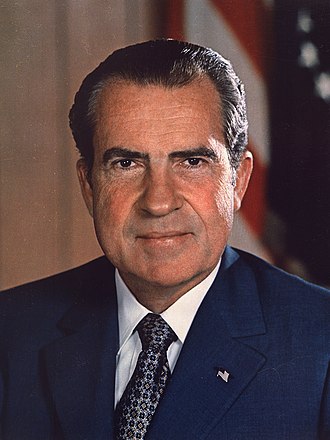
Richard M. Nixon served as the 37th President of the United States from January 1969 until his resignation in August 1974. In February 1971, he ordered the installation of a secret voice-activated taping system in the White House to preserve a historical record of his administration. Until the system's existence was revealed and dismantled in July 1973, the tapes captured Nixon directing major foreign policy initiatives, such as the opening to China, as well as his central role in the Watergate cover-up.
What Nixon talks about on the tapes
White House operations 4,718Presidential scheduling 2,225Public relations 1,784Presidential schedule 1,782Vietnam War 1,693Logistics 1,650Manolo Sanchez 1,626White House communications 1,400White House administration 1,399Presidential communication 1,243Henry Kissinger 1,191Foreign Policy 1,183
Conversations (21,010)
— Page 142 of 211President Nixon met with Marjorie P. Acker to request an edited version of a document he was preparing. He specifically asked for a copy of his remarks that removed his personal stylistic flourishes. The conversation concluded with Nixon instructing Acker to deliver the revised text to his office immediately.
President Nixon met with Marjorie P. Acker to discuss the administrative preparation of his upcoming remarks. The President specifically requested that Acker ensure a word count for the document was completed promptly. He directed her to assign the task to an appropriate staff member to ensure the work was finalized.
President Nixon and his personal secretary, Rose Mary Woods, coordinate administrative arrangements regarding the preparation of remarks by Marjorie P. Acker. The discussion centers on ensuring that the necessary staffing and drafting assignments are finalized for upcoming executive communications. No further policy or strategic developments are addressed in this brief exchange.
President Nixon and his personal secretary, Rose Mary Woods, discuss the status of administrative edits and numerical revisions to a set of remarks. The two coordinate the processing of these changes, with Woods confirming that her staff is currently tallying the updated figures. Nixon requests that she notify him as soon as the final count is reconciled.
President Nixon held an brief, informal discussion with an unidentified individual within the Executive Office Building. While the audio recording is largely unintelligible, the brief exchange reflects the President expressing his personal appreciation to the guest. No substantive policy developments or administrative decisions are discernible from the available transcript.
President Nixon and Alexander Butterfield met to coordinate the President's participation in a testimonial dinner for Thomas B. McCabe in Pennsylvania. They discussed the logistics of the event, including the potential for a presidential appearance via a pre-recorded videotape message and the management of the guest list. Butterfield sought final confirmation on whether the President would attend in person or opt for alternative remote arrangements.
President Nixon and Alexander P. Butterfield held a brief meeting to coordinate preparations for an upcoming televised address. The discussion centered on logistics for the broadcast, specifically arranging a phone call to Thomas A. Pappas and managing production details like makeup and wardrobe. Nixon evaluated his attire, comparing suit options from previous major events to determine his appearance for the final draft of the speech.
President Nixon initiates a brief telephonic request through the White House operator to reach staff member Raymond K. Price, Jr. This communication serves as a logistical bridge to connect the President with one of his speechwriters. No substantive policy discussions occur during this short exchange, as it is strictly limited to facilitating a follow-up conversation.
President Nixon instructed the White House operator to place an outgoing telephone call. The exchange serves primarily as a logistical connection to facilitate further communication. No substantive policy matters or major decisions were recorded during this brief administrative interaction.
President Nixon and speechwriter Raymond K. Price, Jr. discuss the editing and refinement of an upcoming foreign policy address. The President focuses on shortening the text to hit specific word count targets for a broadcast documentary while avoiding unnecessary duplication with a separate, forthcoming speech. They also touch upon foreign policy philosophy and specific concerns raised by Henry Kissinger regarding the Vietnam section of the draft.
President Nixon and speechwriter Raymond K. Price, Jr. discussed the development and finalization of a foreign policy-themed radio address. Nixon provided specific editorial guidance regarding the tone and length of the speech, expressing a desire for a realistic narrative rather than overly aggressive rhetoric. The pair reached a consensus on the draft's direction, with Price tasked to refine the material before final submission.
President Nixon directs the White House operator to contact speechwriter and aide Raymond K. Price, Jr. The purpose of this brief communication is to facilitate a meeting between the President and Price at the Executive Office Building. No further substantive policy matters were discussed during this request.
President Nixon held a brief exchange with the White House operator to facilitate a telephonic connection. The conversation functioned primarily as a routine administrative communication to initiate further outreach. No substantive policy matters or major developments occurred during this brief interaction.
President Nixon met with speechwriter Raymond K. Price, Jr. to refine upcoming radio addresses and a campaign speech scheduled for the days leading up to the 1972 election. The discussion focused on adjusting the rhetoric surrounding Vietnam, tax policy, and welfare to ensure political impact and clarity. Nixon also emphasized the need for a non-partisan, unifying tone for his post-election remarks, specifically addressing the recent campaign tensions and the role of the "New American Majority."
President Nixon contacted the White House operator to issue a formal request for Charles W. Colson to report to his office in the Executive Office Building. This brief administrative exchange served to coordinate a direct meeting between the President and his special counsel. No further substantive policy matters were discussed during this brief communication.
President Nixon contacted the White House operator to facilitate an outgoing call to speechwriter Raymond K. Price, Jr. This brief administrative interaction served as a routing request to connect the President with a member of his staff. No substantive policy discussions or decisions occurred during the exchange.
President Nixon and speechwriter Raymond Price consult on the strategy for upcoming public addresses to avoid appearing overly scripted or arrogant. Nixon decides against using a formal written text, favoring a more spontaneous delivery through talking points to project a less complacent tone. The pair determines that both potential broadcast opportunities should rely on this improvised format rather than a prepared speech.
President Nixon communicated with the White House operator to facilitate an outgoing call. The brief exchange focused on the status and reliability of an unidentified individual. This interaction served primarily as a logistical step in managing the President’s private correspondence and communication network.
President Nixon met with his personal secretary, Rose Mary Woods, to coordinate the final editing and typing of an important speech draft. The President emphasized the need for a clean, finalized version and instructed Woods to distribute the completed portions to Press Secretary Ronald L. Ziegler’s office. This brief exchange focused on streamlining the document preparation process to ensure timely dissemination of the revised text.
President Nixon initiates a brief, informal communication with the White House operator. The exchange is limited to a short, possibly religious or perfunctory remark, as indicated by the transcript's focus on a single utterance. No substantive policy discussions or administrative decisions occur during this brief interaction.
President Nixon and speechwriter Raymond K. Price, Jr. discuss the tone and political messaging of upcoming public remarks. Nixon expresses concern that a specific draft sounds overly smug and complacent, advising against the inclusion of certain policy details like those related to banking. The brief consultation serves to refine the President's rhetorical strategy to ensure his presentation does not alienate the audience.
President Nixon held a brief one-minute meeting with an unidentified individual in the Old Executive Office Building. Because the majority of the brief exchange consists of withdrawn material or is otherwise undefined in the records, no substantive policy discussions or actionable decisions are documented. The brief nature of the encounter suggests an informal or routine interaction that yielded no formal historical developments.
President Nixon instructed the White House operator to initiate a telephone call to Thomas A. Pappas. The brief exchange served as a logistical coordination to establish communication with the prominent businessman and political donor. The conversation concluded with the operator confirming the request and proceeding to place the call.
President Nixon and Charles Colson met to discuss campaign strategy in the final days before the 1972 election, focusing on counter-attacking George McGovern's campaign. They reviewed media coverage of political demonstrations and agreed on the necessity of portraying the McGovern camp as being behind the chaotic protests and "dirty" campaign tactics. Nixon instructed his staff to aggressively utilize surrogates and negative advertisements to highlight issues like welfare and taxes while framing the opposition as desperate and failing. The discussion also included plans for the President's upcoming speeches and strategies for managing voter concerns regarding the Vietnam War.
President Nixon received a status update from the White House operator regarding a pending telephone call with Thomas A. Pappas. The operator informed the President that Pappas was currently unavailable but had been instructed to return the call. No further substantive policy matters were discussed during this brief administrative exchange.
President Nixon and Charles Colson confer via telephone to coordinate communications with W. Richard Howard. The discussion centers on logistics and the facilitation of outreach to Howard, involving White House operators and staff members to manage the call flow. The primary objective is the execution of these specific external contacts as part of the administration's ongoing agenda.
President Nixon contacted the White House operator to facilitate a telephone connection with his aide, Stephen B. Bull. This brief exchange served as a routine administrative request to reach a member of the President's personal staff. No other substantive policy or political matters were discussed during this short communication.
President Nixon consulted with his aide Stephen B. Bull to coordinate his midday schedule and personal appointments. Nixon directed Bull to reschedule his barber visit to 12:00 pm to ensure efficiency. Additionally, the President requested that H.R. Haldeman be summoned to his office to meet as soon as he became available.
President Nixon initiates a brief, informal interaction with the White House operator to place an outgoing call. This routine administrative exchange facilitates the President's telephonic communications during his time in the Executive Office Building. No policy matters or substantive political decisions are recorded during this brief technical connection.
President Nixon and Stephen B. Bull briefly coordinated their schedules to facilitate an upcoming meeting. The discussion focused on confirming timing for a later appointment, which Bull committed to attending at noon. This exchange served as a routine administrative interaction to manage the President's daily calendar.
President Nixon met with his personal valet, Manolo Sanchez, in the Old Executive Office Building for a brief, private discussion. The recording largely consists of a withdrawn segment containing personal material, indicating the exchange was focused on private administrative or domestic matters rather than official policy. No significant political developments or substantive government decisions were recorded during this short encounter.
President Nixon consulted Alexander P. Butterfield to locate H.R. Haldeman for a scheduled meeting. Butterfield informed the President that Haldeman was away from the White House and expected to return around 1:00 p.m. Nixon acknowledged the report and indicated there was no issue with the delay.
President Nixon met briefly with Alexander P. Butterfield in the Old Executive Office Building to conduct official administrative business. While the specific nature of their discussion remains undocumented due to the lack of a transcript, this encounter reflects the routine logistical coordination occurring between the President and his deputy assistant. No major policy developments or decisive actions are discernable from this short interaction.
President Nixon contacted the White House operator to facilitate a telephone connection. The primary purpose of the brief interaction was to place a call to Stephen B. Bull. No further policy or administrative matters were addressed during this exchange.
President Nixon held a brief, informal exchange with a White House operator to facilitate a connection for a subsequent telephone call. The interaction served as a functional necessity for presidential communications management. No substantive policy discussions or significant strategic decisions occurred during this brief contact.
President Nixon instructed Stephen B. Bull to notify him immediately upon the arrival of his barber. The conversation served to coordinate the President's personal grooming appointment with his ongoing work on a pending draft. No other policy matters were discussed during this brief administrative exchange.
President Nixon consulted with his aide Stephen B. Bull regarding the status of a pending document draft. The brief exchange centered on tracking the progress of this material, confirming that the President was waiting for the paperwork to be finalized. No further actions were specified beyond the immediate expectation of the draft's arrival.
President Nixon consulted with his aide, Stephen B. Bull, regarding his immediate daily schedule. Bull confirmed that the President’s barber had arrived at the White House for an appointment. Nixon acknowledged the update and prepared to depart for the grooming session.
President Nixon and personal aide Stephen B. Bull held a brief, informal encounter in the Old Executive Office Building. The exchange appears to be personal in nature rather than a discussion of policy or administration business. No substantive political decisions or official actions were recorded during this brief interaction.
President Nixon and Henry Kissinger discussed the ongoing Vietnam peace negotiations, focusing on strategies for communicating with South Vietnamese President Nguyen Van Thieu and managing domestic press relations. The participants evaluated potential candidates for an emissary to Thieu, including John Connally, to deliver a firm message regarding the settlement agreement. Additionally, they reviewed the timing of the troop withdrawal plans and the political impact of the peace terms ahead of the 1972 election.
President Nixon called Thomas A. Pappas to express gratitude for his successful organization of a recent campaign rally and dinner in Boston. The two discussed the positive feedback from First Lady Pat Nixon regarding the event's success despite the presence of disruptive protesters. Both men agreed that the unruly behavior of the demonstrators ultimately benefited the campaign's image as they looked toward the final days of the 1972 election.
President Nixon initiated a brief telephone communication with the White House operator to facilitate a call to Stephen B. Bull. This exchange served as a routine administrative request to connect the President with his personal aide. No further policy or substantive matters were discussed during this brief connection.
President Nixon met with an unidentified individual in the Old Executive Office Building to discuss scheduling matters. The brief interaction focused on coordinating the President's calendar and managing his daily itinerary. No significant policy decisions or major developments were recorded during this session.
President Nixon held a meeting in his Executive Office Building space with an unidentified individual for a brief consultation. The primary substance of the discussion involved the formal acceptance of an unspecified item or proposal. The interaction concluded with the visitor departing the office while the President remained to continue his duties.
President Nixon consulted with speechwriter Raymond K. Price, Jr. to coordinate the final preparations for his upcoming address titled "Look to the Future." The discussion centered on finalizing the word count of the speech to ensure it met specific rhetorical requirements. The President concluded the meeting by directing Price to follow up via a return telephone call once the revisions were complete.
President Nixon met with speechwriter Raymond K. Price, Jr. to review and finalize the content of his upcoming address, titled "Look to the Future." The discussion centered on adjusting the speech’s word count and implementing specific editorial revisions to sharpen the message. The meeting concluded with the President confirming the necessary modifications to prepare the text for public delivery.
President Richard M. Nixon rehearses a campaign speech titled "Look to the Future," intended for public broadcast in the final days of the 1972 election. During this session, he outlines his administration's achievements, specifically regarding foreign policy, peace negotiations, and his vision for a future free from war. He also articulates his domestic platform, emphasizing a commitment to reducing federal bureaucracy and shifting responsibility back to states and local governments.
President Nixon requested assistance from the White House operator to place an outgoing call. The interaction primarily served as a brief administrative exchange to facilitate communication. No further substantive policy matters or decisions were recorded during this brief contact.
President Nixon met with his personal valet, Manolo Sanchez, in the Old Executive Office Building. The brief interaction focused on the provision of refreshments for the President. No significant policy decisions or political developments occurred during this routine service encounter.
President Nixon met with his personal valet, Manolo Sanchez, in the Old Executive Office Building to discuss the President's personal schedule and administrative arrangements. The discussion focused on logistical coordination regarding the President's daily appointments and movements. No major policy developments resulted from this brief interaction, which served primarily to manage the internal operations of the White House.
President Nixon held a private meeting with an unidentified individual in the Old Executive Office Building to discuss unspecified administrative or political matters. Due to the lack of available transcript records or descriptive metadata, the specific substance of the dialogue remains historical conjecture. No verifiable decisions or action items were documented during this recorded session.
President Nixon coordinated with aide Stephen B. Bull to adjust the scheduling and logistical arrangements for an upcoming televised message. They moved the recording time to 4:15 p.m. to provide the production team with additional preparation time in the Queens room. The President also confirmed his wardrobe choice, selecting the dark blue suit he had worn at the Republican National Convention.
President Nixon and Stephen B. Bull briefly conferred regarding a sensitive scheduling matter or administrative task that required urgent attention. Nixon emphasized the necessity of the project, instructing Bull to finalize the work by 4:15 p.m. Bull acknowledged the priority of the assignment and committed to completing it within the specified timeframe.
President Nixon spent this session rehearsing his "Look to the Future" speech, a reflection on his administration's philosophy and policy goals. He focused on themes of individual responsibility, the need to reduce federal bureaucratic overreach, and the pursuit of peace with honor in Vietnam. Nixon emphasized that his administration would not be pressured by election deadlines to accept a peace agreement that fell short of his core requirements, including the safe return of prisoners of war.
President Nixon met briefly with Manolo Sanchez before convening with Press Secretary Ronald L. Ziegler to coordinate final arrangements for the President's upcoming “Look to the Future” speech. The discussion focused on media strategy, including the management of press relations and the inclusion of a photograph opportunity featuring White House photographer Oliver Atkins. The participants specifically addressed the logistical planning for the speech's taping and its dissemination to the press, including the Washington Post.
President Nixon instructed the White House operator to place a telephone call to First Lady Pat Nixon. The brief interaction served as a routine administrative request to facilitate private communication between the President and his wife. No policy matters or significant political developments were addressed during this connection.
President Nixon and Charles Colson met to discuss campaign strategy and address the political fallout from recent heckling incidents targeting the First Family in Boston. The discussion encompassed media relations, public opinion regarding the First Lady, and an analysis of shifting voter demographics, particularly among Catholics, Jewish voters, and labor groups. They further assessed the political landscape for the upcoming election, weighing the influence of campaign surrogates and the effectiveness of current messaging.
President Richard Nixon and First Lady Pat Nixon held a brief telephone conversation to coordinate the President's upcoming schedule. The primary focus of the discussion concerned the timing and preparation for a forthcoming speech on health and a television broadcast. The exchange served as a logistical check-in regarding these professional commitments.
President Nixon and H.R. Haldeman met briefly to finalize outstanding administrative matters following the President's daily schedule. The two reviewed remaining tasks, referred to as "odds and ends," to ensure the completion of their immediate agenda. No specific policy decisions were recorded during this short transitionary discussion.
President Nixon and H.R. Haldeman met to coordinate final logistics for the 1972 presidential campaign, focusing on radio addresses, polling strategies, and scheduling for upcoming candidate support calls. The discussion covered concerns regarding campaign disruptions, such as heckling at events, and the ongoing fallout from the Watergate investigation, including the roles of John Mitchell and Donald Segretti. Additionally, the President and his staff discussed the rollout of national health insurance policy and their desire to maintain a distance from certain political candidates while managing public perceptions through television and media engagement.
President Nixon consulted with John Ehrlichman to express strong opposition to language regarding health maintenance organizations (HMOs) in an upcoming health care speech. Nixon directed that references to HMOs be removed and mandated that the term "national health insurance" be replaced with "comprehensive health insurance" to distance his proposal from socialist-leaning government programs. The conversation concluded with Nixon emphasizing his skepticism toward the existing legislative program and calling for a rigorous internal review of the administration's health care policy.
President Nixon met with his personal valet, Manolo Sanchez, in the Old Executive Office Building for a brief, informal interaction. The discussion centered on the serving of wine, reflecting a routine service interaction rather than substantive policy deliberation. This brief engagement concluded shortly thereafter as Sanchez departed the office.
President Nixon met with his personal valet, Manolo Sanchez, in the Old Executive Office Building. The primary purpose of the brief interaction was to convey a specific message intended for an unidentified individual. No further policy-related developments were recorded during this exchange.
President Nixon and his personal secretary, Rose Mary Woods, met to discuss final preparations for a scheduled radio address regarding national health policy. They reviewed specific changes to the script and addressed the logistical handling of the press copies for the upcoming broadcast. The conversation served to ensure the speech materials were finalized and ready for distribution prior to the President’s campaign engagement.
President Nixon met with his personal valet, Manolo Sanchez, in the Old Executive Office Building. The brief discussion centered on coordinating the President's upcoming professional schedule and administrative arrangements. The meeting concluded with Sanchez departing the office shortly thereafter.
President Nixon met with Rose Mary Woods and Marjorie P. Acker to review administrative tasks and personal correspondence during the final days of the 1972 campaign. The discussion centered on finalizing edits for the President's "Look to the Future" speech and handling gift-related communications, including a painting and a message from Amory Houghton, Jr. The participants also managed various campaign-related notes and scheduling logistics to ensure the President's materials were prepared for upcoming public events.
President Nixon instructed the White House operator to facilitate a telephone call with his son-in-law, Dwight David Eisenhower II. The President requested that the operator connect Eisenhower as soon as he arrived at the Executive Office Building around 7:00 pm. This brief exchange served to coordinate communication between the two individuals.
President Nixon contacted the White House operator to facilitate a telephone connection with John K. Andrews, Jr. This brief communication served solely as a logistical request to initiate a call with Andrews. No further substantive discussion took place during this specific exchange.
President Nixon consulted with the White House operator to facilitate an outgoing call. This brief interaction served as a logistical step to connect the President with another party. No substantive policy discussions or significant political developments occurred during this brief exchange.
President Nixon met with David C. Hoopes to discuss administrative logistics and scheduling, including the management of an unknown woman’s office space and the removal of specific items from her desk. The brief exchange also touched upon travel or personnel logistics involving labor considerations and scheduling, concluding with requests for refreshments. The conversation served primarily as a coordination meeting for the President’s immediate office operations.
President Nixon consulted with John K. Andrews, Jr. to clarify the total number of speeches in a planned series, ensuring that a previous address on labor is included to bring the final count to 14. The discussion emphasized maintaining accuracy in the series structure and documentation for a future collection of these speeches. Nixon further affirmed his approval of the speech goals outlined in Andrews's recent memorandum, specifically citing the importance of the dignity of work.
President Nixon and his son-in-law, David Eisenhower, discuss the logistics and scheduling of upcoming campaign broadcasts. The conversation focuses on coordinating radio and television appearances, including the involvement of First Lady Pat Nixon. The primary objective is to manage the President's media schedule in the final days of his reelection campaign.
President Richard Nixon met briefly with his son-in-law, David Eisenhower, in the Old Executive Office Building. The conversation served as a private, informal check-in between the two family members. No specific policy decisions or significant administrative actions were recorded during this brief encounter.
President Nixon met with an unknown individual to coordinate the delivery of a book or document to Raymond K. Price, Jr. The participant requested that the materials be forwarded to the "rate crisis office" for further handling. This brief interaction focused specifically on the logistical transfer of these internal records.
President Nixon held a brief meeting with an unidentified individual in the Old Executive Office Building to discuss administrative or political matters. Due to the lack of audible or documented dialogue in the recording, the specific subjects addressed and any resulting decisions remain unknown. This interaction serves as an example of the undocumented meetings frequently captured by the White House taping system during this period.
President Nixon initiates a brief telephone exchange with the White House operator to place an outgoing call to speechwriter and advisor Raymond K. Price, Jr. The interaction serves solely as a logistical request to connect the President with his staff member. No substantive policy discussions or decisions occur during this brief communication.
President Nixon met with his personal valet, Manolo Sanchez, in the Old Executive Office Building. The primary purpose of this brief encounter was for Sanchez to assist the President with his morning grooming. No substantive policy or political matters were discussed during this routine personal service.
President Nixon and H. R. Haldeman discussed the logistics of candidate-related telephone calls and the distribution of the President’s campaign speeches. Nixon requested that specific recipients be prioritized for direct outreach while delegating others to a general list for supplementary contact. Additionally, the pair briefly reviewed Haldeman’s daily schedule and upcoming meetings.
President Nixon met briefly with Marjorie P. Acker in the Old Executive Office Building for a short, informal inquiry. The exchange lasted only one minute, providing no substantial policy discussion or strategic deliberation. Consequently, no specific decisions or action items were recorded during the interaction.
President Nixon and his personal secretary Rose Mary Woods coordinate the preparation and distribution of a forthcoming list of presidential telephone calls. Nixon instructs Woods to withhold the current 'reading copy' of the document after noting minor corrections on his own version. They conclude by prioritizing the finalization of these materials before release through Press Secretary Ronald L. Ziegler.
President Richard M. Nixon and his personal secretary Rose Mary Woods met to discuss administrative matters, campaign strategy, and media coverage regarding the 1972 election. They reviewed the President's upcoming schedule, including radio speeches and a list of telephone calls, while also critiquing the perceived hostility and desperation of Democratic campaign tactics. Additionally, the pair coordinated logistics for official photographs and discussed recent television appearances by political allies like John Connally.
President Nixon held a brief introductory meeting with Mary A. ("Toni") Sidley in his Old Executive Office Building suite. The encounter served primarily as a formal exchange of greetings. No policy discussions or specific administrative actions occurred during the one-minute interaction.
President Nixon held a brief, informal exchange with a White House operator that concluded with a shared prayer. This interaction served as a moment of personal reflection or religious observance between the President and a staff member. No policy matters or administrative actions were addressed during this short recording.
President Nixon met with Stephen B. Bull and Raymond K. Price, Jr. to coordinate 1972 reelection campaign messaging and streamline the President's telephone scheduling. The discussion focused on establishing a standardized endorsement and communication protocol for political candidates across various states. Nixon also directed the drafting of a concise statement emphasizing his administration's forward-looking legislative and national priorities for the next four years.
President Nixon consulted with an unidentified individual regarding the scheduling of upcoming telephone calls. The discussion focused on political strategy, specifically involving the potential support of a candidate for a Congressional seat. The participants concluded the brief meeting with instructions to finalize these outreach efforts.
President Nixon consulted with speechwriter Raymond K. Price, Jr. to request a specific addition to an upcoming foreign policy address. Nixon directed Price to draft a paragraph framing the 1972 election as a mandate to strengthen his hand in future international negotiations. The President emphasized the need to convey to world leaders that the American public supports his strategic shift from confrontation to cooperation, requesting the revision be completed by 10:00 am.
President Nixon met with an unknown individual to review his daily schedule and manage his outgoing telephone correspondence. Following the meeting, the President recorded an audio message intended for Thomas B. McCabe. The discussion focused on strategic support for McCabe’s political campaign efforts in Connecticut.
President Nixon instructed the White House operator to place a series of telephone calls to several Republican senators, including Edward W. Brooke, Margaret Chase Smith, Clifford P. Case, Clifford P. Hansen, and Mark O. Hatfield. The President aimed to reach these individuals, who were largely occupied with campaign activities in their respective home states, for brief consultations. The operator was tasked with locating and connecting the President to these lawmakers as part of his outgoing communication schedule.
President Nixon and H. R. Haldeman met to discuss various administrative tasks, including the President recording gratitude messages for campaign supporters like Thomas B. McCabe and addressing health policy. The conversation also touched upon the President's upcoming phone calls, including one to Margaret Chase Smith. These interactions focused on the President's outreach efforts and the preparation of materials for his official agenda.
President Nixon contacted the White House operator to initiate a series of outbound telephone calls to several United States Senators. The President requested that the operator locate and connect him specifically to Senator Margaret Chase Smith in Maine along with several other unnamed members of the Senate. This brief administrative interaction served to facilitate the President's personal outreach to congressional leadership.
President Nixon briefed Senator Edward Brooke on the progress of peace negotiations regarding the Vietnam War, confirming that a significant breakthrough had been achieved on core issues such as a ceasefire, the return of POWs, and South Vietnamese self-determination. Nixon cautioned the Senator against speculating on the timing of a final agreement, indicating that negotiations would likely conclude after the upcoming election to ensure that technical details were properly settled. The President emphasized his commitment to securing a durable peace rather than rushing an imperfect settlement like the 1968 bombing halt.
President Nixon and Senator Edward W. Brooke discuss the upcoming 1972 election and the status of Vietnam peace negotiations. Nixon conveys confidence regarding the progress of the peace talks, emphasizing the critical importance of finalizing technical details to avoid the pitfalls of previous agreements. The two men briefly touch upon political campaign dynamics in Massachusetts and the necessity of maintaining discretion regarding the ongoing diplomatic process.
President Nixon briefed Senator Clifford P. Case on the status of Vietnam peace negotiations, emphasizing that a major breakthrough had been achieved regarding prisoners of war, a ceasefire, and an electoral commission. Nixon urged Case to maintain a supportive public stance while reiterating that the administration remained cautious to ensure the final agreement was substantive rather than a mere political maneuver. The President acknowledged that remaining issues concerning force withdrawals were still being negotiated but expressed confidence in a successful resolution.
President Nixon consulted with Senator Clifford P. Case regarding the status of ongoing peace negotiations and the complexities involved in finalizing an agreement. The President addressed lingering challenges related to prisoners of war and ceasefire terms while expressing a desire for continued cooperation with the Senator. Additionally, Nixon requested that Case help manage public expectations and political messaging regarding the President’s campaign travel schedule, specifically mentioning a competitive race in Oklahoma.
President Nixon and aide Stephen B. Bull reviewed the President's upcoming schedule, specifically focusing on logistics for meetings with the Council on Environmental Quality and the Soviet Academy of Sciences. The discussion centered on coordinating necessary photograph opportunities, including sessions with Beatrice Willard and Dixie Lee Ray. They also briefly touched upon the status of the President's recent telephone correspondence, including a call with Senator Clifford P. Case.
President Nixon consulted with Senator Mark O. Hatfield and Mrs. Antoinette Hatfield regarding the status of the 1972 election and ongoing Vietnam peace negotiations. Nixon emphasized the importance of securing a vote of confidence to support the administration's progress in securing a breakthrough in the peace talks. The parties also exchanged pleasantries regarding a portrait of First Lady Pat Nixon painted by Elizabeth Grant.
President Nixon met briefly with Senator Mark Hatfield and his wife to express his support for the Senator's re-election campaign in Oregon. Nixon emphasized the importance of returning Hatfield to the Senate and urged him to focus on maximizing voter turnout. The President also discussed upcoming campaign travel plans and referenced an impending policy speech regarding the situation in Vietnam.
President Nixon contacted the White House operator to request a telephone connection with his aide, Stephen B. Bull. This brief exchange served as a logistical bridge to facilitate direct communication with a member of his staff. No further substantive policy discussions occurred during this brief interaction.
President Nixon held a brief exchange with a White House operator to facilitate a routine communication task. The conversation concluded with a casual pleasantry regarding the operator's future availability. No substantive policy matters or administrative decisions were addressed during this interaction.
President Nixon instructed his aide, Stephen B. Bull, to delay an upcoming meeting with Soviet Ambassador Anatoliy Dobrynin by 15 minutes. Nixon emphasized that the appointment needed to be extended to a half-hour duration to account for translation time. Additionally, the President confirmed the schedule for a subsequent brief meeting with Beatrice Willard at 10:45 am.