Kennedy, David M.
David M. Kennedy served as President Nixon's first Secretary of the Treasury from January 1969 until February 1971. During the initial part of the White House taping period, he transitioned from this role to become an Ambassador at Large, a position he held from February 1971 to March 1973. Concurrently, he was appointed the U.S. Ambassador to NATO in March 1972, serving until February 1973, thus his appearance on the tapes would relate to his diplomatic roles concerning international economic policy and NATO.
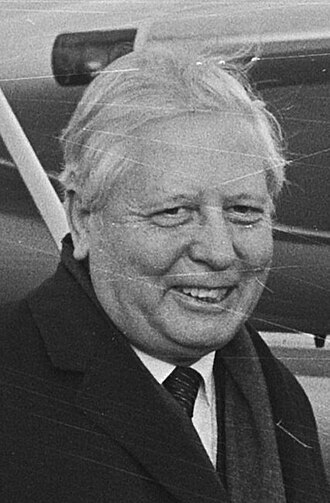
President Nixon met with David M. Kennedy and General Alexander Haig to discuss the strategic objectives and logistical planning for Kennedy’s upcoming diplomatic tour of Vietnam, Indonesia, Micronesia, Hong Kong, and Thailand. The President emphasized the critical need for an expert evaluation of South Vietnam’s post-withdrawal economic viability and urged Kennedy to consult directly with local leaders and business figures to bypass the perceived limitations of State Department bureaucracy. Additionally, Nixon provided specific instructions for managing regional alliances, including reassuring Thai leadership of U.S. commitment and addressing the political complexities of Micronesian governance.
President Nixon and his Cabinet met to discuss the ongoing challenge of inflation and rising construction costs, focusing on the administration's strategic options for economic stabilization. Dr. Paul McCracken reviewed current inflationary trends and labor market data, outlining a spectrum of potential responses ranging from maintaining current fiscal policies and targeted interventions to implementing more aggressive measures like wage and price controls. The meeting served as a forum to evaluate the efficacy of various regulatory mechanisms, such as the National Commission on Productivity and the suspension of the Davis-Bacon Act, while weighing the political and practical risks of further government intervention in the economy.
President Nixon and the Council on International Economic Policy (CIEP) met to review global economic trends, specifically focusing on the United States' competitive position regarding trade, technological exports, and shifting GNP shares among developed and developing nations. The participants discussed the challenges posed by Japanese industrial policies, the role of multinational corporations, and potential antitrust law reforms to better align with international business realities. The meeting served to define the CIEP’s procedural structure and establish priorities for future foreign economic initiatives, including trade legislation and adjustment assistance programs.
President Nixon met with Franco Mario Malfatti, President of the European Commission, and various U.S. officials to address rising protectionist tensions between the United States and the European Economic Community (EEC). The discussion focused on the necessity of reciprocal trade concessions, specifically identifying how minor, mutually beneficial adjustments—such as those regarding citrus and textiles—could alleviate domestic political pressures and prevent broader trade conflicts. Nixon emphasized the importance of finding practical solutions to avoid protectionism, while Malfatti discussed the EEC’s ongoing efforts toward economic integration and the logistical challenges posed by the community's potential expansion. To facilitate progress, the parties agreed to coordinate follow-up efforts, including an upcoming diplomatic mission by Ambassador David Kennedy to Europe and Asia.
President Nixon met with David M. Kennedy and Alexander M. Haig, Jr. to discuss Kennedy’s recent diplomatic trip to Asia, focusing on economic and political conditions in Vietnam, Indonesia, and Thailand. They evaluated the effectiveness of U.S. aid programs and the conduct of embassy staff, with Nixon expressing a strong desire to replace existing economic advisors with private-sector CEOs to better promote stability and self-reliance. Additionally, Nixon directed Haig to aggressively reduce the number of Peace Corps personnel in the Pacific territories, citing concerns over their behavior and political leanings.
President Nixon and a wide-ranging group of Cabinet members, advisors, and Congressional representatives met to discuss the growing national energy crisis and the necessity of transitioning to nuclear power. AEC Chairman Glenn Seaborg and other experts detailed the technological, environmental, and economic advantages of the liquid metal fast breeder reactor, emphasizing its ability to maximize fuel efficiency and provide long-term, pollution-free energy. The participants concluded that a strong national commitment, including significant federal funding and industry collaboration, is essential to accelerate the development of demonstration reactors and ensure future energy independence.
President Nixon met with his economic advisors and Henry Kissinger to strategize on managing mounting domestic and international pressures regarding textile, steel, and shoe import quotas. The discussion focused on leveraging diplomatic and economic inducements, such as trade initiatives and aid, to secure favorable voluntary restraint agreements with Japan, Taiwan, Hong Kong, and Korea. The participants concluded that a coordinated strategy involving high-level diplomatic outreach followed by technical negotiations was necessary to address industry concerns and prevent restrictive legislative action.
President Nixon and his Cabinet met to receive a briefing on international affairs and domestic policy, with a focus on Secretary of State William P. Rogers' recent diplomatic travels to the Middle East and the feasibility of desalinization technology. Rogers reported on his efforts to stabilize the Middle East through ceasefire maintenance and discussed the geopolitical concerns of various regional leaders. Dr. Edward E. David Jr. and other experts presented a detailed plan to advance domestic water desalinization and nuclear power capabilities, with the President calling for a major, accelerated federal effort to ensure American technological leadership. The meeting concluded with a brief status report from Treasury Secretary David M. Kennedy regarding the current international monetary situation and the fluctuations of the dollar.
President Nixon met with David M. Kennedy and Peter G. Peterson to discuss international trade negotiations and domestic economic performance. The group reviewed the status of textile negotiations involving Japanese Minister Takeo Fukuda and analyzed updated first-quarter Gross National Product (GNP) figures. The participants noted that the upwardly revised GNP data, scheduled for public release that Friday, represented positive economic news for the administration.
President Nixon met with his Cabinet members to discuss the delicate political landscape surrounding the administration's efforts to open communications with the People's Republic of China. The conversation centered on the necessity of maintaining strict discretion to avoid premature public speculation, which could jeopardize sensitive diplomatic negotiations and create political vulnerabilities. Nixon emphasized the importance of a unified front among Cabinet members to manage domestic and international expectations as the policy shift progressed.
President Nixon and David M. Kennedy discussed the strategic necessity of the recently announced wage-price freeze, agreeing that proactive executive action was essential to preempt adverse Congressional intervention. They reviewed the domestic and international economic pressures that necessitated the decision, noting that delaying the measure would have been politically and economically disastrous. The conversation concluded with Nixon encouraging Kennedy to travel to Europe to manage the international diplomatic fallout and reassure foreign partners.
President Nixon convened a large meeting with Vice President Agnew and his Cabinet to discuss the national economy and the "New Economic Policy" he had announced the previous day. Key topics included the wage-price freeze, import surcharges, tax relief, budget cuts, and the convertibility of the dollar. The administration sought Cabinet support for these initiatives and discussed their potential impact on international trade and domestic employment.
President Nixon met with the Council on International Economic Policy (CIEP) and key economic advisors to discuss the administration's post-August 15 New Economic Policy (NEP) and future international trade strategy. Peter G. Peterson led a presentation analyzing the shortcomings of global liberal trading systems and the challenges posed by foreign competitors like Japan, while other officials addressed the domestic economic impact, labor relations, and the status of ongoing monetary negotiations. The President emphasized the need for a firm but diplomatic approach toward Japan and directed his team to maintain the offensive on domestic economic policy while keeping options flexible regarding international monetary reform.
President Nixon, Pat Nixon, and the Cabinet met with their spouses to discuss the implementation and public perception of the administration’s New Economic Policy. Secretary of the Treasury John Connally led a comprehensive briefing on the wage-price freeze, tax reforms, and international monetary adjustments aimed at curbing inflation. The discussion emphasized the necessity of these economic measures for restoring national growth, managing federal expenditures, and building public and congressional support for the administration's program.
President Nixon, Vice President Agnew, and members of his Cabinet met to coordinate a unified administration strategy ahead of critical International Monetary Fund (IMF) meetings and ongoing global trade negotiations. The discussion emphasized the necessity of maintaining the recently imposed 10% import surcharge and a firm bargaining stance to address the nation's economic balance of payments and reshape the international monetary system. Nixon and his advisors agreed that while foreign partners would likely criticize U.S. policy, maintaining domestic political support and correcting long-standing trade imbalances remained the administration's primary objective.
President Nixon met with John Ehrlichman and CIA Director Richard Helms to discuss the President's access to sensitive, classified intelligence documents, specifically concerning past operations like the Bay of Pigs and the assassination of Ngo Dinh Diem. Nixon emphasized his need for full information regarding historical foreign policy and intelligence "dirty tricks" to prepare for upcoming diplomatic negotiations and to manage political exposure. Following this, Nixon met with David Kennedy, Henry Kissinger, and Peter Peterson to strategize on high-stakes textile trade negotiations with Japan, where they aimed to secure an agreement by applying pressure while maintaining the credibility of the U.S. position.
President Nixon met with his Cabinet officers to discuss a variety of domestic and international issues, including transportation leadership, government funding through a continuing resolution, and the cultivation of opium poppies in Turkey. The conversation also touched upon administrative transitions, such as the departure of Secretary of Agriculture Clifford Hardin, and strategies for managing the national economy and price controls. Nixon emphasized the importance of maintaining clear leadership and coordination across departments to ensure the success of his domestic policy initiatives.
President Nixon met with his Vice President and Cabinet to discuss the state of the U.S. economy, the administration's fiscal policy, and the upcoming 1973 budget. Key areas of focus included interpreting unemployment data—specifically the impact of new entrants to the workforce—and managing inflation through Phase II price and wage controls. Nixon urged his department heads to aggressively implement approved spending programs to stimulate the economy, while simultaneously directing them to more effectively communicate and promote the administration's economic achievements and social policy investments to the public.
President Nixon met with his Cabinet and senior staff to debrief them on the results and implications of his recent diplomatic trip to the People's Republic of China. The President emphasized that the primary success of the visit was the establishment of a new communication channel between the two nations, which he argued was essential for managing long-term stability and reducing the potential for future conflict. Nixon shared his impressions of Chinese leadership, particularly his discussions with Chou En-lai, noting the stark ideological differences while highlighting common strategic interests, such as peace in the Pacific and balancing influence against the Soviet Union. The discussion concluded with a focus on how this opening could be leveraged to reshape international relations and manage regional tensions across Asia.
President Nixon held an Oval Office meeting with Peter G. Peterson, his family, and members of the Cabinet to commemorate Peterson's recent Senate confirmation. The event served primarily as a formal ceremony for the administration of the oath of office and a subsequent photograph session with White House photographer Ollie Atkins. The interaction concluded with informal social conversation regarding Camp David and scheduling logistics.
President Nixon and members of the National Security Council met to evaluate strategic options for the ongoing Strategic Arms Limitation Talks (SALT), focusing on ABM site deployments and the potential inclusion of submarine-launched ballistic missiles (SLBMs). Nixon emphasized the political necessity of securing an agreement that prevents Soviet strategic superiority, while participants debated the relative merits of "hard-site" defense versus current safeguard proposals and the impact of these negotiations on Congressional support. The discussion underscored a shared concern regarding the erosion of U.S. bargaining leverage and established a firm directive to pursue an agreement based on the principle of strategic equivalency.
President Nixon met with Vice President Agnew, Cabinet members, and senior staff to discuss the administration's recent escalation in Vietnam, specifically the blockade of North Vietnamese ports. The President articulated his rationale for the decision and sought unified support from his team to manage potential congressional and public opposition. He emphasized the necessity of leadership during difficult times and urged his Cabinet to present a cohesive front in defending the policy to the public.
President Nixon met with his Cabinet and senior staff to discuss strategies for achieving a balanced federal budget by 1975, emphasizing the necessity of immediate spending cuts and potential vetoes of congressional legislation to curb inflation. Budget Director George Shultz outlined the administration’s plan to issue "ceiling letters" to agency heads to enforce strict fiscal guidelines and reduce government deficits. The participants also reviewed recent positive economic indicators, including growth in the Gross National Product and declining unemployment, while noting that the public generally views government spending as a primary driver of inflation.