Nixon, Richard M. (President)
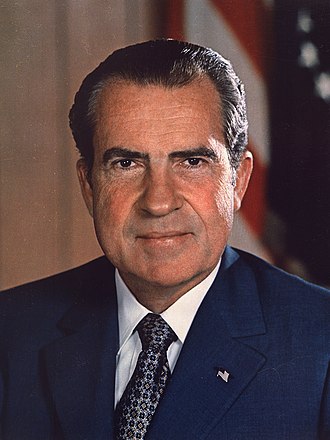
Richard M. Nixon served as the 37th President of the United States from January 1969 until his resignation in August 1974. In February 1971, he ordered the installation of a secret voice-activated taping system in the White House to preserve a historical record of his administration. Until the system's existence was revealed and dismantled in July 1973, the tapes captured Nixon directing major foreign policy initiatives, such as the opening to China, as well as his central role in the Watergate cover-up.
What Nixon talks about on the tapes
White House operations 4,718Presidential scheduling 2,225Public relations 1,784Presidential schedule 1,782Vietnam War 1,693Logistics 1,650Manolo Sanchez 1,626White House communications 1,400White House administration 1,399Presidential communication 1,243Henry Kissinger 1,191Foreign Policy 1,183
Conversations (21,010)
— Page 159 of 211President Nixon spoke with Muriel "Honey" Berlin to express his personal appreciation for the ties she sent him as a birthday gift, confirming he intends to wear them during future television appearances. The conversation also touched upon the Berlins' social engagements and their mutual support for the President's firm approach toward communist negotiators. Nixon and Berlin briefly discussed the necessity of strength in foreign policy, specifically referencing ongoing Vietnam negotiations and the political situation in the Philippines.
President Nixon and Stephen B. Bull discussed logistical adjustments to the President's upcoming schedule, specifically regarding a proposed meeting with three councilors. Nixon directed Bull to cancel the meeting, deeming it unhelpful for the afternoon agenda. The discussion concluded with a brief exchange regarding the President's itinerary for his remaining days leading up to the inauguration.
President Nixon instructed the White House operator to place a telephone call to Peter J. Brennan. While Nixon initially identified Brennan as the Secretary of Commerce, he was actually the Secretary of Labor-designate. The call was initiated to establish direct communication with the incoming cabinet member.
President Richard Nixon met with Marjorie P. Acker in the Oval Office to discuss personal administrative matters, specifically involving his clothing and neckties. The conversation also touched upon the professional arrangements of his staff, with the President tasking Acker with delegating specific oversight duties to his associates. This brief meeting served to facilitate personal housekeeping and internal staff coordination.
President Nixon met with his valet, Manolo Sanchez, to coordinate the delivery of personal items or documents to his personal secretary, Rose Mary Woods. The brief exchange focused on the logistics of handling these materials via the dictating machine process. No major policy developments occurred, as the interaction was limited to administrative assistance and clerical handoffs.
President Nixon dictates a series of directives to H.R. Haldeman concerning the development of historical guest literature for Camp David and the presidential yacht, Sequoia. He emphasizes creating well-researched, professional accounts for these venues that highlight significant historical policy decisions and guest records. Additionally, Nixon instructs Haldeman to commission post-inaugural polling to gauge public opinion on tax increases versus government spending, stressing the need for precise and effective survey questions to clarify the President’s stance on fiscal responsibility.
President Nixon directs H. R. Haldeman to facilitate a series of national security briefings for new members of Congress to bolster support for his administration's foreign policy agenda. The President intends to highlight the Nixon Doctrine, ongoing arms control negotiations, and recent diplomatic initiatives involving the Soviet Union and China. Alexander Haig and Henry Kissinger are identified as key figures to spearhead these sessions to ensure effective communication of the President's leadership and strategic vision.
President Nixon dictates a memorandum to H. R. Haldeman establishing a strict protocol for the handling of high-level administration appointments. Nixon directs Haldeman to oversee the process and participate in all appointment discussions to ensure that competing interests from the RNC, Charles Colson, and Cabinet members are properly balanced and vetted. This directive serves to centralize control over personnel decisions while insulating the President from internal staff conflicts and potential disputes with Congress.
President Nixon met with an unknown woman to provide specific instructions regarding the handling of his personal dictation tapes and related memoranda. He emphasized the necessity of maintaining personal control over the original recordings, explicitly stating his desire to secure the tapes himself rather than having them copied or filed by others. The discussion focused on establishing a secure process for the custody and clearance of these sensitive records.
President Nixon and Stephen B. Bull met to coordinate the President's upcoming schedule and address administrative matters. The discussion centered on managing access to the President, specifically regarding a request from Vice President Spiro Agnew to meet with Nixon following a prior communication with H.R. Haldeman. Nixon also reviewed logistical plans involving key staff members, including Haldeman and William E. Timmons.
President Nixon and Stephen B. Bull met to review and adjust the President's morning schedule regarding upcoming appointments with William E. Timmons, H.R. Haldeman, and Colonel Richard T. Kennedy. Nixon evaluated the necessity of including certain attendees in his briefings to maintain focus. The discussion concluded with the President directing Bull to have Colonel Kennedy join him later that morning.
President Nixon initiates a brief request to the White House operator to be connected with Peter Bryan. The primary purpose of the communication is to secure information regarding news and e-commerce developments. The call serves as a routine administrative coordination to facilitate the President's access to external reporting.
President Nixon met with Col. Richard T. Kennedy and Peter J. Brennan to strategize the final stages of the Vietnam peace negotiations, emphasizing that the U.S. would move forward with an agreement regardless of South Vietnamese President Nguyen Van Thieu's reservations. Nixon instructed that information regarding these sensitive talks be tightly controlled to prevent interference from State Department staff or other officials. The group also discussed the timing of a potential ceasefire announcement, the management of international relations with foreign heads of state, and the necessity of maintaining pressure on South Vietnamese leadership to ensure a successful outcome.
President Nixon called Secretary of Labor-designate Peter J. Brennan to offer encouragement and support regarding his ongoing confirmation process. The two discussed the challenges Brennan faced during the hearings, specifically noting the critical coverage by The Washington Post. Nixon dismissed the negative press as predictable, affirming his confidence in Brennan’s ability to navigate the scrutiny successfully.
President Nixon consulted with Col. Richard T. Kennedy regarding the ongoing, complex status of Vietnam peace negotiations and the challenge of managing communications with South Vietnamese leader Nguyen Van Thieu. During the discussion, Nixon also sought to clarify the identity and role of James T. Lynn, whom he identified as the Secretary of Housing and Urban Development-designate. The conversation served to coordinate personnel information for the administration while addressing the sensitive diplomatic pressures surrounding North Vietnam.
President Nixon met with James T. Lynn to discuss the status of pending cabinet confirmations and the organizational structure of his administration. Nixon indicated that he was postponing cabinet meetings until nominees were confirmed and signaled potential adjustments to the counselor positions within his staff. This brief exchange served to reassure Lynn of his position and outline the President's preference for direct proximity to his advisors.
President Nixon and Stephen B. Bull discussed logistical arrangements regarding an upcoming meeting with William E. Timmons. The brief exchange focused on coordinating the President's daily schedule and ensuring the necessary preparations for his pending interaction with his assistant. No major policy decisions were reached during this short administrative consultation.
President Nixon met with his valet, Manolo Sanchez, in the Oval Office to discuss personal or domestic arrangements. The brief interaction focused on the provision of refreshments. No significant policy developments or political decisions were recorded during this encounter.
President Nixon met with William E. Timmons to discuss strengthening congressional relations and managing the legislative agenda. They reviewed lists of supportive Democrats and Republicans, strategizing on how to cultivate these alliances through social events and political recognition. Additionally, they addressed concerns regarding potential opposition on Vietnam policy, the status of Watergate investigations, and plans to utilize Alexander Haig for briefings on national security matters.
President Nixon met with his aide Stephen B. Bull in the Oval Office to conduct a brief administrative review of the President's daily schedule. The discussion focused on coordinating upcoming meetings and appointments, specifically involving Press Secretary Ronald L. Ziegler. No major policy decisions were recorded during this short transition period.
President Nixon and Press Secretary Ronald Ziegler met to coordinate the administration's messaging strategy for an upcoming press briefing. The discussion focused on managing media inquiries regarding the Watergate scandal, Vietnam negotiations, and various campaign finance allegations. Nixon directed Ziegler to frame sensitive topics as non-stories while encouraging a strategy of providing exclusive interviews to maintain favorable press coverage.
President Nixon and H. R. Haldeman met to coordinate key administrative personnel appointments, specifically prioritizing the exclusion of unauthorized intermediaries in the decision-making process. The discussion focused on strategies for managing press relations, particularly regarding negative coverage from the Washington Post and CBS, and leveraging potential influence over political figures like Lyndon B. Johnson. They also touched upon staffing roles for figures like Charles Colson and H. R. Haldeman, ensuring tighter control over news summaries and organizational responses to political pressure.
President Nixon met with members of the Council on Environmental Quality and key administration advisors to discuss the content and delivery of his upcoming State of the Union messages. Nixon emphasized a desire for a positive, forward-looking tone regarding the environment and population growth, while shifting from a single speech to a series of ten installments to maintain sustained media interest. The conversation also touched upon the restructuring of intelligence and resource management, as well as complex diplomatic maneuvers involving Vietnam negotiations and potential Middle East initiatives.
President Nixon met with his personal valet, Manolo Sanchez, in the Oval Office for a brief, four-minute encounter. The discussion focused on the President's personal schedule and logistical arrangements for his upcoming activities. No significant policy decisions were recorded during this brief exchange.
President Nixon held a brief meeting with Alexander P. Butterfield to discuss personnel matters. The discussion centered on the status and transition of Brent Scowcroft. No further substantive details regarding the meeting's outcome are available due to the lack of a transcript.
President Nixon contacted the White House operator to request a telephone connection to his daughter, Tricia Nixon Cox. The conversation served as a brief administrative interaction to facilitate this personal call. No further substantive policy or political discussions took place during this exchange.
President Nixon held a meeting in his Old Executive Office Building office with an unidentified individual. The nature of the discussion remains undocumented due to the transcript's lack of substantive content. No specific policy decisions or action items can be discerned from the available record of this brief engagement.
President Nixon met with his valet, Manolo Sanchez, in the Old Executive Office Building. The brief discussion primarily concerned the logistics and administrative details of the President’s daily schedule. No major policy decisions or significant developments were recorded during this brief encounter.
President Richard Nixon met with his personal valet, Manolo Sanchez, in his Executive Office Building office to discuss administrative matters and personal assistance. The primary focus of the brief interaction was the review and coordination of the President's daily schedule. No major policy developments occurred, as the meeting was limited to routine logistical arrangements.
President Richard Nixon met with his personal valet, Manolo Sanchez, in the Old Executive Office Building to discuss personal arrangements. The brief interaction centered on the President's request for refreshments. No substantive policy or political matters were addressed during this exchange.
President Nixon held a brief, procedural interaction with a White House operator to facilitate an outgoing call. No substantive policy matters or political discussions were recorded during this exchange. The conversation served primarily as an administrative bridge to connect the President with another party.
President Nixon met with an unidentified individual to briefly discuss matters pertaining to his official schedule. The conversation concluded abruptly without substantive policy deliberations or recorded action items. The meeting remains historically opaque due to the lack of identifiable participants and limited transcript documentation.
President Nixon met with an unidentified individual in the Old Executive Office Building to review the President’s upcoming schedule. The discussion focused on administrative planning and logistical arrangements for the President's calendar. No specific policy decisions or significant external developments were recorded during this brief administrative encounter.
President Nixon speaks with Tricia Nixon Cox and Edward R. F. Cox to receive a firsthand account of the performance by the Shenyang Acrobatic Troupe in Washington, D.C. Tricia describes the enthusiastic reception, noting that the audience remained for a lengthy standing ovation despite the presence of heavy security measures. The discussion emphasizes the success of this cultural exchange as a positive tool for U.S.-China relations.
President Richard Nixon met briefly with his daughter, Tricia Nixon Cox, in the Old Executive Office Building. The exchange was personal and informal in nature, consisting primarily of casual remarks and pleasantries. No substantive policy discussions or official government actions occurred during this brief interaction.
President Nixon directed the White House operator to place an outgoing call to Colonel Richard T. Kennedy. This brief interaction served as a logistical step to facilitate direct communication with the National Security Council staff member. No further policy discussions or substantive developments occurred during this administrative exchange.
President Nixon met with his personal valet, Manolo Sanchez, in the Old Executive Office Building to discuss administrative logistics and the President's upcoming schedule. The brief interaction focused on coordinating communications with press secretary Ronald L. Ziegler regarding the President's availability. No significant policy decisions were recorded during this routine operational check-in.
President Nixon consulted with a White House operator in his office at the Old Executive Office Building to address routine administrative or telephonic needs. Due to the lack of available transcript data, the specific substance of the exchange remains unrecorded. The interaction represents a brief, undocumented operational check-in between the President and the switchboard staff.
President Nixon directed Colonel Richard T. Kennedy to hand-deliver a newly received report regarding Vietnam negotiations to his office in the Executive Office Building. Kennedy acknowledged the directive and confirmed he would bring the sensitive documents over immediately. This brief exchange highlights the priority placed on reviewing diplomatic updates during the critical final stages of the peace process.
President Nixon held a brief meeting with Colonel Richard T. Kennedy to discuss matters concerning the National Security Council staff. The participants coordinated their schedules, as evidenced by the reference to a subsequent conversation. No substantive policy decisions were finalized during this extremely short interaction.
President Nixon met with Col. Richard T. Kennedy to discuss the status and messaging strategy regarding the Vietnam peace negotiations and a potential settlement. The primary focus was on coordinating the announcement of an agreement, managing press relations, and handling the position of South Vietnamese President Nguyen Van Thieu. Nixon emphasized the need for tight control over the release of information to ensure the success of the talks and requested that Alexander Haig review current drafts for further input.
President Nixon initiates a brief telephone request to connect with his Press Secretary, Ronald L. Ziegler. The interaction serves exclusively as an administrative instruction to the White House operator to facilitate this specific communication. No further substantive policy matters or tactical decisions are addressed during this exchange.
President Nixon and H. R. Haldeman engaged in a brief, administrative exchange regarding the scheduling of an upcoming meeting involving Ronald L. Ziegler. The conversation centered on coordinating personal and professional availability to ensure a smooth transition between private discussions and official business. No substantive policy decisions were made, as the dialogue remained focused on logistics and participant arrival times.
President Nixon interacted with the White House operator in the Old Executive Office Building to facilitate a telephone connection. The brief exchange focused on administrative communication logistics rather than substantive policy discussions. No major policy decisions or developments occurred during this brief interaction.
President Nixon directs Press Secretary Ronald L. Ziegler to join him for an immediate meeting at the Executive Office Building. This brief exchange serves primarily as a logistical coordination for the President to confer with his press secretary in person. No substantive policy matters were discussed during this short transition to an off-site location.
President Nixon and Press Secretary Ronald L. Ziegler held a brief, cryptically phrased exchange regarding the logistics of an upcoming meeting. The conversation appears to be a check on Ziegler’s availability to convene in person. No substantive policy matters were resolved during this short procedural coordination.
President Nixon met with his personal valet, Manolo Sanchez, in the Old Executive Office Building for a brief administrative interaction. The discussion primarily concerned a private food order for the President's personal files and sustenance. This routine exchange reflects the daily logistical support provided by staff within the Executive Office of the President.
President Nixon met with Ronald Ziegler and H. R. Haldeman to coordinate the administration's public relations strategy regarding the upcoming Vietnam peace settlement. The participants discussed the need for message discipline among staff, the timing of public announcements, and the handling of congressional briefings to ensure the negotiations' success while maintaining confidentiality. Additionally, they reviewed potential legislative priorities and the impact of ongoing congressional investigations, including the Watergate trial, on the administration's agenda.
President Nixon and H. R. Haldeman coordinated a brief meeting to discuss upcoming administrative scheduling. Haldeman signaled his availability to consult with the President following his ongoing discussion with Press Secretary Ronald Ziegler. The conversation concluded with Nixon confirming that Haldeman should proceed to the White House immediately.
President Nixon initiates a call to the White House operator to be connected with Colonel Richard T. Kennedy. This brief interaction serves as a routine administrative request to facilitate a direct line of communication with the National Security Council staffer. No further substantive discussion occurs during this exchange.
President Nixon instructed Col. Richard T. Kennedy to relay specific directives to Henry Kissinger regarding the pending Vietnam settlement agreement. Nixon mandated that any public announcement regarding the deal must be issued by Press Secretary Ronald Ziegler rather than Kissinger. Furthermore, he established a contingency plan where Alexander Haig would remain in Saigon to manage South Vietnamese President Thieu’s resistance, with instructions to delay any announcement if Thieu refused to agree to the terms.
President Nixon contacted the White House operator to facilitate a telephone call to Claude S. Brinegar. The primary purpose of the communication was to connect with Brinegar, who was serving as the Secretary of Transportation-designate at the time. This exchange served as a logistical step in the President’s administrative coordination during the transition period.
President Nixon and H. R. Haldeman met with various staff members and Cabinet officials to discuss preparations for the 1973 Inauguration, administrative reorganization, and legislative strategy. They reviewed logistical details for inaugural events, evaluated the performance of congressional Republicans, and strategized on how to manage media and public perception regarding the administration's second-term agenda. Nixon emphasized the importance of maintaining a low-profile, disciplined approach to 1974 midterm campaign activities to avoid perceptions of political deception while advancing his policy goals in areas such as crime, the federal budget, and education.
President Nixon called Claude S. Brinegar to offer personal well-wishes and encouragement regarding the transition process ahead of the upcoming inauguration and first Cabinet meeting. Brinegar confirmed that his confirmation hearings were progressing smoothly and that his family would be joining him in Washington shortly. The brief exchange served to solidify rapport and ensure the nominee felt supported as he settled into his new role.
President Nixon contacted the White House operator to place a telephone call to Frederick B. Dent. The purpose of this interaction was to reach Dent, who had been designated as the new Secretary of Commerce. No further substantive policy matters were discussed during this brief administrative exchange.
President Nixon called Secretary-designate Frederick B. Dent to offer encouragement ahead of his upcoming confirmation hearings and to schedule a cabinet meeting following the inauguration. The two discussed the importance of Dent maintaining a firm yet professional demeanor during his questioning. Additionally, Dent reported positive feedback from the business community regarding George P. Shultz’s announcement of Phase III economic policies.
President Nixon contacted the White House operator to facilitate a telephone connection with Secretary of the Treasury George P. Shultz. The conversation was purely administrative in nature, serving as a brief request to initiate communication with the Treasury Secretary. No substantive policy discussions or decisions were recorded during this brief exchange.
President Nixon and George Shultz reviewed the favorable reaction from the business community regarding the administration's new Phase III economic announcement. Shultz reported on his meeting with economist Pierre Rinfret, noting that the policy aligned with Rinfret's previous recommendations. Nixon requested that Shultz convey his personal appreciation to Rinfret and specifically asked that Rinfret continue to publicly support the economic plan.
President Nixon instructed the White House operator to place a call to Chief of Staff H. R. Haldeman. He specified that the operator should prioritize reaching Haldeman but requested that he not be disturbed if he was attending a social engagement. The interaction served as a routine administrative request to facilitate communication with a key advisor.
President Nixon and H. R. Haldeman coordinate the logistical details and public relations strategy for the President's upcoming departure for Florida. They determine that Nixon will depart on Friday afternoon to work on his inaugural address, a decision intended to minimize press and staff speculation regarding ongoing Vietnam peace negotiations in Paris. By maintaining a routine appearance of working on speeches, the President seeks to avoid revealing his preoccupation with developments involving Henry Kissinger and Alexander Haig.
President Nixon called James T. Lynn to offer encouragement regarding Lynn’s pending cabinet confirmation and to explain the scheduling delay for upcoming cabinet meetings. The two discussed the progress of the confirmation process in the Senate, specifically addressing political hurdles raised by Senator Harrison A. Williams, Jr. They also briefly commended outgoing Secretary George W. Romney for his recent public stance on housing, acknowledging the behind-the-scenes role played by Paul O'Neill at the Office of Management and Budget in shaping that position.
President Richard Nixon met with his personal valet, Manolo Sanchez, in the Old Executive Office Building. The brief interaction focused on the provision of refreshments for the President. No further administrative or political business was recorded during this encounter before Sanchez departed.
President Nixon contacted the White House operator to facilitate a telephone call to Colonel Richard T. Kennedy. This brief interaction served solely as a request to initiate official communication with the Colonel. No substantive policy matters or further developments were addressed during this exchange.
President Nixon met with speechwriter Raymond K. Price to discuss logistics regarding Price's participation in an upcoming trip. The brief discussion focused on confirming Price's inclusion in the traveling party and establishing the duration of his stay. This exchange served to finalize the travel arrangements for the presidential aide.
President Nixon met with his aide Stephen B. Bull to coordinate administrative details regarding his upcoming schedule and personal logistics. The discussion focused on planning events surrounding a visit by a troupe of acrobats from the People’s Republic of China, including gift arrangements and guest lists for a reception. Additionally, they reviewed travel plans for a pending trip to Florida and managed the scheduling of upcoming meetings involving key staff members such as H.R. Haldeman and Alexander Haig.
President Nixon met with a White House operator to facilitate an outgoing communication. This brief interaction served as a logistical step to initiate a phone connection to an unspecified third party. No substantive policy discussions or administrative decisions were recorded during this exchange.
President Nixon and Col. Richard T. Kennedy discuss the management of communications regarding a breakthrough in Vietnam peace negotiations, specifically focusing on the upcoming announcement of the cessation of U.S. bombing. They plan a schedule to inform key officials, including Secretary of State William P. Rogers, Secretary of Defense Melvin R. Laird, and Congressional leaders, while ensuring the details remain confidential. The President tasks Col. Kennedy with handling these briefings and coordinating the logistics of Henry Kissinger's and Alexander Haig's movements, including a trip to Saigon and a meeting in Florida.
President Nixon and Colonel Richard T. Kennedy discussed the logistics and messaging surrounding an upcoming high-stakes public announcement regarding ongoing peace negotiations. Nixon emphasized the importance of managing the timing of the release to avoid internal conflict and unnecessary involvement from congressional leaders. The conversation focused on ensuring that administration officials, specifically Secretary of State William Rogers and Secretary of Defense Melvin Laird, were appropriately informed to maintain a unified front following the development.
President Richard Nixon met with his valet, Manolo Sanchez, in the Old Executive Office Building to handle routine personal matters. During this brief encounter, the two discussed refreshments and the President's upcoming schedule, specifically a meeting with speechwriter Raymond K. Price, Jr. This exchange served as a mundane administrative check-in to coordinate the President's morning activities.
President Nixon met with his personal aide Manolo Sanchez to coordinate logistical details regarding his daily schedule. The discussion centered on upcoming appointments, specifically a meeting with speechwriter Raymond K. Price, Jr. Additionally, they addressed administrative matters involving Rose Mary Woods and the selection of ties.
President Nixon met with his aide Stephen B. Bull to coordinate administrative logistics and manage the President’s daily agenda. The discussion focused on finalizing the schedule for Alexander M. Haig Jr. and organizing the President’s upcoming telephone communications. No major policy decisions were reached, as the meeting served primarily to streamline executive workflow and scheduling priorities.
President Nixon met with his aide Stephen B. Bull in the Old Executive Office Building to review and coordinate the upcoming schedule for Alexander M. Haig Jr. The brief discussion served as an administrative check-in to ensure the alignment of Haig’s calendar with the President's priorities. No specific policy decisions were finalized during this exchange.
President Nixon and Alexander Haig met to coordinate the messaging and diplomatic strategy surrounding the nearing Vietnam peace settlement. They discussed the importance of managing Congressional relations and the timing of public announcements to ensure political support, specifically addressing the sensitivities of South Vietnamese President Nguyen Van Thieu. The conversation focused on maintaining a low-key approach to the negotiations and preparing for briefings with Congressional leaders to present the agreement as the best achievable outcome.
President Nixon met with Ronald Ziegler and H.R. Haldeman to coordinate the public messaging and timing regarding the ongoing Vietnam peace negotiations and Henry Kissinger's diplomatic schedule. The participants discussed managing press relations and maintaining staff secrecy as the administration navigated the conclusion of the war and preparations for the upcoming 1973 inauguration. Nixon also engaged in a brief, separate discussion with Rose Mary Woods concerning a symbolic gift calendar designed to reflect the duration of his second presidential term.
President Nixon met with H.R. Haldeman, Ronald Ziegler, Rose Mary Woods, and Marjorie P. Acker to discuss various administrative, political, and personal matters. The conversation touched upon federal budget allocations, the media's portrayal of a recent sniper incident, and Nixon's views on educational policies regarding racial integration. The group also spent significant time troubleshooting and learning the technical operation of a portable dictation recording device.
President Nixon met with H.R. Haldeman, Rose Mary Woods, and Marjorie Acker to discuss the technical operations, portability, and functionality of various dictation machines for use in his offices and during travel. The conversation also covered logistical details regarding the President's attire and protocol for the upcoming 1973 Inauguration, including coordination with family members. Additionally, the group touched on broader administrative matters, including personnel considerations for the second-term reorganization and the public perception of press relations staff.
President Nixon instructed the White House operator to place a telephone call to his daughter, Julie Nixon Eisenhower. This brief administrative interaction was initiated solely to facilitate direct communication between the President and his daughter. No further policy or political business was discussed during this exchange.
President Nixon met with Zosimo Monson and Manolo Sanchez to discuss personal logistical arrangements regarding the procurement and selection of neckties. The conversation focused on practical details such as the delivery, fit, and aesthetic choices for the items. Rose Mary Woods was noted as being involved in the purchasing process for these personal effects.
President Nixon met with his personal valet, Manolo Sanchez, in the Old Executive Office Building. The brief interaction focused on the service of refreshments for the President. No substantive policy matters or major political decisions were addressed during this exchange.
President Nixon consulted with the White House operator in his office at the Old Executive Office Building. The brief interaction served to facilitate administrative communication needs for the President. No substantive policy discussions or specific action items were recorded during this engagement.
President Nixon met with Stephen B. Bull to discuss logistical arrangements regarding the President’s schedule and preparations for the upcoming inauguration. The conversation further touches on the potential for maintaining an oral diary of events, with Nixon advising Bull on the practical handling and filing of these recordings. Julie Nixon Eisenhower also briefly joins the discussion, rounding out the informal session centered on administrative workflows and archival record-keeping.
President Nixon speaks with his daughter, Julie Nixon Eisenhower, to discuss logistics for his upcoming Florida trip and final preparations for his 1973 second-term inauguration. During the call, the President encourages Julie to maintain an oral diary using her new Dictaphone, emphasizing that personal anecdotes and daily observations are historically valuable. Additionally, the President coordinates scheduling with Stephen B. Bull regarding a potential appearance at a Chinese cultural event and confirms his itinerary for the inaugural week.
President Nixon directs the White House operator to facilitate a meeting with speechwriter Raymond K. Price, Jr. The President specifically requests that Price relocate from his current position to the Executive Office Building to consult with him. This brief exchange initiates a direct administrative request for immediate staffing coordination.
President Nixon initiates a brief administrative interaction with the White House operator to facilitate a telephonic connection. This recording serves as a routine logistical exchange typical of White House communications operations during the period. No substantive policy discussions or significant political developments are recorded in this brief interaction.
President Nixon met with speechwriter Raymond K. Price, Jr. to refine themes and rhetoric for his upcoming second inaugural address. The discussion focused on projecting a tone of patriotic renewal, emphasizing individual responsibility, and framing America’s ongoing leadership role in a changing world. Additionally, the participants reviewed the status of Vietnam peace negotiations and the potential for a settlement, weighing how to best communicate these developments to the public and Congress.
President Nixon met with his aide Stephen B. Bull to coordinate logistical details regarding his upcoming schedule and travel arrangements. The discussion covered the planning of a reception for People's Republic of China acrobats, the handling of personal items for trips to Florida, and administrative follow-ups involving First Lady Pat Nixon and Tricia Nixon Cox. The meeting focused primarily on routine scheduling matters and the execution of specific presidential requests.
President Nixon met with Zosimo Monson in the Old Executive Office Building to conduct business regarding the President’s personal briefcases. The encounter was brief, concluding by mid-afternoon. No further policy or political discussions were recorded during this session.
President Nixon met with Stephen B. Bull and an unidentified individual, likely John A. Scali, to finalize logistical details regarding his upcoming second inauguration. The discussion focused on scheduling public appearances, including a symphonic concert and prayer breakfast, as well as managing guest lists and reception duties for the First Lady and other high-profile attendees. The participants coordinated the timing of these various ceremonial obligations to ensure smooth coverage and adherence to the President's inaugural agenda.
President Nixon instructed the White House operator to contact staff members Raymond K. Price, Jr. and Stephen B. Bull to coordinate an urgent meeting. The President directed that Price report to his Executive Office Building (EOB) office immediately. These requests initiated a series of administrative actions to facilitate direct communication with key aides.
President Nixon instructed the White House operator to contact Raymond Price to convey specific directions regarding GOP office matters. This brief interaction served to facilitate internal administrative coordination and communication with his staff. No further policy or strategic developments were recorded during this exchange.
President Nixon consulted with his aide, Stephen B. Bull, to coordinate scheduling for upcoming meetings with Henry Kissinger and Raymond K. Price, Jr. Nixon prioritized completing his work with Price before meeting with Kissinger at 10:00 am. Bull was instructed to ensure Kissinger notified the President immediately upon his arrival at the White House.
President Nixon consulted with his aide, Stephen B. Bull, to receive a follow-up briefing regarding an outstanding inquiry. The brief exchange focused on obtaining specific information that the President had previously requested. No major policy decisions were reached, as the discussion served primarily as a status update on an administrative task.
President Nixon met briefly with an unidentified individual in the Old Executive Office Building. Due to the lack of available transcripts or descriptive logs, the specific subject matter and objectives of this meeting remain unknown. The interaction concluded within a single minute, offering no record of decisions or substantive developments.
President Nixon met with speechwriter Raymond Price and National Security Advisor Henry Kissinger to refine the language of his upcoming inaugural address and strategize the final stages of the Vietnam peace negotiations. The discussion focused on emphasizing foreign policy successes, specifically the breakthroughs with the Soviet Union and China, while balancing the tone regarding South Vietnamese President Nguyen Van Thieu's resistance to the proposed peace terms. Nixon and Kissinger also evaluated the political implications of a potential cease-fire and the necessity of maintaining a firm stance to ensure a stable exit from the conflict.
President Nixon met with his personal valet, Manolo Sanchez, in the Old Executive Office Building to discuss mundane administrative matters. The conversation focused on a food order for the President's consumption and a review of Nixon's upcoming schedule, specifically regarding a meeting with speechwriter Raymond K. Price, Jr. No major policy developments occurred during this brief check-in before Sanchez departed the office.
President Nixon met with advisors Raymond K. Price, Jr. and Ronald L. Ziegler to finalize logistical preparations for his upcoming 1973 second inauguration. The discussion focused primarily on the strategic timing, distribution, and media management of the President's inaugural address, including vetting which journalists and commentators should receive advance copies. The participants also touched on peripheral topics ranging from professional football coaching records to historical comparisons regarding former President Eisenhower.
President Nixon initiated a brief telephone communication through the White House operator to contact his aide, Stephen B. Bull. The sole purpose of the call was to facilitate this connection for further presidential business. No substantive policy matters or historical developments were recorded during this brief administrative exchange.
President Nixon and speechwriter Raymond K. Price, Jr. met to review and refine the content, tone, and specific phrasing of Nixon's upcoming second inaugural address. The discussion focused on balancing policy objectives with themes of personal responsibility, governmental paternalism, and international relations. Henry Kissinger’s input on the foreign policy segments was also integrated into the final drafting process before Price departed for a follow-up meeting with Kissinger.
President Nixon and Henry Kissinger met to coordinate administrative logistics and staffing, specifically regarding Kissinger's upcoming schedule. The discussion focused on coordinating meetings with White House aides Raymond K. Price, Jr. and Alexander M. Haig, Jr. These personnel arrangements were prioritized to manage the workflow within the Executive Office Building during this period.
President Nixon held a brief administrative interaction with the White House operator to facilitate a telephone connection. The conversation primarily served to initiate communication with an unnamed third party. No substantive policy discussions or significant political decisions occurred during this brief exchange.