Nixon, Richard M. (President)
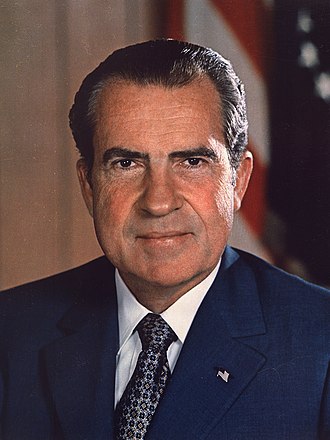
Richard M. Nixon served as the 37th President of the United States from January 1969 until his resignation in August 1974. In February 1971, he ordered the installation of a secret voice-activated taping system in the White House to preserve a historical record of his administration. Until the system's existence was revealed and dismantled in July 1973, the tapes captured Nixon directing major foreign policy initiatives, such as the opening to China, as well as his central role in the Watergate cover-up.
What Nixon talks about on the tapes
White House operations 4,718Presidential scheduling 2,225Public relations 1,784Presidential schedule 1,782Vietnam War 1,693Logistics 1,650Manolo Sanchez 1,626White House communications 1,400White House administration 1,399Presidential communication 1,243Henry Kissinger 1,191Foreign Policy 1,183
Conversations (21,010)
— Page 200 of 211President Nixon and Alexander Haig held a brief meeting to coordinate the review of specific documents related to authorized actions. Nixon requested that Haig prepare and deliver these materials for his personal inspection before they were finalized. The discussion focused on ensuring the President had oversight of documentation before further administrative progress was made.
President Nixon met with Alexander Haig, Rose Mary Woods, and Marjorie Acker to draft and edit a White House statement regarding the Watergate scandal and national security activities. The primary focus was refining the language used to describe the President’s role, potential prior knowledge, and the activities of the 'Plumbers' while balancing the necessity of maintaining presidential authority. Additionally, the group discussed strategies for managing public perception, economic policy concerns, and the political implications of upcoming congressional hearings.
President Nixon initiated a brief telephone communication through the White House operator to contact Stephen B. Bull. The interaction served as a logistical attempt to reach a specific staff member for further discussion. No substantive policy matters or major decisions were finalized during this exchange.
President Nixon consulted with a White House operator to facilitate an outgoing call. This brief interaction served administrative purposes to connect the President with another party for further communication. No substantial policy or political discussions occurred during this exchange.
President Nixon and Stephen Bull coordinate logistics for two upcoming meetings with Congressional leaders, clarifying the separate schedules for a Republican-only session and a larger group meeting. Nixon explicitly instructs Bull to avoid hosting the larger event at the White House due to noise from scheduled band rehearsals, directing that it be moved to Blair House instead. They finalize plans to hold the smaller meeting that evening in the Executive Office Building.
President Nixon and Stephen B. Bull meet briefly to discuss scheduling logistics and security concerns regarding an upcoming appearance. Nixon explicitly instructs Bull to cancel a planned flight for the following day. The conversation reflects the President's desire to maintain a controlled schedule and formal decorum in his interactions with the White House and the Supreme Court.
President Nixon and Alexander Haig met to coordinate the development of a Watergate White Paper, specifically focusing on the drafting of a cover memorandum. They reviewed the collaborative contributions of Raymond K. Price, Jr. and J. Fred Buzhardt, Jr. regarding the document's structure. The discussion centered on finalizing the strategy for this formal response to ongoing political pressures.
President Nixon met with Stephen B. Bull to conduct administrative oversight and address immediate executive workflow requirements. The discussion focused on securing the President’s signature for various remarks and cabinet-related materials, while also coordinating the President’s upcoming lunch schedule with key congressional leadership, including Hugh Scott and Gerald R. Ford. Additionally, the pair reviewed the timing of Henry Kissinger’s reports and processed pending action papers to ensure the efficiency of White House operations.
President Nixon met with his personal aide, Stephen B. Bull, to provide specific directives regarding the handling and delivery of sensitive White House papers. The brief interaction focused on the procedural logistics of document management within the Executive Office Building. No further policy or political developments were recorded during this exchange.
President Nixon held a meeting with unknown individuals in the Old Executive Office Building to conduct executive business. Due to the lack of an available transcript, the specific subject matter and resulting action items remain undocumented. The session occurred during a period of intense scrutiny regarding the administration's internal affairs.
President Nixon held a discussion with an unidentified individual regarding matters of peace. Due to the limited nature of the recording, the specific context and participants remain obscured. No substantive policy shifts or action items can be verified from the surviving audio fragment.
President Nixon met with Raymond Price, Alexander Haig, and J. Fred Buzhardt to strategize the content and presentation of a White House White Paper regarding the Watergate scandal. The group focused on drafting a cover statement that addressed specific controversies, including the funding of defendants, the Ellsberg break-in, and the involvement of key aides like H.R. Haldeman and John Ehrlichman. They also discussed plans to brief influential Congressional leaders, such as Henry Jackson and Barry Goldwater, to ensure consistent messaging regarding prior statements and wiretaps.
President Nixon coordinates with the White House operator to facilitate a telephone call to Press Secretary Ronald L. Ziegler. The brief interaction serves as an administrative bridge to establish communication with a key staff member. No substantive policy discussions occur during this exchange as the line is connected.
President Nixon held a brief, unscheduled interaction with a White House operator in his Old Executive Office Building workspace. The primary purpose of the contact was to facilitate an outgoing telephone connection. No substantial policy matters were addressed during this minute-long exchange.
President Nixon and Press Secretary Ronald L. Ziegler discuss the broad dissemination of a forthcoming White House statement regarding the Watergate scandal. Nixon emphasizes the need to distribute the document not only to the press but also to an extensive list of 10,000 Republican leaders and chairmen. The two agree that the statement serves as an effective platform to counter negative media narratives, specifically those involving the Cuban fund.
President Nixon and Press Secretary Ronald L. Ziegler held a brief, one-minute meeting in the Old Executive Office Building to coordinate administrative or press-related matters. While no transcript exists for this interaction, the meeting serves as an internal check-in between the President and his primary spokesperson during the height of the Watergate scandal. The session represents a routine point of contact for managing the administration's public narrative and scheduling priorities.
President Nixon instructed the White House operator to connect him with Mr. Sigmund to facilitate further communication. This brief administrative exchange served as a precursor to placing a subsequent telephone call. No significant policy discussions occurred during this brief interaction.
President Nixon initiates a brief telephone exchange with the White House operator to facilitate an outgoing call. The interaction serves as a routine administrative request to connect the President with an outside party. No further policy discussions or substantive developments occur during this brief recorded window.
President Nixon and Press Secretary Ronald Ziegler coordinate the rollout of an upcoming White House statement regarding the Watergate scandal. The discussion focuses on the strategy for a press briefing, which will include Leonard Garment and J. Fred Buzhardt, Jr., intended to project a relaxed and positive image. Nixon emphasizes that the staff must maintain a firm conviction in the truthfulness of the forthcoming statement before scheduling a follow-up meeting to finalize implementation details.
President Nixon and Press Secretary Ronald L. Ziegler held a brief, informal discussion regarding the nature and extent of Ziegler's professional autonomy. The conversation centers on the President clarifying the degree of freedom granted to his press secretary in his official duties. No specific policy decisions were recorded during this brief exchange.
President Nixon contacted the White House operator to facilitate a telephone call to William E. Timmons, who served as the Assistant to the President for Legislative Affairs. The interaction served as a logistical bridge to connect the President with his chief liaison for Congressional relations. No further substantive policy discussions were recorded during this brief administrative exchange.
President Nixon held a brief, unscheduled meeting with an unidentified White House operator in his Old Executive Office Building suite. The interaction served as a routine administrative coordination between the President and the switchboard staff. Due to the lack of an available transcript or audio content, no specific policy decisions or substantive topics were recorded for this encounter.
President Nixon and William E. Timmons coordinate a meeting with Congressional leaders to discuss the administration's ongoing Watergate strategy and a proposed White House statement. The President decides to host the group, including Hugh Scott, Gerald Ford, and others, for dinner aboard the Sequoia to facilitate a more informal discussion. Nixon emphasizes that Congressional leaders must take a more proactive role in defending the administration, comparing their current expectations for presidential intervention unfavorably to the independent leadership displayed by figures like Everett Dirksen during the Eisenhower era.
President Nixon and William E. Timmons meet to discuss organizational logistics and the status of various outreach initiatives. The conversation focuses on regional shifts in political operations and the management of leadership expectations regarding upcoming initiatives. No definitive policy decisions are recorded, as the discussion remains largely centered on logistical updates.
President Nixon initiated a telephone call to the White House operator to facilitate a conversation with William E. Timmons, then Assistant to the President for Legislative Affairs. The brief exchange served primarily as a logistical connection to reach Timmons regarding pending legislative matters. No substantive policy discussions occurred during this specific interaction as the President awaited the completion of the call.
President Richard Nixon met with his personal valet, Manolo Sanchez, in the Old Executive Office Building to discuss the President’s upcoming schedule. The conversation focused on administrative planning and logistical arrangements regarding official appointments. No significant policy decisions or controversial developments were recorded during this brief administrative briefing.
President Nixon met with his personal valet, Manolo Sanchez, in the Old Executive Office Building. While no transcript or detailed record of the dialogue exists, the session served as a private engagement between the President and a long-time member of his domestic staff. No policy decisions or administrative actions were documented as outcomes of this interaction.
President Nixon consulted with the White House operator to facilitate an outgoing call. The brief exchange focused exclusively on establishing a connection for the President. No substantive policy discussions or significant political developments occurred during this administrative interaction.
President Nixon and William E. Timmons coordinated a brief, 30-minute meeting with Republican Congressional leadership to discuss Watergate strategy and express mutual support. Despite scheduling conflicts with evening dinners and a Senate vote, Nixon insisted on maintaining the upcoming morning leadership meeting regarding the farm bill while keeping the evening session focused and time-constrained. The President ultimately decided that Alexander Haig and Bryce Harlow should attend the evening session to assist with the complex political discussions.
President Nixon consulted with legislative liaison William E. Timmons to discuss strategies for managing public perception and the administration's policy response to ongoing political pressures. The brief exchange focused on coordinating legislative action with the necessity of publicly articulating the White House's position. This meeting served as a direct effort to align executive messaging with congressional maneuvers during a period of intense scrutiny.
President Nixon initiates a brief telephone call to the White House operator to be connected with William E. Timmons, his Assistant for Legislative Affairs. The exchange serves solely as a logistical request to facilitate communication with a key staff member. No further policy or substantive matters were discussed during this brief connection.
President Nixon initiated a brief contact with the White House operator from his office in the Old Executive Office Building. The conversation was functional in nature, serving primarily to facilitate a telephone connection. No substantial policy or political discussions were recorded during this brief exchange.
President Nixon directed William E. Timmons to mobilize congressional allies, specifically Representatives Samuel L. Devine and John B. Conlan, to support the White House position regarding the Watergate scandal. The discussion focused on leveraging these vocal defenders to shift the political narrative ahead of an upcoming meeting with congressional leaders. Nixon emphasized the urgency of the effort, instructing Timmons to ensure these representatives were prepared for action within a strict timeframe.
President Nixon held a brief, one-minute meeting with his assistant for congressional relations, William E. Timmons. Given the absence of a recorded transcript, the discussion likely concerned immediate legislative updates or the status of ongoing congressional affairs. The brevity of the exchange suggests it served primarily as a swift coordination or status check between the President and his liaison.
President Nixon contacted the White House operator to facilitate a telephone connection to Stephen B. Bull. The interaction served as a brief administrative bridge to initiate communication with a staff member. No further substantive policy matters or decisions were recorded during this brief exchange.
President Richard Nixon met with his personal aide, Manolo Sanchez, in the Old Executive Office Building. The brief interaction was limited to the delivery and consumption of refreshments. No significant policy discussions or administrative decisions were recorded during this brief encounter.
President Nixon met with his personal secretary, Rose Mary Woods, in his Old Executive Office Building workspace to review administrative details. The discussion centered on coordinating the President's upcoming schedule, specifically regarding engagements with Republican Congressional leadership and First Lady Pat Nixon. No significant policy decisions were recorded during this brief planning session.
President Nixon met with an unidentified individual to coordinate the administration's strategic response to the unfolding Watergate scandal. The discussion centered on the preparation and forthcoming release of a formal White House White Paper regarding the matter. They specifically deliberated on the intended distribution methods to ensure the document effectively addressed public and political scrutiny.
President Nixon met with an unidentified individual to discuss personal and family-related matters, including the delivery of a message from his daughter, Julie Nixon Eisenhower. The conversation also involved discussions regarding First Lady Pat Nixon and a request for the President to place a telephone call to his personal secretary, Rose Mary Woods. No significant policy decisions were recorded during this brief administrative and personal exchange.
President Nixon consulted with a White House operator to facilitate an outgoing call. This interaction served primarily as a logistical step to connect the President with another party for further communication. No substantive policy discussions occurred during this brief exchange.
President Nixon consulted with Stephen B. Bull to check the status of Press Secretary Ronald L. Ziegler, who was delayed in completing a scheduled briefing. The President expressed concern that the briefing had run past its expected conclusion time and requested that Bull provide an update on Ziegler's availability. No major policy decisions were made, as the exchange focused exclusively on coordinating the President's immediate daily schedule.
President Nixon met with his personal aide, Stephen B. Bull, for a brief one-minute session in the Old Executive Office Building. While no transcript exists for this interaction, the meeting served as an administrative touchpoint between the President and his assistant. The encounter is formally indexed as part of the White House Taping System's record of presidential activities during the Watergate era.
President Nixon and Stephen B. Bull discussed the status of an ongoing briefing to coordinate a scheduled meeting. Bull informed the President that the briefing was concluding and estimated that the participant would arrive at the White House within ten minutes. This brief exchange served to facilitate the President's logistical planning for upcoming appointments.
President Nixon met with his aide, Stephen B. Bull, for a brief one-minute session in the Old Executive Office Building. The primary purpose of this meeting was to facilitate a handoff or coordination of materials, as indicated by a direct reference to a subsequent conversation. No substantive policy discussions were recorded during this extremely short administrative interaction.
President Nixon and Alexander Haig met to coordinate the White House strategy regarding the escalating Watergate scandal and the administration's public relations response. The discussion centered on managing communications through Press Secretary Ronald Ziegler and preparing for a critical meeting with Republican congressmen. Haig also briefed the President on recent consultations with William J. Baroody and addressed concerns regarding national security implications of the unfolding investigation.
President Nixon met with Alexander Haig to discuss the nature and implications of Patrick Buchanan’s recent interactions with Vice President Spiro Agnew. The brief consultation focused on assessing the political fallout and potential risks associated with these communications. No major policy decisions were recorded during this short exchange regarding the internal dynamics of the administration.
President Nixon held a brief, nine-minute meeting in the Old Executive Office Building with an unidentified individual. Due to the lack of audio content or transcript documentation for this recording, the specific subject matter and any resulting directives remain unknown to researchers. The session serves as a brief placeholder within the archival record of the President's daily schedule.
President Richard Nixon met with his personal valet, Manolo Sanchez, in the Old Executive Office Building to discuss administrative matters regarding the President's upcoming schedule. The brief interaction served as a logistical check-in between the President and his staff member. No further substantive policy decisions or developments were recorded during this segment of the meeting.
President Nixon contacted the White House operator to facilitate a telephone connection to his aide, Stephen B. Bull. This brief administrative interaction served as a logistical step to initiate direct communication with staff. No substantive policy discussions or decisions occurred during this brief exchange.
President Nixon coordinated with Stephen B. Bull to organize a meeting with key Republican congressional leaders, including Gerald R. Ford and George H. W. Bush. Nixon instructed Bull to track the arrival of the attendees and ensure they were provided refreshments while awaiting his arrival at the Executive Office Building. Bull confirmed that a partial group had already arrived, prompting Nixon to direct that the present guests be escorted to the location immediately while he prepared to join them shortly.
President Nixon met with key Republican congressional leaders and White House staff to discuss strategies for containing the political fallout from the Watergate scandal. The participants debated the timing and content of a forthcoming White House "White Paper" and discussed the potential benefits of a presidential press conference to restore public confidence. They also reviewed legislative management, specifically the importance of maintaining congressional support for administration initiatives amidst ongoing committee investigations and allegations of intelligence-gathering activities.
President Nixon requested that the White House operator place a telephone call to his Press Secretary, Ronald L. Ziegler. The conversation served as a brief administrative coordination to facilitate direct communication between the President and his top spokesperson. No substantive policy matters were discussed during this brief exchange.
President Nixon met with his personal valet, Manolo Sanchez, in the Old Executive Office Building for a brief, informal encounter. The discussion focused on scheduling logistics related to the President's upcoming engagements. No substantive policy matters or major historical developments were addressed during this short interaction.
President Nixon directed Press Secretary Ronald Ziegler to leak information regarding the administration's surveillance of journalists to the press. Nixon emphasized that the leak should frame the disclosure as a response to mounting pressure from senators demanding the release of wiretap records. Ziegler was instructed to disseminate this information immediately to control the narrative surrounding the ongoing Watergate investigations.
President Nixon instructed the White House operator to connect him to his Press Secretary, Ronald L. Ziegler. The brief interaction served as a logistical bridge to initiate a direct communication between the President and his primary spokesperson. No substantive policy matters were discussed during this brief exchange.
President Nixon directs Press Secretary Ronald Ziegler to strategically leak information regarding the Daniel Ellsberg break-in to allies such as Hugh Scott and Strom Thurmond. The President emphasizes the necessity of releasing this information to shift the political narrative and intimidate his critics. He instructs Ziegler to characterize the forthcoming disclosure as part of a planned presidential action to ensure the material receives public and congressional attention.
President Nixon initiates a routine administrative request through the White House operator to be connected with Press Secretary Ronald L. Ziegler. The brief interaction serves solely as a logistical bridge to facilitate direct communication with a key staff member. No substantive policy matters or political strategy discussions occur during this short call.
President Nixon directs Ronald Ziegler to coordinate a strategy involving Senate Minority Leader Hugh Scott to demand the release of Kennedy and Johnson-era wiretap records. Nixon orders the immediate public disclosure of information regarding the Daniel Ellsberg break-in, insisting it be handled decisively despite potential political fallout. Additionally, Nixon instructs Ziegler to signal to Richard Helms that he intends to declassify sensitive materials related to the Bay of Pigs and the assassination of Ngo Dinh Diem, pressuring Helms to prepare for the imminent release of these records.
President Nixon instructed the White House operator to place a call to Bryce Harlow. He specifically requested that Harlow not be disturbed if he was out to dinner, but expressed a desire to speak with him if he was at home. This brief exchange reflects the President’s administrative efforts to reach his advisor during the evening hours.
President Nixon and Bryce N. Harlow discuss the political fallout of the Watergate scandal following the release of a new presidential statement. Harlow reassures Nixon of his support among congressional allies, specifically noting George H. W. Bush's defense of the presidency against calls for Nixon to testify before the Ervin Committee. The two men address the need for Nixon to maintain strong communication with his supporters, with Harlow suggesting that Nixon schedule informal retreats at Camp David to foster better relationships with legislative leaders. Nixon expresses his need for a trusted advisor, ultimately asking Harlow to serve as a confidant and assistant as he navigates the ongoing crisis.
President Nixon met with an unidentified individual in the Oval Office to coordinate his daily schedule and upcoming staff interactions. The discussion focused on logistics involving Press Secretary Ronald L. Ziegler, Republican National Committee Chairman George H.W. Bush, and congressional liaison William E. Timmons. The conversation served to organize the President's immediate agenda and determine the availability and location of staff members like Stephen B. Bull.
President Nixon met with Ronald Ziegler to strategize the White House's public response to the escalating Watergate investigation and the recent release of a "White Paper." The discussion focused heavily on refining the narrative regarding the President's awareness of "hush money" payments and the timing of his knowledge of the cover-up, specifically pinning the start of his personal investigation to his March 21 conversation with John Dean. Nixon also emphasized distancing the administration from illegal activities by characterizing his own previous actions—such as discussions regarding the CIA—as efforts to protect national security rather than to facilitate a cover-up.
President Nixon met with Republican congressional leadership to discuss administration strategy regarding pending agricultural legislation and the proposed Alaska pipeline. The President and his team emphasized the shift toward an export-driven agricultural policy and sought consensus on managing the Senate's version of the farm bill, noting the political risks of introducing a standalone administration proposal. Regarding the Alaska pipeline, the President and Secretary Morton argued for immediate legislative approval to address urgent domestic energy shortages, asserting that current supply crises were exacerbated by previous delays and that alternative Canadian routes were not currently viable. Finally, the President urged the leaders to maintain support for his foreign policy initiatives, highlighting recent successes in Vietnam, China, and the USSR while stressing the need for continued operational security to protect sensitive ongoing negotiations.
President Nixon and Alexander Haig met to strategize on managing the ongoing Watergate scandal, specifically focusing on the White House's public relations response through the release of statements and "White Papers." The conversation centered on discrediting testimony from John Dean, reframing the "plumbers" unit activities as national security necessities, and consolidating a strong defensive posture to prevent panic within the administration. Additionally, they discussed shifting personnel roles, including the appointment of Bryce Harlow to manage Congressional relations and political matters to insulate the President, and coordinating the White House response with other officials.
President Nixon met with his personal secretary, Rose Mary Woods, to discuss the ongoing fallout from the Watergate scandal and manage public perception of his administration. They reviewed sensitive matters regarding fundraising efforts by Tom A. Pappas, the potential involvement of John W. Dean III, and the President's desire to clarify that no illicit discussions took place. The conversation also touched upon the President’s political standing, the impact of congressional inquiries, and the strategic importance of highlighting public support to counter the negative narrative surrounding the White House.
President Nixon held an Oval Office meeting with an unidentified individual, the substance of which remains unrecorded in official transcripts. The interaction, noted only for the provision of refreshments, concludes without documented evidence of substantive policy discussions or specific administrative actions. Consequently, the meeting's purpose and any potential decisions resulting from the exchange are currently unknown to historical researchers.
President Nixon met with an unidentified individual to discuss adjustments to his official daily schedule. The conversation focused specifically on shifting his planned engagements between Mint Director Mary T. Brooks and a representative from the American Legion. No further details regarding the substantive outcome of this scheduling revision were recorded.
President Nixon met with an unidentified individual in the Oval Office to discuss matters related to his official schedule and the administrative duties of his personal secretary, Rose Mary Woods. The discussion focused on logistical coordination and the management of the President's upcoming appointments. No significant policy decisions or further actions were recorded beyond the brief administrative review.
President Nixon met with Director of the Mint Mary T. Brooks, Rose Mary Woods, and members of the press to formally receive his official commemorative medal. During the brief exchange, Brooks presented the new medal design to the President before the group departed. An unidentified man subsequently entered the Oval Office to briefly discuss the President's upcoming schedule and a visit from his barber.
President Nixon held a brief, two-minute meeting in the Oval Office with an unidentified individual, who was likely associated with the office of William J. Baroody, Jr. Due to the lack of a transcript and the extremely short duration of the encounter, no specific policy decisions or substantive topics were recorded. This interaction remains a brief, undocumented entry in the President's daily schedule.
President Nixon met with an unidentified individual to discuss matters pertaining to his official schedule and upcoming engagements. The brief exchange centered on potential meetings with key political figures, including Robert J. Dole, William E. Timmons, and George H.W. Bush. The conversation served primarily as a logistical check-in regarding the President's immediate administrative agenda.
President Nixon met with Thomas R. Moore, Thomas S. Kleppe, and William J. Baroody, Jr. in the Oval Office for a brief, ceremonial engagement. The session included formal introductions, a photo opportunity with members of the press, and the presentation of presidential gifts, including cufflinks and a portrait. The participants also facilitated the delivery of an eight-page statement during the meeting.
President Nixon met with an unidentified individual to coordinate logistical details regarding his upcoming schedule. The discussion centered on an American Legion award presentation involving Senator Jacob K. Javits. The participants finalized arrangements for accompanying press coverage and the required official photography session.
President Nixon met with Senator Jacob Javits and a delegation of associates to receive the Robert L. Hague Merchant Marine Achievement Award and commemorate the Merchant Marine Act of 1970. The participants briefly discussed Javits’s long-standing relationship with the President, mutual acquaintances such as Ben Javits and Spyros Skouras, and the President's upcoming diplomatic engagements. The meeting concluded after a brief exchange regarding scheduling and administrative priorities.
President Nixon met with an unidentified individual in the Oval Office for a brief, six-minute discussion. The interaction primarily involved the removal of refreshments from the room. No substantive policy matters or significant historical developments were captured in the available documentation of this exchange.
President Nixon met with an unknown individual to coordinate administrative tasks within the Oval Office. The discussion primarily involved managing the President’s schedule, specifically regarding upcoming meetings with Robert J. Dole and Press Secretary Ronald L. Ziegler. Additionally, they addressed the placement of a decorative vase gifted by Leonid Brezhnev, confirming its integration into the office decor.
President Nixon met with Nellie L. Yates in the Oval Office for a brief social interaction. Their discussion included an exchange regarding a note and a statement, as well as a short conversation about the age of Yates's niece. The meeting concluded quickly without any record of significant policy decisions or official action items.
President Nixon met with Robert Dole, George H. W. Bush, and William Timmons to coordinate a unified Republican defense regarding the Watergate scandal and its impact on the administration. The participants discussed strategies to shift the public narrative by emphasizing national security concerns and separating the President from the actions of subordinates like John Dean. Additionally, the group addressed the Alaska Pipeline Bill, upcoming foreign state visits, and potential future political roles for Dole.
President Nixon met with an unidentified individual to discuss a briefing involving White House Press Secretary Ronald L. Ziegler. The conversation centered on the scheduling and content of this briefing, specifically regarding the Central Intelligence Agency (CIA). No definitive policy decisions were recorded during this brief administrative exchange.
President Nixon met with an unknown individual to coordinate the timing and logistics of an upcoming briefing involving Press Secretary Ronald L. Ziegler. The discussion centered on determining the expected duration of the session and managing the President’s schedule at the Executive Office Building. No major policy decisions were reached, as the conversation focused exclusively on administrative scheduling adjustments.
President Nixon contacted the White House operator to facilitate a telephone connection with Stephen B. Bull. The brief interaction served as an administrative request to reach a specific staff member. No substantive policy matters or major decisions were recorded during this brief exchange.
President Nixon met with his personal valet, Manolo Sanchez, in the Old Executive Office Building to handle minor hospitality arrangements. The brief interaction focused on the President requesting lemonade for Sanchez. No significant policy discussions or administrative decisions occurred during this exchange.
President Nixon met with his personal valet, Manolo Sanchez, in the Old Executive Office Building to discuss administrative scheduling matters. The conversation briefly addressed the professional calendar of an unidentified individual, potentially Press Secretary Ronald L. Ziegler. No major policy decisions were reached during this brief, informal encounter.
President Nixon interacts with a White House operator in a brief administrative exchange. The conversation serves as a functional request to place an outgoing telephone call. No significant policy decisions or substantive political developments are captured in this brief logistical encounter.
President Nixon consulted with his aide Stephen B. Bull to finalize logistical arrangements for an evening meeting with congressional leaders. Nixon decided to relocate the event from Blair House to the Executive Office Building to ensure better control over the venue. He directed Bull to have Manolo Sanchez coordinate cocktail service for the twenty attendees and secure an additional bartender for the gathering.
President Nixon and Stephen B. Bull briefly conferred regarding the logistics of an upcoming event and the appointment of an individual to lead the Blair House. Nixon expressed a preference for the specific administrative arrangement being proposed to ensure proper management. The discussion concluded with a consensus to proceed with the planned approach for the evening's proceedings.
President Nixon and Press Secretary Ronald Ziegler met to strategize on managing the ongoing Watergate scandal and the increasingly hostile press corps. They discussed refining the administration's public messaging regarding national security, the CIA's potential involvement in the Watergate break-in, and the President's awareness of these events. The conversation focused on preparing for upcoming press briefings and potential presidential appearances to shift the narrative and defend the administration against mounting political pressure.
President Nixon met with his personal valet, Manolo Sanchez, in the Old Executive Office Building. While the specific nature of the interaction is obscured by redacted segments related to the removal of materials, the brief exchange concludes with the President instructing an unidentified party to remain disengaged from the matter at hand. This interaction appears to be a private administrative or logistical task involving the President's personal staff.
President Nixon met with his personal valet, Manolo Sanchez, in the Old Executive Office Building. The brief discussion primarily concerned the management of the President's daily schedule. No major policy developments occurred during this brief interaction.
President Nixon and Alexander Haig met to coordinate the President's upcoming schedule and prepare remarks for a planned trip to Camp David. Nixon expressed concerns regarding his physical fatigue and the necessity of readying his notes for the excursion. They further discussed logistics involving General Brent Scowcroft's participation in the trip and broader administrative matters concerning Congressional relations.
President Nixon met with his personal valet, Manolo Sanchez, in the Old Executive Office Building to attend to routine personal matters. The conversation centered on the logistical arrangements for daily refreshments and meal choices for the President. No major policy decisions were made, as the exchange remained focused on private, domestic coordination.
President Nixon directs the White House operator to facilitate a meeting with Nellie L. Yates. He requests that she be brought to the Oval Office for a scheduled discussion. The brief exchange serves as an administrative coordination to initiate this personnel interaction.
President Nixon initiates a brief request to a White House operator to be connected to the Navigation office regarding a specific room inquiry. The conversation is strictly logistical in nature, serving as a functional administrative request to facilitate communication. No broader policy or political matters are addressed during this exchange.
President Nixon and Stephen B. Bull coordinated logistics for an upcoming meeting with state whips, specifically addressing the duration of the session and transportation arrangements. They discussed managing press exposure during the event and ensured that William E. Timmons would facilitate a timely conclusion to the proceedings. The conversation also touched upon broader congressional relations, including the status of Elliot L. Richardson's confirmation and potential veto strategies.
President Nixon met briefly with his personal valet, Manolo Sanchez, to discuss logistical arrangements and the President's upcoming schedule. During the exchange, Sanchez informed Nixon that he would be unavailable that evening. The brief meeting concluded after these administrative details were addressed.
President Nixon met with Nellie L. Yates and Manolo Sanchez to discuss the prevailing climate of the administration during the ongoing Watergate scandal. The participants exchanged impressions regarding public reaction, the President’s current mood, and the departure of key aides H.R. Haldeman and John D. Ehrlichman. Nixon also provided administrative instructions to Yates concerning the delivery of a book to Press Secretary Ronald Ziegler.
President Nixon initiates a request to the White House operator to be connected with Press Secretary Ronald L. Ziegler. The brief interaction serves as a functional step to facilitate official communication between the President and his top spokesperson. No further policy or substantive matters were discussed during this specific transmission.
President Nixon instructed the White House operator to restrict his incoming communications, explicitly stating that he did not want to receive any materials or calls. This brief interaction served as a directive to limit his availability and filter his professional engagement during this period. The exchange reflects the President's desire for seclusion or a shift in his administrative workflow.
President Nixon and Ronald Ziegler discussed upcoming public relations strategies, including managing the press during the President's scheduled meeting with Congressional leaders at Blair House. They reviewed recent political successes, specifically the sustainment of a presidential veto and the confirmation progress of Elliot Richardson. Additionally, Ziegler briefed the President on Gerald Alch’s testimony before the Ervin Committee, which challenged the credibility of James McCord’s Watergate-related accounts. Nixon concluded the call by announcing his intention to travel to Camp David with Brent Scowcroft to prepare for a press briefing and secure some rest.
President Nixon and Press Secretary Ronald Ziegler briefly coordinate on an upcoming meeting with Congress regarding a veto and the involvement of Elliot Richardson. They discuss the strategic necessity of managing ongoing political developments amid significant confusion within the administration. The conversation concludes with administrative arrangements regarding Ziegler’s schedule and future marketing work.