Nixon, Richard M. (President)
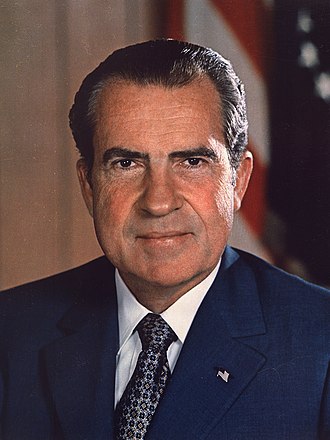
Richard M. Nixon served as the 37th President of the United States from January 1969 until his resignation in August 1974. In February 1971, he ordered the installation of a secret voice-activated taping system in the White House to preserve a historical record of his administration. Until the system's existence was revealed and dismantled in July 1973, the tapes captured Nixon directing major foreign policy initiatives, such as the opening to China, as well as his central role in the Watergate cover-up.
What Nixon talks about on the tapes
White House operations 4,718Presidential scheduling 2,225Public relations 1,784Presidential schedule 1,782Vietnam War 1,693Logistics 1,650Manolo Sanchez 1,626White House communications 1,400White House administration 1,399Presidential communication 1,243Henry Kissinger 1,191Foreign Policy 1,183
Conversations (21,010)
— Page 35 of 211President Nixon met with an unknown participant to coordinate his daily schedule and finalize timing for upcoming evening appointments. The discussion centered on logistics for personal meetings, including an encounter with Dr. W. Kenneth Riland and Stephen B. Bull. No major policy decisions were recorded during this brief administrative exchange regarding the President's calendar.
President Nixon and John Ehrlichman discuss the legislative status of an emergency employment appropriation bill. The conversation centers on the prospects for the bill's passage and the potential role of Representative George H. Mahon in the legislative process. Due to technical issues during the recording, the exchange remains fragmented regarding the specific tactical approach the administration should take.
President Nixon and H. R. Haldeman met to coordinate staffing and public relations strategies regarding Treasury Secretary John Connally. The discussion focused on the timing and management of upcoming personnel announcements to ensure they aligned with the President’s travel schedule to California. The primary objective was to finalize a decision on when to publicly reveal these administrative shifts.
President Nixon and John Ehrlichman discussed potential responses to anticipated press conference questions regarding prayer in public schools and the voting age for eighteen-year-olds. They assessed the political implications of these issues, identifying potential opposition from secular groups, Jewish organizations, and constitutional scholars. The discussion focused on formulating a strategic administration stance to navigate these sensitive topics effectively during upcoming public appearances.
President Nixon and John Ehrlichman discuss the political implications of upcoming judicial and administrative appointments, specifically regarding the influence of specific voting blocs and the constitutional process. They address the strategic positioning of the administration ahead of court challenges and weigh the political optics of policy stances concerning 18-year-old voters. The conversation focuses on navigating these sensitive issues to maintain electoral viability and manage public perception.
President Nixon held a brief, fragmented meeting with an unidentified individual to discuss various personal and administrative matters. The conversation touched upon the ongoing national research initiatives concerning cancer and the general political challenges associated with candidate vetting and public relations. No definitive policy decisions were recorded during this exchange, which focused primarily on navigating administrative optics.
President Nixon consulted with the White House operator to facilitate a direct communication with Secretary of the Treasury John B. Connally. The interaction was brief and focused entirely on the administrative task of initiating this specific telephone connection. No further policy discussions or substantive developments are recorded in this brief exchange.
President Nixon and Treasury Secretary John Connally discussed the strategic timing for rolling out upcoming economic policy initiatives while the President prepared for a vacation in San Clemente. The pair deliberated on how to manage external expectations and coordinate administrative messaging involving key advisors like Peter Peterson and George Shultz. They also briefly touched upon Connally's coordination with Federal Reserve Chairman Arthur Burns regarding the administration's fiscal goals.
President Nixon and Henry Kissinger met to coordinate talking points for a forthcoming press conference, specifically regarding the complex approval status of the Kama River Project foundry deal with the Soviet Union. The discussion touched upon managing potential inquiries from the Senate Foreign Relations Committee and the broader diplomatic implications of U.S.-Soviet relations. Additionally, the participants briefly reviewed administrative matters, including the upcoming departure of David K.E. Bruce and perceptions of Secretary of State William P. Rogers among liberal factions.
President Nixon held a brief meeting in the Old Executive Office Building with an unidentified individual. The interaction was classified as a mistaken call, resulting in no substantive policy discussions or significant administrative developments. The encounter concluded without any documented outcomes or action items.
President Nixon consulted with the White House operator to facilitate a telephone call to Caspar Weinberger. This interaction served purely as an administrative step to connect the President with a key member of the Office of Management and Budget. No further policy discussions or substantive developments were recorded during this brief exchange.
President Nixon consulted with Caspar Weinberger regarding the status of the 1972 federal budget in preparation for an upcoming press conference. Nixon requested a precise calculation of how much Congressional spending had exceeded the administration's proposed budget to anticipate potential media inquiries. The President also briefly directed Weinberger to manage communications with the Secretary of Health to avoid premature or unauthorized public disclosures.
President Nixon and John D. Ehrlichman held a brief consultation regarding the coordination of budget information between Caspar Weinberger and Secretary of State William P. Rogers. They also briefly reviewed the public and political reaction to school busing initiatives within Ohio and Iowa. The discussion served as a strategic check-in on domestic policy communications and administrative oversight.
President Nixon consulted with a White House operator to facilitate a telephonic communication with George P. Shultz, who was serving as the Director of the Office of Management and Budget at the time. This brief interaction served solely as a logistical request to initiate contact with Shultz. No substantive policy discussions or further actions were recorded during this specific administrative exchange.
President Nixon and George P. Shultz consulted on messaging strategy for an upcoming press conference regarding the state of the national economy. The two discussed positive economic indicators, specifically noting strength in retail sales and housing markets, while weighing how to address ongoing concerns about inflation and the Consumer Price Index. Nixon directed Shultz to synthesize these data points and determine the administration's next steps in publicizing the economic narrative.
President Nixon met with an unidentified individual to discuss U.S. financial contributions to the International Labor Organization (ILO). The conversation centered on the budgetary implications of current funding levels and potential adjustments for the ILO conference committee. No final policy decisions were reached, though the discussion reflected the President's skepticism toward existing organizational expenditures.
President Nixon and Patrick J. Buchanan met to prepare for an upcoming press conference by strategizing responses to anticipated inquiries. They discussed a range of sensitive issues, including the national economy, steel industry policies, and complex foreign policy challenges regarding Pakistan and the People's Republic of China's potential UN seat. The pair also addressed internal political concerns, specifically correcting inaccuracies regarding Vice President Spiro Agnew’s recent trip to Africa and managing controversies surrounding Rev. John J. McLaughlin.
President Nixon and Henry Kissinger met to discuss the status of arms and economic aid to Pakistan in the face of mounting pressure from Congress. The primary focus was on navigating the potential for adverse Senate action regarding an arms embargo against the Pakistani government. This discussion highlights the administration's efforts to manage foreign policy challenges amid legislative scrutiny during the ongoing crisis in the region.
President Nixon met with his personal valet, Manolo Sanchez, in the Old Executive Office Building to discuss administrative matters. The brief interaction focused on the delivery of a briefing book prepared by domestic policy advisor John D. Ehrlichman. The meeting concluded quickly, with Sanchez departing the office shortly after presenting the materials to the President.
President Nixon and Henry Kissinger met to prepare for an upcoming press conference, specifically focusing on potential foreign policy questions. They discussed the administration's stance on Pakistan, including the status of arms sales, and reviewed internal disagreements regarding China and Taiwan involving Secretary of State William P. Rogers. Additionally, the conversation addressed the progress of Vietnam negotiations in Paris following the arrival of William J. Porter.
President Nixon and H. R. Haldeman coordinated upcoming travel arrangements to Maine and New Hampshire, specifically discussing protocols for interacting with Senator Margaret Chase Smith. The discussion also addressed strategies for managing negative press coverage, including plans to correct inaccuracies in a Newsweek article regarding Vice President Agnew’s trip to Africa. Additionally, the pair reviewed the President's logistical schedule and upcoming public appearances.
President Nixon met with his personal valet, Manolo Sanchez, in the Old Executive Office Building for a brief, informal discussion. The conversation primarily involved cursory remarks regarding personal matters and a vague reference to discussing unspecified concerns at a later time. No significant policy decisions or administrative actions were recorded during this brief exchange.
President Nixon contacted the White House operator to facilitate an urgent communication with Senator John C. Stennis. The brief exchange served as a logistical request to place a telephone call to the Senator. No further substantive policy matters were discussed during this brief administrative interaction.
President Nixon met with his personal aide, Manolo Sanchez, in the Old Executive Office Building to conduct private or personal business. The limited record of the encounter reflects a brief, restricted interaction between the President and his longtime valet. Due to the withdrawal of the audio segments under personal privilege, no substantive policy or administrative developments are documented.
President Nixon and H.R. Haldeman reviewed administrative and political priorities, specifically focusing on the status of government reorganization plans regarding the Office of Management and Budget and the Federal Reserve. They discussed strategies for engaging business leaders and economic editors to improve public and media perception of the national economy. Additionally, the pair evaluated the political fallout of recent busing controversies and reviewed potential responses to Democratic critiques on foreign policy and domestic issues.
President Nixon and George Shultz discuss the administration's messaging strategy regarding the national economy, specifically focusing on how to address negative press coverage and public perception of indicators like unemployment, inflation, and housing. They analyze the political implications of recent economic data presented in weekly news magazines and assess how the President should frame these issues during his upcoming public appearances. The conversation emphasizes a need for the administration to maintain a unified and fixed narrative to counter critical media reports.
President Nixon and H. R. Haldeman held a brief meeting in the Old Executive Office Building to discuss the administration's ongoing efforts regarding government reorganization. The discussion focused specifically on the Federal Reserve Board and its structural role within the federal apparatus. The dialogue served as a consultation to align strategies for potential changes to the organization of government agencies.
President Nixon and Patrick J. Buchanan met to discuss administration strategies regarding contentious issues, specifically school busing and the national economy. Nixon expressed firm opposition to forced busing, suggesting the administration should clarify that Supreme Court rulings on the matter are not mandates. Additionally, they reviewed media coverage of the economy, with Nixon instructing Buchanan to proactively highlight positive economic indicators—such as housing, construction, and retail sales—to counter negative press narratives regarding unemployment statistics.
President Nixon held an undocumented meeting with an unidentified individual in the Old Executive Office Building to discuss matters currently lost to history due to the lack of an available transcript. As the specific dialogue remains unrecorded or inaccessible, the precise nature of the topics and any resulting policy decisions or action items cannot be determined. This session remains a significant gap in the archival record of the Nixon administration's internal deliberations during the summer of 1971.
President Nixon met with his personal aide, Stephen B. Bull, to coordinate his daily schedule and upcoming engagements. The primary focus of the discussion was planning an impending meeting between the President, Secretary of State William P. Rogers, National Security Advisor Henry A. Kissinger, and Press Secretary Ronald L. Ziegler. Bull subsequently managed the administrative logistics necessary to facilitate this high-level session.
President Nixon and Press Secretary Ronald L. Ziegler met to coordinate messaging for an upcoming press conference and a scheduled trip to New York. The discussion focused on managing press expectations, specifically regarding the exclusion of radio and television coverage for the briefing and potential responses to international monetary volatility. Nixon expressed concern over handling inquiries regarding French efforts to control 'hot money' and its impact on the U.S. dollar.
President Nixon held a brief meeting with an unidentified individual in the Old Executive Office Building. Due to the lack of available transcript data, the specific subject matter remains undocumented and cannot be determined. Consequently, no substantive policy decisions or action items were recorded for this exchange.
President Nixon conducted a press conference to address key domestic and international concerns, including the humanitarian crisis in East Pakistan, the status of Vietnam War negotiations, and the state of the U.S. economy. He defended his administration's economic policies, expressing confidence in long-term growth while rejecting permanent wage and price controls. Following the formal briefing, the President engaged in casual conversation regarding a potential family trip to East Africa and shared personal reflections on professional baseball.
President Nixon met with Alexander Butterfield and Ronald Ziegler to review strategy for upcoming press engagements and manage media narratives regarding the economy and foreign policy. The discussion focused on addressing wage increases, the status of current job legislation, and the administration's stance on congressional recess. Nixon explicitly instructed Ziegler to emphasize that Congress must remain in session to pass pending jobs bills, while also providing guidance on how to respond to inquiries about wage and price controls.
President Nixon, H.R. Haldeman, Henry Kissinger, and John Connally met in the Oval Office to analyze the success of the President's recent press conference and strategize on forthcoming communication regarding the economy and foreign policy. The group discussed the importance of managing public perception of the administration's economic initiatives and the strategic sequencing of potential summit meetings with the Soviet Union versus the upcoming visit to the People's Republic of China. Additionally, the President and his staff coordinated his travel schedule, focusing on balancing public engagements at the Illinois State Fair and the Grand Teton National Park with necessary time for speech preparation and internal meetings.
President Nixon met with his personal aide, Stephen B. Bull, to coordinate logistics for a specific visual presentation or media briefing. The President instructed Bull to summon Ronald L. Ziegler and Charles W. Colson to manage the technical aspects, including the use of a screen and close-up camera angles. This interaction served to organize administrative support for an upcoming project involving high-level staff.
President Nixon and Press Secretary Ronald L. Ziegler met to evaluate the effectiveness and strategic utility of holding informal press conferences in the Oval Office. They discussed the benefits of the setting, noting that it allows the President to maintain tighter control over questioning and avoid the public scrutiny of follow-up inquiries compared to televised events. Ultimately, Nixon decided to increase the frequency of these sessions to better manage public perception and communicate key administration messages on specific topics like economic policy.
President Nixon and Charles Colson met to discuss strategies for countering negative economic perceptions and managing press coverage, particularly concerning unemployment figures. They planned a coordinated effort involving Cabinet members and economic advisors to meet with business leaders and media editorial boards to shift the narrative toward a positive economic outlook. Additionally, they discussed using the Pentagon Papers to highlight political vulnerabilities of the previous Democratic administration, opting to delay the release of certain sensitive material until after the upcoming Vietnam elections.
President Nixon called Senator John C. Stennis to offer birthday greetings and coordinate strategy regarding a pending conference report. The two discussed the political necessity of publicly endorsing the report to protect the administration's negotiating position. Nixon committed to bolstering Stennis's efforts in the Senate by issuing a formal letter and tasking Press Secretary Ronald L. Ziegler with publicizing the White House's approval.
President Nixon directed the White House operator to place an outgoing call to Congressman Gillespie V. ("Sonny") Montgomery. This brief exchange served solely as a logistical request to initiate communication with the Representative. No substantive policy discussions took place during this specific segment of the recording.
President Nixon, John Connally, and George Shultz met to formulate a comprehensive economic response to a worsening national "psychological recession" and negative media coverage. The participants discussed implementing a dramatic package of fiscal measures, including an investment tax credit and import taxes, alongside the necessity of a wage and price freeze to counter inflation. Nixon and his advisors decided to hold these plans in strict confidence until Congress returned in September, at which point they intended to launch the initiative as a decisive, coordinated effort to turn the tide of public and business sentiment.
President Nixon met with Ambassador Henry J. Tasca and Alexander Haig to discuss the delicate political situation in Greece and the pressure from the U.S. Congress to restore democratic governance. Tasca provided an update on his recent testimony before congressional committees, emphasizing the importance of Greece's role in NATO and the need for the Greek government to demonstrate progress toward liberalization. Nixon urged the Greek leadership, specifically George Papadopoulos, to schedule elections and end martial law to appease congressional critics and bolster their international standing ahead of Vice President Spiro Agnew’s upcoming visit.
President Nixon met with an individual identified as Steven Baker to provide specific instructions regarding an upcoming photography session. The discussion focused on the logistics and management of the event to ensure the President's requirements were met. No other business was recorded during this brief encounter.
President Nixon, Henry Kissinger, and H. R. Haldeman met to coordinate communication strategies and manage relations with various political factions and the media. Key discussions focused on neutralizing conservative opposition to the Administration's foreign policy—specifically regarding China and defense budget concerns—and crafting a narrative that prioritized the President's foreign policy successes over economic criticisms. The group also evaluated the impact of recent presidential trips on public opinion and planned upcoming public relations efforts to highlight legislative inaction by Congress and address the ongoing debate over the Pentagon Papers.
President Nixon met with Vice President Agnew and his Cabinet to discuss the administration's foreign policy objectives and the state of the national economy. Agnew briefed the attendees on his recent international tour, highlighting the global reception of the Nixon Doctrine and the challenges posed by the Arab-Israeli conflict, East Pakistan, and the increasing Soviet and Chinese presence in various regions. Nixon and his advisers subsequently addressed the economic outlook, emphasizing the need for an aggressive, unified defense of administration policies regarding inflation and unemployment, while dismissing the viability of permanent wage and price controls. Finally, the President mandated a strict reduction in government personnel and grade-level escalation to improve budget management across executive departments.
President Nixon met with the Cabinet Committee on Opportunities for the Spanish Speaking (CCOSS), led by Dr. Henry M. Ramirez, to discuss increasing Hispanic representation and employment within the federal government. Emphasizing that the administration must proactively identify and promote talent rather than waiting for external political pressure, the President linked the development of human resources to the broader necessity of maintaining American economic competitiveness against global rivals like Japan and Western Europe. Nixon formally charged cabinet members to improve departmental hiring practices and mandated regular progress reports to ensure accountability in expanding opportunities for Hispanic Americans.
President Nixon met with members of the Cabinet Committee on Opportunities for the Spanish Speaking (CCOSS) to discuss the administration's commitment to addressing the needs of the Hispanic community. Nixon expressed frustration that federal minority efforts had focused disproportionately on Black Americans, emphasizing that the Spanish-speaking community required better organization, advocacy, and representation in government. He tasked Dr. Henry M. Ramirez with aggressively pursuing progress in areas such as job creation, business opportunities, and discrimination, while encouraging the committee to integrate their efforts into the White House Domestic Council to ensure their influence within the mainstream political structure.
President Nixon and Press Secretary Ronald L. Ziegler met briefly in the Oval Office to coordinate strategy ahead of a forthcoming press briefing. Given the extremely short duration of the recorded segment, the discussion focused on preparing public messaging. No definitive policy decisions were captured before the recording ended.
President Nixon and Alexander P. Butterfield met briefly in the Oval Office to coordinate the President's upcoming schedule and manage logistical priorities. The discussion centered on adjusting congressional engagements and handling specific meeting requests, including a prior appointment involving Maurice H. Stans. The exchange concluded with the President directing Butterfield to proceed with these administrative arrangements.
President Nixon held a series of brief, informal meetings in the Oval Office with various members of Congress and constituent groups. The sessions were largely ceremonial, involving a bill-signing for veterans' loans, the presentation of a Gideons International Bible, and the reception of commemorative gifts including artwork and presidential keepsakes. These interactions served as photo opportunities and constituent relations, allowing the President to engage with representatives and their guests on topics ranging from local history to personal anecdotes.
President Nixon met with H. R. Haldeman and Charles Colson to discuss the administration's political and public relations strategy, focusing specifically on managing economic perceptions and highlighting foreign policy achievements. The participants critiqued the current distribution of economic talking points to Cabinet members and Congress, resolving to push for more aggressive, simplified communication to counter negative media narratives. Additionally, they reviewed scheduling logistics for upcoming presidential trips to New York, Illinois, and the American West, emphasizing the need for carefully orchestrated events that maximize positive media exposure.
President Nixon, Alexander Butterfield, and Stephen Bull met to coordinate the distribution of an economic fact sheet to Cabinet members. They discussed administrative logistics and timelines regarding these materials, specifically noting the roles of Charles Colson and Secretary John A. Volpe. The discussion focused on ensuring consistent communication of economic statistics across the administration to avoid redundancy or conflicting statements.
President Nixon met with his aide, Stephen B. Bull, to briefly discuss administrative logistics regarding the President's upcoming schedule. The primary focus of the discussion concerned the coordination and arrival of Treasury Secretary John B. Connally for a forthcoming meeting. Bull received instructions to facilitate the entry of the Secretary and related materials into the Oval Office.
President Nixon met with his economic advisors and cabinet members to weigh the political and economic implications of raising FHA interest rate ceilings. The participants debated whether to maintain the current 7% rate with increased subsidies or raise it to 7.75% to reflect market realities, ultimately deciding to hold the current rate for 60 days while utilizing the 'tandem plan' and other legislative avenues to support housing starts. Additionally, the President instructed his team to aggressively manage their public narrative regarding the economy, specifically directing them to challenge the press and administration critics by focusing on positive economic indicators and the President's personal involvement in fiscal policy.
President Nixon met with Senator James L. Buckley and Attorney General John N. Mitchell to discuss the administration’s foreign policy, specifically ongoing developments regarding the People’s Republic of China and the Soviet Union. Nixon emphasized his commitment to maintaining a strong national defense, detailing his efforts to secure congressional support for military hardware, including the ABM system and naval modernization, despite resistance from Democrats. The participants discussed strategies to leverage conservative support for defense spending while countering potential budget cuts proposed by political rivals in the lead-up to the 1972 election. Nixon proposed arranging a private briefing for influential conservatives to provide them with the strategic data necessary to advocate for his defense priorities.
President Nixon met with Stephen B. Bull and H. R. Haldeman to review logistics for upcoming White House events, specifically a meeting with farm editors and various gift distributions. The President expressed frustration regarding an overly packed daily schedule, emphasizing the need for better pacing to avoid exhaustion and ensure productive engagements. Consequently, he instructed his staff to tighten the flow of meetings and streamline future scheduling to provide more breathing room at the end of the day.
President Nixon met with editors of leading farm publications to discuss the essential role of American agriculture in the national economy and the administration's efforts to combat inflation. The conversation focused on the critical importance of agricultural productivity in maintaining a favorable U.S. trade balance, as well as the burden of the cost-price squeeze on farmers due to wage inflation and equipment costs. Nixon emphasized his commitment to rural revitalization through revenue sharing and addressed concerns regarding foreign trade barriers, farm subsidies, and his administration's cautious approach to wage-price controls.
President Nixon utilized this time to dictate several administrative tasks, including a memorandum to John C. Whitaker regarding a report on cloud seeding for a recent farm editors meeting. Additionally, he dictated personal letters of appreciation to performers Ruby Keeler and Bobby Van following their recent interactions with the First Family. The President also dictated a note to J. Willard Marriott to express gratitude for the hospitality provided during the Nixon family's stay at the Essex House.
President Nixon met with H. R. Haldeman and Henry Kissinger to dictate several administrative memoranda regarding personal outreach and regional intelligence. He directed a congratulatory message to be sent to baseball player Harmon Killebrew and requested communication with Billy Graham. Additionally, Nixon addressed a missionary report concerning tribal irregular forces in Laos, highlighting their strategic importance in countering communist influence in Southeast Asia.
President Nixon and his personal secretary, Rose Mary Woods, engaged in an informal administrative session regarding scheduling and logistical details. The discussion focused on coordinating upcoming activities, including the arrangement of a family portrait session featuring David Eisenhower. These interactions served to manage the President's personal engagements and photographic record-keeping.
President Nixon met with Rose Mary Woods and Jim Brown to dictate personal correspondence following recent public appearances. He directed Woods to draft an encouraging letter and send an autographed portrait to a young boy who presented him with a drawing during an Iowa dam dedication. Additionally, Nixon dictated a congratulatory note to football legend Jim Brown, commending his recent induction into the Pro Football Hall of Fame and his dedication to his community.
President Nixon consulted with the White House operator to facilitate communication with external political figures. He specifically requested that a call be placed to Representative Gillespie V. "Sonny" Montgomery. This interaction highlights the President's reliance on administrative staff to manage his direct outreach to members of Congress.
President Nixon met with Henry Kissinger and H.R. Haldeman to coordinate high-level foreign policy initiatives, specifically focusing on the status of Vietnam peace negotiations, potential US-China relations, and ongoing diplomatic channels with the Soviet Union. The discussion addressed the political implications of Vietnam POW releases, the management of sensitive communications through unofficial channels, and strategic defense budgetary concerns regarding anti-ballistic missile limitations. Additionally, the participants touched upon Nixon's domestic popularity and the perceived conservative shift in the national mood, which they viewed as favorable for the President's upcoming political prospects.
President Nixon held a brief meeting in the Oval Office with an unidentified individual to discuss matters related to his official schedule. The exchange was extremely short, concluding at the very start of the recorded interval. No further details regarding the substance of the discussion are available due to the brevity of the encounter and the lack of a transcript.
President Nixon and H.R. Haldeman met to coordinate the logistical arrangements for upcoming meetings with John B. Connally, Rudolph A. Peterson, and Congressional leadership. The pair focused on the spatial organization of the Oval Office, specifically discussing the optimal seating placement for the Congressional leaders. They ultimately decided to move the leadership seating to the left bench to better accommodate the group.
President Nixon met with his senior advisors, including John Connally and H. R. Haldeman, to formulate a strategy for addressing the U.S. economic crisis, specifically focusing on potential wage and price controls, import taxes, and fiscal policy. The group discussed the importance of timing their economic announcements to maximize psychological impact and manage congressional and international reactions. Later in the meeting, Nixon met with George H. W. Bush and Rudolph A. Peterson to discuss Peterson’s appointment to the UN Development Program and the need for better coordination of U.S. international economic and foreign aid policies.
President Nixon met with Republican congressional leadership, including Gerald R. Ford, Hugh Scott, and Robert P. Griffin, to coordinate legislative strategy on pressing domestic economic issues and sensitive foreign policy matters. The discussion focused on securing congressional cooperation for trade and tax policies, addressing unemployment and inflation, and managing public perception regarding the Vietnam War. Additionally, Nixon emphasized the necessity of maintaining strict confidentiality in diplomatic negotiations, particularly regarding his administration’s opening to the People's Republic of China and future discussions with the Soviet Union.
President Nixon met with Alexander P. Butterfield to review the logistics of an upcoming signing ceremony for the Council on Environmental Quality report. They discussed the expected attendance, including John C. Whitaker, and the management of press involvement for the event. This discussion served to finalize the President's schedule and administrative preparations for the ceremony.
President Richard Nixon met with Alexander Butterfield in the Oval Office to review the President’s daily schedule and prepare necessary documentation. The discussion focused on organizing materials intended for signature, specifically referencing the contents of the President's briefcase. This brief administrative consultation served to finalize the President's immediate operational agenda.
President Nixon instructed the White House operator to place an outgoing call to Congressman Wright Patman of Texas. This brief administrative interaction served to facilitate direct communication between the President and the Representative. No further discussion occurred during this recording as the operator proceeded to initiate the request.
President Nixon consulted with the White House operator to facilitate a telephone connection with Representative Wright Patman. The brief exchange addressed a dropped connection, with the operator confirming that she would reconnect the President to the Congressman immediately. This interaction served as an administrative step to ensure the President could proceed with a scheduled legislative or political discussion.
President Nixon consulted with the White House operator to facilitate a communication with Congressman Adam of Dixie Street. The brief exchange served primarily as a logistical request to place a telephone call to the representative. No further policy discussions or significant political developments occurred during this brief administrative interaction.
President Nixon met with members of the Council on Environmental Quality, including Russell E. Train and John C. Whitaker, to express his appreciation for their work. The meeting began with a brief photo session, followed by casual conversation regarding the President's upcoming travel plans, pop culture references, and historical anecdotes. The meeting concluded with Nixon presenting commemorative paperweights to the council members.
President Nixon met with Alexander P. Butterfield in the Oval Office to address the administrative task of signing official documents. The discussion specifically concerned the use of pens for these signatures, including arrangements for Senator Michael J. Mansfield. This brief encounter served to finalize procedural details regarding presidential correspondence.
President Nixon initiated a brief contact with the White House operator to facilitate an outgoing call. The interaction served administrative purposes to connect the President with a third party. No substantive policy discussions or significant political decisions occurred during this brief exchange.
President Nixon met briefly with his personal secretary, Rose Mary Woods, to address administrative matters regarding his daily schedule. The two reviewed an unspecified memorandum concerning the President's itinerary. The meeting concluded quickly after a brief exchange of pleasantries.
President Nixon telephoned Representative Wright Patman to offer birthday well-wishes and acknowledge his pivotal role in passing the Lockheed loan guarantee legislation. Nixon commended Patman’s legislative efforts while emphasizing the collaborative success between the administration and Congress on the bill. The brief call concluded with the President urging Patman to take an hour off from his duties to celebrate the occasion.
President Nixon held a brief introductory meeting with Congressman Wright Patman, the influential Chairman of the House Banking and Currency Committee. The discussion served as a preliminary touchpoint between the administration and the committee leadership regarding upcoming legislative priorities. No formal policy decisions or specific legislative actions were finalized during this momentary exchange.
President Nixon directed the White House operator to facilitate two administrative actions: summoning Henry Kissinger to his Executive Office Building (EOB) suite and placing a call to Congressman Marvin L. Esch of Michigan. These instructions reflect the President’s management of his immediate scheduling and his outreach to key legislative figures. No policy decisions were recorded, as the conversation served strictly as a logistical coordination of the President's agenda.
President Nixon contacted the White House operator to place an outgoing call to Congressman Orval H. Hansen. This brief interaction served solely as a logistical request to facilitate direct communication between the President and the legislator. No substantive political or policy discussions occurred during this exchange.
President Nixon sought to contact Congressman Marvin L. Esch, who was currently traveling in Nairobi, Kenya, as part of an Education and Labor Committee trip. After determining that the Congressman was unavailable until the end of the month, the President instructed the White House operator to connect him with Esch’s secretary, Linda Davis. The communication facilitated a follow-up call regarding the Congressman's schedule and the delivery of birthday greetings to Clark MacGregor.
President Richard Nixon met with Alexander P. Butterfield to discuss administrative details regarding the President's upcoming schedule on the presidential yacht, Sequoia, including menu selections. The conversation also touched upon official matters concerning Henry A. Kissinger and specific instructions to be relayed to Charles W. Colson. This brief administrative meeting functioned primarily to coordinate executive logistics and staff communications.
President Nixon contacted the White House operator to personally offer birthday greetings and express appreciation for her dedicated service. He acknowledged her role as a hardworking member of the White House staff and encouraged her to take time off to celebrate the occasion. This brief interaction served as a gesture of executive recognition for a member of the support staff.
President Nixon held a brief, informal exchange with the White House operator to discuss an unspecified matter of importance. The conversation served as a routine communication check between the President and the operator. No specific policy decisions or significant administrative actions were recorded during the brief duration of this interaction.
President Nixon consulted with the White House operator to facilitate an urgent communication. The brief exchange was initiated to connect the President to a specific party, indicating an immediate need for outreach. No further policy-related deliberations occurred during this brief logistical coordination.
President Nixon contacted Linda Davis, secretary to Congressman Marvin L. Esch, to extend birthday greetings to the Congressman. During the brief call, Davis clarified that Esch was currently traveling in Africa as part of an Education and Labor Committee trip. Nixon requested that she relay his well wishes and his personal hope that Esch would continue his service in the U.S. Congress.
President Nixon held a brief meeting with Linda Davis to discuss a matter of apparent urgency, as indicated by the repeated emphasis on the importance of the subject matter. The dialogue suggests an ongoing task or project that Davis committed to continuing, with a mutual desire to avoid any delays. No specific policy decisions were finalized, but the participants confirmed their shared commitment to moving the work forward.
President Nixon instructed the White House operator to contact Louise H. Dagney, the secretary for Congressman Orval H. Hansen, regarding an urgent matter. Although the operator initially reported that Hansen was traveling and unreachable until the 10th, the President insisted on bypassing the Congressman to speak directly with his secretary. This exchange reflects the President's immediate need to relay information or seek assistance through the Congressman's office staff.
President Nixon and Henry Kissinger met to discuss sensitive foreign policy issues, primarily focusing on ongoing Vietnam peace negotiations and the strategic implications of recent press coverage. They evaluated North Vietnamese positions, including North Vietnamese demands for U.S. withdrawal and economic aid, while also considering how these developments affected the administration's leverage with South Vietnamese leader Nguyen Van Thieu. Additionally, the participants touched upon regional crises, including the India-Pakistan situation and evolving diplomatic relations with the People's Republic of China.
President Nixon placed a brief telephone call to Louise H. Dagney, the secretary for Congressman Orval H. Hansen, to acknowledge Hansen's upcoming trip to Idaho. The primary purpose of the conversation was to extend personal birthday greetings to the Congressman. Nixon expressed his well-wishes for Hansen's future, specifically noting his desire for the Congressman to continue his tenure in the House of Representatives.
President Nixon contacted the White House operator to facilitate a personal call to his daughter, Tricia Nixon Cox. The conversation served as a routine administrative request to connect the President with a family member. No policy matters or official government business were discussed during this brief exchange.
President Nixon, Tricia Nixon Cox, and First Lady Pat Nixon engaged in a personal family conversation regarding upcoming travel and social arrangements. The discussion centered on coordinating schedules for visits to Maine and Camp David involving Tricia and Edward Cox, as well as Julie and David Eisenhower. The President also reflected on his recent activities in Maine, including boating and time spent with his family dogs.
President Nixon contacted the White House operator to request a telephone connection with his special counsel, Charles W. Colson. This brief administrative interaction served as the necessary step to facilitate a direct consultation between the President and one of his key political advisors. No further substantive matters were recorded during this brief exchange.
President Nixon and Charles W. Colson reviewed recent public relations efforts and television coverage regarding the President's travel, specifically focusing on reception crowds in Maine and New Hampshire. The two discussed the potential impact of Edith Efron’s book, *The News Twisters*, which alleged that television networks displayed a pro-Democratic bias during the 1968 campaign. They further explored strategies to leverage these criticisms against the media in the lead-up to the 1972 election.
President Nixon placed a call through the White House operator to facilitate a connection to another party. The brief interaction served as an administrative bridge to initiate a subsequent, substantive conversation. No policy matters or significant decisions were addressed during this specific exchange.
President Nixon, H. R. Haldeman, and Henry Kissinger met to discuss foreign policy, specifically relations with the PRC, USSR, India, and Pakistan, while also coordinating their strategy regarding the Vietnam War. A central focus of the conversation was the hostile press coverage of the administration, which they analyzed using an Edith Efron media study to confirm network bias against the President. Nixon and his advisors decided to maintain a low profile on Vietnam while launching a more aggressive public relations effort to challenge the media's credibility and the liberal establishment's influence on government policy.
President Nixon met briefly with his personal valet, Manolo Sanchez, in the Oval Office to discuss logistical arrangements. The conversation focused on the placement or installation of a specific, unspecified item. No major policy decisions were recorded during this brief administrative interaction.
President Nixon met with Alexander P. Butterfield and Stephen B. Bull to coordinate logistical details for an upcoming public relations event involving the "Cyclemates II" bicycling group. The discussion focused on choreographing the group's route around the South Portico to ensure optimal media coverage and scheduling the President’s subsequent greeting. The meeting concluded with a plan to bring the participants into the Oval Office for a final photo opportunity with official photographer Oliver Atkins.
President Nixon initiated a brief telephone call with George P. Shultz to address scheduling conflicts. Nixon explained he needed to postpone their conversation immediately to meet with a group of bicyclists scheduled to visit the White House. The interaction concluded with an agreement to reconnect at a later time.
President Nixon initiates a brief administrative request to the White House operator to be connected with George P. Shultz. The conversation serves solely as a logistical bridge to facilitate communication with the Director of the Office of Management and Budget. No policy discussions occur during this brief interaction.