Nixon, Richard M. (President)
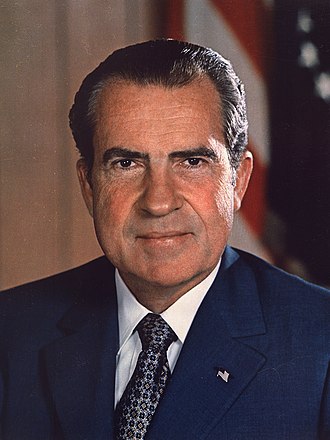
Richard M. Nixon served as the 37th President of the United States from January 1969 until his resignation in August 1974. In February 1971, he ordered the installation of a secret voice-activated taping system in the White House to preserve a historical record of his administration. Until the system's existence was revealed and dismantled in July 1973, the tapes captured Nixon directing major foreign policy initiatives, such as the opening to China, as well as his central role in the Watergate cover-up.
What Nixon talks about on the tapes
White House operations 4,718Presidential scheduling 2,225Public relations 1,784Presidential schedule 1,782Vietnam War 1,693Logistics 1,650Manolo Sanchez 1,626White House communications 1,400White House administration 1,399Presidential communication 1,243Henry Kissinger 1,191Foreign Policy 1,183
Conversations (21,010)
— Page 60 of 211President Nixon consulted with the White House operator to facilitate a specific telephone connection. The brief exchange focused on identifying and initiating contact with an individual referred to as the 'old lady.' No further administrative or policy developments were recorded during this short interaction.
President Nixon requested that Stephen B. Bull deliver a weekend news summary to his office. The President explained that he missed the report while traveling in Florida and required the materials to catch up on current events. Bull promptly agreed to fulfill the request.
President Nixon met with his aide Stephen B. Bull to request the delivery of materials pertaining to summer weekend schedules. The brief exchange focused on the logistics of obtaining these specific documents, which were reportedly not immediately available because they had been sent to the President's home. No further policy or administrative developments resulted from this short procedural request.
President Nixon and Stephen B. Bull discussed logistical preparations for an upcoming trip to New York, focusing on meetings with key political supporters. The conversation centered on acknowledging the early financial backing provided by individuals such as Bernard J. Lasker and Louis Marx. Nixon sought to ensure these prominent contributors were properly recognized for their support during his visit.
President Nixon met with Stephen B. Bull in the Old Executive Office Building to discuss matters related to the President's upcoming schedule. While the specific nature of the planned activity remains unclear due to the fragmented audio recording, the discussion centered on logistical coordination for official engagements. The conversation concluded with Bull departing the office while an unidentified person remained in the background.
President Richard Nixon met with his valet, Manolo Sanchez, in the Old Executive Office Building to review the President's upcoming schedule. This brief meeting served as a routine coordination session regarding the President's daily agenda and administrative arrangements. The discussion focused exclusively on logistical planning for Nixon’s activities.
President Nixon and John A. Knebel discuss a narrative strategy regarding the historical perception of national strength and the risks of political overreach. Their conversation centers on the practical limitations of foreign policy maneuvers and the importance of maintaining an image of national dignity. The dialogue concludes with an informal agreement to monitor incoming intelligence or confirmation of a specific developing situation.
President Nixon met with Alexander P. Butterfield in the Old Executive Office Building to discuss the physical placement of unspecified materials. The brief two-minute conversation focused on logistical arrangements regarding these items. No further details were recorded regarding the nature of the materials or any subsequent administrative actions.
President Richard Nixon met with his personal valet, Manolo Sanchez, in the Old Executive Office Building to discuss personal arrangements. During the brief interaction, the President requested refreshments, specifically tea. This exchange reflects the routine daily logistics and personal services provided by household staff within the White House environment.
President Nixon met with his personal valet, Manolo Sanchez, in the Old Executive Office Building to discuss the President's personal wardrobe and upcoming schedule. The conversation focused on the selection and presentation of specific garments, with Nixon requesting that Sanchez bring forward particular items for his inspection. The brief interaction concluded with logistical instructions regarding the President's apparel.
President Nixon met with his personal valet, Manolo Sanchez, in the Old Executive Office Building. While the specific nature of the discussion is largely obscured by the transcript, the President briefly directs Sanchez to focus on a specific task or initiative. The conversation serves primarily as a routine administrative interaction between the President and his long-time aide.
President Nixon met with his personal valet, Manolo Sanchez, in the Old Executive Office Building to provide specific instructions regarding the handling of a briefcase. The interaction was brief and focused on the logistics of transporting or securing personal or official materials. No further policy or administrative developments were recorded during this exchange.
President Nixon directed the White House operator to place a telephone call to Congressman Silvio O. Conte of Massachusetts. The exchange served strictly as a procedural request to facilitate communication between the President and the Representative. No further policy discussions or substantive developments occurred during this brief administrative interaction.
President Nixon follows up with the White House operator to determine the current status of an outgoing call to Congressman Silvio O. Conte. The operator acknowledges the request and immediately initiates a check on the connection's progress. No further developments are recorded as the President awaits confirmation of the legislative contact.
President Nixon directs the White House operator to place a telephone call to a Congressman from Massachusetts. This brief exchange serves as an administrative request to facilitate legislative outreach or political communication. No further substantive discussion occurs during this interaction.
President Nixon met with his aide Stephen B. Bull in the Old Executive Office Building to review and coordinate the President's upcoming professional schedule. The discussion focused on logistical management and time allocation for the President's official engagements. No further administrative developments were recorded beyond this routine scheduling review.
President Nixon initiates a brief interaction with the White House operator to inquire about the status of a specific, previously requested telephone call. The exchange serves as a functional check on the connectivity and progress of official communications being routed through the White House switchboard. No substantive policy matters are addressed, as the President is solely focused on confirming the logistics of the pending connection.
President Nixon met with his personal valet, Manolo Sanchez, to discuss logistical arrangements regarding the presidential residence and scheduling matters. The conversation focused on the movement of personal items or documents to the residence and the coordination of the President's upcoming five o'clock appointment. The exchange concluded with instructions for Sanchez to handle these tasks before returning to assist with the President's agenda.
President Nixon initiated this brief call to Congressman Silvio O. Conte to offer personal birthday greetings as Conte turned 50. The two engaged in lighthearted banter regarding the significance of the milestone, with the President offering advice on aging and encouraging the Congressman to enjoy the evening with his family. The conversation served as a gesture of political courtesy and goodwill between the President and a member of Congress.
Representative Silvio O. Conte initiated a brief, informal telephone call to President Nixon to offer birthday greetings upon the President turning 58. The exchange served primarily as a social gesture to acknowledge the milestone. No substantive political or policy matters were discussed during the brief interaction.
President Nixon hosted entertainer Pat Boone, his family, and associates for a tour and social visit in the Oval Office. During the meeting, Nixon presented his guests with mementos while providing historical context about the office's furnishings and the White House. The participants also engaged in a brief discussion praising the President's recent leadership decisions regarding foreign policy and the national economy, specifically noting his upcoming diplomatic initiatives and wage-price controls.
President Nixon and Stephen B. Bull met to coordinate logistics regarding the Cabinet Room schedule for Pat Boone and his family. The discussion also touched upon the timing of the President’s upcoming meeting with National Security Advisor Henry A. Kissinger. The brief interaction served to finalize arrangements for these pending appointments.
President Nixon met with his aide Stephen B. Bull to review and manage his daily appointments. The discussion focused on coordinating the schedules of key administration figures, specifically Henry Kissinger and Melvin Laird. They confirmed Kissinger’s unavailability until the afternoon and verified the timing for a 3:00 p.m. meeting with Larry.
President Nixon and Stephen B. Bull discussed logistical arrangements for an upcoming meeting with journalist Richard Wilson. Nixon expressed his desire to meet with Wilson privately, separate from a larger group of individuals. Bull confirmed the necessary scheduling adjustments, noting a thirty-minute wait period before the meeting could proceed.
President Nixon met with his personal secretary, Rose Mary Woods, to discuss matters regarding his daily agenda and administrative scheduling. The brief interaction focused on coordinating the President's upcoming commitments and managing the flow of his appointments. No major policy decisions were reached during this session, which served primarily as a routine administrative briefing.
President Nixon met with his personal valet, Manolo Sanchez, to coordinate brief logistical and personal tasks. Their discussion centered on the delivery of items to the Old Executive Office Building, the handling of a belt, and the management of the President's dog. The exchange concluded with instructions regarding the President's upcoming schedule and the need to address an incoming phone call.
President Nixon and Rose Mary Woods reviewed recent political fundraising events in Chicago and New York, assessing crowd reactions and the political stature of figures such as Richard B. Ogilvie. They discussed strategies for donor recognition, including the distribution of certificates of appreciation and letters from the President to event chairmen and speakers. Additionally, the pair coordinated guest lists and logistical arrangements for upcoming White House events, including a state dinner for Emilio Garrastazu Medici.
President Nixon initiates a request through the White House operator to place a telephone call to Arthur F. Burns. This brief interaction serves as the administrative bridge for a direct consultation with the Chairman of the Federal Reserve. No substantive policy discussions occur during this exchange, as it is strictly logistical in nature.
President Nixon met with his personal valet, Manolo Sanchez, in the Old Executive Office Building. While the bulk of the recording is withheld for personal privacy, the brief transcript captures the President inquiring about the needs of Dr. Arthur Burns. No further substantive policy discussions were documented during this short interaction.
President Nixon initiates a brief administrative interaction with the White House operator to facilitate an outgoing call. The discussion focuses strictly on telephonic logistics, serving as a functional bridge to connect the President with another party. No policy decisions or substantive political deliberations occur during this short exchange.
President Nixon consulted with Federal Reserve Chairman Arthur Burns regarding an upcoming meeting with Congressman Wright Patman concerning national economic policy and interest rates. The President informed Burns of a planned reduction in the discount rate, intending to use this move as leverage to discourage Patman from pursuing mandatory legislative controls on interest rates. Nixon ultimately decided that Burns should not attend the meeting, opting for a one-on-one session to better manage the political rapport with Patman.
President Nixon and Federal Reserve Chairman Arthur F. Burns held a brief check-in following the President’s return from a trip to Chicago. The two men exchanged brief pleasantries and confirmed the receipt of previously discussed information. The conversation concluded with Nixon expressing his intention to address the pending matter in the near future.
President Nixon contacted the White House operator to initiate an urgent telephone connection with his special counsel, Charles W. Colson. The call functioned solely as a administrative request to facilitate direct communication with his aide. No further substantive policy matters or decisions were discussed during this brief exchange.
President Nixon held a brief meeting with an unidentified individual in his Old Executive Office Building suite. The conversation was largely characterized by a withdrawn segment, leaving the specific agenda and substantive discussions undocumented. Consequently, no policy decisions or action items can be discerned from the available record.
President Nixon consulted with the White House operator to facilitate an outgoing call. This routine interaction served as a administrative step to connect the President with a third party. No substantive policy discussions or policy decisions occurred during this brief exchange.
President Nixon and Charles Colson discuss ongoing efforts to stabilize the Pay Board and manage organized labor relations ahead of a critical meeting with George Meany. Colson reports that Frank Fitzsimmons has been instrumental in brokering cooperation for the administration's Phase II economic policies and suggests that Meany would not oppose potential clemency for Jimmy Hoffa. The conversation reinforces the administration's commitment to a 5.5 percent wage increase target to ensure economic stability.
President Nixon and Charles Colson briefly discuss economic strategy, specifically focusing on the administration’s 5.5 percent wage-price control guideline. Nixon expresses confidence in the effectiveness of this figure, suggesting it will be well-received by the business community despite temporary market adjustments. The pair also touches upon political logistics regarding a potential convention before Nixon interrupts the call to attend to administrative duties.
President Nixon instructed the White House operator to connect him with special counsel Charles W. Colson. This brief administrative exchange served as the precursor to a subsequent conversation between the two men. No substantive policy discussions or decisions occurred during this brief request for a connection.
President Nixon met with his aide Stephen B. Bull to coordinate his daily schedule and manage pending telephone communications. The discussion focused on arranging calls with Henry Kissinger, Charles Colson, and other administration officials, while also finalizing plans for upcoming meetings with figures such as Melvin Laird, William Rogers, and Senator Carl Curtis. The President provided specific instructions regarding the sequence of these engagements and the logistical coordination required for his personal office affairs.
President Nixon held a brief administrative interaction with the White House operator to facilitate an outgoing communication. This exchange served a routine operational purpose, allowing the President to initiate a connection through the executive switchboard system. No substantive policy discussions or significant political decisions took place during this short administrative engagement.
President Nixon and Charles Colson discussed positive public sentiment regarding the administration’s economic policies based on monitored telephone interviews conducted by Albert E. Sindlinger. They critiqued the complacency of big business leaders, contrasting their pessimistic outlook with the bullish optimism displayed by American consumers. Additionally, Nixon reflected on his recent nonpartisan speaking engagements and the importance of maintaining a leadership posture to effectively manage economic perceptions heading into the 1972 election cycle.
President Nixon and Charles Colson discuss strategies for managing frustration with the business community, particularly academic elites and corporate leaders who remain dissatisfied with the administration despite efforts to engage them. Nixon expresses exasperation regarding these groups and emphasizes the necessity of maintaining a non-partisan approach to political maneuvering. The conversation briefly touches upon economic indicators, such as retail sales, and the prospects for pending tax legislation.
President Nixon initiates a request through the White House operator to place a telephone call to Senator Barry M. Goldwater. This administrative action serves to facilitate direct communication between the President and the Senator regarding undisclosed matters. The conversation concludes with the operator confirming the request to connect the two parties.
President Nixon met with his aide, Stephen B. Bull, to coordinate his immediate schedule and manage logistical delays. The conversation focused on upcoming meetings with Secretary of Defense Melvin Laird and National Security Advisor Henry Kissinger regarding a pending troop withdrawal announcement. Nixon emphasized the need for a strategic game plan and requested further private discussion with Bull to organize these priority administrative actions.
President Nixon held a brief communication with the White House operator to facilitate an outgoing call. The interaction functioned primarily as a logistical exchange to connect the President with a third party. No substantive policy matters or administrative decisions were documented during this short engagement.
President Nixon and Henry Kissinger met briefly in the Old Executive Office Building to coordinate the President's upcoming daily schedule. The discussion focused on managing the logistics and priorities of the presidential calendar during a busy period in the administration. This brief consultation ensured alignment on time management and the prioritization of pending executive tasks.
President Nixon instructed the White House operator to place an outgoing call to Chicago Mayor Richard J. Daley. This brief communication served solely to initiate contact with the Mayor for a subsequent conversation. No further policy discussions or substantive developments occurred during this administrative exchange.
President Nixon instructed the White House operator to place an outgoing call to a contact in Chicago. This brief administrative interaction served as a logistical step to facilitate direct communication with an unnamed individual. No further substantive policy or strategic discussions occurred during this exchange.
President Nixon and Senator Barry Goldwater discussed Nixon's recent speeches in New York and Chicago, with a primary focus on the administration's stance on national defense and the necessity of the Amchitka nuclear test. Goldwater praised Nixon's firm position against disarmament, while the President emphasized the dangers posed by Soviet military growth and the failures of the McNamara era. They agreed on the need for the administration to provide Republican lawmakers with informational fact sheets to better defend these policies against environmentalist and congressional criticism.
Senator Barry Goldwater met with President Nixon to share positive feedback regarding the President's recent public appearances and to discuss their shared concerns about national defense. Goldwater recounted his recent speeches in which he defended the necessity of a strong military posture and dismissed environmentalist objections to defense testing. Nixon emphasized the urgent need to maintain U.S. military strength against Soviet advances, expressing frustration with Congressional efforts that he equated to disarmament.
President Nixon and Henry Kissinger met to discuss strategy for an upcoming troop withdrawal announcement in Vietnam, specifically debating whether to set a withdrawal figure of 40,000 or 45,000 troops. The President aimed to seize the political initiative and neutralize administration critics while maintaining a residual force as a key leverage point for future negotiations with North Vietnam. Additionally, the President spoke briefly with Chicago Mayor Richard J. Daley to thank him for his hospitality during a recent visit. The conversation also touched upon the President's diplomatic outreach to China and the Soviet Union in the pursuit of a "generation of peace."
President Nixon consulted with a White House operator to facilitate an urgent telephone connection with Chicago Mayor Richard J. Daley. Upon learning that Daley was unavailable and his secretary was at lunch, the President instructed the operator to patch him through to the secretary instead. The interaction reflects the President's efforts to establish direct communication with the Mayor, though the specific purpose of the intended discussion remained unstated.
President Richard M. Nixon contacted Chicago Mayor Richard J. Daley to express his personal appreciation for the hospitality extended to him and First Lady Pat Nixon during his recent political visit to Chicago. Nixon specifically acknowledged the Mayor’s welcoming signage and nonpartisan atmosphere, while highlighting his agreement with Daley's views on national defense. The brief exchange concluded with pleasantries regarding the upcoming spring wedding of Daley's son and acknowledgment of the logistical support provided by Jack Reilly.
President Nixon met with Alexander P. Butterfield in the Old Executive Office Building to discuss the schedule of Secretary of Defense Melvin R. Laird. The brief exchange focused on administrative logistics regarding Laird's availability. No major policy decisions were recorded during the short interaction.
President Nixon instructed the White House operator to place a telephone call to his daughter, Tricia Nixon Cox. The conversation served strictly as a request for assistance in connecting a private family communication. No other political, administrative, or substantive policy matters were addressed during this brief exchange.
President Nixon initiated a call to his daughter, Tricia Nixon Cox, through the White House operator. Upon learning that she was unavailable, the President chose to forgo the attempt and instructed the operator to hold off on further efforts. No substantive policy matters or official developments were discussed during this brief administrative exchange.
President Nixon interacts briefly with the White House operator to facilitate outgoing communications. The exchange serves as a routine administrative task to connect the President with other parties. No substantive policy discussions or significant decisions occur during this brief operational contact.
President Nixon met with H. R. Haldeman and Stephen B. Bull to coordinate his upcoming daily schedule and ensure appropriate preparations for several high-level meetings. The discussion focused on logistics for appointments with Secretary of Defense Melvin R. Laird, including a press photograph, as well as sessions involving Secretary of State William P. Rogers and national security advisors Henry Kissinger and Alexander Haig. This briefing served to organize the administrative flow and personnel attendance for these key executive engagements.
President Nixon, Secretary of Defense Melvin Laird, and National Security Advisor Henry Kissinger met to discuss the status of the Vietnam War following Laird's recent trip to South Vietnam, specifically focusing on the military situation, Vietnamization progress, and future troop withdrawal strategies. Laird expressed confidence in the combat effectiveness of the South Vietnamese forces and their improved logistical capabilities, while the group evaluated the political ramifications of the recent South Vietnamese election and the need for continued U.S. financial support. The participants also debated the timing and logistics of future troop withdrawal announcements to balance domestic political pressures with ongoing negotiations with North Vietnam.
President Nixon, William Rogers, H.R. Haldeman, and Alexander Haig met to discuss international travel logistics, foreign policy, and domestic political strategy. The President explored the viability of a Latin American trip, weighing its potential for strengthening alliances against the challenges of scheduling and security. They also reviewed pending foreign aid legislation and deliberated on the timing and content of upcoming Vietnam troop withdrawal announcements in the context of the forthcoming State of the Union address. The participants emphasized the need to balance international diplomatic engagements with domestic economic concerns and public expectations.
President Nixon met with Senator Carl T. Curtis and advisor Clark MacGregor to discuss pressing agricultural concerns, specifically corn prices and the political implications of pending legislation regarding strategic grain reserves. The President urged Curtis to maintain a discreet, ongoing assessment of these agricultural issues while balancing farmer sentiment with the Administration's broader economic goals. Following these deliberations, the conversation transitioned to a lengthy interview-style session with journalist Richard Wilson, during which Nixon outlined his philosophy on governance, foreign policy, and the necessity of restoring American competitiveness through institutional reform and long-term strategic initiatives.
President Nixon contacted the White House operator to place an urgent call to Henry Kissinger. The operator identified that Kissinger was likely located in New York at the time of the request. Nixon specifically inquired about Kissinger's presence at the residence or office of Nelson Rockefeller to facilitate the connection.
President Nixon initiates a brief telephone request to the White House operator to be connected with William E. Timmons. The conversation serves solely as a logistical bridge to facilitate communication with his assistant for legislative affairs. No substantive policy discussions or further actions are recorded during this exchange.
President Nixon contacted the White House operator to facilitate a telephone connection with his special counsel, Charles W. Colson. The interaction served as a brief administrative step to initiate an urgent or private consultation with a key advisor. No further substantive policy matters were discussed during this specific operator-assisted request.
President Nixon and Charles W. Colson discussed the national economy, focusing on the recent reduction of the discount rate by Arthur Burns and the ongoing volatility of the stock market. They reviewed the progress of Pay Board regulations, emphasizing the need to frame these policies to avoid the appearance of yielding to labor interests. Additionally, Colson reported on Frank Fitzsimmons' offer to provide intelligence gathered by labor investigators regarding Edward M. Kennedy, which the President encouraged him to pursue.
President Nixon consulted with William E. Timmons regarding the status of pending foreign aid legislation and military procurement bills in Congress. They assessed the recent Senate passage of an economic aid bill and strategized for upcoming votes on security-related amendments and military funding. The President directed Timmons to monitor legislative developments and prepare signals for House leadership concerning the necessity of a new foreign aid authorization bill versus relying on appropriations.
President Nixon and Henry Kissinger discuss personnel concerns regarding Secretary of the Air Force Robert C. Seamans, Jr. and the internal political dynamics involving Secretary of Defense Melvin Laird and Secretary of State William P. Rogers. They address strategic planning for upcoming Vietnam troop withdrawal announcements and the timing of congressional pressure. Additionally, they review Kissinger's recent media engagements regarding foreign policy—including India-Pakistan tensions—and coordinate the scheduling of upcoming meetings with international leaders like Willy Brandt and Georges Pompidou.
President Nixon initiates a brief telephone call through the White House operator to contact George P. Shultz. The conversation serves solely as a logistical request to establish communication with the Director of the Office of Management and Budget. No policy discussions or substantive developments occur during this short administrative interaction.
President Nixon consulted with the White House operator to confirm the current whereabouts of George P. Shultz. The operator clarified that Shultz was attending meetings in the Bahamas rather than being immediately available. Upon receiving this information, the President acknowledged the update and concluded the brief inquiry without further action.
President Nixon contacted the White House operator to place an outgoing call to Chief of Staff H. R. Haldeman. The brief exchange served as a routine administrative request to establish communication with a key advisor. No further substantive policy matters were discussed during this brief connection.
President Nixon and H. R. Haldeman coordinate the final arrangements for the appointment of Earl L. Butz to replace Clifford M. Hardin as Secretary of Agriculture. They discuss scheduling a meeting between John Mitchell and Butz, as well as the timing for the public announcement and the President's personal involvement in the rollout. Additionally, the pair briefly reviews positive reactions to the President's recent fundraising speeches and outlines the protocol for his upcoming Veterans Day ceremony.
President Nixon contacted the White House operator to request a personal telephone connection to his daughter, Tricia Nixon Cox. This brief administrative interaction was intended solely to facilitate the private call. No other substantive policy or political matters were discussed during this exchange.
President Nixon and his daughter, Tricia Nixon Cox, discuss the reception and technical logistics of a recent Republican fund-raising dinner in Boston featuring Gerald Ford and Bob Hope. They review the success of the event, including the funds raised and the audience's reaction to the President's broadcast remarks, while also noting the attendance of Tricia's family friends. Additionally, the conversation touches upon upcoming political concerns in Massachusetts and the President's personal schedule for the following weekend.
President Nixon and Attorney General John Mitchell discuss the potential appointment of Earl L. Butz to lead the Department of Agriculture, with Mitchell expressing confidence in Butz's suitability for the role. The two men also review political feedback regarding recent speeches and endorsements from Ronald Reagan and Nelson Rockefeller. Additionally, they touch upon ongoing tensions between the administration and Governor Reagan regarding Department of Health, Education, and Welfare (HEW) programs, which Mitchell intends to address with John Ehrlichman.
President Nixon and John Mitchell engaged in a brief, informal discussion regarding the reception of a recent political appearance, possibly in Chicago. The conversation focused on evaluating the public perception and efficacy of an unnamed individual's performance and endorsements. The meeting concluded with instructions to relay a message to a third party, referred to as 'the doctor,' though the specific identity and strategic intent remain obscured by the vague transcript.
President Nixon met with his personal valet, Manolo Sanchez, in the Oval Office to coordinate logistics regarding the President's daily schedule. The brief discussion centered on immediate administrative transitions and movement requirements. No substantive policy matters were addressed during this interaction.
President Nixon met with John Ehrlichman, John Whitaker, and Secretary of Agriculture Earl Butz to discuss political strategy regarding depressed corn prices and agricultural policy heading into the 1972 election cycle. The President emphasized the need for Butz to serve as a strong, partisan advocate for farmers to counter potential anti-administration sentiment in agricultural states. The group also addressed the logistics of a forthcoming administrative announcement regarding government reorganization, with Nixon insisting on a concise, one-sentence statement to avoid overcomplicating the issue.
President Nixon met with his personal valet, Manolo Sanchez, in the Old Executive Office Building for a brief, routine administrative interaction. The conversation focused on a refreshment order, specifically the delivery of coffee to the President. No substantive policy matters or political developments occurred during this brief exchange.
President Nixon and Henry Kissinger met briefly in the Old Executive Office Building to coordinate the National Security Advisor's schedule. The discussion focused on managing Kissinger’s availability to ensure efficient access to the President. No major policy decisions were recorded during this brief administrative exchange.
President Nixon and John D. Ehrlichman discussed the strategic framing of personnel changes within the Department of Agriculture, specifically regarding the transition from Secretary Clifford M. Hardin to Earl L. Butz. They reviewed potential government reorganization plans, focusing on the placement of the Coast Guard and concerns regarding Secretary John A. Volpe’s management. Additionally, the President briefly evaluated his public relations strategy, weighing the benefits of potential interviews with various media outlets, including Reader’s Digest and Playboy.
President Nixon and H.R. Haldeman met to coordinate the administrative structure and logistics for a forthcoming presidential press conference. The discussion focused primarily on determining the desired format and presentation strategy for the event. This meeting served as a preparatory session to ensure the President's public appearance was effectively organized.
President Nixon met with H. R. Haldeman and Henry Kissinger to strategize for an upcoming televised announcement, weighing the benefits of holding it in the Oval Office versus the press room to maximize public impact while limiting media access. The conversation also shifted to staffing concerns, specifically the President's frustration with Peter Peterson's performance and the need for a more loyal, strategic replacement in the commerce role. Finally, the group discussed foreign policy and domestic political risks, including the timing of further troop withdrawals in Vietnam and the complications of a potential European diplomatic trip.
President Nixon and H. R. Haldeman coordinated the logistics for a presidential press announcement to ensure optimal timing for ABC broadcast editing. They settled on a 3:45 p.m. start time to accommodate a subsequent National Security Council meeting at 5:00 p.m. Haldeman was tasked with communicating these arrangements to Press Secretary Ron Ziegler while maintaining strict confidentiality regarding the event.
President Nixon and H.R. Haldeman discussed the timing and potential reaction to an upcoming Vietnam troop withdrawal announcement, as well as the agenda for a National Security Council meeting focused on the Strategic Arms Limitation Talks (SALT). They also addressed the handling of a Daniel Schorr FBI investigation and the public relations strategy for Julie Nixon Eisenhower's speeches and schedule, including concerns about her overexposure and the need for better coordination between the East and West Wings. Additionally, the conversation touched upon First Lady Pat Nixon's reluctance to participate in White House events and presidential trips.
President Nixon held a brief administrative exchange with an unidentified individual regarding communication protocols. The primary purpose of the discussion was to arrange a follow-up telephone call with Alexander M. Haig, Jr. The President instructed the interlocutor to facilitate this contact as soon as Haig became available.
President Nixon met with his personal aide, Manolo Sanchez, to discuss logistical details regarding the President's upcoming schedule. The conversation focused on the administrative management of personal commitments and potential documentation requirements. No significant policy decisions were recorded during this brief administrative exchange.
President Nixon met with his personal valet, Manolo Sanchez, to attend to minor administrative and maintenance tasks within the Oval Office. The two discussed the repair of a leaking pen that had malfunctioned during recent air travel and the retrieval of a pair of eyeglasses. Sanchez agreed to handle these requests, ensuring the President's personal items were cleaned and properly maintained.
President Nixon met with his personal valet, Manolo Sanchez, in the Old Executive Office Building for a brief, informal interaction. The dialogue focuses on routine logistical coordination regarding the President's schedule and upcoming evening plans. No substantive policy matters or major political decisions were recorded during this segment of the conversation.
President Nixon met with an aide to discuss the drafting and presentation strategy for an upcoming troop withdrawal announcement. He emphasized keeping the public statement concise and directed that it reference the recommendations of Secretary of Defense Melvin Laird. Additionally, the President requested updated intelligence estimates concerning North Vietnamese troop deployments in Cambodia, Laos, and South Vietnam to inform his planning.
President Nixon met with his personal valet, Manolo Sanchez, in the Old Executive Office Building to discuss the President's personal schedule. During the brief interaction, Nixon directed Sanchez to retrieve his pet Irish Setter, King Timahoe, and bring the dog to the office. This conversation reflects the informal, routine nature of the President's interactions with his domestic staff regarding his personal environment.
President Nixon met with his aide Stephen B. Bull to review draft remarks prepared for an upcoming appearance. The brief consultation focused on finalizing specific language requested by the President for his address. Following the review of the prepared text, the interaction concluded with the President acknowledging the completion of the requested material.
Archival review of this recording confirms that the audio contains no discernible conversation or meaningful content between President Nixon and the unidentified party. Despite its formal designation as a meeting, the brief segment remains unintelligible. Consequently, no substantive policy discussions, decisions, or developments occurred during this recorded interval.
President Nixon and John Ehrlichman discuss the internal strategy for reorganizing the Department of Agriculture, emphasizing the need to secure support from Roy Ash and the Ash Council. Nixon instructs Ehrlichman to coordinate with Charls Walker to ensure the reorganization plan is presented as a necessary concession to achieve broader community development goals. They also agree to balance the public framing of the decision by providing credit to both Earl Butz and Clifford Hardin.
President Nixon and John Ehrlichman discuss the logistics and necessity of providing private financial backing for a sensitive negotiation involving overseas interests. Nixon emphasizes that the operation cannot rely on government funding, necessitating a more hardened approach to secure the required resources. The two agree on the urgency of the task and move to finalize the strategy for executing the funding.
President Nixon contacted the White House operator to facilitate a personal telephone connection with First Lady Thelma “Pat” Nixon. This brief interaction served an administrative purpose, functioning solely to initiate a private communication between the President and his wife. No substantive policy discussions or governmental decisions were conducted during this exchange.
President Nixon consulted with an unidentified individual regarding the professional background of Earl L. Butz. The discussion focused specifically on the duration of Butz’s experience with farm ownership and operations. The conversation concluded with the President requesting a follow-up phone call to confirm these details.
President Nixon directs the White House operator to place a telephone call to Mrs. Mason. This interaction serves as a brief administrative request to facilitate communication with the specified party. No other substantive policy matters or further actions were discussed during this exchange.
President Nixon held a brief discussion regarding the background and potential appointment of Earl L. Butz. During the meeting, Nixon provided instructions to finalize the selection process, emphasizing the need to bring the candidate to the White House. This interaction served to coordinate the final arrangements for securing Butz's confirmation.
President Nixon and First Lady Pat Nixon discussed the formation of a U.S. delegation for an upcoming trip to the Ivory Coast. The President expressed specific concerns regarding the composition of the delegation, particularly regarding the recommendations provided by Jeremiah Milbank of the Republican National Committee. The two agreed to review and revise the list of potential attendees to ensure the appointments met the President’s standards.
President Nixon and First Lady Pat Nixon coordinate their personal schedules and upcoming political matters, including the resignation of Secretary of Agriculture Clifford Hardin. The President discusses his plans to work through an upcoming National Security Council meeting before traveling to Camp David. The couple also briefly touches upon event logistics, including the presence of Billy Graham and the management of various guests.