Nixon, Richard M. (President)
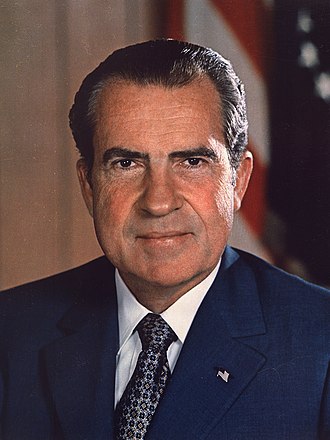
Richard M. Nixon served as the 37th President of the United States from January 1969 until his resignation in August 1974. In February 1971, he ordered the installation of a secret voice-activated taping system in the White House to preserve a historical record of his administration. Until the system's existence was revealed and dismantled in July 1973, the tapes captured Nixon directing major foreign policy initiatives, such as the opening to China, as well as his central role in the Watergate cover-up.
What Nixon talks about on the tapes
White House operations 4,718Presidential scheduling 2,225Public relations 1,784Presidential schedule 1,782Vietnam War 1,693Logistics 1,650Manolo Sanchez 1,626White House communications 1,400White House administration 1,399Presidential communication 1,243Henry Kissinger 1,191Foreign Policy 1,183
Conversations (21,010)
— Page 61 of 211President Nixon contacted the White House operator to place a personal telephone call to First Lady Pat Nixon. The interaction served as a brief administrative bridge to facilitate direct communication with his wife. No policy matters or significant government decisions were discussed during this short exchange.
President Nixon contacted the White House operator to facilitate a telephone connection with First Lady Pat Nixon. The brief interaction served as a administrative request to initiate a private conversation between the President and his wife. No substantive policy or political discussions took place during this short exchange.
President Nixon requested that the White House operator place a telephone call to Mrs. Lexington. This brief interaction served solely as a functional administrative request to facilitate private communication. No substantive policy discussions or political developments occurred during this exchange.
President Nixon consulted with the White House operator to facilitate an outgoing call. This brief interaction served administrative purposes to connect the President with another party. No substantive policy matters or major political decisions were recorded during this brief exchange.
President Nixon and First Lady Pat Nixon discussed the vetting of potential political appointees recommended by Jeremiah Milbank. The conversation focused on the suitability of Robert Dunlop and Bernard J. Lasker for upcoming delegation assignments, with specific concerns regarding financial arrangements and family accompaniment. The President directed that all relevant documentation be forwarded to H.R. Haldeman to finalize the review process.
President Nixon and First Lady Pat Nixon briefly discussed the logistics of a political appointment or personnel recommendation involving an unidentified individual and their family. The President specifically addressed the prohibition of direct financial support in this context, suggesting alternative arrangements to provide assistance. He ultimately directed that the matter be forwarded to Harry Hurd (identified as Holland) to handle the necessary administrative and financial considerations.
President Nixon directs H. R. Haldeman to ensure Alexander Butterfield notifies Cabinet officers regarding an imminent announcement before it becomes public. The President also expresses frustration over external lobbying of the First Lady regarding delegation appointments, specifically mentioning Bernard Lasker and Robert Dunlop. To exert greater control over these selections and bypass State Department influence, Nixon orders Haldeman and Rose Mary Woods to personally vet all future delegation members.
President Nixon met with an unknown individual in the Old Executive Office Building to discuss personal refreshments. The brief interaction focused on the President's preference for coffee and involved playful engagement with his Irish Setter, King Timahoe. No substantive policy matters or administrative decisions were addressed during this short exchange.
President Nixon directed H. R. Haldeman to ensure that cabinet officers are briefed regarding an upcoming announcement and to oversee the composition of official delegations. Expressing frustration with State Department-led appointments, Nixon instructed Haldeman to personally vet future delegation members in coordination with secretary Rose Mary Woods to ensure political efficacy. This directive aimed to centralize control over executive appointments and bypass traditional bureaucratic influence.
President Nixon met with his valet, Manolo Sanchez, to discuss the presence of pets in the office and the condition of the President's dog, King Timahoe. During the brief exchange, Nixon permitted the dogs to remain in the office while he worked, provided they remained well-behaved. The conversation concluded with a brief status update on King's health following a recent incident.
President Nixon and Alexander P. Butterfield met briefly to discuss administrative matters regarding upcoming birthday observances for Senator Hugh Scott. The President reviewed a note from William E. Timmons concerning the Senator's birthday folder and addressed minor logistics regarding office arrangements. No major policy decisions were made during this brief procedural exchange.
President Nixon met with Alexander P. Butterfield to coordinate logistical adjustments to the President’s daily schedule. The brief discussion primarily focused on the involvement of Stephen B. Bull in managing these upcoming arrangements. The interaction concluded with the President instructing Butterfield to bring Bull in to finalize the scheduling details.
President Nixon met with outgoing Secretary of Agriculture Clifford Hardin and his designated successor, Earl Butz, to coordinate the transition and manage the associated media rollout. The participants discussed the timing of Hardin's resignation and the logistics for a forthcoming joint press conference to announce the change in leadership. Additionally, the group touched upon international matters, including U.S. relations with Turkey, and addressed administrative planning regarding the potential reorganization of the Department of Agriculture.
President Nixon contacted the White House operator to place a personal telephone call to his daughter, Julie Nixon Eisenhower. The brief exchange served solely as a request to connect the President with his daughter. No other political, administrative, or policy-related matters were discussed during this interaction.
President Nixon met with an unidentified staff member to provide instructions regarding a message received from Manila. The President inquired about the whereabouts of another individual and directed the staffer to deliver the information once that person returned. The brief exchange concluded with the President requesting coffee.
President Nixon initiates a brief request for the White House operator to connect him with his daughter, Julie Nixon Eisenhower. This interaction serves purely as a functional administrative request to facilitate a personal telephone call. No policy or substantive political matters are discussed during the brief communication.
President Nixon consults his daughter, Julie Nixon Eisenhower, regarding the scheduling of professional photography sessions in the Old Executive Office Building and the Lincoln Sitting Room to support upcoming press publicity. The two coordinate travel plans to Camp David and discuss staff assignments, including the appointment of John K. Andrews, Jr. to handle editorial work for the First Family. Nixon also confirms that H.R. Haldeman is coordinating with David N. Parker to ensure staff harmony regarding upcoming trip logistics.
President Nixon and his daughter, Julie Nixon Eisenhower, coordinate logistical details regarding a forthcoming photo session featuring the President. Julie discusses staffing assignments for an upcoming project involving the First Lady, specifically mentioning the appointment of a young editor named Andrews. The brief exchange also addresses family scheduling, including the President's work obligations and their shared plans for an upcoming trip to Camp David.
President Nixon contacted the White House operator to initiate a telephone call to Senate Minority Leader Hugh Scott. The brief exchange served as a procedural request to connect the President with Senator Scott. No further substantive policy matters were discussed during this specific interaction.
President Nixon and H. R. Haldeman discussed the political messaging and public image of Secretary of Agriculture Earl L. Butz. They emphasized highlighting Butz's Indiana roots and agricultural background to appeal to rural voters. Additionally, the pair briefly reviewed the arduous process of implementing government reorganization initiatives spearheaded by the Ash Council and John Ehrlichman.
President Nixon consulted with a White House operator to facilitate an outgoing call. The brief exchange focused on establishing a connection with another party. No substantive policy discussions or major decisions occurred during this interaction.
President Nixon held a brief, informal coordination call to request that an unknown associate, possibly Henry Kissinger, join him in the Old Executive Office Building. He instructed the intermediary to convey the request to the individual without urgency, emphasizing flexibility in the timing of the meeting. No substantive policy matters were addressed during this exchange.
President Nixon calls Senate Minority Leader Hugh Scott to extend birthday wishes and commend him for his successful leadership in securing a key Senate vote on a foreign military aid amendment. The conversation focuses on the strategic value of providing foreign assistance to reduce U.S. troop levels in regions like Korea and Vietnam. Henry Kissinger joins briefly to offer further congratulations and acknowledge Scott's recent progress in fostering Republican unity during legislative proceedings.
President Nixon and Henry Kissinger discuss the strategy for an upcoming Vietnam troop withdrawal announcement, expressing significant frustration with Secretary of State William P. Rogers and Secretary of Defense Melvin Laird over their policy disagreements and suspected leaks to the press. Nixon evaluates different withdrawal timelines and troop levels, ultimately leaning toward a two-month incremental plan despite pressure from his cabinet for longer-term commitments. The conversation concludes with Kissinger tasked to manage the communications with Rogers and Laird to ensure they align with the President's preferred policy direction.
President Nixon directed the White House operator to place a telephone call to Senator John C. Stennis. This brief administrative interaction served as a precursor to a substantive discussion between the President and the Senator. The primary action item was the successful establishment of this communication link.
President Nixon telephoned Senator John C. Stennis to express his gratitude for the successful passage of the Stennis amendment regarding the foreign aid program. The two discussed the strategic necessity of the legislation, with the President emphasizing that the aid is essential for maintaining U.S. foreign policy and facilitating the withdrawal of American troops from Vietnam, Korea, and Cambodia. Nixon credited Stennis's hard work in the Senate for securing this legislative victory despite a difficult political environment.
President Nixon initiates a brief request for the White House operator to connect him with Charles W. Colson. This communication serves as an administrative bridge to facilitate a direct conversation between the President and his Special Counsel. No further substantive policy matters are discussed during this brief exchange.
President Nixon and H. R. Haldeman met to coordinate the President's schedule and manage administrative distractions, including restricting unnecessary telephone calls. The discussion centered on staffing concerns, specifically the vetting of candidates for Secretary of Commerce, with Nixon emphasizing the need for an appointee who would effectively collaborate with Henry Kissinger and George Shultz. They also briefly reviewed ongoing political priorities, including a pending textile vote and potential business council involvement.
President Nixon instructed the White House operator to place a telephone call to the police. This brief interaction served as a logistical request for the operator to facilitate official communication between the President and law enforcement authorities. No further details regarding the specific nature or purpose of the contact were captured in this recording.
President Nixon and Charles Colson discuss strategies to manage business community anxieties and bolster confidence in the national economy following the implementation of Phase II wage and price controls. They characterize business leaders as unnecessarily timid despite favorable economic indicators, such as rising consumer demand and optimistic projections from economists. Nixon and Colson decide to utilize high-profile administration figures, including Secretary John B. Connally and Vice President Spiro Agnew, to urge business leaders to adopt a more aggressive investment stance. Additionally, the conversation touches upon the administration's ongoing efforts to influence Federal Reserve Chairman Arthur Burns regarding the money supply and notes recent successes in legislative maneuvers concerning military and economic aid.
President Nixon and Charles Colson discuss the state of the U.S. economy, specifically focusing on stock market fluctuations, consumer confidence, and the perceived inaction of business leaders. Nixon expresses frustration with the lack of bold leadership from the corporate sector, contrasting it with the resilience shown by average consumers on Main Street. The conversation serves as an informal policy review regarding economic sentiment and the administration's ongoing efforts to influence public and market perception.
President Nixon initiates a request through the White House operator to be connected with Charles W. Colson. The brief exchange serves as a routine administrative step to facilitate a direct conversation between the President and his special counsel. The primary action item is the immediate placement of the call to Colson.
President Nixon instructed Charles W. Colson to coordinate with speechwriter William Safire to draft a brief summary highlighting positive economic indicators. The President specifically requested that the document emphasize recent growth in retail sales to support potential upcoming public statements. Colson committed to delivering the prepared material to the President by the following morning.
President Nixon contacted the White House operator to place an outgoing call to speechwriter William L. Safire. The exchange served as a logistical request to initiate contact with a key member of his staff. No substantive policy discussions occurred during this brief administrative interaction.
President Nixon and Alexander P. Butterfield discussed logistical arrangements for a visit to Washington, D.C., by former President Lyndon B. Johnson. The conversation focused on the former President's stay at Blair House and planned engagements, including a briefing with Henry Kissinger. Nixon authorized the meeting with Kissinger to ensure the former administration remained informed on key policy issues.
President Nixon held a brief, informal interaction with a White House operator while working in the Executive Office Building. The exchange served as a routine check-in regarding the operator's current status and workload. No significant policy decisions or substantive governmental matters were addressed during this brief encounter.
President Nixon directs Charles Colson to coordinate with speechwriter William Safire to draft briefing materials regarding potential public relations risks associated with the U.J.L.C.O. The President requests that these documents include the most favorable available statistics to help mitigate negative optics during future public events. No immediate deadline is set for the project, reflecting a strategic effort to prepare for potential criticism.
President Nixon and Henry Kissinger discussed the upcoming announcement regarding Vietnam troop withdrawal timelines. The conversation centered on weighing various withdrawal options, with Nixon expressing a preference to deliberate further despite internal debate over the proposed durations. Kissinger was tasked with coordinating with Secretary of State William P. Rogers to manage the messaging and internal policy friction surrounding these strategic decisions.
President Nixon met with his aide, Stephen B. Bull, in the Old Executive Office Building to review and coordinate the President's upcoming daily schedule. The conversation focused on administrative planning and logistical arrangements for future presidential engagements. No major policy developments or definitive decisions beyond routine time management were recorded in this brief interaction.
President Nixon held a brief administrative interaction with the White House operator to facilitate an outgoing communication. The conversation served primarily as a functional request to connect the President with another party. No substantive policy matters or strategic developments were discussed during this brief exchange.
President Nixon and William L. Safire discuss the final preparations for an upcoming press conference, specifically focusing on the structure and content of the provided briefing book. Nixon emphasizes the importance of incorporating positive economic indicators to counter public uncertainty while reinforcing his strategy to avoid commenting on political matters, such as remarks by Edward Kennedy or Edmund Muskie. Ultimately, Nixon decides to adopt a "no comment" stance toward political queries to maintain a presidential demeanor and deny the media opportunities to portray him as actively campaigning.
President Nixon consults with speechwriter William Safire regarding the framing of economic messages to counter public and media uncertainty. The President stresses the need for rigorous preparation for press appearances, expressing frustration with administration officials who improvise or lack sufficient research. Nixon decides to avoid political commentary during upcoming engagements to deny critics the opportunity to characterize his activities as partisan.
President Nixon contacted the White House operator to facilitate a telephone connection with Press Secretary Ronald L. Ziegler. The brief interaction served as a logistical administrative request to reach a key member of the executive staff. No further policy discussions or substantive developments occurred during this specific exchange.
President Nixon held a brief, non-substantive interaction with a White House operator. No policy decisions, political discussions, or significant administrative actions were recorded during this segment. The exchange served primarily as a functional communication with switchboard staff.
President Nixon and Press Secretary Ronald Ziegler reviewed recent press coverage, focusing on the resignation of Secretary of Agriculture Clifford Hardin and the appointment of his successor, Earl L. Butz. They discussed strategies to deflect media scrutiny regarding the administration's investigation of reporter Daniel Schorr, reaffirming their commitment to correcting inaccurate press reports. Finally, they prepared for an upcoming press conference, anticipating questions on foreign policy, Phase II economic plans, and China relations.
President Nixon and Press Secretary Ronald Ziegler discuss media management strategies, specifically addressing unfavorable news reports regarding administration staff departures and background checks. The conversation focuses on refuting allegations of staff firings and providing favorable talking points regarding government reorganization and agricultural policy. Nixon instructs Ziegler to emphasize the normalcy of security investigations and to steer media inquiries toward the administration's legislative successes in the Senate.
President Nixon coordinated with the White House operator to place an urgent call to prominent attorney John J. McCloy. Kissinger provided assistance in locating McCloy’s contact information, directing the operator to reach him at his private residence. The conversation focused exclusively on the logistics of establishing this communication link.
Henry Kissinger coordinated with the White House operator to initiate a telephone call to diplomat John J. McCloy. Kissinger requested that the operator route the call through his office, ensuring the connection was properly facilitated for his discussion with McCloy. This administrative coordination reflects Kissinger’s ongoing efforts to manage high-level communications during his tenure as National Security Advisor.
President Nixon communicated with a White House operator regarding an error in the telephone connection process. The operator acknowledged that the call had been placed unintentionally and apologized for the mistake. No substantive policy matters or official business were conducted during this brief exchange.
President Nixon directed the White House operator to place a telephone call to Senator William Proxmire. The request served as a preliminary administrative step to facilitate a direct conversation between the President and the Senator. No further discussion occurred during this brief exchange.
President Nixon and Henry Kissinger discussed strategies for managing Vietnam troop withdrawal announcements to minimize political backlash and maintain leverage in ongoing negotiations. During their conversation, they identified John J. McCloy as a potential candidate for the U.S. Ambassador to NATO, tasking Kissinger with persuading him to accept the position to bolster U.S.-European relations. They also reviewed personnel matters and planning for the President's upcoming trip to the USSR, specifically emphasizing the importance of avoiding stopovers that could undermine their diplomatic objectives.
President Nixon initiated this phone call to Senator William Proxmire primarily to extend birthday greetings and express professional respect for the Senator’s political tenacity. Beyond the personal pleasantries, the two men briefly touched upon the complexity of the national economy and the importance of bipartisan cooperation on legislative efforts. The conversation concluded with an informal discussion regarding the performance of the Green Bay Packers and the potential of running back John Brockington.
President Nixon contacted the White House operator to facilitate an urgent communication with his Chief of Staff, H.R. Haldeman. The brief exchange served solely as a logistical request to initiate a connection with Haldeman. No further substantive policy matters were discussed during this operator-assisted call.
President Nixon initiated a brief telephone call with H. R. Haldeman through the White House operator. The conversation remained informal and consisted primarily of greetings between the two men. No substantive policy discussions, decisions, or action items were recorded during this exchange.
President Nixon and H. R. Haldeman coordinate the composition and logistical arrangements for a U.S. delegation to Liberia, specifically prioritizing the inclusion of Bernard J. Lasker. Nixon emphasizes the importance of allowing Lasker and Billy Graham to travel on the First Lady's plane to Liberia while ensuring they do not accompany her on the rest of her tour. The conversation also shifts to the administration's staffing needs, with the two discussing the potential assignment of Peter G. Peterson to either a role in Japan or the Commerce Department.
President Nixon initiated a brief telephone request for the White House operator to connect him with his close friend and confidant, Charles G. "Bebe" Rebozo. This call serves as a logistical interaction typical of the President’s routine communication efforts. The primary action item was the successful placement of the call to facilitate a private conversation between the two men.
President Nixon and Henry Kissinger discuss the potential appointment of John J. McCloy to the administration. Seeking to avoid the complications of a Cabinet-level position, Nixon decides to offer McCloy a role specifically within the National Security Council focusing on European matters. This decision aims to utilize McCloy's expertise while limiting his influence over broader administrative concerns.
President Nixon consulted with his close friend Charles G. "Bebe" Rebozo regarding the reception of his recent political speeches in New York and Chicago, specifically discussing his effort to remain "above the battle" despite media pressure for a more partisan approach. The two also addressed logistics for an upcoming trip to the People's Republic of China and concerns regarding press access. Nixon concluded the conversation by inviting Rebozo to join him at Camp David for the weekend, instructing him to coordinate the travel plans with Rose Mary Woods.
President Nixon and his daughter, Julie Nixon Eisenhower, coordinate their upcoming personal schedules and social arrangements. Their discussion focuses on logistical planning for a visit to Camp David, including the celebration of Bebe Rebozo’s birthday and the involvement of Rose Mary Woods. Additionally, they reflect on recent public appearances, including the reaction to the President's November 9 Chicago speech and upcoming speaking engagements for the First Lady.
President Nixon and Henry Kissinger coordinate the communication strategy regarding a forthcoming announcement involving Japan. Nixon directs Kissinger to inform the Japanese government of the news immediately rather than delaying. To handle this diplomatic notification, they agree to use a back-channel approach via Treasury Secretary John B. Connally, a move Nixon views as a strategic effort to bolster Connally’s standing.
President Nixon contacted the White House operator to facilitate an urgent connection with Press Secretary Ronald L. Ziegler. The brief interaction served as a logistical bridge to initiate a direct line of communication between the President and his primary spokesperson. No further substantive policy matters were addressed during this short administrative exchange.
President Nixon and Press Secretary Ronald Ziegler reviewed the evening television news coverage of the President's Veterans Day ceremony, recent Department of Agriculture announcements, and Senate votes. They assessed how different networks reported on administration initiatives, with Nixon expressing a clear preference for ABC's news coverage over that of CBS and NBC. Additionally, they briefly discussed the minimal media attention given to an investigation regarding Daniel Schorr.
President Nixon dictated a memorandum for his files while working in his office at the Old Executive Office Building. The recording, which appears to contain unrelated or corrupted audio in Welsh, captures the President in the process of documenting administrative business. Aside from the dictation, no significant policy developments or substantive discussions involving other participants were recorded.
President Nixon contacted the White House operator to initiate an urgent telephone connection with Charles W. Colson. This brief administrative interaction served as the necessary logistical step to facilitate a private consultation between the President and his special counsel. No further substantive discussion took place during this exchange.
President Nixon consulted with the White House operator to facilitate communication with Charles W. Colson. The operator confirmed Colson's current location at 'Root Holmes' and informed the President that a message had been left for Colson to initiate a return call. This exchange served strictly as a logistical coordination to establish a direct line of communication between Nixon and his special counsel.
President Nixon initiates a brief interaction with the White House operator to inquire about the quality of the food service. This informal exchange serves as a check-in regarding the logistical support provided to the President's office. No significant policy decisions or strategic developments emerge from this brief social inquiry.
President Nixon utilized this session to dictate a memorandum for his personal records. The recording captures the President documenting internal affairs, though specific details remain classified as part of a withdrawn item. This brief dictation serves as a formal entry for the White House files.
President Nixon consulted with a White House operator to facilitate an outgoing communication from his office in the Old Executive Office Building. This brief interaction served administrative purposes to connect the President with an outside party. No substantive policy matters or major developments were recorded during this brief logistical exchange.
President Nixon utilized this brief session to dictate a memorandum for his personal files. While the specific content of the recording remains restricted under a personal returnable withdrawal, the session served as an administrative record-keeping action by the President. No other participants were involved in this dictated entry.
President Nixon consulted Charles Colson regarding Federal Reserve Chairman Arthur F. Burns's recent public remarks on inflation in New York. Concerned primarily with how Burns's statements were perceived by his specific audience, Nixon directed Colson to move beyond wire service summaries and secure a firsthand account of the reception. Colson committed to contacting an attendee immediately to evaluate the impact of the comments on liquidity and investor sentiment, reporting his findings back to the President that evening.
President Nixon and Charles W. Colson held a brief, one-minute meeting in the Old Executive Office Building. Given the lack of a transcript and the extreme brevity of the interaction, the specific agenda remains undocumented. This encounter reflects the frequent, rapid consultations typical of the Nixon-Colson professional relationship regarding White House operations.
President Nixon contacted the White House operator to place an outgoing call to his personal secretary, Rose Mary Woods. The brief exchange served as a procedural request to facilitate communication with a key staff member. No policy matters or substantive political topics were discussed during this connection.
President Nixon utilized this session to dictate a memorandum for his personal files regarding administrative or policy-related matters. The recording serves as a formal record of the President's internal documentation process during his time in the Executive Office Building. No other participants were involved in this brief dictation.
President Nixon consulted with the White House operator to facilitate an outgoing call. This interaction served a logistical purpose, as the President required assistance from the operator to connect with a specific party. No further policy discussions or substantive developments are recorded in this brief administrative exchange.
President Nixon calls Rose Mary Woods to check on her recovery from an illness and discuss upcoming weekend plans. Nixon encourages Woods to join him at Camp David, despite her hesitation regarding space constraints and her personal responsibilities. The President ultimately instructs Woods to attend a White House church service and tour with her visiting aunt to ensure the relative is properly escorted.
President Nixon met briefly with his personal secretary, Rose Mary Woods, in the Old Executive Office Building. While the specific substance of this one-minute exchange remains undocumented due to the lack of a transcript, such meetings typically involved coordinating personal schedules, managing correspondence, or addressing confidential administrative directives. No major policy decisions or significant developments are recorded as a result of this brief encounter.
President Nixon utilized this session to dictate a memorandum for his personal files regarding recent developments. The brief recording serves as a record of the President's private reflections or administrative observations. No further details are available due to the withdrawal of the personal material.
President Nixon held a private meeting with an unidentified individual in the Old Executive Office Building. Due to the lack of a transcript and the unintelligible nature of the audio, the specific topics, decisions, or purpose of this discussion remain historically obscured. The meeting concluded when the unknown participant departed shortly before 9:13 pm.
President Nixon and Charles Colson discuss the positive reception among Wall Street figures regarding Federal Reserve Chairman Arthur Burns' recent address to the New York Stock Exchange and his comments on money supply. Colson reports that despite some lingering concerns regarding international policy and a perceived 'profit squeeze,' key financial leaders remain optimistic about economic growth. Additionally, Colson updates the President on labor relations, confirming that AFL-CIO President George Meany intends to keep labor representatives involved in the Pay Board process despite recent disagreements.
President Nixon and Charles Colson discuss ongoing organizational tasks and the management of sensitive information reaching the press. The dialogue touches upon the public's uncertainty regarding the administration’s Phase 2 economic policies and the origins of a leaked story involving the White House. The President concludes by confirming that a specific administrative action or announcement is scheduled to take place the following evening.
President Nixon met with his personal valet, Manolo Sanchez, to discuss administrative tasks involving correspondence with the University of Nebraska football coaching staff and veterans' groups. The President inquired about the status of a specific letter he intended to review and briefly checked in on his own health and physical state. No significant policy decisions were made during this brief, informal encounter.
President Nixon and his personal secretary, Rose Mary Woods, met to discuss administrative matters and personal correspondence. The President dictated a note intended for the University of Nebraska football coach and addressed a letter received from editors at the Omaha World-Herald. Additionally, the brief meeting touched upon updates regarding Woods's health.
President Nixon met with Alexander P. Butterfield to discuss administrative matters and the approval of a foreword for a book associated with Richard Wilson. The President reviewed the document, which had been prepared by John K. Andrews, Jr. and Raymond K. Price, Jr., and provided authorization for it to proceed to the publisher. The brief discussion also touched upon the delivery of materials involving Rose Mary Woods and the review of statistical data from Charles W. Colson.
President Nixon initiates a request for the White House operator to place a telephone call to Charles W. Colson. This brief interaction serves as a routine administrative step to facilitate a direct conversation between the President and his Special Counsel. No further policy or strategic developments are discussed during this brief exchange.
President Nixon and H.R. Haldeman discuss concerns regarding the health of Rose Mary Woods and the potential need for a medical evaluation by General Walter R. Tkach. Following this, the participants briefly shift focus to the state of the national economy and persistent inflation issues. The conversation concludes with a directive for Haldeman to monitor Woods’s schedule and well-being.
President Nixon utilized this session to dictate a memorandum for his personal records. As no transcript is available and a portion of the recording was withdrawn, the specific content of the dictation remains undisclosed to researchers. This entry serves as a formal documentation of the President's internal administrative activities regarding his personal files.
President Nixon and H. R. Haldeman discussed the health and professional schedule of Rose Mary Woods, focusing on the need for her to take a legitimate vacation to recover from ongoing fatigue. The President expressed concerns regarding the optics of her repeated absences and emphasized that she must be in peak condition for upcoming travel commitments. Haldeman was tasked with coordinating a plan to ensure she steps away to rest before the administration's demanding schedule resumes.
President Nixon met with an unidentified individual to organize and secure specific documents and a book. The brief interaction focused on the physical handling and placement of these materials within the office. The meeting concluded with Nixon providing direct instructions to the staff member to ensure the items were properly arranged.
President Nixon held a meeting with an unidentified male visitor in his Old Executive Office Building suite. Due to the lack of an available transcript and the presence of a withdrawn personal segment, the specific substance of the discussion remains undocumented. Consequently, no policy decisions or action items can be verified from this record.
President Nixon met with his valet, Manolo Sanchez, to facilitate the delivery of a specific book to Alexander P. Butterfield. The brief exchange focused on coordinating this administrative task, with the President issuing instructions for the item's transfer. The meeting concluded shortly thereafter, marking a routine operational interaction within the White House staff.
President Nixon met with William Safire and Ronald Ziegler to coordinate communication strategies regarding ongoing administrative projects. The discussion focused on the logistics of a specific initiative referred to as the "overwintering of Texas," likely involving internal policy development or public relations messaging. Nixon issued instructions to convey that certain obligations or project requirements were no longer necessary, signaling a shift in the administration's operational priorities.
President Nixon recorded a brief, informal memorandum for his files, likely intended as a personal note or reminder. The dictated content is cryptic, involving vague references to a third party, the handling of "nectar," and instructions regarding telephone communications. The dialogue appears to reflect private observations or instructions rather than matters of official state policy.
President Nixon and H. R. Haldeman consulted on the scheduling and strategic rollout of the upcoming Vietnam troop withdrawal announcement. The discussion prioritized managing press coverage and coordinating the timing of the announcement with Representative Gerald R. Ford. Additionally, the pair addressed administrative logistics regarding Rose Mary Woods’ travel arrangements to California.
President Nixon coordinates with the White House operator to manage the timing and rollout of an upcoming public announcement. Seeking to avoid a disorganized or premature reaction from press or political associates, he directs that the official release be rescheduled for 4:30 p.m. He further instructs the operator to ensure key figures, specifically Jerry Ford, are aligned with the administration's messaging before the information is made public.
President Nixon and Charles Colson discuss strategies for managing the national economy and combating internal administration leaks. Nixon expresses frustration with the business community's reaction to economic price controls and tasks Colson with preparing more effective, 'zingy' fact sheets to communicate economic successes to the public. Additionally, the two address a recent unauthorized leak regarding an investigation into CBS journalist Daniel Schorr, with Nixon mandating a search for the source and reiterating his distrust of the press.
President Nixon and Charles Colson discuss strategies to improve public perception of the administration's economic policies, specifically addressing corporate and labor resistance to current inflation and pricing measures. Nixon directs Colson to disseminate positive economic data—including trends in unemployment, interest rates, and retail pricing—to influential congressmen and stakeholders. The conversation emphasizes the need to counter negative media narratives and "left-wing" economic biases, urging a more aggressive and optimistic communication strategy to reassure the public.
President Nixon and Henry Kissinger discuss concerns regarding internal leaks and personnel loyalty within the administration. Expressing frustration over unauthorized disclosures to the press, the President emphasizes the need to identify the sources of these leaks and enforce internal discipline to prevent further backbiting. The conversation concludes with a directive to handle personnel matters discreetly while reinforcing the administration's stance against untrustworthy staff members.
President Nixon and Henry Kissinger met to strategize the upcoming announcement regarding U.S. troop withdrawals from Vietnam and the management of associated press inquiries. They discussed the risks of potential leaks by White House staff and the necessity of coordinating the messaging with key congressional leaders like Gerald Ford and Hugh Scott. Furthermore, the conversation touched upon the ongoing India-Pakistan conflict, the status of diplomatic appointments, and the development of contingency plans for increased air power in Vietnam should peace negotiations with North Vietnam collapse.
President Richard M. Nixon met with his personal aide, Manolo Sanchez, in the Old Executive Office Building for a brief discussion. The primary substance of the interaction remains restricted due to the withdrawal of personal materials from the archival record. Consequently, no formal policy decisions or official action items were documented in the available summary of this brief meeting.
President Richard M. Nixon met with his personal valet, Manolo Sanchez, in the Old Executive Office Building. The recording consists entirely of a withdrawn segment classified as a personal returnable item, indicating no substantive policy or administrative matters were captured. Consequently, no official decisions or developments were documented during this brief encounter.