Nixon, Richard M. (President)
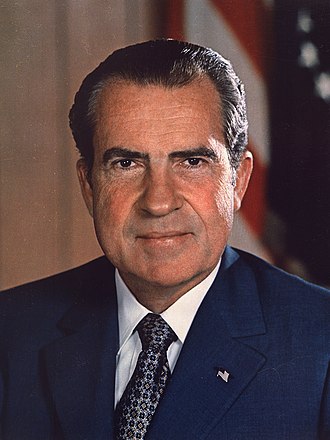
Richard M. Nixon served as the 37th President of the United States from January 1969 until his resignation in August 1974. In February 1971, he ordered the installation of a secret voice-activated taping system in the White House to preserve a historical record of his administration. Until the system's existence was revealed and dismantled in July 1973, the tapes captured Nixon directing major foreign policy initiatives, such as the opening to China, as well as his central role in the Watergate cover-up.
What Nixon talks about on the tapes
White House operations 4,718Presidential scheduling 2,225Public relations 1,784Presidential schedule 1,782Vietnam War 1,693Logistics 1,650Manolo Sanchez 1,626White House communications 1,400White House administration 1,399Presidential communication 1,243Henry Kissinger 1,191Foreign Policy 1,183
Conversations (21,010)
— Page 59 of 211President Nixon initiated this brief courtesy call to Representative Robert H. Steele to offer personal birthday greetings. Beyond the well-wishes, the President specifically commended Steele for his effective political outreach and appeal to younger voters. The conversation served primarily as a gesture of rapport-building between the President and a junior Republican legislator.
President Nixon consulted with the White House operator to facilitate contact with Congressman Joel T. Broyhill. The operator informed the President that the Congressman was currently in Florida and offered to place a call to his out-of-state location. Nixon authorized the operator to attempt the connection to reach the Congressman before his scheduled return to Washington.
President Nixon attempted to reach Congressman Joel T. Broyhill via telephone at his Florida residence. After the White House operator reported that the line went unanswered, the President instructed the operator to cease the attempts for the time being. Nixon decided to postpone the outreach and try to contact the Congressman at a later time.
President Nixon initiates a request through the White House operator to be connected with Charles W. Colson. The brief exchange serves as a logistical step to facilitate direct communication with his special counsel. No further policy discussions or substantive developments occur during this recording.
President Nixon consulted with his personal valet, Manolo Sanchez, to discuss potential travel plans for an upcoming trip to Florida. The two reviewed the President’s recent travel history to the state and considered the logistical feasibility of a short five-day visit. Ultimately, the conversation concluded with the President deciding not to pursue the trip at that time.
President Nixon met with his personal valet, Manolo Sanchez, to coordinate his immediate schedule and travel logistics. The discussion focused on tight timing requirements for an upcoming engagement, necessitating a swift departure. Sanchez confirmed the logistical arrangements before exiting the office to facilitate the President's transition.
President Nixon met with his personal valet, Manolo Sanchez, to discuss adjustments to his daily schedule following the cancellation of a meeting with Attorney General John N. Mitchell. Noting the change in plans, the President opted to utilize the newfound time for additional work. This brief interaction served primarily to reorganize the President's immediate agenda for the afternoon.
President Nixon held a brief discussion with an unidentified individual to extend birthday greetings to Representative Joel T. Broyhill. During the conversation, Nixon also briefly touched upon his upcoming travel plans to Florida. The exchange served primarily as a social and political courtesy rather than a substantive policy deliberation.
President Nixon and H.R. Haldeman discuss logistics for an upcoming trip to Florida, specifically evaluating staff accommodations and the inclusion of Leonard Garment. The conversation shifts to addressing impending wage increases for government employees, with Nixon tasking Haldeman to coordinate a public statement with Donald Rumsfeld, George Shultz, and Paul McCracken. They also briefly touch upon broader foreign aid program matters.
President Nixon and Henry Kissinger discuss strategies for managing relations with India and Pakistan ahead of a meeting with Prime Minister Indira Gandhi. Nixon expresses deep frustration with the Indian leadership and skepticism regarding their intentions toward Pakistan, urging Secretary of State William Rogers to adopt a tougher diplomatic stance. They also touch upon Vietnam negotiations, specifically addressing the status of American POWs and military operations in Laos and Cambodia.
President Nixon instructed the White House operator to place a telephone call to the police. This brief interaction represents a direct administrative request by the President to mobilize law enforcement personnel. No further details regarding the nature of the request or the intended department were recorded.
President Nixon and Henry Kissinger coordinate the President's upcoming schedule and preparation requirements following a demanding day involving meetings with foreign dignitaries, including Kofi Busia and Indira Gandhi. The discussion focuses on managing Nixon's time and readiness for high-stakes 'pitch sessions' or diplomatic briefings. Kissinger confirms the logistics for an upcoming appointment, ensuring the President is adequately prepared for the scheduled engagement.
President Nixon and Charles Colson discuss a breakthrough with maritime unions that allows for the shipment of grain to the Soviet Union, a feat they note previous administrations failed to accomplish. Colson reports that the deal is set for a public announcement, contingent on final coordination with the Soviet embassy. The President directs Colson to involve Henry Kissinger to ensure the process remains on schedule, noting the significant positive impact this development is expected to have on the American farm belt.
President Nixon and Charles Colson discuss preparations for a meeting with Indian Prime Minister Indira Gandhi and the potential economic impact of upcoming unemployment statistics on the stock market. Nixon directs Colson to coordinate with Henry Kissinger to ensure high-level diplomatic outreach regarding the Gandhi visit. Additionally, the pair discusses maintaining pressure on the Pay Board to advance the administration’s economic objectives.
President Nixon and Henry Kissinger discuss finalizing a grain deal with the Soviet Union that has been stalled by shipping labor disputes. Nixon emphasizes the significant political impact the agreement will have on the Corn Belt and instructs Kissinger to coordinate with Charles Colson and the Soviet embassy to resolve the remaining obstacles. The President expresses urgency in securing the agreement, aiming to make a formal announcement by the following day.
President Nixon met with his aide, Stephen B. Bull, in the Oval Office to address administrative matters regarding the President’s upcoming daily schedule. The brief discussion served to coordinate logistics and confirm arrangements for Nixon's professional agenda. No major policy developments resulted from this brief scheduling consultation.
President Nixon and his personal secretary, Rose Mary Woods, discuss the guest list for an upcoming state dinner honoring Indian Prime Minister Indira Gandhi. Nixon expresses strong personal distaste for former U.S. ambassadors to India, specifically Chester Bowles and John Kenneth Galbraith, while confirming that these individuals were excluded from the invitation list. The conversation concludes with the President deciding not to involve former ambassadors in the event protocols.
President Nixon and Rose Mary Woods discuss the guest list and planning for an upcoming state dinner honoring Indian Prime Minister Indira Gandhi. The conversation focuses on streamlining the invitee list, specifically regarding officials from the State Department, military representatives, and cabinet members like Elliot Richardson. Nixon emphasizes limiting the number of attendees to avoid unnecessary complications while managing the social protocol for the event.
President Nixon, hosting Ghanaian Prime Minister Kofi A. Busia at the White House, requested that Alexander Haig arrange for Peter G. Peterson to join them for a meeting. Haig successfully contacted Peterson to facilitate this introduction. The call served primarily as a logistical coordination to include Peterson in the ongoing diplomatic discussion with the Ghanaian leader.
President Nixon met with Ghanaian Prime Minister Kofi A. Busia and Alexander M. Haig, Jr. to discuss strengthening U.S.-Ghanaian relations, supporting Ghana’s democratic stability, and addressing the country's significant foreign debt crisis. Busia sought assistance in rescheduling debt inherited from the previous administration, drawing a parallel to successful international restructuring efforts in Indonesia. Nixon expressed strong support for Busia's leadership, tasked his staff—including Peter G. Peterson and John B. Connally—with exploring financial solutions, and discussed potential visits by First Lady Pat Nixon to Ghana to bolster bilateral ties.
President Nixon contacted the White House operator to facilitate a personal telephone call to First Lady Pat Nixon. The brief interaction served solely to initiate a connection between the President and the First Lady. No further policy or administrative matters were addressed during this exchange.
President Nixon met with his valet, Manolo Sanchez, to coordinate logistics regarding upcoming diplomatic gift exchanges and personal scheduling. The discussion primarily focused on the procurement of gold pins intended as gifts for the family of Ghanaian Prime Minister Kofi A. Busia. Additionally, the pair briefly reviewed scheduling details for First Lady Pat Nixon and Julie Nixon Eisenhower, including considerations regarding the First Lady's wardrobe.
President Nixon consulted with the White House operator to facilitate an outgoing call. This interaction served purely as a logistical bridge to connect the President with a subsequent party. No substantive policy matters or strategic decisions were addressed during this brief administrative exchange.
President Richard M. Nixon met with Alexander P. Butterfield in the Oval Office to discuss the President's upcoming schedule. The brief conversation focused on logistical planning and coordination, specifically involving H.R. Haldeman. No major policy decisions were recorded during this short administrative check-in.
President Nixon consulted with First Lady Pat Nixon regarding her upcoming diplomatic travel to Africa following his meeting with the Prime Minister of Ghana. The President urged Mrs. Nixon to include Ghana on her itinerary to reinforce the administration's appreciation for the nation's supportive voting record at the United Nations. Consequently, the President decided to move forward with planning a two-country tour for the First Lady, emphasizing projects related to schools and international cooperation.
President Nixon and First Lady Pat Nixon discuss potential diplomatic travel plans for the First Lady to West African nations, specifically countries neighboring Liberia. The conversation focuses on the strategic importance of demonstrating American support for regional development and education initiatives. They finalize the decision to coordinate with the ambassador to put these travel arrangements into motion as a gesture of international goodwill.
President Nixon contacted the White House operator to initiate a telephone call to his special counsel, Charles W. Colson. The interaction served as a brief administrative request to facilitate communication with a key staff member. No further policy or strategic matters were discussed during this short exchange.
President Nixon and H.R. Haldeman discussed logistics for Pat Nixon’s upcoming travel schedule to Ghana and surrounding African nations, focusing on coordinating invitations and press coverage. The conversation transitioned to managing White House dinner guest lists and administrative decisions regarding which staff members and former ambassadors should receive invitations. Nixon also coordinated travel arrangements for a trip to Florida, emphasizing the inclusion of loyal, long-serving staff members over others, while noting the public popularity of Henry Kissinger.
President Nixon and Charles Colson discuss ongoing negotiations regarding the Pay Board and the status of a potential Soviet grain deal involving Henry Kissinger and Anatoliy Dobrynin. The two also review recent stock market performance, noting that despite late-day profit taking, the market showed signs of upward momentum. Nixon expresses concern regarding the negative impact of reporting by Daniel Schorr on market stability while anticipating upcoming unemployment data.
President Nixon met with several Republican House members to discuss critical legislative and political concerns, including the administration's judicial nominees, busing policies, and pending Office of Economic Opportunity (OEO) legislation. The participants reviewed the President's upcoming foreign policy agenda, specifically focusing on the Taiwan UN vote and his forthcoming trips to the People's Republic of China and the Soviet Union. The conversation also touched upon domestic economic issues, notably the dock strike and potential grain sales to the Soviet Union, as Nixon sought to align his legislative strategy with key congressional allies.
President Nixon and William E. Timmons discussed legislative strategies for securing foreign aid funding, focusing on overcoming resistance within the Senate Foreign Relations Committee. The participants assessed current vote counts among conservatives and expressed confidence in capturing necessary swing votes. To avoid future legislative roadblocks, Nixon directed that foreign assistance be bundled into the defense appropriation bill going forward.
President Nixon initiated a brief telephone request to the White House operator to be connected with Arthur F. Burns. This administrative communication served as the setup for a subsequent conversation with the Chairman of the Federal Reserve. No further substantive policy matters were discussed during this brief exchange.
President Nixon consulted the White House operator to locate Federal Reserve Chairman Arthur F. Burns regarding a returned phone call. Upon learning that Burns was attending an event at the Madison Hotel, the President instructed the operator to leave a message with Burns' wife. Nixon decided against interrupting Burns at the function, opting instead to speak with him directly during an upcoming receiving line appearance that evening.
President Nixon instructed the White House operator to connect him with Arthur Burns, the Chairman of the Federal Reserve. This brief interaction served solely as a logistical request to initiate a telephone communication with the economic official. No further policy discussions or substantive developments occurred during this brief exchange.
President Nixon instructs the White House operator to place a return call to an unidentified individual who had attempted to reach him earlier that day. He specifically requests that the operator convey a message to the individual's wife confirming the President's intent to return the call. The exchange serves as a brief administrative coordination to facilitate direct communication between Nixon and the unnamed party.
President Nixon and H. R. Haldeman met to review the guest list and preparations for an upcoming White House dinner for Indian Prime Minister Indira Gandhi. Nixon expressed frustration with the inclusion of certain activist and State Department-recommended guests, ordering a more exclusive list that prioritized political allies and restricted White House staff attendance. Additionally, they discussed strategies for disseminating the President's welcoming remarks to ensure they were framed correctly in the press.
President Nixon contacted the White House operator to facilitate a telephone connection with his Chief of Staff, H.R. Haldeman. This brief administrative interaction served as the necessary step to bridge the President to his top aide for an urgent or scheduled consultation. No further substantive discussion occurred during this specific exchange.
President Nixon contacted the White House operator to place a follow-up call to H.R. Haldeman. Upon learning that Haldeman had not yet arrived at the residence, the President instructed the operator to continue attempting to reach him. This interaction reflects the routine administrative coordination required to facilitate urgent communications between the President and his Chief of Staff.
President Nixon contacted the White House operator to request a telephone connection with either Vernon C. Coffey or Craig S. Campbell. This brief administrative interaction served as a directive for the operator to facilitate communication with one of these two individuals. No further policy or strategic matters were discussed during this short exchange.
President Nixon held a brief telephone conversation with Craig S. Campbell. Following an initial exchange of greetings, the remainder of the recorded interaction was categorized as a personal, returnable item. No substantive policy discussions or official directives were captured in this segment.
President Nixon instructed the White House operator to facilitate a telephone call to Cornell football player Ed Marinaro. The President sought assistance in verifying the correct spelling and pronunciation of the athlete's name before the call was placed. This request served to ensure the President was prepared to address the player properly during their conversation.
President Nixon and H.R. Haldeman discussed logistical arrangements for the President’s upcoming trip scheduled for November 5, 1971. The brief conversation focused on placing a telephone call to Commander Craig S. Campbell and securing authorization for Manolo Sanchez to accompany the President on the flight. No further substantive policy matters were addressed during this short exchange.
President Nixon contacted the White House operator to follow up on the status of a phone call he had initiated several days prior to Lloyd J. Christie in California. The President requested that the operator check their records to determine if Christie had returned the call or if there was any record of the previous attempt. The operator acknowledged the request and committed to verifying the status of the communication.
President Nixon directed the White House operator to place a telephone call to Lloyd J. Christie, located in Santa Fe Springs. The brief interaction served as a logistical step to initiate contact with Christie for an unspecified purpose. The operator successfully confirmed the subject's identity and proceeded to connect the call as requested by the President.
President Nixon contacted the White House operator to facilitate an outgoing call to Douglas L. Hallett. This brief interaction served solely as a logistical request to establish communication with the intended party. No further substantive policy matters or decisions were discussed during this exchange.
President Nixon initiated this brief courtesy call to Lloyd J. Christie to personally acknowledge and thank him for a letter Christie had recently sent. The President expressed appreciation for Christie's support and connected with him through their shared history as residents of Whittier, California. During the exchange, Nixon also requested that Christie convey his gratitude to his son and his colleagues for their service abroad.
President Nixon contacted the White House operator to facilitate an urgent communication with his Chief of Staff, H.R. Haldeman. This brief interaction served solely as a logistical request to initiate a phone call between the President and his top aide. No substantive policy discussions occurred during this brief exchange.
President Nixon and H.R. Haldeman discuss the scheduling of John Ehrlichman, specifically considering whether he should meet with the President or proceed with travel plans to Boston. Nixon expresses that a meeting with Ehrlichman would be useful but determines that substantive discussions regarding political strategy should be postponed to a later time. The brief exchange concludes with an agreement to defer these political consultations.
President Nixon contacted the White House operator to facilitate a telephone connection with John D. Ehrlichman. The primary purpose of the brief interaction was to initiate this communication link for further discussion. No substantive policy matters or decisions were addressed during this brief logistical exchange.
President Nixon and John Ehrlichman discuss the potential appointment of Earl L. Butz as Secretary of Agriculture, with Nixon expressing concerns regarding Butz's name. They deliberate on the recommendation of the "Triumvirate"—Frederic Malek, Bryce Harlow, and John Whitaker—while considering an alternative candidate, Representative John Kyl. Nixon instructs Ehrlichman to have Whitaker evaluate Kyl's suitability during an upcoming meeting, tasking them with assessing whether Kyl would be a strong political asset.
President Nixon contacted the White House operator to initiate an urgent telephone call to National Security Advisor Henry A. Kissinger. The brief interaction served solely to facilitate this communication channel. No further substantive policy discussions occurred during this exchange.
President Nixon consulted with the White House operator to facilitate an upcoming meeting with National Security Advisor Henry Kissinger. This brief interaction served as a logistical coordination effort to ensure the President was prepared for his scheduled session with Kissinger. No substantive policy discussions occurred during this brief administrative exchange.
President Nixon directs the White House operator to place a telephone call to Edward V. Regan, the newly elected county executive in Buffalo, New York. The President provides the necessary spelling and location details to ensure the operator can successfully facilitate the connection. This administrative request initiates an outreach effort to a local political official.
President Nixon consulted with the White House operator to facilitate a communication regarding Ned Reagan, the newly elected county executive in Buffalo, New York. The brief exchange focused on identifying and initiating contact with the local official. No further policy discussions or significant administrative decisions were recorded during this brief administrative interaction.
President Nixon met briefly with his personal valet, Manolo Sanchez, in the Oval Office. The discussion focused on logistical matters regarding the President's personal requirements. The interaction concluded with a request for refreshments.
President Nixon held a brief morning meeting with an unidentified individual in the Oval Office to discuss his daily schedule. The conversation primarily focused on coordinating a forthcoming telephone call involving H. R. Haldeman. No substantive policy matters were recorded before the unidentified participant departed.
President Nixon and H.R. Haldeman discussed a wide range of scheduling and political strategy issues, including upcoming domestic travel, the President's interactions with foreign leaders such as Indira Gandhi, and managing the press. They coordinated the logistics for a forthcoming grain deal with the USSR, emphasizing the need to secure credit for the administration while navigating labor union involvement. Additionally, they reviewed strategies for the Pay Board, the handling of Supreme Court nominees, and concerns regarding negative media coverage and potential incitement from political opponents.
President Nixon instructed the White House operator to place a telephone call to Charles W. Colson. This brief communication served solely as a logistical request to initiate contact with his Special Counsel. No further policy discussions or significant developments occurred during the exchange.
President Nixon and Charles Colson discuss a public relations strategy to maximize the political impact of a Soviet Union grain deal. Nixon directs Colson to have the relevant representatives announce the deal on Capitol Hill to generate favorable press coverage. They plan to frame the announcement as a weekend-long media narrative to highlight the President’s personal involvement in the negotiations.
President Nixon directs H. R. Haldeman to facilitate phone calls to several Republican county executives in New York, specifically requesting contact information for leadership in Nassau, Suffolk, and Erie counties. The President seeks these engagements to bolster his political outreach efforts, including a planned conversation with Congressman Jack Kemp. These calls are part of a broader strategy, which Nixon refers to as a 'four-channel drive,' intended to secure regional political support.
President Nixon and Stephen B. Bull reviewed the President's morning schedule, specifically addressing upcoming meetings and communications. Nixon instructed Bull to defer a meeting with Arthur F. Burns, opting to take a phone call rather than an in-person visit. The discussion also briefly touched upon John D. Ehrlichman and logistics regarding a planned trip to Florida.
President Nixon and Stephen B. Bull coordinated scheduling logistics regarding an upcoming meeting with Arthur F. Burns. The President directed Bull to facilitate communication with Burns concerning his recent discussions with Indian Prime Minister Indira Gandhi. Additionally, the pair managed internal administrative arrangements to ensure these high-priority diplomatic and economic updates were handled promptly.
President Nixon spoke with Edward V. Regan to establish a direct line of communication between Regan and John Ehrlichman regarding domestic policy and county government issues. The two discussed the political fallout of a recent bond issue, with Nixon validating Regan’s support for the measure as a responsible political action despite its unpopularity. The conversation concluded with a brief, lighthearted exchange concerning the performance of the Buffalo Bills and Representative Jack Kemp.
President Nixon met with John Ehrlichman, later joined by H.R. Haldeman and George Shultz, to discuss a broad range of political and economic issues. The group focused on coordinating strategy for upcoming congressional votes on busing, the potential veto of child development legislation, and the selection of a new Secretary of Agriculture. Furthermore, they reviewed economic policies, specifically addressing concerns regarding the dock strike, the potential re-imposition of wage-price freezes, and the need to manage Arthur Burns regarding monetary policy and the money supply.
President Nixon calls John V. N. Klein to congratulate him on his recent electoral victory in Suffolk County. The two discuss their mutual plans to visit Florida and the prospects for improving the weather. Additionally, the President mentions that John Ehrlichman will soon be meeting with New York county executives to provide administrative support.
President Nixon met with aide Stephen B. Bull to coordinate logistical details for upcoming ceremonial events. The discussion focused on scheduling a signing ceremony, managing the distribution of souvenir pens, and arranging photography sessions for participants, including Charles R. Jonas and Julie Nixon Eisenhower. The pair also reviewed plans for a tour and photo opportunity at the Executive Office Building.
President Nixon met with newly elected Congressman H. John Heinz III, his wife Teresa Heinz, and Richard K. Cook for a brief, informal introductory meeting. The discussion focused on Heinz's recent electoral victory, his age, and the political landscape of his district. Nixon also offered personal advice to the young congressman regarding the financial benefits of investing in Washington, D.C. real estate.
President Nixon consulted with the White House operator to facilitate a telephone connection. The brief exchange served as a logistical step to reach another party for a subsequent conversation. No substantive policy matters or decisions were recorded during this interaction.
President Nixon met with Stephen B. Bull in the Oval Office to coordinate logistics for the upcoming state visit of Indian Prime Minister Indira Gandhi. The discussion focused specifically on the protocols and arrangements for her arrival at the White House. This brief meeting served to ensure the administrative staff was prepared for the high-level diplomatic engagement.
President Nixon consulted with the White House operator to facilitate a communication or record regarding Ted Brant, a member of the Secret Service. The brief exchange focused on identifying and clarifying the spelling of Brant's name to ensure accurate documentation. This interaction served an administrative purpose in managing personnel information within the White House communications system.
President Nixon initiates a request to the White House operator to be connected with Secretary of State William P. Rogers. The brief exchange serves as a logistical bridge to facilitate direct communication between the President and the Secretary. No substantive policy discussions occur during this short administrative interaction.
President Nixon initiated a brief telephone call to Ted Brehm to inquire about his health and express personal support from himself and the White House staff. The conversation focused on Brehm's recovery and his potential return to work. Nixon also briefly discussed the care Brehm was receiving from his nurses.
President Nixon held a brief, informal telephone conversation with an unidentified individual, referred to as Ted, who was hospitalized. Nixon expressed his personal well-being and encouragement, emphasizing that the staff missed him and remained supportive during his recovery. The discussion served as a morale-boosting gesture, with Nixon urging his associate to focus on a swift return to his duties.
President Nixon met with Stephen B. Bull to coordinate the logistics for upcoming meetings in the Cabinet Room. The discussion focused on scheduling details regarding Secretary of State William P. Rogers and the arrival of Indian Prime Minister Indira Gandhi. Bull briefed the President on the movements of these officials to ensure the administration's preparations were aligned.
President Nixon and Secretary of State William P. Rogers met to coordinate their strategy ahead of the President's upcoming summit with Indian Prime Minister Indira Gandhi. Rogers briefed the President on his prior discussions with Gandhi regarding rising tensions between India and Pakistan, specifically focusing on the necessity of a political solution, the reduction of arms shipments, and the potential for mutual troop withdrawals. The two agreed on the importance of maintaining a firm but cordial stance to discourage military escalation while ensuring the administration’s efforts to mediate the conflict were clearly understood.
President Richard Nixon met with Indian Prime Minister Indira Gandhi to discuss major geopolitical shifts, specifically the U.S. outreach to the People's Republic of China and the upcoming summits with the Soviet Union. The leaders navigated delicate topics including India’s regional security concerns, the ongoing conflict in Vietnam and the status of American prisoners of war, and the broader goal of transitioning from an era of confrontation to one of pragmatic communication. Nixon emphasized that his diplomatic initiatives with communist powers were intended to moderate global hostilities rather than undermine traditional U.S. alliances.
President Nixon contacted the White House operator to facilitate a telephone connection with his special counsel, Charles W. Colson. The brief exchange served as a routine administrative request to initiate communication with a key staff member. No further policy discussions or substantive developments occurred during this brief interaction.
President Nixon met with Henry Kissinger and subsequently Arthur F. Burns to discuss high-stakes foreign policy and domestic economic stabilization. The conversation touched upon the delicate diplomatic handling of Indian Prime Minister Indira Gandhi, specifically focusing on managing the threat of conflict between India and Pakistan and coordinating messages to the USSR and Vietnam. Regarding the economy, Nixon and Burns reviewed the money supply, interest rates, and potential contingency plans for the Pay Board should labor leaders like George Meany resist wage stabilization policies.
President Nixon and Charles Colson reviewed the success of a recent cabinet meeting, specifically praising a presentation by John Scali. They discussed the public relations strategy for the Soviet Union grain deal, with Colson outlining efforts to ensure the President receives personal credit for the diplomatic and economic success. Additionally, they touched upon the status of current unemployment figures, the performance of the stock market, ongoing negotiations regarding the Pay Board, and the necessity of maintaining favorable relations with pollster Louis Harris.
President Nixon and Charles Colson met briefly to discuss the status of an ongoing, unspecified operation referred to as the 'captain.' The conversation remains largely cryptic due to the informal nature of the exchange and lack of specific context regarding the objective. The participants briefly touched upon the management of public or internal reactions before concluding the discussion.
President Nixon met with John K. Andrews, Jr. and his parents for a brief, informal social visit in the Oval Office. The participants engaged in polite conversation before the meeting concluded after approximately two minutes. No substantive policy discussions or significant political decisions were recorded during this brief encounter.
President Nixon initiated a brief administrative request through the White House operator to be connected with his National Security Advisor, Henry Kissinger. The exchange served strictly as a logistical bridge to facilitate high-level communication between the President and his top foreign policy aide. No substantive policy discussions or decisions occurred during this brief operator-assisted connection.
President Nixon and Henry Kissinger discussed a Washington Star news report concerning escalating tensions between India and Pakistan. The two men reviewed the origins of the media leak, assessing the extent of Indian involvement in disseminating the information. They ultimately sought to clarify the administration's position and ensure there were no misunderstandings regarding the United States' communication with Pakistan.
President Nixon initiates a brief telephone call to the White House operator to be connected with his special counsel, Charles W. Colson. This communication serves as a routine administrative request to facilitate a direct discussion between the President and a key advisor. No further substantive policy matters are addressed in this short exchange.
President Nixon and Charles Colson discussed the Pay Board's recent, unexpected vote regarding wage contract regulations and the potential for labor unrest. While the Board approved a 5.5 percent wage increase guideline, the members' decision to reject certain retroactive pay provisions created complications that Nixon, Colson, and George Shultz aimed to address through regulatory maneuvering. Colson briefed the President on the political landscape, including favorable economic indicators and his recent discussions regarding Democratic Party demoralization heading into the 1972 election.
President Nixon met with his aide, Stephen B. Bull, to discuss scheduling priorities for the executive office. The primary focus of the brief consultation was arranging upcoming meetings, specifically regarding Henry A. Kissinger’s travel itinerary. No major policy decisions were reached during this administrative briefing.
President Nixon met with his personal valet, Manolo Sanchez, in the Old Executive Office Building. The brief interaction focused on a request for office supplies, specifically involving a pen and ink. No major policy developments occurred during this brief administrative exchange.
President Nixon held a brief meeting in the Old Executive Office Building with an unidentified individual to discuss his daily schedule. Due to the lack of a preserved or audible transcript, no substantive policy decisions or actionable directives can be discerned from this recording. The interaction remains a brief administrative engagement focused on managing the President's morning agenda.
President Nixon met with his personal valet, Manolo Sanchez, in the Old Executive Office Building to discuss personal services. The brief encounter was limited to a routine request for refreshments. No other policy or administrative matters were addressed during this interaction.
President Nixon and H.R. Haldeman met to coordinate the President's upcoming daily schedule and agenda. The discussion focused on prioritizing key meetings and managing the timing of official obligations. They concluded the session by preparing to review and finalize the sequence of the President's priorities.
President Nixon met with H.R. Haldeman to discuss various administrative issues, including managing upcoming speeches in New York and Chicago, strategies for handling political demonstrators, and staffing considerations for his 1972 campaign. The conversation also touched upon economic policy, specifically the role of the Pay Board and labor relations, as well as the President's desire to minimize time spent on foreign travel, such as a potential Latin American trip. Later, Henry Kissinger joined to review foreign policy concerns, including the situation in India and Pakistan, Vietnam troop withdrawals, and preparations for the President's diplomatic initiative with the People's Republic of China.
President Nixon received a brief telephone call from his daughter, Tricia Nixon Cox, facilitated by a White House operator. The conversation functioned as a short personal check-in between family members. No substantive policy matters or administrative decisions were addressed during this exchange.
President Nixon met with Alexander P. Butterfield to coordinate the handling of administrative paperwork and presidential documents ahead of an upcoming trip to Chicago. They discussed the logistics of document signing and the specific management of a briefcase to ensure efficiency during the President's travel. Nixon decided to delay signing the materials until his return to avoid complications or delays in his schedule.
President Nixon contacted the White House operator to facilitate a telephone connection with his aide, Stephen B. Bull. The brief interaction served exclusively as a request to initiate this internal communication. No further policy or administrative matters were discussed during this exchange.
President Nixon instructed the White House operator to remain at home rather than coming into the office. This brief directive served as a personal management instruction for his communications staff. No further policy or administrative business was conducted during this exchange.
President Nixon contacted his aide, Stephen B. Bull, to coordinate a personal appointment. During this brief exchange, the President requested that the White House barber be scheduled for 4:30 pm. Bull confirmed the request and completed the task immediately.
President Nixon instructed his aide, Stephen B. Bull, to arrange for a portable bar to be brought to his office by 4:30 PM. This brief administrative request suggests preparations for an afternoon meeting or social gathering. No other policy matters were discussed during this interaction.
President Nixon contacted the White House operator to request a telephone connection with his aide, Stephen B. Bull. This brief administrative exchange served solely as a logistical bridge to facilitate communication between the President and his staff. No substantive policy discussions or decisions occurred during the interaction.
President Nixon and H. R. Haldeman discuss the scale and cost of a significant upcoming public event, specifically comparing its financial requirements to past Democratic political functions. The pair also reviews Vice President Spiro Agnew’s recent international travel schedule and the extent of his foreign recognition. These discussions emphasize the administration's focus on political optics and the strategic management of the Vice President's public profile.
President Nixon met with his personal valet, Manolo Sanchez, to check on his health following a period of illness. The discussion primarily focused on Sanchez’s physical recovery and symptoms, including his use of antibiotics. Additionally, the President briefly coordinated his upcoming afternoon schedule regarding lunch plans.