Harlow, Bryce N.
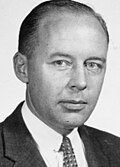
Bryce N. Harlow was a trusted political advisor to President Richard Nixon, initially serving as Assistant to the President for Legislative and Congressional Affairs from January 1969 until November 1969, when he was elevated to Counselor to the President. He left the administration in December 1970 to return to the private sector at Procter & Gamble, meaning he was absent for the majority of the White House taping period (February 1971 – July 1973). However, as the Watergate scandal escalated, Nixon brought Harlow back as Counselor to the President in June 1973, where he served as a crucial liaison to an increasingly restive Congress until his final resignation in April 1974.
President Nixon met with H. R. Haldeman, Bryce Harlow, and Peter Flanigan to discuss various ambassadorial appointments and administrative personnel strategies. The conversation focused on identifying suitable candidates for roles in Australia and the Court of St. James, while evaluating the political implications of rewarding donors and associates with high-level posts. Additionally, the group addressed the need to manage relations with agricultural officials and coordinate an upcoming White House event, the 'Salute to Agriculture,' to strengthen support in the farming sector.
President Nixon met with Republican congressional leaders and cabinet members to discuss rural development initiatives and solicit support for the administration's policy agenda. Secretary of Agriculture Clifford Hardin and staff provided an extensive briefing on the status of rural America, highlighting demographic shifts and explaining the mechanics of proposed federal revenue-sharing programs designed to foster economic growth. Participants also reviewed legislative priorities, including the upcoming vote on the supersonic transport (SST) appropriation and other pending congressional business.
President Nixon met with George Shultz, John Ehrlichman, H.R. Haldeman, and other advisors to navigate complex legislative and diplomatic challenges, including dairy price supports, Social Security reform, and welfare legislation. The discussion focused on managing relations with House Ways and Means Chairman Wilbur Mills and coordinating the administration's position on sensitive issues like Japanese textile trade negotiations. Additionally, the President assessed the professional friction between National Security Advisor Henry Kissinger and Secretary of State William P. Rogers, considering the implications for foreign policy decision-making.
President Nixon met with John Byrnes and senior White House staff to coordinate a unified Administration strategy against House Ways and Means Chairman Wilbur Mills regarding ongoing Japanese textile negotiations. Concerned that Mills was bypassing the White House to conduct his own foreign policy, Nixon directed Byrnes to publicly support the President’s official position and reject the implication that congressional leaders held a veto over executive authority. The group finalized a plan for the President to issue a formal statement that afternoon, followed immediately by Byrnes endorsing the policy to the press to solidify Republican unity.
President Nixon met with Vice President Agnew and Republican Congressional leaders to secure support for two of his primary initiatives: the Supersonic Transport (SST) program and a major government reorganization plan. Secretary of Transportation John Volpe advocated for the SST by addressing environmental, economic, and technological concerns, arguing that the project was essential for U.S. aviation preeminence and long-term economic growth. Subsequently, John Connally detailed the work of the Ash Council, urging the legislators to embrace a fundamental restructuring of the executive branch to improve government efficiency, accountability, and public trust. Nixon emphasized that these measures were critical for ensuring that his administration could effectively manage federal programs and maintain the nation's competitive edge.
Peter G. Peterson, Bryce N. Harlow, and Richard H. Poff met to coordinate the agenda for an upcoming session with Republican Congressional leaders. The discussion focused on strategic messaging regarding government reorganization, 1972 appropriations, and specific policy objectives involving education, jobs, and health. The participants aimed to align the legislative schedule with the President’s goals, including briefings from Henry Kissinger and James Schlesinger.
President Nixon met with Vice President Agnew and Republican Congressional leaders to discuss the administration's legislative and economic agenda. The participants analyzed current economic indicators, including inflation and productivity, and evaluated the implementation of the Task Force for International Development's recommendations regarding foreign and military aid. Additionally, the group addressed the future of the military draft, focusing on pay increases and the transition toward an all-volunteer force while assessing potential legislative hurdles in Congress.
President Nixon met with his administration officials, including John Mitchell, Elliot Richardson, and George Shultz, to coordinate the White House's response to a recent Supreme Court ruling on school desegregation. Concerned about the ruling's political impact and the potential for a "double standard" between the North and South, Nixon directed his subordinates to remain disciplined and avoid proactive initiatives, emphasizing that the administration would comply with the law without going beyond what was strictly required by the courts. The President also instructed his team to keep a low profile on the Ribicoff amendment to avoid further legislative complications while managing upcoming political optics regarding Southern school policies.
President Nixon met with leaders of the American Farm Bureau Federation, including William J. Kuhfuss and Roger Fleming, along with White House staff, to address tensions between the administration and the farm community. The discussion focused on agricultural trade policy, legislative challenges in a Democrat-controlled Congress, and the perceived failure of the administration to reduce farmer dependency on government programs. Nixon pledged closer communication through his staff and identified several legislative priorities, including farm labor relations and strengthening farmers' negotiating power, to foster a more cooperative political alliance.
President Nixon met with Vice President Agnew, Treasury Secretary John Connally, and Republican Congressional leaders to address critical economic and legislative challenges. The primary focus was the potential bankruptcy of the Lockheed Corporation and the necessary legislative strategy to secure government loan guarantees to prevent a ripple effect of industrial failures and job losses. Additionally, the group reviewed the administration's legislative priorities, including welfare reform, general and special revenue sharing, and the status of various appropriations bills.
President Nixon met with his Cabinet and Republican Congressional leaders to coordinate the administration's legislative agenda, specifically addressing the ongoing national railroad strike and the upcoming Congressional vote on the military draft. The discussion also focused on foreign policy, with Secretary of Defense Melvin Laird and Henry Kissinger providing briefings on the status of NATO, the credibility of U.S. military commitments in Europe, and the implications of recent Soviet statements regarding mutual force reductions. The President urged the Congressional leaders to maintain a firm stance against unilateral U.S. force withdrawals while emphasizing the need to handle these matters through stable, negotiated frameworks rather than disruptive legislative amendments.
President Nixon met with H. R. Haldeman, Bryce Harlow, Harry Dent, and others to discuss political strategy, specifically regarding the fractured state of the Democratic Party and the potential for voter realignment. The participants analyzed the political fallout of busing, evaluated strategies for the 1972 campaign, and deliberated on how to leverage patriotism and national security to gain public support. Nixon emphasized the importance of projecting strong, aggressive leadership on television to maintain voter confidence and effectively contrast his administration against Democratic opponents.
President Nixon and his administration met with Republican Congressional leaders to discuss the 1971-1972 economic outlook, focusing on key indicators such as GNP, unemployment rates, and inflation. The discussion centered on evaluating recent economic growth, managing ongoing labor disputes in the steel and transportation sectors, and addressing political concerns regarding the administration's fiscal and wage-price policies. The President and his economic advisors emphasized their commitment to achieving peacetime economic stability and requested support from leadership to convey a positive but measured economic narrative to the public.
President Nixon and Republican Congressional leaders met to coordinate strategy on key foreign and domestic policy initiatives, emphasizing the administration's progress in achieving global peace and economic stabilization. Secretary of State William Rogers provided an assessment of U.S. leadership, focusing on the upcoming United Nations vote regarding Taiwan, the ongoing India-Pakistan crisis, and preparations for Nixon's summits in Moscow and Beijing. The group also discussed legislative tactics for securing Republican priorities, specifically the Economic Stabilization Act and the ongoing challenge of the Mansfield Amendment to Vietnam policy. Nixon urged the leaders to maintain a firm, unified front to avoid projecting vulnerability to foreign adversaries and domestic political opponents.
President Nixon met with H.R. Haldeman and other staff members to review a wide range of political, administrative, and foreign policy matters. The conversation covered the potential appointment of a new Secretary of Agriculture, upcoming Supreme Court nomination strategies, and the President's schedule, including his desire to minimize press interviews and public appearances. Additionally, the participants discussed U.S. foreign policy toward the Soviet Union, Latin America, and NATO, with Nixon emphasizing his intent to exert greater control over these diplomatic initiatives while managing the roles of Secretary of State William Rogers and Henry Kissinger.
President Nixon and Bryce Harlow consulted on the selection of a new Secretary of Agriculture, weighing the political risks and administrative capabilities of potential candidates Henry Bellmon and Earl Butz. Nixon expressed significant concern that the agricultural portfolio, specifically corn and hog prices, could become an "Achilles heel" for his 1972 re-election effort, necessitating a loyal and effective spokesperson. The discussion highlighted the potential downside of associating a candidate with former Secretary Ezra Taft Benson, while simultaneously addressing the President's frustration with political opponents who he believed were sabotaging his efforts to conclude the Vietnam War.
President Nixon and Bryce N. Harlow discussed the selection process for a new Secretary of Agriculture and exchanged congratulations regarding the recent, successful nominations of Lewis F. Powell, Jr. to the Supreme Court. Harlow advised the President against considering certain senators due to constitutional eligibility constraints and provided an analysis of the leading departmental candidates, specifically Clarence D. Palmby, J. Phillip Campbell, and Earl L. Butz. Nixon directed Harlow to consult with Henry L. Bellmon to gauge his perspective on the candidates and instructed him to deliver a final recommendation by the following Tuesday.
President Nixon met with H.R. Haldeman and other staff to review administrative priorities, including the upcoming State of the Union address preparations and the handling of congressional relations. A significant portion of the discussion focused on managing the conflicting foreign policy roles of Henry Kissinger and Secretary of State William Rogers, with Nixon emphasizing the need for better information flow and coordination. Additionally, the President discussed his reliance on Treasury Secretary John Connally for economic policy and political judgment, strategizing on how to integrate Connally’s role without alienating other Cabinet members or White House staff.
President Nixon met with Vice President Agnew and Republican congressional leaders to discuss strategy regarding his recent speech on Vietnam and the administration's upcoming FY 1973 budget. The President and Henry Kissinger briefed the attendees on the Vietnam peace negotiations, emphasizing that the U.S. had made comprehensive offers while denouncing North Vietnamese intransigence and political maneuvering. Economic advisors, including George Shultz and Herbert Stein, presented the administration's fiscal plans, highlighting the importance of balancing the budget while supporting a transition to a peacetime economy through controlled spending and wage-price stabilization. Participants agreed on the necessity of maintaining a firm stance on defense and economic policy to solidify public support and improve the administration's negotiating leverage.
President Nixon, H.R. Haldeman, Charles Colson, and other staff members discuss communication strategy following a televised speech, specifically focusing on the favorable public reaction and the need to capitalize on it. They coordinate the dissemination of a Q&A document to help the press and administration officials defend the President's peace plan. Additionally, the group brainstorms a publicity stunt involving a surprise live telephone call from the President to Henry Kissinger during a public dinner to highlight the administration's unity and focus.
H. R. Haldeman and Bryce Harlow discussed their concerns regarding Vice President Spiro Agnew’s tendency to question administration policy during sensitive meetings with Congressional leadership. Both agreed that Agnew's behavior, particularly his questioning of a Vietnam-related speech, appeared unthinking and harmful to the administration's message of unity. Haldeman tasked Harlow with finding a discreet opportunity, potentially during a planned tennis match, to counsel Agnew on how his conduct affects his role and political efficacy.
President Nixon met with Vice President Agnew and Republican Congressional leaders to coordinate legislative strategy ahead of the upcoming election, specifically focusing on the status of pending bills and the management of the Congressional schedule. Key priorities included securing a federal spending ceiling, advancing revenue sharing, and emphasizing anti-busing legislation as a must-pass measure to counter Democratic-led policies. The President urged the leadership to maintain a unified front on fiscal restraint, framing opposition to Republican economic proposals as reckless and warning that Democrats should bear the political cost for failing to curb government spending.
President Nixon met with his senior staff and campaign advisors to assess his 1972 reelection strategy, focusing on framing the debate against George McGovern around key issues like Vietnam, welfare, busing, and national defense. The group discussed the necessity of moving from a defensive posture to an aggressive offense by highlighting the radical nature of McGovern's positions to the general public. Additionally, the President met with James Hodgson and other officials to review progress on veterans' benefits and education programs, confirming plans to maintain support among Vietnam-era veterans as part of the broader campaign effort.
President Nixon and Bryce Harlow discussed organizational strategies for the administration's second term, focusing on the planned departure of Secretary of Defense Melvin Laird and a broader restructuring of White House staff. Nixon proposed appointing Laird as the new Republican National Committee chairman to lead a reorganization of party political operations, intending to shift partisan activities away from the White House. The conversation also touched upon the necessity of staff turnover to revitalize the administration, with Nixon confirming the pending departures of several key personnel, including Herbert Klein, Donald Rumsfeld, and Charles Colson.
President Nixon consulted with Bryce N. Harlow regarding the strategic reorganization of his administration and political operations for his second term. Nixon expressed his intent to move political functions out of the White House and into the Republican National Committee, proposing that Melvin Laird serve as his primary political operative to manage these activities. The two also discussed necessary staff changes, potential departures, and the importance of infusing new personnel into the administration to avoid the common pitfalls experienced by previous second-term presidencies.
President Nixon met with Vice President Agnew, Cabinet members, and key staff to discuss recent foreign policy developments and economic strategy. Vice President Agnew briefed the group on his recent tour of Southeast Asian nations, while Treasury officials and Cabinet members deliberated on international monetary policy, trade barriers, and the need for a more competitive U.S. industrial posture. The President emphasized the importance of maintaining international engagement, securing legislative tools for trade negotiations, and justifying reconstruction aid for Vietnam as a strategic security necessity rather than purely humanitarian relief.
President Nixon met with key Republican congressional leaders and White House staff to discuss strategies for containing the political fallout from the Watergate scandal. The participants debated the timing and content of a forthcoming White House "White Paper" and discussed the potential benefits of a presidential press conference to restore public confidence. They also reviewed legislative management, specifically the importance of maintaining congressional support for administration initiatives amidst ongoing committee investigations and allegations of intelligence-gathering activities.
President Nixon and Bryce N. Harlow discuss the political fallout of the Watergate scandal following the release of a new presidential statement. Harlow reassures Nixon of his support among congressional allies, specifically noting George H. W. Bush's defense of the presidency against calls for Nixon to testify before the Ervin Committee. The two men address the need for Nixon to maintain strong communication with his supporters, with Harlow suggesting that Nixon schedule informal retreats at Camp David to foster better relationships with legislative leaders. Nixon expresses his need for a trusted advisor, ultimately asking Harlow to serve as a confidant and assistant as he navigates the ongoing crisis.
President Nixon consults with Bryce N. Harlow to finalize his return to the White House staff in a senior advisory role. Nixon clarifies that he expects Harlow to serve as a key political strategist and confidant alongside Alexander M. Haig, Jr. and Melvin R. Laird, rather than merely focusing on congressional relations. The conversation concludes with an agreement for Harlow to begin his tenure on July 2, 1973, with a formal announcement scheduled for the following Saturday.
President Nixon met with Bryce Harlow and Alexander Haig to manage the political fallout from the Watergate scandal, coordinate the administration's stance on economic policy, and prepare for the upcoming state visit of Leonid Brezhnev. The participants discussed strategies to deflect partisan criticism, including leveraging statements from sympathetic senators and countering media narratives regarding past wiretapping practices. Additionally, they coordinated a briefing schedule for Congressional leaders to maintain support for the administration's foreign policy and Vietnam negotiations amid ongoing domestic instability.
President Nixon met with Alexander Haig, Anne Armstrong, Bryce Harlow, and others to discuss public relations strategies following his June 13, 1973, address on economic price controls. The conversation focused heavily on managing the political influence and public roles of John Connally and George H. W. Bush within the administration and the Republican Party. Additionally, the group reviewed potential candidates for leadership roles, including positions within the Bicentennial Commission, while touching upon concerns regarding Watergate, upcoming elections, and personnel management.
President Nixon met with Vice President Agnew, top economic advisors, and a large group of Republican Congressional leaders to discuss the administration's current 60-day economic freeze and the development of a subsequent "Phase IV" program. The primary challenge identified was managing inflation and supply shortages—particularly in food—while avoiding the long-term economic damage of permanent price and wage controls. The President and his advisors sought Congressional support for a balanced budget and specific legislative measures, such as the release of strategic stockpiles, while acknowledging the significant political difficulty of passing unpopular fiscal reforms. Participants emphasized the need for a careful balance between short-term political relief and long-term economic stability to avoid the pitfalls of past rationing and supply-side distortions.
President Nixon met with his economic advisors and Cabinet members to debate the design of 'Phase IV' of his economic program, focusing on the appropriate speed for removing wage and price controls. The discussion centered on balancing the political need to curb inflation with the economic necessity of incentivizing production, particularly in the agricultural sector, where export controls and price ceilings had created supply shortages. The President and his team also addressed the critical need for a balanced federal budget to bolster business confidence, ultimately agreeing on the necessity of a tough, credible policy to stabilize the economy.
President Nixon met with Vice President Agnew and his Cabinet to discuss the transition from the current wage and price freeze to a "Phase IV" economic policy. The President emphasized the need to balance controlling inflation with maintaining domestic production, while acknowledging the political difficulty of removing controls due to congressional and public pressure. Key developments included the administration's resolve to move toward a free-market economy as quickly as possible, coupled with a renewed commitment to fiscal austerity and a balanced federal budget to bolster economic confidence.