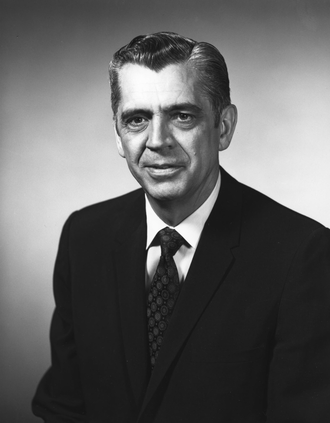
Hardin, Clifford M.
Clifford M. Hardin served as the United States Secretary of Agriculture during the first half of the Nixon administration, holding the position from January 1969 until his resignation in November 1971. During the early months of the White House taping system, Hardin participated in administration discussions regarding agricultural policy, the expansion of food stamp programs, and farm subsidies. He departed the cabinet in late 1971 to become an executive at Ralston Purina and was succeeded by Earl Butz.
President Nixon and his Cabinet met to discuss the ongoing military operations in Indochina and the development of the administration's national health reform agenda. Regarding the war, officials reviewed the progress of South Vietnamese incursions into Laos and Cambodia, noting that the strategy was successfully disrupting enemy supply lines while shifting the burden of ground operations away from American forces. The conversation then transitioned to a detailed proposal from Secretary of Health, Education, and Welfare Elliot Richardson regarding healthcare reform, with the group debating the costs, tax implications, and administrative feasibility of implementing Health Maintenance Organizations (HMOs) and national health insurance standards.
President Nixon and H. R. Haldeman met to coordinate the President's upcoming schedule, focusing on agriculture-related appearances and the management of high-level meetings with business and community leaders. The President expressed frustration with White House staffing processes, specifically regarding the frequency of his meetings with advocacy groups and his desire to delegate these engagements to senior staff members like George Shultz or George Romney. Additionally, the conversation included a candid assessment of Henry Kissinger’s personality, his ongoing conflicts with Secretary of State William Rogers, and the need for a more disciplined administration strategy when dealing with political opponents and the press.
President Nixon met with Republican congressional leaders and cabinet members to discuss rural development initiatives and solicit support for the administration's policy agenda. Secretary of Agriculture Clifford Hardin and staff provided an extensive briefing on the status of rural America, highlighting demographic shifts and explaining the mechanics of proposed federal revenue-sharing programs designed to foster economic growth. Participants also reviewed legislative priorities, including the upcoming vote on the supersonic transport (SST) appropriation and other pending congressional business.
President Nixon and H. R. Haldeman reviewed recent polling data, analyzed public reaction to the President's televised interview with Howard K. Smith, and discussed the optics of presidential television appearances, including attire and seating arrangements. Following this, Secretary of Agriculture Clifford M. Hardin joined the meeting to coordinate strategy regarding upcoming legislative challenges with the dairy industry. The group agreed to schedule a subsequent meeting at Camp David with John B. Connally and George P. Shultz to address parity issues and potential congressional action on pending agricultural bills.
President Nixon met with Secretary of Agriculture Clifford Hardin and a large delegation of dairy industry representatives to discuss federal agricultural policy and industry concerns. The meeting served as a forum for stakeholders to engage directly with the administration regarding price supports and the economic interests of the dairy sector. This engagement took place amidst broader administration efforts to manage agricultural production and solidify support among industry leaders.
President Nixon met with his economic and agricultural advisors to discuss political strategies regarding the dairy industry and legislative support. The group, including George Shultz, John Connally, and Clifford Hardin, addressed the necessity of securing political backing from powerful dairy organizations while balancing the economic implications of milk price supports. Nixon emphasized the importance of securing credit for any concessions made to these groups and coordinating closely with Congressional leaders, such as Speaker Carl Albert and Wilbur Mills, to manage these interests effectively.
President Nixon and his Cabinet met to discuss the ongoing challenge of inflation and rising construction costs, focusing on the administration's strategic options for economic stabilization. Dr. Paul McCracken reviewed current inflationary trends and labor market data, outlining a spectrum of potential responses ranging from maintaining current fiscal policies and targeted interventions to implementing more aggressive measures like wage and price controls. The meeting served as a forum to evaluate the efficacy of various regulatory mechanisms, such as the National Commission on Productivity and the suspension of the Davis-Bacon Act, while weighing the political and practical risks of further government intervention in the economy.
President Nixon calls Secretary of Agriculture Clifford M. Hardin to announce his decision to support the Agricultural Extension Service, effectively overruling the Office of Management and Budget (OMB) staff and siding with the Secretary. Nixon emphasizes the political importance of the service to the American farm community and instructs Hardin to communicate this victory to the department. Additionally, the President speaks with Claude W. Gifford of the Farm Journal to personally encourage him to accept an appointment within the administration.
President Nixon and the Council on International Economic Policy (CIEP) met to review global economic trends, specifically focusing on the United States' competitive position regarding trade, technological exports, and shifting GNP shares among developed and developing nations. The participants discussed the challenges posed by Japanese industrial policies, the role of multinational corporations, and potential antitrust law reforms to better align with international business realities. The meeting served to define the CIEP’s procedural structure and establish priorities for future foreign economic initiatives, including trade legislation and adjustment assistance programs.
President Nixon met with Franco Mario Malfatti, President of the European Commission, and various U.S. officials to address rising protectionist tensions between the United States and the European Economic Community (EEC). The discussion focused on the necessity of reciprocal trade concessions, specifically identifying how minor, mutually beneficial adjustments—such as those regarding citrus and textiles—could alleviate domestic political pressures and prevent broader trade conflicts. Nixon emphasized the importance of finding practical solutions to avoid protectionism, while Malfatti discussed the EEC’s ongoing efforts toward economic integration and the logistical challenges posed by the community's potential expansion. To facilitate progress, the parties agreed to coordinate follow-up efforts, including an upcoming diplomatic mission by Ambassador David Kennedy to Europe and Asia.
President Nixon and a wide-ranging group of Cabinet members, advisors, and Congressional representatives met to discuss the growing national energy crisis and the necessity of transitioning to nuclear power. AEC Chairman Glenn Seaborg and other experts detailed the technological, environmental, and economic advantages of the liquid metal fast breeder reactor, emphasizing its ability to maximize fuel efficiency and provide long-term, pollution-free energy. The participants concluded that a strong national commitment, including significant federal funding and industry collaboration, is essential to accelerate the development of demonstration reactors and ensure future energy independence.
President Nixon met with Secretary of Agriculture Clifford Hardin, General George A. Lincoln, and Peter Flanigan to coordinate a strategic response to a severe drought in Texas and Oklahoma. The President emphasized that the administration must appear highly responsive and concerned to mitigate political fallout, even if a full disaster declaration was not yet legally or fiscally advisable. Nixon directed the team to facilitate a high-profile visit to the region, including securing appropriate aircraft and media presence, to reassure farmers and political allies like John Connally and John Tower that the administration was proactively exhausting all available relief channels.
President Nixon met with his Cabinet and key staff to coordinate legislative strategies and manage domestic policy agendas. The discussion focused on securing passage for welfare reform and other administration priorities by engaging directly with congressional leadership and balancing competing interests within the labor market. Participants assessed the challenges of mobilizing support among both Democrats and Republicans and emphasized the necessity of persistent lobbying and effective communication with legislative committees.
President Nixon hosted a Federal Civilian Service Awards ceremony in the Oval Office to honor distinguished public servants, including Samuel M. Cohn, U. Alexis Johnson, Edward F. Knipling, Fred Leonard, and George H. Willis. During the event, the President presented medals and recognized the recipients for their significant contributions to fiscal policy, diplomacy, entomology, medical research, and international monetary systems. Following the formal presentations and a group photograph, the President engaged in general conversation with the attendees regarding the Oval Office décor, his daily schedule, and his auxiliary office in the Executive Office Building.
President Nixon met with Secretary of Agriculture Clifford M. Hardin, agronomist Norman E. Borlaug, and aide John C. Whitaker to discuss administrative details regarding an upcoming agriculture exhibit. The brief meeting focused primarily on scheduling logistics and the potential impact of weather on the event's proceedings. No major policy decisions were recorded during the short interaction.
President Nixon met with Secretary of Agriculture Clifford Hardin and Nobel Laureate Norman Borlaug, later joined by Clark MacGregor and Congressmen H. R. Gross and Jack R. Miller, to discuss U.S. agricultural aid programs and global food production. The participants emphasized the importance of training local scientists in developing nations and long-term technical assistance over short-term financial aid. A significant portion of the discussion centered on the urgent need to address rapid population growth in countries like India, Pakistan, and Mexico as a prerequisite for global stability. The meeting also included informal exchanges regarding a gift from the National Pork Producers’ Council and a discussion on the health of former Pakistani President Ayub Khan.
President Nixon hosted a bipartisan group of congressional members and administration officials in the Cabinet Room for the ceremonial signing of the Telephone Bank Bill (S. 70). The meeting featured general discussion regarding rural telecommunications policy, the recognition of Agriculture Day, and the presentation of commemorative gifts. Attendees also engaged in casual conversation concerning the President's upcoming schedule and domestic matters.
President Nixon and his Cabinet met to receive a briefing on international affairs and domestic policy, with a focus on Secretary of State William P. Rogers' recent diplomatic travels to the Middle East and the feasibility of desalinization technology. Rogers reported on his efforts to stabilize the Middle East through ceasefire maintenance and discussed the geopolitical concerns of various regional leaders. Dr. Edward E. David Jr. and other experts presented a detailed plan to advance domestic water desalinization and nuclear power capabilities, with the President calling for a major, accelerated federal effort to ensure American technological leadership. The meeting concluded with a brief status report from Treasury Secretary David M. Kennedy regarding the current international monetary situation and the fluctuations of the dollar.
President Nixon met with Henry Kissinger to finalize the announcement of a breakthrough in the Strategic Arms Limitation Talks (SALT), emphasizing the need for a brief and controlled public presentation. Following this, the President convened a broader group of officials to address domestic policy, specifically focusing on expanding agricultural drought relief for Texas and Oklahoma and managing national economic policy, including interest rates and housing market stability. The meeting concluded with a review of upcoming congressional votes, where administration staff expressed confidence in defeating the Mathias Amendment.
President Nixon met with his Cabinet and key advisors to announce a major breakthrough in Strategic Arms Limitation Talks (SALT) with the Soviet Union, culminating in a joint statement to be released simultaneously in both nations. The agreement establishes a framework to prioritize limiting anti-ballistic missile (ABM) systems while pursuing parallel measures for offensive weapons. Nixon emphasized that the breakthrough was achieved by maintaining a strong U.S. defense posture, and he urged his administration to avoid public speculation or detailed commentary that could complicate sensitive ongoing negotiations.
President Nixon, Vice President Agnew, and a large group of Cabinet members and senior staff met to establish a strategic framework for domestic policy, budget planning for the 1973 fiscal year, and the development of the 1972 Republican legislative and election platform. Participants reviewed polling data regarding national, community, and family concerns, noting that the economy, inflation, and unemployment are primary public priorities while other issues like pollution and consumerism are often driven by media visibility. The President and attendees emphasized the need for better communication to receive credit for administration accomplishments, focusing on a limited number of 'gut issues' rather than overextending on too many programs. Ultimately, the group discussed the necessity of coordinating policy initiatives and messaging to ensure visible progress on key economic and social concerns ahead of the 1972 election.
President Nixon met with his senior advisors and drug policy experts to address the escalating heroin crisis among servicemen returning from Vietnam. The discussion focused on establishing a comprehensive program to identify and treat addicted soldiers through urinalysis, detoxification, and expanded rehabilitation, while avoiding stigmatizing veterans in the civilian workforce. The group explored innovative bureaucratic and scientific strategies, including the potential for using biological agents or pests to eradicate opium crops at their source, and proposed holding law enforcement officials accountable for complicity in the drug trade.
President Nixon and Secretary of Agriculture Clifford M. Hardin discussed the administration’s strategy for shipping grain to communist nations, specifically noting the logistical advantages of trading with the People's Republic of China due to West Coast longshoreman cooperation. Nixon also tasked Hardin with investigating the possibility of using biological agents, such as insects or viruses, to quietly destroy poppy crops used for opium production. Hardin agreed to explore the feasibility of these biological methods while emphasizing the extreme caution required when introducing new organisms into an environment.
President Nixon met with his Cabinet members to discuss the delicate political landscape surrounding the administration's efforts to open communications with the People's Republic of China. The conversation centered on the necessity of maintaining strict discretion to avoid premature public speculation, which could jeopardize sensitive diplomatic negotiations and create political vulnerabilities. Nixon emphasized the importance of a unified front among Cabinet members to manage domestic and international expectations as the policy shift progressed.
President Nixon met with the Cabinet Committee on Opportunities for the Spanish Speaking (CCOSS), led by Dr. Henry M. Ramirez, to discuss increasing Hispanic representation and employment within the federal government. Emphasizing that the administration must proactively identify and promote talent rather than waiting for external political pressure, the President linked the development of human resources to the broader necessity of maintaining American economic competitiveness against global rivals like Japan and Western Europe. Nixon formally charged cabinet members to improve departmental hiring practices and mandated regular progress reports to ensure accountability in expanding opportunities for Hispanic Americans.
President Nixon and Secretary of Agriculture Clifford M. Hardin discussed the immediate public and international reactions to Nixon's wage-price freeze speech delivered earlier that day. They reviewed key economic components of the new policy, specifically focusing on agricultural exemptions, the 10% import tax intended to pressure Japan into revaluing the yen, and the implementation of investment tax credits. Nixon emphasized the necessity of secrecy regarding these plans to protect the price of gold and instructed Hardin to maintain a vigorous enforcement stance.
President Nixon convened a large meeting with Vice President Agnew and his Cabinet to discuss the national economy and the "New Economic Policy" he had announced the previous day. Key topics included the wage-price freeze, import surcharges, tax relief, budget cuts, and the convertibility of the dollar. The administration sought Cabinet support for these initiatives and discussed their potential impact on international trade and domestic employment.
President Nixon met with the Council on International Economic Policy (CIEP) and key economic advisors to discuss the administration's post-August 15 New Economic Policy (NEP) and future international trade strategy. Peter G. Peterson led a presentation analyzing the shortcomings of global liberal trading systems and the challenges posed by foreign competitors like Japan, while other officials addressed the domestic economic impact, labor relations, and the status of ongoing monetary negotiations. The President emphasized the need for a firm but diplomatic approach toward Japan and directed his team to maintain the offensive on domestic economic policy while keeping options flexible regarding international monetary reform.
President Nixon met with the Cost of Living Council to assess the implementation and public reception of the 90-day wage-price freeze initiated on August 15, 1971. The council members, including John Connally, George Shultz, and Arthur Burns, reported on the effectiveness of enforcement efforts, current compliance levels, and the complexities of handling exemption requests. The discussion shifted toward strategic planning for Phase II, emphasizing the need for sustainable economic policies, public leadership, and the critical role of securing support from business and labor leaders before the freeze's conclusion.
President Nixon and Secretary of Agriculture Clifford M. Hardin discussed Hardin’s potential resignation and transition to a private sector role at Ralston Purina. Nixon encouraged Hardin to make his career move before the 1972 election to ensure a smooth transition for his successor and to secure his personal financial future. The two also addressed current administration economic initiatives, farm policy, and the recent Attica state prison riots, with Nixon expressing support for Governor Nelson Rockefeller's handling of the crisis.
President Nixon, Pat Nixon, and the Cabinet met with their spouses to discuss the implementation and public perception of the administration’s New Economic Policy. Secretary of the Treasury John Connally led a comprehensive briefing on the wage-price freeze, tax reforms, and international monetary adjustments aimed at curbing inflation. The discussion emphasized the necessity of these economic measures for restoring national growth, managing federal expenditures, and building public and congressional support for the administration's program.
President Nixon met with a delegation of agricultural leaders to discuss the impact of his administration's 90-day wage-price freeze and broader economic policies on the farm sector. The participants, representing groups like the American Farm Bureau and the National Grange, expressed general support for the President's anti-inflationary efforts while highlighting concerns regarding farm income parity, high interest rates, and the risks of long-term price controls. Nixon sought their input for a follow-up economic program, emphasizing that agriculture remains a critical, competitive component of U.S. foreign trade and requesting continued advice as his administration finalized its post-freeze strategy.
President Nixon, Vice President Agnew, and members of his Cabinet met to coordinate a unified administration strategy ahead of critical International Monetary Fund (IMF) meetings and ongoing global trade negotiations. The discussion emphasized the necessity of maintaining the recently imposed 10% import surcharge and a firm bargaining stance to address the nation's economic balance of payments and reshape the international monetary system. Nixon and his advisors agreed that while foreign partners would likely criticize U.S. policy, maintaining domestic political support and correcting long-standing trade imbalances remained the administration's primary objective.
President Nixon met with his Cabinet and key staff members to review the administration’s domestic and foreign policy priorities, primarily focusing on the economic transition to 'Phase II' and the announcement of a 1972 Soviet summit. Officials discussed the successful implementation of the wage-price freeze and the strategy for securing organized labor's cooperation on the newly formed Pay Board and Price Commission to curb inflation. Additionally, the President addressed the importance of linking economic policy to job growth through his pending tax proposals, while Secretary of State Rogers and the President emphasized that international diplomatic overtures toward the Soviet Union and China were part of a cohesive, long-term strategy for global peace.
President Nixon met with William Ruckelshaus, John Ehrlichman, John Whitaker, and later Clifford Hardin to discuss administrative personnel changes and pending agricultural policies. The group focused heavily on managing the timing of Secretary of Agriculture Hardin’s resignation and selecting a successor while avoiding political fallout from various farm interest groups. Additionally, Nixon directed his staff to resolve labor disputes and facilitate a grain sale to the Soviet Union, prioritizing the deal's completion despite resistance from unions.
President Nixon met with outgoing Secretary of Agriculture Clifford Hardin and his designated successor, Earl Butz, to coordinate the transition and manage the associated media rollout. The participants discussed the timing of Hardin's resignation and the logistics for a forthcoming joint press conference to announce the change in leadership. Additionally, the group touched upon international matters, including U.S. relations with Turkey, and addressed administrative planning regarding the potential reorganization of the Department of Agriculture.
President Nixon met with his Cabinet officers to discuss a variety of domestic and international issues, including transportation leadership, government funding through a continuing resolution, and the cultivation of opium poppies in Turkey. The conversation also touched upon administrative transitions, such as the departure of Secretary of Agriculture Clifford Hardin, and strategies for managing the national economy and price controls. Nixon emphasized the importance of maintaining clear leadership and coordination across departments to ensure the success of his domestic policy initiatives.
President Nixon and former Secretary of Agriculture Clifford M. Hardin engaged in a personal exchange to finalize a letter of appreciation regarding Hardin’s tenure. The conversation reflected on the challenging economic climate of 1969–1970 and Hardin’s contributions to the administration’s success in the Farm Belt during the 1972 election. Nixon concluded the interaction by formally expressing his gratitude for Hardin’s dedicated service and extending well wishes to the Hardin family.
President Nixon met with former Secretary of Agriculture Clifford M. Hardin to discuss the formal conclusion of his tenure. During the session, the President reviewed a dictated letter addressed to Hardin, highlighting his appreciation for the outgoing official's service. No major policy shifts or strategic decisions were recorded, as the meeting functioned primarily as a professional transition acknowledgement.