Mansfield, Michael J. ("Mike")
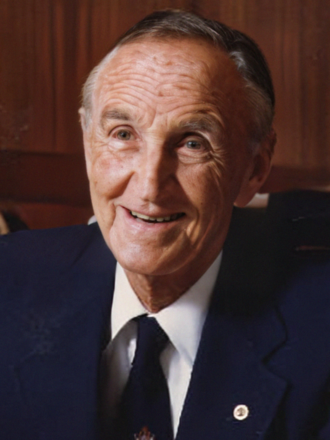
During the Nixon administration, Michael J. ("Mike") Mansfield served as the Democratic U.S. Senator from Montana and the Senate Majority Leader, a position he held throughout Nixon's entire presidency. During the White House taping period (February 1971 – July 1973), Mansfield was a prominent legislative counterpart and frequent critic of the president's foreign policy, repeatedly introducing the "Mansfield Amendments" to force U.S. troop withdrawals from Southeast Asia. In early 1973, he also played a crucial role in establishing the Senate Watergate Committee to investigate the administration's abuses of power.
President Nixon met with H. R. Haldeman and Henry Kissinger to discuss White House strategy regarding the ongoing Vietnam War, Congressional relations, and the national economic recovery. Amidst frustration over a lack of support from mainstream establishment figures, the President directed his staff to replace moderate names with stronger, conservative allies on official lists and committees. The participants also reviewed positive indicators in the economy, specifically retail and automotive sector data, to assess the Administration's standing.
President Nixon coordinated an unscheduled meeting with Senate Majority Leader Mike Mansfield to discuss an upcoming, highly sensitive announcement regarding Vietnam policy. Nixon sought to brief Mansfield privately to prevent leaks that had plagued previous communications involving South Vietnamese President Nguyen Van Thieu. The two agreed to hold a discreet meeting at the Executive Office Building that morning, while keeping the encounter off the official record to avoid political friction with Republican leadership.
President Nixon met with Henry Kissinger and subsequently Senator Mike Mansfield to refine the messaging and strategy for an upcoming major address regarding the Vietnam War. The discussion centered on balancing the public announcement of troop withdrawal plans with the need to maintain negotiating leverage against North Vietnam and manage domestic Congressional pressure. Nixon also reviewed geopolitical concerns, including the political situation in Chile under Salvador Allende and broader strategies for international arms control and the Middle East, while seeking to reassure Mansfield regarding the administration’s commitment to ending the conflict.
President Nixon met with Senate Majority Leader Mike Mansfield and National Security Advisor Henry Kissinger to discuss U.S. foreign policy toward the People's Republic of China (PRC). The President sought to use Mansfield as a private channel to gauge interest in a potential high-level visit to China, aiming to initiate a dialogue while maintaining a step-by-step approach regarding trade and travel restrictions. The participants emphasized the importance of conducting these overtures privately to avoid public rejection and to manage the delicate balance of power between the U.S., China, and the Soviet Union.
President Nixon met with Vice President Agnew and a bipartisan group of Congressional leaders to announce a significant diplomatic breakthrough in the Strategic Arms Limitation Talks (SALT). Nixon informed the attendees of a forthcoming joint statement with the Soviet Union pledging to focus on limiting anti-ballistic missile (ABM) systems and certain offensive strategic weapons. While some lawmakers advocated for immediate unilateral U.S. defense cuts to demonstrate good faith, the President and his advisors successfully urged the leaders to maintain existing defense programs during the negotiations to avoid losing vital bargaining leverage.
President Nixon met with bipartisan Congressional leaders and senior administration officials to discuss the sensitive diplomatic initiative concerning the normalization of relations between the United States and the People’s Republic of China. The President and Henry Kissinger briefed the group on the nature of these confidential negotiations, emphasizing the necessity of absolute discretion to ensure the process remained successful. Nixon and his team requested that participants avoid speculation and maintain a unified, non-partisan front when speaking publicly about the delicate geopolitical implications of this shift in U.S. foreign policy.
President Nixon convened a meeting with Vice President Agnew and a bipartisan group of Congressional leaders to discuss the national economy and his administration's "New Economic Policy." Key topics included the wage-price freeze, investment tax credits, the international monetary situation, and an import surcharge. The discussion focused on the necessity of Congressional cooperation for implementing these measures and their potential impact on inflation, trade, and specific industries like automobiles.
President Nixon met with Senate leaders Mike Mansfield and Hugh Scott to discuss the legislative agenda and foreign policy, specifically emphasizing the urgent need to extend the military draft. Nixon explained that securing the draft extension was vital for his leverage in sensitive arms control negotiations and maintaining his credibility with the Soviet Union and China. The participants also reviewed the status of major domestic bills, including welfare reform and government reorganization, while discussing the international reaction to Nixon's recent economic policies and the complexities of Middle East diplomacy.
President Nixon met with a bipartisan group of Congressional leaders to discuss the progress of the 90-day wage-price freeze and to seek input on the development of Phase II economic policies. Treasury Secretary George Shultz provided an overview of the administration's administrative efforts, including the roles of the Cost of Living Council and the IRS in enforcing the freeze. The discussion centered on the need for continued cooperation across sectors—including labor, business, and agriculture—and the development of a framework for economic stabilization once the initial freeze expired.
President Nixon met with bipartisan Congressional leadership to outline his post-freeze economic program and announce plans for an upcoming summit in Moscow. He detailed the formation of a tripartite Pay Board, a Price Commission, and a committee on interest and dividends to maintain economic stability through a mix of voluntary cooperation and necessary sanctions. Additionally, the President briefed the leaders on the status of international monetary negotiations and his strategic approach to the May 1972 summit with Soviet leadership regarding arms control and trade.
President Nixon met with a bipartisan group of Congressional leaders and key administration officials to discuss his upcoming summit in Moscow and broader U.S. strategy regarding the Soviet Union and China. The President emphasized that his administration sought to maintain a delicate balance between the two powers without appearing to collude with one against the other. The discussion underscored the importance of bipartisan support for national defense funding and the need for diplomatic engagement to prevent escalation in volatile regions like the Middle East.
President Nixon met with key Congressional leaders and administration officials to address an impending budget crisis caused by the lack of a continuing resolution for several federal agencies, including the OEO, foreign aid, defense, and the District of Columbia. The participants debated the legality of continuing government operations without explicit authorization, with Nixon expressing a firm reluctance to engage in practices he deemed legally questionable. To resolve the standoff before the December 1st pay deadline, the group discussed legislative strategies to expedite authorization bills and tentatively set a target adjournment date of December 4th to allow Congress time to complete essential business.
President Nixon met with a bipartisan group of Congressional leaders to brief them on his recent diplomatic discussions with French President Georges Pompidou and the status of U.S. international economic policy. The conversation focused on efforts to address the global monetary crisis, the necessity of realigning exchange rates to restore the competitive position of American goods, and the importance of burden-sharing among trade partners. Nixon highlighted the recent breakthrough in negotiations with France as a critical step toward stabilizing the international monetary system and advancing domestic economic goals like job creation and inflation control.
President Richard Nixon initiated a brief holiday telephone call to Senate Majority Leader Mike Mansfield to exchange Christmas greetings and well wishes for the New Year. The two men engaged in light conversation regarding the weather conditions on the West Coast before concluding with a mutual commitment to reconvene for a scheduled meeting on January 18, 1972. The interaction served primarily as a diplomatic gesture of goodwill rather than a discussion of substantive policy matters.
President Nixon consulted with Senate leaders Hugh Scott and Mike Mansfield regarding the formal opening of the Senate and his upcoming address to a joint session of Congress. Nixon confirmed his intention to speak on January 20th, joking about the length of his remarks while coordinating logistics for his appearance. The participants also exchanged pleasantries about their recent recesses and briefly discussed the senators' lack of involvement in current presidential campaigns.
President Nixon met briefly with Senate leaders Hugh Scott and Mike Mansfield to coordinate an upcoming meeting and discuss general scheduling. The President noted the unique position of both senators as non-candidates in the upcoming election cycle, expressing his desire to engage in informal dialogue away from partisan pressures. The exchange served primarily as a brief pleasantry to arrange a more substantive future engagement.
President Nixon called Senate Majority Leader Mike Mansfield to express appreciation for his public support of the administration's recent Vietnam peace proposal and to discuss the ongoing secret negotiation strategy. Nixon emphasized that the U.S. continues to engage with both the Soviet Union and China regarding Vietnam while maintaining strict confidentiality to protect sensitive diplomatic channels. Additionally, Nixon outlined his upcoming travel itinerary for his historic trip to China, requested a bipartisan leadership breakfast for February 17, and proposed facilitating a visit for Mansfield to China during future discussions with Chinese officials.
President Nixon met with Senate Majority Leader Mike Mansfield to express gratitude for Mansfield’s recent public support regarding the administration's ongoing diplomatic efforts. The discussion centered on maintaining domestic and legislative momentum for a forthcoming peace proposal intended for international negotiations. Nixon emphasized the importance of keeping these proposals at the forefront of public discourse to maximize their impact and prospects for acceptance.
President Nixon met with a bipartisan group of Congressional leaders to discuss his upcoming historic trip to the People's Republic of China. The President sought to build support for the mission, briefing the group on communication protocols with Peking and his strategy for managing the international and domestic implications of the visit. The discussion emphasized the goal of establishing a new dialogue with the PRC to foster long-term global stability and balance regional power dynamics.
President Nixon and Henry Kissinger met to discuss the media strategy and public reception surrounding Nixon’s recent trip to the People’s Republic of China. The conversation focused on managing journalistic access and potential news coverage, including specific deliberations over which reporters and networks to include in upcoming briefings. Nixon and Kissinger also evaluated the success of the President's recent televised speech and its positive impact on the American public's perception of his foreign policy efforts.
President Nixon met with a bipartisan group of Congressional leaders to provide a firsthand report on his recent diplomatic mission to the People's Republic of China (PRC). During the briefing, the President discussed his interactions with Chinese leadership, the strategic importance of establishing communication channels, and the complex geopolitical dynamics concerning Taiwan and the broader Pacific region. The meeting emphasized the necessity of maintaining trust and diplomatic dialogue to navigate future international relations and manage long-term foreign policy objectives.
President Nixon met with bipartisan Congressional leaders, administration officials, and cabinet members to advocate for a legislative moratorium on court-ordered busing to achieve racial balance in schools. Nixon argued that current judicial mandates were causing societal turmoil and urged Congress to act immediately to stop new busing orders while advancing his broader 'Equal Educational Opportunities Act.' The administration proposed a two-pronged strategy involving an immediate legislative moratorium followed by a long-term commitment to compensatory education funding to improve school quality, specifically for low-income and minority students.
President Nixon met with bipartisan Congressional leaders to discuss the upcoming Soviet summit and the administration's strategic approach to international relations. The discussion focused on complex issues including trade, Most Favored Nation (MFN) status for the Soviet Union, and the potential for bilateral cooperation despite ideological differences. Nixon emphasized the importance of maintaining a unified stance to ensure the success of the negotiations while managing domestic political expectations.
President Nixon consulted with Senate leaders Margaret Chase Smith and Mike Mansfield regarding the formal adjournment of the Senate. During the call, the President granted permission for the adjournment and briefly discussed Mansfield's upcoming diplomatic trip to the People's Republic of China. Nixon also expressed his personal support for Senator Smith's reelection campaign in Maine.
President Nixon met with Senator Margaret Chase Smith and Senate Majority Leader Mike Mansfield to exchange brief pleasantries and acknowledge their recent collaborative efforts. The discussion primarily focused on the conclusion of congressional business and the challenges of the upcoming three-week period. The participants expressed mutual appreciation for their service and implicitly acknowledged ongoing legislative or administrative matters requiring future attention.
In this extensive Oval Office meeting, President Nixon, H.R. Haldeman, Henry Kissinger, and other key advisors discussed the administration's second-term reorganization, personnel appointments (including John Scali as UN Ambassador), and public relations strategies. A significant portion of the conversation focused on the status of Vietnam peace negotiations, with Nixon emphasizing a hardline approach, including the escalation of bombing and mining operations to pressure North Vietnam. The President also provided specific directives for handling the press and managing the White House social schedule, including the exclusion of certain media outlets and the coordination of internal White House renovations.
President Nixon and Senate Majority Leader Mike Mansfield discuss establishing a more collaborative, bipartisan approach to legislative affairs for the upcoming congressional term. Nixon expresses a desire to move beyond strictly partisan leadership meetings, proposing instead a regular, small-group format with top congressional leaders to address complex issues such as the energy crisis. The two agree to meet after the first of the year to further develop this framework, maintaining confidentiality to avoid political friction within their respective parties.
President Nixon met with Senate Majority Leader Mike Mansfield to discuss upcoming bipartisan Congressional leadership meetings, administrative reorganization, and the status of Vietnam peace negotiations. Nixon emphasized the need for strict confidentiality regarding the sensitive peace talks while requesting Mansfield’s assistance in managing Congressional pressure. The two leaders also coordinated on procedural matters, including the handling of Cabinet confirmations and the structure of future legislative communication.
President Nixon spoke with Senate leaders Mike Mansfield and Hugh Scott to acknowledge the formal reconvening of the Senate and confirm the readiness of both chambers for legislative action. The participants coordinated their upcoming schedules, confirming a Friday morning bipartisan meeting to address domestic policy and an evening reception for new members of Congress. Nixon signaled the imminent transmittal of executive branch nominations and legislative messages to the Senate to facilitate the new session's workflow.
President Nixon met with bipartisan Congressional leadership, Vice President Agnew, and Henry Kissinger to discuss the imminent Vietnam peace settlement and the subsequent withdrawal of U.S. forces. The participants reviewed key provisions of the agreement, including cease-fire terms, the release of prisoners of war, and the complexities surrounding continuing conflicts in Laos and Cambodia. Nixon coordinated with the congressional delegation regarding the distribution of briefings to broader legislative members and finalized plans for his public address announcing the agreement.
President Nixon met with a bipartisan group of Congressional leaders to provide a detailed briefing on the recently finalized Vietnam Peace Agreement and its implementing protocols. Henry Kissinger explained the strategic nuances of the agreement, including the status of North and South Vietnam, the mechanisms for the International Control Commission, and the timeline for the withdrawal of U.S. forces and the release of prisoners of war. The President emphasized the necessity of bipartisan Congressional support to ensure the agreement's stability and signaled that the administration would work with Congress to frame a positive resolution regarding the end of the war.
President Nixon met with Vice President Agnew and a broad bipartisan group of Congressional leaders to outline the administration's 1974 federal budget and economic strategy. Economic advisors Herbert Stein and George Shultz presented data highlighting a strong 1972 economy and stressed the necessity of fiscal discipline to curb inflation and maintain growth. The President urged Congress to support his proposed spending ceilings, emphasizing the need to avoid the inflationary deficits experienced during the late 1960s, while briefly acknowledging progress toward a Vietnam peace settlement.
President Nixon met with bipartisan Congressional leaders, cabinet members, and staff to outline the administration’s strategy for the 1973 and 1974 federal budgets, emphasizing a commitment to avoiding tax increases. The President defended his use of impoundment to control spending and curb inflation, arguing that Congress must share the responsibility of fiscal discipline or face the political consequences of tax hikes. The discussion also addressed the economic impact of the Vietnam cease-fire, defense budget priorities, and the need for greater cooperation between the executive and legislative branches to manage spending levels.
President Nixon and Senate Majority Leader Mike Mansfield discussed upcoming foreign policy developments, including Henry Kissinger’s diplomatic missions to Hanoi and Peking and the potential for a future trip to China for Mansfield. They also coordinated on appointing members to the Committee for the Study of Foreign Policy, with Nixon expressing a desire to select high-profile individuals like Nelson Rockefeller. Finally, the two reviewed the status of ceasefires in Southeast Asia, with Nixon justifying continued U.S. bombing in Laos as an incentive to finalize peace agreements.
President Nixon and Senate Majority Leader Mike Mansfield met to coordinate on administrative appointments and foreign policy developments. The two discussed potential candidates for a congressional committee, with Nixon expressing a preference for experienced figures like governors who could provide significant contributions. Additionally, Nixon provided a status report on the ongoing ceasefires in Vietnam, Cambodia, and Laos, noting that current U.S. air operations serve as an incentive for continued compliance.
President Nixon met with Vice President Agnew and a bipartisan group of Congressional leaders to outline the administration's proposed foreign trade legislation. The discussion focused on securing presidential authority to negotiate trade agreements, implementing safeguards for domestic industries, and establishing pension and unemployment insurance reforms. Nixon emphasized the necessity of shifting away from a 'one-way street' trade policy to protect American workers and leverage better terms with international partners, while urging caution against attaching human rights conditions to Most Favored Nation (MFN) status for the Soviet Union to avoid jeopardizing broader diplomatic and arms control initiatives.
President Nixon met with Vice President Agnew and a bipartisan group of Congressional leaders to address the nation's growing energy needs and proposed legislative solutions. The discussion focused on mitigating potential future shortages by balancing environmental protections with domestic production efforts, including natural gas deregulation, expanded offshore oil leasing, and the completion of the Alaska pipeline. The President and his cabinet members emphasized the importance of developing a cohesive national energy strategy to maintain independence and discussed the foreign policy implications of relying on foreign oil exports. The administration sought Congressional cooperation for pending energy legislation and signaled an intent to increase research and development funding for alternative fuel sources like coal and nuclear power.
President Nixon met with Vice President Agnew, Secretary of State Rogers, USAID Administrator John A. Hannah, and a bipartisan group of Congressional leaders to secure support for the administration's foreign aid and security assistance requests. The discussion covered the implementation of the Nixon Doctrine, the strategic importance of military and development aid to maintain stability in Southeast Asia, the Middle East, and Latin America, and the necessity of burden-sharing with allies. Nixon emphasized that maintaining U.S. strength and diplomatic engagement was vital for ongoing negotiations regarding arms reduction and global peace, warning against unilateral reductions that could weaken the U.S. negotiating position.
President Nixon met with Vice President Agnew, cabinet members, and a bipartisan group of Congressional leaders to announce an upcoming economic policy address and discuss the administration's new strategy to combat inflation. The President detailed a 60-day price freeze—excluding wages and raw agricultural products—and sought legislative assistance regarding export controls on food and gasoline supply allocations. Additionally, the President arranged for key Congressional leaders to receive ongoing briefings from administration officials during the upcoming summit with Soviet leader Leonid Brezhnev to ensure better oversight of the resulting agreements.
President Nixon met with Vice President Agnew, Secretary of State William Rogers, Henry Kissinger, and bipartisan congressional leaders to discuss recent foreign policy breakthroughs and the administration's ongoing diplomatic strategy. The discussion focused on the significance of newly negotiated agreements with the Soviet Union, specifically regarding the prevention of nuclear war and the management of bilateral relations. Nixon emphasized that these diplomatic efforts represent a move toward global stability and stressed the necessity of maintaining bipartisan support as his administration continues these critical negotiations with Soviet leadership.