Nixon, Richard M. (President)
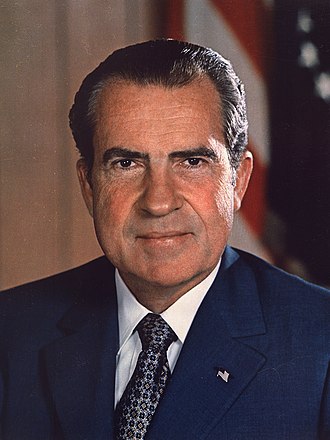
Richard M. Nixon served as the 37th President of the United States from January 1969 until his resignation in August 1974. In February 1971, he ordered the installation of a secret voice-activated taping system in the White House to preserve a historical record of his administration. Until the system's existence was revealed and dismantled in July 1973, the tapes captured Nixon directing major foreign policy initiatives, such as the opening to China, as well as his central role in the Watergate cover-up.
What Nixon talks about on the tapes
White House operations 4,718Presidential scheduling 2,225Public relations 1,784Presidential schedule 1,782Vietnam War 1,693Logistics 1,650Manolo Sanchez 1,626White House communications 1,400White House administration 1,399Presidential communication 1,243Henry Kissinger 1,191Foreign Policy 1,183
Conversations (21,010)
— Page 182 of 211President Nixon contacted the White House operator to request a telephone connection with his daughter, Julie Nixon Eisenhower. The brief exchange served as a routine administrative request to facilitate a personal call. No substantive policy discussions or political developments occurred during this interaction.
President Nixon contacted the White House operator to place a personal telephone call to his daughter, Tricia Nixon Cox. After being informed that his other daughter, Julie Nixon Eisenhower, was unavailable, the President requested to be connected to Tricia instead. This brief interaction served solely as a logistical request for the operator to facilitate a family communication.
President Nixon consulted with the White House operator to facilitate an outgoing call. This interaction served a routine administrative purpose to connect the President with another party. No substantive policy discussions or significant political developments occurred during this brief exchange.
President Nixon and his daughter, Tricia Nixon Cox, spoke briefly as the President prepared to depart for a trip to California. The two discussed positive public reactions to the President's March 29 speech, specifically noting input from Patrick J. Buchanan. Tricia also expressed her expectation that the President would receive a favorable response from returning prisoners of war regarding his address.
President Richard Nixon and his daughter, Tricia Nixon Cox, held a brief, informal meeting in the Oval Office to bid each other farewell. Their conversation touched upon a recent encounter with an unidentified individual whom Tricia was pleased to have met. The exchange concluded with plans to reconnect the following week, serving primarily as a personal interaction rather than a discussion of formal administrative business.
President Nixon instructed the White House operator to connect him with General Alexander M. Haig, Jr. at the Pentagon. This brief communication served as the logistical initiation of a follow-up conversation between the President and his top aide. No substantive policy matters were discussed during this initial exchange.
President Nixon and personal secretary Rose Mary Woods discussed administrative details, including scheduling, gift logistics for Vietnam POWs and their families, and the potential for a visit with Norman Chandler. The conversation also focused on the President's ongoing work on his upcoming Vietnam speech, with Woods praising his decision to write the address personally to ensure the language remained direct and accessible. Nixon concluded the meeting by emphasizing his commitment to refining the speech through his own direct involvement.
President Nixon and Alexander Haig consulted on the deteriorating military situation in Southeast Asia and the frequent violations of the Paris Peace Accords by North Vietnam. Concerned by intelligence reports of a potential April communist offensive and instability in Cambodia, they discussed the necessity of maintaining leverage without succumbing to a "crisis mentality" that might antagonize Congress. Nixon suggested that Haig conduct a regional assessment visit to Cambodia and South Vietnam, while both agreed that the administration should frame future military actions—such as renewed bombing—as a justified response to North Vietnamese treaty breaches rather than an escalation.
President Nixon initiates a brief, routine communication with the White House operator to place an outgoing call. No substantive policy matters or political developments are discussed during this short administrative interaction. The recording primarily serves as a procedural example of the President utilizing the internal switchboard to facilitate his daily schedule.
President Nixon and Alexander Haig discuss the escalating military situation in Cambodia and the need to justify continued U.S. air operations to a skeptical Congress. They emphasize that air strikes are necessary because enemy forces have violated established peace agreements. To better assess the crisis, the President instructs Haig to personally visit Cambodia and evaluate the situation on the ground.
President Nixon met with an unidentified individual in the Oval Office to engage in an informal, private discussion. The brief interaction, which included refreshments, appears to have been social or personal in nature rather than focused on official administrative business. No significant policy decisions or substantive governmental actions were recorded during this segment of the meeting.
President Nixon held a brief, informal meeting in the Oval Office to discuss the landscaping and seasonal progression of the White House grounds. The dialogue focused specifically on the upcoming bloom of tulips and the condition of the trees. No substantive political or administrative policy decisions were recorded during this interaction.
President Nixon, H. R. Haldeman, and Ronald Ziegler met to coordinate the administration’s strategy for responding to escalating Watergate inquiries and press scrutiny. They discussed the President’s recent televised speech, the necessity of maintaining a unified front among Republican allies, and the risks posed by potential testimony from figures like John Dean and James McCord. Nixon emphasized the importance of publicizing a statement to clarify that the White House was cooperating with investigations while attempting to distance the President from the operational details of the campaign.
President Nixon held a brief, informal meeting with an unknown woman in the Oval Office to discuss her upcoming travel plans. The conversation focused on the woman's impending departure for California to begin employment with Thomas Hart. Nixon inquired about her personal interests, specifically her golf experience, before concluding the meeting as he prepared to depart for a helicopter trip.
President Nixon engaged in an unidentified telephone call that was immediately aborted. Due to the lack of available transcripts or descriptive metadata, the specific intent, participants, and subject matter of the communication remain unknown. No substantive policy discussions or actionable decisions were recorded during this brief connection.
President Nixon instructed the White House operator to place a telephone call to his domestic affairs advisor, John D. Ehrlichman. The brief exchange served as a logistical bridge to initiate a direct conversation between the President and Ehrlichman. No substantive policy or political discussions occurred during this operator-assisted connection.
John Ehrlichman updates President Nixon on a meeting with John Dean, who plans to cooperate with prosecutors and testify before a grand jury regarding the Watergate scandal. Dean intends to notify John Mitchell and Jeb Magruder of his decision to engage in informal discussions with investigators while maintaining that he possesses no information damaging to Mitchell. The participants discuss the potential for Magruder to serve as a volatile witness and the necessity for Dean to manage these communications carefully to ensure the White House is not perceived as attempting to influence testimony.
President Nixon instructs the White House operator to place a telephone call to evangelist Billy Graham. This brief administrative interaction serves as the preliminary step for the President to initiate contact with his prominent religious advisor. No further substantive discussion occurs during this exchange beyond the request to facilitate the connection.
President Nixon directed the White House operator to relay a message to Reverend Billy Graham regarding a follow-up conversation. Nixon requested that Graham be informed that he would call him at approximately noon the following day. This exchange served solely to coordinate the timing of a future communication between the President and the evangelist.
President Nixon and H.R. Haldeman meet to discuss the escalating Watergate scandal, focusing on the legal and political vulnerabilities posed by pending Senate hearings and damaging press reports. The President expresses deep unease regarding the White House taping system and issues explicit instructions to Haldeman to dismantle the system and destroy the recordings to prevent them from being used against the administration. They also deliberate on how to frame the public narrative, debating whether Mitchell or other staffers should accept responsibility to insulate the White House from direct culpability.
President Nixon met with his personal valet, Manolo Sanchez, in the Oval Office to discuss matters related to the President's daily schedule. The brief interaction focused on logistics regarding Nixon’s upcoming appointments and personal requirements. No significant policy decisions or major developments were recorded during this exchange.
President Nixon initiates a call to Billy Graham through the White House operator. The primary purpose of the brief interaction is to facilitate communication between the President and the prominent evangelist. No further substantive discussion occurs during this operator-assisted connection.
President Nixon met with his personal aide, Manolo Sanchez, in the Old Executive Office Building to focus on administrative matters. During this time, the President utilized the session to dictate the text of an upcoming speech. This encounter also served to address adjustments to the President's official schedule.
President Nixon utilized the White House operator to place a personal telephone call to his daughter, Julie Nixon Eisenhower. The brief exchange served as a routine administrative request to facilitate private communication. No substantive policy discussions or political decisions were recorded during this connection.
President Nixon consulted with the White House operator to coordinate a return call with Reverend Billy Graham, who was traveling to Pittsburgh. Following this, the President spoke with his daughter, Julie Nixon Eisenhower, to discuss political efforts involving George H. W. Bush regarding David Eisenhower’s future plans. Nixon concluded the conversation by informing his daughter that he would miss dinner due to a meeting with John Ehrlichman concerning upcoming trade bill legislation.
President Nixon initiates a brief administrative interaction with the White House operator to facilitate the activation of the recording system in the Old Executive Office Building. The exchange serves primarily as a technical check to ensure the taping apparatus is functioning properly. No substantive policy matters or political discussions are addressed during this brief equipment verification.
President Nixon consulted with a White House operator to manage the scheduling of a return telephone call before speaking briefly with his daughter, Julie Nixon Eisenhower. During the call, Nixon alluded to pending decisions regarding unspecified individuals, specifically mentioning plans to coordinate with George and Larry Bush to assess the situation. The brief exchange focused on maintaining discretion and oversight as the President prepared to navigate these developing circumstances.
President Nixon instructed the White House operator to connect him with Stephen B. Bull. The brief communication functioned as a routine administrative request to initiate a call with a member of the President's staff. No further substantive policy matters or discussions were captured during this exchange.
President Nixon and Henry Kissinger met to discuss diplomatic strategy, specifically focusing on the status of Vietnam and the upcoming schedule for General Alexander M. Haig, Jr. The discussion included the formulation of official statements and considerations regarding U.S. relations with the Soviet Union. The participants evaluated the effectiveness of recent diplomatic maneuvers and established parameters for future communications.
President Nixon met with an unidentified individual in the Old Executive Office Building to coordinate the arrival of Manolo Sanchez. The President intended to consult with Sanchez personally upon his return to the office. No further official business or substantive policy discussions were recorded during this brief encounter.
President Nixon met with his personal valet, Manolo Sanchez, in the Old Executive Office Building. The primary purpose of the brief interaction was to coordinate the President's midday meal arrangements. No significant policy discussions occurred during this meeting, as it focused exclusively on the President's personal daily schedule.
President Nixon held a private meeting with an unidentified individual in the Old Executive Office Building to discuss his upcoming presidential schedule. The conversation centered on administrative planning and logistical arrangements for his official calendar. No further details regarding specific developments or broader policy discussions are available due to the limited scope of the existing records.
President Nixon and Stephen B. Bull coordinate the President's afternoon schedule to ensure sufficient preparation time for upcoming obligations. They confirm a barber appointment and finalize the timing for a 2:45 meeting, which will be followed by the presentation of diplomatic credentials. These adjustments are made to accommodate the President's workload before his scheduled interaction with Glenn.
President Nixon met with his aide, Stephen B. Bull, to coordinate his late-afternoon schedule. The brief discussion served to confirm the timing of the President's upcoming haircut appointment. Bull acknowledged the request and committed to facilitating the logistics for the session.
President Nixon met with unidentified individuals in the Old Executive Office Building to discuss administrative or personal matters. The brief exchange reflects a reassurance regarding scheduling constraints and priorities. No substantive policy decisions or political strategies were recorded in this fragment.
President Nixon dictated a memorandum for his files while coordinating internal administrative actions. The President notably requested the presence of General Alexander M. Haig, Jr. and documented a conversation with Senator Mike Mansfield regarding potential foreign aid to Vietnam. Additionally, the President recorded an interaction involving Reverend Billy Graham.
President Nixon met with an unknown individual in the Old Executive Office Building to discuss administrative matters regarding the President's schedule. The brief dialogue focused on logistics and upcoming engagements, though specific details remain largely unintelligible. No major policy decisions or significant executive actions were recorded during this session.
President Nixon met with an unidentified individual in the Old Executive Office Building to discuss administrative matters or personal grievances. The brief exchange centers on a direct inquiry from the President regarding the rationale behind a specific, unnamed action taken by the interlocutor. No further policy decisions or substantive developments are captured in this fragmented recording.
President Richard Nixon met with his personal aide, Manolo Sanchez, in the Old Executive Office Building for a private discussion. Due to the restriction of the conversation's content under a deed of gift, no further information regarding the topics or specific outcomes of this meeting is available. Consequently, the nature of their interaction remains undocumented in the public record.
President Nixon met with H.R. Haldeman, John Ehrlichman, and Leonard Garment to discuss administrative strategies regarding the Watergate investigation and the management of economic policy. The group focused heavily on establishing a "hard-line" stance on executive privilege to navigate upcoming Senate hearings and protect the President's position amidst the unfolding scandal. Additionally, they reviewed economic concerns, including inflation and the challenges of transitioning away from government price controls.
President Nixon instructed the White House operator to contact Leonard Garment and request his immediate presence at the Oval Office. This brief directive served as a scheduling order to facilitate a high-level consultation with one of his legal counsels. The conversation reflects the administrative process Nixon utilized to manage his inner circle during a period of heightened internal pressure.
President Nixon met with Stephen B. Bull and a film crew in the Oval Office to record a formal public address regarding his trade legislation. The President delivered a scripted statement emphasizing the potential for increased jobs, consumer benefits, and the strengthening of international peace through these new trade proposals. The session concluded promptly following the successful completion of the filming segment.
President Nixon met with Stephen B. Bull and an unidentified individual to address routine administrative tasks, specifically the processing of presidential signatures and scheduling matters. The discussion centered on the recent promotion of Admiral James B. Stockdale and the coordination of the President's upcoming haircut appointment. The meeting concluded with confirmation of the late afternoon schedule.
President Nixon met with Admiral James B. Stockdale and General Brent Scowcroft to discuss Stockdale's experiences as a prisoner of war in North Vietnam and broader geopolitical themes regarding American leadership. The conversation centered on the resilience of POWs, the strategic necessity of the December 1972 B-52 bombing campaign in securing negotiations, and the ongoing challenges of maintaining public and congressional support for post-war commitments. Nixon and Stockdale emphasized the importance of a strong, responsible 'leader class' in American society to prevent isolationism and ensure the nation continues to project influence and maintain global stability against communist adversaries.
President Nixon and General Brent Scowcroft met to discuss the disposition of a sensitive file concerning General John B. Flynn. The primary focus of the brief exchange involved the secure handling and internal administrative routing of this documentation. The discussion resulted in the retrieval of the file for storage within the President's personal safe.
President Nixon met with General Brent Scowcroft in the Oval Office to discuss ongoing national security and foreign policy matters. Given the lack of a transcript or detailed record, the specific substance of their exchange remains classified or unrecorded. The discussion concluded without documented shifts in policy or formal action items, leaving the exact nature of their consultation unavailable to researchers.
President Nixon directed the White House operator to place an outgoing call to James Keogh. The interaction served as a logistical step to initiate communication with Keogh. No substantive policy discussions or decisions were recorded during this brief administrative exchange.
President Nixon met with Gen. John B. Flynn and Gen. Brent G. Scowcroft to discuss the experiences of American Prisoners of War (POWs) in Vietnam, the morale of the American public regarding the war, and broader Cold War foreign policy. Flynn, a former POW leader, shared his perspective on the North Vietnamese strategy and the psychological impact of U.S. military actions, such as the December 1972 bombing campaigns. The group also examined the effectiveness of Communist propaganda, particularly in Latin America, and identified the need for the U.S. to maintain global leadership and strength to deter Communist expansion. Consequently, the President decided to engage James Keogh of the USIA to evaluate and improve the quality of American counter-propaganda materials.
President Nixon instructs James Keogh of the USIA to meet with recently returned prisoner of war General John B. Flynn to discuss propaganda strategies and ideological warfare. The President highlights Flynn's observations regarding the effectiveness of Chinese and Soviet propaganda magazines provided to POWs, as well as the communist focus on education, land reform, and health in Latin America. Keogh agrees to convene his top staff for a briefing with the General to evaluate potential improvements to U.S. information operations.
President Nixon met with his aide Stephen B. Bull in the Oval Office to discuss scheduling matters involving an unidentified individual. The brief exchange touched upon the individual's availability, including a reference to a symphony performance. Additionally, the President requested specific documentation to be prepared for the following day.
President Nixon held a brief administrative coordination meeting with an unidentified individual to arrange for a follow-up report. Nixon requested that the staffer be notified of his impending relocation to the Executive Office Building (EOB). The conversation primarily served to facilitate the logistics of delivering this report later in the day.
President Nixon and Henry A. Kissinger met briefly in the Oval Office to coordinate logistics regarding Kissinger’s upcoming travel schedule. The discussion focused on finalizing the details of his itinerary and ensuring proper administrative alignment for his pending departure. No major policy shifts were recorded during this brief exchange, which functioned primarily as a scheduling consultation.
President Nixon held an brief, unrecorded meeting in the Oval Office with unidentified individuals. The discussion focused on logistical arrangements concerning the President's upcoming travel schedule to California. No further details regarding the substance of the meeting are available as the remainder of the session remains restricted or unrecorded.
President Nixon, Rose Mary Woods, and unidentified individuals met briefly in the Oval Office to facilitate an unspecified logistical or medical arrangement. The discussion involved technical coordination regarding telecommunications equipment and the movement of the participants within the office. The meeting concluded with the departure of the unknown parties, leaving the exact nature of the interaction largely unrecorded.
President Nixon and Henry Kissinger met to discuss urgent foreign policy challenges, particularly regarding the unstable situation in Cambodia and the enforcement of the Vietnam cease-fire agreement. They also analyzed domestic political pressures, specifically focusing on the mounting impact of the Watergate scandal on the administration's authority and staff integrity. Nixon expressed a determination to maintain executive resolve in the face of intense criticism from political opponents and the media, viewing his foreign policy achievements as the defining legacy of his presidency.
President Nixon met with David C. Hoopes in the Old Executive Office Building for a brief morning discussion. The primary subject of the meeting was the coordination of the President's personal schedule. The conversation concluded quickly after addressing these logistical arrangements.
John Ehrlichman updated President Nixon on his preliminary meeting with Senators Sam Ervin and Howard Baker regarding the upcoming Watergate hearings. The discussion focused on establishing the committee's scope, securing the inclusion of Democratic political espionage, and managing witness testimony—specifically regarding John Dean and the potential risk of James McCord's public statements. Ehrlichman aimed to negotiate procedural rules to protect the White House while agreeing to a follow-up meeting to finalize arrangements, reinforcing Nixon's intent to remain distanced from the proceedings.
President Nixon and John Ehrlichman discuss the ongoing fallout from the Watergate investigation, specifically focusing on the precarious position of White House Counsel John Dean. The two men strategize on managing public perceptions and media narratives, emphasizing the need to exercise caution regarding legal allegations. They also touch upon personnel uncertainties and the difficulty of navigating the mounting political pressures facing the administration.
President Nixon initiates a request to the White House operator to be connected with his Assistant for Domestic Affairs, John D. Ehrlichman. The brief exchange serves as a logistical bridge to facilitate direct communication between the President and a key advisor. No substantive policy discussions occur during this short administrative interaction.
President Nixon and John Ehrlichman discuss a strategy to avoid a high-profile, public confrontation regarding John Dean by refusing to send him to testify before the Senate. They decide that Leonard Garment should adopt a hard line, offering only written interrogatories and sworn statements instead of a television appearance. Additionally, they discuss economic policy, specifically the need for a more effective public spokesperson than George Shultz, and agree to wait for a memorandum from Pierre Rinfret before finalizing administration economic papers.
President Nixon and John Ehrlichman briefly discuss strategy regarding legal or political exposure, emphasizing the need to maintain a disciplined defense to avoid self-destruction. The conversation centers on organizational control and the necessity of keeping their legal or public relations teams unified to withstand pressure. Nixon stresses the importance of holding their position firmly in the face of ongoing external scrutiny.
President Nixon requested that the White House operator place a telephone call to his daughter, Julie Nixon Eisenhower. The brief interaction served solely as a logistical request to initiate a personal communication. No other policy matters or administrative developments were discussed during the exchange.
President Richard Nixon met with his valet, Manolo Sanchez, in the Old Executive Office Building for a brief, personal interaction. The discussion primarily consisted of an expression of gratitude from the President and a subsequent request directed toward Sanchez. No substantive policy matters or major political decisions were recorded during this brief segment.
President Richard Nixon spoke with his daughter, Julie Nixon Eisenhower, during a brief evening telephone call. The conversation remains restricted due to personal content, as the entire duration of the exchange is designated as a withdrawn personal record. Consequently, no substantive policy discussions or public administrative actions are preserved for the historical record.
President Nixon held a brief, one-minute meeting with his daughter, Julie Nixon Eisenhower, in the Old Executive Office Building. While no transcript or record of the specific dialogue exists, the encounter took place during a period of significant political stress regarding the Watergate scandal. The meeting serves as a brief personal interlude in the President's schedule, though no policy decisions or administrative actions are recorded from this interaction.
President Nixon met with an unidentified individual in the Old Executive Office Building to review matters concerning the President’s official schedule. The discussion focused primarily on institutional readiness and administrative planning. No specific policy decisions were recorded during this brief encounter, which concluded in less than seven minutes.
President Nixon met with his valet, Manolo Sanchez, to briefly discuss a recent event involving a security or protocol irregularity. The two men reviewed the logistics of the situation, specifically questioning the location and movements of attendees like Boulder. This informal exchange serves as a record of a minor internal inquiry regarding the organization of a prior gathering.
President Nixon met with an unknown individual, likely a staff member or aide, to review his daily schedule. The discussion focused on coordinating upcoming engagements, specifically clarifying the timing of a meeting with H. R. Haldeman and the scheduling of a briefing with bipartisan Congressional leadership. The President finalized these arrangements by confirming the absence of any scheduled photographic opportunities.
President Nixon met with an unknown individual to coordinate his immediate daily schedule. The discussion centered on arranging a meeting with William E. Timmons and securing time to confer with H.R. Haldeman. This brief exchange served to finalize the President's early morning appointments before the arrival of his staff.
President Nixon met with H.R. Haldeman and William Timmons to discuss several high-level administration issues, including the Watergate scandal and various political maneuvers. The participants coordinated a potential strategy for responding to the Ervin Committee hearings, evaluated public relations and counterattack efforts against political opponents, and reviewed the handling of financial issues involving John Mitchell. Additionally, they addressed personnel and legislative matters, such as the placement of David Eisenhower in a congressional office, the management of base closures in Philadelphia and New Hampshire, and preparations for the President’s upcoming energy message.
President Nixon met with Vice President Agnew and a bipartisan group of Congressional leaders to outline the administration's proposed foreign trade legislation. The discussion focused on securing presidential authority to negotiate trade agreements, implementing safeguards for domestic industries, and establishing pension and unemployment insurance reforms. Nixon emphasized the necessity of shifting away from a 'one-way street' trade policy to protect American workers and leverage better terms with international partners, while urging caution against attaching human rights conditions to Most Favored Nation (MFN) status for the Soviet Union to avoid jeopardizing broader diplomatic and arms control initiatives.
President Nixon met with William Timmons and Thomas Korologos to refine their strategy for managing Congressional relations and legislative outreach. The discussion focused on diversifying the attendance at upcoming bipartisan leadership meetings to include a broader range of committee members while strategically inviting select liberal Republicans to maintain a sense of inclusivity. Additionally, the participants discussed the logistics of presenting a television set to Congress, current efforts to sustain presidential vetoes, and concerns regarding Senator Lowell Weicker’s conduct during the L. Patrick Gray confirmation hearings.
President Nixon met with Stephen B. Bull to coordinate his upcoming legislative agenda and scheduling. The discussion focused on the President's intent to veto the vocational rehabilitation and water and sewer bills. Additionally, the two reviewed arrangements for an upcoming White House reception.
President Nixon and H. R. Haldeman discussed strategies to bolster Congressional relations by hosting more frequent, high-attendance meetings at the White House to demonstrate presidential engagement with legislative priorities. They evaluated the logistical and political benefits of packing these sessions with Congress members rather than staff to encourage better leadership performance from the attendees. Additionally, they reviewed personal matters concerning David Eisenhower, including his potential involvement with George Goodling and the political optics surrounding Eisenhower’s recent housing situation.
President Nixon met with an unknown individual to finalize logistics for an upcoming meeting with Lee Kuan Yew. The discussion focused on coordinating the attendance of Henry Kissinger and arranging for Ronald Ziegler to handle the scheduling and photography of the event. The parties briefly confirmed the sequence of events, including the transition to the Rose Garden for photo opportunities.
President Richard Nixon met with Singaporean Prime Minister Lee Kuan Yew and Henry Kissinger to discuss the geopolitical landscape of Southeast Asia and the challenges of sustaining U.S. foreign policy. The conversation focused on the North Vietnamese violation of the Paris Peace Accords, the necessity of maintaining U.S. credibility in the region, and the isolationist trends emerging within the American media and Congress. Nixon and Lee analyzed the evolving roles of China, Japan, and the Soviet Union, ultimately agreeing that strong, consistent American leadership is essential to maintaining global stability and discouraging further communist expansion.
President Nixon attempted to reach Congressman Gerald R. Ford via the White House operator but was unsuccessful because Ford was reportedly on the House floor. After being updated on the operator's status, Nixon decided to abandon the attempt and instructed the operator to hold off on further efforts. The President concluded the call by stating he would try to contact Ford later.
President Nixon met with Henry Kissinger and Stephen B. Bull to coordinate the presidential schedule and manage upcoming diplomatic engagements. Discussions focused on arrangements for a meeting with Singaporean Prime Minister Lee Kuan Yew, the status of trade reform legislation, and logistical planning for a trip to Camp David. The participants also reviewed internal administrative items requiring the President's signature and finalized specific appointments involving staff.
President Nixon met with Henry Kissinger to discuss foreign policy objectives, specifically regarding negotiations with the Soviet Union, the status of Vietnam, and strategic ambassadorship appointments. Kissinger briefed the President on a proposed treaty on the prevention of nuclear war and the management of sensitive domestic and international concerns, including Jewish emigration issues. Additionally, the pair evaluated potential diplomatic candidates, such as William Kintner and Richard Stilwell, for key postings in Pakistan and Cambodia to strengthen U.S. influence.
President Nixon and John D. Ehrlichman coordinated a brief, unscheduled meeting in the Oval Office. The conversation consisted primarily of the President confirming Ehrlichman's availability to discuss pressing administrative matters. No substantive policy issues were recorded before the short interaction concluded.
President Nixon met with his valet, Manolo Sanchez, in the Oval Office to address personal logistical matters. The brief discussion centered on the handling of a briefcase, with the President providing specific instructions regarding its contents. The interaction concluded quickly with Sanchez exiting the office shortly thereafter.
President Nixon, John Ehrlichman, and H.R. Haldeman met to coordinate White House strategy regarding the escalating Watergate investigations, focusing particularly on managing forthcoming testimony from John Dean and former Attorney General John Mitchell. The participants discussed the legal risks surrounding hush money payments, the need to unify the narratives of various aides to avoid perjury, and the potential for a counteroffensive to discredit the Ervin Committee. They weighed the benefits of having Haldeman release his opening statement to the press ahead of his committee appearance and considered appointing an independent investigator to provide a favorable report on the White House's conduct.
President Nixon initiates a request to the White House operator to be connected with William E. Timmons, the Assistant to the President for Legislative Affairs. The brief call serves primarily as a procedural step to facilitate a subsequent communication with Timmons. No substantive policy discussions or decisions are recorded during this brief exchange.
President Nixon and William E. Timmons coordinate the scheduling and guest lists for upcoming legislative meetings and receptions, aiming to avoid redundant interactions with Republican Congressmen. They agree to prioritize inviting members of the Ways and Means and Finance Committees to specific tax and energy discussions. Nixon authorizes a larger breakfast format for the energy meeting to maximize attendance while streamlining his schedule.
President Nixon met briefly with Stephen B. Bull to address logistical arrangements for an upcoming GOP leadership breakfast. The discussion centered on scheduling details and coordination involving H.R. Haldeman and William E. Timmons. Nixon directed Bull to handle specific administrative preparations for the event in lieu of further presidential involvement.
President Nixon and William E. Timmons coordinate the scheduling and attendee management for upcoming meetings with GOP members regarding tax and energy legislation. Concerned about redundant appearances, the President instructs Timmons to streamline these sessions by consolidating committee members from Ways and Means and Finance to ensure maximum attendance. Nixon also suggests hosting a breakfast meeting to accommodate a larger group for the energy policy presentation.
President Nixon contacted the White House operator to request a telephone connection with Stephen B. Bull. This brief administrative interaction served as a routing request to reach a key aide for further communication. No substantive policy discussions or decisions occurred during the call, as it was limited to facilitating contact with staff.
President Nixon met with his personal aide, Manolo Sanchez, in the Old Executive Office Building to discuss routine personal arrangements and schedule logistics. The brief interaction included a minor exchange regarding refreshments and concluded with the President acknowledging the aide's assistance. No significant policy decisions were recorded during this brief encounter.
President Nixon and the White House operator spoke briefly to coordinate the location of aide Stephen B. Bull. The operator reported that Bull was currently away from his desk and committed to tracking him down. Nixon instructed the operator to have Bull return his call immediately.
President Nixon and Stephen B. Bull discussed adjustments to the President’s official schedule following a consultation with William E. Timmons. Nixon decided to cancel a previously planned engagement, noting that the relevant matters could be incorporated into a future meeting scheduled for the 30th. This brief exchange served to streamline the President's calendar and confirm the delegation of these organizational updates.
President Nixon met briefly with his personal aide, Stephen B. Bull, to briefly acknowledge the receipt of unspecified evidentiary materials. The conversation serves as a fleeting confirmation of the delivery of these items, though the specific nature of the evidence remains undefined. No further actions or substantive policy discussions were recorded during this brief exchange.
President Nixon directs the White House operator to place a telephone call to Congressman Gerald R. Ford. This brief administrative interaction serves as the logistical initiation of contact between the President and the future Vice President. No substantive policy discussions occur during this short exchange, as it is limited to the mechanics of connecting the line.
President Nixon requested that the White House operator place a call for him. This brief exchange serves primarily as a procedural interaction facilitating communication between the President and an external party. No substantive policy discussions or policy-related decisions were recorded during this brief administrative check-in.
President Nixon instructed the White House operator to place a telephone call to Congressman Gerald R. Ford. This brief exchange served solely as a logistical request to connect the President with Ford for further communication. No substantive political discussion occurred during this interaction.
President Nixon consulted with the White House operator regarding a pending communication. The President ultimately decided to defer the call to a later time. No further substantive actions or policy discussions were recorded during this brief administrative exchange.
President Nixon contacted the White House operator to facilitate an outgoing call. The brief interaction focused on technical assistance for telephone communications during his time in the Old Executive Office Building. No substantive policy matters or major political decisions were recorded during this connection.
President Nixon consulted with the White House operator to determine the travel status of Gerald R. Ford. Upon learning that Ford was en route to Grand Rapids, the President requested to be connected with Representative Leslie C. Arends instead. This exchange reflects the administration's efforts to coordinate communications with congressional leadership regarding ongoing legislative or political matters.
President Nixon consulted with a White House operator to facilitate an outgoing call. The interaction served as a logistical bridge to connect the President with another party for further discussion. This brief exchange highlights the standard operational procedures used by the President to manage official communications from the Executive Office Building.
President Nixon and Representative Leslie C. Arends discuss the successful effort to sustain a recent presidential veto, noting high morale among congressional supporters and attributing the shift in legislative favor to increased public pressure regarding taxes and government spending. The two men plan a reception for the 'veto crowd' to celebrate this legislative win and coordinate speakers for the event. Additionally, they touch upon upcoming legislative challenges, specifically opposition to the Patman bill, and address growing concerns regarding the national energy crisis and gasoline shortages.
President Nixon and House Minority Whip Leslie C. Arends discussed recent legislative successes regarding veto overrides and strategic outreach to congressional members. The conversation focused on maintaining momentum for administration initiatives, specifically planning an upcoming meeting with senators and representatives to solidify support. Nixon emphasized the need for aggressive advocacy on legislative priorities, particularly regarding energy policy, and requested input on incorporating bipartisan and Southern Democratic perspectives into his outreach efforts.