Nixon, Richard M. (President)
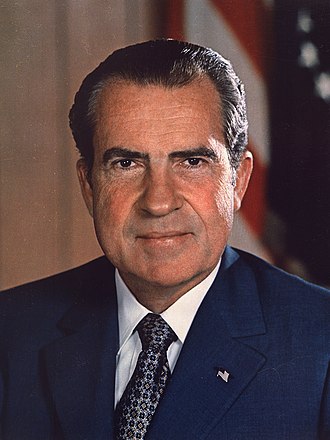
Richard M. Nixon served as the 37th President of the United States from January 1969 until his resignation in August 1974. In February 1971, he ordered the installation of a secret voice-activated taping system in the White House to preserve a historical record of his administration. Until the system's existence was revealed and dismantled in July 1973, the tapes captured Nixon directing major foreign policy initiatives, such as the opening to China, as well as his central role in the Watergate cover-up.
What Nixon talks about on the tapes
White House operations 4,718Presidential scheduling 2,225Public relations 1,784Presidential schedule 1,782Vietnam War 1,693Logistics 1,650Manolo Sanchez 1,626White House communications 1,400White House administration 1,399Presidential communication 1,243Henry Kissinger 1,191Foreign Policy 1,183
Conversations (21,010)
— Page 209 of 211President Nixon held a brief, unscheduled interaction with a White House operator in his office within the Executive Office Building. As no transcript exists for this encounter, the specific subject matter remains undocumented and no formal decisions or action items can be verified. The encounter serves primarily as a record of administrative connectivity during the President's daily operations.
President Nixon and Julie Nixon Eisenhower discuss the positive reception of a recent student event featuring Secretary Caspar Weinberger, noting the students' interest in the upcoming Soviet summit. Nixon updates Julie on his strategy to counter John Dean's allegations, alleging that Dean embezzled funds and was the architect of the Watergate cover-up. The conversation concludes with a discussion regarding supportive media figures and the successful state dinner held for Leonid Brezhnev.
President Nixon met with his daughter, Julie Nixon Eisenhower, for a brief personal check-in regarding her recent activities and upcoming evening engagements. During the discussion, the President alluded to political pressures, expressing confidence in a strategic plan to "strike back" against his detractors. The conversation functioned primarily as a morale-building exchange between family members amidst the mounting difficulties of the administration.
President Nixon consulted with J. Fred Buzhardt, Jr. regarding his immediate schedule and availability for a meeting. The brief exchange served to coordinate the President's upcoming activities, resulting in Buzhardt being instructed to come to the Oval Office. This interaction facilitated direct access between the President and his legal counsel during the height of the Watergate-related investigations.
President Nixon met briefly with White House special counsel J. Fred Buzhardt, Jr. to discuss matters related to the ongoing Watergate investigation. The extremely brief interaction reflects the high level of urgency and concern surrounding the administration's legal defense at the time. No specific directives were recorded, as the conversation primarily served to acknowledge pressing developments in the case.
President Nixon met with Alexander Haig, J. Fred Buzhardt, and Melvin Laird to discuss ongoing challenges including the Watergate scandal and upcoming administrative transitions. They reviewed the status of John Dean's legal situation, focusing on his handling of campaign funds and the political advantage of exposing his alleged financial impropriety through press coverage. Furthermore, the group discussed personnel adjustments, including bringing Bryce Harlow onto the White House staff, and coordinated legislative strategies regarding a pending House vote on Cambodia funding and the implementation of the Phase IV economic program.
President Nixon consulted with an aide regarding the logistical arrangements for an upcoming meeting with Soviet leader Leonid Brezhnev. The discussion focused on managing press access, specifically the duration and scope of photographic opportunities at the meeting site. The President emphasized a preference for minimizing media presence and streamlining the encounter to ensure a quick and efficient engagement.
President Nixon met with his personal aide, Manolo Sanchez, to coordinate logistics for an upcoming trip to Camp David. The conversation focused on the transportation arrangements, specifically the use of the presidential yacht, the Sequoia, and the preparation of the President’s briefcase and personal effects. The meeting concluded with instructions for Sanchez to finalize these administrative details to ensure the President's departure preparations were completed.
President Nixon met with two unidentified individuals to discuss logistical challenges regarding Soviet General Secretary Leonid I. Brezhnev’s upcoming schedule. The primary focus involved the need to delay Henry Kissinger’s activities, a task requiring coordination with Soviet Ambassador Anatoliy F. Dobrynin. The brief meeting concluded with an urgent emphasis on time constraints regarding these diplomatic arrangements.
President Nixon, Henry Kissinger, and Alexander Haig met briefly to coordinate the logistics and diplomatic agenda for Soviet General Secretary Leonid Brezhnev's upcoming visit. They discussed scheduling meetings with Senators and planning specific talks regarding SALT and Mutual and Balanced Force Reductions (MBFR). Additionally, the group briefly addressed emerging press reports concerning John Dean’s handling of campaign funds, with Nixon emphasizing the need to manage the fallout from the Watergate-related allegations.
President Nixon, Soviet General Secretary Leonid Brezhnev, and key members of their diplomatic and economic teams met to discuss the expansion of U.S.-Soviet trade and the challenges of integrating two distinct economic systems. The conversation focused on large-scale, long-term projects in the energy sector—specifically oil and gas—and the necessity of institutionalizing economic cooperation through trade missions and working groups. Participants acknowledged that while political will is high, practical implementation requires navigating complex issues of financing, pricing, and administrative differences between American private enterprise and the Soviet state-controlled economy.
President Nixon contacted the Camp David operator to facilitate an urgent telephone call. The sole purpose of the communication was to establish a connection with National Security Advisor Henry A. Kissinger. No other substantive policy matters or tactical decisions were discussed during this brief administrative exchange.
President Nixon and Henry Kissinger spoke from Camp David to coordinate the agenda for upcoming meetings with Soviet General Secretary Leonid Brezhnev. The two assessed Brezhnev’s strong personal rapport with Nixon and emphasized that their ongoing diplomatic efforts were of greater national significance than the Watergate scandal. Nixon expressed frustration over the distraction caused by domestic political controversies, specifically disparaging John Dean, while affirming the strategic necessity of maintaining his presidency to continue essential international negotiations with the USSR and China.
President Nixon contacted the Camp David operator to facilitate telephone connections with his close associates, Charles “Bebe” Rebozo and Robert H. Abplanalp. He specified that Rebozo could be reached at Abplanalp’s residence in New York. Nixon instructed the operator to forgo further attempts to locate Rebozo if he was dining out, opting instead to call him at a later time.
President Nixon contacted the Camp David operator to facilitate a personal telephone connection. The primary purpose of the communication was to reach Julie Nixon Eisenhower. The exchange served as a routine administrative request to initiate a private family call.
President Nixon and his daughter, Julie Nixon Eisenhower, discuss their respective public engagements and the ongoing, highly successful diplomatic visit of Soviet leader Leonid Brezhnev. Amidst the summit, Nixon emphasizes that the global importance of his negotiations outweighs the domestic political distractions of the Watergate scandal. Additionally, they discuss the positive reception of Julie’s recent public speaking, the upcoming schedule for David Eisenhower, and recent reports discrediting John Dean regarding financial misconduct.
President Nixon contacted the Camp David operator to request an outgoing telephone call to his National Security Advisor, Henry Kissinger. This administrative interaction served as the necessary bridge to facilitate a direct line of communication between the President and his top foreign policy official. No substantive policy matters were discussed during this brief request.
President Nixon and the Camp David operator discuss an incoming communication attempt from National Security Advisor Henry Kissinger. Upon being informed that Kissinger is currently occupied on another line, Nixon authorizes the operator to have Kissinger return the call at a later time. The brief exchange serves primarily as a logistical coordination to facilitate an impending discussion between the President and his advisor.
President Nixon contacted the Camp David operator during a late-night stay at the retreat. He requested that the operator arrange for a shirt to be delivered to him. This brief exchange reflects the routine logistical interactions between the President and the site's support staff.
President Nixon communicated with the Camp David operator to facilitate a telephone connection with Nellie L. Yates. The brief exchange served as a logistical coordination to ensure the President was reachable at his cabin. No substantive policy matters were discussed during this brief administrative call.
President Richard M. Nixon held a brief telephone conversation with Nellie L. Yates from Camp David. The entire content of the discussion was withheld from the public record due to privacy considerations under a deed of gift. Consequently, no information regarding the purpose, topics, or outcomes of this interaction is available for historical analysis.
President Nixon contacted the Camp David operator to facilitate a telephone connection with his close friend and confidant, Charles G. “Bebe” Rebozo. The brief exchange served strictly as a logistical request to initiate a private conversation. No substantive policy matters or political strategy discussions took place during this administrative call.
President Nixon contacted the Camp David operator to facilitate an urgent connection with National Security Advisor Henry Kissinger. This brief administrative interaction served as a logistical bridge to initiate a direct consultation with Kissinger. No substantive policy discussions occurred during this exchange, as its sole purpose was to establish the telephonic link between the President and his advisor.
President Nixon and Henry Kissinger coordinated the logistical arrangements and agenda for the upcoming summit with Soviet General Secretary Leonid Brezhnev. The two discussed the protocol for Nixon to personally present an automobile as a gift to Brezhnev and established a sequence for upcoming meetings, including sessions involving Kissinger and Ambassador Anatoliy Dobrynin, as well as private time for the President and Brezhnev. Kissinger committed to delivering a brief outlining the remaining summit goals to ensure the plenary sessions and private discussions proceeded as planned.
President Nixon contacted the Camp David operator to facilitate a meeting with his Press Secretary, Ronald L. Ziegler. The brief interaction served as a logistical coordination to arrange for Ziegler's arrival at the retreat. No further substantive policy matters were discussed during this communication.
President Nixon contacted the Camp David operator to facilitate a telephone connection with Alexander M. Haig, Jr. The brief exchange served as an administrative request to place a call to his Chief of Staff. No further substantive policy matters were discussed during this brief communication.
President Nixon and Alexander Haig reviewed several pressing political and administrative issues, including a potential SEC inquiry involving Melvin Laird and ongoing concerns regarding the Watergate investigation. The two discussed the nervous state of Vice President Spiro Agnew regarding a Maryland investigation and directed J. Fred Buzhardt to contact Attorney General Elliot Richardson regarding reports of witness intimidation. Additionally, they addressed damaging leaks from John Dean to the Ervin Committee and confirmed the strategic rationale behind past White House discussions regarding IRS investigations of political opponents.
President Nixon contacted the Camp David operator to issue a request for Chief of Staff Alexander M. Haig, Jr. to meet him at the Aspen Lodge. This brief logistical communication facilitated a direct discussion between the President and his top aide during Nixon's stay at the retreat. No further substantive policy matters were addressed in this exchange.
President Nixon contacted the Camp David operator to facilitate a telephone call to his close friend, Charles G. “Bebe” Rebozo, who was in Florida. The President specifically requested the operator's assistance in connecting him to Rebozo's location. This brief interaction served solely as an administrative step to initiate a private communication between the two men.
President Nixon coordinated his schedule with the Camp David operator, specifically requesting a telephone call to Henry Kissinger. The discussion also addressed the afternoon arrival of Charles G. “Bebe” Rebozo and the President's unavailability due to ongoing meetings. Nixon ultimately decided to delay his return call to Rebozo until later in the afternoon.
President Nixon and Henry Kissinger spoke briefly to coordinate their immediate availability for discussions. Nixon inquired about Kissinger's current schedule and potential meetings to ensure they were prepared for upcoming engagements, including the President's scheduled meeting with Soviet Union officials. The call functioned primarily as a logistical check-in to align their respective calendars while at Camp David.
President Nixon initiated a brief telephonic communication with the Camp David operator from his study table. The primary purpose of this contact was to facilitate an outgoing call to White House Press Secretary Ronald L. Ziegler. No further substantive policy matters were discussed during this brief administrative exchange.
President Nixon and Press Secretary Ronald Ziegler discussed concerns regarding J. Fred Buzhardt's investigation into Watergate-related activities, specifically focusing on a tape Charles Colson provided to John Dean and allegations surrounding the improper handling of campaign funds. They expressed frustration with Dean's conduct and discussed the potential for holding him in contempt for his refusal to testify in executive sessions before the Ervin Committee. To counter the negative narrative, the administration planned to have the Committee for the Re-Election of the President issue a letter demanding the return of the funds, while also coordinating media logistics for the upcoming visit of Leonid Brezhnev.
President Nixon initiated a brief telephone request through the Camp David operator to speak with his Chief of Staff, Alexander M. Haig, Jr. The call served solely as a logistical communication to facilitate direct contact with Haig. No further substantive policy discussions occurred during this exchange.
President Nixon and Alexander Haig reviewed the results of a recent press conference held by John Connally, focusing on his remarks regarding the national economy and his future role on the White House staff. While Nixon expressed slight disappointment that Connally's comments on his staff involvement were not more assertive, they agreed his performance on economic messaging was effective. Additionally, Haig provided updates on his ongoing communications with George Shultz and Melvin Laird and briefed the President on upcoming administrative actions.
President Nixon contacted the Camp David operator to request a telephone connection with Alexander M. Haig, Jr. During the brief interaction, the President also made a minor personal request for additional supplies to be delivered to his study. The primary purpose of the call was to facilitate communication with his Chief of Staff.
President Nixon and Alexander Haig discussed the White House's economic messaging strategy, specifically praising Melvin Laird’s recent success in bolstering support among Congressmen. The conversation shifted to monitoring Attorney General Elliot Richardson and the ongoing investigation into Vice President Spiro Agnew. Haig confirmed he had tasked J. Fred Buzhardt with pressing Richardson for information regarding the Agnew probe to ensure the administration was not blindsided by potential legal or political crises.
President Nixon initiated a brief administrative call to the Camp David operator to request a telephone connection. The primary purpose of the communication was to reach Charles G. “Bebe” Rebozo. No further substantive policy matters were recorded during this brief logistical exchange.
President Nixon and his close associate Bebe Rebozo discuss the ongoing press coverage of Leonid Brezhnev’s visit to Camp David, noting that it successfully diverted media attention away from the Watergate scandal. Rebozo reports on his efforts to resolve the legal handling of a Howard Hughes campaign contribution involving an individual referred to as 'Calhoun.' Rebozo confirms that legal counsel Kenneth Gemmill reviewed the matter and concluded that Rebozo bears no legal liability regarding the funds.
President Nixon contacted the Camp David operator to request a telephone connection with Alexander M. Haig, Jr. This brief administrative interaction served to facilitate direct communication between the President and his Chief of Staff. No further substantive policy discussions were recorded during this brief exchange.
President Nixon and Alexander Haig discuss the positive television coverage of Soviet leader Leonid Brezhnev's visit, while also finalizing negotiations regarding SALT and MBFR. The pair reviews the political fallout of the Watergate scandal, specifically monitoring media reports regarding John Dean's upcoming testimony and Senator Hugh Scott's remarks. Additionally, they coordinate the timing of personnel announcements for the SEC and John A. Love to avoid negative headlines, and they clarify the future advisory role of John Connally to mitigate public misperception.
President Nixon contacted the Camp David operator to facilitate an urgent telephone connection. The primary purpose of this brief communication was to request a call with Alexander M. Haig, Jr., who was serving as White House Chief of Staff at the time. This interaction reflects the administrative process Nixon utilized to coordinate high-level staff communications while residing at the presidential retreat.
President Nixon and Alexander Haig discussed the historic significance of the dinner meeting with Leonid Brezhnev, expressing their shared conviction that the personal rapport established during the event represented an unprecedented breakthrough in U.S.-Soviet diplomacy. Emphasizing the importance of documenting these interactions, Nixon directed Haig to ensure that Helmut Sonnenfeldt and Ronald Ziegler draft comprehensive memoranda of their recollections of the evening. The discussion also touched upon the distracting impact of the Watergate scandal, which the President feared threatened to overshadow this major foreign policy achievement.
President Nixon contacted the Camp David operator to issue a request for Press Secretary Ronald L. Ziegler to join him at Aspen Lodge. This brief communication served solely to facilitate a direct meeting between the two men at the President's retreat. No substantive policy matters were discussed during this logistical exchange.
President Nixon initiates a request to be connected by telephone to his close confidant, Charles G. “Bebe” Rebozo. The brief exchange serves as a logistical bridge to facilitate a direct conversation between the President and Rebozo. No substantive policy matters or further decisions were recorded during this connection request.
President Nixon held a brief meeting with an unidentified male visitor in the Old Executive Office Building to discuss the President’s official schedule. The exchange lasted less than seven minutes, concluding shortly before 3:52 pm. No further details regarding specific appointments or logistical decisions are available due to the lack of a transcript.
President Nixon met with an unknown individual in the Old Executive Office Building to review logistical details regarding his upcoming official schedule for June 22, 1973. The discussion focused on coordinating the President's itinerary for the following day. No substantive policy matters or major decisions were recorded during this brief administrative briefing.
President Nixon held a brief, routine administrative interaction with a White House operator to facilitate a phone connection. No substantive policy matters, political strategy, or historical decisions were addressed during this short exchange. The interaction served strictly as a logistical task required for the President to initiate an external communication.
President Nixon held a brief meeting in the Old Executive Office Building to coordinate his schedule, possibly involving National Security Advisor Henry Kissinger. The discussion centered on administrative planning and the structure of the President's upcoming appointments. No definitive decisions were recorded due to the lack of a transcript, though the encounter highlights the internal management of the executive calendar during this period.
President Nixon and his close associate Bebe Rebozo discuss recent diplomatic meetings with Soviet leader Leonid Brezhnev and address ongoing concerns regarding the handling of a Howard Hughes financial contribution. Rebozo updates the President on the strategy for returning the funds, confirming that his lawyer, Kenneth Gemmill, is managing the process with a representative from New York. Rebozo also expresses relief after being assured by his legal counsel that he faces no legal jeopardy regarding the matter.
President Nixon and his close associate Bebe Rebozo discuss the logistics of an ongoing arrangement involving an unidentified third party and a lawyer. The exchange centers on ensuring a specific task is completed, with Nixon emphasizing that the individual must follow through even if the legal representative declines to intervene. The conversation concludes with a plan for the two to reconnect the following day.
President Nixon and Henry Kissinger met to coordinate the upcoming visit of Soviet leader Leonid Brezhnev and manage the accompanying diplomatic strategy, including the preparation of communiqués and the involvement of U.S. allies. A significant portion of the discussion focused on scheduling a briefing for Senator J. William Fulbright and his committee, which Kissinger ultimately moved to the following morning to ensure he could provide a more comprehensive and detailed update. The participants also discussed the necessity of maintaining international perceptions and the importance of presenting a unified administrative stance regarding ongoing negotiations.
President Nixon contacts the White House operator to facilitate a personal phone call to his daughter, Julie Nixon Eisenhower. The brief interaction serves solely as a logistical request for the operator to place the outgoing connection. No substantive policy matters or political topics were discussed during this brief exchange.
President Nixon met briefly with an unidentified individual in the Old Executive Office Building to coordinate scheduling logistics. The discussion focused primarily on the visitor's departure plans. No substantive policy matters were addressed during this two-minute interaction.
President Nixon held a brief, two-minute meeting in the Old Executive Office Building with an unidentified individual. The discussion was centered on administrative matters regarding the President's upcoming schedule. No significant policy decisions were recorded during this brief encounter before the visitor departed.
President Nixon held a brief, informal interaction with a White House operator in the Executive Office Building. The exchange serves primarily as a logistical point of contact for placing an outgoing telephone call. No substantive policy discussions or significant political developments occurred during this brief communication.
President Nixon and his daughter, Julie Nixon Eisenhower, discuss recent positive media coverage of her interactions with a group of Teenage Republicans who expressed strong support for the President. They further address concerns regarding the political impact of the Watergate scandal on the 1974 elections. Additionally, the President explains the logistics behind his upcoming flight to San Clemente, clarifying that seating limitations for Soviet guests necessitated traveling separately from First Lady Pat Nixon.
President Nixon and his daughter, Julie Nixon Eisenhower, held a brief informal meeting to discuss a recent interaction with White House Scholars. The conversation touched upon the positive reception of the administration among students and addressed logistical concerns regarding event scheduling and personnel arrangements. The discussion concluded with a brief exchange confirming their plans to see each other later that evening.
President Nixon speaks with a White House operator to facilitate an outgoing call. The primary purpose of the conversation is to request a connection to Press Secretary Ronald L. Ziegler. No other substantive policy matters or decisions are discussed during this brief administrative exchange.
President Nixon consulted with the White House operator to facilitate an outgoing telephone communication. This brief interaction served administrative purposes to connect the President with a specific party via the White House switchboard. No substantive policy discussions or major decisions occurred during this technical exchange.
President Nixon and Press Secretary Ronald Ziegler discuss the media strategy surrounding Leonid Brezhnev's ongoing visit to the United States. They focus on managing press expectations and coverage for the President’s upcoming toast, ensuring it remains substantively light to avoid overshadowing the official agreements. Furthermore, they note with satisfaction that Henry Kissinger successfully avoided Watergate-related questions during his recent media briefing.
President Nixon and Press Secretary Ronald Ziegler coordinate logistics for a signing ceremony scheduled for the following day. They discuss the potential need for official remarks, ultimately deciding against them to maintain control over the event's messaging. Nixon also outlines plans to organize a seating line for participants while minimizing press interaction.
President Nixon instructed the White House operator to place a telephone call to J. Fred Buzhardt, Jr. The President specified that the operator should only connect the call if Buzhardt was currently present in his office. This brief administrative interaction served as a logistical step to facilitate direct communication between the President and his legal counsel.
President Nixon consulted with a White House operator in his Old Executive Office Building workspace to initiate an outgoing phone call. The brief exchange consists of logistical communication regarding the placement of the call. No substantive policy matters or major political decisions were recorded during this brief interaction.
President Nixon initiates a brief telephone call to summon J. Fred Buzhardt, Jr. to the Oval Office for an immediate meeting. The discussion is strictly logistical, serving to confirm Buzhardt's location and request his presence for a follow-up consultation. No specific policy or legal matters are addressed during this brief exchange, as the conversation functions solely as a scheduling maneuver.
President Nixon summoned J. Fred Buzhardt, Jr. to his office for a brief, informal meeting. The discussion primarily functioned as a prompt to facilitate an immediate in-person consultation between the two men. No substantive policy or legal matters were detailed during this brief exchange.
President Nixon held a brief, informal discussion with an unidentified participant, with Helmut “Hal” Sonnenfeldt also referenced as a subject of inquiry. The conversation focused on clarifying attendance at a specific function and verifying the status of an active call. No substantive policy decisions or historical developments were recorded during this brief exchange.
President Nixon and J. Fred Buzhardt discuss the ongoing Watergate investigations, focusing on strategies to manage public perception and counter testimony from John Dean and other witnesses. They evaluate the effectiveness of the Senate committee's investigation, analyze the flow of hush money, and consider potential legal avenues to discredit damaging claims, including the possibility of a presidential press conference once the Senate hearings conclude. The conversation emphasizes the need to maintain a defensive legal posture while avoiding direct confrontation that might legitimize their political opponents' narratives.
President Nixon contacted the White House operator to facilitate a personal telephone call to his daughter, Tricia Nixon Cox. The President requested that the operator connect him directly to her room. This brief interaction served solely to coordinate the private communication between the President and his daughter.
President Nixon contacted the White House operator to determine the location of his daughter, Tricia Nixon Cox. The operator assisted by suggesting she might be in the West Hall of the residence. The brief exchange concluded with the President acknowledging the information.
President Nixon consulted with a White House operator to facilitate communication with his family members, specifically Tricia Nixon Cox and possibly Julie Nixon Eisenhower. The exchange focused on locating his daughters within the White House residence. The call concluded once the operator confirmed their status and assisted the President in reaching them.
President Nixon initiates a brief telephone call through the White House operator to contact Speaker of the House Carl B. Albert. The conversation serves solely as a logistical request to establish a line of communication with the legislative leader. No further discussion occurs during this interaction beyond the initial placement of the call.
President Nixon met with an unidentified individual in the Oval Office to coordinate administrative logistics. The discussion focused primarily on the schedule and upcoming activities of National Security Advisor Henry A. Kissinger. No definitive policy decisions were recorded during this brief administrative briefing.
President Nixon met with his aide Stephen B. Bull to coordinate his daily schedule and manage upcoming appointments. The discussion focused on finalizing the timing for meetings with Alexander M. Haig, Jr., Ronald L. Ziegler, and Henry A. Kissinger. This interaction served to organize the President's immediate administrative agenda and ensure the availability of key staff members.
President Nixon consulted with the White House operator to facilitate a telephonic connection with Speaker of the House Carl B. Albert. The primary purpose of this interaction was to initiate official communication between the President and the Democratic leader. No further substantive policy discussions occurred during this brief request for the operator's assistance.
President Nixon attempted to initiate a telephone call to Speaker of the House Carl Albert to discuss unspecified business. Upon learning that Albert was unavailable due to personal matters and could not be immediately reached, Nixon directed the White House operator to have the Speaker return the call upon his arrival. No further action or substantive policy discussion occurred during this brief administrative exchange.
President Nixon received a brief communication from a White House operator regarding a request for a telephone call from Speaker of the House Carl B. Albert. The interaction served as a logistical bridge to facilitate direct contact between the President and the legislative leader. No further substantive policy matters were addressed during this short exchange.
President Nixon and Henry Kissinger met to refine strategy regarding Leonid Brezhnev’s ongoing visit and the upcoming Agreement on the Prevention of Nuclear War. They discussed whether to seek a Congressional resolution for the agreement, ultimately deciding against it to avoid unnecessary legislative scrutiny. Additionally, the pair reviewed the President's foreign policy accomplishments, specifically noting the positive shifts in media coverage and public perception despite the ongoing Watergate scandal.
President Nixon, Alexander Haig, Ronald Ziegler, and Henry Kissinger met to coordinate the administration's defensive strategy regarding the unfolding Watergate scandal and the Ervin Committee's upcoming hearings. The participants discussed strategies for discrediting John Dean and mitigating damaging press coverage by leaking information regarding historical FBI surveillance abuses conducted under the Kennedy administration. Furthermore, the President emphasized the necessity of a firm legislative stance against Congress, specifically regarding spending vetoes and the handling of foreign policy agreements like the nuclear war prevention pact with the Soviet Union.
President Nixon held a brief, private meeting with an unidentified individual in the Oval Office. The interaction was limited to informal social pleasantries, specifically the provision of refreshments, and lacks any record of substantive policy discussion or administrative decision-making. No official transcript exists to provide further insight into the purpose or identity of the visitor.
President Nixon met with an unidentified individual to finalize preparations for the upcoming visit of Soviet General Secretary Leonid Brezhnev. The discussion focused on the coordination and compilation of formal agreements to be addressed during the summit. This meeting served as a strategic review to ensure all diplomatic documentation was in order prior to the leader's arrival.
President Nixon met with an unidentified individual to discuss the logistical and diplomatic preparations for the upcoming visit of Soviet General Secretary Leonid Brezhnev. The dialogue focused specifically on the quantity and status of bilateral agreements slated to be finalized during the summit. This briefing served to coordinate executive expectations and planning regarding the high-stakes international engagement.
President Nixon contacted Speaker of the House Carl Albert to lobby against further congressional restrictions on military operations in Cambodia during the pending Second Supplemental Appropriations Act. Nixon argued that maintaining tactical air support is essential to leverage ongoing diplomatic efforts with the Soviet Union, China, and local factions to secure a peace settlement. He warned that if the House adopted the more restrictive stance favored by the Senate, he would be forced to veto the bill, shifting the political responsibility for any resulting instability onto Congress.
President Nixon met with Speaker of the House Carl Albert to urge the House of Representatives to support his administration's position on ongoing military and diplomatic efforts in Cambodia. Nixon emphasized the necessity of maintaining tactical air support until a settlement is reached, warning that legislative interference could undermine delicate negotiations with China and the Soviet Union. He pressured Albert to lead the House in resisting congressional efforts to curtail this authority, framing the request as a critical matter of national interest.
President Nixon met with Stephen B. Bull to coordinate an immediate briefing and facilitate communication with Henry Kissinger. The discussion centered on identifying Kissinger’s current location to ensure the prompt delivery of sensitive materials. Nixon directed Bull to expedite these efforts, prioritizing the rapid transfer of information.
President Nixon prepares for an upcoming meeting with Congressional leaders, including Gerald Ford and Leslie Arends, to discuss legislative strategy and pending petitions. The participants coordinate the arrival of these guests and emphasize the importance of maintaining communication with Senate leadership. The brief discussion serves as a final briefing to ensure the President is ready to address key legislative priorities upon the arrival of the congressional delegation.
President Nixon and Henry Kissinger met to review the public reception of the recently signed Agreement on the Prevention of Nuclear War, specifically focusing on Kissinger's press briefing and the challenges of explaining the accord's scope regarding nuclear first use, China, and regional military operations. They discussed how to frame the agreement as a significant symbolic commitment to peace while managing skepticism from the press and political critics. Additionally, the President briefly consulted with an unidentified staffer regarding legislative meetings and discussed a potential postponement of negotiations concerning a US-USSR air services protocol.
President Nixon met with William E. Timmons to coordinate the logistics of upcoming meetings with members of the Senate. The discussion focused on scheduling arrangements for Capitol Hill visits, specifically involving Senator Stuart Symington. The participants concluded the brief exchange by finalizing these legislative appointment details.
President Nixon met with Vice President Agnew, Secretary of State William Rogers, Henry Kissinger, and bipartisan congressional leaders to discuss recent foreign policy breakthroughs and the administration's ongoing diplomatic strategy. The discussion focused on the significance of newly negotiated agreements with the Soviet Union, specifically regarding the prevention of nuclear war and the management of bilateral relations. Nixon emphasized that these diplomatic efforts represent a move toward global stability and stressed the necessity of maintaining bipartisan support as his administration continues these critical negotiations with Soviet leadership.
President Nixon met with an unidentified individual to coordinate logistics and security protocols for the upcoming state visit of Soviet General Secretary Leonid Brezhnev. The discussion focused on arrival procedures at the North Portico and the specific notification requirements for the President regarding potential schedule delays. These planning efforts were intended to ensure the smooth execution of the state dinner and official reception ceremonies.
President Nixon consulted with an unknown aide regarding the status of Henry Kissinger’s current schedule and his ongoing meetings with Leonid Brezhnev. The discussion focused on coordinating a potential phone conversation between the President and Kissinger, who was occupied with events in the East Room involving business leaders. The exchange served as a brief administrative check-in to facilitate direct communication during the diplomatic visit.
President Nixon initiates a call to the White House operator to request an immediate meeting with Henry Kissinger. The President directs the operator to have Kissinger brought directly to the Oval Office. No other topics are addressed during this brief logistical exchange.
President Nixon and Henry Kissinger coordinated a strategic communication effort to influence Soviet General Secretary Leonid Brezhnev ahead of his upcoming visit. Kissinger was instructed to contact Soviet Ambassador Anatoliy Dobrynin to convey that Congressional leaders held a positive reaction toward the President's diplomatic initiatives, specifically emphasizing the progress on Most Favored Nation (MFN) status. This action aimed to reassure the Soviet leadership and build momentum for negotiations despite delays in the summit's business agenda.
President Nixon and Henry Kissinger met briefly in the Oval Office to continue discussions regarding ongoing international negotiations or intelligence matters. The dialogue, which appears to be a segment of a broader exchange, focuses on the strategic feasibility of obtaining specific terms or information. No definitive policy shift is finalized in this short duration, as the participants weigh the necessity and availability of their objectives.
President Nixon met with an unidentified individual to coordinate logistics regarding the upcoming visit of Soviet General Secretary Leonid I. Brezhnev. The discussion focused primarily on the scheduling and accommodations for the Soviet leader during his stay at Blair House. No further policy decisions were recorded as the meeting concluded shortly thereafter.
President Nixon met with Nellie L. Yates and unnamed individuals to oversee logistical and security arrangements within the Oval Office and the Executive Office Building. The discussion focused on operational concerns, including the management of office doors, alarm system settings, and potential filming activities. The encounter concluded with administrative coordination and a brief exchange regarding protocol and personal departures.
President Nixon consulted his daughter, Tricia Nixon Cox, regarding appropriate reciprocal gifts for Viktoria Brezhnev and her family following the US-USSR summit. The President suggested obtaining high-quality watches from a New York City craftsman, noting that Rose Mary Woods could facilitate the request. He tasked Tricia with coordinating with her mother and sister, Julie, to finalize the selection of gifts.
President Nixon and his daughter, Tricia Nixon Cox, met briefly in the Old Executive Office Building for a personal exchange. The dialogue is fragmentary and largely unintelligible, consisting primarily of casual remarks and procedural acknowledgments. No significant policy discussions, administrative decisions, or political developments are recorded in this brief interaction.
President Nixon contacted the White House operator to place an outgoing call to Press Secretary Ronald L. Ziegler. The brief interaction focused solely on facilitating this connection for the President. No further policy or administrative decisions were documented during this short communication.
President Nixon held a brief, unscheduled meeting with a White House operator in his Old Executive Office Building workspace. Due to the lack of a transcript, the specific substance of the exchange remains unrecorded in historical documents. This encounter serves as a routine administrative interaction typical of the President's daily office operations.