Nixon, Richard M. (President)
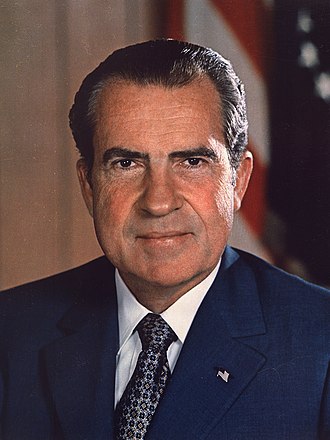
Richard M. Nixon served as the 37th President of the United States from January 1969 until his resignation in August 1974. In February 1971, he ordered the installation of a secret voice-activated taping system in the White House to preserve a historical record of his administration. Until the system's existence was revealed and dismantled in July 1973, the tapes captured Nixon directing major foreign policy initiatives, such as the opening to China, as well as his central role in the Watergate cover-up.
What Nixon talks about on the tapes
White House operations 4,718Presidential scheduling 2,225Public relations 1,784Presidential schedule 1,782Vietnam War 1,693Logistics 1,650Manolo Sanchez 1,626White House communications 1,400White House administration 1,399Presidential communication 1,243Henry Kissinger 1,191Foreign Policy 1,183
Conversations (21,010)
— Page 76 of 211President Nixon met with his personal secretary, Rose Mary Woods, to dictate a letter regarding the daughter of Japanese Prime Minister Kakuei Tanaka. The discussion focused on securing the daughter's name and address to facilitate the delivery of a gift following a recent luncheon. This interaction highlights the President's personal attention to diplomatic protocol and the management of international correspondences.
President Nixon met with his personal aide, Manolo Sanchez, to discuss personal administrative matters and convey birthday wishes. During the exchange, Nixon referenced a contact from the Japanese Ministry of Trade and expressed gratitude toward Sanchez for his service. The brief meeting concluded with the President confirming personal birthday well-wishes for a mutual acquaintance.
President Nixon initiated a brief, informal phone call to Nora L. Moore to convey birthday greetings after learning they shared the same birth date. During the conversation, Nixon praised the military record of Moore’s son, Major General Leslie E. Brown. Moore responded by assuring the President of his strong political support in her hometown of Yucaipa, California.
President Nixon held a brief, ceremonial meeting with Nora L. Moore to offer congratulations regarding the military service of her relative. The discussion focused on honoring the individual's record as a Marine and exchanging pleasantries about travel destinations. No policy decisions or substantive administrative actions were addressed during this short social encounter.
President Nixon received a brief notification from the White House operator regarding an incoming telephone call from his daughter, Julie Nixon Eisenhower. The operator requested approval to patch the call through to the President. Nixon acknowledged the notification and directed the operator to proceed with the connection.
President Nixon met with his personal aide, Manolo Sanchez, to discuss administrative tasks and logistical details regarding his daily schedule. The conversation focused on the transcription of dictabelts, with Nixon providing instructions to ensure the materials were handled by his personal secretary, Rose Mary Woods. The discussion served to streamline the President's workflow and manage the processing of official documentation.
President Richard Nixon met with his personal valet, Manolo Sanchez, in the Old Executive Office Building for an informal discussion. While a portion of the conversation was designated as personal and subsequently withdrawn, the brief encounter centered on routine personal or administrative matters between the President and his long-time staff member. No significant policy decisions or official government actions were recorded during this segment of the meeting.
President Nixon and his daughter, Julie Nixon Eisenhower, held a brief telephone conversation to discuss personal matters and scheduling logistics. They touched upon a television appearance involving Robert H. Abplanalp on the program 'American Sportsman' that featured blue marlin fishing. The discussion also addressed administrative coordination regarding the President's upcoming departure for Andrews Air Force Base.
President Nixon and his daughter, Julie Nixon Eisenhower, held a brief, informal meeting to discuss a specific, undisclosed proposal. During the exchange, the President noted unified opposition to the matter among his staff. The conversation concluded with Nixon directing that the proposal be set aside or addressed accordingly.
President Nixon met with his personal aide, Manolo Sanchez, in the Old Executive Office Building for a brief administrative interaction. The discussion focused on specific instructions regarding the placement of an unidentified object within the office. The meeting concluded shortly after these directions were provided, with both men departing together.
President Nixon initiates a request to the White House operator to place a telephone call to his close friend and confidant, Charles G. "Bebe" Rebozo. This brief interaction serves strictly as a logistical bridge to facilitate communication with Rebozo. No further substantive policy matters or decisions are discussed during this specific exchange.
President Richard Nixon met with his personal valet, Manolo Sanchez, in the Oval Office to discuss routine logistical matters. The brief interaction served as a direct request for assistance from Sanchez. No significant policy decisions or historical developments were recorded during this exchange.
President Nixon consulted with the White House operator to facilitate an outgoing call. This brief interaction served as a routine logistical step for the President to initiate formal communication with another party. No policy decisions or substantive discussions took place during this administrative exchange.
President Nixon met with his aide Stephen B. Bull to manage his immediate schedule and prioritize his upcoming meetings. The discussion focused on coordinating a briefing with John D. Ehrlichman regarding the potential implementation of a value-added tax and managing related press relations. Ultimately, the President directed Bull to defer the meeting with Ehrlichman due to competing scheduling pressures.
President Nixon and his personal secretary, Rose Mary Woods, met to discuss a range of administrative and personal matters, including the President's upcoming work schedule at Camp David, correspondence logistics, and the successful reception of First Lady Pat Nixon's recent trip to Africa. They also addressed the procurement of drinking glasses for the White House and the handling of birthday greetings and gifts received by the President. During the meeting, Nixon provided instructions regarding the delegation of administrative tasks and expressed interest in coordinating a recognition event for General James D. Hughes.
President Nixon coordinated with the White House operator to arrange a connection with his close friend, Charles G. “Bebe” Rebozo. The discussion focused on scheduling logistics for the President's upcoming travel to Florida and California, as well as managing press coverage regarding First Lady Pat Nixon's trip to Africa. These arrangements were intended to facilitate both official work and personal coordination during the President's transit.
President Nixon directs Stephen B. Bull to immediately secure a warrant. This brief exchange reflects an urgent administrative task, though the transcript provides no further context regarding the subject or legal basis of the requested warrant. Bull acknowledges the instruction and departs shortly thereafter.
President Nixon met with H. R. Haldeman and Gerald R. Warren to discuss media strategy regarding the Jack Anderson papers and the defense of Henry Kissinger. The group evaluated upcoming administrative priorities, including the State of the Union address, budget messages, and potential announcements concerning Vietnam troop withdrawals. Additionally, the President reviewed logistical arrangements for the upcoming trip to the People's Republic of China, specifically addressing press attendance limits, and coordinated details for First Lady Pat Nixon's return from her trip to Africa.
President Nixon contacted the White House operator to place a direct phone call to Idanell B. “Nellie” Connally. The brief exchange served as a logistical request to facilitate communication with Mrs. Connally. No further policy or administrative matters were discussed during this short interaction.
President Nixon and Nellie Connally engaged in a brief, cordial exchange to discuss personal matters following the President’s birthday. The conversation centered on the Connallys' gift of a San Clemente photograph and an expression of gratitude for a thoughtful anniversary letter sent by the President. They concluded the call by discussing future social plans and commending First Lady Pat Nixon’s recent television appearance regarding her trip to Africa.
President Nixon and H. R. Haldeman engaged in an extensive review of the President’s upcoming schedule, focusing on the State of the Union address, pending diplomatic visits, and the handling of school financing policy. Nixon emphasized his need for uninterrupted time to focus on his legislative agenda and Vietnam policy, leading to instructions to minimize public events and consolidate state visits. Later, the President met with Arthur Fletcher and other staff to review the success of the First Lady’s recent trip to Liberia and to participate in a photo opportunity involving a funding check for the Grambling University band.
President Nixon and Stephen B. Bull met to finalize scheduling arrangements for upcoming meetings, specifically regarding Dr. W. Kenneth Riland and the Health Service Industry Committee. They discussed the coordination of photo sessions and the potential need for tentative scheduling of these appointments. The President instructed Bull to expedite the departure of the health services representatives following their session.
President Nixon met with his aide, Stephen B. Bull, to conduct a brief administrative review of his daily schedule. The primary focus of the discussion centered on the logistical arrangements for the White House audio taping system. No further policy or political developments were recorded during this brief encounter.
President Nixon held a brief, three-minute meeting in the Oval Office with an unidentified individual. The interaction was limited to informal greetings, as no substantive policy discussions or administrative decisions were recorded. The participants concluded the session shortly after the initial exchange.
President Nixon and H. R. Haldeman met to review the President’s upcoming schedule, including potential diplomatic meetings, Cabinet dinners, and a photo opportunity with the Health Services Industry Committee. They discussed strategies for the 1972 election campaign, with Haldeman advising the President to maintain a non-partisan, presidential image rather than recording radio spots or actively campaigning for individual congressional candidates. Additionally, they deliberated on environmental policy, agreeing that technological solutions managed by professionals, rather than activist trends, should be the administration's focus.
President Nixon met with his personal aide, Stephen B. Bull, in the Oval Office to coordinate administrative tasks and internal scheduling. The discussion focused on managing the President's upcoming daily agenda and logistical arrangements for future meetings. No major policy decisions were recorded during this brief administrative briefing.
President Nixon met with a large delegation of health industry leaders and administrators to acknowledge their contributions to his administration's economic initiatives, specifically regarding cost containment during Phase I. During the session, the President emphasized the importance of maintaining a balance between government oversight and the uniquely American tradition of volunteer-led health services. The meeting concluded with informal remarks about White House staff and services, followed by the presentation of commemorative gifts to the attendees.
President Nixon met with his aide Stephen B. Bull in the Oval Office to coordinate the presidential schedule. The discussion focused primarily on arranging a forthcoming meeting with Ambassador David Kenneth Rush. No further policy or administrative developments were recorded during this brief encounter.
President Nixon met with David Kenneth Rush and Colonel Richard T. Kennedy to discuss appointing Rush as the new Deputy Secretary of Defense. The President emphasized the need for a strong, independent manager who could foster cooperation between Secretary of Defense Melvin Laird and National Security Advisor Henry Kissinger while effectively managing the Washington Special Actions Group (WSAG). Additionally, the participants reviewed international policy issues, including West German election prospects and the administration's strategic handling of the India-Pakistan crisis.
President Nixon consulted with the White House operator to facilitate communication with his staff. The President inquired about his afternoon schedule before requesting to be connected with advisor Peter M. Flanigan. This brief administrative exchange served to coordinate the President's immediate business agenda for the day.
President Nixon and Peter M. Flanigan discussed the search for a successor to outgoing official Kenneth Rush. Nixon instructed Flanigan to meet with Rush to vet potential candidates, prioritizing William P. Clements, Jr. while acknowledging Robert S. Ingersoll's interest in Japan and the withdrawal of Robert W. Galvin. The President delegated the vetting process to Flanigan, aiming to finalize a recommendation without further direct involvement from the Oval Office.
President Nixon met briefly with his personal valet, Manolo Sanchez, in the Oval Office to discuss logistical arrangements. The conversation focused on the coordination of personal items or travel preparations, as indicated by the reference to carrying possessions. The interaction concluded quickly without any recorded policy decisions.
President Nixon and Secret Service agents coordinate security logistics regarding an individual identified as Charlie. The discussion centers on the immediate requirement for a uniformed officer to be stationed at the Oval Office. The brief exchange concludes with instructions to facilitate this security presence.
President Nixon met briefly with an unidentified individual in the Old Executive Office Building to coordinate his personal schedule. The discussion focused primarily on logistics regarding the President’s lunch arrangements. The conversation concluded without any significant policy developments or recorded substantive actions.
President Nixon met with his personal aide, Manolo Sanchez, to discuss his daily schedule and upcoming personal arrangements. The conversation centered on the President's need for rest, specifically addressing his intention to take a nap. This brief interaction highlights the management of the President's personal routine and recovery during his workday.
President Nixon met with his personal valet, Manolo Sanchez, to discuss the President's daily schedule. The primary focus of the brief interaction was the President's intent to take a nap. No significant policy developments or administrative decisions resulted from this brief exchange.
President Nixon directed the White House operator to place a telephone call to Reverend Billy Graham. The operator noted that Graham was believed to be in Puerto Rico at the time. This exchange served as an administrative request to facilitate communication between the President and his advisor.
President Nixon consulted with the White House operator to facilitate a follow-up telephone call to the Reverend Billy Graham, who had reached out to the President the previous day. Upon learning that Graham had checked out of his current location, Nixon provided instructions to the operator regarding his own availability. The President authorized the operator to contact him between 3:00 and 5:00 p.m. to reconnect with Graham once his whereabouts were confirmed.
President Nixon requested that the White House operator place a telephone call to his daughter, Julie Nixon Eisenhower. The operator promptly acknowledged the request to initiate the connection. This brief interaction served solely as an administrative coordination to facilitate a personal conversation between the President and his daughter.
President Nixon consulted with a White House operator to determine the correct route to his next destination within the Executive Office Building. The brief exchange focused primarily on logistical navigation as the President prepared to transition to a subsequent meeting. No substantive policy discussions or major decisions were recorded during this brief encounter.
President Nixon coordinates scheduling logistics with the White House operator regarding an expected incoming call. He specifies his availability window, instructing the operator that he can take the call anytime between 3:00 pm and 5:00 pm. This brief exchange serves primarily to manage his afternoon communications schedule.
President Nixon consulted with the White House operator to facilitate an outgoing call. The interaction served as a brief administrative coordination to establish a connection with an unspecified party. No further policy discussions or substantive developments occurred during this brief exchange.
President Nixon speaks with his daughter, Julie Nixon Eisenhower, to review recent media coverage of the First Lady’s Africa trip and Julie's own environmental tour of the Big Cypress Swamp. They discuss the potential for future public relations opportunities regarding environmental issues involving both Julie and Pat Nixon. Additionally, Julie suggests that staffer Dave Parker needs additional support to manage the scheduling workload for her and her sister, Tricia, a concern the President agrees to address.
President Nixon and his daughter, Julie Nixon Eisenhower, discuss her recent travel and a successful public relations event at a cypress plant. The President praises the positive media coverage generated by her tour and suggests that increasing her and First Lady Pat Nixon's involvement in environmental advocacy could serve as a beneficial political strategy. The brief conversation concludes with the President encouraging further efforts to highlight the administration's interest in environmental issues.
President Nixon initiates a request for the White House operator to place a telephone call to Treasury Secretary John B. Connally. This administrative interaction serves as a bridge to a subsequent conversation between the President and his Treasury Secretary. The call is a routine logistical step in the President's daily schedule of high-level communications.
President Nixon held a brief, informal session with a White House operator to facilitate an outgoing call. The interaction primarily served to manage telephonic logistics, as the President requested assistance in establishing a connection with another party. No substantive policy discussions occurred during this administrative exchange.
President Nixon consulted with Treasury Secretary John B. Connally regarding the legislative strategy for his upcoming State of the Union address, specifically focusing on the public presentation of a potential value-added tax. They agreed that the administration should avoid committing to specific new legislation, instead framing the address as a period of consolidation following previous major domestic and international policy initiatives. Additionally, the President recommended his personal osteopath to Connally to help treat an ongoing back injury.
President Nixon and John B. Connally discuss legislative strategy regarding the administration's upcoming agenda, focusing on preempting political opposition in Congress. They evaluate a plan to delay new legislative proposals by emphasizing that the administration is still studying the issues while urging Congress to prioritize previously submitted reforms like revenue sharing and welfare. Nixon and Connally agree that this approach allows them to maintain flexibility while avoiding unnecessary political friction on the Hill.
President Nixon initiates a brief telephone request to the White House operator to be connected with Vice President Spiro T. Agnew. The interaction serves as a logistical bridge to facilitate direct communication between the two leaders. No substantive policy matters or decisions were discussed during this short exchange.
President Nixon and John Ehrlichman discussed the reaction of Treasury Secretary John Connally to the President's recent policy proposals. Nixon affirmed his decision to move forward with the initiatives, noting that Connally had expressed his approval and agreement to proceed. The discussion centered on securing support for these upcoming executive actions.
President Nixon held a brief, informal communication with the White House operator to facilitate an outgoing call. The interaction primarily served as a logistical step to connect the President with a third party. No substantive policy discussions or significant political decisions were recorded during this brief exchange.
President Nixon consulted with the White House operator to facilitate communication with Vice President Spiro T. Agnew while he was in transit. The President requested that Agnew return his call upon arrival in New York, explicitly noting that there was no urgency regarding the timing of the outreach. This brief administrative exchange served solely to establish a point of contact for the Vice President.
President Nixon initiates a request to the White House operator to place an outgoing call to Secretary of the Interior Rogers C. B. Morton. The brief interaction serves solely as a logistical bridge to facilitate this high-level communication. No further policy discussions or substantive developments occur during this brief exchange.
President Nixon consulted with the White House operator to facilitate an outgoing call. The brief exchange functioned primarily as a routine administrative coordination to connect the President with an outside party. No substantive policy discussions or significant political decisions occurred during this brief logistical interaction.
President Nixon consulted with a White House operator regarding an audible disturbance originating from his surroundings. The brief exchange focused on identifying the source of barking sounds heard during the recording. No further policy or administrative actions resulted from this communication.
President Nixon and Secretary of the Interior Rogers C. B. Morton coordinate follow-up efforts involving John Irwin and Russ Crane regarding ongoing departmental interests. The discussion touches upon the scheduling of future administrative priorities in light of the President's current focus on drafting the State of the Union address and the federal budget. The two briefly deliberate on the placement of materials in the presidential library before concluding with a lighthearted exchange regarding Morton's professional conduct.
President Nixon met with an unknown interlocutor to discuss strategies for improving public perception of his administration through orchestrated presidential outreach. The discussion focused on the potential impact of direct presidential phone calls and the development of favorable columns or media articles to shape public opinion. The participants aimed to leverage these communications to counteract negative impressions and highlight the global demand for engagement with the United States.
President Nixon met with his personal secretary, Rose Mary Woods, in the Old Executive Office Building to conduct administrative business. The brief discussion primarily concerned routine office management and internal scheduling matters. No significant policy decisions or major developments were recorded during this exchange.
President Nixon and his secretary, Rose Mary Woods, met to discuss administrative matters, personal gifts, and logistics regarding the President's recent birthday. The conversation covered the review of correspondence and medical reports, specifically an article concerning the drug Dilantin and John Connally's health. Additionally, they coordinated upcoming travel arrangements and scheduling for First Lady Pat Nixon and family members.
President Nixon initiated a request to speak with Reverend Billy Graham via the White House operator. This brief exchange served as a logistical step to facilitate direct communication between the President and the prominent evangelist. The conversation successfully concluded with the operator confirming the initiation of the call to Dr. Graham.
President Nixon and H. R. Haldeman engaged in a brief discussion regarding an unspecified vision or policy objective. The conversation lacks sufficient context to determine a specific administrative direction, as the brief exchange was largely categorized as unintelligible. No formal decisions or concrete action items were established during this short interaction.
President Nixon met with unidentified individual(s) in the Old Executive Office Building to discuss matters related to his official schedule. The brief six-minute interaction focused on logistical arrangements or upcoming appointments. No further details regarding specific personnel or substantive decisions are available due to the lack of an existing transcript.
President Nixon consulted with the White House operator to facilitate a communication bridge. He specifically requested to be connected to Dr. Berry. The brief interaction focused solely on initiating this external telephone contact.
President Nixon and Reverend Billy Graham spoke to discuss the success of First Lady Pat Nixon’s recent diplomatic trip to Africa, specifically her reception in Liberia. The two reflected on the positive impact of the visit and coordinated efforts to host Liberian President William R. Tolbert, Jr. during his upcoming attendance at the National Prayer Breakfast. Nixon noted that he would likely host a formal dinner for Tolbert to reciprocate the hospitality extended to the First Lady.
President Nixon consulted with various administration officials and advisors, including Billy Graham, Melvin Laird, and Raymond Price, to discuss personnel appointments, campaign strategy, and foreign policy communication. Key subjects included potential roles for Edward Korry and Kenneth Rush, the public relations strategy regarding First Lady Pat Nixon's Africa trip, and managing the perceived credibility issues surrounding Henry Kissinger's influence on Middle East and India-Pakistan policy. Additionally, Nixon and Laird deliberated on Vietnam troop withdrawal levels, finalizing a strategy to manage public expectations while maintaining administration control over national security messaging.
President Nixon contacted the White House operator after being inadvertently disconnected during a telephone conversation with Billy Graham. He instructed the operator to re-establish the connection to resume his discussion with the evangelist. This brief administrative exchange served solely to rectify a technical failure in the communication line.
President Nixon and Reverend Billy Graham discussed the logistical arrangements and appropriate diplomatic protocol for an upcoming visit by Liberian President William R. Tolbert, Jr. Nixon expressed concerns about the timing and scale of the visit, ultimately deciding against a full state visit due to heavy administrative commitments. The two also briefly touched upon a recent positive article concerning Graham’s travels as highlighted by H.R. Haldeman.
President Nixon contacts the White House operator to facilitate a telephone connection with speechwriter Raymond K. Price, Jr. This brief administrative interaction serves as a bridge to a subsequent conversation with a key member of the White House staff. The exchange functions strictly as a logistical request to initiate official communication.
President Nixon and speechwriter Raymond K. Price, Jr. discuss the strategy and themes for the upcoming 1972 State of the Union address. Following consultation with John Connally, Nixon decides to emphasize a theme of "consolidation" and domestic policy implementation rather than introducing new legislative "shockers." The pair agrees to a "two-track" approach, utilizing a shorter, thematic speech accompanied by a more detailed written message to Congress to address the existing legislative backlog. Nixon schedules a trip to Camp David to focus on drafting and refining these materials.
President Nixon and Vice President Agnew briefly exchanged pleasantries regarding a gift before turning to the pressing issue of unauthorized leaks of secret government documents. Agnew proposed a meeting with the President to discuss a potential legislative strategy intended to counter recent court rulings that restricted the executive branch's ability to define national security risks. The two agreed to coordinate a meeting for Thursday, allowing the President to balance the discussion with his upcoming work on the State of the Union address.
President Nixon instructed the White House operator to place an outgoing call to Secretary of Defense Melvin R. Laird. The conversation was brief and strictly administrative in nature, serving only to initiate communication with the Pentagon chief. No further substantive policy matters were addressed during this exchange.
President Nixon and Secretary of Defense Melvin Laird discuss the potential appointment of Kenneth Rush to a high-level position, emphasizing the need to resolve his potential conflicts of interest. The conversation also focuses on finalizing the logistics for an upcoming public announcement regarding the reduction of U.S. troop levels in Vietnam to a 69,000 ceiling by May 1st. Finally, the two address the need for a coordinated response to ongoing intelligence leaks involving the Joint Chiefs of Staff and plan to meet with John Mitchell to formalize their strategy.
President Nixon and H.R. Haldeman discussed strategies for managing public perception and internal administration frictions following the India-Pakistan War. The conversation covered the need to defend Henry Kissinger against criticism from the State Department, the potential value of releasing a factual administration white paper, and concerns regarding leaks by columnist Jack Anderson. Additionally, they reviewed positive press coverage of Pat Nixon’s recent travels and touched upon the character and loyalty of staffers like Charles Colson.
President Nixon instructed the White House operator to initiate a telephone call to Senator Robert J. Dole. The brief exchange served as a logistical coordination effort to facilitate direct communication between the President and the Senator. No further substantive policy discussions occurred during this specific interaction.
President Nixon contacted the White House operator to initiate an outgoing call to Director of Communications Herbert G. Klein. The brief exchange served solely as a request to connect the President with Klein. No substantive policy discussions or decisions occurred during this initial operator interaction.
President Nixon initiates a call to the White House operator to facilitate a connection with Senator Robert Dole. The brief interaction serves as a routine administrative request to place a telephone call to the Senator. No substantive policy discussions occur during this short exchange, as it primarily serves to connect the President with a member of Congress.
President Nixon contacted the White House operator to request a connection to another party. The brief interaction served as a routine administrative request to facilitate an outgoing call. No substantive policy discussions or significant political developments occurred during this brief exchange.
President Nixon praises Herbert Klein for his recent media appearance defending the administration's policy toward India and countering criticism leveled against Henry Kissinger. The two men discuss the necessity of clarifying that the administration's actions were motivated by a rejection of Indian policies rather than anti-Indian bias, while also highlighting the political hypocrisy of Senate opposition to foreign aid. Nixon instructs Klein to call Kissinger in California to bolster his spirits by reporting positive press feedback and reassuring him that his professional credibility remains intact despite negative coverage from outlets like the New York Times.
President Nixon and Director of Communications Herbert G. Klein discuss Klein's recent media appearance and public reaction to administration policies. Nixon offers feedback on Klein's handling of questions regarding the India-Pakistan conflict and public sentiment. They conclude by discussing strategies to bolster the confidence of an unnamed individual within the administration who fears their professional credibility has been damaged.
President Nixon and Senator Robert Dole discuss administrative updates and upcoming political strategy during an informal telephone call. Nixon highlights his focus on drafting the State of the Union address and notes plans for a cabinet dinner, which will serve as the farewell event for Maurice Stans. Additionally, the President encourages Dole to meet with Charles 'Bebe' Rebozo while in Miami to discuss Florida's political climate.
President Nixon and Senator Robert Dole discuss political strategy and administrative planning in anticipation of the upcoming election year. The President stresses the importance of unifying the party and coordinating with colleagues to ensure effective messaging. They also touch upon personnel matters and the need for a cohesive outreach strategy to appeal to broader segments of the electorate.
President Nixon held a brief, three-minute meeting with an unidentified individual to facilitate scheduling coordination. The discussion focused on securing a meeting with Alexander M. Haig, Jr. Nixon prioritized the logistical arrangement of this encounter, ultimately directing the attendee to reach out to Haig to finalize the arrangements.
President Nixon and Alexander Haig coordinate a brief meeting at the Executive Office Building to discuss Haig's health and physical condition following recent travel. Concerned about potential fatigue, the President checks on Haig's status before their upcoming session. The call concludes with Haig agreeing to meet Nixon immediately.
President Nixon initiated this brief, informal check-in to inquire about Alexander M. Haig, Jr.'s physical state and level of fatigue. The President expressed concern regarding Haig's workload and requested that he come to the office for a short meeting before his departure. No specific policy or strategic matters were addressed during this exchange.
President Nixon contacted the White House operator to facilitate a telephone connection with Press Secretary Ronald L. Ziegler. The brief interaction served as an administrative request to reach a key member of the White House staff. No further policy or substantive discussion took place during this brief communication.
President Nixon communicated with a White House operator to initiate a phone connection. This brief interaction served as a logistical step to facilitate external communication. No substantive policy discussions or significant political decisions occurred during this brief exchange.
President Nixon consulted with Press Secretary Ronald Ziegler regarding his recent preparatory trip to the People's Republic of China, specifically addressing the logistical management of the press corps. Ziegler confirmed that the Chinese were cooperative and had accepted the proposed list of journalists, while also noting that Premier Chou En-lai extended an invitation for the Chinese table tennis team to visit the United States. Following this, the President briefly coordinated with Alexander M. Haig, Jr. to arrange a follow-up meeting at the White House.
President Nixon and his senior aides, including H.R. Haldeman and Alexander Haig, met to discuss the status of sensitive international negotiations and public relations strategy. The conversation focused on the Administration’s efforts to maintain credibility regarding the Vietnam War, particularly concerning withdrawal proposals and past peace offers. The participants also touched upon the complexities of U.S. relations with China and the Soviet Union, evaluating the potential for further diplomatic progress while managing domestic political perceptions.
President Nixon consulted with Alexander Haig to arrange a telephone call with journalist John Scali. The primary purpose of the discussion was to review incoming wires and facilitate direct communication with Scali. Nixon subsequently directed the White House operator to place the call.
President Nixon consulted with John A. Scali regarding the utility of Scali’s recent preparatory mission for the President’s upcoming trip to the People's Republic of China. Scali, alongside Alexander Haig and Ronald Ziegler, confirmed that the experience was highly productive and provided essential insights into the diplomatic landscape. The President expressed satisfaction with the progress made in organizing the visit and encouraged Scali to rest following his return.
H.R. Haldeman briefs President Nixon on a conversation with Henry Kissinger regarding ongoing diplomatic issues, including Vietnam troop withdrawals and Middle East negotiations involving Yitzhak Rabin. They discuss Kissinger's frustration with mounting press leaks and rumors of his resignation, which he believes stem from internal bureaucratic opposition. Nixon and Haldeman agree that Kissinger's habit of taking media calls is a counterproductive distraction, and they finalize plans for a upcoming meeting between Haldeman, John Ehrlichman, and Secretary of State William Rogers.
President Nixon contacted the White House operator to facilitate an outgoing call to Charles W. Colson. The interaction served as a brief administrative coordination to establish communication with his special counsel. No further substantive policy matters were discussed during this connection.
President Nixon and Charles W. Colson reviewed recent public opinion polling data, specifically focusing on the Louis Harris poll and its implications for the 1972 presidential election. They discussed the President’s standing against potential Democratic rivals like Edmund Muskie, noting how foreign policy events, such as the India-Pakistan War and the bombing of North Vietnam, affected approval ratings. The two concluded that the administration remained in a strong position, particularly as economic indicators showed signs of improvement and positive domestic events provided potential momentum for the campaign.
President Nixon initiated a call through the White House operator to contact National Security Advisor Henry Kissinger. The brief exchange served as a logistical step to establish communication for an urgent or private discussion. No substantive policy matters were addressed during this initial operator request.
President Nixon contacted the White House operator to place an outgoing call to Paul W. Keyes. The interaction served strictly as a logistical request to facilitate communication with Keyes. No further substantive policy or political discussions occurred during this brief exchange.
President Nixon and Henry Kissinger discuss various foreign policy matters, including the recent conflict in South Asia and the diplomatic implications of the independence of Bangladesh. They also review domestic political strategy, specifically coordinating the rollout of the annual foreign policy report with an upcoming presidential press conference to maximize media coverage. Additionally, they discuss the appointment of Kenneth Rush to a key position, emphasizing his ability to navigate the administration's power dynamics and his role in facilitating communication between the President and the national security apparatus.
President Nixon met with Alexander P. Butterfield to review administrative materials requiring presidential signature and to discuss the current whereabouts and activities of H.R. Haldeman. The two also addressed the status of John N. Mitchell, with Butterfield providing his personal perspective on the matter. The meeting concluded with Butterfield departing the Oval Office after finalizing these routine staff and scheduling updates.
President Nixon met with Alexander P. Butterfield in the Oval Office to discuss administrative and personnel matters, potentially involving John N. Mitchell. The discussion focused on internal White House coordination and logistics. The meeting concluded with Butterfield departing while the President continued his morning schedule.
President Nixon and H. R. Haldeman discuss the internal tensions between Secretary of State William P. Rogers and National Security Advisor Henry Kissinger, specifically addressing Kissinger’s fragile emotional state and reported threats of resignation. They strategize on managing Rogers' grievances regarding communication and bureaucratic exclusion while ensuring White House control over foreign policy, particularly concerning the upcoming trips to China and the Soviet Union. Additionally, the pair reviews the President's upcoming schedule, including the State of the Union address and meetings with Republican leadership and Cabinet members.
President Nixon met with Arthur S. Flemming, his family, and various administration officials in the Oval Office to mark Flemming's appointment to a federal position focused on the needs of older citizens. The ceremony included formal introductions, the presentation of gifts, and a brief photograph session with the White House press corps. Flemming expressed his gratitude for the opportunity and affirmed his commitment to championing the dignity and welfare of the nation’s elderly population.