Nixon, Richard M. (President)
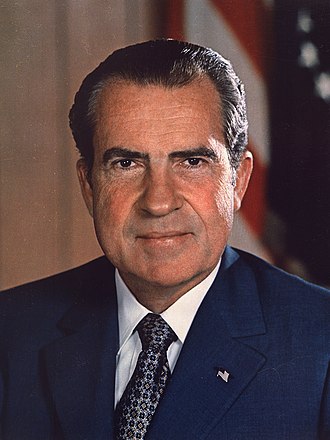
Richard M. Nixon served as the 37th President of the United States from January 1969 until his resignation in August 1974. In February 1971, he ordered the installation of a secret voice-activated taping system in the White House to preserve a historical record of his administration. Until the system's existence was revealed and dismantled in July 1973, the tapes captured Nixon directing major foreign policy initiatives, such as the opening to China, as well as his central role in the Watergate cover-up.
What Nixon talks about on the tapes
White House operations 4,718Presidential scheduling 2,225Public relations 1,784Presidential schedule 1,782Vietnam War 1,693Logistics 1,650Manolo Sanchez 1,626White House communications 1,400White House administration 1,399Presidential communication 1,243Henry Kissinger 1,191Foreign Policy 1,183
Conversations (21,010)
— Page 84 of 211President Nixon consulted with the White House operator to facilitate a telephone connection. The primary purpose of the brief interaction was to reach Congressman Earl Ruth of North Carolina. No substantive policy discussions occurred during this exchange beyond the successful placement of the call.
President Nixon and H. R. Haldeman coordinate the scheduling of an upcoming meeting involving Robert McNamara and John Connally. Nixon instructs Haldeman to have Stephen Bull facilitate the guests' visit to his office, specifically noting his desire for McNamara to see the room. Additionally, the President briefly addresses the need to contact Senator Hugh Scott regarding the administration's support from congressional "hawks."
President Nixon met with aide Stephen B. Bull to coordinate his upcoming schedule and logistical arrangements for meetings with key advisors, including John B. Connally, Robert S. McNamara, and Robert H. Finch. The discussion focused on organizing these appointments and managing the timing of communications involving Henry Kissinger. Nixon directed Bull to facilitate these administrative preparations and ensure relevant materials were brought to his office.
President Nixon consulted with a White House operator to facilitate a telephonic connection. This brief interaction served an administrative purpose to manage presidential communications. No substantive policy discussions or significant political decisions occurred during the exchange.
President Nixon telephoned Representative Earl B. Ruth to extend birthday greetings and express appreciation for his legislative support. The discussion briefly transitioned to the political sensitivity surrounding federal deficit spending and employment goals. Ruth assured the President that he would provide his vote on the budget if necessary, despite his personal opposition to deficit spending.
President Nixon met with Representative Earl B. Ruth for a brief courtesy call to offer birthday wishes and acknowledge their ongoing political alliance. The discussion touched upon the administration's economic policy, specifically addressing concerns regarding federal budget deficits and the broader objective of reducing unemployment. Nixon reassured Ruth of his commitment to pursuing a balanced budget while managing state-specific economic performance.
President Nixon and Robert H. Finch discuss the perceived quality of the Cabinet and the effectiveness of recent leadership meetings. They review a summary of Secretary of State William P. Rogers's foreign policy record, with the President expressing strong approval of the accomplishments listed. The conversation highlights the administration's internal satisfaction with its leadership team's collective performance.
President Nixon and Robert H. Finch discuss the political landscape in California, focusing on improving economic indicators such as the decline in the state's unemployment rate. Nixon emphasizes the importance of highlighting these positive economic shifts in public messaging. The pair also touches upon political strategies and upcoming meetings involving administration officials, including Secretary of Health, Education, and Welfare Elliot Richardson.
President Nixon met with Alexander P. Butterfield in the Old Executive Office Building to review and coordinate the President's upcoming daily schedule. The brief two-minute session served as a routine administrative briefing regarding logistical arrangements. No specific policy decisions were recorded during this brief scheduling update.
President Nixon and Press Secretary Ronald Ziegler met to coordinate the administration's public relations strategy following an interview given by H. R. Haldeman. They discussed whether to issue a formal statement regarding the controversy or simply allow the issue to fade, ultimately deciding against volunteering further information to the press. The conversation also touched on preparations for the President's upcoming trip to the People's Republic of China and the timing of a planned foreign policy address.
President Nixon met with John Connally, Robert McNamara, and Henry Kissinger to discuss the volatile political and economic situation on the Asian subcontinent, focusing on the aftermath of the India-Pakistan War, the instability in Bangladesh, and the need for a nuanced U.S. aid and diplomatic strategy. The conversation emphasized the importance of quiet diplomacy to stabilize the region and counter Soviet influence, while also touching upon domestic economic concerns, potential trade bill strategies, and upcoming travel itineraries. The participants agreed on the necessity of maintaining a balanced approach toward India and Pakistan as the administration prepares for the President's diplomatic initiatives.
President Nixon met with Alexander P. Butterfield and Manolo Sanchez in the Old Executive Office Building to discuss the President's upcoming schedule and location logistics. The dialogue remains largely unintelligible due to the poor quality of the recording, though it centers on administrative coordination between the President and his staff. No substantive policy decisions or historical milestones are discernable from the brief, fragmentary interaction.
President Nixon and H. R. Haldeman met to discuss political strategy and administrative messaging, specifically regarding Haldeman's recent appearance on the Today show and public reaction to administration stances on Vietnam. The pair reviewed potential inquiries from the press and strategies for responding to critics, while also addressing logistical concerns related to the President's upcoming schedule, including a memorial service for Llewellyn E. Thompson. The conversation concluded with administrative updates involving Rose Mary Woods and the management of office materials.
President Nixon requested that the White House operator connect him to Press Secretary Ronald L. Ziegler. The brief interaction served as a logistical step to initiate a direct line of communication between the President and his primary spokesperson. No further substantive discussion took place during this specific telephone connection.
President Nixon attempted to reach Press Secretary Ronald Ziegler by telephone but was informed that he was attending a Parent Teacher Association meeting at St. Agnes School. The operator estimated that Ziegler would be unavailable for approximately two hours. Nixon ultimately decided not to pursue the contact at that time, instructing the operator to drop the call.
President Nixon attempted to reach Chief of Staff H. R. Haldeman via the White House operator to discuss official business. Upon learning that Haldeman was currently at a movie, the President opted not to disturb him. Consequently, no further communication took place and no official actions were initiated.
President Nixon instructed the White House operator to place an urgent outgoing call to his domestic policy advisor, John D. Ehrlichman. The brief exchange served primarily to facilitate direct communication between the President and a key staff member. No policy discussions occurred during this administrative request.
President Nixon consulted with the White House operator to determine the whereabouts of domestic advisor John D. Ehrlichman. The operator informed the President that Ehrlichman was unavailable because he was attending a movie at a theater. No further substantive policy matters were discussed during this brief administrative inquiry.
President Nixon instructed the White House operator to place an outgoing call to his close friend and confidant, Charles G. “Bebe” Rebozo. The interaction served strictly as a logistical request to facilitate communication with Rebozo. No further discussion or substantive policy matters were recorded during this brief exchange.
President Nixon and Charles G. “Bebe” Rebozo discussed logistical arrangements for an upcoming presidential trip to Florida, including fishing plans with John B. Connally and Robert H. Abplanalp. They also reviewed political strategy, specifically discussing H. R. Haldeman’s recent public criticism of administration opponents. The conversation touched upon the reactions of various Democratic presidential candidates to these attacks and the broader media coverage surrounding the primary election landscape.
President Nixon instructed the White House operator to place outgoing calls to three Republican congressmen: John N. Erlenborn of Illinois, John T. Myers of Indiana, and John M. Zwach of Minnesota. The President provided the names and respective states for each representative, noting that the order in which the calls were placed was irrelevant. This administrative request initiated a sequence of executive outreach to members of the House of Representatives.
President Nixon met with Henry Kissinger and his staff to express gratitude for their extensive efforts on major foreign policy initiatives, specifically regarding the Soviet Union and China. During the discussion, Nixon reflected on historical figures like Woodrow Wilson to emphasize the necessity of balancing idealism with pragmatic, disciplined diplomacy. He concluded by asserting that the rigorous 'homework' performed by the staff provided the best opportunity for achieving global peace in 1972.
President Nixon held an early morning meeting in the Oval Office with an unidentified individual to coordinate outreach to three specific congressmen. The discussion centered on issuing instructions regarding legislative matters, with a focus on contacting Representative John B. Anderson of Illinois. The exchange concluded with directions for the participant to proceed to the Executive Office Building to carry out these administrative tasks.
President Nixon consulted with the White House operator to facilitate outgoing telephone calls to Representative John Myers of Indiana and Representative John Zwach of Minnesota. The interaction served as a logistical coordination step to connect the President with these members of Congress. No substantive policy discussions were recorded during this brief administrative exchange.
President Nixon and his personal secretary, Rose Mary Woods, met briefly to coordinate administrative logistics and the President's upcoming schedule. They discussed the timing of a potential trip to Camp David and a prospective press conference. Additionally, the conversation touched upon personnel matters, specifically regarding a promotion for General Walter R. Tkach.
President Nixon, Rose Mary Woods, and Congressman John N. Erlenborn engaged in a brief telephone conversation primarily to exchange birthday greetings. Erlenborn initiated the call to wish the President well following his recent birthday, noting the coincidental shared birth date of two other Republican congressmen. The exchange remained social and congratulatory in nature, focusing on the lighthearted trivia surrounding their birthdays and the prospect of Erlenborn's future congressional seniority.
President Nixon held a brief, informal morning meeting with Congressman John N. Erlenborn to offer well-wishes on the occasion of the representative's birthday. The two men engaged in lighthearted conversation regarding shared names among Republican colleagues and the Congressman's long-term political prospects. No substantive policy matters or administrative decisions were addressed during this exchange.
President Nixon and Representative John T. Myers engaged in a brief, informal telephone conversation initiated by Myers to extend birthday wishes to the President. During the exchange, the two men discussed the President's age and speculated about the long-term political career of the Congressman. The dialogue concluded with a lighthearted remark regarding the potential for Myers to eventually become Speaker of the House.
President Nixon met with Representative John T. Myers to extend personal birthday greetings. During the brief interaction, the two discussed the coincidental birthdays of other Republican colleagues also named John. No significant policy decisions or official business were conducted during this ceremonial exchange.
Representative John M. Zwach called President Nixon to offer belated birthday greetings following the President’s birthday the previous day. The conversation highlighted a coincidence regarding shared birthdays among Republican colleagues John T. Myers and John N. Erlenborn. President Nixon acknowledged the call by expressing his appreciation for Zwach’s ongoing political support.
President Nixon held a brief meeting with Representative John M. Zwach to express his appreciation for the Congressman's ongoing legislative support. The discussion served as a formal acknowledgment of their political alignment. No substantive policy shifts or new action items were recorded during this short exchange.
President Nixon instructed the White House operator to place an outgoing call to General Walter R. Tkach. This brief administrative exchange served as the precursor to a subsequent conversation between the President and his physician. The primary action item was the successful establishment of this direct line of communication.
President Nixon consulted with the White House operator to facilitate an outgoing call. This brief interaction served as a standard administrative precursor to connecting the President with another party. No policy decisions or substantive political discussions were recorded during this connection request.
President Nixon calls Major General Walter R. Tkach to personally inform him that he has signed the paperwork authorizing Tkach's promotion to major general. Tkach expresses surprise at the swiftness of the advancement, as he had originally anticipated the promotion would not occur until the following year. Nixon playfully warns Tkach not to spend the associated pay raise immediately, noting that the bureaucratic process for the salary adjustment may take several months.
President Nixon met with his personal physician, General Walter R. Tkach, to personally inform him of his recent promotion to major general. The President briefly noted that the paperwork had cleared his desk, confirming the advancement despite bureaucratic delays. This short interaction served as an informal notification regarding Tkach's career progression within the military medical corps.
President Nixon, H. R. Haldeman, and Stephen B. Bull discussed the logistical arrangements for the upcoming memorial service of diplomat Llewellyn E. “Tommy” Thompson, Jr. The participants focused on distinguishing the nature of the event from a traditional funeral and confirmed the specific venue as the Washington National Cathedral. They sought to finalize the timing of the service to ensure proper executive planning.
President Nixon met with Alexander P. Butterfield to coordinate the logistics and scheduling for an upcoming memorial service. The discussion focused on the necessary timing for the event and the expected role or participation of Secretary of State William P. Rogers. This meeting served to finalize administrative arrangements to ensure the proper execution of the memorial proceedings.
President Nixon and H.R. Haldeman met to finalize the President's upcoming radio speech concerning his foreign policy report. They discussed the political strategy of criticizing presidential candidates who were undermining Vietnam peace negotiations, framing these candidates as irresponsible for potentially prolonging the war for electoral gain. Additionally, the President reviewed his public relations approach, deciding to minimize direct press interactions to avoid further controversy while emphasizing his role as the sole negotiator for an honorable peace.
President Nixon contacted the White House operator to place a personal telephone call to First Lady Pat Nixon. The brief interaction served strictly as a request for the operator to connect the President to his wife. No substantive political or policy matters were discussed during this brief communication.
President Nixon consulted with the White House operator to confirm the current whereabouts and schedule of First Lady Pat Nixon. The operator reported that Mrs. Nixon was in New York and expected to return by 5:00 p.m. Nixon decided against attempting to contact her, concluding the brief inquiry.
President Nixon utilized this session to rehearse his upcoming radio address regarding his Third Annual Foreign Policy Report to Congress. The remarks focus on major shifts in international relations, including the planned opening to the People's Republic of China, upcoming diplomatic efforts with the Soviet Union, and the restructuring of global alliances and monetary policies. Nixon also defends his administration's Vietnam War policies, arguing for bipartisan restraint to ensure the U.S. maintains its credibility during sensitive negotiations.
President Nixon met with Stephen B. Bull and unidentified individuals to coordinate logistical details and preparations for an upcoming radio address. The discussion involved clarifying the President's schedule and the role of Henry Kissinger in the broadcast process. The meeting concluded with administrative arrangements regarding the President's personal movements during these preparations.
President Nixon instructed the White House operator to place an outgoing call to Alexander M. Haig, Jr. The primary purpose of this brief exchange was to facilitate communication between the President and his Deputy Assistant for National Security Affairs. No further policy discussions or substantive developments occurred during this administrative request.
President Nixon, Henry Kissinger, and Ronald Ziegler met to discuss the public and political reception of the President's recent radio address regarding the Vietnam War. Kissinger offered analysis on the motivations of administration critics, focusing on the intersection of patriotism and policy dissent. The participants framed the President’s withdrawal efforts as a significant achievement in reducing casualties and ending the conflict responsibly.
President Nixon recorded a segment of his radio address concerning the Third Annual Foreign Policy Report to Congress with the assistance of technical staff. The remarks focused on the Vietnam War, emphasizing the necessity of executive authority in peace negotiations and urging presidential candidates to avoid rhetoric that might inadvertently prolong the conflict. Nixon concluded by highlighting the importance of maintaining international trust in U.S. treaty commitments while pursuing an honorable withdrawal from the region.
President Richard Nixon met briefly with his personal valet, Manolo Sanchez, in the Old Executive Office Building. The conversation, which remained largely unintelligible or off-record, consisted of brief personal exchanges. No substantive policy decisions or political developments were recorded during this brief interaction.
President Nixon held a brief, unscheduled meeting with an unidentified individual in the Old Executive Office Building. While no transcript or record of the discussion exists, the encounter lasted less than eight minutes before the visitor departed. The meeting remains undocumented in terms of its specific purpose, policy agenda, or administrative outcome.
President Nixon, H.R. Haldeman, and Ronald Ziegler met to coordinate the administration’s response to media coverage regarding the President's recent foreign policy report and criticism of political opponents like Edmund Muskie and George McGovern. The participants discussed strategies for handling press inquiries, specifically reinforcing the President's stance that he critiques the wisdom, rather than the patriotism, of his critics. They also finalized details for the President’s upcoming Florida trip and the media press list for the upcoming trip to the People’s Republic of China, emphasizing the need for professional, controlled communication.
President Nixon met with his personal valet, Manolo Sanchez, in the Old Executive Office Building. The discussion focused on administrative matters and logistical details regarding the President’s upcoming daily schedule. No major policy developments occurred during this brief interaction before Sanchez departed the office.
President Nixon met with his personal valet, Manolo Sanchez, in the Old Executive Office Building to discuss personal logistics and the President's daily schedule. The brief interaction focused on the President's desire to adjust his medication or dietary supplements. No major policy decisions were made during this routine staff engagement.
President Nixon met with his personal valet, Manolo Sanchez, to coordinate logistics for an upcoming trip to Camp David. The discussion primarily centered on travel arrangements and the transportation of the President’s dogs. Nixon directed Sanchez to oversee the departure details and coordinate with Rose Mary Woods regarding the transit of the pets to the residence.
President Nixon met with an unknown individual to discuss the management of his upcoming schedule and travel plans. The participants focused on the timing of certain engagements, specifically advising against rushing or proceeding with planned road travel at that moment. No major policy decisions were recorded during this brief administrative exchange.
President Nixon and John Ehrlichman discuss the handling of the President's brother, Donald Nixon, and the potential political liability posed by his ongoing business activities and looming press scrutiny. Nixon directs Ehrlichman to coordinate with Donald to prevent him from exploiting the family name while simultaneously insisting that access to the President must remain restricted. Additionally, the pair briefly touches upon logistics for upcoming travel and strategic consultations regarding John Connally.
President Nixon met with his aide Stephen B. Bull to coordinate communication with Henry Kissinger. The primary purpose of the brief interaction was to verify Kissinger’s current location and facilitate a return phone call. Bull was tasked with managing the logistics of this connection to ensure the President could reach his National Security Advisor promptly.
President Nixon consulted with a White House operator to facilitate a telephone connection. The interaction served as a brief administrative precursor to a subsequent, substantive discussion. No further details were captured during this short exchange.
President Nixon contacted the White House operator to facilitate an immediate telephone connection with his National Security Advisor, Henry A. Kissinger. This brief administrative interaction served as the necessary logistical step to initiate a high-level consultation between the two men. No substantive policy matters were discussed during this request for communication.
President Nixon and General Alexander Haig discussed the logistics and strategic objectives of an upcoming 48-hour, maximum-effort bombing campaign in Vietnam. They emphasized the operation's psychological impact, aiming to correct enemy perceptions of weakened U.S. strength and to demonstrate the high cost of continued aggression. The conversation further confirmed that military leadership, including Admiral Thomas Moorer and General Creighton Abrams, supported the strike as a means to gain tactical intelligence and utilize superior naval and air assets.
President Nixon and Alexander Haig discuss the tactical execution and psychological impact of upcoming military operations. The conversation focuses on the strategic targeting of infantry training areas and the efficacy of secondary target selection. They conclude by confirming the operational timeline and assessing the potential impact of these maneuvers.
President Nixon instructed H. R. Haldeman to meet with him at the Executive Office Building shortly before his scheduled departure. This brief interaction served as a logistical coordination to finalize administrative arrangements or consultations before the President moved to his next engagement. No further substantive policy discussions were recorded during this segment.
President Nixon met with his personal valet, Manolo Sanchez, in the Old Executive Office Building. The brief interaction focused on the delivery of a book to the President. No further substantive policy discussions were recorded during this brief encounter.
President Nixon and H. R. Haldeman discussed strategies for managing the press, specifically focusing on the President's upcoming press conferences and his desire to adopt a 'hard-line' approach to counter media hostility. They analyzed political maneuvers regarding rival Edmund Muskie and evaluated public perceptions of the administration's Vietnam policy. Additionally, in separate discussions involving John Ehrlichman, the President strategized on the Bicentennial celebration, instructing staff to coordinate with Philadelphia Mayor Frank Rizzo to ensure the administration dictates the terms and direction of the event.
President Nixon and Henry Kissinger discuss the need to clarify the administration's stance on peace negotiations in Vietnam, specifically regarding recent reports of U.S. "flexibility." Kissinger explains that Secretary of State William P. Rogers and press secretary Ronald Ziegler inadvertently sparked controversy by appearing to soften the U.S. position. The two agree to publicly emphasize that South Vietnamese President Nguyen Van Thieu's offer to resign was entirely his own initiative, thereby distancing the White House from the perception of making unauthorized concessions.
H. R. Haldeman and Patrick Buchanan review the President’s recent press conference, assessing its effectiveness and impact on public perception. They discuss the substance of Nixon’s delivery, particularly his handling of Vietnam questions and his strong stance on busing. The conversation highlights the administration's strategic timing regarding busing legislation in light of the President’s upcoming trip to the People's Republic of China.
President Nixon met with his personal aide, Manolo Sanchez, to discuss the procurement of specific tobacco products. The President directed Sanchez to purchase additional cans of tobacco previously used and suggested acquiring another pipe. This brief interaction served as a directive for personal errands related to the President's smoking habits.
President Richard M. Nixon met with an unidentified individual in the Old Executive Office Building to discuss confidential administrative or political matters. Due to the lack of an available transcript or specific contextual records, the exact nature of the dialogue and any resulting executive decisions remain historical unknowns. The recording serves primarily as a logistical record of the President's private scheduling and consultation activities during the winter of 1972.
President Nixon and H. R. Haldeman met in the Old Executive Office Building to coordinate the arrival of an unidentified visitor to the President's office. The discussion focused on managing the logistics and security of this individual's entry. No further policy or administrative decisions were documented in this brief procedural exchange.
President Nixon met with his personal valet Manolo Sanchez and aide Stephen B. Bull to address the misplaced location of important documents. The discussion primarily focused on locating specific papers and coordinating the President's schedule with key staff, including Henry Kissinger and Rose Mary Woods. The meeting concluded with efforts to resolve administrative logistical issues regarding the President’s working materials.
President Nixon met with members of the press in the Oval Office to conduct a briefing regarding his upcoming historic trip to the People's Republic of China. During the discussion, he outlined the trip's itinerary and objectives, emphasizing that the focus would be on substantive bilateral negotiations rather than sightseeing, while also noting that he would not comment on potential agenda items prematurely. Nixon additionally addressed domestic and foreign policy concerns, including criticisms of his Vietnam War peace proposals, his position on school busing and property taxes, and the status of U.S. relations following the India-Pakistan war.
President Nixon met with Henry Kissinger, H. R. Haldeman, and other staff members to discuss media strategy, public messaging, and foreign policy, specifically regarding Vietnam and China. The participants deliberated on the effectiveness of Nixon's recent public statements, focusing on how to maintain a strong, authoritative image while navigating complex geopolitical tensions. They also addressed the importance of controlling the narrative through concise, impactful communication and the potential political implications of upcoming scheduled appearances and policy announcements.
President Nixon contacted the White House operator to facilitate urgent communications with Secretary of State William P. Rogers and Chief of Staff H. R. Haldeman. This administrative interaction reflects the President's effort to coordinate key personnel shortly before his historic trip to China. The brief exchange served as a logistical necessity to establish direct contact with his top advisors.
President Nixon and H.R. Haldeman discussed various administrative priorities, primarily focusing on streamlining ambassadorial appointments and refining the President's upcoming travel schedule. Nixon directed Haldeman to manage appointment recommendations through Peter Flanigan while minimizing Henry Kissinger’s involvement to avoid bureaucratic friction. Additionally, the President decided to curtail the practice of taking cabinet members and other officials on Air Force One to preserve his own energy and set a stricter standard for presidential travel protocols.
Henry Kissinger informs President Nixon that North Vietnamese officials have initiated a meeting with Lt. Gen. Vernon A. Walters, marking a rare shift in diplomatic engagement. The two discuss potential motivations behind this move, including the possibility of a new meeting request or a strategic diplomatic gesture regarding past negotiation proposals. Additionally, Kissinger confirms his plan to brief Secretary of Defense Melvin Laird on the promotion of Alexander M. Haig, Jr. during an upcoming breakfast meeting.
President Nixon met with a bipartisan group of legislators and administration officials to discuss a coordinated strategy to address public opposition to forced busing for school desegregation. The participants evaluated various legal and legislative remedies, including executive intervention in pending court cases, the passage of restrictive legislation, and the potential adoption of a constitutional amendment. The meeting concluded without a final decision, as the President tasked his staff and advisors with synthesizing these diverse perspectives into a unified, formal policy proposal for the administration.
President Nixon met with Marjorie P. Acker in the Oval Office to organize and categorize photographic materials. The discussion focused on the classification of specific images described as vanity and casual shots. Acker processed these marked copies as part of an administrative task to manage the President's personal or official portrait collection.
President Nixon met with George P. Shultz and John D. Ehrlichman in the Oval Office to coordinate administrative priorities and staffing assignments. The participants briefly discussed personnel matters and the progression of specific agenda items. The meeting concluded with Nixon providing instructions on the handling of these key subjects.
President Nixon consults with an unidentified staff member to review the guest list for an upcoming dinner with French author and statesman André Malraux. The conversation focuses on refining the list of invitees to ensure appropriate attendance for the event. The meeting concludes with the President finalizing the composition of the guest list for the evening's proceedings.
President Nixon and Henry Kissinger discuss strategies for managing public perception and military policy regarding the Vietnam War, particularly concerning the intensity of airstrikes in South Vietnam. Nixon stresses the importance of projecting strength and explicitly warns against government officials signaling "flexibility" in negotiations with the North Vietnamese, arguing that such rhetoric is counterproductive and fails to satisfy critics. The pair also touches upon the upcoming trip to the People's Republic of China, with Nixon emphasizing a firm negotiating stance to avoid appearing weak or apologetic.
President Nixon met with John Ehrlichman and George Shultz to discuss administrative strategy regarding the economy and the unpredictable behavior of Federal Reserve Chairman Arthur Burns. The President expressed frustration with Burns's independent posturing on international monetary convertibility and his management of the money supply, while the group evaluated the political risks of ongoing wage and price controls. Nixon and his advisors decided to push for a stronger, unified economic narrative while avoiding further public controversy, eventually planning a private post-China trip meeting to reassess their strategy for exiting the system of wage and price controls.
President Nixon met with Ronald Ziegler and Stephen Bull to coordinate strategy for the upcoming presidential trip to the People's Republic of China, specifically focusing on press management. They discussed maintaining an upbeat tone with the press corps to avoid frustration and deliberated on how to handle potential inquiries involving Henry Kissinger and Secretary of State William P. Rogers. The President ultimately decided against allowing Kissinger to conduct Q&A sessions with the press to prevent substantive leaks or conflicts, opting instead for controlled briefings that avoid policy details.
President Nixon, John Ehrlichman, and Arthur Burns met to discuss a wide-ranging agenda including the President's upcoming trip to the People's Republic of China, domestic economic management, and the politics of school busing. Nixon emphasized the necessity of tracking federal budget expenditures more strictly to stimulate the economy, demanding weekly status reports from his Cabinet officers. The participants also explored strategies to address tax withholding concerns and discussed potential ambassadorial appointments. Finally, Nixon and Burns aligned their opposition to forced busing, framing it as detrimental to both neighborhood stability and quality education.
President Nixon met with Rose Mary Woods and Stephen B. Bull to coordinate scheduling for upcoming congressional meetings regarding busing, followed by a brief discussion with Henry Kissinger regarding diplomatic strategy. Kissinger and the President analyzed a recent communication from Le Duc Tho concerning potential peace negotiations and the impact of an upcoming trip to the People's Republic of China. The participants deliberated on whether to accept the invitation for further meetings and established the need for a private consultation to finalize their policy approach before traveling.
President Nixon, Henry Kissinger, and Stephen B. Bull met to coordinate the scheduling of upcoming diplomatic engagements. The discussion focused on finalizing the timing for meetings with foreign representatives Jaime Arguelles and Sladeddine El Goulli. These arrangements were intended to manage the President's calendar effectively regarding these specific international visitors.
President Nixon met with departing Spanish diplomat Jaime Arguelles and Henry Kissinger to bid farewell and acknowledge Arguelles’s service. The discussion focused on fond memories of the President’s 1970 visit to Spain and the selection of Angel Sagaz as Arguelles's successor. The participants concluded the meeting by reaffirming the importance of maintaining strong diplomatic ties between the two nations.
President Nixon and Rose Mary Woods discussed preparations for the upcoming trip to the People's Republic of China, specifically focusing on wardrobe choices and official gifts. The President expressed a clear preference against wearing hats during the visit, despite inquiries from Secretary of State William P. Rogers. Additionally, the group reviewed logistics regarding portrait signatures and the distribution of watches as diplomatic gifts.
President Nixon, H. R. Haldeman, and Henry Kissinger met to discuss strategy for the upcoming trip to the People’s Republic of China, emphasizing the need to manage the press corps' expectations and prepare briefings for First Lady Pat Nixon. The participants also reviewed the sensitive status of Vietnam peace negotiations, noting that recent military actions and the President's diplomatic outreach had pressured Hanoi into requesting a private meeting. Finally, they discussed the upcoming resignation of Attorney General John Mitchell and plans for trade-related announcements regarding Moscow.
President Nixon met with his aide, Stephen B. Bull, to review and finalize the details of the President’s upcoming daily schedule. The discussion centered on administrative coordination and managing the executive calendar for the following days. No further actions or major policy shifts were recorded during this brief logistical consultation.
President Nixon and Alexander Butterfield met to coordinate logistics regarding the President’s schedule and upcoming official engagements. The discussion focused on arrangements for a dinner and a photo opportunity featuring French author André Malraux, with photographer Oliver F. Atkins tasked to document the event. They also briefly addressed the technical status of a photograph intended for display.
President Nixon met with H.R. Haldeman and Ronald Ziegler to coordinate press strategy regarding his upcoming trip to the People's Republic of China, including the production of a promotional film and the logistics of the presidential schedule. The discussion also addressed the administration's stance on school busing, with Nixon expressing a firm opposition to mandatory busing to achieve racial balance while critiquing the positions of political rivals. The participants decided to hold a leadership meeting to announce the China trip and opted to utilize the Cabinet Room for a more dramatic, televised presentation.
President Nixon and Stephen B. Bull met briefly to coordinate logistics for an upcoming meeting with Slaheddine El Goulli. The discussion focused on the involvement of Henry Kissinger and the necessity of arranging a formal photograph session for the visitor. The exchange served as a short administrative check to ensure proper protocol was followed for the scheduled appointment.
President Nixon, Henry Kissinger, and Senator James L. Buckley met to discuss the geopolitical implications of the President's upcoming trip to the People's Republic of China and the broader execution of the Nixon Doctrine in Asia. Senator Buckley provided observations from his recent Far East tour, highlighting the need to reassure U.S. allies—particularly Japan, South Korea, and Taiwan—regarding American security commitments amidst changing strategic balances. The conversation also touched upon military operations in Vietnam, the potential for North Vietnamese offensives, and domestic policy issues, including federal housing and the ongoing conflict in Northern Ireland.
President Nixon and John D. Ehrlichman met briefly in the Oval Office to coordinate their schedules. The primary purpose of this encounter was to facilitate a formal meeting between the two men. No substantive policy discussions occurred during this brief exchange.
President Nixon met with Alexander P. Butterfield to discuss staffing arrangements for an upcoming meeting involving André Malraux and Henry Kissinger. Nixon explicitly expressed his opposition to utilizing female interpreters, directing Butterfield to ensure a male interpreter is selected for the assignment instead. This exchange reflects the President’s rigid preferences regarding professional protocol and the composition of his diplomatic staff.
President Nixon met with John Ehrlichman to coordinate administration messaging on several contentious issues, particularly busing and the economy. They discussed developing a clear, unambiguous policy statement and potential constitutional amendment regarding school busing to gain political advantage ahead of the Florida primary. Additionally, Nixon directed Ehrlichman to manage and align key officials, including John Connally, George Shultz, and Donald Rumsfeld, to ensure consistent economic policy and address personnel concerns within the Department of Justice.
President Nixon met with his personal aide, Stephen B. Bull, in the Oval Office shortly after the departure of an unidentified visitor. The discussion was brief and appears to be a routine administrative exchange regarding the President's immediate schedule or logistical coordination. No major policy decisions or significant political developments resulted from this brief encounter.
President Nixon, Henry Kissinger, and French author Andre Malraux engaged in a wide-ranging discussion regarding international relations and the geopolitical landscape of the early 1970s. The conversation centered on the internal dynamics of the People's Republic of China, the Sino-Soviet split, and the role of the United States in the Pacific. Malraux shared his insights on Mao Zedong's leadership and the nature of Chinese foreign policy, while the participants explored the potential long-term implications of American engagement with China and Japan.
President Nixon met with Andre Malraux and Henry Kissinger to discuss the geopolitical implications of the upcoming U.S. opening to the People's Republic of China (PRC) and the necessity of maintaining a U.S. global presence. They evaluated the stability of a 'balance of power' framework in light of regional concerns, specifically Japan's future nuclear and military trajectory, the risks of U.S. isolationism, and the containment of Soviet influence in Europe. Kissinger provided strategic updates on secret negotiations with North Vietnam and coordinated the drafting of a joint communiqué to be finalized during the President's visit to Beijing.
President Nixon and H. R. Haldeman met to review recent polling data from George Gallup, comparing it against the Administration’s internal Opinion Research Corporation findings regarding public sentiment on the Vietnam War. They discussed the timing and accuracy of these polls, specifically noting the close alignment in approval numbers. The conversation also touched upon administrative logistics, including a follow-up inquiry regarding a telephone call made between Donald Rumsfeld and Gallup.
President Nixon met with his aide, Stephen B. Bull, to coordinate his upcoming daily schedule. The discussion centered on logistics involving Manolo Sanchez and H. R. Haldeman. The meeting concluded with the finalization of these internal arrangements for the President's staff and personal itinerary.
President Nixon met with his advisor Henry Kissinger and senior staff members H.R. Haldeman and Stephen Bull to finalize strategy and logistical details for the President's upcoming historic trip to the People's Republic of China. The participants discussed the management of the official communique, the role of translators to ensure accurate records of private meetings, and the President's approach to formal toasts and plenary sessions. Additionally, they reviewed domestic political concerns, including public opinion polls and the potential impact of a North Vietnamese military offensive on the trip's reception.
President Nixon instructed the White House operator to place an urgent telephone call to his National Security Advisor, Henry Kissinger. The President expressed a desire to reach Kissinger despite acknowledging uncertainty regarding whether he had returned to his office or residence. This brief administrative exchange served solely to facilitate direct communication between the President and his top foreign policy aide.