Nixon, Richard M. (President)
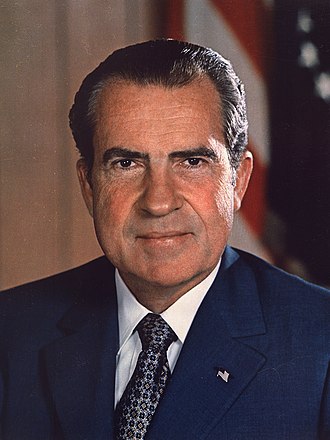
Richard M. Nixon served as the 37th President of the United States from January 1969 until his resignation in August 1974. In February 1971, he ordered the installation of a secret voice-activated taping system in the White House to preserve a historical record of his administration. Until the system's existence was revealed and dismantled in July 1973, the tapes captured Nixon directing major foreign policy initiatives, such as the opening to China, as well as his central role in the Watergate cover-up.
What Nixon talks about on the tapes
White House operations 4,718Presidential scheduling 2,225Public relations 1,784Presidential schedule 1,782Vietnam War 1,693Logistics 1,650Manolo Sanchez 1,626White House communications 1,400White House administration 1,399Presidential communication 1,243Henry Kissinger 1,191Foreign Policy 1,183
Conversations (21,010)
— Page 87 of 211President Nixon and H.R. Haldeman engaged in a brief telephone conversation regarding personal matters. The majority of the interaction, lasting nearly six minutes, was subsequently withdrawn from the public record. Consequently, no substantive policy decisions or administrative actions are reflected in the available documentation for this exchange.
President Nixon and H. R. Haldeman engaged in a brief telephone conversation regarding administrative or political matters. Given the extensive withdrawal of the conversation's content, the specific substance remains classified and unavailable for analysis. Consequently, no definitive policy decisions or developments can be attributed to this exchange.
President Nixon contacted the White House operator to facilitate a telephone connection with Stephen B. Bull. The brief communication served exclusively as an administrative request to reach the President's personal aide. No further policy or strategic matters were discussed during this interaction.
President Nixon instructed the White House operator to place a telephone call to entertainer Red Skelton. Because Skelton had recently been in Washington, D.C. and was traveling to Florida, the President requested that the operator attempt to locate him at either destination. The conversation served as a brief administrative request to facilitate this specific outreach.
President Nixon calls comedian Red Skelton to express appreciation for his upcoming performance in Florida and to reinforce their political rapport. During the brief exchange, Nixon explicitly requests that Skelton conclude his act by reciting his well-known monologue, 'The Pledge of Allegiance' (referred to as 'The Flag'), as a personal tribute. Skelton affirms his total support for the President and agrees to incorporate the requested performance into his show.
President Nixon contacted the White House operator to facilitate a personal telephone call to his daughter, Tricia Nixon Cox. The brief exchange served as a logistical request for the operator to place the connection. No substantive policy or political discussions took place during this communication.
President Nixon and H. R. Haldeman, with Henry Kissinger present, coordinate a return call from John N. Mitchell. The primary purpose of the brief exchange is to facilitate communication with the former Attorney General. The participants prioritize establishing contact with Mitchell to address ongoing political or administrative business.
President Nixon contacted the White House operator to facilitate a telephone connection with Press Secretary Ronald L. Ziegler. The brief interaction served as a logistical bridge to initiate a direct conversation between the President and his primary spokesperson. No further substantive policy matters were discussed during this brief request for administrative assistance.
President Nixon and H. R. Haldeman met to evaluate the public relations performance of Henry Kissinger and Secretary of State William Rogers following the President's recent trip to the People’s Republic of China. The discussion focused on the tension between the two men, specifically regarding Kissinger's media management, his perceived influence, and concerns about Rogers' lack of alignment with administration messaging. Nixon expressed apprehension regarding the public perception of Kissinger's power and instructed Haldeman to monitor potential bureaucratic friction within the State Department.
President Nixon and his daughter, Tricia Nixon Cox, discuss recent media coverage of a presidential portrait and Tricia's proposal to exhibit cloisonné vases acquired during the recent trip to China. They express satisfaction that the portrait received positive attention on the news programs while avoiding political controversy. The President enthusiastically endorses Tricia's plan to loan the vases to a museum in Cambridge, Massachusetts, viewing the gesture as a subtle and effective public diplomacy effort.
President Nixon contacted the White House operator to place a personal call to his daughter, Tricia Nixon Cox. The interaction served solely as a request for the operator to connect the President to his daughter. No political or administrative business was conducted during this brief exchange.
President Nixon met with his personal valet, Manolo Sanchez, in the Old Executive Office Building. The brief discussion centered on the President's upcoming daily schedule and logistical arrangements. No major policy decisions were reached during this administrative exchange.
President Nixon met with an unidentified individual in the Old Executive Office Building to review the President's personal schedule. The discussion was limited in scope, as the recording does not contain substantive policy deliberations or clear documentation of major decisions. The session concluded when the participant departed the office shortly after 2:15 pm.
President Richard Nixon spoke briefly with his daughter, Tricia Nixon Cox, during a short telephone call. The conversation consisted of personal remarks and lasted approximately one minute. No substantive policy matters or administrative decisions were addressed during this exchange.
President Nixon and his daughter, Tricia Nixon Cox, held a brief, informal telephone conversation. The majority of the recorded interaction consisted of a personal segment that was subsequently withdrawn from public release. No substantive policy discussions or administrative decisions were documented during this exchange.
President Nixon contacted the White House operator to facilitate a personal telephone call to his daughter, Tricia Nixon Cox. This brief communication served solely as an administrative request to connect the President with a family member. No further policy or official business was conducted during this exchange.
President Nixon held a brief, informal telephone conversation with his daughter, Tricia Nixon Cox. As the content of the discussion was designated as a personal returnable item, no substantive policy matters or official developments were recorded. The exchange serves primarily as a record of familial communication between the President and his daughter.
President Nixon contacted the White House operator to facilitate a telephone connection with Press Secretary Ronald Ziegler. This brief administrative exchange served solely to initiate official communication with a key staff member. No further substantive policy matters were discussed during this request.
President Nixon and Press Secretary Ronald Ziegler coordinated a meeting at the Executive Office Building to discuss strategy ahead of an upcoming press briefing. Nixon specifically sought to outline his position on the contentious issue of busing before the following Tuesday. They agreed to confer shortly to ensure Ziegler was prepared to handle potential media inquiries on the subject.
President Nixon instructed the White House operator to place an outgoing call to Under Secretary of State John N. Irwin II. The primary purpose of this brief administrative exchange was to facilitate communication between the President and the State Department official. No further policy discussions or substantive developments occurred during this brief interaction.
President Nixon met with Ronald Ziegler to coordinate the public messaging for his upcoming decision on busing, specifically aiming to avoid any perception of being influenced by the Florida primary. They discussed the timing of the announcement and the importance of presenting the policy as a national issue rather than a regional one. The conversation also touched on the ongoing Attorney General confirmation hearings for Richard Kleindienst and strategies for utilizing Henry Kissinger in television interviews to emphasize the President's personal role and achievements during the recent trip to China.
President Nixon called Deputy Secretary of State John N. Irwin, II to commend his skillful handling of a critical Washington Star article by George Sherman. Nixon characterized the journalist's report as a deliberate attempt to create discord between the White House and the State Department, a tactic he compared to past efforts against John Foster Dulles. The President praised Irwin's affirmative response to the press, reinforcing their unified stance against media efforts to stir internal departmental conflict.
President Nixon held a meeting with an unidentified individual in the Old Executive Office Building to address a request previously submitted to the administration. During the discussion, the President formally moved for the cancellation of this pending request. No further details regarding the nature of the request or the identity of the interlocutor are discernable from the available record.
President Nixon met with his personal valet, Manolo Sanchez, to coordinate the day's administrative arrangements. Stephen B. Bull joined the discussion to confirm the President's upcoming schedule, specifically finalizing the timing for a barber appointment. The conversation served as a routine logistical check to manage the President's personal commitments.
President Nixon and Henry Kissinger met to coordinate strategy for upcoming foreign policy challenges and domestic political management. They discussed potential questions from White House staffer Pat Buchanan regarding the recent trip to the People's Republic of China, specifically focusing on the Taiwan communiqué and its domestic impact. The pair also reviewed the President's upcoming schedule, including a potential Moscow trip announcement and the logistics of Kissinger’s future travel to Japan, Korea, and Paris.
President Nixon and his daughter, Julie Nixon Eisenhower, engaged in a brief personal telephone conversation. Due to the withdrawal of the substantive portion of the audio for personal privacy reasons, the specific details and topics discussed remain unavailable for public record. Consequently, no policy decisions or official actions were recorded for this exchange.
President Nixon met with his personal valet, Manolo Sanchez, in the Old Executive Office Building. The brief interaction focused on the President requesting a beverage. No policy matters or significant administrative decisions were recorded during this exchange.
President Nixon communicated briefly with the White House operator to manage telephone connectivity. The interaction served as a functional exchange to facilitate an outgoing call. No substantive policy discussions or significant political developments occurred during this short administrative contact.
President Nixon consulted Press Secretary Ronald Ziegler regarding media inquiries addressed during the daily briefing to prepare for his upcoming press conference. Ziegler reported that he successfully navigated questions concerning controversial busing policies, the Florida primary, and potential rumors surrounding the China trip, including the ITT and Lockheed aircraft deals. The President approved of Ziegler’s strategy to delay the busing decision until after the Florida referendum and to maintain a low-key response to primary election results.
President Nixon consults Press Secretary Ronald Ziegler regarding whether an upcoming press briefing will impact his own scheduled preparations for the following day. The brief exchange focuses on ongoing media scrutiny surrounding the ITT Corporation and the potential necessity for the administration to manage the narrative effectively. Nixon prompts Ziegler to confirm the public status of the ITT inquiry to better inform his own strategy.
President Nixon held a brief, unscheduled meeting with an unidentified individual in his Old Executive Office Building suite. The interaction appears to have been an immediate response to an urgent or startling development, indicated by an audible expression of distress. No formal policy agenda or legislative action was finalized during this fleeting encounter.
President Nixon and Henry Kissinger coordinate strategy for an upcoming press conference, focusing specifically on how to address potential questions regarding the Shanghai Communiqué and Taiwan. They agree to emphasize that the phrase regarding the 'prospect of a peaceful settlement' was carefully chosen, while dismissing concerns raised by Pat Buchanan about force withdrawals and their implications for Indochina and POW policies. Additionally, Nixon approves Kissinger’s plan to propose General Alexander Haig for the position of Vice Chief of Staff of the Army during an upcoming meeting with Secretary of Defense Melvin Laird.
President Nixon and Henry Kissinger coordinate their strategy for addressing potential media or diplomatic inquiries regarding the "renunciation of force" concerning Taiwan. They decide to deflect specific questions by framing their stance within the context of a peaceful settlement, intentionally avoiding a definitive commitment. Nixon affirms his full confidence in Kissinger's handling of the negotiations as they prepare for upcoming high-stakes discussions.
President Nixon and H. R. Haldeman met briefly to coordinate the President's upcoming schedule. The primary focus of the discussion was arranging a meeting to take place immediately prior to a scheduled haircut. No other substantive policy or political developments were recorded during this brief encounter.
President Nixon met with H.R. Haldeman and Stephen Bull to discuss the timing of an upcoming press conference in light of damaging media scrutiny surrounding the ITT controversy and the ongoing scandal involving corporate contributions to the San Diego convention. His advisors urged him to postpone the conference to avoid being cornered by reporters on sensitive issues, particularly regarding his personal knowledge of the ITT situation. The group also analyzed the political impact of recent public opinion polls following Nixon's China trip and assessed the effectiveness of Henry Kissinger's media appearances in promoting the administration's agenda.
President Nixon and Alexander P. Butterfield met briefly to discuss the scheduling of Henry Kissinger. The conversation focused on managing Kissinger’s availability and ensuring he could be reached or intercepted upon his return. Nixon emphasized the urgency of the matter, leading to a plan for coordinating Kissinger's immediate engagement once he became free.
President Nixon and H. R. Haldeman met to discuss various political and administrative issues, focusing on the ITT investigation, the status of the 1972 campaign, and news media coverage. They explored strategies to manage the ITT controversy, including the potential to quiet hearings, and analyzed the President's standing following the New Hampshire primary. Later, Henry Kissinger joined the meeting to address the upcoming Moscow summit, foreign policy objectives, and the importance of maintaining White House control over foreign policy communications and negotiations.
President Nixon met briefly with his personal valet, Manolo Sanchez, in the Old Executive Office Building. The exchange appears to be a casual check-in regarding Sanchez’s well-being or current status. No substantive policy matters or administrative decisions were addressed during this short interaction.
President Richard Nixon met with his daughter, Tricia Nixon Cox, for a brief personal conversation. The discussion appears informal and lacks a clear policy objective, focusing on miscellaneous personal matters and scheduling constraints. No significant political decisions or administrative actions resulted from this short exchange.
President Nixon held a brief, twelve-second meeting with an unidentified individual in his Old Executive Office Building office. The recording contains no discernible dialogue or substantive discussion, rendering the specific purpose or outcome of the interaction impossible to determine from the available audio. Consequently, no policy decisions or action items were established during this exchange.
President Nixon held a brief, informal interaction with a White House operator in his Old Executive Office Building workspace. The dialogue consisted of a singular, non-substantive exclamation rather than a discussion of policy or administration business. No decisions or developments resulted from this brief exchange.
President Richard Nixon and his daughter, Tricia Nixon Cox, discuss logistical arrangements regarding the use of a room, specifically weighing the merits of placing someone on the third floor. The conversation focuses on balancing practical space management with the personal preferences and potential movements of an unnamed individual. Ultimately, the President defers to Tricia's judgment on the matter, while briefly touching upon scheduling timelines for a future event.
President Nixon utilized the White House operator to facilitate a telephonic connection to his Press Secretary, Ronald L. Ziegler. The interaction served as a logistical bridge to initiate further communication with his staff. No substantive policy matters were discussed during this brief administrative exchange.
President Nixon coordinated with Press Secretary Ronald Ziegler regarding a logistical transition between the White House and the Old Executive Office Building. Nixon invited Ziegler to meet at his office to address pending questions and manage the schedule of staff members. The brief exchange served to facilitate immediate communication and address administrative movements ahead of the upcoming week.
President Nixon and Press Secretary Ronald Ziegler met to coordinate public messaging and press briefing strategy regarding several ongoing controversies. They discussed drafting a formal statement on the President’s China trade policy, managing public response to the ITT investigation, and framing the President's approach to school busing legislation. Additionally, the two reviewed the internal dynamics of the Democratic primary elections, focusing on the political vulnerabilities of Edmund Muskie and other candidates.
President Nixon initiates a brief request for the White House operator to connect him with Under Secretary of State John N. Irwin. This interaction reflects the President's reliance on the switchboard to facilitate official communications with high-level State Department personnel. No substantive policy discussions occur, as the exchange is strictly procedural to establish the phone connection.
President Nixon held a brief meeting with Deputy Secretary of State John N. Irwin, II to commend his handling of a recent public statement. Nixon praised Irwin’s professional conduct and ability to manage departmental criticism and internal gossip. The conversation served primarily as a brief expression of presidential support for Irwin's performance regarding sensitive State Department communications.
President Nixon met with his valet, Manolo Sanchez, to coordinate logistics for the remainder of the workday. The primary focus of the brief interaction was the arrangement of a coffee service and the scheduling of a barber appointment. This exchange serves as a routine administrative communication regarding the President's personal schedule.
President Nixon dictates a memorandum to Henry Kissinger and H. R. Haldeman regarding media strategy and communication management. The discussion focuses on refining the public perception of the U.S. position toward the People's Republic of China, particularly concerning the recently released communiqué. Nixon also draws historical parallels to his 1959 trip to the USSR, reflecting on the effectiveness of radio and television addresses in shaping public opinion to inform his current diplomatic communications.
President Nixon met with his personal valet, Manolo Sanchez, to facilitate the delivery of materials to his longtime secretary, Rose Mary Woods. The brief exchange focused on the physical transfer of dictation or documents to Woods. No broader policy or political matters were discussed during this interaction.
President Nixon met with his personal secretary, Rose Mary Woods, to dictate a memorandum intended for National Security Advisor Henry Kissinger. The primary purpose of the recording was to establish directives regarding the distribution of sensitive materials, including instructions to provide a blind copy to Chief of Staff H.R. Haldeman. This exchange served as a procedural step in managing the circulation of classified correspondence within the inner circle of the administration.
President Nixon coordinates weekend logistics at Camp David with his daughter, Julie Nixon Eisenhower. The discussion focuses on travel arrangements, specifically confirming helicopter transportation for Julie and her husband, David Eisenhower, to ensure their arrival by evening. Additionally, the two briefly touch upon current political polling and the upcoming weekend itinerary.
President Nixon dictated a memorandum for the file regarding various administrative and political matters involving his senior staff. The discussion touched upon the upcoming press conference, strategies for managing staff members like H.R. Haldeman and John Ehrlichman, and political concerns including the 1972 election cycle. Nixon also addressed potential public relations issues and internal coordination regarding cabinet members and political rivals.
President Nixon and H. R. Haldeman met to discuss the management of public relations following the President's historic trip to China, emphasizing the need to sustain domestic interest in the visit. Nixon directed Haldeman to oversee the public display of gifts and artifacts from the trip, including the placement of pandas at the National Zoo and the exhibition of souvenirs by his daughters. Additionally, they reviewed scheduling adjustments for upcoming presidential travel to Florida and California to accommodate family commitments and ensure the continued political momentum of the China initiative.
President Nixon initiated a brief communication with the White House operator to place a personal call to his longtime valet, Manolo Sanchez. The interaction served solely as a logistical request to facilitate this specific connection. No other policy matters or administrative business were conducted during this exchange.
President Nixon dictated a memorandum for his personal files while interacting with his valet, Manolo Sanchez. The discourse reflects on personal family matters, including recent interactions with his daughter Julie and son-in-law David Eisenhower, alongside introspective musings on the nature of political power and leadership. Nixon touches upon the requirements for effective political operators and briefly mentions Nelson Rockefeller in the context of his political assessments.
President Nixon met with Alexander P. Butterfield in the Oval Office to review the President's daily agenda. The brief session focused on administrative tasks, specifically the review and signing of pending official documents. No other substantive policy matters were recorded during this meeting.
President Nixon met with his Deputy Assistant Alexander P. Butterfield to briefly coordinate administrative matters and manage the President’s daily schedule. The discussion focused on finalizing the logistics for upcoming staff meetings and the formal execution of presidential documents. The meeting concluded with the pair organizing their immediate workflow before Butterfield departed the Oval Office.
President Nixon met with H. R. Haldeman and Henry Kissinger to discuss the administration's 1972 re-election strategy, focusing on public approval polling data, media outreach, and scheduling decisions regarding busing and social security. Kissinger provided an update on impending agreements with the Soviet Union, including trade and arms limitations, while advising the President on managing the public relations aspect of his upcoming Moscow trip. The participants also reviewed intelligence regarding Soviet and Chinese geopolitical tensions and addressed ongoing concerns related to the ITT anti-trust case.
President Nixon met briefly with an unidentified individual in the Oval Office immediately following a scheduled appointment with Press Secretary Ronald L. Ziegler. Due to the lack of a transcript and the meeting's extremely short duration, the specific agenda remains undocumented. This encounter reflects the rapid turnover typical of the President’s evening scheduling during this period.
President Nixon met with Mark Andrews, Ronald Ziegler, and Henry Kissinger to coordinate the administration's public relations strategy regarding his upcoming trip to the Soviet Union and to manage political fallout from the ITT scandal. The participants discussed ensuring that details of potential bilateral agreements with the Soviets remain confidential to avoid premature disclosure or diplomatic friction involving Secretary of State William P. Rogers. Furthermore, they addressed the need for a unified response to media inquiries, specifically regarding allegations involving John N. Mitchell and the ITT case, emphasizing the importance of maintaining strict control over information leaked to the press.
President Nixon instructed the White House operator to place an outgoing call to Senator J. William Fulbright. This brief exchange served as a logistical request to facilitate direct communication between the President and the Chairman of the Senate Foreign Relations Committee. The conversation concluded once the operator initiated the connection process.
President Nixon met with John Connally and John Ehrlichman to discuss high-level domestic and international economic policy, as well as political strategy regarding the ITT antitrust case and upcoming social policy decisions. Connally proposed radical ideas to address international monetary instability and domestic crime, including the possibility of a total currency exchange to catch tax evaders and criminals, and the implementation of strict controls on capital outflows. The participants also coordinated a messaging strategy for the ITT controversy, advocating for a more aggressive public posture, and reviewed pending decisions on Social Security and Medicare to balance budgetary concerns against political implications.
President Nixon met with John B. Connally, Elliot L. Richardson, Arthur S. Flemming, George P. Shultz, and John D. Ehrlichman to strategize on the administration's position regarding pending Social Security and Medicare legislation, specifically House Resolution 1 (HR 1). The group evaluated various fiscal alternatives to manage benefit increases and wage base adjustments without exacerbating inflation or creating an adverse impact on the 1973 federal budget. The discussion centered on balancing the political necessity of supporting the elderly with the economic imperative of maintaining fiscal responsibility, with participants weighing the potential for a presidential veto against the possibility of working with congressional leaders like Wilbur Mills to moderate the bill's provisions.
President Nixon and Press Secretary Ronald Ziegler met to coordinate logistics for upcoming White House photography sessions and the handling of official press statements. They specifically discussed the framing of a meeting regarding school busing to avoid potential political fallout involving legal counsel. The conversation concluded with Nixon deciding to exclude Ziegler from certain photographic opportunities to maintain appropriate appearances.
President Nixon met with his Cabinet Committee on Education and a group of prominent private attorneys to develop a legislative and constitutional strategy for addressing federal court-ordered school busing. The participants debated the merits of proposing a temporary moratorium on new busing orders while Congress pursued longer-term, systemic solutions focused on improving educational quality. The meeting resulted in a consensus to refine these legislative proposals and maintain strict confidentiality regarding the involvement of the private counsel to protect the administration's political and legal standing.
President Nixon met with his aide, Stephen B. Bull, to conduct administrative preparations for an upcoming meeting with John B. Connally. The discussion centered on logistics and coordination related to this high-level engagement. The brief interaction concluded immediately upon the pair's departure from the Oval Office.
President Nixon and Stephen B. Bull met to coordinate logistics for a signing ceremony involving a Presidential Proclamation and Senate Joint Resolution 189. The discussion focused on preparations for hosting three wives of prisoners of war and the distribution of gift pens. The primary action item involved finalizing the arrangements to ensure the ceremonial presentation for the guests, including Senator William E. Brock, III, proceeded as planned.
President Nixon met with Senator William Brock and a group of visitors, including relatives of prisoners of war, for a ceremonial photograph and gift presentation session. The primary purpose of the gathering was the formal signing of a proclamation and Senate Joint Resolution 189 regarding American POWs. During the session, the President emphasized his administration’s commitment to securing the return of all captives and acknowledged the courage of the families involved.
President Nixon held a brief, five-minute meeting in the Oval Office with an unidentified individual. The entirety of the recorded segment contains only personal or returnable content that has been withdrawn from public access. Consequently, no substantive policy discussions or administrative actions were captured or remain available for historical review.
President Nixon met with Stephen B. Bull to coordinate a signing ceremony scheduled for the Cabinet Room. They reviewed the logistical details concerning the presentation of three specific bills to a limited group of congressional representatives, including George D. Aiken, Wright Patman, and William B. Widnall. The discussion focused on finalizing the list of attendees and ensuring the administrative requirements for the event were met.
President Nixon hosted a signing ceremony in the Cabinet Room with key congressional leaders, administration officials, and representatives from international financial institutions to formalize contributions to the Inter-American Development Bank, the Asian Development Bank, and the International Development Association. The brief gathering served as an official expression of gratitude to the legislative and international participants involved in securing these development funds. The session concluded shortly after the signing, affirming the administration’s commitment to multilateral economic assistance.
President Nixon and Henry Kissinger discuss the management of sensitive diplomatic backchannels, specifically regarding the People's Republic of China and upcoming U.S.-Soviet summit negotiations. Nixon expresses deep frustration with State Department leaks and bureaucratic resistance, reaffirming his intent to centralize control over foreign policy and minimize the State Department's role in sensitive communication. They also strategize on managing Secretary of State William P. Rogers by keeping him occupied, while preparing personal outreach to international leaders to maintain foreign support for the President's diplomatic initiatives.
President Nixon called Senator J. William Fulbright to coordinate a brief delay for a scheduled lunch with Henry Kissinger and to discuss domestic and foreign policy concerns. Nixon briefly noted the difficulty of managing the busing issue before pivoting to the administration's even-handed diplomatic approach regarding the Soviet Union following his recent trip to China. Nixon directed Kissinger to consult with Fulbright on Soviet relations and to arrange future informal meetings with the Senate Foreign Relations Committee.
President Nixon met with H.R. Haldeman and John Ehrlichman to strategize on political damage control regarding the ITT anti-trust case and the Dita Beard memorandum. They discussed mobilizing allies in Congress—specifically naming Senators Cook, Gurney, and Goldwater—to counter the investigation and redirect public attention toward the political motivations of Senator Edward Kennedy and columnist Jack Anderson. The President also finalized plans for upcoming briefings and a potential televised press conference, while reviewing legislative tactics related to school busing and Social Security.
President Nixon, Julie Nixon Eisenhower, and H. R. Haldeman connected briefly via a White House operator for a personal call. The majority of the short communication involves a withdrawn segment, indicating the exchange was private rather than policy-oriented. No official government business, decisions, or strategic developments were recorded during this brief interaction.
President Nixon initiates a brief telephone request with the White House operator to be connected with domestic affairs advisor John D. Ehrlichman. The call serves as a routine administrative step to facilitate a direct conversation between the President and his senior aide. No further policy or substantive matters are addressed during this brief exchange.
President Nixon consulted with the White House operator to determine the whereabouts of John D. Ehrlichman. The President requested that Ehrlichman be instructed to return his call upon arriving home after taking friends to the airport. Nixon noted that the matter was not urgent, but he sought to confirm that his message had been relayed.
President Nixon and John Ehrlichman discussed the drafting of an upcoming message to Congress regarding a moratorium on forced school busing. The President emphasized his desire to move away from busing as a remedy, advocating instead for the 'Equal Educational Opportunity Act' and increased funding for schools where minority students actually reside. They agreed to reject 'window dressing' civil rights provisions that could create a 'pandora's box' of new litigation, while Nixon reaffirmed his resolve to prioritize his administration's policy goals over the potential objections or resignations of career civil rights lawyers at HEW.
President Nixon and John Ehrlichman reviewed and edited a draft speech concerning school busing and education policy. The President emphasized shifting the speech's structure to lead with clear objectives, adopting a more aggressive tone regarding judicial confusion, and highlighting the administration's record on racial equality over legalistic rhetoric. The conversation concluded with a decision to finalize the draft by the end of the week, with Nixon insisting on maintaining political control over the policy direction despite input from lawyers and staff.
President Nixon met briefly with John D. Ehrlichman in the Old Executive Office Building to discuss the President's schedule and dinner plans. This short interaction primarily served to coordinate logistics and personal matters rather than substantive policy development. No significant political or administrative decisions were recorded during this brief exchange.
President Nixon dictates a reflective memorandum for his personal files regarding various administrative and diplomatic issues. The recording covers diverse policy topics including domestic concerns like busing and welfare, as well as reflections on his recent historic trip to the People's Republic of China. Nixon also compares his current experiences with world leaders to his previous tenure as Vice President, while offering anecdotal observations about past presidential experiences at the Gridiron dinner.
President Nixon met with his personal valet, Manolo Sanchez, in the Old Executive Office Building to provide specific instructions regarding the distribution of documents. The President directed Sanchez to coordinate with Rose Mary Woods to ensure the proper handling and delivery of these materials. No further policy or political discussions were recorded during this brief administrative exchange.
President Nixon and John Ehrlichman coordinate the drafting of a presidential address on busing, emphasizing the need for a distinct, declaratory tone that appeals to the political center and right. Nixon mandates that the speech be kept under strict control to exclude input from Leonard Garment and Raymond Price until he has finalized his own vision. The President stresses the importance of crafting a message that preempts criticism from political rivals like George Wallace and Henry Jackson, while maintaining a stance on constitutional moratoriums.
President Nixon dictates a memorandum reflecting on the positive international reception to his recent trip to the People's Republic of China, specifically noting praise from an Iranian official regarding his efforts toward global peace. He subsequently addresses domestic political strategy regarding mandatory busing, expressing his intent to implement a moratorium to align with public sentiment. Nixon also notes his coordination with aides H.R. Haldeman, John Ehrlichman, and William Safire to ensure a unified administrative stance on the busing issue.
President Nixon dictates a memorandum regarding his recent discussions with H. R. Haldeman concerning the political landscape following the Florida primary. The conversation evaluates the performance of Democratic candidates George Wallace, Hubert Humphrey, and Edmund Muskie, while weighing the future of Vice President Spiro Agnew. Additionally, Nixon explores the prospect of John B. Connally switching parties or assuming a more prominent role within the administration.
President Nixon and John Ehrlichman met to coordinate the administration's response to the politically sensitive issue of school busing. They discussed the reaction of the Black Caucus to current policies and reviewed a draft of the President's upcoming public statement on the matter. The discussion resulted in a specific decision to excise a controversial paragraph from the final version of the announcement to better manage the political fallout.
President Nixon met with his aide Stephen B. Bull in the Oval Office to coordinate his daily schedule. The primary objective of the session was to organize the President's upcoming meeting with Press Secretary Ronald L. Ziegler. Following this brief administrative check-in, Bull departed the office to facilitate the requested scheduling arrangements.
President Nixon and Press Secretary Ronald Ziegler met to strategize on managing press coverage and public messaging ahead of upcoming political developments. They focused on drafting a formal statement regarding busing, addressing the political fallout from ITT hearings, and reviewing media reactions to the recent trip to the People's Republic of China. The discussion included the planning of future press conferences and coordinating the administration's stance on pending legislation and diplomatic communications.
President Nixon held a brief, informal telephone conversation with his daughter, Julie Nixon Eisenhower, and at least one unidentified male participant. Due to the extremely short duration and the withdrawal of the primary content as personal, the dialogue serves primarily as a record of familial contact. No substantive policy discussions or administrative decisions were documented during this brief exchange.
President Nixon directs the White House operator to place an outgoing call to Crosby S. Noyes, a journalist with the Washington Star. This brief exchange serves as the administrative initiation for the President to communicate directly with members of the press. No further substantive policy matters are discussed during this connection attempt.
President Nixon, H. R. Haldeman, and Henry Kissinger met to discuss managing the political fallout from Kissinger's secret diplomacy, his potential appearance before congressional committees, and the administration's stance on campaign finance reporting. The group expressed concern over leaks regarding the administration's foreign policy and the ongoing media attention surrounding potential cabinet resignations and the ITT investigation. Nixon and his advisors also strategized on how to frame campaign contribution disclosures to minimize political attacks from Democrats and the press.
President Nixon calls Washington Star journalist Crosby S. Noyes to announce that the pair of giant pandas gifted by the People's Republic of China will be housed at the National Zoo in Washington, D.C. The President explains that this decision was based on the facility's national status and the favorable local climate, while noting that the animals' arrival is expected on April 1st. He further discusses the unusual logistical challenge of ensuring the pandas successfully learn mating behaviors before their departure from China.
President Nixon contacted the White House operator to request a telephone connection with former staff member James Keogh. The brief exchange focused on locating and dialing Keogh's contact information. No further policy or strategic matters were addressed during this administrative interaction.
President Nixon hosted a ceremony in the Oval Office for the swearing-in of Marina von Neumann Whitman as a member of the Council of Economic Advisers. The participants included Whitman’s family, members of the Council, and other White House staff. The conversation featured personal pleasantries, photographs, a discussion about the importance of accessible economic reporting, and lighthearted commentary on White House history and decor.
President Nixon met with Ronald Berman, Chairman of the National Endowment for the Humanities (NEH), and Leonard Garment to discuss strategies for using the arts and humanities to counter the ideological influence of radical intellectuals on college campuses. They evaluated the potential for government-sponsored film and literature programs to appeal to a moderate, middle-class constituency that respects traditional education and values. Nixon emphasized his desire for content that highlights historical and biographical themes rather than current ideological trends, while Berman reported on efforts to bring more moderate academics into the administration's orbit to combat the influence of university radicals.
President Richard Nixon met with his valet, Manolo Sanchez, in the Oval Office for a brief three-minute interaction. The discussion centered on the President's upcoming schedule and daily appointments. No specific policy decisions or significant historical actions were recorded during this brief administrative exchange.
President Nixon, H.R. Haldeman, and Clark MacGregor discussed navigating political tensions involving Secretary of State William Rogers and National Security Advisor Henry Kissinger, specifically regarding Kissinger's private briefings with the Foreign Relations Committee. The participants addressed the perceived rift between Rogers and Kissinger, strategies for managing legislative relations, and concerns about the ongoing ITT hearings. The President also reviewed his communication strategy, emphasizing the use of television press conferences to bypass traditional media narratives and reach the public directly.
President Nixon and Alexander P. Butterfield discussed the selection of an officiant for an upcoming White House church service. The conversation focused on the potential inclusion of Fred B. Rhodes, Jr., president of the Southern Baptist Convention, with input from staff members including Harry S. Dent and Charles W. Colson. The meeting underscored the administration's strategic use of these religious ceremonies as diplomatic gestures.
President Nixon and Press Secretary Ronald Ziegler coordinate the administration's messaging strategy regarding upcoming policy decisions on busing and public inquiries into executive branch personnel. They agree that Nixon will address the busing issue via a formal message to Congress rather than a broadcast address to maintain procedural flexibility. Additionally, they strategize on how to dismiss media speculation and "backstage gossip" concerning the perceived rivalry between Secretary of State William Rogers and Henry Kissinger, emphasizing the President's authority over his own cabinet.