Butterfield, Alexander P.
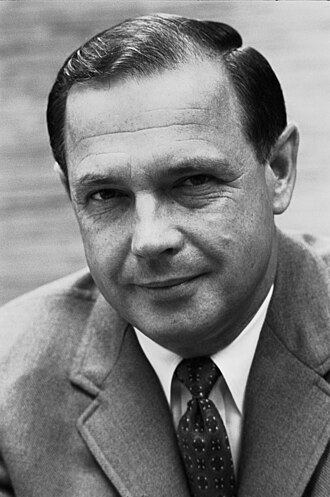
Alexander P. Butterfield served as Deputy Assistant to President Nixon from January 1969 to March 1973, a role in which he oversaw the installation and operation of the secret White House taping system. In March 1973, he transitioned out of the White House to become the Administrator of the Federal Aviation Administration (FAA). While serving as FAA Administrator in July 1973, Butterfield famously testified before the Senate Watergate Committee and publicly revealed the existence of the taping system he had previously managed.
What Butterfield talks about on the tapes
Presidential scheduling 225White House administration 163Presidential schedule 158White House operations 153Public relations 133Vietnam War 113Logistics 83White House logistics 82Foreign Policy 75Henry Kissinger 66Economic policy 62Scheduling 59
Conversations (1,038)
— Page 11 of 11President Nixon met briefly with Alexander P. Butterfield and Manolo Sanchez in the Oval Office to discuss logistical arrangements regarding the President's workspace or personal staff operations. The exchange was extremely short, primarily serving to facilitate immediate administrative coordination before the participants exited the room. No significant policy decisions were reached during this one-minute interaction.
President Nixon met with his staff and Henry Kissinger to discuss the transition into his second term, the ongoing Vietnam peace negotiations, and various administrative matters. Nixon emphasized his desire to centralize control over foreign policy and White House personnel, signaling a move away from relying on State Department officials like William Rogers for Vietnam initiatives. The group also coordinated logistics for Kissinger's travel to Camp David and New York, reviewed recent election results, and addressed personal financial arrangements for White House staff.
President Nixon met with H.R. Haldeman and John Ehrlichman at Camp David to strategize the comprehensive reorganization of his second-term administration. The participants focused on restructuring cabinet-level departments, delegating authority to a new tier of 'super secretaries,' and planning high-profile personnel changes across federal agencies, including the State and Defense Departments. Additionally, they evaluated potential cabinet replacements and discussed the public relations strategy for announcing these shifts to ensure executive efficiency and maintain political momentum.
President Nixon and John Ehrlichman met to discuss the staffing and strategic reorganization of the administration's second term, including the planned departure of Cabinet members like George Romney and John Volpe. They evaluated the optics of announcing these changes, weighing the advantages of a symbolic press event at Camp David to project an image of decisive action. Additionally, they reviewed the status of Vietnam peace negotiations, acknowledging the high public expectations created by Henry Kissinger, and strategized on potential personnel appointments, including the U.N. ambassadorship for John Scali and various departmental roles.
President Nixon met with Alexander P. Butterfield in the Oval Office to discuss the handling of a sensitive letter. The primary focus of the brief interaction involved logistics regarding the delivery of this document to National Security Advisor Henry A. Kissinger. No further substantive policy developments were recorded during this encounter.
President Nixon met with Alexander P. Butterfield to coordinate the logistics of the President's daily schedule. The brief discussion centered on managing the President's upcoming appointment with his barber. No major policy developments occurred during this brief administrative encounter.
President Nixon met with Peter Flanigan to review ambassadorial appointments and strategy for his second-term administration. The discussion focused on replacing non-performing or aged diplomats with individuals possessing strong economic backgrounds capable of influencing European political leaders. Nixon explicitly tasked Flanigan with taking personal responsibility for vetting candidates and managing the appointment process to prevent back-channel influence from Henry Kissinger or campaign contributors like Maurice Stans. Additionally, the two discussed organizational restructuring within the State Department and proposed consolidating certain European ambassadorial posts to enhance administrative efficiency.
President Nixon met with Alexander P. Butterfield to review the scheduling of upcoming meetings, specifically focusing on a discussion with Henry Kissinger. The brief conversation served to verify the availability of time slots preceding the President’s scheduled engagement with South Vietnamese representatives Nguyen Phu Duc and Tran Kim Phuong. Butterfield confirmed the timeline, ensuring the President's agenda remained organized ahead of these critical diplomatic sessions.
President Nixon met with his senior military and national security leadership, including Henry Kissinger, Melvin Laird, and the Joint Chiefs of Staff, to align the administration on the status and defense of pending Vietnam peace negotiations. The discussion focused on the current terms of the settlement agreement, the importance of maintaining public and congressional support, and the necessity of contingency planning should North Vietnam violate the terms. Nixon emphasized that the agreement was the best obtainable outcome and instructed his team to present a unified, positive front while preparing for potential retaliatory actions if the cease-fire collapsed.
President Nixon met with Stephen B. Bull to conclude a budget discussion and review his upcoming schedule, specifically regarding a meeting with Nguyen Phu Duc. Following Bull's departure, Alexander P. Butterfield entered to facilitate a meeting between the President and George P. Shultz. Nixon instructed Butterfield to delay his helicopter departure so that Shultz could accompany him for an informal walk.
President Nixon, Henry Kissinger, and key staff members met to discuss communication strategy and the status of ongoing peace negotiations. The discussion focused on managing public perception regarding diplomatic briefings and the potential implications of Congressional opposition to current foreign policy goals. Kissinger affirmed that the administration had achieved more success than initially projected, while the group considered the risks and tactical necessity of continuing high-level diplomatic meetings.
President Nixon met with Pennsylvania political figure M. Harvey Taylor and District Attorney Leroy S. Zimmerman, accompanied by Alexander P. Butterfield, for a courtesy visit to the Oval Office. The discussion focused on Pennsylvania politics, reflections on the 1972 election results, and the exchange of gifts and presidential mementos. During the meeting, Nixon encouraged Taylor to return for future visits and touched upon Zimmerman’s potential future career path in the judiciary.
President Nixon and Alexander Butterfield met briefly to coordinate administrative logistics and the President's upcoming schedule. They discussed the arrangements for a meeting with H.R. Haldeman and a reception for California administration officials. Additionally, the pair reviewed the physical placement of furniture and finalized the timing for a document requiring the President’s signature.
President Nixon met with H. R. Haldeman to discuss the breakdown of Vietnam peace negotiations and the potential for a televised address to explain the situation to the public. They evaluated recommendations from Henry Kissinger and other advisors regarding military strategy, public relations, and the political implications of a potential impasse. The discussion also addressed second-term administrative reorganizations, including ambassadorships, and coordinated the President's upcoming schedule, which involved various meetings and social obligations.
President Nixon and H. R. Haldeman met to discuss personnel changes for the second term, administrative reorganization, and strategies for managing the press and Congress. They reviewed the status of Vietnam peace negotiations, specifically focusing on the President's firm stance against North Vietnamese compromises regarding the Demilitarized Zone. The conversation also touched on the ongoing Watergate fallout and the need to maintain a strong, confident public posture while finalizing key staff appointments.
President Nixon met with H. R. Haldeman, Robert Dole, and various staff members to discuss political appointments, including the selection of George H. W. Bush as the new Republican National Committee Chairman and the departure of Robert Dole. The group also evaluated strategies for a second-term administration reorganization, emphasizing the need for loyal, creative personnel and improved administrative control over the bureaucracy. A significant portion of the discussion focused on managing the public relations fallout of the Watergate scandal and Segretti's campaign sabotage operations, with the President weighing whether to issue a statement to distance the White House from these controversies.
President Nixon and Alexander P. Butterfield met to review and refine the President's upcoming scheduling commitments and logistical arrangements. The discussion focused on coordinating various high-profile meetings, including appointments with business leaders and media figures, as well as managing the President's personal health checkup at Bethesda. Additionally, they addressed the timing for a meeting with Spanish-speaking administration officials regarding the second-term agenda.
President Nixon met with Alexander P. Butterfield and Alexander M. Haig, Jr. to coordinate administrative logistics for upcoming White House holiday events and to conduct a critical strategic review of Vietnam peace negotiations. The President expressed frustration with the progress of talks and explored the potential for resuming intensive bombing campaigns if North Vietnam continued to delay or reject a final settlement. Nixon and Haig also discussed the administration's tense relationship with South Vietnamese President Nguyen Van Thieu and considered a possible diplomatic mission to Saigon to secure his cooperation.
President Nixon met with Alexander M. Haig, Jr. to discuss the status of stalled Vietnam peace negotiations and potential military escalations. They analyzed North Vietnamese tactics, including the recent breakdown in talks and the perceived influence of Soviet and Chinese pressure on Hanoi. The President and Haig reviewed target lists for renewed bombing operations, specifically emphasizing the necessity of using B-52s and precision munitions to compel North Vietnam to reach a settlement.
President Nixon met with H.R. Haldeman and Gordon Strachan to discuss personnel strategies for his second term, emphasizing the need to purge disloyal bureaucrats and replace them with loyal, courageous appointees. The conversation then shifted to a meeting with Frank Shakespeare and James Keogh, where they evaluated the loyalty of State Department and USIA officials, discussed potential appointments, and lamented the perceived cultural elitism within the media and government bureaucracy. Later, Alexander Haig joined the President to review the status of Vietnam peace negotiations, with Nixon firmly insisting that options for resuming intensive bombing must remain open despite ongoing diplomatic consultations.
President Nixon met with H.R. Haldeman and John Ehrlichman to discuss personnel and organizational strategy for his second term. The participants focused on the importance of appointing a high-profile woman to the White House staff to handle political and PR tasks, with Anne Armstrong identified as a prime candidate due to her toughness and political savvy. They also addressed concerns regarding cabinet performance, the management of congressional relations, and the necessity of re-instituting regular staff meetings to prevent unauthorized end-runs by officials like George Shultz.
President Nixon held a brief telephone conversation with his daughter, Tricia Nixon Cox, to discuss her ongoing trip to the United Kingdom. Nixon provided her with specific messages of support to convey to British Prime Minister Edward Heath and noted his intention to reach out to J. Paul Getty for his 80th birthday. The President also briefly touched upon the status of Vietnam peace negotiations, emphasizing his commitment to maintaining pressure until a resolution is reached.
Alexander P. Butterfield and Stephen B. Bull coordinated logistics for the President's upcoming schedule, including meetings for Robert H. Finch and a reception for 1972 election supporters. The discussion focused on the necessity of a public address system for the reception and clarifying the guest list for a planned Cabinet dinner. They specifically noted the status of RSVPs from Vice President Spiro T. Agnew and William P. Rogers regarding the dinner.
Alexander P. Butterfield and Stephen B. Bull met in the Oval Office to coordinate details regarding an upcoming Cabinet dinner. The discussion specifically addressed arrangements involving Vice President Spiro T. Agnew, with a primary focus on managing protocol for a handshake. The meeting served as a brief administrative planning session for formal executive events.
President Nixon and Alexander Butterfield coordinated final preparations and logistics for a White House dinner scheduled for December 16, 1972. Following the resignation of John B. Connally, who was slated to be the respondent, Nixon decided that Secretary of State William P. Rogers should serve in that role. Additionally, the President confirmed that Vice President Spiro Agnew and Mrs. Agnew would join him and the First Lady in receiving guests.
President Nixon met with Alexander P. Butterfield and later Ronald L. Ziegler to coordinate media strategy regarding the administration's second-term reorganization. Nixon expressed concern that the press failed to adequately highlight the scale of personnel changes in his cabinet and sub-cabinet compared to previous administrations, particularly regarding religious and regional diversity. He directed Ziegler to emphasize that this restructuring was necessary to assert control over the executive branch bureaucracy, drawing a lesson from the mistakes of the Lyndon B. Johnson administration.
President Nixon met with Alexander P. Butterfield to coordinate logistics for an upcoming Cabinet dinner. The discussion focused on finalizing the guest list and reviewing the seating diagram for the event. Nixon requested specific documentation to ensure he could personally select the guests for his table.
President Nixon and Alexander P. Butterfield met to coordinate the logistics and guest list for an upcoming Cabinet dinner. They discussed the specific number of White House assistants and other officials to include while ensuring the venue remained comfortable for the attendees. Nixon requested a final head count and instructed Butterfield to consult with H.R. Haldeman to finalize the seating arrangements and potential additions.
President Nixon met with Charles Colson to strategize the public relations and implementation of the administration's second-term reorganization. The discussion focused on highlighting a narrative of significant personnel changes, including the appointment of John A. Scali and the replacement of various sub-Cabinet officials, to project strength and managerial control. They also addressed the importance of improving press relations, utilizing political appointees over career bureaucrats, and reinforcing the President’s "New Majority" by reaching out to labor and ethnic constituencies. Finally, the President emphasized the need to maintain public pressure regarding Vietnam negotiations and to aggressively combat media bias.
President Nixon consulted with Alexander P. Butterfield to clarify why John B. Connally and Melvin R. Laird were absent from an upcoming White House dinner. Butterfield was unable to provide a specific reason for Connally’s absence or his current whereabouts. The brief exchange highlights the President's personal attention to guest list management and the logistical uncertainty surrounding the attendance of key political figures.
President Nixon and Alexander P. Butterfield met to coordinate the administrative logistics of upcoming White House events. The discussion focused on scheduling potential meetings with John D. Ehrlichman and refining the guest list and seating arrangements for a Cabinet dinner. The two evaluated potential additions to the dinner, including H.R. Haldeman, Leonard Garment, and Herbert G. Klein, to ensure the appropriate size and composition for the gathering.
President Nixon and H.R. Haldeman met to discuss personnel and organizational logistics for the upcoming second term, specifically focusing on the office placement of Counselor Anne L. Armstrong within the White House complex. Nixon insisted that Armstrong be provided with suitable office space inside the White House rather than the Executive Office Building to enhance her profile, even at the expense of office space for other staffers. Additionally, the President received updates on internal leadership disputes within the Republican National Committee regarding finance chair candidates.
In this Oval Office meeting, President Nixon, Henry Kissinger, H. R. Haldeman, and others discussed the state of Vietnam peace negotiations following a breakdown in talks and North Vietnamese public charges. The participants reviewed the administration's strategic efforts to maintain pressure on Hanoi, including the impact of recent bombing campaigns and the tone of Congressional relations. Additionally, the President and his staff coordinated personnel and administrative matters for the second term, specifically addressing campaign contributor recognition, the vetting of nominees for the Securities and Exchange Commission, and the desire for greater loyalty and political reliability in key appointments.
President Richard Nixon met briefly with Alexander P. Butterfield to inquire about the current whereabouts of John D. Ehrlichman. The short exchange served primarily as a status check on a key staff member's location. No further policy matters or significant administrative decisions were recorded during this two-minute interaction.
President Nixon held a brief meeting with Alexander P. Butterfield to discuss personnel matters. The discussion centered on the status and transition of Brent Scowcroft. No further substantive details regarding the meeting's outcome are available due to the lack of a transcript.
Alexander P. Butterfield engages in an brief, unidentified telephone conversation from the Oval Office. The audio recording provides no substantive dialogue, rendering the specific context, participants, or administrative actions impossible to determine. Consequently, no policy decisions or developments were captured during this segment of the taping system.
President Nixon requested that Alexander Butterfield summon John Dean to the Oval Office. The purpose of this brief meeting was to facilitate Dean's arrival for a subsequent discussion. Butterfield departed before Dean arrived, and no further substantive topics were addressed in this segment.
President Nixon, Alexander Haig, and Alexander Butterfield met to strategize the White House response to the escalating Watergate scandal, focusing on the upcoming Ervin Committee hearings and potential impeachment proceedings. Nixon expressed a desire to present a 'White Paper' to Congressional leaders to clarify the administration's position and distance himself from the scandal, rather than addressing the public on prime-time television. They also discussed the status of CIA involvement, potential testimony from Richard Helms and Vernon Walters, and the need for a unified defense against political opponents.