Nixon, Richard M. (President)
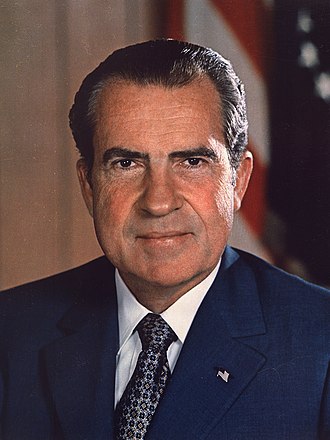
Richard M. Nixon served as the 37th President of the United States from January 1969 until his resignation in August 1974. In February 1971, he ordered the installation of a secret voice-activated taping system in the White House to preserve a historical record of his administration. Until the system's existence was revealed and dismantled in July 1973, the tapes captured Nixon directing major foreign policy initiatives, such as the opening to China, as well as his central role in the Watergate cover-up.
What Nixon talks about on the tapes
White House operations 4,718Presidential scheduling 2,225Public relations 1,784Presidential schedule 1,782Vietnam War 1,693Logistics 1,650Manolo Sanchez 1,626White House communications 1,400White House administration 1,399Presidential communication 1,243Henry Kissinger 1,191Foreign Policy 1,183
Conversations (21,010)
— Page 155 of 211President Nixon instructed the Camp David operator to connect him with Deputy Secretary of Defense Kenneth Rush. The President specified that he did not want to interrupt Rush if he was currently at a social gathering, requesting instead that he be reached at his home if available. This call reflects the President’s attempt to establish communication with top defense leadership while stationed at Camp David.
President Nixon contacted the Camp David operator from the Aspen Lodge study to address a logistical or communication matter. The brief exchange served as a routine administrative interaction typical of White House operations at the presidential retreat. No substantive policy discussions or significant strategic decisions resulted from this brief communication.
President Nixon requested that the Camp David operator connect him with U. Alexis Johnson of the State Department. This brief administrative exchange served as an attempt to establish direct communication with the senior diplomat. No further substantive discussion or policy developments occurred during this brief interaction.
President Nixon and Under Secretary of State U. Alexis Johnson discussed the security protocols for communicating the decision to halt U.S. bombing north of the 20th parallel. Johnson explained that he took the initiative to inform the relevant parties to listen to the public announcement rather than risking an insecure transmission of the sensitive news. The two men acknowledged the difficulty of the decision to pause the bombing, with Nixon reflecting that only history would judge the efficacy of his choice.
President Nixon and U. Alexis Johnson briefly conferred regarding the status of sensitive diplomatic negotiations and communications following a period of intense conflict. Nixon expressed that the recent breakdown in talks left him with no alternative course of action, framing the situation as a necessary challenge compared to previous wartime escalations. The discussion focused on maintaining operational security to prevent information leaks, with Nixon confirming his personal involvement in managing key contacts.
President Nixon consulted with Deputy Secretary of State Kenneth Rush to confirm preparations for an upcoming policy announcement. The conversation focused on ensuring the administration remained on track regarding the cessation of U.S. bombing north of the 20th parallel in Vietnam. Rush expressed support for the decision, confirming that their strategic course of action was settled and ready for implementation.
President Nixon consulted with Deputy Secretary of State Kenneth Rush to coordinate efforts and ensure organizational readiness for upcoming events, likely related to ongoing diplomatic negotiations. Nixon affirmed his support for the administration's strategic path despite anticipated media scrutiny, emphasizing the necessity of resolving the situation decisively. The discussion served as a final check to ensure all parties were aligned before critical developments occurred the following day.
President Nixon contacted the Camp David operator to facilitate an outgoing call to his special counsel, Charles W. Colson. The interaction served as a logistical bridge to initiate high-level communication while the President was working from the Camp David retreat. No substantive political or policy discussions occurred during this brief request for operator assistance.
President Nixon met with an unknown individual at the Aspen Lodge study at Camp David to engage in a brief, private encounter. The recorded segment consists only of ambient noise, including the sound of a fire and refreshments, with no substantive policy discussions or decisions preserved in the transcript. The interaction concluded quickly when the unidentified visitor departed shortly before 9:53 am.
President Nixon and Charles W. Colson coordinated the strategy for notifying Congressional leaders regarding the cessation of U.S. bombing north of the 20th parallel in Vietnam. The conversation focused on ensuring that outreach efforts by William Timmons and Henry Kissinger were synchronized to avoid duplicate calls to key figures like Hugh Scott. They also discussed managing political fallout, particularly addressing potential criticisms from congressional "mavericks" and handling media relations to maintain public support.
President Nixon and Charles Colson discuss communication strategies regarding the administration's recent decision to resume bombing campaigns in North Vietnam. The President emphasizes that the bombing pause was conditional upon serious negotiations and instructs Colson to coordinate with congressional leaders, particularly Hugh Scott, to ensure they are properly informed. They also briefly touch upon political opposition and media narratives, with Nixon expressing a desire to project strength and avoid any perception that the administration was coerced by domestic critics.
President Nixon initiated a brief communication with the Camp David operator to facilitate a telephone connection with National Security Advisor Henry A. Kissinger. The discussion was purely administrative, serving as a logistical step to coordinate high-level foreign policy consultations during the President's stay at Camp David. No policy decisions were made during this exchange, which functioned solely to bridge the President's connection to his key advisor.
President Nixon communicated with a Camp David operator to facilitate logistical coordination during his stay at Aspen Lodge. Given the lack of a transcript or detailed record, the discussion likely pertained to routine administrative or telephonic arrangements necessary for the President's operations at the retreat. No substantive policy decisions or political developments are documented as a result of this brief exchange.
President Nixon and Henry Kissinger coordinated the notification of congressional leaders regarding the upcoming suspension of U.S. bombing in North Vietnam. The discussion focused on managing political fallout, particularly pressure from liberal critics and figures like Hubert Humphrey and Mike Mansfield, while maintaining a restrained public message to avoid the perception of gloating over a military victory. Kissinger was tasked with briefing key members of Congress to ensure they were informed of the administration's decision prior to the official public announcement.
President Nixon and Henry Kissinger coordinate a strategy to brief congressional leaders regarding a pending major announcement related to the Vietnam War and the recent bombing campaigns. The President stresses the importance of personal outreach to key allies like Mansfield and Scott to manage legislative fallout and control the narrative surrounding the resumption of military operations. Kissinger outlines a justification for the bombing, emphasizing that the action was a necessary response to an impasse in peace negotiations, and confirms that legislative aides will be tasked with reaching out to remaining members of Congress.
President Nixon contacted the Camp David operator to facilitate an urgent communication. The primary purpose of the brief interaction was to place an outgoing call to White House aide Stephen B. Bull. No substantive policy discussions or complex strategic decisions occurred during this exchange.
President Nixon met with William Hirsch at Camp David to briefly discuss the President's upcoming schedule. The conversation included arrangements for an incoming telephone call and the provision of refreshments. No significant policy decisions or major developments were recorded during this brief administrative interaction.
President Nixon dictates a memorandum reflecting on the political fallout and public perception surrounding his recent decision to suspend the bombing of North Vietnam and resume peace negotiations. He contrasts the public's current anti-war outcry with the support received during the May 1972 invasion, acknowledging that his administration faces intense criticism from Congress and the media. Nixon evaluates the strategic effectiveness of the bombing campaign, concluding that while it successfully compelled Hanoi to return to the negotiating table, it necessitated a more proactive public relations strategy to counter domestic opposition.
President Nixon communicated with the Camp David operator to request that staff remain available or "on call" to provide necessary services. The exchange serves as a logistical directive to ensure continued operational support at the presidential retreat. No major policy discussions or significant political developments occurred during this brief request for assistance.
President Nixon consulted with Stephen B. Bull regarding the logistical planning and protocol for the upcoming memorial service for former President Harry S. Truman. The discussion centered on managing the attendance of international dignitaries and heads of state, specifically contrasting the scale of this event with the more elaborate funeral arrangements for Dwight D. Eisenhower. Nixon expressed concern over the time-consuming nature of reception lines and requested that the State Department ensure clear communication regarding the expectations for these visiting delegations.
President Nixon consulted with his aide, Stephen B. Bull, regarding the protocol for hosting a reception for foreign dignitaries attending the funeral services of former President Harry S. Truman. Nixon emphasized the importance of treating the event with at least the same level of honor as that provided for Dwight D. Eisenhower to avoid unfavorable public comparisons. The President ultimately authorized a brief White House reception to accommodate visiting heads of state and other high-ranking officials attending the memorial.
President Nixon, Charles Colson, and John Scali coordinate the administration's public relations strategy following the announcement of a halt to U.S. bombing north of the 20th parallel and the planned resumption of Vietnam peace negotiations. The participants emphasize a message of presidential decisiveness and seriousness, aiming to counter potential criticism from domestic "doves" and the media. Scali details his efforts to brief journalists and manage press coverage to ensure the administration's narrative regarding the bombing halt and negotiation efforts remains unified and controlled.
President Nixon met with Charles Colson and John Scali to coordinate administration messaging and congressional relations regarding the ongoing Vietnam War negotiations and recent bombings. The President expressed frustration with Henry Kissinger's sensitivity to press criticism and over-reliance on external perceptions of the administration's negotiation strategy. Nixon instructed his aides to maintain a firm, determined tone in public communications while avoiding premature projections of a settlement, and he specifically tasked them with managing political outreach to key congressional figures to bolster support.
President Nixon and Charles Colson discuss strategies to manage public and media perception regarding the administration's recent foreign policy decisions and the ongoing negotiations led by Henry Kissinger. The pair focuses on refuting claims that the administration is 'crowing' over developments, instead emphasizing the necessity of their actions to counter North Vietnamese stalling and military buildup. Colson is tasked with reaching out to supportive journalists, specifically Crosby Noyes and others, to help frame the administration's narrative of calm determination in the face of congressional criticism.
President Nixon contacted the Camp David operator to facilitate a telephone call to Commander Alexander R. Larzelere, one of his military aides. This brief administrative interaction served as a logistical step to reach a member of the President's personal military staff. No substantive policy discussions or complex decision-making occurred during this communication.
President Nixon and First Lady Pat Nixon met at Camp David to coordinate upcoming travel arrangements and logistical planning. They discussed the specific timing and scheduling requirements for these engagements. The brief exchange focused on finalizing the details of their itinerary.
President Nixon contacted the Camp David operator to request assistance with establishing a telephone connection. The President specifically directed the operator to connect him with military personnel. This brief communication served as a routine administrative request to facilitate an official call.
President Nixon consulted with Commander Alexander R. Larzelere to coordinate travel logistics for First Lady Pat Nixon's return to the White House from Camp David. The discussion focused on evaluating weather conditions to determine the feasibility of helicopter transport versus automobile travel. They ultimately addressed scheduling and safety considerations to finalize the First Lady’s transit arrangements.
President Nixon met with Commander Alexander R. Larzelere at Camp David to coordinate transportation arrangements for First Lady Pat Nixon's return to the White House. The President requested that a helicopter be prepared for her departure between 7:00 and 7:30 p.m., while also designating the flight as the primary means for transporting official documents and signed materials. Larzelere was instructed to ensure the aircraft was ready or to arrange for a motorcade alternative if weather or other conditions prevented air travel.
President Nixon contacted the Camp David operator to facilitate an outgoing telephone call to Nellie L. Yates. This brief administrative interaction served as a logistical step to connect the President with his intended party. No substantive policy discussions or major decisions occurred during this brief communication.
President Nixon held a brief telephone conversation with Nellie L. Yates to discuss logistical arrangements and scheduling for the First Lady, Pat Nixon. The discussion centered on the First Lady's return to Washington, D.C., and details concerning upcoming New Year's celebrations, including the use of Chinese wine. The call served as a coordination check regarding these holiday social plans.
President Nixon consulted with the Camp David operator regarding a technical or administrative matter involving telephone communications. The brief interaction focused on the handling of specific incoming calls and the identity of personnel involved in routing them. No major policy decisions were reached, as the discussion remained limited to telephonic logistical operations.
President Nixon coordinated travel arrangements with Nellie L. Yates to ensure she could return home in time for New Year's Eve festivities alongside First Lady Pat Nixon. The brief interaction focused on logistics for the First Lady's departure and included lighthearted, informal social pleasantries. No significant policy decisions were made during this exchange.
President Nixon contacted the Camp David operator to facilitate a telephone connection with Special Counsel Charles W. Colson. This brief administrative interaction served as the initiation of a call to his advisor regarding pressing White House matters. No substantive policy discussions occurred during this exchange, as its primary purpose was strictly telephonic connectivity.
President Nixon communicated with the Camp David operator from the Aspen Lodge study to address logistical matters. The brief interaction served as a functional exchange regarding the President's immediate telecommunications needs during his stay at the retreat. No substantive policy discussions or major administrative decisions occurred during this brief contact.
President Nixon and Charles Colson confer regarding public relations messaging surrounding the recent cessation of U.S. bombing north of the 20th Parallel in Vietnam. Colson reports feedback from Henry Kissinger, who advocates for a restrained public approach to avoid over-discussing the administration's strategic shifts. The discussion reinforces the need for the President to maintain control over the messaging narrative to ensure consistency in congressional and public communications.
President Nixon directs Charles Colson to contact Henry Kissinger to provide reassurance regarding ongoing administrative operations and personnel reactions. The conversation focuses on ensuring Kissinger feels supported by the President's directives as he prepares to receive additional data. Nixon emphasizes the need for a unified front to prevent internal friction, specifically noting the challenges of controlling the economy.
President Nixon and Charles W. Colson discussed the administration's strategic management of congressional and media relations during the Vietnam War, specifically regarding the cessation of bombing north of the 20th Parallel. They addressed political friction caused by public statements from figures such as Senator William B. Saxbe and coordinated efforts to engage influential opinion makers and legislators to secure support. The conversation emphasized the necessity of maintaining a firm, unified political stance against criticism while navigating the complex editorial landscape.
President Nixon and Charles Colson discuss a political strategy to discipline Senator William Saxbe for his public criticisms of the administration's bombing policies. Nixon directs Colson to pressure Ohio political figures, including Robert Taft and various congressmen, to force a public retraction or threaten the withdrawal of political support. The President emphasizes the need for a swift, aggressive response to marginalize dissenters and ensure party loyalty during sensitive diplomatic negotiations.
President Nixon contacted the Camp David operator to facilitate a telephone call to Deputy Press Secretary Gerald L. Warren. This brief administrative interaction served as a logistical step to connect the President with his staff while he was stationed at Camp David. No policy matters or substantive political discussions occurred during this exchange.
President Nixon initiated a brief contact with the Camp David operator to facilitate a telephonic connection. He specifically requested to be patched through to Deputy Press Secretary Jerry Warren. No further substantive policy matters were discussed during this brief administrative exchange.
President Nixon and Deputy Press Secretary Gerald L. Warren conferred regarding the administration's public relations strategy and the reception of recent press briefings. The discussion focused on managing the tone of White House press interactions, specifically addressing the reporting of figures such as Helen Thomas and AP journalists. Nixon expressed satisfaction with Warren's performance, reinforcing the administration's determination to maintain a composed public image amidst ongoing media scrutiny.
President Nixon met with Deputy Press Secretary Gerald L. Warren to commend his recent performance during a press briefing regarding Vietnam policy. The President emphasized the importance of maintaining an image of calm and determination in the face of media scrutiny, noting his frustration with Henry Kissinger's failure to adequately brief the press. Nixon concluded by expressing satisfaction with the briefing's impact on journalists and encouraged Warren to enjoy his evening.
President Nixon contacted the Camp David operator to facilitate a telephone connection with Admiral Thomas H. Moorer, the Chairman of the Joint Chiefs of Staff. This administrative interaction served to initiate a formal line of communication between the President and his senior military advisor during a period of high-level strategic decision-making. No substantive policy discussions occurred during this brief exchange, as its sole purpose was to place the requested call.
President Nixon communicated with the Camp David operator from the Aspen Lodge study to address routine logistical or telecommunications needs. This brief interaction served to facilitate the President's connectivity while he was stationed at the retreat. No substantive policy matters or major historical developments were recorded during this brief exchange.
President Nixon consulted with Admiral Thomas H. Moorer to discuss his desire to send a formal message of appreciation to military commanders following recent bombing operations over North Vietnam. Moorer confirmed that North Vietnamese forces were significantly depleted of missiles and supplies, attributing the success of the campaign directly to the President's decisive leadership. Nixon requested that the commendation avoid a tone of triumphalism while emphasizing the professionalism and courage of the Air Force personnel involved.
President Nixon instructed Admiral Thomas H. Moorer to draft a message to military commanders commending the courage and sacrifice of forces involved in the recent bombing operations in Vietnam. Nixon emphasized the necessity of maintaining resolve and morale despite domestic political criticism of the air campaign, asserting that the pressure on the North Vietnamese had been effective. This directive served to ensure that service members understood their efforts were recognized by the administration as a critical factor in achieving peace.
President Nixon contacted the Camp David operator to facilitate an urgent communication with Under Secretary of State U. Alexis Johnson. The brief administrative exchange focused exclusively on connecting the President with the State Department official. No further policy discussion or substantive developments occurred during this connection attempt.
President Nixon initiated a brief exchange with the Camp David operator to facilitate a communication connection. The primary focus of the call was to reach Deputy Secretary of State U. Alexis Johnson. The brief interaction served as a logistical step to enable further official government correspondence.
President Nixon contacted the Camp David operator to inquire about the whereabouts of U. Alexis Johnson and requested a telephone connection to Deputy Secretary of Defense David Kenneth Rush. The discussion was primarily logistical, focused on locating key personnel to facilitate official communications during the President's stay at Camp David. No significant policy decisions were recorded during this brief administrative exchange.
President Nixon contacted the Camp David operator to facilitate an urgent communication with Deputy Secretary of Defense Kenneth Rush. The exchange was strictly logistical, as the President requested to be connected to Rush rather than receiving assistance from the operator for an alternative task. This brief interaction highlights the President's administrative efforts to maintain direct lines of communication with top defense officials while at Camp David.
President Nixon met with his personal aide, Manolo Sanchez, at Camp David to manage his refreshment requests and discuss the afternoon's television schedule. The President directed Sanchez to bring a smaller portion of cheese and crackers than the previous day's serving. Additionally, the two briefly coordinated the timing of an upcoming football game scheduled for 4:00 p.m.
President Nixon consulted with the Camp David operator to determine the whereabouts of Kenneth Rush, who was reportedly at the Burning Tree Country Club. Upon learning of a potential radio contact, the President declined the offer to reach Rush. The President also initially requested to place a call to Henry Kissinger, though the conversation concluded without further action.
President Nixon communicated with the Camp David operator regarding the status of a potential phone call. The President determined that an immediate call was not necessary, deciding instead to initiate the contact himself at a later time. The brief exchange served as a logistical coordination effort for the President's personal and official communications while at Camp David.
President Nixon and Henry Kissinger discussed the political and public reception of the recent decision to cease U.S. bombing north of the 20th Parallel in North Vietnam. Kissinger updated the President on his outreach to congressional leaders and media figures, noting a surprisingly positive surge in public telegrams supporting the administration's actions. The two also addressed the status of peace negotiations, the potential for an eventual agreement in Paris, and the necessity of managing South Vietnamese President Nguyen Van Thieu's expectations through a low-profile visit by Alexander Haig.
President Nixon and Henry Kissinger met to coordinate their strategy regarding upcoming peace negotiations and the management of domestic political fallout. They discussed the importance of controlling the narrative by refusing to explain or defend recent bombing decisions to critics, focusing instead on presenting the finalized peace agreement as a fait accompli. Additionally, they reviewed key political allies and opponents, emphasizing the need to keep supportive congressional leaders informed while bypassing or ignoring critical media figures.
President Nixon contacted the Camp David operator to facilitate an outgoing call to his special counsel, Charles W. Colson. This administrative interaction served as a logistical step to connect the President with his aide while he was stationed at the retreat. No further substantive policy matters were recorded during this brief communication.
President Nixon held a brief, informal communication with the Camp David operator from the Aspen Lodge study. The exchange was strictly logistical in nature, primarily concerning the establishment of a telephone connection. No substantive policy or political matters were addressed during this interaction.
President Nixon and Charles Colson spoke to assess public and media support for the President’s recent decision to conduct the intensified bombing of North Vietnam. They reviewed feedback from political figures such as John Connally and Daniel Moynihan, noting that despite criticism from some media outlets, there was significant underlying public support for the administration's decisive actions. Colson updated the President on efforts to manage press relations and mitigate negative editorials, particularly those originating from the Washington Star, while reinforcing the necessity of maintaining a firm stance during this critical period leading up to the inauguration.
President Nixon and Charles Colson discuss strategies for managing public and press perception regarding ongoing military operations, specifically focusing on the necessity of generating vocal support in regions like Ohio. The conversation touches on favorable feedback received by broadcasters like Howard Smith and the administration's frustration with media coverage. Nixon emphasizes the importance of framing the political narrative to counter critical editorial stances and instructs Colson to actively challenge opposing viewpoints.
President Nixon and First Lady Pat Nixon met briefly at the Aspen Lodge study to discuss the President's personal schedule. The primary focus of the discussion was the President's plans to attend a football game. The conversation was brief and concluded with the First Lady departing shortly thereafter.
President Nixon and his daughter Tricia Nixon Cox spoke to exchange New Year's greetings and coordinate logistics regarding Tricia’s upcoming travel to the Soviet Union. Tricia sought the President’s approval for hosting various official functions, including luncheons and meetings with Soviet cultural officials and city mayors. The President affirmed her plans and encouraged her to proceed with the scheduled itinerary.
President Nixon consulted with his daughter, Tricia Nixon Cox, regarding her upcoming social and diplomatic obligations. The President offered parental advice on how to manage attendance at two separate embassy events, encouraging her to participate in both. The brief exchange concluded with New Year's greetings and expressions of mutual well wishes.
President Nixon consulted with his valet, Manolo Sanchez, at Camp David to coordinate his personal schedule. The primary focus of the discussion concerned the timing of upcoming leisure activities, specifically the scheduling of a movie and a football game. No significant policy decisions were made, as the exchange remained strictly logistical regarding the President's personal agenda.
President Richard Nixon met with First Lady Pat Nixon at the Aspen Lodge study to coordinate their personal schedule at Camp David. The discussion centered on timing for recreational activities, specifically planning a swimming session and establishing an agenda for the evening meal. No significant policy decisions were reached, as the conversation focused exclusively on the presidential couple's domestic itinerary.
President Richard Nixon and First Lady Pat Nixon met privately at the Aspen Lodge in Camp David. The entire accessible portion of this conversation was withheld from public release under a deed of gift, as it was classified as a personal record. Consequently, no information regarding the specific topics discussed or decisions made during this interaction is available.
In this recorded memorandum, President Nixon reflects on his administration's press strategy and the performance of key personnel regarding the recent bombing of North Vietnam. Nixon critiques Henry Kissinger's handling of the media and his susceptibility to outside influence, while simultaneously expressing concern over Vice President Spiro Agnew's temperament and lack of political subtlety. The President also reviews his efforts to manage public and media relations through subordinates like Charles Colson and Gerald Warren, emphasizing the importance of securing favorable coverage during this critical period.
President Nixon communicated with a Camp David operator from the Aspen Lodge to discuss administrative or logistical matters related to his stay at the retreat. Due to the lack of a transcript, the specific nature of the conversation remains classified as a brief, routine exchange between the President and onsite support staff. No significant policy decisions or historical developments resulted from this brief communication.
President Nixon contacted the Camp David operator to facilitate a telephone connection with Special Counsel Charles W. Colson. The brief exchange served as an administrative request to reach Colson for a conversation. No further policy or strategic discussions took place during this specific call.
President Nixon initiated a brief exchange with the Camp David operator to request assistance in placing an outgoing telephone call. The interaction was strictly administrative, focused on establishing a line to an unspecified destination. No policy discussions or significant political developments occurred during this brief request for communication services.
President Nixon and Charles Colson reviewed the events of 1972, focusing heavily on public and press reactions to the Vietnam War and recent U.S. bombing campaigns. They discussed the administration's frustration with media coverage, specifically criticizing James Reston’s analysis of Henry Kissinger and the alleged discord within the executive branch. The conversation served to coordinate political strategy and message control as the President prepared for his second term.
President Nixon and Charles Colson met to discuss press coverage and public perception regarding the administration's recent Vietnam policies and the resumption of negotiations. Nixon expressed significant frustration with Henry Kissinger's tendency to cultivate a 'peacemaker' image in the media, fearing it undermined their bargaining position and created a false dichotomy between his own toughness and Kissinger's perceived softness. To address this, Nixon directed Colson to contact Kissinger, critique specific media reports, and reinforce the necessity of presenting a unified, firm stance on the negotiations.
In this memorandum dictated at Camp David, President Nixon reflects on the domestic and political fallout of the recent bombing halt in North Vietnam. He discusses the necessity of military action to force Hanoi back to the negotiating table and outlines strategy for shaping public and congressional perception of these events through Charles Colson. Furthermore, the President touches upon his own personal struggles with sleep and stress, and touches on organizational considerations for his second term, including the roles of Henry Kissinger and Herbert Klein.
President Nixon contacted the White House operator to initiate a telephone call to Charles W. Colson. This brief communication served solely as a request to connect with his special counsel. No further substantive policy discussions occurred during this brief interaction.
President Nixon and Charles Colson opened their conversation by discussing the Washington Redskins' recent victory and Nixon’s unsuccessful efforts to reach coach George Allen to offer congratulations. The discussion quickly shifted to a professional concern regarding Henry Kissinger, specifically suspecting him of leaking information to New York Times journalist James Reston. Nixon ordered Colson to investigate Kissinger’s communications, including his private telephone records and potential contacts with the press, to confirm the source of the unauthorized disclosures. They agreed on the necessity of monitoring Kissinger more closely to maintain control over national security messaging during delicate Vietnam peace negotiations.
President Nixon called Washington Redskins head coach George Allen to congratulate him on the team's decisive victory over the Dallas Cowboys. The two discussed the importance of team chemistry, the superior work ethic of players like Billy Kilmer and Jack Pardee, and the psychological impact of aggressive play on the opposing team. Nixon encouraged Allen to be open with the press regarding his support, emphasizing his long-standing practice of reaching out to winners.
President Nixon instructed the White House operator to place a follow-up call to George E. Allen at his private residence. The brief exchange served to facilitate direct communication between the President and Allen on New Year's Eve. No further details regarding the nature of the intended discussion were recorded during this short administrative interaction.
President Nixon invited his associate George E. Allen to bring his in-laws, Mr. and Mrs. Felix Lumbrosso, for a private tour of the White House. The President suggested a meeting time of 10:00 a.m. the following day to allow the guests to view the holiday decorations and the remaining Christmas tree. Nixon extended the invitation to include the entire family, including the children.
President Nixon contacted the White House operator to initiate an urgent telephone call to his special counsel, Charles W. Colson. The brief exchange served as a direct request for administrative assistance in connecting the President with Colson. No further substantive policy matters or decisions were discussed during this brief connection attempt.
President Nixon and Charles W. Colson coordinated a New Year's Day White House tour for Washington Redskins coach George Allen and his in-laws. They discussed extending invitations to specific players, including Jack Pardee, Billy Kilmer, and Larry Brown, to demonstrate appreciation for Allen's leadership and the team's public support for the administration. Nixon directed Colson to facilitate the visit and provide the coach with flexibility in selecting additional players to accompany his family.
President Nixon contacted the White House operator to place a personal call to his close friend, Charles G. "Bebe" Rebozo. Nixon specified that he only wished to be connected if Rebozo was reachable via standard telephone lines. He explicitly instructed the operator to avoid using radio communication if Rebozo was currently at his retreat in Walker's Cay.
President Nixon dictates a personal letter to Major General James D. Hughes to express his gratitude for Hughes’ recent correspondence and offer congratulations on his daughter’s wedding. During the session, Nixon briefly consults with Stephen B. Bull regarding Rose Mary Woods’ schedule and a visit from George H. Allen. The President concludes by reflecting on the bravery of American airmen during the December 1972 bombing campaign in Vietnam and reiterating his commitment to securing an honorable peace through ongoing negotiations.
President Nixon and former Secretary of Agriculture Clifford M. Hardin engaged in a personal exchange to finalize a letter of appreciation regarding Hardin’s tenure. The conversation reflected on the challenging economic climate of 1969–1970 and Hardin’s contributions to the administration’s success in the Farm Belt during the 1972 election. Nixon concluded the interaction by formally expressing his gratitude for Hardin’s dedicated service and extending well wishes to the Hardin family.
President Nixon met with his personal aide, Stephen B. Bull, in the Oval Office to conduct administrative dictation. The brief meeting focused on dictating instructions for secretarial staff regarding the processing and typing of official documents. No major policy developments occurred, as the session was limited to routine clerical and workflow management.
President Nixon met with former Secretary of Agriculture Clifford M. Hardin to discuss the formal conclusion of his tenure. During the session, the President reviewed a dictated letter addressed to Hardin, highlighting his appreciation for the outgoing official's service. No major policy shifts or strategic decisions were recorded, as the meeting functioned primarily as a professional transition acknowledgement.
President Nixon dictates a letter to Dallas Cowboys head coach Tom Landry to express his personal admiration following the team's recent performance. The President commends the Cowboys for maintaining their dignity despite a difficult loss, specifically highlighting Bob Lilly’s resilience while playing through injuries. The correspondence reinforces Nixon’s respect for the team's championship history and their representation of high standards in competitive athletics.
President Nixon met with his aide Stephen B. Bull to discuss the broadcast coverage of the Rose Bowl Parade. The primary focus of the brief interaction was the timing of the television broadcast and whether the event had already commenced. No further policy or administrative actions were recorded during this exchange.
President Nixon met with aide Stephen B. Bull to discuss recent sporting events and upcoming scheduling matters. The conversation centered on a detailed post-game analysis of the Washington Redskins' victory over the Dallas Cowboys, focusing on key plays and individual performances. They also briefly touched upon the televised broadcast of the Rose Bowl Parade and reviewed the President’s scheduled meeting with Japanese Prime Minister Kakuei Tanaka.
President Nixon met with his valet, Manolo Sanchez, in the Oval Office to discuss the arrangement and organization of his workspace. During the brief interaction, the President provided specific instructions regarding the relocation of items to his office in the Executive Office Building. This conversation focused primarily on administrative logistics and personal office management at the start of the new year.
President Nixon met with Stephen B. Bull to coordinate the President’s January schedule, focusing on managing public appearances and minimizing unnecessary social obligations. Key discussions included logistics for attending upcoming memorial services for Harry S. Truman and Hale Boggs while avoiding media scrutiny, as well as planning a streamlined, low-contact reception for members of Congress. Nixon emphasized a desire to limit his personal interactions and maintain a disciplined schedule to focus on administrative and policy priorities following his upcoming inauguration.
President Nixon met with his aide, Stephen B. Bull, to request the presence of Charles W. Colson at the White House. Upon verifying that Colson was at home, the President directed Bull to attempt to bring him in for a meeting. This brief interaction served as a logistical effort to initiate a private consultation with a key advisor on New Year's Day.
President Nixon dictates instructions to H. R. Haldeman regarding the selection process for official U.S. delegations, specifically citing the recent funeral of Lester Pearson as an example of overly bureaucratic choices. Nixon mandates that future delegations prioritize rewarding loyalists, major financial and political supporters, and key allies in Congress and the media rather than relying on State Department officials. To streamline this process, he orders the creation of a standing list of approximately 100 vetted individuals to ensure delegations can be formed quickly while maintaining minimal administration representation.
President Nixon met with Charles Colson to discuss strategies for managing press relations, targeting political adversaries, and restructuring administration personnel for his second term. The conversation focused on sidelining hostile media outlets like the Washington Post, utilizing legal and regulatory challenges to neutralize critics, and ensuring loyalty within government appointments. Additionally, Nixon reviewed the success of recent Vietnam bombing campaigns, analyzed public reaction to the war, and strategized on how to maintain political momentum through upcoming congressional cycles.
President Nixon met with his aide, Stephen B. Bull, in the Oval Office to conduct a brief administrative review of the President's upcoming daily schedule. The exchange was strictly procedural, focusing on the logistical coordination of the President's appointments for the day. No substantive policy matters were addressed during this short transition.
President Nixon hosted Washington Redskins coach George Allen and his family for a courtesy meeting in the Oval Office. The conversation focused on the Redskins' upcoming schedule and Super Bowl prospects, with Nixon offering professional advice on managing press relations and securing team accommodations. The President also arranged for Michael J. Farrell to provide the Allen family with a private tour of the White House’s upper residential floor and Christmas decorations.
President Nixon hosted Washington Redskins head coach George Allen and his family for a brief social visit in the Oval Office. The conversation centered on casual pleasantries, including a discussion about double milkshakes. The meeting concluded with brief farewells as the group departed the White House.
President Nixon met with Stephen B. Bull and an unidentified individual to discuss personal matters, specifically the television broadcast of the Rose Bowl parade. The conversation touched upon the logistics of the parade’s timing and the presence of Manolo Sanchez during the event. Additionally, the group briefly addressed the status of the White House Christmas tree lights.
President Nixon and his valet, Manolo Sanchez, briefly met in the Oval Office to coordinate logistics for the day. The primary focus of the discussion concerned the potential use of Nixon’s office in the Executive Office Building and whether a visit there was necessary. Ultimately, the two reached a mutual agreement that the trip to the EOB was not required, resulting in their departure shortly thereafter.
President Nixon consulted with the White House operator to facilitate a meeting with his Special Counsel, Charles W. Colson. The primary objective of the interaction was to coordinate Colson's arrival at the Executive Office Building. The conversation served as a brief administrative arrangement to ensure the President could convene with his advisor.
President Nixon met with an unidentified individual in the Old Executive Office Building to discuss the physical management of his workspace. The primary topic of conversation focused on providing specific instructions regarding the adjustment of the window blinds. No other substantive political or administrative matters were recorded during this brief interaction.