Nixon, Richard M. (President)
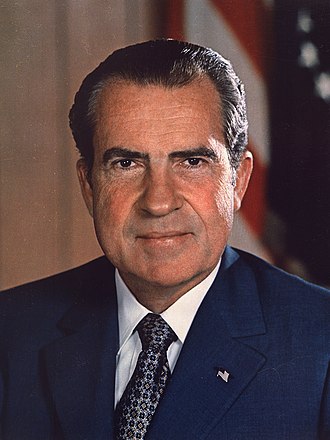
Richard M. Nixon served as the 37th President of the United States from January 1969 until his resignation in August 1974. In February 1971, he ordered the installation of a secret voice-activated taping system in the White House to preserve a historical record of his administration. Until the system's existence was revealed and dismantled in July 1973, the tapes captured Nixon directing major foreign policy initiatives, such as the opening to China, as well as his central role in the Watergate cover-up.
What Nixon talks about on the tapes
White House operations 4,718Presidential scheduling 2,225Public relations 1,784Presidential schedule 1,782Vietnam War 1,693Logistics 1,650Manolo Sanchez 1,626White House communications 1,400White House administration 1,399Presidential communication 1,243Henry Kissinger 1,191Foreign Policy 1,183
Conversations (21,010)
— Page 163 of 211President Nixon and H. R. Haldeman met to coordinate communication strategies regarding the 1974 federal budget and manage the President’s increasingly demanding schedule. They discussed drafting a letter to Republican members of Congress to promote the administration’s fiscal agenda and debated the logistics of high-level meetings, specifically regarding POW/MIA families and Republican leadership. Additionally, the pair touched upon the potential role of George H.W. Bush in the administration and the need to streamline presidential engagements to improve efficiency.
President Nixon and H. R. Haldeman met to strategize on managing Congressional resolutions to prevent unwanted legislative outcomes. The pair consulted with Stephen B. Bull regarding the President's schedule and the coordination of specific Senate resolutions. They tasked staff with gathering further congressional input by 11:00 a.m. to ensure the administration's objectives were properly positioned in the House and Senate.
President Nixon met with Phyllis Galanti, Darlene Sadler, and Helene Knapp, representatives of the National League of Families of American Prisoners of War and Missing in Action in Southeast Asia. The brief meeting centered on the plight of American servicemen held captive or missing during the Vietnam War. No substantive policy decisions were recorded during this short interaction.
President Nixon met with bipartisan Congressional leaders, cabinet members, and staff to outline the administration’s strategy for the 1973 and 1974 federal budgets, emphasizing a commitment to avoiding tax increases. The President defended his use of impoundment to control spending and curb inflation, arguing that Congress must share the responsibility of fiscal discipline or face the political consequences of tax hikes. The discussion also addressed the economic impact of the Vietnam cease-fire, defense budget priorities, and the need for greater cooperation between the executive and legislative branches to manage spending levels.
President Nixon and John Ehrlichman discuss political strategy regarding the 1974 budget and the congressional confirmation of Peter M. Flanigan. They deliberate on press messaging to leverage opposition against potential tax increases and review the responsiveness of Democratic leaders like Wilbur Mills to the administration's firm fiscal stance. Additionally, the President briefly addresses administrative scheduling with Stephen B. Bull regarding upcoming meetings, including sessions with POW wives.
President Nixon held a ceremonial gathering in the Cabinet Room with key staff from the Office of Management and Budget and the Department of Health, Education, and Welfare to sign the 1974 Budget Message. The meeting served primarily as an opportunity for the President to acknowledge the career civil servants in attendance, noting their years of service and the vital role they played in federal operations. Nixon shared lighthearted personal anecdotes about his own early work experience while distributing souvenir pens to those involved in the budget's development.
President Nixon met with his aide Stephen B. Bull in the Oval Office to discuss scheduling matters. The primary focus of the brief conversation was the arrangements for a meeting with Adam Malik. No further significant developments or policy decisions were recorded during this session.
President Nixon met with his aide Stephen B. Bull in the Oval Office to coordinate his daily schedule and upcoming engagements. The brief discussion focused on administrative logistics regarding meetings with William E. Timmons and Indonesian Foreign Minister Adam Malik. No major policy decisions were recorded during this brief scheduling review.
President Nixon met with William E. Timmons, Rose Mary Woods, and Stephen B. Bull to discuss the administration's strategy regarding the 1974 budget, potential tax increases, and congressional relations. The participants reviewed the successful passage of a recent congressional resolution and coordinated the distribution of the President’s upcoming radio speech to Republican allies. Additionally, the group addressed logistical arrangements for upcoming state dinners, specifically focusing on managing guest lists and seating configurations to better accommodate political figures like Senator Hugh Scott.
President Nixon, Henry Kissinger, and Indonesian Foreign Minister Adam Malik met to discuss the positive international reaction to the recently signed Vietnam peace agreement. The participants reviewed favorable responses from various global powers and the perceived strengthening of Nixon's political position. Additionally, the group touched upon the strategic importance of Indonesia and Southeast Asia, with Nixon emphasizing a commitment to continued economic and geopolitical cooperation.
President Nixon met with his personal secretary, Rose Mary Woods, to coordinate arrangements for upcoming funeral services. The discussion focused on logistical planning involving the Capitol, the National Cathedral, and the involvement of Billy Graham. Additionally, the two reviewed the President’s schedule at the Executive Office Building and addressed a memorandum from James D. Hughes to H. R. Haldeman.
President Nixon met with his aide Stephen B. Bull to coordinate logistical adjustments to his morning schedule. The discussion centered on delaying certain appointments and setting a specific time for an important telephone call. Nixon provided clear instructions for Bull to manage communications with expected parties regarding these timing changes.
President Nixon met with his senior advisors and South Vietnamese officials, Tran Kim Phuong and Tran Van Lam, to discuss the recent Vietnam ceasefire and the importance of continued U.S. military and economic support for South Vietnam. Nixon emphasized the necessity of a strong, unified front against North Vietnamese aggression while expressing frustration with domestic media coverage and political opposition regarding the war. During the meeting, the participants coordinated plans for future high-level visits and strategies to maintain the stability of the South Vietnamese government under President Thieu.
President Nixon, H. R. Haldeman, and Ronald Ziegler met to discuss the administration's struggle to manage public perception and media relations regarding the Vietnam peace settlement. The President expressed frustration with Henry Kissinger’s tendency to court favor with the press, insisting that he must prioritize communicating the President's vision and accomplishments in foreign policy rather than focusing on himself. Nixon directed his staff to coordinate a more aggressive and unified effort to secure positive media coverage and public support, specifically noting that he needed to maintain firm control over the administration's messaging.
President Nixon requested that the White House operator connect him with his Press Secretary, Ronald L. Ziegler. This brief administrative call served as a precursor to a more substantive discussion with his aide. No further dialogue or policy decisions were captured in this specific exchange.
President Nixon met briefly with an unidentified woman in his Old Executive Office Building workspace. The interaction consisted of a short exchange of greetings before the woman departed. No substantive policy discussions or significant political developments were recorded during this brief encounter.
President Nixon met with his personal valet, Manolo Sanchez, in the Old Executive Office Building. The brief interaction concluded as Sanchez departed the office immediately following the meeting. No substantive policy discussions or administrative decisions were recorded during this brief encounter.
President Nixon met with his personal valet, Manolo Sanchez, to discuss personal wardrobe arrangements. The brief interaction focused specifically on the selection and placement of a jacket. No broader political or administrative decisions were made during this exchange.
President Nixon and aide Stephen B. Bull reviewed the presidential schedule, focusing on the logistical arrangements for upcoming Cabinet swearing-in ceremonies and pending confirmations. The discussion addressed the scale and protocol for these events, with Nixon deciding to limit group ceremonies to undersecretaries and agency heads while excluding assistant secretaries to streamline the process. They also coordinated details regarding a scheduled meeting with Eisaku Sato and a private session with Herbert Stein.
President Nixon and H. R. Haldeman discuss the editing and refinement of audio recordings, specifically focusing on reducing the duration of a lengthy tape. They address the technical constraints of their playback equipment and the necessity of trimming content to ensure the material fits within desired time parameters. The conversation centers on the practical challenges of managing the President's personal tape archives.
President Nixon and H. R. Haldeman met to discuss strategies for shaping public perception and press relations following the 1972 election and the Vietnam peace settlement. The conversation focused on the placement of favorable articles and editorials, emphasizing the need to utilize external authors to maintain distance from the White House. Additionally, they evaluated potential political maneuvers, including the role of John Connally and the management of ongoing press inquiries regarding the President's schedule and political opponents.
President Nixon held a brief, unscheduled interaction with the White House operator while working in the Executive Office Building. This engagement served as a routine communication check or request for logistical assistance regarding the President's ongoing telephone connectivity. No significant policy developments or substantive political discussions were recorded during this brief exchange.
President Nixon consulted Press Secretary Ronald Ziegler about delaying the release of Herbert Stein’s economic report to avoid competition with other news cycles. Despite Ziegler's concerns regarding legal requirements and legislative constraints, Nixon insisted on shifting the briefing to an AM release schedule. The President directed Ziegler to prioritize this change, dismissing potential congressional backlash.
President Nixon directed Press Secretary Ronald L. Ziegler to release a sensitive announcement to the press by 3:00 p.m. for the next morning's news cycle. Despite potential political friction, Nixon explicitly instructed Ziegler to disregard congressional concerns regarding the timing. This directive was intended to prioritize the public release strategy as a critical component of a larger administration initiative.
President Nixon contacted the White House operator to initiate a telephone call with Pat Buchanan. The interaction served strictly as a logistical request to connect the President with his advisor. No substantive policy matters or discussions were addressed during this brief exchange.
President Nixon held a brief, informal communication with the White House operator to facilitate a connection or confirm administrative details. The exchange remained minimal and lacked substantive policy discussion or strategic decision-making. No further actions were recorded following this administrative contact.
President Nixon consults with Patrick J. Buchanan regarding the manuscript for Buchanan's upcoming book. Nixon expresses strong disapproval of a passage describing the anti-war peace movement as possessing moral courage and conviction. Buchanan quickly agrees to remove the controversial language from the text, successfully satisfying the President's demand.
President Nixon held a brief, informal check-in with Patrick Buchanan, though the transcript provides insufficient context to determine the specific subject matter discussed. The exchange suggests a casual administrative update or a follow-up to previous ongoing business. No substantive policy decisions or action items were captured during this extremely short interaction.
President Nixon contacted the White House operator to facilitate a telephone connection with his special assistant, Patrick J. Buchanan. The brief exchange served as a procedural request to initiate communication with a key staff member. No further policy discussion or substantive deliberation occurred during this specific interaction.
President Nixon met with his personal valet, Manolo Sanchez, in the Old Executive Office Building to review the President's upcoming schedule. The discussion centered on managing the President's personal workload and coordinating dinner arrangements. No further substantive policy matters were recorded during this brief administrative exchange.
President Nixon met with his personal valet, Manolo Sanchez, to discuss logistical arrangements regarding the President's schedule. The conversation served as a brief coordination check between the two. No major policy decisions were reached during this interaction.
President Nixon and Press Secretary Ronald Ziegler coordinate the administration's media strategy regarding the recently finalized Vietnam peace settlement. They discuss the timing and management of press releases for morning newspapers, the logistics of Henry Kissinger’s potential trip to Hanoi, and the necessary coordination with Congress for upcoming public announcements. The conversation focuses on ensuring the administration maintains control over the narrative surrounding the Vietnam agreement and the President's related remarks.
President Nixon met with his personal valet, Manolo Sanchez, to discuss logistical arrangements for an upcoming dinner. The conversation centered on the President's schedule and travel plans involving Pat Nixon and Julie Nixon Eisenhower, specifically regarding a visit to New York. No major policy decisions were recorded during this brief administrative exchange.
President Nixon met with his personal aide, Manolo Sanchez, to coordinate late-afternoon logistics. The primary topic of the brief discussion concerned the scheduling of a barber appointment for the President. The conversation concluded with the President confirming the timing of this commitment with Stephen B. Bull.
President Nixon met with his personal aide, Manolo Sanchez, to discuss the logistical handling of various personal items. The two men coordinated the placement of specific objects into a case, noting that Rose Mary Woods had already received similar items. This brief interaction focused on the administrative organization of the President's personal effects.
President Nixon and H. R. Haldeman met to coordinate the scheduling and logistics of an upcoming meeting with Henry Kissinger. The primary focus involved confirming Kissinger's current location to ensure his prompt arrival at the Executive Office Building. No further substantive policy decisions were documented during this brief administrative exchange.
President Nixon met with his personal valet, Manolo Sanchez, to attend to routine administrative and personal matters. The discussion primarily focused on logistical arrangements, specifically the placement of a refreshment order and coordination of the President's schedule regarding a barber appointment facilitated by Stephen B. Bull. These brief interactions underscore the daily operational tasks managed by White House staff to maintain the President’s personal schedule.
President Nixon met with Manolo Sanchez, his longtime personal valet, in the Executive Office Building. The primary purpose of the brief encounter was the delivery of an unknown item to the President. No further substantive policy matters or official actions were recorded during this interaction.
President Richard Nixon met with his personal valet, Manolo Sanchez, in the Old Executive Office Building to review the President's upcoming schedule. The discussion served as a brief administrative coordination of the President's personal agenda and daily obligations. No significant policy decisions were recorded during this brief encounter, which concluded before the President's subsequent engagements.
President Nixon and aide Stephen B. Bull reviewed the logistics for upcoming administrative events, including the signing of the State of the Union message and various Cabinet swearing-in ceremonies. The discussion focused on managing the President's schedule, specifically addressing the appropriate protocols for photographs and interactions with staff and their families. Nixon explicitly directed Bull to streamline the transition events by eliminating unnecessary handshaking and family photo sessions to maintain a professional focus during the proceedings.
President Nixon consulted with an associate regarding the potential booking of pianist Roger Williams for a performance. The discussion focused on Williams's classical musical abilities and his suitability for an upcoming event in New York. Nixon ultimately directed the individual to proceed with making the necessary arrangements for the performance.
President Richard M. Nixon met with British Prime Minister Edward Heath, Sir Burke Trend, Henry Kissinger, and George Shultz to discuss diplomatic and policy matters. Due to the highly fragmentary and incoherent nature of the provided transcript, it is impossible to discern substantive policy developments or specific action items from this record. The conversation appears to lack a coherent topical focus, precluding a meaningful historical summary of the proceedings.
President Richard Nixon and Henry Kissinger met to discuss the status and implementation of the Vietnam peace settlement following the Paris Accords. They analyzed specific provisions regarding elections, the National Council, and the management of prisoner of war (POW) returns. Additionally, the pair coordinated strategies for managing press relations and briefed each other on upcoming diplomatic travel and internal scheduling requirements.
President Nixon and H. R. Haldeman met briefly in the Old Executive Office Building to review the President's upcoming daily schedule. The exchange served as a logistical check-in to coordinate administrative arrangements and finalize appointments. No major policy decisions were recorded during this short planning session.
President Richard Nixon met with his valet, Manolo Sanchez, in the Old Executive Office Building to coordinate administrative details regarding the President's evening dinner schedule. The brief discussion focused specifically on finalizing the timing for the meal. No further significant policy or political developments were recorded during this interaction.
President Nixon and H. R. Haldeman discussed concerns regarding Henry Kissinger’s public relations strategy and his perceived efforts to distance himself from the President’s Vietnam policies. Haldeman reviewed his recent attempts to counsel Kissinger on the necessity of reinforcing the President's central role in the peace process and the strategic validity of the December 1972 bombing campaign. They determined that Kissinger must stop subtle posturing that encourages the media to separate his reputation from the administration's, deciding that he should explicitly emphasize the President’s decisive leadership in future public appearances.
President Richard M. Nixon met with his valet, Manolo Sanchez, in the Old Executive Office Building to handle personal administrative matters. The brief interaction focused exclusively on the President's food order. No other policy or political issues were discussed during this short exchange.
President Nixon consulted with a White House operator to facilitate an outgoing telephone communication. This brief interaction served as a logistical bridge to initiate a call from the Executive Office Building. No further substantive policy or strategic discussions occurred during this brief exchange.
President Nixon held a brief administrative interaction with the White House operator while located in the Old Executive Office Building. The recording consists only of a valediction, indicating the conclusion of a communication session. No substantive policy discussions or decision-making processes occurred during this exchange.
President Nixon speaks with Patrick J. Buchanan to coordinate the preparation of briefing materials for Press Secretary Ronald L. Ziegler. The President emphasizes his desire to incorporate Henry Kissinger's specific perspectives into responses for upcoming inquiries. Buchanan confirms that the necessary information is being gathered and arranges to consult with Kissinger that evening.
President Nixon held a brief introductory meeting with Secretary of Labor Peter J. Brennan following Brennan's confirmation. The discussion served as a formal greeting between the President and his new cabinet member. No substantive policy decisions or action items were addressed during this minute-long exchange.
President Nixon contacted the White House operator to facilitate a telephone connection to his advisor, Patrick J. Buchanan. The brief exchange served as a routine administrative request to initiate communication with a member of the President's staff. No substantive policy discussions occurred during this brief request for the operator's assistance.
President Nixon held a brief administrative interaction with a White House operator in his Old Executive Office Building office. The recording primarily serves as a placeholder for a functional telecommunications exchange rather than a policy discussion. No significant substantive decisions or political developments occurred during this brief communication.
President Nixon directed Patrick J. Buchanan to gather data on civilian casualties attributed to North Vietnamese and Viet Cong forces during the Vietnam War. This request was intended to counter what the President perceived as biased and distorted reporting by the New York Times regarding war atrocities. Nixon specifically sought evidence of deliberate targeting and assassinations to highlight the enemy's disregard for civilian life.
President Nixon requested an urgent assessment concerning civilian casualties and infrastructure destruction resulting from recent military operations. He sought specific data on the number of non-combatant deaths and associated collateral damage to inform his ongoing briefings. This brief exchange prioritized the compilation of accurate casualty figures for administrative review.
President Nixon contacted the White House operator to request a telephone connection with his Chief of Staff, H.R. Haldeman. The operator informed the President that Haldeman was currently at his residence. No further discussion occurred during this brief administrative exchange.
President Nixon met with his personal valet, Manolo Sanchez, in the Old Executive Office Building. The brief interaction was centered on a routine request for refreshments. No substantive political or policy discussions were recorded during this period.
President Nixon met with his personal valet, Manolo Sanchez, in the Old Executive Office Building to discuss personal arrangements. The conversation focused on the coordination of a refreshment order for the President. No further administrative or political policy decisions were recorded during this brief encounter.
President Nixon held an undocumented meeting in the Old Executive Office Building with an unidentified individual. While no transcript or descriptive records exist to detail the dialogue, the brief encounter concluded with the President offering his assent to the unknown party's proposal. The lack of archival documentation leaves the specific policy or administrative subject matter of this engagement historically unresolved.
President Nixon met with an unknown individual in the Executive Office Building for an informal discussion. The participants briefly engaged in casual conversation regarding the status and maintenance of the President's smoking pipe. No substantive policy matters or official administrative decisions were recorded during this brief exchange.
President Nixon held a brief administrative interaction with the White House operator to facilitate a telephone connection. The conversation served as a functional bridge to initiate a separate, substantive call. No major policy discussions or executive decisions occurred during this brief exchange.
President Nixon and H. R. Haldeman coordinated the rescheduling of a meeting with John B. Connally, who postponed his appointment due to urgent negotiations with Algerian representatives. Haldeman confirmed the meeting would occur the following morning, and Nixon requested a briefing on the subject matter prior to his own scheduled afternoon discussion with Connally. The call served to adjust the President's calendar and ensure adequate preparation regarding the Algerian diplomatic situation.
President Nixon and H. R. Haldeman held a brief meeting to discuss the status of an unidentified committee. The exchange suggests the committee had been disbanded or had failed to reconvene following previous proceedings. No further substantive actions or strategic decisions were recorded during this brief encounter.
President Nixon contacted the White House operator to place an outgoing call to Charles W. Colson and his wife. This brief exchange served exclusively to initiate a connection with the Colson residence. No further policy or administrative matters were addressed during this short administrative interaction.
President Nixon held a brief administrative interaction with the White House operator while located in the Old Executive Office Building. The recording captures a routine exchange regarding telephone connectivity or call processing. No substantive policy discussions or significant political decisions were recorded during this brief communication.
President Nixon and Charles Colson discussed strategies for managing public and press perception following the recent Vietnam peace settlement. They reviewed the administration's efforts to counter negative media coverage, mobilize sympathetic columnists, and highlight the support of allies such as John Connally and Barry Goldwater. The conversation also touched upon the desire to maintain political pressure on critical news organizations and "elitist" opponents who, in their view, were frustrated by the successful conclusion of the war.
President Richard M. Nixon and Charles W. Colson met to discuss the perceived opposition of the political establishment toward the administration. The conversation reflects a sense of frustration regarding external resistance and the perceived failure of traditional allies to support White House initiatives. The participants touch upon various vague internal grievances and strategic concerns, though the fragmented nature of the transcript makes it difficult to discern specific actionable outcomes.
Henry Kissinger informs President Nixon that Senator John Stennis was shot twice during a robbery outside his home and is currently undergoing surgery at Walter Reed Army Hospital. The two discuss the potential political implications of the shooting, specifically noting that the incident elevates Senator Stuart Symington to acting chairman of the Armed Services Committee. Nixon decides to personally contact Mrs. Stennis to express his concern regarding the Senator’s condition.
President Nixon and Henry Kissinger engaged in a brief, lighthearted exchange to share a laugh regarding a recent event. The conversation served as a casual follow-up to a previous discussion, focusing on the perceived humor and successful outcome of the incident. No substantive policy matters or formal decisions were addressed during this short interaction.
President Nixon directs the White House operator to locate Senator John C. Stennis following reports that the Senator had been shot. The President requests immediate information regarding the Senator's current hospital location and asks to be connected to his wife, Coy H. Stennis. This urgent inquiry reflects the administration's immediate response to the violent incident involving the high-ranking legislator.
President Nixon expressed frustration to the White House operator regarding a telephonic connection to a hospital. He insisted that the operator prioritize the request to ensure the call was completed successfully. The exchange highlights the President's urgent demeanor concerning sensitive or time-critical communications.
President Nixon consulted with his aide Stephen B. Bull to coordinate an urgent communication via the White House operator. The brief exchange focused on facilitating an outgoing telephone call to an unnamed individual. No further substantive policy matters or major developments were recorded during this brief administrative interaction.
President Nixon consulted with Stephen B. Bull to gather additional details regarding the shooting of Senator John C. Stennis. Bull provided updates on the Senator's injuries, his status in exploratory surgery, and the circumstances surrounding what appeared to be an attempted robbery. The call served to ensure the President was accurately informed before he placed a follow-up outreach call to Mrs. Stennis.
President Nixon called Coy H. Stennis to express his concern and offer support following the shooting of Senator John C. Stennis during a robbery outside his home. Mrs. Stennis recounted the details of the attack, describing the young assailants and confirming that the Senator remained conscious after being struck. President Nixon emphasized the Senator's vital importance to the country and instructed his medical team to ensure the Senator received the highest level of care at Walter Reed Army Hospital.
President Nixon spoke with Coy Stennis to express his concern and offer support following the attempted assassination of Senator John C. Stennis. The discussion focused on the senator’s medical status, the circumstances of the shooting, and the importance of his recovery to the nation. Nixon affirmed the significance of the senator’s role in government and committed to visiting him once his condition allowed.
President Nixon contacted the White House operator to facilitate a telephone connection with Stephen B. Bull. This brief administrative exchange served as the precursor to a subsequent conversation between the President and his aide. No further policy or substantive matters were addressed during this interaction.
President Nixon consulted with a White House operator to facilitate an outgoing call. The brief exchange focused on establishing telephonic communication, serving as a procedural step in the President's administrative workflow. No substantive policy matters or political developments were addressed during this short connection.
President Nixon and Stephen B. Bull discussed the ongoing investigation into the shooting of Senator John C. Stennis. The President inquired about the status of the police report and specific rumors concerning two potential suspects mentioned by Mrs. Stennis. Bull confirmed that authorities had not yet apprehended any suspects in the case.
President Nixon and Stephen B. Bull briefly coordinate the logistics surrounding the retrieval of a police report. They confirm that the document will be available for pickup between 3:00 and 7:00 p.m. This short exchange ensures that staff members are prepared to secure the requested file within the specified timeframe.
President Nixon contacted the White House operator to facilitate an immediate telephone connection with his personal aide, Stephen B. Bull. The brief interaction served as a logistical step to reach a member of the president's inner staff. No further substantive policy matters were addressed during this specific operator-assisted call.
President Nixon held a brief communication with the White House operator from his office in the Old Executive Office Building. The recording captures routine administrative interaction rather than substantive policy discussion or strategic decision-making. No formal developments or action items resulted from this brief contact.
President Nixon directed Stephen B. Bull to urgently gather information regarding the shooting of U.S. Senator John C. Stennis, expressing extreme dissatisfaction with current bureaucratic delays. Nixon bypassed the Secret Service and the Situation Room, explicitly ordering Bull to mobilize the FBI and Washington Metropolitan Police immediately. He further demanded that John W. Dean III be activated to coordinate these efforts and insisted on receiving a comprehensive update within ten minutes.
President Nixon directed Stephen B. Bull to coordinate an immediate investigation into an unspecified security violation involving a United States Senator. Nixon demanded that the FBI, the Washington police, and other relevant authorities be mobilized instantly, explicitly sidelining the Secret Service. The President emphasized the urgency of the matter by setting a ten-minute deadline for a status report and insisting that John Dean facilitate the FBI's involvement.
President Nixon met briefly with his personal valet, Manolo Sanchez, in the Old Executive Office Building. While the exact substance of their dialogue is not fully captured, the meeting included a reference to the shooting of Senator John C. Stennis. The brief encounter concluded immediately after this exchange.
President Nixon met with his personal aide, Manolo Sanchez, to discuss a recent communication involving Charles W. Colson. The conversation centered on the timing and circumstances of a follow-up call, with Nixon clarifying that he had already addressed the matter with another individual. The interaction functioned primarily as a brief administrative coordination regarding the President's ongoing correspondence.
President Nixon consulted with Stephen B. Bull regarding the status of the investigation into the shooting of Senator John C. Stennis. Bull provided an update on the coordination between the FBI, under L. Patrick Gray, and the Metropolitan Police to track down the suspects. Nixon demanded an aggressive dragnet in the neighborhood and requested that John Dean or Pat Buchanan prepare a status report on gun control legislation by the following morning.
President Nixon and Stephen B. Bull engage in a brief, informal exchange regarding the acquisition of a cannon currently located in a parking lot. The President expresses interest in obtaining the item, and Bull acknowledges the request. The conversation concludes with a mutual agreement to proceed with securing the artifact.
President Nixon contacted the White House operator to facilitate a telephone connection with his personal aide, Stephen B. Bull. The brief communication served solely as a logistical request to initiate this administrative call. No further substantive policy discussions occurred during this brief exchange.
President Nixon initiated a brief exchange with the White House operator to facilitate an outgoing communication. The primary purpose of the contact was to place a telephone call to an unnamed party. No substantive policy matters or significant decisions were addressed during this short administrative interaction.
President Nixon instructed his aide, Stephen B. Bull, to contact Press Secretary Ronald L. Ziegler regarding the shooting of Senator John C. Stennis. Nixon directed that an announcement be made emphasizing that the President had formally ordered an FBI investigation into the incident. This conversation served to establish the administration's public posture and demonstrate the President’s proactive involvement in the federal response.
President Nixon directs his aide, Stephen B. Bull, to distribute stickers intended as gifts for the FBI. This brief exchange focuses on the logistical handling of these items to ensure their delivery. The conversation concludes with the President confirming the purpose of these materials.
President Nixon contacted the White House operator to place an outgoing call to special counsel Charles W. Colson. The exchange was strictly procedural, serving as the administrative request to connect the President with his advisor. No policy discussions or substantive deliberations occurred during this brief interaction.
President Nixon consulted with a White House operator to facilitate an outgoing call. The interaction primarily served an administrative purpose to connect the President with a third party. No substantive policy discussions or major decisions were recorded during this brief communication.
President Nixon and Charles Colson discuss the recent shooting of Senator John C. Stennis, expressing concern over the political impact and the potential for a violent backlash in the South. Nixon mandates that the FBI take immediate jurisdiction over the investigation and instructs his staff to publicize his personal involvement to ensure a robust law enforcement response. The conversation also briefly touches on the political implications of gun control legislation regarding 'Saturday night specials' and the impact of busing policies.
President Nixon and Charles W. Colson engage in a brief, disjointed exchange that briefly touches upon investigations involving the FBI and the Secret Service. The conversation lacks a clear agenda, appearing to reference a shooting incident involving a U.S. Senator and expressing frustration over ongoing security or intelligence matters. No formal policy decisions or concrete action items are established during the brief interaction.
President Nixon initiates a brief request to the White House operator to be connected with Press Secretary Ronald L. Ziegler. The conversation serves as a logistical communication to facilitate an immediate discussion between the President and his press aide at the Executive Office Building. No substantive policy matters are discussed beyond the administrative act of establishing the connection.
President Nixon initiates a brief request for the White House operator to place an outgoing call. The conversation is procedural, serving as a gateway for the President to connect with another party. No substantive policy discussions occur during this brief interaction.
President Nixon initiates a routine administrative request for the White House operator to connect him with domestic policy advisor John D. Ehrlichman. The call serves as a brief logistical bridge to facilitate a subsequent conversation between the President and his senior aide. No substantive policy matters were discussed during this brief exchange.
President Nixon contacted the White House operator to initiate a telephone call to his aide, Patrick J. Buchanan. The brief exchange served as a routine administrative request to establish a line of communication with the staff member. No further policy discussions or substantive developments took place during this brief interaction.
President Nixon consulted with the White House operator to facilitate a telephonic connection. This brief interaction served administrative purposes to initiate external communication. No further substantive policy matters or specific decisions were recorded during this exchange.