Nixon, Richard M. (President)
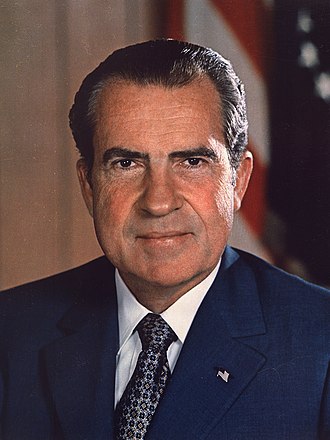
Richard M. Nixon served as the 37th President of the United States from January 1969 until his resignation in August 1974. In February 1971, he ordered the installation of a secret voice-activated taping system in the White House to preserve a historical record of his administration. Until the system's existence was revealed and dismantled in July 1973, the tapes captured Nixon directing major foreign policy initiatives, such as the opening to China, as well as his central role in the Watergate cover-up.
What Nixon talks about on the tapes
White House operations 4,718Presidential scheduling 2,225Public relations 1,784Presidential schedule 1,782Vietnam War 1,693Logistics 1,650Manolo Sanchez 1,626White House communications 1,400White House administration 1,399Presidential communication 1,243Henry Kissinger 1,191Foreign Policy 1,183
Conversations (21,010)
— Page 18 of 211President Nixon contacted the White House operator to facilitate a telephone connection with his National Security Advisor, Henry A. Kissinger. The exchange serves as a routine administrative request to initiate an urgent high-level communication. No substantive policy matters were discussed during this brief logistical coordination.
President Nixon and Henry Kissinger discuss the importance of upcoming media briefings with representatives from Time and Newsweek, specifically mentioning journalists Jerrold L. Schecter and John L. Steele. Nixon emphasizes the critical nature of the coverage expected for the following week and directs Kissinger to ensure he personally speaks with these correspondents before their respective deadlines. Kissinger confirms his intent to meet with the reporters to manage the administration's messaging.
President Nixon and Press Secretary Ronald Ziegler reviewed the overwhelmingly positive television network coverage of the administration's announcement regarding the Strategic Arms Limitation Talks (SALT). Ziegler detailed favorable commentary from ABC, NBC, and CBS, noting that anchors like Walter Cronkite characterized the negotiations as a potential breakthrough for global peace. To maintain this positive momentum, Nixon directed the team to expand their media outreach strategy by engaging with major news magazines through additional background briefings led by Henry Kissinger.
President Nixon and Stephen B. Bull spoke briefly to coordinate the logistical details for the President’s upcoming speech to a Tulane University group at the Washington Hilton. The conversation focused on confirming departure arrangements for the event. The President acknowledged the plan and signaled his intention to depart shortly thereafter.
President Nixon initiates a brief telephone call to White House speechwriter and advisor William L. Safire. The communication serves as a direct request for the operator to connect him with Safire for an immediate discussion. No further substantive policy or administrative details were captured in this brief exchange.
President Nixon met with H.R. Haldeman, Henry Kissinger, and other advisors to review his upcoming schedule, including appearances at the INTELSAT conference and a National Medal of Science ceremony. The discussion covered the President’s recent surprise visit to a Tulane alumni dinner, various domestic policy issues such as school desegregation and environmental regulations, and potential personnel moves within the administration. Additionally, the President and his staff strategized on handling media coverage of the SALT agreement and discussed the importance of presenting a confident, coordinated economic policy in anticipation of upcoming meetings in Europe.
President Nixon initiates a brief administrative request to the White House operator to terminate a current connection. This exchange serves as a logistical instruction regarding telephone communications. No broader policy or political matters are addressed in this short interaction.
President Nixon consulted speechwriter William Safire for assistance in refining rhetoric for an upcoming presentation of science medals. Nixon sought to incorporate historical quotes from Thomas Jefferson and Alfred E. Smith to challenge the contemporary anti-science sentiment and pushback against technological progress. Safire agreed to research the specific phrasing of the requested quotes and identify additional references to Benjamin Franklin that would resonate with an audience of scientists.
President Nixon consulted speechwriter William Safire to refine remarks for an upcoming presentation of science medals. The President requested that Safire incorporate a paraphrase of Thomas Jefferson regarding the preference of hope over fear to ensure the speech resonated with the audience. Nixon finalized the messaging strategy, intending to utilize the draft for an event scheduled for early June.
President Nixon and Alexander P. Butterfield met to coordinate the logistics and presentation strategy for the National Medals of Science awards ceremony. They discussed the physical handling of the medals, specifically debating the most effective way to present the awards to recipients without creating awkward or cumbersome visual moments. The discussion focused on streamlining the protocol to ensure the ceremony proceeded smoothly and with proper decorum.
President Nixon met with his personal valet, Manolo Sanchez, in the Oval Office to address personal service needs. The interaction was brief and limited to a request for coffee. No substantive policy or political discussions were recorded during this engagement.
President Nixon met with his SALT delegation, including Henry Kissinger and Gerard C. Smith, to strategize for upcoming negotiations in Helsinki and manage public and bureaucratic expectations. The discussion focused on maintaining a firm stance on the 'Safeguard' ABM program while emphasizing the need to keep details confidential to prevent premature leaks and political opposition. Nixon stressed that the delegation should project strength and avoid defensiveness, ultimately aiming to finalize a comprehensive treaty that would serve American security interests.
President Nixon met with Alexander P. Butterfield for a brief discussion regarding a Senate request. The two men addressed the procedural or administrative handling of this legislative inquiry. No further substantive details regarding the nature of the request or specific action items were recorded during this brief interaction.
President Nixon and Stephen B. Bull met briefly to discuss adjustments to the President's daily itinerary. Bull informed the President that his schedule was running slightly behind, necessitating revisions to accommodate upcoming appointments. The two finalized the timing for the President to return to his planned sequence of events.
President Nixon met with Secretary of State William P. Rogers to discuss complex foreign policy strategies involving the Soviet Union, the People's Republic of China, and the Middle East. Nixon emphasized the importance of leveraging the Soviet Union's underlying anxiety regarding China while maintaining a careful, high-level approach to diplomatic overtures with the PRC. Regarding the Middle East, the President instructed Rogers to take a firm stance in negotiations, expressing personal willingness to apply pressure on Israel to reach a settlement while critiquing the current Israeli leadership.
President Nixon met briefly with Secretary of State William P. Rogers and aide Stephen B. Bull to coordinate scheduling and logistics for upcoming appointments. The participants finalized the arrangements for an impending meeting and confirmed the availability of staff support. The discussion concluded with the parties departing to continue their daily schedules.
President Nixon met with Olympic swimmer Donald Schollander and Jonathan Rose to express his appreciation for Schollander’s achievements and dedication. The conversation centered on the societal value of athletics, the importance of discipline and leadership in sports, and comparisons of coaching styles across various disciplines. During the meeting, President Nixon presented Schollander with a pair of presidential cuff links.
President Nixon met with his aide Stephen B. Bull in the Oval Office to coordinate logistics for a film screening in the White House Family Theatre. The brief discussion focused on the physical setup and preparation of the theater space for the upcoming showing. No major policy decisions were made during this administrative interaction.
President Nixon met with Mr. and Mrs. Sidney Stevens, Mr. and Mrs. Alex D. Steinkamp, and Robert H. Finch for a social visit in the Oval Office. The discussion included the guests' recent tour of the Treasury Department and a proposal from the guests to simplify federal revenue sharing by utilizing local county treasurers. The President concluded the meeting by presenting the guests with commemorative gifts and discussing upcoming events at the White House.
President Nixon met with his personal aide, Stephen B. Bull, in the Oval Office to discuss the details of the President’s upcoming daily schedule. The two reviewed logistical arrangements and planning for official engagements. No major policy decisions or significant developments were recorded during this brief administrative briefing.
President Nixon instructed the White House operator to place an outgoing call to National Security Advisor Henry Kissinger. This brief administrative interaction served as a logistical step to facilitate direct communication between the President and his advisor. No substantive policy discussions were recorded during this short connection process.
President Nixon and Henry Kissinger discussed the media's coverage of the ongoing Strategic Arms Limitation Talks (SALT), specifically focusing on how major outlets like The New York Times and The Washington Post were portraying the negotiations. Nixon expressed frustration with the press's characterization of the potential agreement, viewing their critical stance as an attempt to protect their past editorial positions. Ultimately, they agreed that Kissinger should maintain a positive, firm narrative during upcoming press briefings, emphasizing the importance of a simultaneous approach to both offensive and defensive weapons.
President Nixon contacted the White House operator to facilitate a personal telephone call to First Lady Pat Nixon. The brief interaction served solely as a request for the operator to connect the President to his wife. No policy matters or administrative business were discussed during this brief communication.
President Nixon met with H. R. Haldeman, George Shultz, John Ehrlichman, and Henry Kissinger to discuss several pressing domestic and foreign policy issues. The team reviewed Peter Peterson's potential new roles in intelligence and government reorganization, addressed political concerns regarding environmental regulations, and formulated plans to require an "economic impact statement" for future agency decisions. Additionally, the President and Kissinger finalized plans for a diplomatic meeting with South Vietnamese President Nguyen Van Thieu, deciding to prioritize the regional impact over potential negative reactions from American liberals.
President Nixon met with Herbert Stein, George Shultz, John Connally, and Arthur Burns to discuss the state of the U.S. economy, specifically focusing on inflation, sluggish recovery, and steel industry negotiations. The group debated the potential risks of government intervention, including wage-price freezes, while also planning a strategy to better communicate budget deficits and fiscal policy to the American public. Additionally, Nixon emphasized the need for a unified administration voice on economic policy ahead of upcoming international monetary conferences, urging his team to maintain a confident and assertive posture regarding U.S. domestic economic strength.
President Nixon met with Robert D. Murphy and Alexander M. Haig, Jr. to discuss the geopolitical implications of the United States' shifting China policy, particularly regarding Taiwan's status in the United Nations. The participants analyzed the political stability and leadership of Chiang Kai-shek and explored the feasibility of a 'two-China' policy versus the risks of abandoning a long-standing ally. Nixon expressed concern that tactical maneuvering within the UN would fail to win respect from Peking and might instead signal a loss of American resolve to the international community.
President Nixon met with Alexander P. Butterfield to coordinate preparations and review remarks for the President's upcoming schedule on May 22, 1971. The brief discussion focused on finalizing the details of the President's public messaging and agenda for the following day. No significant policy decisions were recorded during this short administrative consultation.
President Nixon met with unidentified individual(s) in the Oval Office to conduct a brief review of his upcoming daily schedule. The discussion focused on logistical planning and the arrangement of his official commitments. No significant policy decisions or substantive developments were recorded during this brief administrative interaction.
President Nixon, H.R. Haldeman, and Alexander Butterfield met to coordinate upcoming presidential remarks and review scheduling logistics. The discussion included planning for an honorary dinner for Nicaraguan President Anastasio Somoza Debayle and television arrangements for the upcoming Lyndon B. Johnson library dedication ceremony. Nixon also expressed his personal preference to avoid future use of a presidential library, favoring his office in San Clemente instead.
President Nixon met with Ronald Ziegler and Alexander Butterfield to coordinate the President's upcoming schedule and social engagements. The discussion focused on logistics regarding a scheduled lunch and a planned meeting with Charles "Bebe" Rebozo. The participants concluded the brief session by clarifying the availability and whereabouts of the individuals involved in these meetings.
President Nixon and Alexander P. Butterfield met to review specific materials, including a speech draft and a press conference transcript. The discussion focused on finalizing the text and organization of these documents for upcoming use. No major policy decisions were reached, as the meeting served primarily as an administrative review of White House communications.
President Nixon met with Stephen B. Bull in the Oval Office to coordinate his personal and professional schedule. The discussion focused primarily on arranging a meeting with Charles G. "Bebe" Rebozo. The interaction served as a brief logistical briefing to manage the President's evening appointments.
President Nixon met with his close friend Charles G. "Bebe" Rebozo to discuss personal logistics and preparations for an upcoming social gathering. The conversation included arrangements for Billy Graham's arrival in Florida, the scheduling of the President's speech for the following day, and coordination with First Lady Pat Nixon regarding dinner plans and guest etiquette. These discussions focused on balancing professional obligations with personal travel and private hospitality.
President Richard Nixon and First Lady Pat Nixon engaged in a brief telephone conversation to coordinate personal plans. The discussion centered on logistics and private matters rather than official government business. No significant policy decisions were made during this exchange.
President Nixon and Henry Kissinger discuss the strategic importance of ongoing negotiations with the Soviet Union and the necessity of establishing clear linkage between various diplomatic issues. They evaluate the political risks of a potential failure in reaching an agreement, characterizing the situation as a critical test of whether the two nations can conduct substantive business. The conversation emphasizes that the administration’s forthcoming public announcement will serve as a definitive gauge of Soviet intentions.
President Nixon and his close associate Charles G. "Bebe" Rebozo held an informal meeting in the Executive Office Building. The brief, fragmentary exchange appears to focus on casual social observations rather than formal policy matters. No substantive administrative decisions or action items were recorded during this session.
President Nixon and his close confidant Charles G. "Bebe" Rebozo engaged in a wide-ranging, informal discussion in the Oval Office covering both personal matters and political strategy. The conversation touched upon the stresses of the presidency, potential political challengers like Ted Kennedy, and the political future of Vice President Spiro Agnew, whom Nixon expressed a desire not to force out of office despite press scrutiny. Additionally, the pair discussed administrative appointments, the merits of various cabinet members such as John Connally, and miscellaneous personal topics including property, finance, and office decor.
President Nixon contacted the White House operator to place an outgoing call to National Security Advisor Henry A. Kissinger. This brief interaction served solely as an administrative bridge to initiate communication with Kissinger. No substantive policy discussions or decisions occurred during this exchange.
President Nixon and Henry Kissinger discuss the favorable media coverage surrounding the administration's progress in the Strategic Arms Limitation Talks (SALT). Kissinger reports on his briefings with prominent journalists, noting that their reporting confirms a growing consensus that the President is achieving a historic breakthrough in U.S.-Soviet relations. The two reflect on their strategic decision-making process since December 1970 regarding the USSR and China, concluding that their diplomatic maneuvering has effectively neutralized political opposition.
President Nixon consulted with the White House operator to facilitate and manage a telephonic connection. The brief exchange focused on logistical coordination regarding the status and potential cancellation of an outgoing call. No substantive policy matters or major decisions were finalized during this communication.
President Nixon initiates a brief telephone call to connect with Alexander P. Butterfield. The President requests that the operator facilitate this communication to reach his Deputy Assistant. No substantive policy discussions or further actions are recorded during this exchange.
President Nixon consulted with the White House operator to facilitate an outgoing call to an unidentified individual. During the brief interaction, the President expressed frustration regarding the current situation, describing it as the worst he had witnessed. No further details regarding the specific subject of the call or subsequent actions were recorded.
President Nixon contacted the White House operator to place a call to Alexander P. Butterfield. Shortly after initiating the request, the President instructed the operator to cancel the call. No further discussion or substantive business was conducted during this brief exchange.
President Nixon and Henry Kissinger discussed strategies for managing Vietnam policy, specifically regarding the timing of a proposed meeting with South Vietnamese President Nguyen Van Thieu. They evaluated the political risks of prematurely announcing an end to combat operations and agreed to delay public actions until mid-June to align with potential developments in negotiations and ongoing diplomatic efforts with the Soviet Union and China. Kissinger advised the President to use a firm, deadline-driven approach with the Soviets regarding a potential summit to avoid being manipulated by their stalling tactics.
President Nixon initiates a request for the White House operator to place a telephone call to Chief of Staff H.R. "Bob" Haldeman. The brief exchange serves as a procedural instruction for the operator to connect the President with his senior advisor. No further substantive discussion occurs during this short segment.
President Nixon and H. R. Haldeman discussed scheduling logistics for upcoming domestic and foreign policy events, including a meeting with South Vietnamese President Nguyen Van Thieu and various budget-related briefings. They reviewed the success of the President’s recent trip to Alabama, noting favorable crowd reactions and the effectiveness of his engagement with regional media and local editors. Additionally, the two discussed the strategic timing for a future press conference to maximize television audience reach during the Memorial Day weekend, while acknowledging the positive public relations value of recent family photos featuring Julie and David Eisenhower.
President Nixon contacted the White House operator to request a telephone connection with Press Secretary Ronald L. Ziegler. The brief interaction served as a logistical bridge to facilitate an official communication between the President and his primary spokesperson. No further substantive discussion took place during this brief exchange.
President Nixon and Press Secretary Ronald Ziegler reviewed the media coverage and public reception of the President's recent trip to Alabama, specifically praising the large, enthusiastic crowds and the effective messaging regarding national unity. They discussed the positive impact of the President's informal briefing for Southern regional journalists, noting that his comments on patriotism, religion, and military strength were well-received. Finally, the two consulted on the scheduling of an upcoming press conference, weighing the strategic advantages of holding it on a Friday versus a Tuesday in light of the week's existing news cycle.
President Nixon contacted the White House operator to place a direct phone call to National Security Advisor Henry A. Kissinger. The brief interaction served as a logistical step to facilitate a private communication between the President and his advisor. No substantive policy discussions occurred during this exchange with the operator.
President Nixon instructed the White House operator to place his scheduled telephone call to Henry Kissinger on hold. He ultimately decided to cancel the call entirely after giving the directive to stand by. No substantive policy matters were discussed during this brief administrative exchange.
President Nixon initiates a brief telephone call with the White House operator to be connected to Secretary of State William P. Rogers. The communication serves as a logistical step to facilitate direct consultation between the President and his top diplomat. No substantive policy discussions occur during this initial request for connection.
President Nixon met with his aide Stephen B. Bull to discuss administrative tasks and personnel matters. The conversation centered on assigning specific responsibilities to Charles W. Colson, particularly regarding his activities from the previous day and the processing of incoming correspondence. This brief interaction served as a coordination meeting to ensure follow-up on outstanding staff assignments.
President Nixon dictates a highly sensitive, 'eyes-only' memorandum for Secretary of State William P. Rogers outlining his strategic vision for U.S. Middle East policy. He emphasizes that U.S. national security interests must take precedence over domestic political pressures, specifically criticizing the influence of the 'Jewish lobby' on American foreign policy and past humanitarian neglect of Arab refugees. Nixon instructs Rogers to aggressively pursue an interim peace agreement with Israeli leaders by mid-summer 1971, warning that failing to secure a settlement will force the U.S. to rebalance its regional military support to prevent a broader conflict.
President Nixon held a meeting in the Oval Office with an unidentified individual to discuss scheduling matters. The discussion remained brief and focused on logistical coordination regarding the participant's calendar. No substantive policy decisions were documented during this exchange.
President Nixon, H.R. Haldeman, and Henry Kissinger discussed the recent killings of police officers in New York and Washington D.C., with Nixon expressing strong support for law enforcement and frustration over perceived inaction. They also covered upcoming presidential travel, including potential trips for Vice President Agnew and Kissinger's own international engagements, as well as the ongoing Vietnam War and the complex diplomatic situation regarding the People's Republic of China. A decision was made to schedule a press conference for Tuesday, May 25th, and Nixon emphasized the need for a strong statement on marijuana policy.
President Nixon and Secretary of State William P. Rogers discussed internal security concerns regarding police violence and coordinated a private strategy meeting regarding sensitive diplomatic outreach to the People's Republic of China. Nixon directed Rogers and Henry Kissinger to prepare comprehensive political and diplomatic arguments for this China policy shift while maintaining a firm presidential posture. The participants agreed to meet privately following a scheduled luncheon with King Faisal to finalize their approach before Rogers’ upcoming trip to Europe.
President Nixon directed the White House operator to place an outgoing call to Edward J. Kiernan, the president of the New York City Patrolmen's Benevolent Association. The President provided the name to ensure the operator could facilitate the connection. This interaction served solely as a logistical step to initiate a formal communication with the labor leader.
President Nixon met with Alexander P. Butterfield to finalize the logistical and protocol arrangements for an upcoming working lunch with King Faisal of Saudi Arabia. Nixon directed Butterfield to increase the guest list to approximately 40 congressional members and industry figures, including those from the oil sector, to maximize political engagement. The President also established specific rules for the event, including a strict three-course menu, a champagne-only beverage policy, and a directive that the interpreter should not translate his English remarks during the toast.
President Nixon met with H.R. Haldeman and other staff members to review administrative operations and discuss public relations strategies. They evaluated the success of a recent trip to Alabama, debated the appropriate use of motorcades and podiums to maintain presidential dignity, and addressed upcoming personnel appointments, including a potential position for Albert Watson. Additionally, Nixon emphasized his preference for controlling his media appearances and artistic portraiture, insisting that staff streamline his briefing materials and limit his direct physical engagement with crowds.
President Nixon, Henry Kissinger, and David K. E. Bruce met to discuss the terms of Bruce's resignation from his role in the Vietnam negotiations and his future potential as a presidential consultant. The participants reviewed the status of the Paris peace talks, including the challenges regarding prisoner of war issues and the need for a graceful exit strategy for Bruce. Additionally, Nixon and Kissinger solicited Bruce’s insights on potential diplomatic outreach to the People's Republic of China, emphasizing that his future involvement would be most effective after he had officially left his current position.
President Nixon met with his secretary, Rose Mary Woods, to address a variety of administrative tasks and personal correspondence. They discussed the logistics of book presentations, the potential for Nixon to author a book on past presidents, and the management of his future presidential papers. Additionally, the pair touched upon public sentiment regarding the funding of presidential libraries and the political climate surrounding recent police funerals.
President Nixon and Alexander P. Butterfield held a brief meeting to coordinate the President's upcoming schedule. The primary focus of the discussion was a specific telephone call involving Edward J. Kiernan at the Executive Office Building. Butterfield prompted the President to review details regarding this communication, which concluded the short session.
President Nixon instructed the White House operator to place a telephone call to Edward Kiernan, the president of the Patrolmen's Benevolent Association of New York. The President provided the contact's professional affiliation to assist the operator in locating the correct number. This brief interaction served solely as an administrative request to facilitate direct communication between the President and the police union leader.
President Nixon consulted with the White House operator to facilitate a telephone call to Edward J. Kiernan, who was attending a patrolman's funeral. The operator informed the President that Kiernan would likely be unavailable until mid-afternoon and offered to attempt contact via his vehicle. Nixon instructed the operator to have Kiernan return the call at his earliest convenience.
President Richard M. Nixon met with his aide Stephen B. Bull in the Oval Office to coordinate administrative matters regarding the President's schedule. The discussion focused specifically on logistical arrangements for an upcoming meeting between Nixon and Charles W. Colson. No major policy decisions were made during this brief administrative briefing.
President Nixon held a brief, four-minute meeting with an unidentified male visitor in the Oval Office. The limited audio record indicates the conversation included a personal exchange regarding an individual mentioned by the visitor. No substantive policy decisions or administrative actions were documented during this short interaction.
President Nixon and Charles Colson met to discuss the administration's political strategy regarding the recent killing of police officers, with Nixon expressing frustration over the Justice Department's failure to take aggressive legal action or project a sufficiently firm image. The two strategized on how to exploit the issue to court public support and push for new federal legislation against police killings, while also reviewing current polling data and congressional maneuvering on the Strategic Arms Limitation Talks (SALT) and the Antiballistic Missile (ABM) program. Nixon emphasized his desire for a hard-line, proactive stance to contrast with Democratic candidates, ultimately tasking Colson with finding ways to leverage these issues for electoral advantage.
President Nixon met with his personal valet, Manolo Sanchez, in the Old Executive Office Building. The brief interaction consisted solely of an exchange of greetings. No substantive policy discussions or administrative actions were recorded during this segment.
President Nixon telephoned Edward J. Kiernan to express his condolences following the recent slayings of police officers in New York City. Nixon requested that Kiernan convey his appreciation for the force's service and reassured him that the vast majority of Americans support law enforcement during these difficult times. The conversation also touched upon the necessity of fostering greater public respect for police officers, with both men noting that the tragic incidents served to re-awaken public support for law and order.
President Nixon spoke with Edward J. Kiernan, president of the Patrolmen's Benevolent Association, to express support for law enforcement following a recent, troubling incident. During the brief discussion, Nixon emphasized the necessity of maintaining public respect for police officers in their efforts to combat criminal elements. The President concluded the call by requesting that Kiernan convey his encouragement and gratitude to the rank-and-file officers.
President Nixon instructed the White House operator to place a telephone call to special counsel Charles W. Colson. This brief communication served to initiate a direct line of contact between the President and a key political operative. The exchange was limited to these logistical arrangements and did not involve further substantive discussion.
President Nixon initiates a brief request to the White House operator to place an outgoing telephone call. The exchange serves primarily as a logistical step to connect the President with another party. No substantive policy discussions or decisions are recorded during this brief administrative interaction.
President Nixon and Charles Colson discuss the President’s recent outreach to Edward J. Kiernan following the killing of New York City police officers. Nixon confirms he sent letters of condolence to the victims' families and expressed his formal support for the NYPD to boost morale and public appreciation for law enforcement. Colson agrees to coordinate further publicity for these actions, specifically through the New York Daily News, to capitalize on the potential political impact.
Charles W. Colson informs President Nixon that he has successfully contacted Karen regarding a note he had previously sent her. This brief exchange confirms the delivery of the correspondence and follows up on a pending administrative or personal task. No further policy-related actions were taken during this minute-long interaction.
President Nixon initiates a brief telephone call through the White House operator to contact speechwriter Raymond K. Price, Jr. The primary purpose of the communication is to connect with Price regarding ongoing administrative tasks. The call serves as a logistical bridge to facilitate further discussion between the President and his staff.
President Nixon and John D. Ehrlichman discuss shifting federal management of water resource projects from the Department of the Interior to NASA, aiming to leverage NASA's technical and management expertise for broader social applications. The President expresses frustration with the current bureaucracy and advocates for utilizing modern scientific approaches over traditional departmental methods. Additionally, the participants coordinate a legislative strategy involving Congressman F. Edward Hébert regarding land use at Camp Pendleton and address ongoing concerns related to New York police issues and J. Edgar Hoover.
President Nixon requested that his personal aide, Manolo Sanchez, bring his briefcase to the Old Executive Office Building. This brief interaction served as a logistical instruction for the President to access his professional materials. Sanchez fulfilled the request, facilitating the transition of the briefcase to the President's immediate workspace.
President Nixon initiates a brief request for the White House operator to connect him with speechwriter and aide Ray Price. The interaction serves as a functional bridge to facilitate a subsequent conversation with a key member of the President's communications staff. No further substantive policy matters are addressed in this short administrative exchange.
President Nixon consults with Raymond K. Price, Jr. to coordinate revisions for an upcoming West Point speech, requesting that Price bring speechwriter John K. Andrews to the Executive Office Building for a meeting. Nixon expresses concern that current drafts focus too heavily on Vietnam, directing his staff to pivot the speech toward post-Vietnam foreign policy and economic strategy. He emphasizes incorporating themes related to U.S. diplomatic initiatives with the Soviet Union and China to highlight the broader transition from war to peace.
President Nixon met with speechwriter Raymond K. Price, Jr. to coordinate preparations for an upcoming West Point commencement address. The President expressed specific concerns regarding how the speech should frame Vietnam policy and distance his administration's position from existing, unsatisfactory drafts. Nixon directed Price to meet with him shortly thereafter to ensure the speech draft better aligned with his personal perspective and strategic vision.
President Nixon contacted the White House operator to place a personal telephone call to his daughter, Julie Nixon Eisenhower. The brief exchange served as a routine administrative request to facilitate private family communication. No policy matters or official government business were addressed during this interaction.
President Nixon initiated a brief call to the White House operator to request a connection to his daughter, Julie Nixon Eisenhower. This interaction served solely as a functional bridge to reach a family member. No policy matters or substantive government business were addressed during this short exchange.
President Richard Nixon engaged in a brief personal telephone conversation with his daughter, Julie Nixon Eisenhower. As the entire content of the call is classified as a personal returnable item, no substantive policy or administrative matters were recorded. Consequently, there were no official developments or action items resulting from this communication.
President Richard Nixon and his daughter, Julie Nixon Eisenhower, engage in a brief, informal personal check-in. The conversation centers on coordinating social arrangements and logistical planning for an upcoming gathering involving Julie and her husband, David Eisenhower. No significant policy decisions are made, as the exchange is limited to light domestic updates and scheduling clarifications.
President Nixon initiates a request to the White House operator to be connected with Leonard Garment. This brief interaction serves as the administrative bridge to facilitate a direct communication between the President and his advisor. The primary action item is the immediate placement of the call to Garment's office.
President Nixon consulted with a White House operator to facilitate an outgoing telephone connection. This brief interaction served solely as an administrative coordination to establish communication with an unnamed third party. No substantive policy discussions or decisions occurred during this brief exchange.
President Nixon and Leonard Garment discuss the positive reception of the President's recent speech on the arts, which Nancy Hanks reported was well-received by leaders in the field. Beyond cultural policy, Garment informs the President of a significant fundraising development involving Taft Schreiber, Sam Rothberg, and other California Democrats targeting $5 million for the 1972 campaign. Nixon emphasizes the importance of framing arts and culture as essential to the human experience, transcending basic material needs like food stamps or Social Security.
President Nixon and Leonard Garment discussed the administration's outreach efforts to the arts community and the political value of engaging with cultural figures. Nixon emphasized his belief that the government should look beyond material concerns like social security or food stamps to convey more profound, inspirational messages to the public. He specifically instructed Garment to encourage Nancy Hanks, the chair of the National Endowment for the Arts, to maintain flexibility and effectively navigate the countercultural climate of the era.
President Nixon held a brief, informal meeting with an unidentified individual in the Old Executive Office Building. The interaction concluded almost immediately after the guest offered to provide the President with coffee. No substantive policy matters or official business were discussed during this brief exchange.
President Nixon met with Raymond K. Price, Jr. and John K. Andrews, Jr. to edit and refine the themes of a forthcoming commencement speech. The President emphasized a message centered on American global responsibility, the necessity of maintaining strength, and the importance of service, while cautioning against neo-isolationism. The discussion also addressed recent violence against police officers, with Nixon directing staff to highlight his prior initiatives regarding law enforcement support and to consider a potential national scholarship fund for the children of slain officers.
President Nixon met with J. Edgar Hoover, John Mitchell, and senior staff to coordinate a stronger federal response to rising violence against police officers, including the potential implementation of federal insurance benefits for fallen officers' families. The group discussed strategies to foster public support for law enforcement, such as establishing an annual Police Recognition Day and organizing high-profile meetings between the President and police leadership to counter anti-authority sentiment. Additionally, the President issued a directive to create a centralized, independent agency to tackle the national drug crisis, moving responsibilities away from HEW to improve accountability and treatment programs for military personnel.
President Nixon met with Hong Kong-based businessman Harold Lee and Henry Kissinger to solicit an expert perspective on the shifting geopolitical landscape in Asia. The discussion focused on U.S.-China relations, the motivations behind the People's Republic of China's recent diplomatic openness, and the broader, even-handed foreign policy Nixon intended to pursue between the USSR and China. Nixon and Kissinger also discussed the difficulties of maintaining U.S. alliances, specifically regarding Taiwan, while managing the pragmatic realities of global power dynamics.
President Nixon held a brief, one-minute meeting with an unidentified individual in his Old Executive Office Building suite. Due to the extremely short duration of the recording and the absence of a transcript, the specific subject matter and objectives of this encounter remain undocumented. No substantive policy discussions, decisions, or administrative actions were captured on the audio.
President Nixon initiates a brief telephone call through the White House operator to contact FBI Director J. Edgar Hoover. The conversation serves solely as a procedural request to connect with the Director. No further substantive discussion occurs during this short segment of the recording.
President Nixon held a brief farewell meeting with an unidentified visitor in the Executive Office Building. The conversation touched upon the performance of economists, with Nixon expressing dissatisfaction or assigning blame to them regarding current economic conditions. The meeting concluded shortly thereafter with pleasantries exchanged between the two parties.
President Richard Nixon met with his personal aide, Manolo Sanchez, to coordinate logistics for an upcoming flight. The brief exchange focused on confirming travel readiness and establishing a departure timeline. No significant policy decisions were made during this routine interaction.
President Nixon consulted with the White House operator regarding an unspecified individual's birthday. This brief interaction served to facilitate a personal or professional outreach initiated by the President. No further policy or administrative developments were recorded during this brief exchange.
President Nixon coordinated with the White House operator to arrange a telephone conversation with FBI Director J. Edgar Hoover. The operator informed the President that Hoover would be available shortly, and Nixon requested that the call be placed at the Director's convenience. This exchange served as a logistical bridge to facilitate direct communication between the President and the head of the FBI.
President Nixon instructed the White House operator to facilitate a follow-up call with H.R. Haldeman. The President requested that Haldeman contact him upon arriving home, indicating a need for an urgent or private communication. No substantive policy matters were discussed during this brief administrative exchange.
President Nixon held a brief, informal communication with the White House operator. The dialogue consists of casual, non-substantive remarks regarding scheduling or personal preferences. No policy decisions, historical developments, or significant administrative actions were recorded during this exchange.