Nixon, Richard M. (President)
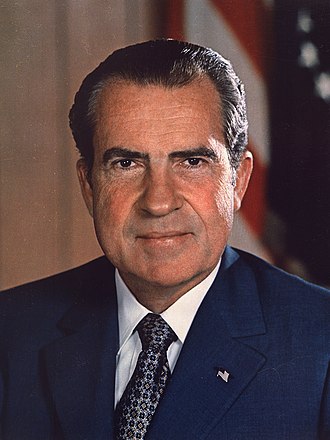
Richard M. Nixon served as the 37th President of the United States from January 1969 until his resignation in August 1974. In February 1971, he ordered the installation of a secret voice-activated taping system in the White House to preserve a historical record of his administration. Until the system's existence was revealed and dismantled in July 1973, the tapes captured Nixon directing major foreign policy initiatives, such as the opening to China, as well as his central role in the Watergate cover-up.
What Nixon talks about on the tapes
White House operations 4,718Presidential scheduling 2,225Public relations 1,784Presidential schedule 1,782Vietnam War 1,693Logistics 1,650Manolo Sanchez 1,626White House communications 1,400White House administration 1,399Presidential communication 1,243Henry Kissinger 1,191Foreign Policy 1,183
Conversations (21,010)
— Page 17 of 211President Nixon consulted with White House Director of Communications Herbert G. Klein to review the outcomes of a recent meeting with business magazine editors. Following their assessment of the media engagement, the President requested that the operator connect him to First Lady Pat Nixon. The discussion served as a brief administrative coordination regarding public relations and personal communication.
President Richard Nixon and First Lady Pat Nixon engaged in a brief telephone conversation to coordinate personal matters. Due to the withdrawal of the recording's content under personal privacy guidelines, no substantive policy or administrative developments are documented. The brief nature of the call suggests a routine exchange between the couple.
President Richard Nixon contacted First Lady Pat Nixon to coordinate their evening plans. The President informed her that he was currently hosting guests aboard the presidential yacht, the Sequoia, but intended to return to the White House for dinner. No significant policy discussions occurred during this brief exchange.
President Nixon and Stephen B. Bull met to finalize logistical arrangements for an upcoming dinner aboard the presidential yacht, the Sequoia. They discussed the guest list, which included John B. Connally, Henry Kissinger, H.R. Haldeman, Charles Colson, and John Ehrlichman, and coordinated the specific timing for the gathering. Additionally, the pair briefly touched upon administrative details, including the placement of office equipment and scheduling confirmations.
President Nixon met with H.R. Haldeman, Henry Kissinger, George Shultz, and others to discuss recent legislative developments, specifically the House progress on a manpower revenue-sharing bill and the resolution of an impending rail strike. The group reviewed the President's recent meeting with business leaders, focusing on his stance on free trade and domestic economic priorities. Additionally, Nixon emphasized his refusal to be pressured into reactive international monetary policy changes and authorized the initiation of a new intelligence program.
President Nixon inquired with the White House operator regarding the current whereabouts of Alexander M. Haig, Jr. The operator informed the President that Haig had traveled to Annapolis to deliver a speech. No further policy discussions or administrative actions were addressed during this brief exchange.
President Nixon instructed the White House operator to place a telephone call to General Alexander M. Haig, Jr. This brief administrative interaction served as the necessary procedural step to connect the President with his Deputy Assistant for National Security Affairs for a subsequent discussion. No further policy or strategic matters were addressed during this initial operator exchange.
President Nixon directs Alexander Haig to meet with him immediately prior to a scheduled session with Secretary of State William P. Rogers. The conversation serves to coordinate staff access and scheduling for the President's upcoming diplomatic deliberations. Nixon specifically notes that Henry Kissinger is currently occupied in a meeting with Gerard C. Smith, necessitating Haig's prompt arrival for a briefing.
President Nixon directs Alexander M. Haig, Jr. to meet with him immediately to discuss recent developments regarding Henry Kissinger's negotiations with Gerard Smith. The President intends to consult with Haig regarding the status of these talks before proceeding to a scheduled meeting with Secretary of State William P. Rogers. This brief exchange serves to coordinate administration strategy and brief the President on critical diplomatic updates.
President Nixon held an extremely brief, one-second meeting with an unidentified individual in the Oval Office. The interaction consisted solely of a request for coffee. No substantive policy matters or administrative decisions were addressed during this exchange.
President Nixon and Henry Kissinger met to refine the messaging and strategy for the upcoming public announcement regarding the Strategic Arms Limitation Talks (SALT). They discussed the content of the President's public statement, debating whether to emphasize personal involvement in initiating negotiations with Soviet leadership versus keeping the announcement brief and formal. To manage potential skepticism and ensure support, they also planned a background briefing for key columnists and a meeting with the verification panel to solidify Congressional and public confidence.
President Nixon and Secretary of State William Rogers discussed strategies for advancing peace negotiations in the Middle East and the status of Strategic Arms Limitation Talks (SALT) with the Soviet Union. Rogers provided an update on his recent diplomatic tour, noting promising overtures from Egyptian President Anwar el-Sadat regarding a potential interim settlement and the future removal of Soviet personnel. The President emphasized a firm stance toward Israel, arguing that the U.S. must leverage its military and economic support to pressure Israel into serious negotiations, while also planning to coordinate closely with Congressional leaders on the upcoming SALT announcement regarding anti-ballistic missile (ABM) systems.
President Nixon and H. R. Haldeman discussed coordinating the logistics of King Faisal’s upcoming state visit to avoid scheduling conflicts with a scheduled press conference. Nixon directed Haldeman to shift the King’s visit from an 11:00 am meeting to a formal dinner. Haldeman agreed to review the schedule and identify a suitable night, such as Wednesday or Saturday, to accommodate the change.
President Nixon met with his aide Stephen B. Bull in the Oval Office to conduct brief administrative business. During this short interaction, the President issued a specific request for an item to be retrieved or handled by Bull. The meeting concluded quickly with Bull departing shortly thereafter to carry out the task.
President Nixon held a brief, informal meeting in the Oval Office with an unidentified individual. The interaction, lasting less than ten minutes, primarily concerned the provision of refreshments. No substantive policy discussions or significant administrative decisions were recorded during this encounter.
President Nixon, H. R. Haldeman, and Henry Kissinger met to coordinate the upcoming public announcement of a breakthrough in the Strategic Arms Limitation Talks (SALT). A primary concern for the participants was managing the ego and professional expectations of Secretary of State William P. Rogers, who was reportedly frustrated by his exclusion from these sensitive negotiations. The group decided to present the achievement as a collective effort involving the State and Defense Departments, while privately acknowledging that such high-level diplomatic channels are uniquely the President's responsibility. They also finalized the schedule for briefing congressional leaders and Cabinet members to ensure the announcement was handled with appropriate gravitas and controlled messaging.
President Nixon held a brief, three-minute meeting in the Oval Office with an unidentified individual. The discussion was limited to logistical matters regarding the President’s daily schedule. No substantial policy decisions or significant developments were recorded during this brief encounter.
President Nixon held a brief, unscheduled meeting with an unidentified woman in the Oval Office. The discussion concerned a specific item on the President's daily agenda. No further details regarding the nature of the meeting or specific action items were recorded due to the brevity and lack of transcript for the interaction.
President Nixon met with Alexander P. Butterfield to review and coordinate the President's upcoming schedule. The primary focus of the brief discussion was the logistics regarding Nixon's planned meetings with the Strategic Arms Limitation Talks (SALT) delegation. No major policy decisions were reached during this short administrative consultation.
President Nixon held a brief, five-minute meeting in the Oval Office with an unidentified individual. The discussion centered on Rose Mary Woods' schedule and logistics. No further substantive policy developments were recorded during this brief exchange.
President Nixon met briefly with an unidentified woman in the Oval Office to address an unspecified request. The conversation lasted less than five minutes and concluded with the woman's departure. Due to the lack of transcript detail, the specific nature of the request and any subsequent administrative actions remain undocumented.
President Nixon held separate discussions with Rose Mary Woods and Henry Kissinger regarding social, political, and strategic matters. Woods reported on her recent travel and media appearances, while Kissinger briefed the President on delicate negotiations involving Strategic Arms Limitation Talks (SALT), Soviet relations, and potential leaks regarding Vietnam defense policies. The President provided guidance on managing various political associates and addressed concerns regarding Secretary of Defense Melvin Laird’s communication tactics.
President Nixon and H. R. Haldeman briefly conferred regarding the President's upcoming schedule and the coordination of meetings. Nixon specifically instructed Haldeman not to join him and Henry Kissinger at that moment, opting instead to initiate a follow-up call with Haldeman later. The exchange served primarily as a logistical check-in to manage the President's immediate agenda.
President Nixon held a brief, two-minute meeting in the Oval Office with an unidentified individual. Due to the extremely short duration of the interaction and the lack of discernable context in the recorded audio, the specific substance of the discussion remains unintelligible. No substantive policy decisions, directives, or significant historical developments were documented in this transcript.
President Nixon, H. R. Haldeman, and Henry Kissinger discussed how to manage Secretary of State William Rogers' frustration regarding his exclusion from sensitive SALT negotiations. The participants aimed to develop a unified 'party line' for Rogers to use with Congress and the press, framing the breakthrough as a successful presidential initiative while shielding the specifics of the diplomatic channels used. They agreed that Rogers must be reassured of his standing and protected from appearing uninformed, even as they emphasized that maintaining secrecy was essential to the negotiation's success.
President Nixon met with his personal valet, Manolo Sanchez, in the Oval Office for a brief, informal discussion. The interaction focused on personal or household matters rather than substantive policy issues, as evidenced by the extremely short duration of the recording. No major political decisions or official actions were initiated or recorded during this exchange.
President Nixon, H. R. Haldeman, and Henry Kissinger met to coordinate the announcement of a breakthrough in the Strategic Arms Limitation Talks (SALT), emphasizing that the agreement was a presidential initiative. They strategized on how to manage key Cabinet members, particularly William Rogers and Melvin Laird, to ensure they felt included and supportive without revealing the sensitive details of the negotiation process. Additionally, the President discussed his plans to brief legislative leaders and handle potential leaks, while Kissinger briefed the group on secret diplomatic efforts involving China and North Vietnam.
President Nixon initiates a request for the White House operator to place a telephone call to Secretary of State William P. Rogers. The brief exchange serves as a procedural step to facilitate a direct conversation between the President and his top diplomat. No further substantive policy matters were discussed during this specific transmission.
President Nixon and Secretary of State William P. Rogers discuss the strategic management of upcoming Congressional votes, specifically the Mansfield Amendment, and a significant breakthrough in the Strategic Arms Limitation Talks (SALT). To maintain leverage and avoid the appearance of political maneuvering, Nixon instructs Rogers to confidentially brief Senator Mike Mansfield about the progress on SALT only after the Senate vote concludes. They also address diplomatic logistics, including Vice President Agnew’s planned attendance at South Korean President Park Chung-hee’s inauguration and the potential for Rogers to represent the U.S. at an Atoms for Peace anniversary event in Geneva.
President Nixon met with his aide Stephen B. Bull to coordinate the scheduling of upcoming meetings with key administration officials. The discussion focused on finalizing arrangements for discussions with National Security Advisor Henry Kissinger and Secretary of Defense Melvin Laird. The primary outcome was the administrative preparation required to facilitate these high-level consultations.
President Nixon, Melvin Laird, and Henry Kissinger discussed the administration's strategic approach to upcoming NATO defense meetings, emphasizing the need to avoid being pressured into premature agreements regarding Mutual and Balanced Force Reductions (MBFR). The participants reviewed the status of the SALT negotiations, highlighting the necessity of maintaining the Anti-Ballistic Missile (ABM) program as a critical bargaining chip against Soviet offensive weapons. They also addressed personnel changes within the Department of Defense, including potential replacements for Deputy Secretary David Packard and the Secretary of the Army, while coordinating strategy for managing Congressional relations and ongoing military assistance in Vietnam and Cambodia.
President Nixon met with Henry Kissinger, Gerard C. Smith, and a group of defense and foreign policy advisors to discuss the status of the Strategic Arms Limitation Talks (SALT). The group reviewed the progress toward an Anti-Ballistic Missile (ABM) agreement with the Soviet Union, evaluating verification concerns, technological competition, and the potential impact of troop reductions in Europe. Additionally, the President emphasized the importance of maintaining a neutral, balanced diplomatic stance toward both the Soviet Union and the People's Republic of China while exploring minor trade gestures to improve relations with the Soviets.
President Nixon consulted with his aide Stephen B. Bull regarding the scheduling of an upcoming meeting with Robert H. Finch and Donald H. Rumsfeld. The President expressed flexibility regarding the timing of the appointment, noting that a meeting the following day would be acceptable if the participants faced scheduling conflicts. Bull was directed to coordinate the arrangements without signaling to the attendees that the President’s schedule was easily adjustable.
President Nixon and Alexander P. Butterfield held a brief meeting in the Oval Office to coordinate administrative matters regarding the President’s upcoming schedule. The discussion touched upon sensitive legal or political concerns alluded to in the cryptic reference to potential jail time. No formal policy decisions were finalized during this exchange, which primarily served to manage the President's immediate operational agenda.
President Nixon met with his aide Stephen B. Bull to discuss logistical adjustments to the President's upcoming schedule. The brief discussion focused on reviewing and finalizing specific appointments or commitments for the executive calendar. No major policy decisions were reached, as the meeting served primarily as an administrative check-in.
President Nixon consulted with Alexander P. Butterfield and Stephen B. Bull regarding updates on the Charles McC. Mathias amendment and the progress of pending legislative votes. The President sought information on these developments to coordinate his upcoming schedule with Robert H. Finch and Donald H. Rumsfeld. The meeting concluded with Nixon tasking staff to secure information before his 5:00 pm deadline.
President Nixon met with Henry Kissinger to finalize the announcement of a breakthrough in the Strategic Arms Limitation Talks (SALT), emphasizing the need for a brief and controlled public presentation. Following this, the President convened a broader group of officials to address domestic policy, specifically focusing on expanding agricultural drought relief for Texas and Oklahoma and managing national economic policy, including interest rates and housing market stability. The meeting concluded with a review of upcoming congressional votes, where administration staff expressed confidence in defeating the Mathias Amendment.
President Nixon held a brief, informal meeting with an unidentified individual to discuss personal or logistical matters rather than official government business. The conversation centers on the logistics of obtaining specific items, including the acquisition of a tent and apartment-related arrangements. No policy decisions or significant administrative actions were recorded during this brief exchange.
President Nixon met with Alexander P. Butterfield and Stephen B. Bull to review pending administrative paperwork and finalize the President's upcoming schedule. The discussion specifically addressed preparations for a 5:00 p.m. meeting involving key advisors including Henry Kissinger, H.R. Haldeman, and Ronald Ziegler. During the exchange, Nixon also gave instructions regarding the visual presentation of staff in photographs, specifically requesting that images of individuals with cigarettes be excluded.
President Nixon met with his personal aide, Stephen B. Bull, to conduct a brief administrative review of the President's upcoming schedule. The discussion served as a routine logistical check-in to manage the President's time and engagements. No further policy-related actions or major decisions were recorded during this brief encounter.
President Nixon and Henry Kissinger discussed the legislative maneuvering surrounding the Charles McC. Mathias amendment, which threatened to impact the administration's foreign policy agenda. To address the precarious vote count, Nixon and Kissinger strategized on how to influence key senators. As a direct result, Kissinger committed to contacting Senator John Sherman Cooper to lobby for his support against the amendment.
In this Oval Office meeting, President Nixon met with H.R. Haldeman, Henry Kissinger, and other key staff to coordinate the rollout of a major breakthrough in the Strategic Arms Limitation Talks (SALT) with the Soviet Union. The President emphasized the need to maintain secrecy regarding the specific channels used to achieve this diplomatic progress while ensuring that the public message highlighted his personal initiative and the transition to simultaneous negotiations on offensive and defensive weapons. Additionally, Donald Rumsfeld and Robert Finch reported on their recent foreign tour, discussing European perceptions of U.S. foreign policy, the status of U.S. ambassadors, and the challenge of managing drug usage among military personnel abroad.
President Nixon initiated a brief telephone call to Secretary of State William P. Rogers with H. R. Haldeman present. The conversation functioned primarily as a coordination effort to facilitate a direct communication between the President and the Secretary. No substantive policy discussions were recorded during this brief connection attempt.
President Nixon and H. R. Haldeman discuss legislative strategy regarding upcoming Senate votes on the Mathias and Mansfield amendments. The conversation centers on timing the floor votes to minimize opposition success, specifically noting that the Mansfield amendment is expected to be defeated. Nixon consults with Secretary of State William P. Rogers to coordinate communication with Senator Mike Mansfield, aiming to manage the debate schedule and ensure favorable outcomes for the administration.
President Nixon and Secretary of State William P. Rogers coordinate legislative strategy to defeat the Mathias resolution, an amendment regarding troop reductions that the administration views as undermining foreign policy. Rogers updates the President on his discussions with Senator Mike Mansfield regarding a sensitive upcoming announcement and outlines his plan to lobby Senators Charles Percy and John Sherman Cooper to block the resolution. The President emphasizes the importance of preventing leaks while stressing that the resolution's call for unilateral NATO reductions would cripple ongoing negotiations with the Soviet Union.
President Nixon instructed the White House operator to place an outgoing telephone call to H.R. "Bob" Haldeman, his Chief of Staff. The brief interaction served solely to initiate communication with Haldeman, reflecting the logistical process of reaching key administration officials. No further substantive policy discussions occurred during this specific exchange.
President Nixon and Henry Kissinger discuss the successful defeat of the Mathias resolution, which failed by a vote of 73 to 24. They attribute the legislative victory to the administration's firm stance and strategic coordination with Congressional leaders, noting that the vote of Senator John Sherman Cooper was pivotal in securing the outcome. Additionally, they discuss maintaining morale within the State Department and reaffirm the value of William P. Rogers' continued tenure as Secretary of State amid the administration's recent foreign policy successes.
President Nixon contacted the White House operator to place an outgoing call to his Chief of Staff, H.R. Haldeman. The exchange served exclusively as a procedural step to connect the President with his senior advisor. No substantive policy matters or decisions were discussed during this brief administrative request.
President Nixon and H. R. Haldeman discuss the surprisingly lopsided 73-20 defeat of the Mathias resolution and the potential for subsequent parliamentary maneuvering. Fearing a legislative trap involving alternative amendments or a coordinated effort by opponents, they decide to delay a planned thank-you call from the President to Senator John Sherman Cooper. Haldeman is instructed to contact Secretary of State William P. Rogers to share the news while maintaining vigilance over ongoing Senate debates regarding the Mansfield Amendment.
President Nixon contacted the White House operator to place an outgoing call to National Security Advisor Henry Kissinger. This brief administrative interaction served as a logistical step to facilitate direct communication between the President and his advisor. No substantive policy discussions or decisions occurred during this brief exchange.
President Nixon directed Henry Kissinger to organize an informal cocktail reception for Gerard C. Smith and the SALT delegation before their return to Vienna for further negotiations. While Kissinger initially expressed concern that the event might signal a loosening of oversight on the negotiators, Nixon clarified that the gathering was strictly social in nature. The President finalized plans to host the event in the State Dining Room, including the invitation of William P. Rogers, Melvin R. Laird, and Admiral Thomas H. Moorer.
President Nixon requested that the White House operator place a telephone call to his daughter, Julie Nixon Eisenhower. The brief interaction served solely to facilitate personal communication between the President and his family. No policy matters or official business were discussed during this request.
President Nixon held a brief, informal telephone conversation with his daughter, Julie Nixon Eisenhower. The discussion was personal in nature and served as a private familial check-in. Given the brevity of the call and the withdrawal of the primary content, no substantive policy matters or official administrative actions were addressed.
President Nixon dictated a formal memorandum addressed to Dean G. Acheson to express national appreciation for his long-standing contributions to American foreign policy. The discussion reflected on Acheson's pivotal role in the post-World War II era, referencing his seminal work, *Present at the Creation*. Nixon emphasized the importance of Acheson's service across multiple administrations, formally documenting the nation's debt to his diplomatic legacy.
President Nixon calls George W. Ball to express appreciation for Ball's instrumental role in lobbying Democrats to defeat the Mathias Resolution. Ball highlights a growing sense of isolation and suspicion among senators regarding foreign policy, recommending that the administration improve congressional relations through small-group briefings on sensitive topics like Soviet negotiations. Nixon acknowledges the need for better communication and suggests coordinating these sessions through Secretary of State William P. Rogers to mitigate institutional friction between the State Department and the White House.
President Nixon met with George W. Ball to express personal gratitude for Ball's bipartisan assistance on legislative efforts, specifically regarding the Senate. The discussion touched upon the strategic importance of bipartisan cooperation and the tactical necessity of keeping key senators involved to ensure legislative success. Nixon also signaled that an upcoming announcement would reflect the administration's ongoing progress on these policy objectives.
President Nixon initiated a telephone call to request a connection with Congressman Gerald R. Ford. This brief exchange served as an administrative bridge to facilitate direct communication between the President and the House Minority Leader. No further substantive discussion occurred during this recording segment.
President Nixon met with his personal valet, Manolo Sanchez, in the Oval Office to address a brief logistical request. The discussion focused on the specific placement or acquisition of a table. No significant policy decisions were recorded during this short interaction.
President Nixon and Alexander P. Butterfield met to coordinate the logistics and seating arrangements for an upcoming Cabinet meeting. They discussed concerns regarding the meeting's size, specifically addressing the participation of individuals traveling from out of town such as Brown. Additionally, the President briefly addressed administrative matters regarding a letter to Dean G. Acheson.
President Nixon and Henry Kissinger met to refine the public announcement of a breakthrough in the Strategic Arms Limitation Talks (SALT), focusing on the precise wording to characterize the agreement and its potential to improve U.S.-Soviet relations. Beyond the announcement, they reviewed recent legislative successes, including the defeat of the Mathias amendment, and discussed strategies for improving communication with the State Department and key congressional allies like Senator John C. Stennis. The President emphasized the need for strict secrecy regarding the negotiations until the simultaneous release in Washington and Moscow to prevent leaks and maximize the political impact.
President Nixon met with his Cabinet and key advisors to announce a major breakthrough in Strategic Arms Limitation Talks (SALT) with the Soviet Union, culminating in a joint statement to be released simultaneously in both nations. The agreement establishes a framework to prioritize limiting anti-ballistic missile (ABM) systems while pursuing parallel measures for offensive weapons. Nixon emphasized that the breakthrough was achieved by maintaining a strong U.S. defense posture, and he urged his administration to avoid public speculation or detailed commentary that could complicate sensitive ongoing negotiations.
In this meeting, President Nixon consulted with Secretary of State William P. Rogers regarding Middle East diplomacy, emphasizing his desire to push for a peace settlement before the upcoming election season and expressing frustration with the influence of Israeli interests. Following this, the President met with Henry Kissinger and Ronald Ziegler to coordinate the upcoming public announcement of a SALT agreement with the Soviet Union. Nixon and Kissinger strategically aligned on how to brief Congressional leaders while minimizing specific disclosures about negotiating history, MIRVs, and treaty structures to maintain control over the process.
President Nixon met with Stephen B. Bull to discuss the scheduling and availability of White House staff members Rose Mary Woods and Marjorie P. Acker. During the brief briefing, Bull informed the President that the two women were currently unavailable and noted that other housekeepers were delayed due to a vehicular accident. No major policy decisions were made during this logistical status update.
President Nixon and Henry Kissinger met to finalize talking points for a briefing with Congressional leaders regarding the impending announcement of the Strategic Arms Limitation Talks (SALT) agreement. They discussed the strategic framing of the announcement, specifically focusing on positioning the initiative as a personal presidential endeavor while acknowledging defensive weapons limitations. Stephen B. Bull joined the discussion to coordinate the arrival of Democratic leadership, and the group reviewed the planned script to ensure an effective presentation of the administration's progress on nuclear arms control.
President Nixon met with Vice President Agnew and a bipartisan group of Congressional leaders to announce a significant diplomatic breakthrough in the Strategic Arms Limitation Talks (SALT). Nixon informed the attendees of a forthcoming joint statement with the Soviet Union pledging to focus on limiting anti-ballistic missile (ABM) systems and certain offensive strategic weapons. While some lawmakers advocated for immediate unilateral U.S. defense cuts to demonstrate good faith, the President and his advisors successfully urged the leaders to maintain existing defense programs during the negotiations to avoid losing vital bargaining leverage.
President Nixon met with an unknown individual to briefly discuss a specific, albeit now unintelligible, proposal or piece of information. The interaction was brief, centered on the delivery of an answer or resolution, and included the distinct sound of a typewriter. No major policy decisions or significant administrative actions were recorded during this short exchange.
President Nixon and his advisors met to finalize the announcement of the Strategic Arms Limitation Talks (SALT) agreement and coordinate the administration's strategy for managing congressional and public reactions. The discussion focused on emphasizing the historic nature of the deal—despite its initial status as a framework—and included logistical planning for a televised address and related press briefings. Additionally, the President addressed minor White House operational concerns, such as plumbing issues in his residence, while maintaining focus on the political leverage gained through recent ABM (Antiballistic Missile) defense initiatives.
President Nixon and Representative Gerald Ford discussed the political fallout of the administration’s recent Strategic Arms Limitation Talks (SALT) announcement, noting that it successfully neutralized criticism from J. William Fulbright and congressional “doves.” Nixon emphasized that this diplomatic breakthrough was only possible because of the administration's firm stance on the antiballistic missile (ABM) program. Ford reaffirmed his support and committed to ensuring the passage of the necessary ABM authorization and appropriation measures in the House.
President Nixon and his senior aides, including H. R. Haldeman and Henry Kissinger, reviewed the successful public reception of the President's televised announcement regarding the Strategic Arms Limitation Talks (SALT) agreement. They analyzed press coverage, specifically the favorable reactions from media figures like Dan Rather, and discussed the strategic value of the brief, dramatic presentation to the public. Additionally, the group addressed the tepid responses from certain congressional leaders and planned a follow-up briefing for the NSC and negotiating team to reinforce the narrative of a mutual, high-level diplomatic breakthrough.
President Nixon consulted with John A. Scali regarding media relations and the effective communication of administration messaging. The discussion touched upon the public and press reception of the President's upcoming schedule, including coverage by NBC's John Chancellor concerning relations with the PRC and the USSR. They also coordinated details regarding a social event for Strategic Arms Limitation Talks (SALT) negotiators involving key cabinet members and the Nixon family.
President Nixon and his daughter Tricia Nixon Cox discuss the positive public reception of the President's recent televised announcement regarding foreign policy developments. Tricia relays favorable commentary from NBC's John Chancellor, who praised the administration's progress in relations with China and the Soviet Union for transcending domestic politics. The President confirms logistical details for an upcoming cocktail reception at the White House for Strategic Arms Limitation Talks (SALT) negotiators, inviting Tricia and Julie Nixon Eisenhower to attend.
President Nixon instructed the White House operator to place an outgoing call to businessman and political confidant Justin W. Dart in California. The brief exchange served as a procedural request to initiate communication with Dart. No further policy discussions or substantive matters were recorded during this connection.
President Nixon consulted with a White House operator to facilitate an outgoing call. This brief interaction served as a logistical step in managing the President's telephonic communications. No substantive policy discussions or significant political developments occurred during this brief exchange.
President Nixon telephoned Justin W. Dart to offer well wishes following Dart's recent hip surgery. Beyond discussing Dart's health and recovery, the President acknowledged the contributions of Dart’s daughter, Jane, who was working under Egil “Bud” Krogh. They concluded the call by discussing Dart's ongoing Republican fundraising efforts and the positive reception to the President’s televised announcement earlier that morning.
President Nixon met with his senior advisors to coordinate the administration's messaging strategy following the announcement of the Strategic Arms Limitation Talks (SALT) agreement. The participants discussed managing the press, addressing potential discrepancies between U.S. and Soviet translations of the agreement, and ensuring the President received proper credit for the diplomatic breakthrough. Kissinger provided updates on his communication with Soviet Ambassador Anatoliy Dobrynin, while the group planned briefings to counter potential negative interpretations from the media and ensure a unified administration position.
President Nixon initiates a call to the White House operator to be connected with Congressman Leslie C. Arends. The brief exchange serves as a procedural request to facilitate communication between the President and the Congressman. No substantive policy discussions occur during this initial connection phase.
President Nixon met with his aide Stephen B. Bull to review the administrative schedule for an upcoming afternoon meeting. The discussion focused on confirming a 3:00 p.m. appointment with George P. Shultz and John D. Ehrlichman. The brief exchange served to finalize the President's immediate calendar logistics.
President Nixon initiates a call to the White House operator to request a telephone connection with Congressman Harris. This brief administrative interaction serves as a bridge to facilitate communication between the President and a member of Congress. The primary outcome of the exchange is the commencement of the dialing process to reach the congressman.
President Nixon spoke with Congressman Leslie C. Arends to emphasize that the recent breakthrough in Strategic Arms Limitation Talks (SALT) was a direct result of Congressional support for the antiballistic missile (ABM) program. Nixon credited the firm stance of his allies for the success of his latest announcement and the resulting silence from political opponents like J. William Fulbright. Arends agreed to convey this message to his fellow committee members, including F. Edward Hébert, to reinforce the strategic value of their legislative unity.
President Nixon met with Stephen B. Bull to coordinate logistical details regarding his upcoming attendance at an event at the French embassy. Following this brief administrative check, the President held a short interaction with Leslie C. Arends. The primary focus of the brief session was the management of the President's daily schedule.
President Nixon initiates a request for the White House operator to place a telephone call to Arnold R. Weber. This brief interaction serves as a logistical bridge to connect the President with his advisor for a subsequent discussion. No substantive policy matters or decisions are reached during this short administrative exchange.
President Nixon held an brief, unrecorded meeting in the Oval Office with an unidentified woman. The discussion focused on the President's schedule and included the involvement of special counsel Charles W. Colson. No further details regarding the substance of the meeting are available as the interaction concluded quickly.
President Nixon, William P. Rogers, and Charles W. Colson met to discuss the political implications and public relations strategy surrounding the announcement of the Strategic Arms Limitation Talks (SALT) agreement. The participants analyzed how the agreement could undermine the positions of Democratic critics and presidential hopefuls like Edmund Muskie and Hubert Humphrey, who had previously advocated for positions the administration had now effectively bypassed. Nixon and Colson agreed to maintain a sense of mystery and confidence regarding foreign policy, concluding that keeping public commentary brief would reinforce the President's stature as a far-sighted leader in command of momentous international developments.
President Nixon met with key advisors including John Ehrlichman, George Shultz, and Henry Kissinger to navigate a broad agenda covering economic policy, domestic legislative priorities, and the recent Strategic Arms Limitation Talks (SALT) agreement. The participants discussed strategies for managing inflation and fiscal policy, coordinating economic messaging through the Quadriad, and securing congressional support for revenue-sharing initiatives. Furthermore, the President focused on maintaining political discipline regarding his SALT negotiations, successfully leveraging support from key figures like McGeorge Bundy to bolster the agreement's reception among Senate leadership.
President Nixon attempted to reach Arnold R. Weber, the former executive director of the Cost of Living Council, to discuss pending business. After being informed by the White House operator that Weber was en route to the airport, the President spoke briefly with Weber’s secretary, Mrs. Lee, to confirm his availability. The conversation concluded with the understanding that the President would follow up with Weber’s office the following morning.
President Nixon contacted Arnold R. Weber’s secretary, Mrs. Lee, to convey his appreciation for Weber’s recent efforts. The President specifically praised Weber’s work on a statement drafted for the Congressional Black Caucus, acknowledging the significant labor involved in the project. Nixon requested that Mrs. Lee ensure his gratitude was relayed to both Weber and his relevant staff members.
President Nixon and Henry Kissinger coordinate a brief administrative request to contact Rose Mary Woods via the White House operator. This exchange serves as a logistical bridge to facilitate further private communication between the President and his secretary. No substantive policy matters are addressed during this brief connection.
President Nixon consulted with a White House operator and his personal secretary, Rose Mary Woods, regarding logistical movements. The brief exchange focused on confirming Woods' current location as she was in transit to the President's office. No significant policy decisions were made during this brief coordination call.
President Nixon and H. R. Haldeman consulted via telephone regarding personnel or policy matters involving George Shultz. The brief exchange focused on coordinating a specific administrative or cabinet-level action. No definitive final decision was recorded, as the conversation served as a preliminary coordination effort.
President Nixon and George Shultz spoke to review the latest Consumer Price Index (CPI) figures. Shultz reported a consistent upward trend of approximately two to three-tenths of a percent for the year, which Nixon acknowledged as a positive outcome. The conversation served as a brief progress update on economic indicators.
President Nixon initiates a brief telephone call through the White House operator to connect with Press Secretary Ronald L. Ziegler. The conversation is functional in nature, serving solely to facilitate communication between the President and his staff. No substantive policy discussions or decision-making processes occur during this brief administrative interaction.
President Nixon instructed the White House operator to redirect his communication efforts by canceling a pending call to Press Secretary Ronald L. Ziegler. He requested an immediate connection to Director of Communications Herbert G. Klein instead. This brief administrative exchange reflects the President's shifting priorities regarding his public relations and messaging strategy.
President Nixon and Herbert Klein discuss the favorable press reception following a recent meeting between the President and financial journalists, as well as the positive public reaction to recent foreign policy developments. Klein reports that journalists were deeply impressed by Nixon's long-range strategic thinking, despite some dissenting views from columnist Joseph Alsop. Nixon instructs Klein to have Henry Kissinger meet privately with Alsop to better manage the columnist's perspective. Additionally, Klein updates the President on the enthusiastic support for his policies from the Naval War College.
President Nixon initiates a request to the White House operator to place a telephone call to journalist John A. Scali. The brief communication serves solely as an administrative directive to establish contact with Scali. No further substantive policy matters or tactical decisions are addressed during this exchange.
President Nixon instructed the White House operator to place an outgoing call to journalist and television correspondent John A. Scali. The brief interaction served as a logistical arrangement to establish communication with Scali. No substantive policy matters were discussed during this request for a return call.
President Nixon instructed the White House operator to connect him via telephone to Press Secretary Ronald L. Ziegler. This brief administrative exchange served as the necessary logistical step to initiate a conversation between the President and his press secretary. No substantive policy matters were discussed during this brief request for a call placement.
President Nixon requested that the White House operator connect him to his personal aide, Stephen B. Bull. The brief communication served solely to initiate a telephone transfer between the two parties. No further substantive discussion or policy matters were addressed during this exchange.
President Nixon consulted with his aide, Stephen B. Bull, to verify the logistics for a dinner event honoring the Louisiana congressional delegation, specifically asking Bull to confirm if the function was scheduled at the Washington Hilton. Nixon directed Bull to report back immediately to ensure he arrived at the correct location. This brief exchange served to finalize the President's departure plans for the evening engagement.
President Nixon initiates a brief telephone call through the White House operator to connect with his National Security Advisor, Henry A. Kissinger. The exchange serves solely as a logistical request to facilitate direct communication between the President and Kissinger. No substantive policy discussions occur during this short administrative interaction.
President Nixon directs Henry Kissinger to meet with columnist Joseph Alsop to manage his public reporting and address his frustrations regarding administration policy. Additionally, Nixon and Kissinger coordinate on the timing of a statement regarding Strategic Arms Limitation Talks (SALT), with Nixon advising that comments concerning Gerard C. Smith be withheld until after Smith returns from Vienna to prevent premature international disclosure.