Woods, Rose Mary
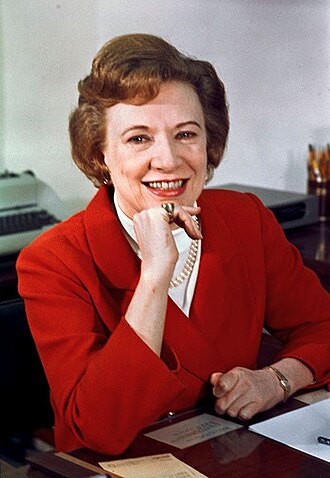
Rose Mary Woods served as President Richard Nixon's fiercely loyal Personal Secretary from January 1969 to May 1973, acting as a crucial gatekeeper to the Oval Office. During the White House taping period (February 1971 – July 1973), she maintained strict control over access to Nixon and was one of the few staff members whose daily interactions with the President were frequently recorded. Following the Watergate-related resignations of top aides H.R. Haldeman and John Ehrlichman, her responsibilities expanded and she was promoted to Executive Assistant and Personal Secretary to the President in June 1973, serving until August 1974. She later became infamous for the "Rose Mary stretch," claiming she accidentally erased 18.5 minutes of a subpoenaed June 1972 tape while transcribing it.
What Woods talks about on the tapes
Public relations 110White House administration 100Vietnam War 90Presidential scheduling 72Presidential schedule 61Speechwriting 59Scheduling 57White House operations 54Foreign Policy 49Watergate 41Political strategy 38Henry Kissinger 37
Conversations (745)
— Page 8 of 8President Nixon and his personal secretary, Rose Mary Woods, discuss the enthusiastic reception Nixon received at a recent Republican fundraising dinner. The conversation shifts to the ongoing Watergate scandal, specifically focusing on the legal troubles and reputations of Maurice Stans and John Mitchell. Nixon expresses personal sympathy for both men, while Woods provides updates on her efforts to maintain contact and support them during their testimony and legal challenges.
President Nixon met with Ronald Ziegler to strategize the White House response to the escalating Watergate scandal, specifically addressing negative press coverage and the potential for a formal election reform initiative. The discussion focused on shifting public attention away from the scandal by emphasizing the administration's foreign policy achievements and the need to professionalize government communications through the Republican National Committee. Nixon directed Ziegler to pursue a strategy of full disclosure regarding the administration’s actions while framing Watergate within the context of previous political wiretapping practices and media manipulation.
President Nixon and Alexander Haig met to discuss managing the ongoing Watergate investigation and coordinating the testimony of CIA Deputy Director Vernon Walters. Nixon emphasized that he wanted Walters to reassure officials like Elliot Richardson, William Colby, and James Schlesinger of the President’s innocence and his desire for a full investigation. The conversation centered on the potential legal exposure of H.R. Haldeman and John Ehrlichman, the status of sensitive memoranda of conversation, and ensuring the loyalty of key administration appointees amidst the political fallout.
President Nixon, Rose Mary Woods, and Alexander Haig confer to locate missing files once belonging to J. Edgar Hoover that were reportedly sent to the White House following the departures of H. R. Haldeman and John Ehrlichman. Woods clarifies that the sensitive materials were never delivered to her office or placed in her custody. Consequently, Haig agrees to investigate the matter further to determine the actual location of the files.
President Nixon and his secretary Rose Mary Woods discussed administrative matters, staff assignments, and the administration's political strategy during the Watergate crisis. Nixon directed Woods to initiate a project of making 15 to 20 appreciation calls daily to political supporters to bolster morale and counter negative media coverage. The two also exchanged views on the perceived conspiracy by the press, Congress, and political opponents to undermine the presidency.
President Nixon met with his personal secretary, Rose Mary Woods, to discuss the management and security of sensitive documents, specifically memos and John D. Ehrlichman's diaries related to the ongoing Watergate investigation. Nixon instructed Woods to verify the contents of their files and retrieve certain personal dictated notes to ensure they were kept separate from official records. The conversation also touched upon the climate of the administration, with Woods offering personal support and encouragement to the President as he navigated the mounting political crisis.
President Nixon and his personal secretary, Rose Mary Woods, met to organize and review sensitive records, including Presidential memoranda and dictabelt tapes relevant to the Watergate investigation. The President reviewed specific files and dictabelt content to manage and verify the filing procedures for these materials. During the meeting, they established instructions for the handling and marking of these tapes to maintain control over the documentation.
President Nixon and his personal secretary, Rose Mary Woods, met to conduct a review of specific dictabelt recordings related to the Watergate scandal. The discussion centered on organizing and verifying the chronological date ranges of these sensitive materials. This effort was part of the administration's internal process for managing and cataloging evidence during the unfolding investigation.
President Richard Nixon met with his personal secretary, Rose Mary Woods, to discuss the organization and status of sensitive Watergate-related memoranda. The conversation focused on distinguishing between internal files and documents prepared for distribution, including materials originating from Camp David. Nixon confirmed that the records were properly accounted for and verified, indicating the completion of a review process regarding these sensitive papers.
President Nixon met with his personal secretary, Rose Mary Woods, to discuss sensitive files related to the Watergate investigation. The brief interaction focused on the President's assessment of these documents and their management. No specific action items were recorded beyond the handling and review of these materials.
President Nixon and his personal secretary, Rose Mary Woods, met to discuss the mounting political pressure from the Watergate scandal and strategies for maintaining a strong public image. They strategized on counter-messaging, including encouraging supporters to write letters to editors defending the administration and framing the opposition as McCarthyist. Additionally, they reviewed Nixon’s recent public appearances and discussed the need to project resilience and resolve in the face of calls for the President’s resignation.
President Nixon directs his personal secretary, Rose Mary Woods, to instruct Secret Service agent Jack Brennan to conduct an immediate, high-priority investigation into threats against the President. Nixon demands a 24-hour turnaround on a comprehensive report detailing historical threats, including prank correspondence and specific incidents dating back to the start of his administration. The objective of this directive is to gather concrete statistical data regarding security risks to bolster the President’s protective posture.
President Nixon met with his personal secretary, Rose Mary Woods, to coordinate the logistics surrounding the arrival of his close confidant, Charles G. “Bebe” Rebozo. The brief discussion focused on managing the President's schedule to accommodate Rebozo’s visit. No further policy or strategic developments were addressed during this transitionary exchange.
Rose Mary Woods and President Nixon coordinate the arrival logistics for Charles G. “Bebe” Rebozo. They discuss his anticipated landing time at the airport and his expected arrival at the White House. The President explicitly instructs that Rebozo be transported to Julie Nixon Eisenhower’s residence upon his arrival.
President Nixon and Alexander Haig met to discuss defensive strategies regarding the ongoing Watergate investigation, including managing leaks and potential legal exposure. The President focused on reframing the Watergate scandal within the context of national security and foreign policy achievements to counter domestic critics. Additionally, they reviewed personnel concerns, including the status of FBI leadership and the potential implications of the grand jury investigation involving Vice President Spiro Agnew.
President Nixon and Rose Mary Woods discussed the administration's defensive strategy regarding the unfolding Watergate scandal, specifically focusing on the recent televised testimony of James W. McCord. The two strategized on how to counter negative media narratives, address the erratic public behavior of Martha Mitchell, and organize a group of loyal political allies to fight back against congressional and public criticism. Nixon emphasized his resolve not to quit, while Woods suggested aggressively questioning McCord's credibility and past associations to protect the President and John Mitchell.
President Nixon held a brief morning meeting with his personal secretary, Rose Mary Woods, and Nellie L. Yates in the Oval Office. The interaction primarily consisted of informal greetings and general movement within the office space. No substantive policy discussions or executive decisions were recorded during this brief encounter before the participants departed.
President Nixon met with Alexander Haig, Rose Mary Woods, and Marjorie Acker to draft and edit a White House statement regarding the Watergate scandal and national security activities. The primary focus was refining the language used to describe the President’s role, potential prior knowledge, and the activities of the 'Plumbers' while balancing the necessity of maintaining presidential authority. Additionally, the group discussed strategies for managing public perception, economic policy concerns, and the political implications of upcoming congressional hearings.
Rose Mary Woods coordinates office logistics with her staff, specifically requesting a delivery of drafting paper to facilitate potential typing work. She also arranges to reschedule an appointment with Patricia Reilly Hitt to accommodate these tasks. The discussion focuses on routine administrative management and scheduling adjustments within the White House office.
President Nixon met with his personal secretary, Rose Mary Woods, in his Old Executive Office Building workspace to review administrative details. The discussion centered on coordinating the President's upcoming schedule, specifically regarding engagements with Republican Congressional leadership and First Lady Pat Nixon. No significant policy decisions were recorded during this brief planning session.
President Nixon met with his personal secretary, Rose Mary Woods, to discuss the ongoing fallout from the Watergate scandal and manage public perception of his administration. They reviewed sensitive matters regarding fundraising efforts by Tom A. Pappas, the potential involvement of John W. Dean III, and the President's desire to clarify that no illicit discussions took place. The conversation also touched upon the President’s political standing, the impact of congressional inquiries, and the strategic importance of highlighting public support to counter the negative narrative surrounding the White House.
President Nixon met with Director of the Mint Mary T. Brooks, Rose Mary Woods, and members of the press to formally receive his official commemorative medal. During the brief exchange, Brooks presented the new medal design to the President before the group departed. An unidentified man subsequently entered the Oval Office to briefly discuss the President's upcoming schedule and a visit from his barber.
President Nixon and his personal secretary, Rose Mary Woods, discuss the President's recent interaction with his daughter, Julie Nixon Eisenhower, regarding her upcoming television appearance. The conversation touches on public relations strategies for the administration, emphasizing the need for maintaining secrecy in foreign policy and securing public support for the President’s agenda. Additionally, they reflect on the favorable public reception of a recent event honoring returning prisoners of war.
President Nixon and Rose Mary Woods met to discuss ongoing concerns regarding the Watergate scandal, specifically focusing on the potential testimony of Thomas A. Pappas. Nixon expressed anxiety about his March 7 meeting with Pappas, emphasizing his desire to ensure there was no implication that he had thanked Pappas for raising funds to pay off Watergate defendants. The conversation also touched on the broader political climate, the impact of the Ervin Committee hearings, and the need to maintain staff morale while preparing for potential legal scrutiny.
President Nixon consulted with his personal secretary, Rose Mary Woods, regarding the personal schedule of his daughter, Julie Nixon Eisenhower. The brief exchange focused on confirming whether Julie would be at home that evening. No major policy or political decisions resulted from this administrative inquiry.
President Nixon, Rose Mary Woods, and an unidentified individual met briefly in the Oval Office to coordinate administrative logistics. The discussion focused on locating items within the President's briefcase and managing his immediate schedule. The participants concluded their brief interaction by confirming the placement of specific materials before departing the office.
President Nixon and Rose Mary Woods discussed the ongoing political pressure from the Watergate scandal, focusing on the negative impacts of the Ervin Committee hearings and hostile media coverage. Nixon and Woods strategized on how to handle potential campaign contributions and expressed frustration regarding the testimony of figures like John Dean. Throughout the discussion, Woods emphasized the widespread public support for the President and the importance of maintaining his resolve against calls for impeachment.
Rose Mary Woods met with an unidentified individual in the Oval Office to conduct brief administrative business. The recording captures only fragmented pleasantries and concludes shortly thereafter, offering no substantive insight into policy or political developments. No significant decisions or action items were documented during this exchange.
President Nixon met with Alexander Haig and Rose Mary Woods to discuss routine administrative tasks, including the President's upcoming schedule and staff support for a potential book project. The conversation shifted significantly to Watergate, specifically focusing on the ongoing Ervin Committee hearings and the legal difficulties facing John Mitchell, Maurice Stans, and John Dean. They also touched upon concerns regarding Martha Mitchell's behavior and the involvement of Thomas Pappas in financial matters related to legal defense funds.
President Nixon and his secretary, Rose Mary Woods, coordinate the guest list for an upcoming dinner with Soviet leader Leonid Brezhnev, specifically finalizing the inclusion of Earl Butz and labor union leaders while excluding Elliot Richardson. The pair also discusses the favorable public reception of Maurice Stans’ recent testimony before the Ervin Committee, with Nixon emphasizing the importance of television coverage over negative newspaper reports. Finally, they briefly reflect on Tricia Nixon Cox's wedding anniversary and Julie Nixon Eisenhower's recent television appearance.
President Nixon directed his personal secretary, Rose Mary Woods, to finalize the guest list for an upcoming after-dinner event honoring Soviet General Secretary Leonid Brezhnev. The President requested that all administration officials with experience traveling to the USSR be included and specifically instructed that individuals who had already attended multiple White House events be excluded. Furthermore, Nixon expressed frustration with the current vetting process, ordering that future guest lists provided by Warren L. “Bill” Gulley be strictly managed to ensure a fresh rotation of attendees.
President Nixon consulted his secretary, Rose Mary Woods, regarding the entertainment arrangements for an upcoming dinner with Soviet leader Leonid Brezhnev. The discussion focused on finalizing the lineup, specifically confirming the participation of the Johnny Mann Singers and Debbie Reynolds as preferred choices of Pat Nixon and Julie Nixon Eisenhower. The President also briefly considered the feasibility of including entertainer Danny Kaye, noting potential concerns regarding his reception by the Soviet delegation.
President Nixon and his secretary, Rose Mary Woods, met to discuss administrative arrangements for upcoming events and the President's public messaging. The conversation focused heavily on guest lists and logistics for the official visit of Soviet leader Leonid Brezhnev, as well as the strategy for the President's televised address regarding price control measures. Nixon provided guidance on maintaining a nonpartisan appearance for his events while tasking Woods with managing high-level invitations and coordinating schedules with various political figures.
President Nixon calls Rose Mary Woods to coordinate her arrival for a planned evening excursion on the presidential yacht, the Sequoia. The two discuss her ongoing beauty shop appointment and finalize travel logistics to ensure she meets the President and First Lady on the White House south grounds. Nixon instructs Woods to join their party directly rather than traveling separately, confirming a brief wait for her arrival.
President Nixon consulted with his personal secretary, Rose Mary Woods, to coordinate her attendance on a brief excursion aboard the presidential yacht, the Sequoia. After confirming Woods' current availability, Nixon instructed her to meet him at the South Grounds within twenty minutes to facilitate transportation together. The brief exchange focused primarily on scheduling logistics and travel arrangements for the outing.
President Nixon met with Alexander Haig, Henry Kissinger, and other staff members to review preparations for his upcoming speech in Pekin, Illinois, and the anticipated visit of Soviet leader Leonid Brezhnev. The participants discussed strategies for managing foreign relations, specifically addressing requests regarding potential diplomatic travel for Vice President Spiro Agnew and navigating the delicate balance of U.S. relations with China and the Soviet Union. Additionally, the President and his team assessed the administration's political standing amid Watergate-related pressures, the national economy, and media coverage, emphasizing the need to project presidential strength and focus on the administration's policy achievements.
President Nixon, assisted by Rose Mary Woods and Alexander M. Haig, Jr., worked to finalize the text of his upcoming toast for the visit of Soviet General Secretary Leonid Brezhnev. The participants focused on editing the speech for appropriate length and tone, specifically requesting the removal of extraneous references, such as a passage regarding John Adams. Nixon reviewed the revised wording to ensure the toast effectively conveyed a message of peace and mutual responsibility between the two global powers.
President Nixon met with Rose Mary Woods to discuss logistics for Leonid Brezhnev’s state visit, specifically focusing on managing guest lists and timing for receiving lines and entertainment. Following Woods' departure, Alexander Haig joined the President to discuss the ongoing Watergate investigation, including the erratic public behavior of Martha Mitchell and efforts to ensure objectivity regarding Special Prosecutor Archibald Cox. The participants expressed concern over the perceived partisanship of the Ervin Committee and emphasized the need for strategic handling of political allies and legal representatives.
President Nixon and Rose Mary Woods met to discuss the ongoing political fallout from the Watergate scandal, specifically focusing on the Ervin Committee hearings and the testimony of John N. Mitchell. They assessed the performances and loyalty of various administration figures, including John Dean, H.R. Haldeman, and John Ehrlichman, while criticizing media coverage of the proceedings. Additionally, the conversation touched upon the President's public relations strategy, the negative portrayal of the White House staff in the press, and general morale amidst the mounting pressures of the scandal.
President Nixon met with John B. Connally to discuss the administration's economic strategy, specifically regarding price and export controls on meat and agricultural products. They explored the political necessity of maintaining certain controls temporarily while emphasizing the importance of long-term economic prosperity and strengthening the U.S. dollar through increased agricultural exports. The discussion also shifted to the impact of the Watergate scandal, with Nixon expressing frustration over press coverage of his personal finances and the political distraction caused by ongoing congressional investigations.
President Nixon and Rose Mary Woods discussed the ongoing fallout from the Watergate scandal, specifically focusing on the recent Ervin Committee hearings and the testimony of John N. Mitchell. They reviewed the aggressive questioning tactics employed by Senator Lowell Weicker and compared them to the treatment of John Dean, while also discussing the President's public support and his reception during a recent trip to Kansas City. Woods reassured the President by sharing reports of positive correspondence and telephone calls from supporters, reinforcing a narrative of loyalty and resilience amidst the political pressure.
President Nixon met with Rose Mary Woods, Manolo Sanchez, and an unknown guest to discuss his ongoing recovery from viral pneumonia and his intense frustration regarding the Senate Watergate Committee hearings. Nixon expressed profound disapproval of Senator Howard Baker’s conduct during the hearings, declaring that Baker would no longer be welcome at the White House. Additionally, the President praised the testimony of John Mitchell and Richard Moore, contrasting their reliability with the accusations made by John Dean, and reaffirmed his administration's decision to withhold White House papers from the committee.
President Nixon and Henry Kissinger met to discuss the escalating political pressure of the Watergate investigation, specifically focusing on the Ervin Committee's demands for White House files and the recent testimony of John Mitchell and Richard Moore. Nixon and Kissinger strategized on how to maintain a firm stance against the committee's inquiries while managing the potential for a constitutional crisis. Additionally, they reviewed progress on the 'Year of Europe' foreign policy initiatives and discussed the optics of managing the President's current bout of viral pneumonia to garner public sympathy while maintaining a statesmanlike image.
President Nixon calls his personal secretary, Rose Mary Woods, to personally inform her of his diagnosis of viral pneumonia and his impending week-long hospitalization at Bethesda. The two discuss his frustration regarding forced rest and the President's instructions to Press Secretary Ronald Ziegler concerning the public announcement of his condition. Nixon expresses cynical amusement at the prospect of the White House press corps applauding the news of his illness.
President Nixon and his personal secretary, Rose Mary Woods, discuss the logistical process of transferring materials. The brief exchange concerns the coordination of file management or record handling. No major policy decisions are reached during this short interaction.